
Reviewed · WALKING TOURS
Trier: Private Walking Tour with a Local Guide
Trier rewards a slow walk. This private three-hour tour brings the city’s Roman monuments, medieval streets, churches, and grand squares into one well-planned route, with a local guide explaining what you are seeing as you go. I like the focus on major sights, especially Porta Nigra and the Basilica of Constantine, and I like that the private format lets your group keep the pace comfortable. The main thing to consider is that entrance fees are not included, so check which interiors you want to visit before you set out.
The tour begins near Porta Nigra and finishes back at the same meeting point. That makes the route easy to manage, especially if you are visiting Trier for only a day. Guides speak English or German, and the small private-group setup is a good fit for families, couples, and groups who want explanations shaped around their interests. Nicholas was praised for being kind, clear, and easy to understand, while Andrea Tullius was described as friendly and well informed.
In This Review
- Key points to know before you book
- Starting at Porta Nigra, Trier’s unmistakable Roman gate
- Dreikonigenhaus and the details between major sights
- The Market Cross and Trier’s medieval center
- St. Gangolf Kirche and the fountains of Kornmarkt
- St. Peter’s Cathedral, built over Roman foundations
- The Basilica of Constantine and its enormous throne room
- The Electoral residence and the final Roman bath complex
- What $441 means for a private group
- Who will get the most from this walk
- Timing, language, and simple planning advice
- Should you book the Trier private walking tour?
- FAQ
- How long is the Trier walking tour?
- How much does the private tour cost?
- Where does the tour begin?
- Where does the tour end?
- Is the tour private?
- Which languages are available?
- Is Porta Nigra included in the route?
- Are entrance fees included?
- Can I cancel for a full refund?
- Can I reserve now and pay later?
Key points to know before you book
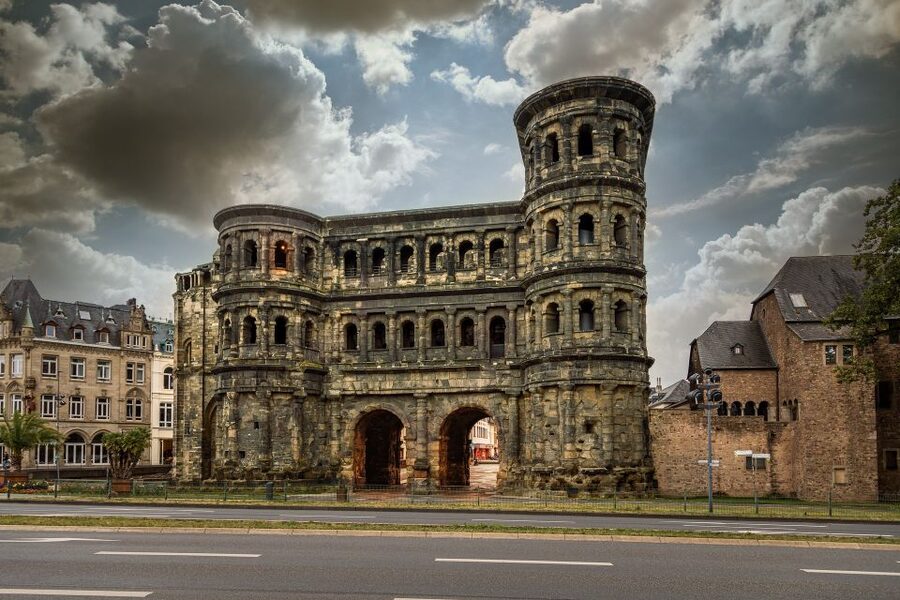
- Porta Nigra begins the story: See Trier’s huge grey-sandstone Roman gate, built after 170 AD and listed as a UNESCO World Heritage Site.
- A private group of up to 20: You get one guide for your party rather than joining a larger shared group.
- The route links many eras: Roman remains, medieval trading streets, churches, fountains, an archbishop’s residence, and Roman baths all fit into three hours.
- The Basilica of Constantine is a major stop: Its long interior and preserved walls give you a clear sense of Roman imperial scale.
- The price works best for a full group: At $441 per group, the cost is easier to justify when shared among several people.
- Plan for walking and extra entrance costs: The tour is on foot, and admission fees are separate.
Starting at Porta Nigra, Trier’s unmistakable Roman gate
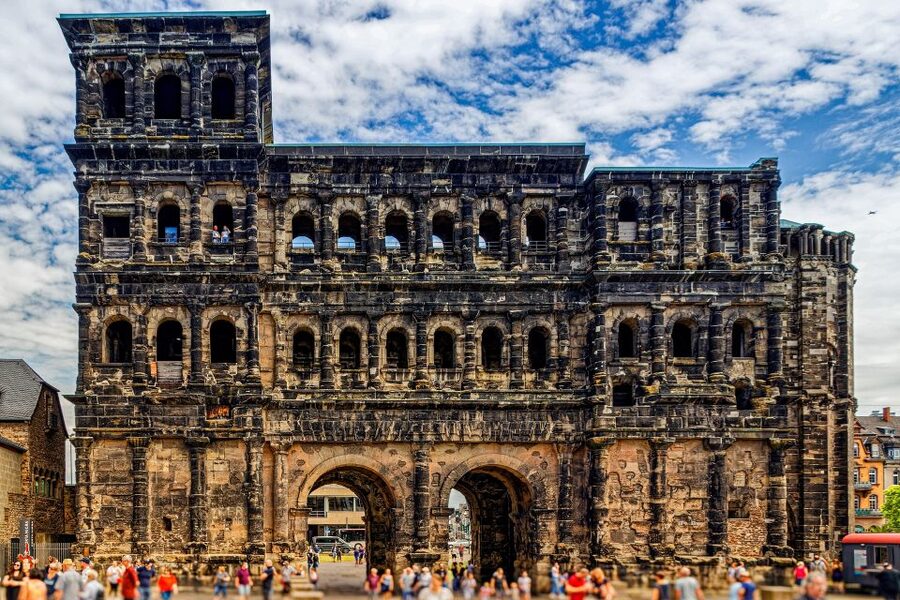
Meet your guide in front of Hotel Römischer Kaiser, close to Porta Nigra. This is an excellent starting point because the gate is not a small archaeological fragment you need to hunt for. It dominates the approach and immediately gives Trier a sense of Roman scale.
Porta Nigra was built with grey sand after 170 AD. It is recognized as the largest city gate from the ancient world and forms part of Trier’s UNESCO World Heritage listing. Even before your guide adds context, the structure makes a strong first impression: this was once an important Roman city, not merely a modern town with a few old stones.
I like beginning here because it gives the rest of the walk a clear theme. You are not simply ticking off churches and squares. You are watching Trier change from a Roman center into a medieval and later German city.
The tour description does not specify whether the group enters Porta Nigra, so you should ask your guide about the plan and any admission cost. Entrance fees are not included. If seeing the inside matters to you, confirm that before the walk begins.
More Walking Tours in Trier
- Trier: Guided City Walk with Wine Tasting
★ 4.8 · 979 reviews - Trier: Guided Old Town Highlights and History Walking Tour
★ 4.7 · 687 reviews - Trier: City Walking Tour
★ 4.6 · 118 reviews
Dreikonigenhaus and the details between major sights
After Porta Nigra, the route continues to the Dreikonigenhaus, one of Trier’s distinctive houses. The appeal here is different from the Roman gate. Instead of monumental public power, you get a look at the unusual character of Trier’s urban architecture.
The available information does not give a detailed explanation of the house’s design or interior access. That makes this a good moment to listen closely to your guide and ask what makes it famous. A private walk is particularly useful at stops like this because you can ask for the practical explanation you want instead of waiting for a large group to move on.
You then pass the Frankenturm, a fortified brick residential tower dating from the 11th century. It is a useful reminder that Trier’s story did not end with the Roman Empire. The city later developed defensive homes and towers that feel far removed from the broad imperial spaces of Roman Trier.
The Frankenturm is not described as an interior visit, so expect to view it as part of the streetside route unless your guide says otherwise. That is typical of a city walk that covers many sights in a limited time. You see a great deal, but not every building becomes a full museum stop.
The Market Cross and Trier’s medieval center
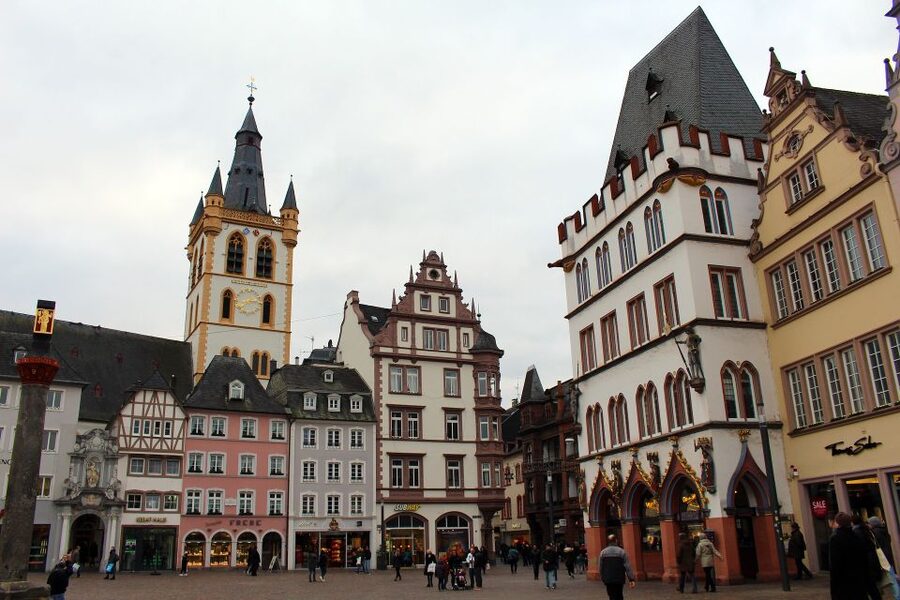
The walk reaches the main market and its Market Cross, a square linked with Trier’s medieval trading life. This is one of the places where the tour shifts from archaeology to everyday city life. Markets explain how a town functioned: people came to trade, meet, shop, and conduct business in the same central space.
Today, you will find shops and cafes around the square. That gives you a useful chance to pause after the earlier monuments, although the three-hour schedule may not allow a long break. If you want coffee or shopping time, you may prefer to return here after the tour rather than trying to fit it into the guided route.
The Market Cross also helps you read Trier as a living city. Roman monuments can sometimes feel detached from modern life. A market square, by contrast, connects the old center with the way the city is used now.
St. Gangolf Kirche and the fountains of Kornmarkt
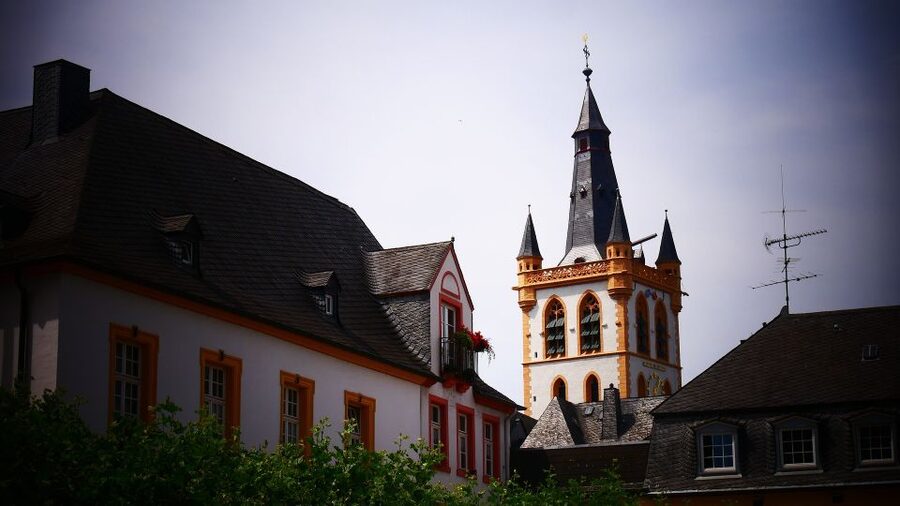
St. Gangolf Kirche is dedicated to St. Gangulphus and is described as Trier’s second-oldest church. It is a Roman Catholic church in the middle of the historic center, and its place on the route adds another layer to the city’s long religious story.
The tour does not promise a formal interior visit, so you should ask whether you will step inside or view the church from outside. As with the other buildings, admission fees are not included. Still, even a guided exterior stop can be worthwhile when the guide explains how the church fits into the surrounding square and the city’s past.
Next comes Saint George’s Fountain in Kornmarkt. The fountain was built between 1750 and 1751 by the same builder associated with the Electoral Palais. That date places it in a later period than the Roman and medieval sights, helping you see how Trier’s public spaces continued to change.
This is the sort of detail that can be easy to miss on your own. You might notice an attractive fountain, take a photograph, and move on. A guide can connect it to the Electoral Palais and point out the city’s later architectural ambitions.
Something different for another day:
- Trier: Discovery Tour – Germany’s Oldest Wine Cellar
★ 4.7 · 218 reviews - Trier: Solve the Mystery of the Merchant’s Gold!
★ 4.2 · 61 reviews - Trier: Private Guided Walking Tour
★ 4.2 · 32 reviews - Trier, Moselle: Wine excursion with boat trip
★ 3.9 · 13 reviews
St. Peter’s Cathedral, built over Roman foundations
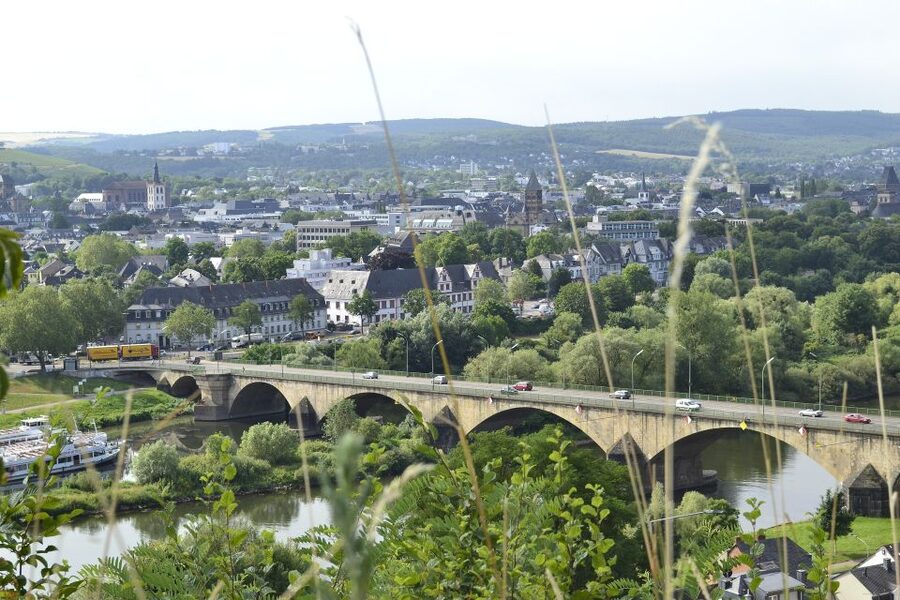
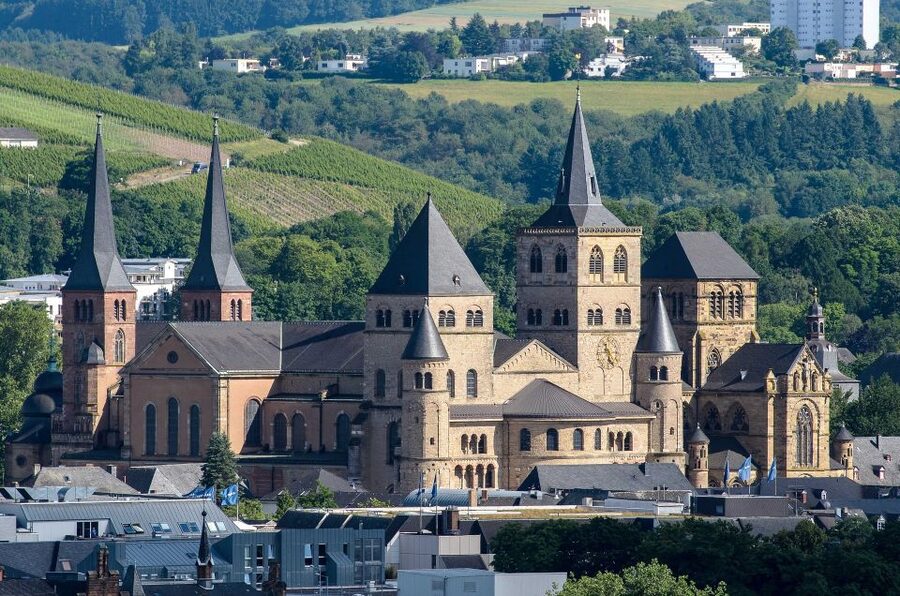
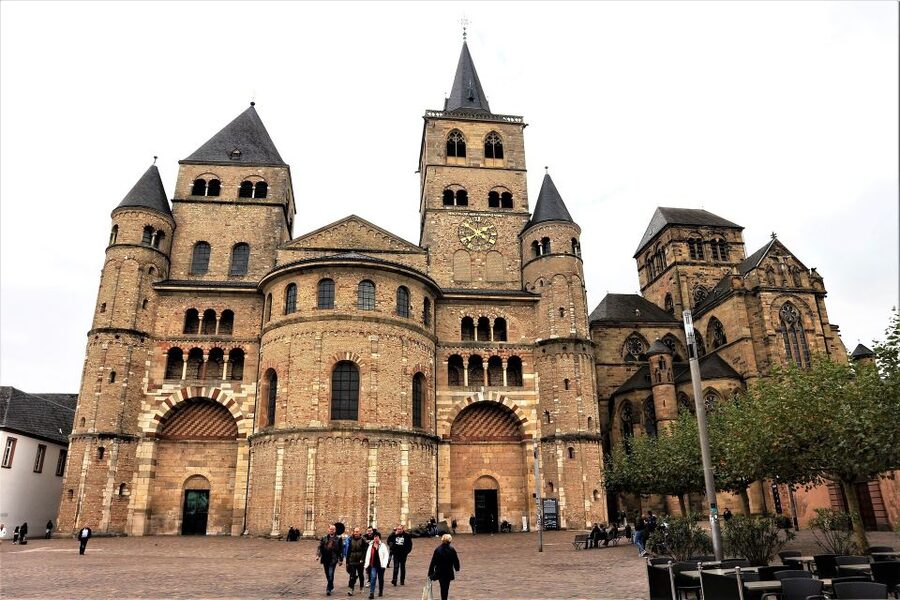
St. Peter’s Cathedral is one of the route’s biggest highlights. It is described as the oldest church in Germany and the largest religious structure in Trier. Its foundation was built by Roman bricklayers in the early 4th century, which makes the building a direct link between Roman Trier and the Christian era that followed.
The cathedral’s importance is not only its age. Its Roman foundation shows how older structures and new religious buildings were layered together over time. You get a clearer idea of how history works in Trier: it is not arranged in separate museum rooms, with Roman history in one place and medieval history in another. The periods overlap beneath your feet and within the same walls.
The itinerary says to discover or see the cathedral, but it does not guarantee an interior visit or include admission. If the inside is a priority, ask your guide at the start. The private format should make it easier to clarify that plan, but the tour still has a fixed three-hour length and several major stops.
The Basilica of Constantine and its enormous throne room
The Basilica of Constantine, built around 310 AD, is likely the most powerful interior experience on this route. Its walls have been kept intact, including after repair work connected with World War II. That survival gives the building a rare sense of scale and continuity.
The basilica was constructed as the Throne Room of Constantine the Great and later Roman emperors in the 4th century. You can picture the room as a setting for imperial power rather than a conventional church. Its great size was part of the message. The building made the emperor appear larger than ordinary life.
Today, the former throne room is used as a Protestant church. That later use adds another chapter without erasing the Roman structure. You see how one building can pass through different religious and political eras while keeping its original walls.
Admission is not included, so confirm whether the route includes entry and what fees apply. The interior is a major reason to consider paying separately, particularly if Roman architecture interests you. If you are mainly looking for an overview of Trier’s streets and exterior monuments, you may decide that the guided explanation is enough.
The Electoral residence and the final Roman bath complex
The route continues to the 16th-century residence of the Archbishops and Electors of Trier. This stop moves you forward from Roman imperial authority to the power of the church and its political leaders. The supplied details do not specify whether you enter the residence, so treat it as a sight explained from the route unless your guide confirms otherwise.
The tour then ends at a large Roman Bath complex built in the 4th century AD. This is a fitting final stop because it returns you to Roman Trier after the walk has shown you medieval, religious, and later political landmarks.
The bath complex also rounds out the Roman picture. Porta Nigra shows the city’s defenses and entrances. The Basilica shows imperial ceremony. The baths point to public life and the large civic projects that supported a major Roman city.
The activity ends back at the original meeting point near Hotel Römischer Kaiser. That return is useful because you do not need to arrange transport from an unfamiliar part of town. You can continue exploring, return to your accommodation, or revisit the Market Cross and its cafes.
What $441 means for a private group
The price is $441 per group of up to 20 people, not a per-person fare. For one or two people, that is a serious expense for a three-hour walk. For a larger family or group of friends, the calculation changes. Shared among 10 people, it comes to $44.10 each. Shared among 20, it is $22.05 each, before any entrance fees.
The real value is the private format. You are paying for an official guide dedicated to your party, with no need to adapt to strangers or a large shared schedule. That matters if your group has particular interests in Roman history, church architecture, medieval Trier, or the city’s political past.
The price is less attractive if you want only a quick orientation or plan to explore the center independently. Trier’s principal sights are concentrated enough that confident walkers can see many exteriors without a guide. The tour earns its cost through interpretation, questions, and a coherent explanation of how the city developed.
Because entrance fees are separate, budget for those only if you want to go inside the sights where entry is available. The tour price covers the private walking tour and official guide, not admissions.
Who will get the most from this walk
I would choose this tour for a first visit to Trier, particularly if you want the city’s main periods explained in one sitting. It suits people who prefer walking to buses and want to see the center without spending time planning a route between individual monuments.
It is also a good option for families and private groups. A dedicated guide can make the history easier to follow, and the three-hour length gives you a substantial introduction without taking the entire day. The group limit of 20 is generous, but the private arrangement still gives your party control over the experience.
History-minded visitors will appreciate the range: Roman gates, a 4th-century basilica, Roman baths, an 11th-century tower, medieval commerce, older churches, and the 16th-century electoral residence. Architecture fans will find plenty to compare.
You should think twice if you dislike walking, want a long stop inside every building, or need a tour with entrance fees built into the price. The route covers many places, and that breadth means some stops may be brief or exterior-only.
The two named guide comments are encouraging for anyone concerned about communication. Nicholas was praised for being kind and easy to understand, while Andrea Tullius was described as friendly and well informed. Guide quality can vary by assignment, but those details suggest that clear delivery and a pleasant manner are central strengths of this experience.
Timing, language, and simple planning advice
The tour lasts three hours, with starting times available according to the date you choose. Since the route begins near Porta Nigra, allow enough time to reach Hotel Römischer Kaiser and find the meeting point in front of it.
English and German are available. If your group has a strong preference, select the language carefully when booking or confirm it before arrival.
Wear shoes suited to a three-hour walk. The route is through the historic center and includes several stops, but no transport is provided. Keep your schedule open enough that you are not rushing to another appointment immediately afterward.
Free cancellation is available up to 24 hours in advance for a full refund. You can also reserve now and pay later, which helps if your Trier plans are still shifting.
Should you book the Trier private walking tour?
Book it if you want a clear, guide-led introduction to Trier’s Roman and medieval center, especially with a group large enough to share the $441 cost. Porta Nigra, St. Peter’s Cathedral, the Basilica of Constantine, and the Roman baths give the walk strong historical range, while the Market Cross and Kornmarkt keep it connected to the city’s later life.
I would skip it if you are traveling alone, watching every euro, or mainly want to photograph exterior buildings at your own pace. For most first-time visitors with family or friends, though, the private format and return to the starting point make this a practical way to get oriented before exploring Trier on your own.
FAQ
How long is the Trier walking tour?
The tour lasts three hours.
How much does the private tour cost?
The price is $441 per group of up to 20 people.
Where does the tour begin?
Meet your guide in front of Hotel Römischer Kaiser, close to Porta Nigra in Trier.
Where does the tour end?
The activity ends back at the original meeting point.
Is the tour private?
Yes. It is offered for a private group.
Which languages are available?
The live guide is available in English and German.
Is Porta Nigra included in the route?
Yes. The tour visits Porta Nigra, a UNESCO World Heritage Site and the largest city gate from the ancient world.
Are entrance fees included?
No. Entrance fees are not included in the tour price.
Can I cancel for a full refund?
Yes. You can cancel up to 24 hours in advance for a full refund.
Can I reserve now and pay later?
Yes. The activity offers a reserve now and pay later option.
Just added around Trier
- Trier Private Walking Tour With A Professional Guide★ 5.0 · 4 reviews
- Trier: Express City Walking Tour with Local Guide★ 5.0 · 5 reviews
- Trier – Private Guided Walking Tour★ 4.5 · 6 reviews
- Trier: early morning tour without the hustle and bustle and with less noise★ 5.0 · 6 reviews
- Luxembourg to Trier: Tour of Germany’s Oldest City.★ 4.6 · 9 reviews
- Trier Self Guided Sherlock Holmes Murder Mystery Game★ 4.0 · 9 reviews
- For the love of Riesling – Mosel Wine tour★ 5.0 · 11 reviews
- Trier: Your Adventure Awaits – The Return of the Elector★ 4.0 · 12 reviews
Walking Tours, compared.





Berlin’s Best: 2 Hour Walking Tour Third Reich and the Cold War
Read our review →


Third Reich Berlin: Hitler and WWII Walking Tour
Read our review →Browse the lists this tour appears in