
Reviewed · WALKING TOURS
Berlin: Hidden Backyards Guided Walking Tour
Berlin keeps some of its best stories behind ordinary doors. This two-hour courtyard walk through Mitte reveals old passageways, art studios, Jewish history, and leafy urban hideaways that are easy to miss from the street. I especially like the mix of architecture and everyday city life, plus the way the route links Berlin’s past with its current creative scene.
I also like the guide-led format. Guides such as Nick, Nicolas, Susanne, Lydia, and Alex have been praised for making complex history clear, friendly, and easy to follow. The main drawback is that the experience takes place rain or shine, and one booking was conducted only in German despite the published English and German language options. Check your departure language carefully before booking.
In This Review
- Key points at a glance
- Why Berlin’s courtyards tell a bigger story
- Starting at Hackescher Markt
- Haus Schwarzenberg: Berlin with rough edges
- Hackesche Höfe: grand courtyards with a different mood
- Rosenhöfe and the passage through Mitte
- Sophienkirche and the Jewish quarter
- Auguststraße and the everyday city
- Heckmann-Höfe: a leafy pause near the end
- What the guide adds to the experience
- Is $23 a fair price?
- Weather, comfort, and practical planning
- Who should book this courtyard walk?
- Should you book the Berlin Hidden Backyards Tour?
- FAQ
- Where does the Berlin Hidden Backyards Tour begin?
- How long does the tour last?
- What language is the tour offered in?
- Is the tour wheelchair accessible?
- Does the tour run in bad weather?
- What does the $23 price include?
- Are food and drinks included?
- Where does the tour finish?
- Can I cancel for a full refund?
Key points at a glance
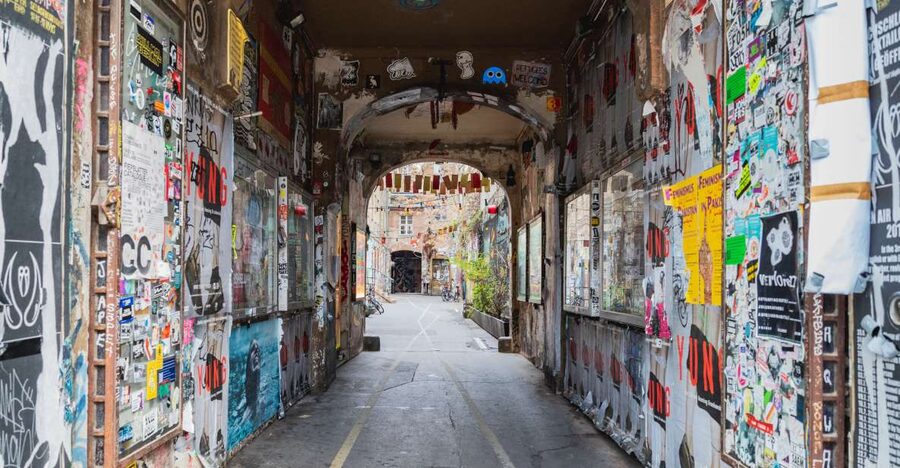
- Haus Schwarzenberg combines faded historic buildings, street art, and working art studios in one unforgettable courtyard.
- The New Synagogue area gives the walk a serious historical purpose, with a close look at the former center of Jewish life in Berlin.
- Hackesche Höfe and Heckmann-Höfe show two different versions of Berlin courtyard culture, one grand and polished, the other more informal and artistic.
- The route is easy to cover in two hours, with no food stop and no transport included, so wear comfortable shoes and bring water.
- Guide quality is a major strength, with repeated praise for clear stories, warm personalities, good English, and an easy pace.
- The tour costs $23 per person, a fair price if you want context and access to courtyards you might otherwise walk past.
Why Berlin’s courtyards tell a bigger story
The Spandauer Vorstadt area in Berlin-Mitte is more than a collection of pretty backyards. Its courtyards show how the city changed from a working district into one of central Berlin’s most fashionable and international neighborhoods.
Your guide explains how buildings once used for homes, workshops, storage, small businesses, and industry have taken on new roles. Today, those same spaces can hold galleries, studios, cafés, shops, and informal meeting places. The useful part is not just seeing an attractive courtyard. You learn why these spaces exist and how they shaped daily life.
I find this approach more rewarding than simply ticking off Berlin’s famous sights. The route looks at architecture, religion, economics, art, and city life in one compact walk. Several people who had already seen the main monuments found this tour a good way to look behind the street front.
The area around the New Synagogue adds weight to the experience. Berlin’s Jewish story is central here, and the guide places the buildings and streets within that history. The tour does not treat the courtyards as mere photo backdrops. It connects them to the people who lived, worked, worshipped, and created in this part of the city.
More Walking Tours in Berlin
- Discover Berlin Half-Day Walking Tour
★ 5.0 · 9,624 reviews - Berlin: Third Reich and Cold War 2 Hour Walking Tour
★ 4.9 · 6,830 reviews - Berlin: Discover Berlin Walking Tour
★ 4.9 · 5,998 reviews
Starting at Hackescher Markt
The meeting point is in front of the BUTLERS shop at Hackescher Markt 4. This is a useful starting place because Hackescher Markt is well known and easy to identify, though the surrounding area can be busy. Give yourself a few minutes to find the shopfront rather than arriving at the last second.
From there, the walk moves into the courtyards and passageways of Mitte. The contrast begins quickly. Outside, you are in one of central Berlin’s active shopping and sightseeing areas. Inside, the mood can change to quiet, enclosed, and local.
The route is a walking tour from beginning to end. You do not need to arrange transport between stops, and the advertised duration is two hours. That makes it easy to fit into a morning or afternoon, especially if you are staying in or near Berlin-Mitte.
Haus Schwarzenberg: Berlin with rough edges
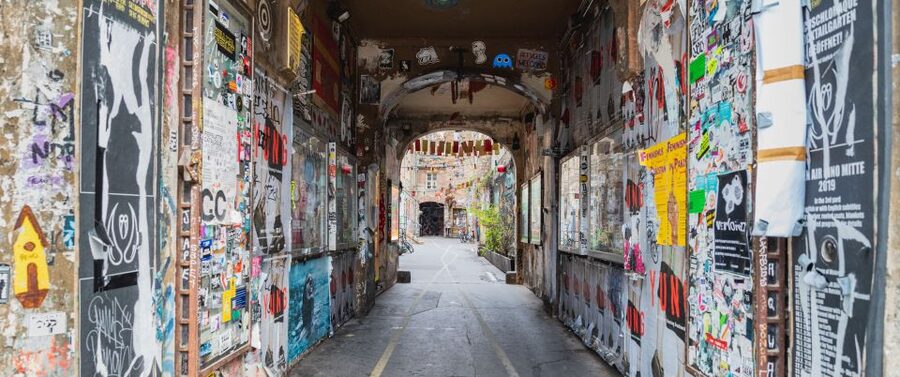
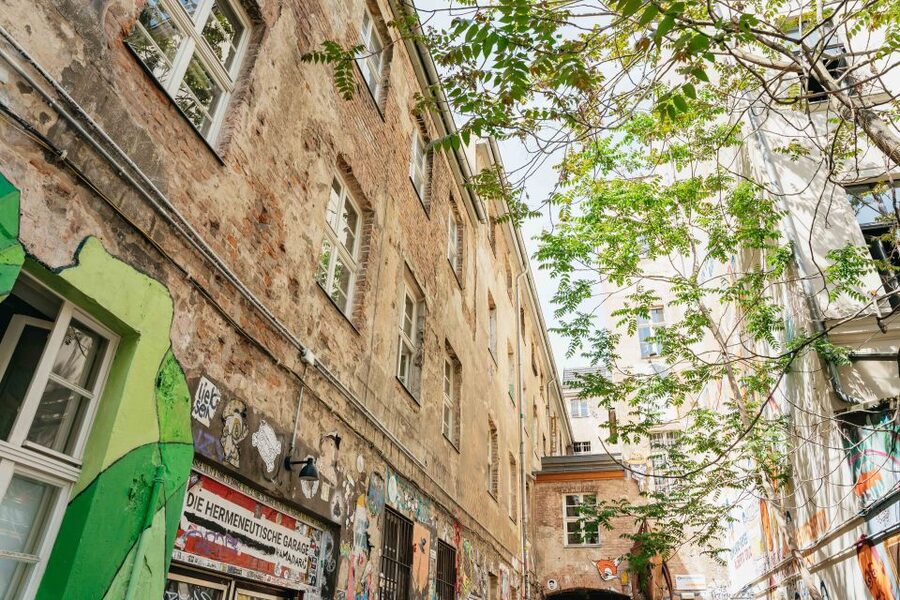
Haus Schwarzenberg is one of the strongest stops on the route. The courtyard has a worn, almost improvised look, with walls covered in street art and old buildings that have served several purposes over time.
This is not polished Berlin. That is exactly why it works. The courtyard gives you a look at a city space that has been reused rather than scrubbed clean. Art studios and creative spaces now occupy buildings connected to an older Berlin, and the mixture feels more revealing than a restored façade.
I would pay close attention to the walls here. The street art is part of the character of the place, but the guide’s explanation gives it more meaning. You learn how a courtyard can shift from practical work space to a place for artists and cultural activity.
The stop also shows why a guide helps. You can walk into a courtyard, admire the paint, and leave in two minutes. With a good explanation, you begin to notice the building’s age, its changing uses, and the tension between preservation and new creative life.
Hackesche Höfe: grand courtyards with a different mood
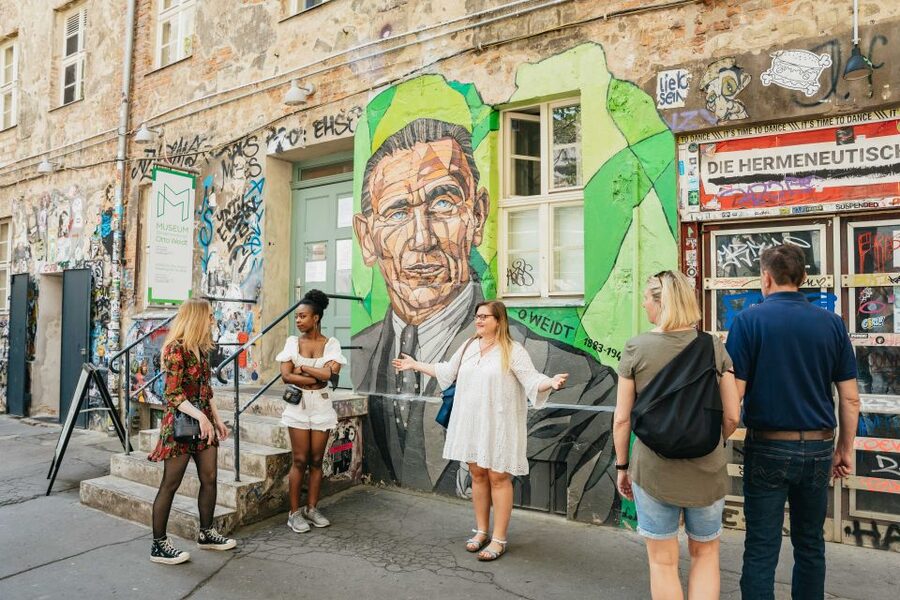
Hackesche Höfe offers a sharper contrast with Haus Schwarzenberg. This group of courtyards is better known and more formally designed, with attractive architecture and spaces used for shops, culture, and social life.
The route helps you understand the difference between a courtyard that feels rough and independent and one that has become a popular destination in its own right. You see how Berlin’s backyards can serve both local residents and a wider public.
This stop may be busier than the less familiar courtyards. If you want quiet photographs, your timing and weather will affect the experience. Still, the architectural detail and the layered history make it worthwhile.
The guide’s role here is to move beyond surface beauty. Instead of only pointing out decorative features, the tour explains how this part of Mitte developed and why these enclosed spaces became such an important part of Berlin’s urban character.
Something different for another day:
- Berlin: Reichstag, Dome and Government District Guided Tour
★ 4.7 · 18,288 reviews - Berlin: 1-Hour City Tour by Boat with Guaranteed Seating
★ 4.3 · 16,993 reviews - Berlin: Boat Tour Along the River Spree
★ 4.4 · 11,252 reviews - Berlin: Hop-on Hop-off Bus Tour with Live Commentary
★ 4.3 · 8,579 reviews
Rosenhöfe and the passage through Mitte
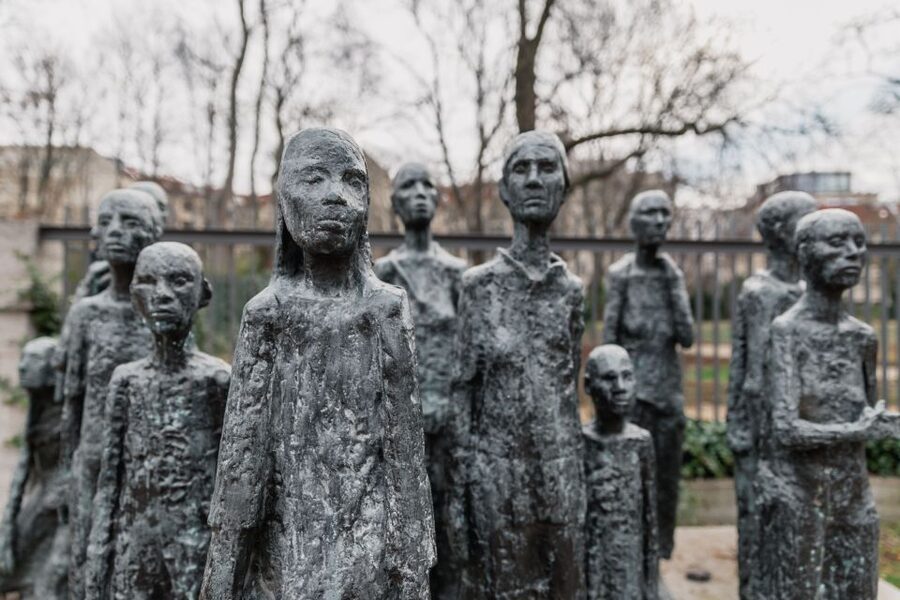
Rosenhöfe is another chance to see how central Berlin hides its life behind the main street. The name is easy to remember, and the courtyard adds another variation to the route.
I like this part of the walk because the stops do not all present the same image. Some spaces are artistic, some elegant, some quiet, and some still feel tied to ordinary urban use. That variety keeps the tour from becoming a repeated sequence of similar courtyards.
The route is also a lesson in scale. Berlin’s grand avenues and monumental buildings get much of the attention, but these smaller spaces explain how people actually used the city. You see the relationship between street, passage, courtyard, building, and workplace.
Sophienkirche and the Jewish quarter
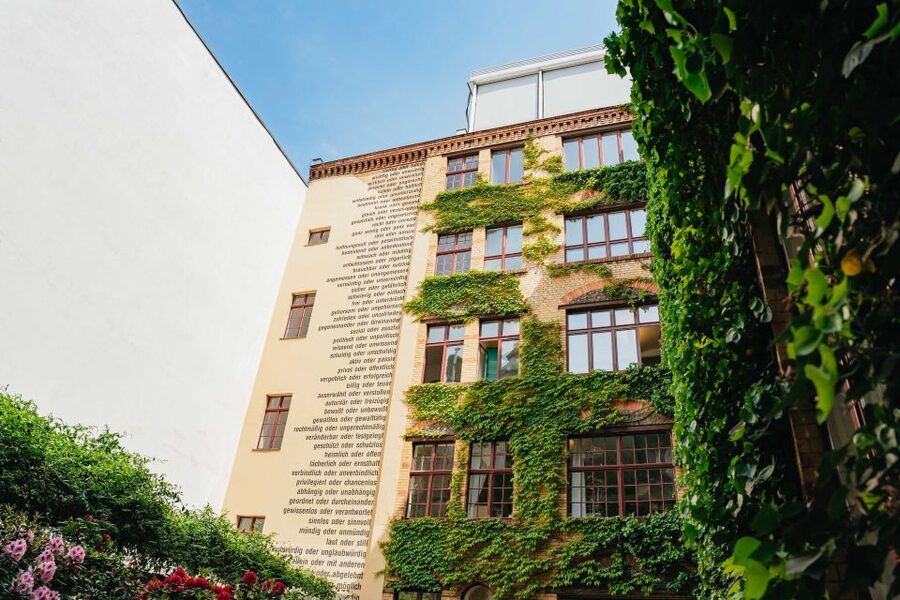
The Sophienkirche stop brings religious architecture into the story. It also helps place the surrounding neighborhood within a longer time frame. The walk is not limited to recent street art or fashionable shops. It looks at the forces that shaped the district across generations.
The Jewish quarter around the New Synagogue is one of the most important parts of the tour. Your guide discusses the development of Jewish life in the area and explains how the neighborhood later changed into the colorful, international district you see today.
One especially useful detail mentioned by a guide was the story of the first female rabbi. Stories like this can make the history feel more human and specific. They also keep the tour from becoming a string of dates and building names.
The subject matter deserves attention. This is not simply a cheerful architecture walk. Berlin’s Jewish history includes loss, disruption, and transformation, and the quality of the guide matters greatly. Past participants have praised guides for presenting the material in a realistic but positive way, with enough context to make the buildings meaningful.
Auguststraße and the everyday city
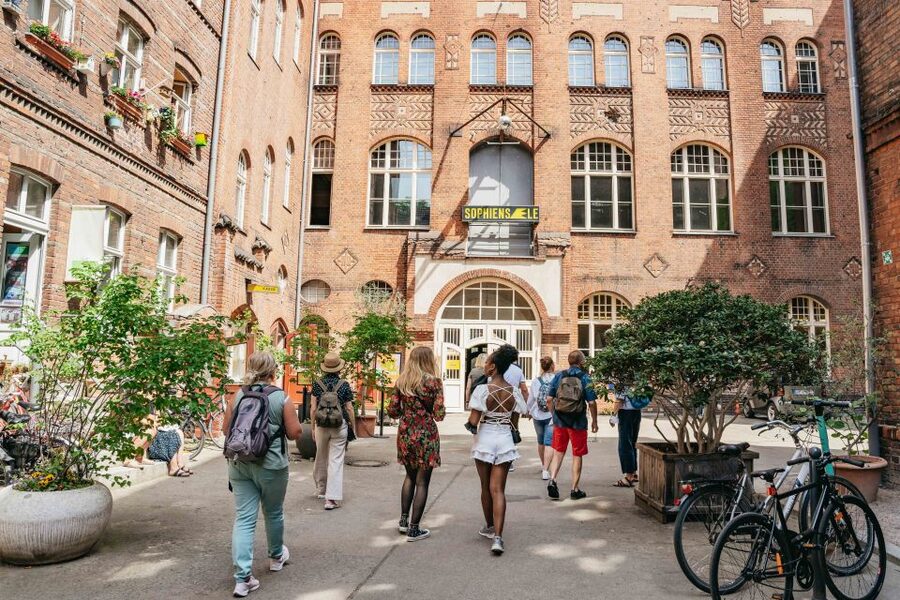
The route continues along Auguststraße, where the wider neighborhood comes into view. After several enclosed courtyards, walking along a street helps you connect the individual stops.
This is where the tour’s theme becomes clearest. The backyards are not isolated curiosities. They are part of a living district where people work, make art, meet friends, shop, and pass through on ordinary days.
You may notice how quickly Berlin changes from one doorway to the next. A busy street can lead to a quiet courtyard, while an old building may contain a modern creative space. The guide helps you spot these shifts instead of walking past them.
Heckmann-Höfe: a leafy pause near the end
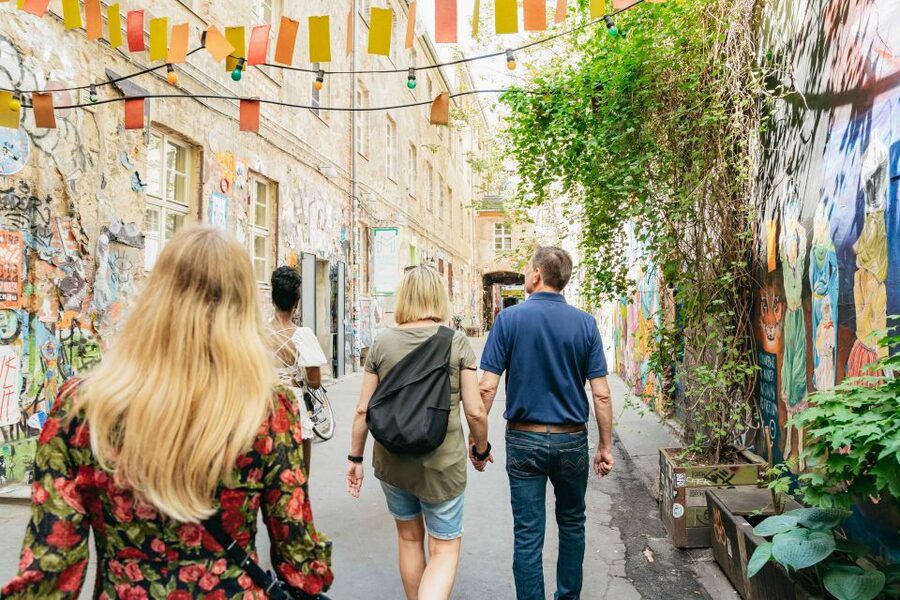
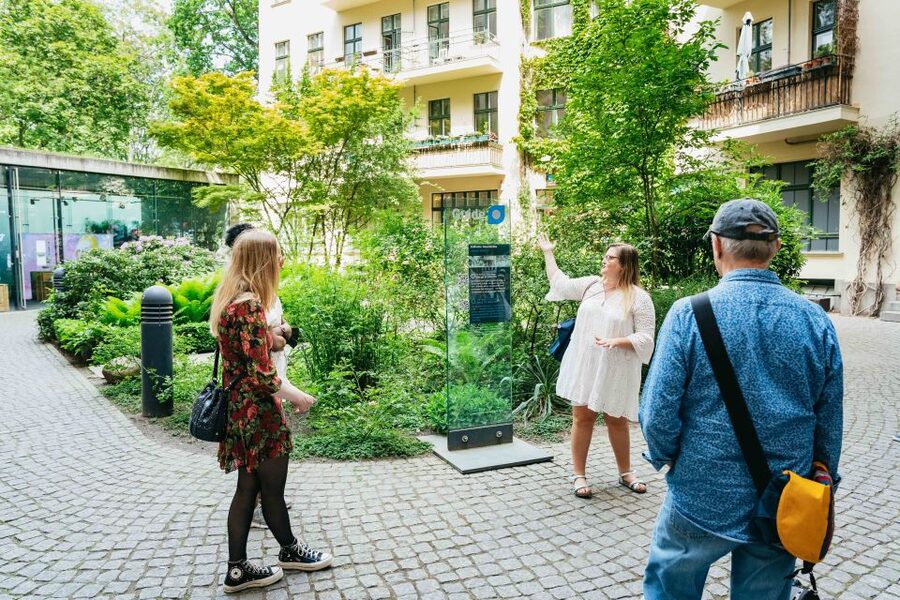
Heckmann-Höfe is one of the most atmospheric stops. The 19th-century courtyard has colorful details, trees, and buildings lined with ivy. It feels like a small break from the noise of Oranienburger Straße.
This is a good place to slow down and look around. The courtyard has the character of a local hangout and an urban retreat at the same time. Its appeal comes from the combination of architecture, greenery, color, and the enclosed layout.
The word oasis is often overused in travel writing, but it fits this stop better than most. You are still in central Berlin, yet the street feels several steps away. That contrast is one of the pleasures of the walk.
Do not expect a long rest break or a café visit to be included. Food and drinks are not part of the tour. You can enjoy the setting, but plan your coffee or lunch separately before or after the walk.
What the guide adds to the experience
The strongest feature of this tour is the guide. The route itself is worthwhile, but the stories turn a pleasant walk into a useful lesson in Berlin.
Nick has received repeated praise for his energy, humor, historical detail, and ability to make the past feel connected to the present. Nicolas was described as speaking informally, almost as if he were talking with friends. Susanne has been praised for her dynamic presentation and huge store of local information.
Other guides, including Lydia and Alex, have also been singled out for clear explanations and thoughtful storytelling. That range suggests that the experience depends partly on who leads your departure, but the overall guide record is very strong. The tour carries a 4.8 rating from 5,360 reviews, which supports the view that guide quality is consistently high.
A good guide also controls the pace. The walk has several stops, but it is not meant to be a race. One person described it as an easy walk, and that sounds right from the itinerary. You will spend time standing, listening, looking, and moving between courtyards rather than covering a huge distance.
Language needs a quick warning. The activity is offered in English and German, but one booking expected a bilingual experience and found the tour was only in German. Another person with intermediate German managed well because the guide checked in and explained things clearly. If your German is limited, confirm the language before paying.
Is $23 a fair price?
At $23 per person, the tour is reasonably priced for a two-hour guided walk in central Berlin. You are paying for local explanation, access to a planned sequence of courtyards, and the time saved by not having to identify each entrance and space yourself.
You can walk through parts of Mitte without a guide for free. The question is what you want from the visit. If you only want photographs of courtyards, independent wandering may be enough. If you want to understand the Jewish quarter, the building changes, and the social story behind the spaces, $23 is good value.
The cost becomes even easier to justify if this is your first visit to Berlin or your first day in Mitte. You get a useful sense of direction and several ideas for places to revisit. It also works well for someone who has already seen the Brandenburg Gate, Museum Island, and other major sights and wants something less obvious.
There is no food, drink, or transport included, so the price covers the walk and guide only. That is not a problem, but budget for your own refreshments.
Weather, comfort, and practical planning
The tour runs rain or shine. Bring a raincoat or umbrella if the forecast looks uncertain, because courtyards may offer some shelter but the walk between them is outdoors.
Wear comfortable shoes. The route is described as easy, but you will be on your feet for two hours and may pause on hard surfaces. In cold weather, the experience can feel much tougher. One person enjoyed the walk despite bitter cold, and another still had a good time in pouring rain, but decent clothing will make a real difference.
The tour is wheelchair accessible. Since the route includes courtyards and passageways, it is still sensible to confirm any specific access needs when booking. The published activity information identifies the tour as accessible, which is useful for planning.
The finish is near Oranienburger Straße, with two listed drop-off locations there. This is convenient for continuing your day in central Berlin. You can also use the end of the route to find a meal or another nearby sight, though the tour itself does not include a stop for refreshments.
Who should book this courtyard walk?
I would recommend it most strongly to:
- First-time Berlin visitors who want history beyond the major monuments.
- Repeat visitors who have already covered the main sights.
- People interested in Jewish history, architecture, street art, and city change.
- Anyone who prefers a relaxed walking tour to a large bus excursion.
- Visitors who enjoy stories about how buildings were used, not just how they look.
- Couples, solo visitors, and small groups looking for a compact activity in Mitte.
It may be less suitable if you dislike outdoor tours in poor weather or want a highly formal presentation. It is also not the right choice if you expect food, drinks, transport, or a museum-style indoor program.
Should you book the Berlin Hidden Backyards Tour?
Yes, if you want to understand Berlin through its courtyards rather than only its famous landmarks. Haus Schwarzenberg gives you art and rough-edged creativity. Hackesche Höfe and Heckmann-Höfe show more polished and social versions of courtyard life. The New Synagogue area adds serious historical context, while Sophienkirche, Rosenhöfe, and Auguststraße fill out the architectural and social picture.
The best reason to book is the guide. Names such as Nick, Nicolas, Susanne, Lydia, and Alex come up with praise for clear English, humor, warmth, and strong local knowledge. Confirm your language, check the weather, and bring good shoes. At $23, this is a smart, compact introduction to a side of Mitte you could easily miss on your own.
FAQ
Where does the Berlin Hidden Backyards Tour begin?
Meet your guide in front of the BUTLERS shop at Hackescher Markt 4.
How long does the tour last?
The walking tour lasts two hours.
What language is the tour offered in?
The listed tour languages are English and German. Confirm your selected departure language because one booking was conducted only in German.
Is the tour wheelchair accessible?
Yes, the activity is listed as wheelchair accessible.
Does the tour run in bad weather?
Yes. The tour takes place rain or shine.
What does the $23 price include?
The price includes the walking tour and a tour guide.
Are food and drinks included?
No. Food and drinks are not included.
Where does the tour finish?
The tour finishes at Oranienburger Straße, with two listed drop-off locations there.
Can I cancel for a full refund?
Yes. You can cancel up to 24 hours in advance for a full refund. You can also reserve now and pay later.
Just added around Berlin
- Berlin: Private Guided Tour of the Main Sights★ 5.0 · 13 reviews
- Private Highlights of Berlin Bike Tour★ 5.0 · 13 reviews
- Modern Berlin Private Walking Tour: Diverse, Vibrant and Exciting German Capital★ 5.0 · 13 reviews
- Tour in Berlin from Warnemünde and Rostock Cruise Port★ 4.1 · 13 reviews
- Berlin: Stasi Museum Private Guided Tour with Entry Ticket★ 4.8 · 13 reviews
- Private Food Tour Experience with a born and bred Berliner★ 5.0 · 14 reviews
- Berlin: Rheinsberg Palace Entrance Ticket★ 4.8 · 14 reviews
- Berlin in one day – day tour with an expert guide★ 5.0 · 14 reviews
Walking Tours, compared.

Berlin’s Best: 2 Hour Walking Tour Third Reich and the Cold War
Read our review →
Third Reich Berlin: Hitler and WWII Walking Tour
Read our review →
Browse the lists this tour appears in