
Reviewed · THIRD REICH & WWII TOURS
Munich: Third Reich & WWII Walking Tour
Munich’s darkest chapter is written into its streets. This 2.5-hour walking tour follows Hitler’s rise in Bavaria’s capital, from early Nazi meetings at the Hofbräuhaus to the failed 1923 power grab at the Feldherrnhalle and the party rallies at Königsplatz. I like the way it connects famous buildings with the political events that happened around them. I also like that it includes the White Rose resistance, giving you more than a story about Nazi leaders and military power.
At $31 per person, it is a fair buy for a guided look at Munich’s role in the Third Reich. The main drawback is simple: this is an outdoor walk dealing with grim material, and the full route can last close to three hours. Cold, rain, noise, and a large group can affect the experience, so good shoes and warm clothing matter.
In This Review
- Key points to know before you book
- Why Munich is the right place for this tour
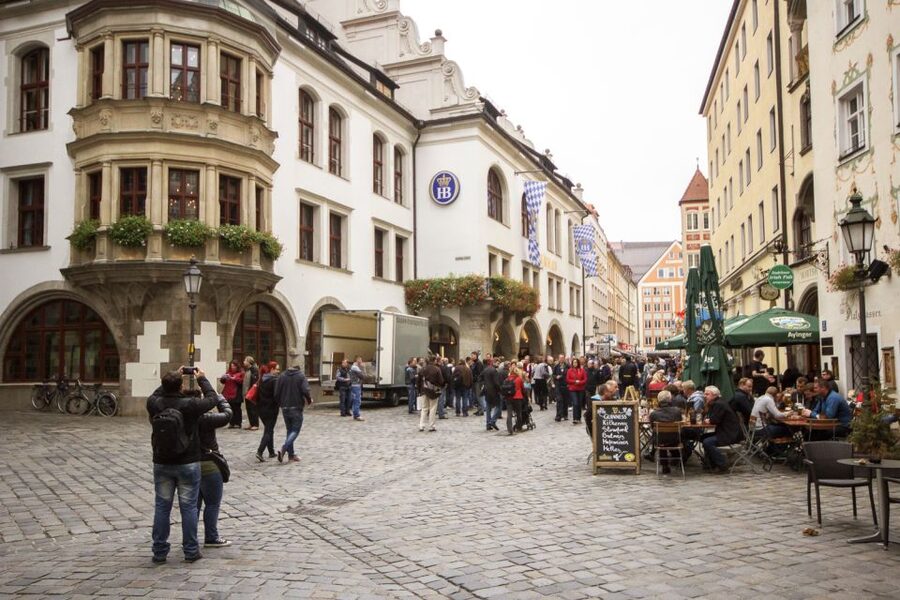
- The Hofbräuhaus and the birth of a mass movement
- The Feldherrnhalle and Hitler’s failed 1923 gamble
- Königsplatz and the power of political spectacle
- The Hofgarten and the White Rose resistance
- What the guides do best
- The pace, walking conditions, and group experience
- Is $31 good value in Munich?
- Who should take this Munich history walk?
- Final verdict: should you book it?
- FAQ
- How long is the Munich Third Reich and WWII Walking Tour?
- How much does the tour cost?
- Which places does the walking tour visit?
- What languages are available?
- Is the tour wheelchair accessible?
- Is a private tour available?
- What should I bring?
- Can I cancel the booking?
Key points to know before you book
- The Hofbräuhaus is the starting point for Nazi mass politics: You learn how Hitler’s movement used Munich’s beer halls to gather followers and spread its message.
- The Feldherrnhalle marks a failed attempt to seize power: This is where the 1923 Beer Hall Putsch ended in gunfire and arrests rather than victory.
- Königsplatz shows how space became political theater: The square was used for major Nazi rallies and remains one of the most important outdoor stops.
- The White Rose adds a vital second perspective: The tour also covers young Germans who resisted the regime from Munich.
- Guides are the chief strength: Michael, Steve, Alex, Josh, Danielle, Florian, Ulrich, Aileen, and Brigit Muller are among the guides praised for clear explanations, strong delivery, and care with a difficult subject.
- Plan for weather and walking: Wear comfortable shoes, bring warm layers, and check the exact meeting point because it can vary by booking option.
Why Munich is the right place for this tour
Munich is often sold through palaces, churches, food, and beer. Those are all good reasons to come. But the city also played a central role in the birth of German Nazism, and this tour helps you see why.
In 1919, Germany was defeated after World War I. The country faced political violence, economic collapse, hyperinflation, and anger over the peace settlement. Bavaria, with Munich at its center, was also shaken by revolution and assassination. This unstable setting gave radical movements room to grow.
The tour explains how Hitler arrived in Munich and built a political base there. You follow the movement from small gatherings to mass meetings and then to an organized attempt to take control of the German government.
That progression matters. The story is not presented as if Hitler simply appeared and took power overnight. You see how political frustration, public speaking, street organization, propaganda, and carefully staged events helped turn a fringe movement into a force capable of destroying a democracy.
I find this city-based approach more useful than a simple list of dates. You are not just told that something happened in 1923 or 1933. You are taken to the places where people gathered, argued, marched, celebrated, resisted, and later confronted the ruin left behind.
More Third Reich & WWII Tours in Munich
- Third Reich Walking Tour Munich
★ 4.5 · 4,291 reviews - Munich: Birthplace of the Third Reich Guided Walking Tour
★ 4.6 · 771 reviews - Munich World War II Sites Including Dachau Concentration Camp
★ 4.5 · 570 reviews
The Hofbräuhaus and the birth of a mass movement
The Hofbräuhaus is one of Munich’s most famous beer halls. It is also an important setting in the early story of the Nazi movement.
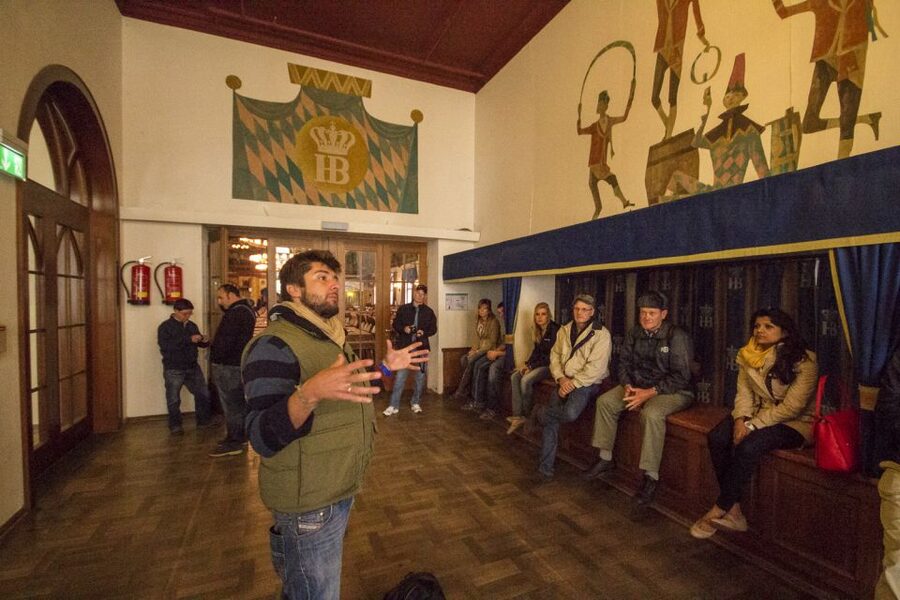
Here, the tour discusses the first major Nazi mass meeting in Munich and the way beer halls functioned as political venues. A crowded hall gave speakers a ready audience, while the loud, communal setting helped turn political speeches into public spectacles.
This stop is useful because it shows the social side of political growth. The Nazi movement did not begin only in government offices. It built support in everyday public places, using speeches and group energy to attract people who felt angry, frightened, or humiliated after the war.
The guide’s delivery matters especially here. The room itself may be busy and noisy, and the tour can include a large group. Several guides are praised for projecting their voices well, while one visitor specifically suggested that extra sound equipment could help when crowds make listening difficult.
Do not expect a long indoor visit with a private table or a quiet lecture. The Hofbräuhaus is a working attraction and a functioning beer hall. Its value on this tour is the historical setting and the explanation of how the space was used, not a meal or beer tasting.
The Feldherrnhalle and Hitler’s failed 1923 gamble
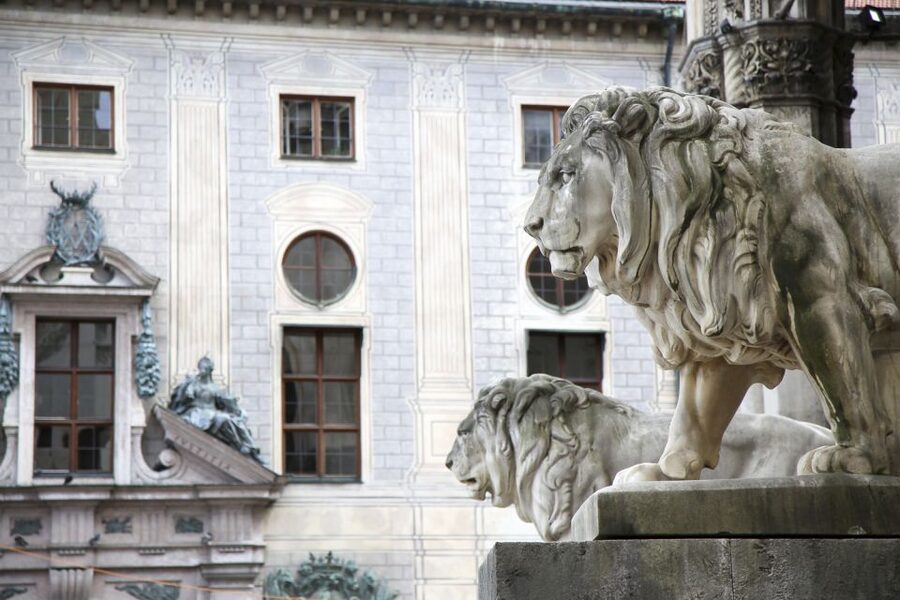
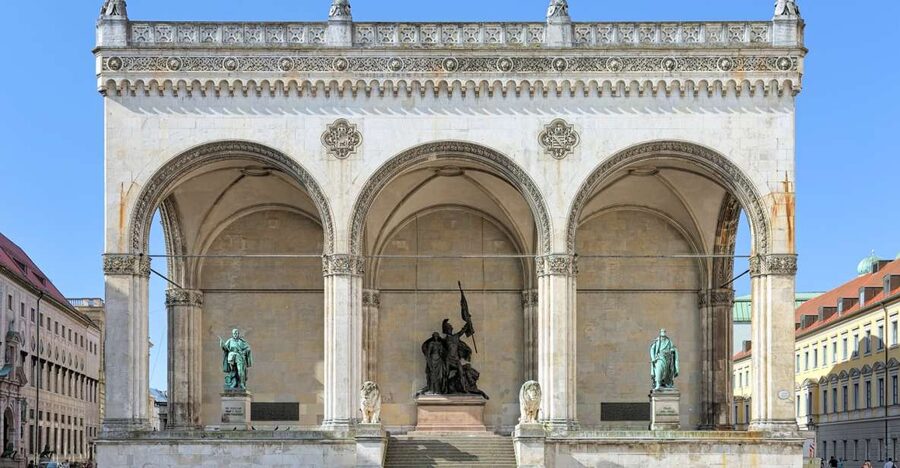
The Feldherrnhalle is one of the most important stops on the walk. This monument near the center of Munich was the scene of the Beer Hall Putsch in November 1923, when Hitler and his supporters tried to seize power in Bavaria.
The attempt failed. The confrontation ended with deaths, arrests, and Hitler’s imprisonment. Yet the failure became part of his political education. The tour explains how the event shaped his later approach, including the decision to pursue power through legal and electoral methods rather than relying only on an immediate armed uprising.
That is one of the strongest parts of the route because you can connect the physical setting with a major change in Nazi strategy. The Feldherrnhalle was not just a backdrop. It became part of the movement’s mythology and propaganda.
You will likely stop nearby while the guide explains what happened and why the event mattered. This is a listening stop rather than a museum visit. There is no promise of indoor seating, so you should be ready to stand outdoors.
Several guides are praised for turning complex political developments into a story that is easy to follow. Alex is repeatedly described as approachable and clear. Michael is praised for enthusiasm and context, while Josh is noted for keeping a large group engaged for more than two hours.
Königsplatz and the power of political spectacle
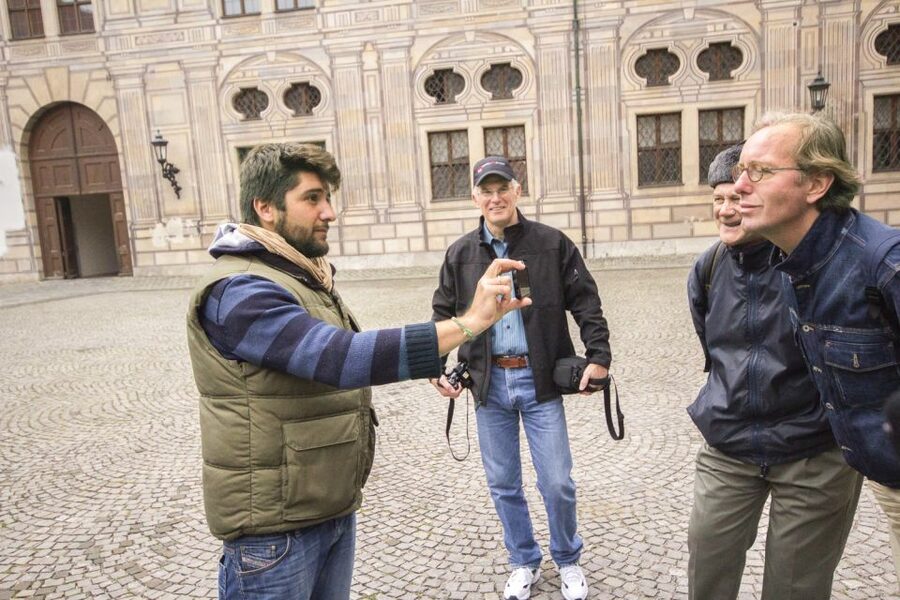
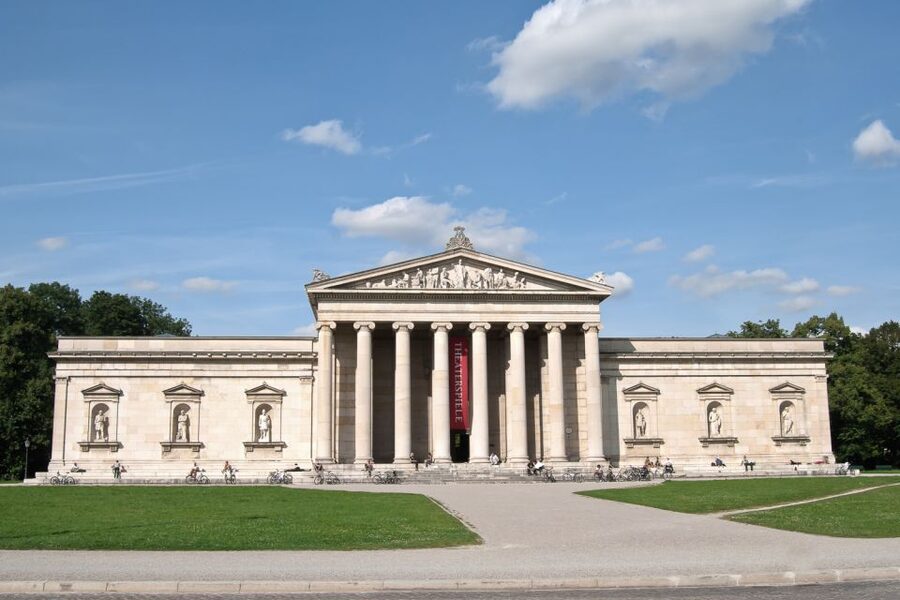
Königsplatz gives the tour a wider sense of scale. The open square was used for Nazi rallies and ceremonies, helping transform Munich into a stage for the movement’s public image.
This stop helps explain why architecture and public space mattered so much to the Third Reich. Large gatherings, formal marches, flags, speeches, and carefully planned ceremonies were designed to create a sense of unity and power. The setting allowed individuals to feel part of something much larger than themselves.
The contrast between the square’s present-day appearance and its political use is striking. You see a public place that can look calm and ordinary, then learn how it was turned into a tool of mass persuasion.
The route is especially worthwhile for people who already know the basic dates but want to understand how Nazi rule was presented to the public. You will hear about the events and locations that helped the movement create a sense of inevitability.
One practical point deserves attention. The published route includes Königsplatz, but the final endpoint can vary. Some people finished near the Dokumentationszentrum München, while another person expected to end at Königsplatz and did not. If the endpoint matters for your next activity, ask the guide or operator at the beginning.
The nearby Documentation Center can make a useful follow-up visit if the walk finishes there or close by. The tour itself is outdoors and guided, while a museum visit gives you more time with documents, photographs, and displays.
More Walking Tours in Munich
- Munich: Old Town & Viktualienmarkt City Walk in German
★ 4.7 · 2,304 reviews - Munich: Night Watchman Walking Tour
★ 4.7 · 2,092 reviews - Munich Ghosts and Spirits Evening Walking Tour
★ 5.0 · 1,900 reviews - Munich Old Town Walking Tour
★ 4.5 · 1,287 reviews
The Hofgarten and the White Rose resistance
The stop in the Hofgarten broadens the story beyond Hitler and his supporters. Here, the tour discusses the White Rose, a Munich-based resistance group led largely by students who opposed Nazi rule and distributed leaflets calling for resistance.
This section is essential. A tour of the Third Reich can easily become too focused on the machinery of dictatorship. The White Rose reminds you that some people recognized the regime’s crimes and risked their lives to oppose it.
The setting also changes the emotional rhythm of the walk. After hearing about rallies, propaganda, and attempts to seize power, you encounter a story of moral courage from young people operating under extreme danger.
The guide’s tone is important at this point. The strongest descriptions of the tour emphasize respectful storytelling, clear facts, and an ability to handle difficult material without turning it into entertainment. Humor may appear in the broader presentation, but the subject is treated seriously.
If you are visiting Munich with teenagers or family members interested in modern European history, this stop can give the tour particular value. It presents resistance as a human choice rather than an abstract political idea.
What the guides do best
The guide can make or break a walking tour, and this experience has received especially strong praise for its staff.
Michael is described as friendly, enthusiastic, and easy to hear. Steve receives repeated praise for explaining difficult subjects clearly and for taking extra care of the group in cold weather. On snowy or wet days, he has brought hot tea, disposable cups, and mats or cushions for people sitting on damp ledges.
Those small gestures tell you something useful. The tour can be physically demanding in poor weather, and a guide who watches the group’s comfort can make a real difference.
Josh is praised for strong voice projection, energy, and the ability to hold a large group’s attention. Danielle is noted for handling big groups well while keeping the presentation friendly. Florian is described as personable and deeply interested in Munich’s past. Ulrich, Aileen, Alex, and Brigit Muller are also praised for clear explanations and strong command of the subject.
You should still allow for variation. Different guides have different styles. One guide may use more humor, another may focus more heavily on political context, and another may emphasize personal stories or moral questions.
One person found that a very large group led to more reminders about staying focused and together. That is common on city walks, but it is worth knowing if you prefer a quiet, informal pace. A private group is available if you want a more personal format.
The pace, walking conditions, and group experience
The listed duration is 2.5 hours, or 165 minutes. The description also refers to a 2:45-hour walk, and several accounts describe the experience as lasting close to three hours. I would plan for the longer end of that range rather than scheduling a tight appointment immediately afterward.
The tour stops regularly, so you are not walking nonstop for 165 minutes. Still, you will spend much of the time on your feet in central Munich. Comfortable shoes are not a minor suggestion here. They are the one item specifically recommended for the activity.
Weather can shape the day. Cold and rain have not stopped guides from delivering the tour, but you should bring warm clothing and prepare to stand outside. Gloves, a waterproof layer, and footwear with good grip are sensible additions, especially in winter.
A large group may make it harder to hear at busy points. Stay close to the guide and move into speaking range before each explanation begins. If you have hearing concerns, ask about the group setup when you arrive.
The walk is listed as wheelchair accessible. Since the meeting point and exact route can vary by option, confirm the details in advance if you need specific access arrangements.
Is $31 good value in Munich?
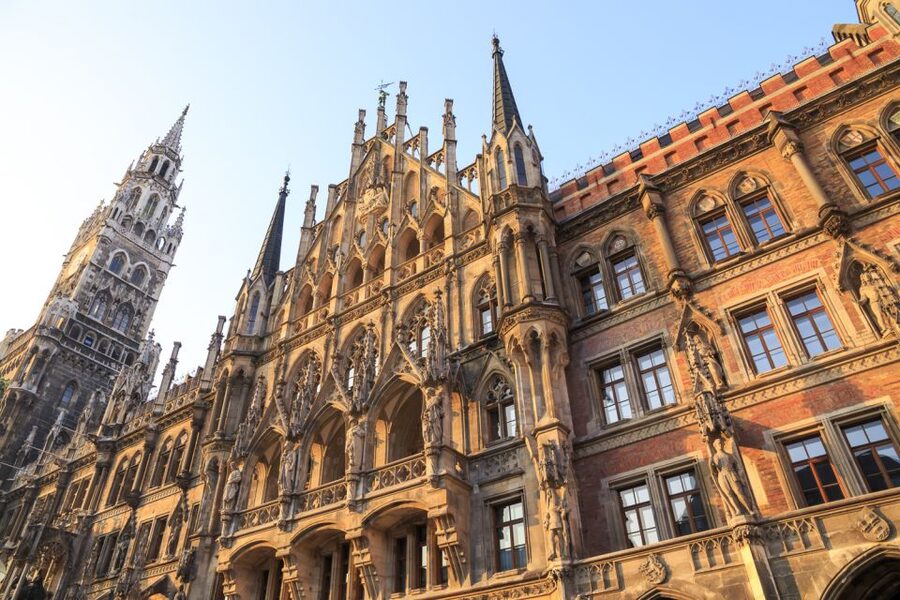
At $31 per person, this tour offers solid value if you want structure and context rather than simply photographing historic buildings.
You could visit the Hofbräuhaus, Feldherrnhalle, Königsplatz, and Hofgarten independently. The problem is that the buildings do not explain themselves. Without a guide, you may miss how these places connect to one another and how Munich helped the Nazi movement grow.
The price also pays for more than a route between landmarks. A strong guide gives you the political background, explains the sequence of events, answers questions, and links the local story to the wider rise of the Third Reich.
The value is greatest for first-time visitors and for anyone with limited time in Munich. In a single walk, you cover several central sites and gain a framework for later museum visits.
It is less useful if you want a quiet sightseeing walk, a short photo stop, or a tour focused on Munich’s general attractions. This is a serious history lesson with a lot of spoken material.
Free cancellation up to 24 hours before the start and the option to reserve now and pay later make it easier to fit into a changing schedule. The meeting point can vary, so check the exact location for the option you choose rather than assuming every departure begins in the same place.
Who should take this Munich history walk?
I would recommend it to you if you:
- Want to understand how Nazism first grew in Munich
- Enjoy political and social history
- Plan to visit the Documentation Center afterward
- Prefer learning through places and stories rather than reading alone
- Are comfortable spending several hours outdoors
- Want a tour that includes resistance as well as dictatorship
Families can enjoy it if children are mature enough for the topic. One family described it as a strong activity for people interested in local history, but the material includes political violence, persecution, war, and genocide.
It also suits people who already know a fair amount about World War II. The tour’s strongest guides add lesser-known details and local context rather than only repeating basic textbook facts.
You may want to skip it if you are looking for light entertainment or if poor weather will make a long outdoor walk unpleasant. The subject is disturbing, and the tour asks for your full attention.
Final verdict: should you book it?
Yes, if Munich’s role in the Third Reich is important to your visit. For $31, you get a focused route through the Hofbräuhaus, Feldherrnhalle, Königsplatz, and Hofgarten, along with the political story that binds those sites together.
The best reason to book is the quality of the guiding. Michael, Steve, Alex, Josh, Danielle, Florian, Ulrich, Aileen, and Brigit Muller are all praised for making difficult material clear and engaging. Steve’s tea and seating mats are an especially thoughtful touch on cold days, though you should still bring your own warm layers.
Book it early in your Munich stay if you can. It will help you understand the city’s memorials and museums afterward. Just allow nearly three hours, wear comfortable shoes, check the meeting point, and accept that the experience is serious, outdoor, and sometimes emotionally heavy.
FAQ
How long is the Munich Third Reich and WWII Walking Tour?
The listed duration is 2.5 hours, or 165 minutes. The description also refers to 2:45 hours, so you should allow close to three hours.
How much does the tour cost?
The tour costs $31 per person.
Which places does the walking tour visit?
The route includes the Hofbräuhaus, Feldherrnhalle, Königsplatz, and the Hofgarten. The tour discusses the role of each place in Munich’s Nazi past or in the White Rose resistance movement.
What languages are available?
The tour is offered in English and German.
Is the tour wheelchair accessible?
Yes, the activity is listed as wheelchair accessible. The meeting point and route can vary by booking option, so confirm the details before you go.
Is a private tour available?
Yes, a private group option is available.
What should I bring?
Bring comfortable shoes. Warm clothing is also a wise choice because the tour takes place outdoors and can be cold, especially in winter.
Can I cancel the booking?
You can cancel up to 24 hours in advance for a full refund. You can also reserve now and pay later.
Just added around Munich
- Munich: Private or Group Third Reich and WWII Walking Tour★ 4.9 · 13 reviews
- From Munich: Neuschwanstein Castle and Linderhof Private Tour★ 5.0 · 13 reviews
- Private Transfer from Munich to Salzburg with 2 hours for sightseeing★ 4.5 · 13 reviews
- Munich: Historical Walking Tour on the Rise of Hitler★ 5.0 · 13 reviews
- Private Scenic Transfer from Munich to Prague with 4h of Sightseeing★ 5.0 · 13 reviews
- From Munich: VIP day trip to Salzburg★ 5.0 · 14 reviews
- National Socialism WWII with licensed guide – private tour★ 5.0 · 14 reviews
- Munich: Walking Tour Old Town 3D VR Tour in GERMAN★ 4.3 · 14 reviews
Third Reich & WWII Tours, compared.
Berlin’s Best: 2 Hour Walking Tour Third Reich and the Cold War
Read our review →
Third Reich Berlin: Hitler and WWII Walking Tour
Read our review →
Walking Tour of Former Nazi Party Rally Grounds
Read our review →
Berlin Third Reich Sites: Half-Day Walking Tour
Read our review →Browse the lists this tour appears in