
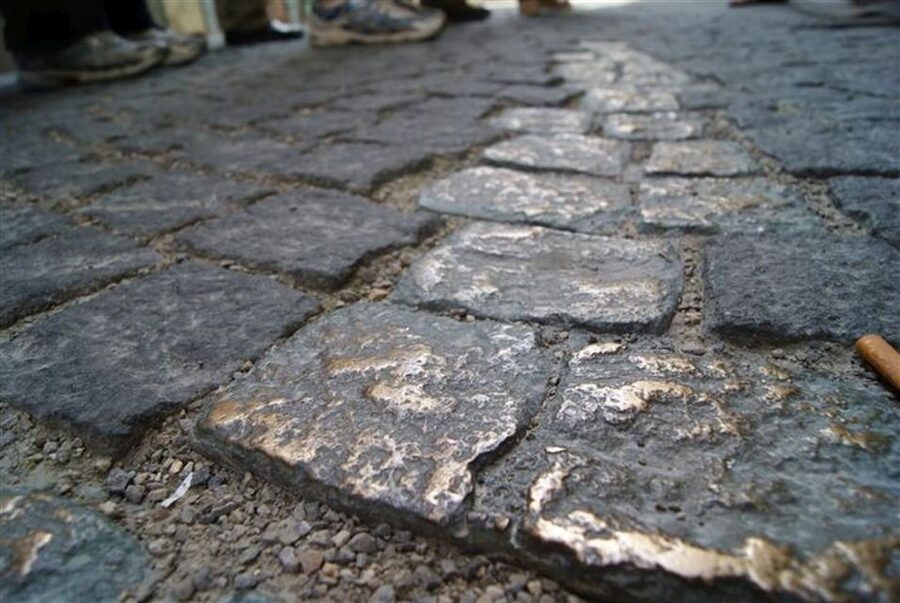
Reviewed · THIRD REICH & WWII TOURS
Munich: Birthplace of the Third Reich Guided Walking Tour
Munich’s old streets carry a difficult story. This 2.5-hour walk connects beer halls, government buildings, Nazi Party sites, wartime scars, and memorials to show how Hitler’s movement gained ground in this Bavarian city. I like the way the tour links grand political events to ordinary streets, and I especially value its attention to victims and opponents of Nazism. The main drawback is simple: you are outside for the full tour, so cold, rain, or summer heat can affect the experience.
I also like the English-speaking guides’ clear, personal approach. Guides including Jake, Sam, Steve, Nick, Iain, Aileen, Josh, and Dan have been praised for making heavy material understandable without turning it into a dry lecture. You should expect a serious history lesson, but one softened by warmth, questions, occasional humor, and plenty of human detail.
In This Review
- Key points at a glance
- Why Munich is the right place for this subject
- Meeting at the Radius Tours office
- Beer halls and the first Nazi gatherings
- From failed putsch to political power
- The former Nazi headquarters and wartime scars
- Kristallnacht and the Night of Broken Glass
- Memorials to victims and people who resisted
- The guides make or break the experience
- Timing, weather, and walking comfort
- Is $29 a fair price?
- Who should book this Munich history walk?
- Final verdict: book it for context, not entertainment
- FAQ
- How long does the tour last?
- What language is the tour in?
- Where does the tour meet?
- Is hotel pickup included?
- Is transportation included?
- What places does the tour cover?
- Can I cancel for a full refund?
- Can I reserve the tour without paying immediately?
Key points at a glance
- Hitler’s first political stages: Visit Munich beer halls linked to the early Nazi movement, including places where Hitler delivered major speeches.
- Kristallnacht explained on location: Stop at the building where Goebbels helped plan the Night of Broken Glass, then consider what that event meant for Jewish communities.
- Nazi power made visible: See the former official Nazi headquarters and surviving buildings connected with the regime.
- Victims and resistance remembered: Memorials along the route show how Munich honors those murdered by Nazism and those who opposed it.
- A guide-led history lesson: The strongest part of the tour is the storytelling, with guides using photos, questions, and local context to explain what you are seeing.
- Good value at $29: For two and a half hours of focused instruction and city walking, the price is fair, especially for history-minded visitors.
Why Munich is the right place for this subject
Munich is often introduced through palaces, churches, food, beer, and handsome squares. Those are all real parts of the city, but Munich also played a central role in the early growth of the Nazi Party. This tour helps you see why the city mattered before the Second World War began.
The story does not start with Hitler ruling Germany. It starts with political frustration, postwar anger, street violence, propaganda, and small gatherings in beer halls. Munich became a place where radical ideas could gather an audience, where uniforms and speeches helped create a sense of belonging, and where political violence was used to intimidate opponents.
That setting is valuable because it shows you that dictatorships do not appear fully formed. The tour follows the gradual process: failed political action, public speeches, organization, intimidation, antisemitism, and the use of state power.
I find this approach more useful than simply touring a list of Nazi buildings. You learn how places functioned at the time, who used them, and how a movement that once seemed marginal became powerful.
More Third Reich & WWII Tours in Munich
- Munich: Third Reich & WWII Walking Tour
★ 4.6 · 6,181 reviews - Third Reich Walking Tour Munich
★ 4.5 · 4,291 reviews - Munich World War II Sites Including Dachau Concentration Camp
★ 4.5 · 570 reviews
Meeting at the Radius Tours office
The tour begins at the Radius Tours office. The exact starting option can vary, so check the time and meeting details when booking. Hotel pickup is not included, and you should plan to reach the office yourself.
Transportation to Munich’s historic center is included. That is a helpful detail because it gets the group into the main walking area before the historical route begins. The listed drop-off points include postal code 80331 and the Radius Tours office, giving you a practical end point in or near central Munich.
Wear comfortable shoes. You will be walking for 2.5 hours, with stops for explanations and questions. The route is not a museum visit with indoor seating, so bring weather protection and water. One summer participant wished for a drink stop on a warm day, while others completed the route in freezing weather and heavy rain. The guide can make the day more enjoyable, but no guide can control Munich’s skies.
Beer halls and the first Nazi gatherings
The early part of the walk focuses on Munich’s beer halls, where Hitler and his supporters found an audience. These places matter because they were not just restaurants or drinking spots. At the time, beer halls could serve as public meeting rooms, political stages, and places where speakers reached large local crowds.
You will hear about the small gatherings that helped form the Nazi Party and about the speeches that brought Hitler wider attention. The point is not to admire the performance. It is to understand how public speaking, emotional slogans, group identity, and political anger worked together.
A good guide makes you look at the surroundings differently. A familiar old building can become a place where people were persuaded, threatened, or recruited. The physical setting helps explain the movement’s growth in a way that dates and names alone cannot.
This section is especially useful if your knowledge begins with the Second World War rather than the years before it. The tour spends time on the period when Hitler was still trying to gain influence, including his failed putsch. That failure is important because it shows that the Nazi rise was not automatic. The movement had setbacks, but it learned how to use publicity, organization, and legal politics more effectively.
You may also hear how Munich’s streets became places of confrontation between Hitler’s Brownshirts and political opponents. That turns political history into something physical. Power was fought for in public, in neighborhoods and meeting places, not only in distant government offices.
From failed putsch to political power
The walk explains how the Nazi Party moved from fringe politics toward national influence. This is one of the tour’s strongest ideas: the group did not win power through one single speech or event.
Your guide may connect economic hardship, resentment after the First World War, fear of communism, antisemitic propaganda, and dissatisfaction with democratic politics. These forces did not affect every person in the same way, but they created conditions that extremists could exploit.
The tour also makes clear that ideology mattered. Antisemitism was not a side issue added later. It was central to Nazi politics from the beginning. As you move through Munich, the guide explains how prejudice was turned into political language, public policy, and eventually organized persecution and mass murder.
This is where the experience benefits from a live guide. You can ask how local events fit into the wider German story, or pause over a detail that is easy to miss in a textbook. Several guides have been praised for handling questions openly, including questions from people who already know a great deal about the period.
If you are a history student or an avid reader, this tour should still offer value. One participant with a university background in history described it as one of the most interesting history lessons they had experienced. That says something about the level of detail available, though your experience will depend partly on the guide and the group’s questions.
More Walking Tours in Munich
- Munich: Old Town & Viktualienmarkt City Walk in German
★ 4.7 · 2,304 reviews - Munich: Night Watchman Walking Tour
★ 4.7 · 2,092 reviews - Munich Ghosts and Spirits Evening Walking Tour
★ 5.0 · 1,900 reviews - Munich Old Town Walking Tour
★ 4.5 · 1,287 reviews
The former Nazi headquarters and wartime scars
A later stop brings you to the official Nazi headquarters. This is one of the more striking parts of the route because the buildings provide a direct link between the movement’s early meetings and its later machinery of power.
The guide explains what happened in these offices and how Munich became tied to the Nazi bureaucracy. You also see other buildings that survived the war, alongside areas affected by Allied bombing. The contrast is important. Some Nazi structures remained standing, while much of central Munich was damaged or destroyed.
Do not expect every building to carry an obvious plaque or dramatic visual sign. The value comes from the explanation. Without a guide, you could walk past these places and see only old stone, modern repairs, or ordinary city life. With context, the buildings become evidence of how the regime operated and how the city changed through war and reconstruction.
The route’s focus on surviving structures also avoids a common problem with historical sightseeing: treating the past as something safely sealed away. Munich’s streets show both the physical remains of the period and the city’s later efforts to explain them.
Kristallnacht and the Night of Broken Glass
The stop connected with Kristallnacht is among the heaviest moments of the tour. You stand near the building where Goebbels plotted the Night of Broken Glass, the November 1938 attacks on Jewish people, homes, businesses, and places of worship.
The phrase is often presented as a shocking historical milestone, but the tour gives it a more direct meaning. You learn how coordinated violence, official encouragement, and public persecution pushed antisemitism into a new and dangerous stage. It was a clear warning of what was ahead on the road to the Holocaust.
This part requires a serious tone, and the best guides appear to understand that. A guide may use gentle humor elsewhere to keep a long walk manageable, but the subject is treated with care. One guide was praised for balancing empathy and humor, which is exactly the right balance for a difficult city tour.
You should not book this experience expecting light sightseeing. The tour deals with murder, persecution, political violence, and the experiences of people who had to live under the Nazi regime. That can be emotionally difficult, but it is also why the walk feels worthwhile.
Memorials to victims and people who resisted
The final part of the route turns toward remembrance. You see monuments honoring victims of Nazism and people who opposed the regime. These memorials help you consider not only what the Nazis did, but also how Munich and Germany have tried to confront that past.
That distinction matters. A tour about Hitler can accidentally give too much attention to Hitler himself. This walk attempts to widen the frame by showing the human cost of Nazi rule and the risks taken by opponents.
The memorials also bring the subject into the present. You are not only hearing about events from the 1920s and 1930s. You are seeing how a modern city marks persecution, resistance, guilt, grief, and responsibility.
One particularly memorable closing idea, described by a participant, connects the beginning of Kristallnacht with the need for continued vigilance today. That kind of ending gives the tour purpose beyond sightseeing. It asks you to think about how prejudice becomes normal, how public language can prepare people for violence, and why historical memory still matters.
The guides make or break the experience
The tour’s strongest feature is its guide team. Names praised in detailed feedback include Jake, Sam, Steve, Nick, Iain, Aileen, Josh, Dan, Sara, Mark, and Werner. That list suggests a broad team rather than one fixed presenter, so your guide will depend on the date and schedule.
The most admired qualities are clear explanations, strong command of German history, friendliness, and a willingness to answer questions. Steve has used a binder of photographs to show how places looked during the Nazi period, then compare those images with the streets in front of you. That is a useful tool because it helps you picture events that are no longer visible.
Jake has been praised for energetic storytelling and humor. Iain has been described as especially good at handling difficult material while talking with people who already have substantial background knowledge. Aileen has received praise for clear structure, well-managed breaks, and making sure the entire group stayed together.
The range of guide styles is worth considering. Some guides may be lively and conversational. Others may feel more like a formal history teacher. The shared strength appears to be subject knowledge and the ability to make the material accessible in English.
Timing, weather, and walking comfort
The tour lasts 2.5 hours, which is long enough to build a proper story but short enough to fit into a day of Munich sightseeing. An earlier morning option can be useful if you want to avoid the heaviest crowds in the main square later in the day.
You should allow extra time before the start so you are not rushing to the Radius Tours office. The route includes stops, but it remains a walking tour, not a coach ride. Expect to be on your feet and outdoors for most of the experience.
Weather deserves real attention. The walk has taken place in freezing conditions, torrential rain, and hot summer weather. Participants still found the tour worthwhile in difficult conditions, but one warm-weather comment noted that a water stop would have helped.
For winter, wear gloves, a warm coat, and shoes that cope with cold pavement. For summer, carry water and use sun protection. Rain can make the 2.5 hours less comfortable, so a waterproof jacket is more useful than a small umbrella when you need to keep pace with a group.
Is $29 a fair price?
At $29 per person, I consider this a good value for a focused 2.5-hour tour. You are paying for a live English-speaking guide, transportation to the historic center, and a carefully connected history route. There are no separate museum admission costs listed, so the price mainly buys interpretation and access to places you could otherwise pass without understanding.
That last point is important. Munich’s streets are free to walk, but the meaning of those streets is not always obvious. A guide can connect a beer hall to the early Nazi Party, a headquarters to the later Nazi state, and a memorial to the people harmed by that process.
The tour is especially good value if you have limited time in Munich and want one serious historical activity. It is less suitable if you want indoor exhibits, extensive time inside museums, or a relaxed sightseeing stroll with little political content.
Free cancellation up to 24 hours before the tour and the option to reserve now and pay later add flexibility. Check the selected start time and meeting point carefully, since the starting location can vary by option.
Who should book this Munich history walk?
I recommend it for first-time visitors who want to understand Munich beyond its attractive center. It also suits students, history enthusiasts, and anyone interested in how extremist politics gained public support.
You do not need specialist knowledge. The guides explain the subject in a way that works for newcomers, while question time can give more experienced readers something extra. English is the only listed tour language, so you should be comfortable following a detailed spoken presentation in English.
I would not choose this walk if your main goal is cheerful sightseeing, shopping, or a short overview of Munich’s most famous buildings. The material is painful, and the tour asks you to pay attention rather than simply take photographs.
Final verdict: book it for context, not entertainment
I would book this tour if I wanted to understand why Munich became so important to the Nazi movement and how the city remembers that past today. The route gives you places, dates, political context, and memorials in one compact experience.
The biggest strength is the human delivery. Guides such as Jake, Sam, Steve, Nick, Iain, Aileen, and Josh have shown that difficult history can be explained with care, clarity, and enough warmth to keep a group engaged. The main caution is the outdoor format and the emotional weight of the subject.
At $29, the tour earns its price through interpretation. Bring good shoes, dress for the weather, and arrive ready for a serious discussion. If you want Munich’s past to make sense rather than simply pass by your window, this is a worthwhile choice.
FAQ
How long does the tour last?
The guided walking tour lasts 2.5 hours.
What language is the tour in?
The tour is conducted in English with a live English-speaking guide.
Where does the tour meet?
You meet at the Radius Tours office. The precise starting location depends on the option selected.
Is hotel pickup included?
No. Hotel pickup is not included.
Is transportation included?
Transportation to Munich’s historic center is included. The listed drop-off points include 80331 and the Radius Tours office.
What places does the tour cover?
The route includes historic beer halls linked to Hitler’s early speeches and party meetings, the former official Nazi headquarters, buildings affected by the Second World War, and memorials to victims and opponents of Nazism.
Can I cancel for a full refund?
Yes. You can cancel up to 24 hours in advance for a full refund.
Can I reserve the tour without paying immediately?
Yes. The reserve-now, pay-later option lets you hold a place without paying at the time of booking.
Just added around Munich
- Munich: Private or Group Third Reich and WWII Walking Tour★ 4.9 · 13 reviews
- From Munich: Neuschwanstein Castle and Linderhof Private Tour★ 5.0 · 13 reviews
- Private Transfer from Munich to Salzburg with 2 hours for sightseeing★ 4.5 · 13 reviews
- Munich: Historical Walking Tour on the Rise of Hitler★ 5.0 · 13 reviews
- Private Scenic Transfer from Munich to Prague with 4h of Sightseeing★ 5.0 · 13 reviews
- From Munich: VIP day trip to Salzburg★ 5.0 · 14 reviews
- National Socialism WWII with licensed guide – private tour★ 5.0 · 14 reviews
- Private Tour to Neuschwanstein & Linderhof, Skip The Line & Lunch★ 5.0 · 14 reviews
Third Reich & WWII Tours, compared.
Berlin’s Best: 2 Hour Walking Tour Third Reich and the Cold War
Read our review →
Third Reich Berlin: Hitler and WWII Walking Tour
Read our review →
Walking Tour of Former Nazi Party Rally Grounds
Read our review →
Browse the lists this tour appears in