
Reviewed · WALKING TOURS
Munich: Historical Walking Tour on the Rise of Hitler
Munich’s prettiest streets carry a hard story. This 2.5-hour walk with local guide Alex explains how Munich became the birthplace and political center of National Socialism, using buildings, squares, speeches, parades, and wartime destruction to connect the past with the city you see today. I like the clear chronological structure, and I like that Alex treats the subject seriously without making the tour stiff or joyless.
The price is $30 per person, which is fair for a personal, fully guided history walk led by someone born and raised in Munich. The main consideration is language: the live tour is listed in German, so you will need strong German skills to get the full value. There is also no hotel pickup, and the tour goes ahead in rain or shine.
In This Review
- Key things to know before you book
- Why Munich matters to the story of National Socialism
- Meeting Alex at the Marian Column
- Following Hitler’s early rise through Munich
- The squares where speeches and parades shaped public opinion
- Seeing the buildings built for Nazi propaganda
- The bombing war and Munich’s change
- Alex’s style: serious, clear, and not stiff
- Is $30 a fair price for this Munich history tour?
- Who will get the most from this walk?
- What to bring and how to prepare
- Should you book Alex’s Munich history walk?
- FAQ
- Where does the tour begin?
- How long does the tour last?
- What language is the tour in?
- Is the tour wheelchair accessible?
- Does the tour include hotel pickup?
- What should I bring?
- What does the tour focus on?
- Will the tour visit Nazi-era buildings?
- Can I cancel for a refund?
- Do I have to pay when I book?
Key things to know before you book
- Alex brings a local connection: He grew up in Munich and has studied the city’s Nazi period since his youth, not just as a guidebook subject.
- The route follows history in order: You move from the early rise of National Socialism through propaganda, parades, dictatorship, and the bombing war.
- Munich itself becomes the classroom: Important squares and surviving Nazi-era buildings help explain how the movement gained power.
- The tone is serious but human: Alex aims to make the tour engaging and approachable without treating the subject lightly.
- Expect about three hours in practice: The stated duration is 2.5 hours, but one particularly detailed outing ran close to three hours.
- Start at Marienplatz: Meet at the Marian Column, the large column with the small golden statue in the center of the square.
Why Munich matters to the story of National Socialism
Berlin is often the first city people connect with the Nazi dictatorship. Munich, however, is where the movement took root. This tour begins with that uncomfortable fact and asks how an open, cultured city became the place where Adolf Hitler built his political career.
The subject is not presented as a simple story about one man. Alex’s stated aim is to explain the conditions that allowed National Socialism to grow. That means looking at Munich as a political setting, a place of public gatherings, a center of propaganda, and a city where early Nazi activity gained an audience.
That approach matters. A tour that only points to Hitler’s speeches can turn history into a parade of famous names. A better tour shows how public spaces were used, how political theater worked, and how ordinary city streets became part of a much larger campaign.
You will also see how the city’s role changed over time. Munich first helped the Nazi movement grow, then became a showcase for its power, and later endured the bombing war that damaged much of Germany. The surviving buildings are not simply old architecture. They are physical reminders of how dictatorship tried to shape public life.
More Historical Tours in Munich
- Munich: Guided Tour of the historic Town Hall on Marienplatz
★ 4.8 · 63 reviews - Munich Craft Beer & Cultural Tour With Snack
★ 5.0 · 46 reviews - Munich History Tour: Private & Personalized with a Local Guide
★ 4.5 · 33 reviews
Meeting Alex at the Marian Column
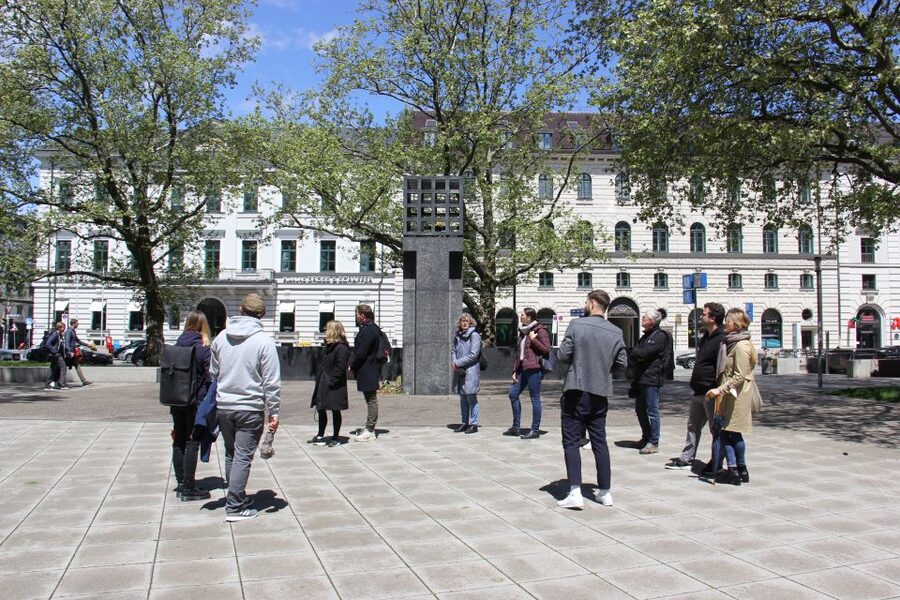
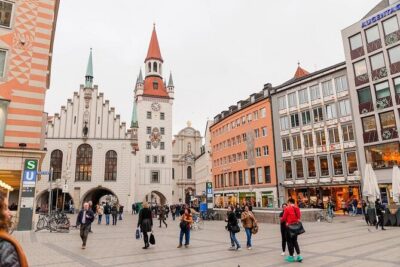
The walk begins at Marienplatz, Munich’s central square, at the Marian Column. This is an easy meeting point because the column is large and easy to identify: look for the tall column with the small golden statue at its center.
Starting here gives you an immediate contrast. Marienplatz is one of Munich’s best-known public spaces, usually associated with sightseeing, shopping, and the city’s grand historic center. The tour uses that familiar setting to shift your attention toward the political events that took place in and around Munich.
You should arrive ready to walk and wear comfortable shoes. The route is outdoors, and the tour runs rain or shine, so a waterproof layer or umbrella is sensible if the forecast looks uncertain. No hotel pickup is included, so you need to make your own way to Marienplatz.
The tour is listed as wheelchair accessible. Because the information supplied does not describe every surface or indoor access point, it is still sensible to confirm any specific mobility needs when booking.
Following Hitler’s early rise through Munich
The tour’s strongest feature is its chronological structure. Instead of jumping between unrelated sites, Alex guides you through the sequence of events that turned an unknown Austrian soldier into the dictator of the Third Reich.
That order helps if you know only the broad outline of the period. You can follow the development step by step: Hitler’s early appearance in Munich, the growth of the Nazi movement, the use of public speaking and mass gatherings, the creation of propaganda architecture, and the eventual transformation of the city under National Socialism.
Alex’s background is useful here. He is a professional guide from Munich who has been interested in this subject since he was young. His stated motivation is not hero worship or shock value. He wanted to understand how such an inhuman dictatorship could arise in Germany and destroy much of Europe within a few years.
That gives the walk a more thoughtful purpose. You are not simply collecting photographs of dark historical sites. You are being asked to consider how political movements use place, language, crowds, symbols, and public memory.
The squares where speeches and parades shaped public opinion
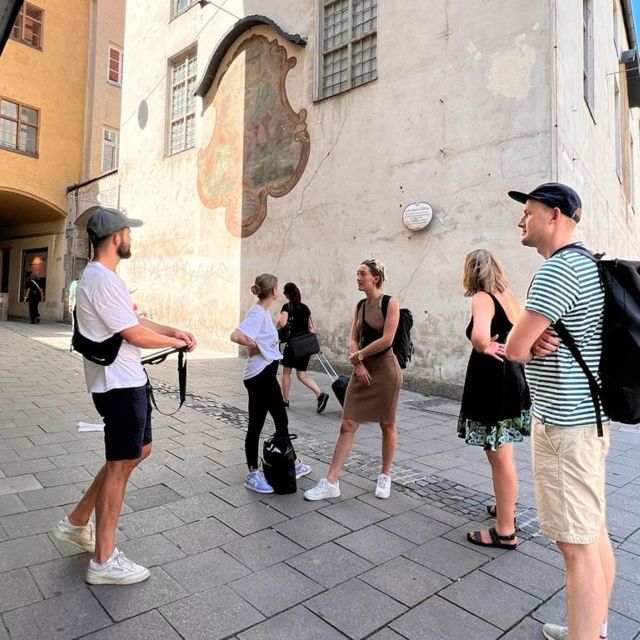
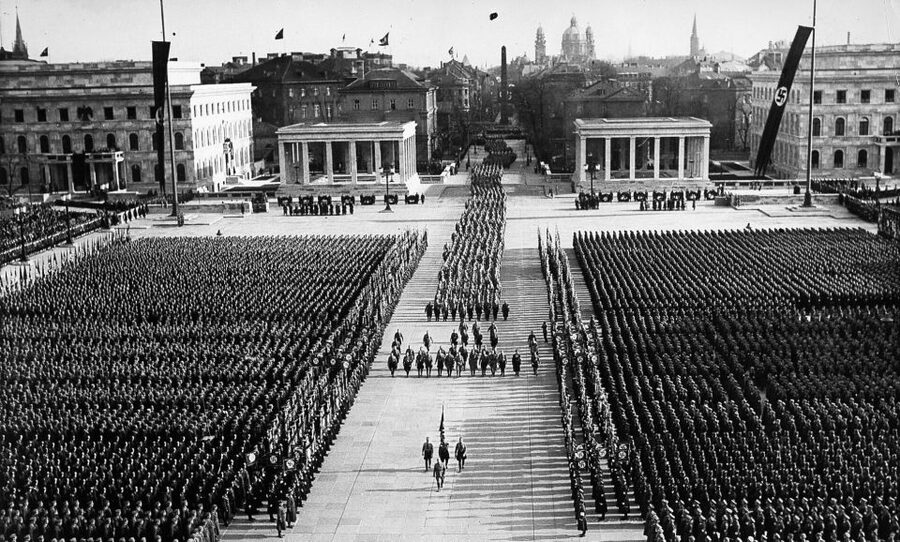
Public squares are central to this experience. The Nazis did not treat city spaces as neutral backdrops. They used them for speeches, parades, ceremonies, and displays of authority.
At the places where Hitler spoke or the Nazi movement staged public events, Alex explains what happened and why those settings mattered. A speech in a square can reach far more people than a meeting in a private room. A parade can make a political organization appear disciplined, powerful, and unavoidable.
This is where the tour connects architecture with psychology. The buildings and open spaces were designed or used to impress. They helped create a feeling of unity and power, even as the dictatorship stripped away freedom and persecuted its enemies.
I like this focus because it gives you something concrete to look at. Political history can feel remote when it is presented only through dates. Standing in the actual places where speeches and parades occurred makes the process easier to grasp.
Do not expect every stop to feel comfortable. Some sites were places of political worship, and the tour deals directly with the way people were encouraged to treat Hitler and the Nazi movement with near-religious devotion. That is part of the historical point, but it can make the walk emotionally heavy.
More Walking Tours in Munich
- Munich: Third Reich & WWII Walking Tour
★ 4.6 · 6,181 reviews - Third Reich Walking Tour Munich
★ 4.5 · 4,291 reviews - Munich: Old Town & Viktualienmarkt City Walk in German
★ 4.7 · 2,304 reviews - Munich: Night Watchman Walking Tour
★ 4.7 · 2,092 reviews
Seeing the buildings built for Nazi propaganda
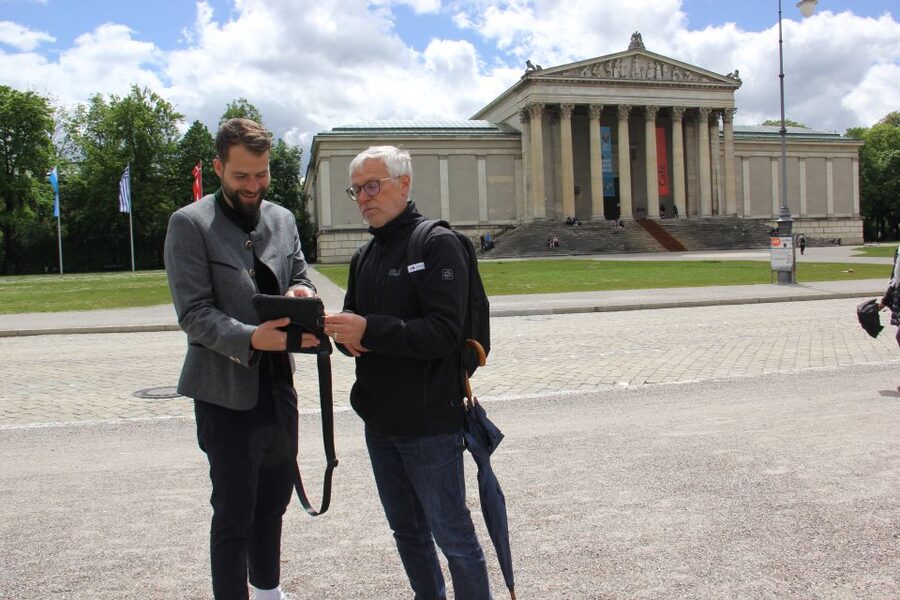
Munich experienced a major building program during the Nazi period. Many propaganda buildings were constructed, and a surprising number survived the war with little damage. They still affect the way parts of the city look.
The tour visits important structures built by the National Socialists, along with places that were misused as sites of political devotion. Alex explains how the buildings served the regime, rather than treating them as ordinary architectural sights.
This distinction is important. Large, formal buildings can appear impressive if you look only at their shape and materials. Their original purpose tells another story. They were part of a system that used architecture to communicate control, permanence, and national destiny.
You may find the surviving structures especially striking because they remain part of daily Munich. People pass them on ordinary errands. Cars move around them. Modern life continues beside places that were designed to project dictatorship.
Alex also has a reputation for trying to give participants access to areas that are not always open to the public. The exact access can vary, so you should not book expecting a guaranteed private entrance, but this personal effort can add something that a self-guided walk cannot provide.
The bombing war and Munich’s change
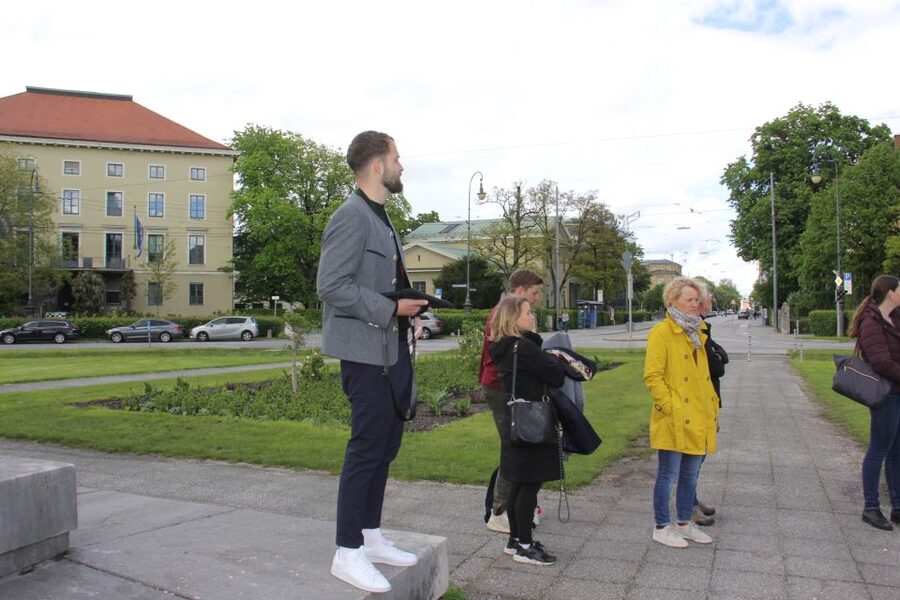
The final part of the story reaches the bombing war. Munich was deeply tied to the Nazi movement, but it also suffered the consequences of the conflict and the destruction brought by war.
At relevant locations, Alex explains how the city endured bombing and how the wartime period changed its buildings and public spaces. This helps prevent a narrow focus on political history alone. The tour also becomes a story about civilians, damaged streets, survival, and the physical cost of dictatorship.
The contrast between surviving Nazi buildings and areas affected by bombing gives the walk a strong visual dimension. Some structures remain as silent witnesses, while other parts of Munich had to be rebuilt or altered after the war.
A walking tour cannot explain every part of Munich’s wartime experience in 2.5 hours. It does, however, show how the Nazi period left marks in the city long after the regime fell. That is valuable if you plan to explore Munich on your own afterward.
Alex’s style: serious, clear, and not stiff
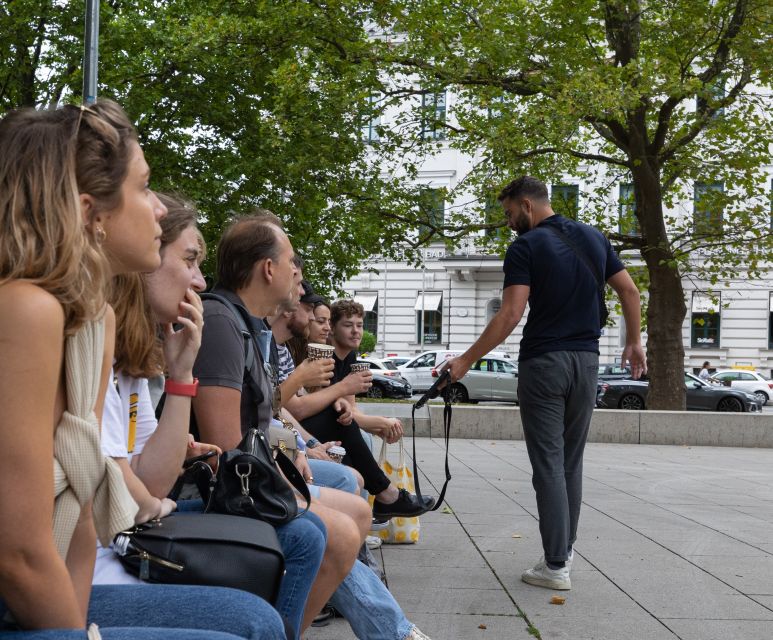
The subject is grim, but Alex does not present it in a cold or scolding way. His style is described as engaged, competent, friendly, and often lightly humorous. That balance is one of the main reasons this walk suits a broad audience.
Humor needs care in a tour about National Socialism. Here, the intention is to make the experience approachable, not to make light of the crimes. Alex’s approach appears to be conversational enough to hold your attention while keeping the historical facts in focus.
He also welcomes questions and adjusts to the needs of the group. Short pauses are built into the walk, which matters when the tour runs close to three hours or when you want a moment to absorb a difficult subject.
You do not need to be a history specialist. The chronological format gives newcomers a clear path through the material, while the surviving buildings and squares offer details that can interest people who already know Munich well.
This is particularly useful for locals. The tour is designed to show Munich from several sides, and the feedback from Munich residents has been especially warm. Even if you have lived in the city for years, you may see familiar streets differently after learning what happened there.
Is $30 a fair price for this Munich history tour?
At $30 per person, this is a good value if German is comfortable for you and you want more than a general city walk.
You are paying for 2.5 hours with a dedicated guide, a focused subject, and a route built around places connected to the rise of National Socialism. Alex also offers local recommendations for exploring Munich after the tour, which adds practical value beyond the historical material.
The price is easier to justify for first-time visitors who want context before visiting other memorials or museums. It can also suit repeat visitors who have already seen the postcard side of Munich and want to understand the city’s political past.
The value is less clear if you prefer a broad overview of Munich, dislike serious historical topics, or do not speak German well. This is not a relaxed sightseeing loop with occasional historical comments. The Nazi period is the central subject from beginning to end.
The flexible booking terms also help with planning. You can reserve now and pay later, and cancellation is available up to 24 hours before the tour for a full refund. Those details are useful when your Munich schedule depends on weather or changing arrival plans.
Who will get the most from this walk?
I would recommend this tour to:
- People interested in German history and politics
- Visitors who want to understand Munich’s role in the Nazi movement
- Repeat visitors looking beyond the standard city sights
- Munich residents curious about familiar places
- Anyone who prefers a guide-led explanation to reading plaques alone
- Families with older children who can handle a serious subject
The tour may not suit young children, since the material concerns dictatorship, persecution, war, and public political worship. The supplied information does not set a minimum age, so families should use their own judgment.
German ability is the biggest practical factor. The live guide language is German, and there is no indication of an English-language version. If you understand German well, Alex’s warm presentation and willingness to answer questions should make the walk accessible. If you do not, this is probably not the right booking.
What to bring and how to prepare
Wear comfortable shoes. You will be on foot for 2.5 hours, and the tour may run longer when the discussion is especially detailed.
Bring weather protection because the walk goes ahead in rain or sunshine. A small bottle of water may also be useful, though drinks are not listed as included.
Before you arrive, it helps to think about what you want to learn. You might ask Alex how Munich’s role differed from Berlin’s, how propaganda buildings were used, or how the city remembers this period today. The tour welcomes questions, and a prepared question can turn a good walk into a more personal one.
Keep the rest of your day flexible if possible. The stated duration is 2.5 hours, but one detailed tour lasted almost three hours and did not feel too long to the participants. That suggests Alex may allow the discussion to breathe rather than cutting off every conversation at the advertised minute.
Should you book Alex’s Munich history walk?
Book it if you want a serious, place-based explanation of how Munich helped the Nazi movement rise. The combination of a local guide, chronological storytelling, surviving propaganda buildings, political squares, and wartime sites gives the tour a clear purpose.
I especially like it for visitors who want to understand what they are seeing instead of simply passing old buildings. Alex’s friendly style should keep the subject accessible, while his personal connection to Munich adds a local point of view.
Skip it if you want an English tour, a general introduction to Munich, or a light afternoon of sightseeing. For German-speaking visitors with an interest in history and politics, however, $30 is a sensible price for a thoughtful walk that can change how you read the city.
FAQ
Where does the tour begin?
Meet Alex at the Marian Column in Marienplatz. It is the large column with the small golden statue in the middle of the square.
How long does the tour last?
The scheduled duration is 2.5 hours. A detailed outing has lasted almost three hours, so allow a little extra time if you want to stay for questions and discussion.
What language is the tour in?
The live tour guide language is German.
Is the tour wheelchair accessible?
Yes, the activity is listed as wheelchair accessible. You should confirm any specific access requirements when booking because detailed information about every point on the route is not provided.
Does the tour include hotel pickup?
No. Hotel pickup is not included, so you need to reach the meeting point at Marienplatz yourself.
What should I bring?
Bring comfortable shoes. The tour takes place outdoors and goes ahead rain or shine, so weather protection is also sensible.
What does the tour focus on?
It focuses on Munich’s role in the rise of Hitler and National Socialism, including important buildings, squares, speeches, parades, propaganda sites, and the bombing war.
Will the tour visit Nazi-era buildings?
Yes. The route includes important buildings built by the National Socialists, as well as places that were used for political worship or Nazi ceremonies.
Can I cancel for a refund?
You can cancel up to 24 hours before the tour for a full refund.
Do I have to pay when I book?
No. The reserve now and pay later option lets you hold a place without paying immediately.
Just added around Munich
- Munich: Private or Group Third Reich and WWII Walking Tour★ 4.9 · 13 reviews
- From Munich: Neuschwanstein Castle and Linderhof Private Tour★ 5.0 · 13 reviews
- Private Transfer from Munich to Salzburg with 2 hours for sightseeing★ 4.5 · 13 reviews
- Private Scenic Transfer from Munich to Prague with 4h of Sightseeing★ 5.0 · 13 reviews
- From Munich: VIP day trip to Salzburg★ 5.0 · 14 reviews
- National Socialism WWII with licensed guide – private tour★ 5.0 · 14 reviews
- Munich: Walking Tour Old Town 3D VR Tour in GERMAN★ 4.3 · 14 reviews
- Private Tour to Neuschwanstein & Linderhof, Skip The Line & Lunch★ 5.0 · 14 reviews
Walking Tours, compared.
Berlin’s Best: 2 Hour Walking Tour Third Reich and the Cold War
Read our review →
Third Reich Berlin: Hitler and WWII Walking Tour
Read our review →Browse the lists this tour appears in