
Reviewed · GHOST & NIGHT WATCHMAN TOURS
Munich: Night Watchman Walking Tour
Munich gets more interesting after dark. This 1.5-hour walk through the old town turns familiar squares, churches, alleys, and city gates into a stage for medieval stories and dry comic scolding. I like the costumed guide’s character, and I like the way the route reaches small lanes that daytime sightseeing can easily miss. The main drawback is the high $530 group price, which makes the tour far better value for a larger private party than for a couple.
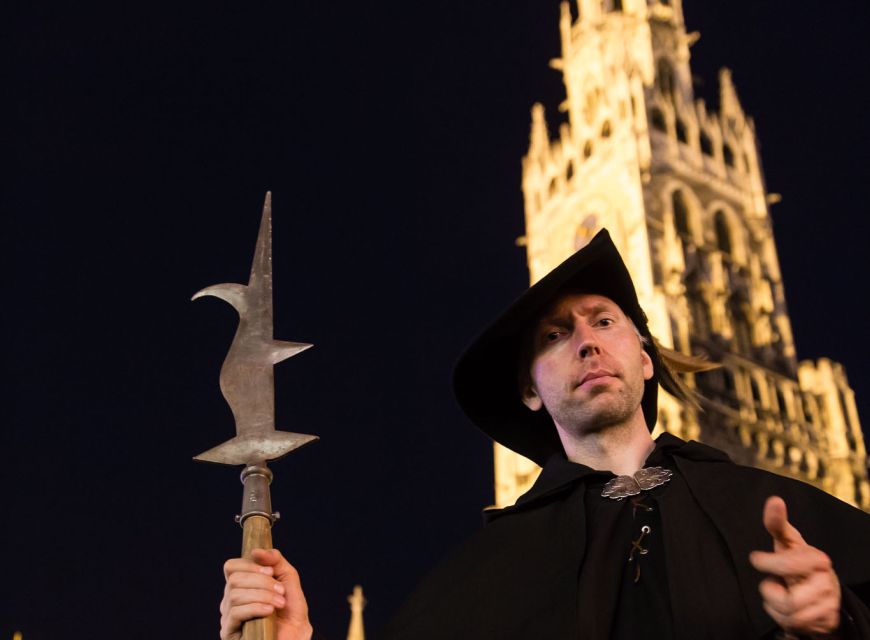
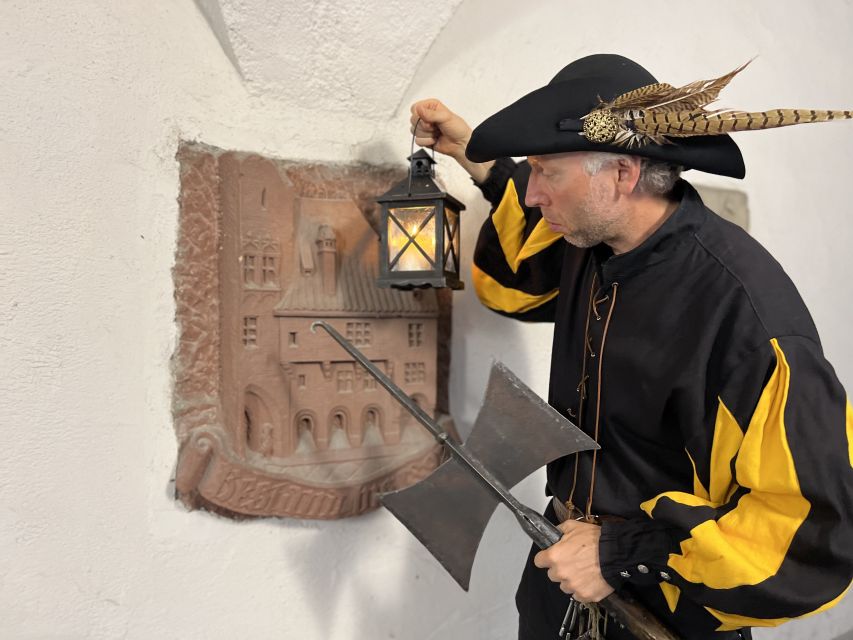
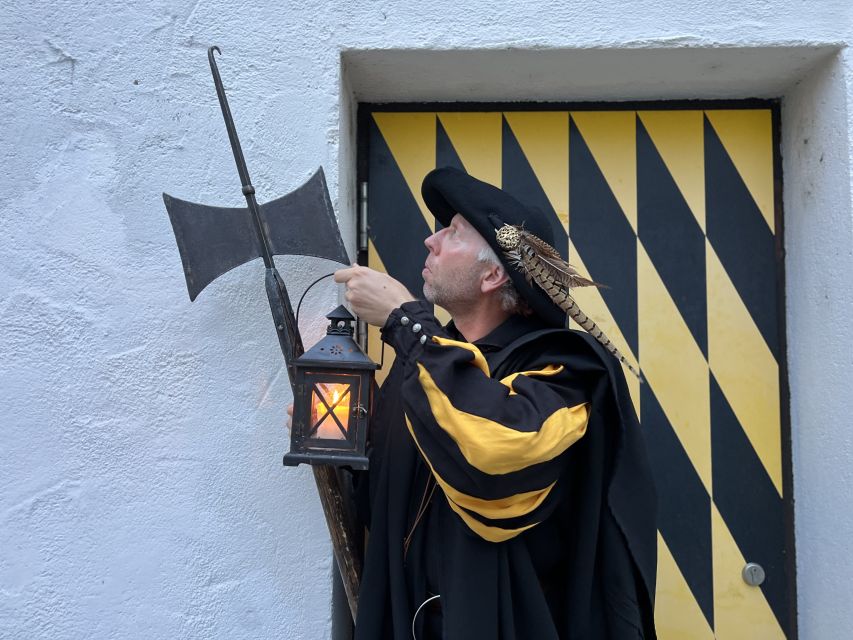
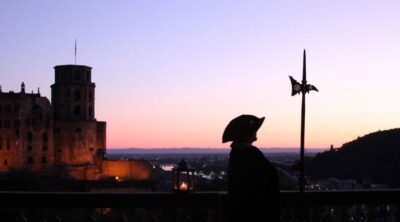
The tone is playful, spooky, and theatrical rather than academic. You will hear about funeral customs, torture chambers, patron saints, rulers, palace scandals, and beer, all while a lantern-carrying watchman shepherds you through central Munich. Guide Elsbeth earned especially warm praise for being authentic, funny, and informative, though the guide you meet can vary.
In This Review
- Key points to know before you book
- Why Munich works so well after dark
- Marktplatz and the night watchman’s rules
- St. Peter’s Church and the crooked towers
- The Altes Rathaus, Salzstraße, and Munich’s protective saints
- Alter Hof, Louis II, and the old prison quarter
- City walls, Gruftgasse, and the tale of Waller
- Schäfflergasse and the medieval drink you may not expect
- Frauenkirche and stories told from the gravestones
- Promenadeplatz, Salzstadel, and Munich’s palace gossip
- Salvatorkirche and the Theatine Church’s long-awaited heir
- What $530 means for value
- Timing, language, access, and who should book
- Should you book the Munich Night Watchman walk?
- FAQ
- How long does the Munich Night Watchman Walking Tour last?
- How much does the tour cost?
- Is the tour private?
- What languages are offered?
- Is the tour wheelchair accessible?
- Are food, drinks, or transport included?
- Can I cancel the tour for a refund?
Key points to know before you book
- The route covers Munich’s old town after dark: Expect Marktplatz, St. Peter’s Church, the Altes Rathaus, Alter Hof, Frauenkirche, Promenadeplatz, and the Theatine area.
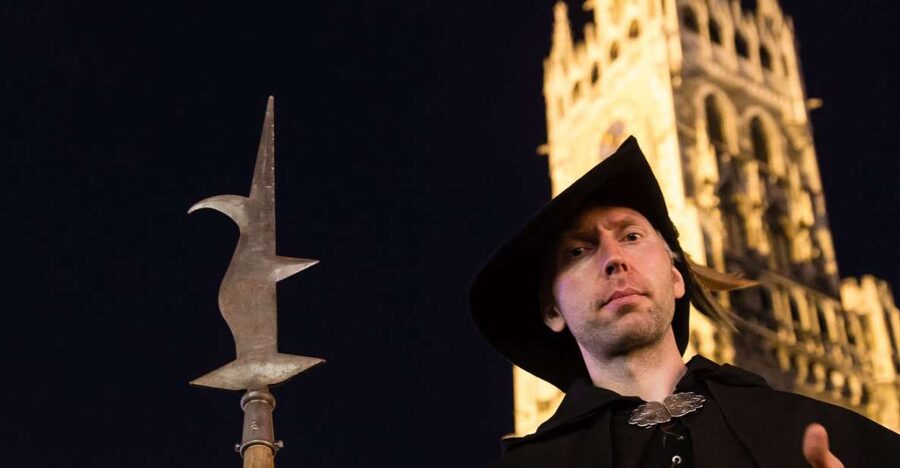
- The guide plays a real character: This is not simply a standard city walk with a costume added. The night watchman acts as an old civic guardian who distrusts modern habits and keeps order among his nighttime flock.
- The stories range from funny to grim: You will hear about beer taps, crooked church towers, graveyards, decomposing bodies, torture, prison, sudden death, and a fatal fall from the Frauenkirche.
- It suits private groups best: The price is $530 for up to 30 people, so the per-person cost drops sharply as your group grows.
- It is available in English or German: A live guide leads the walk, and the activity is wheelchair accessible.
- The timing shapes the experience: The dark streets and quiet lanes are part of the appeal, but late-night sightseeing is not ideal for every child or visitor who prefers a conventional history tour.
Why Munich works so well after dark
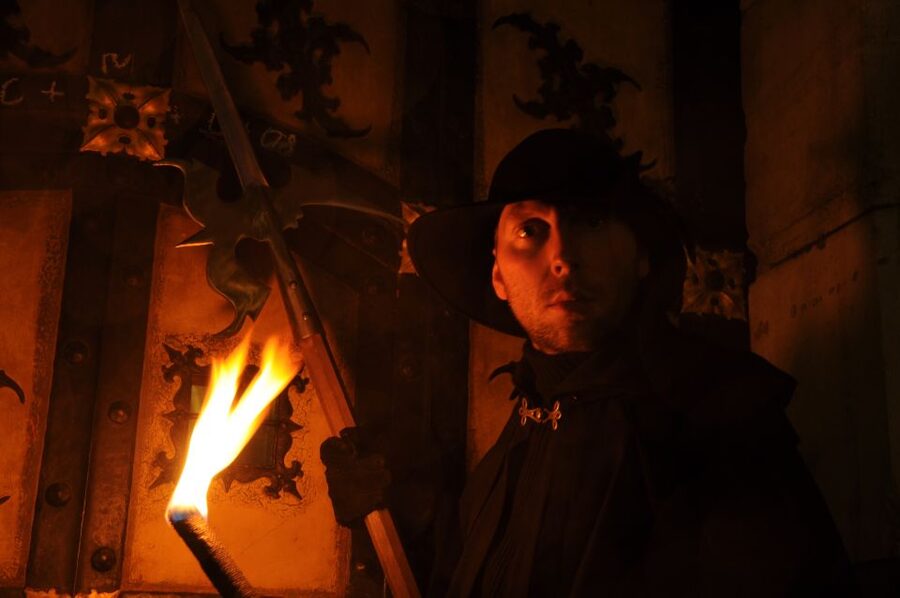
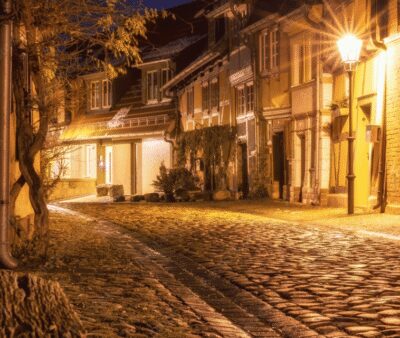
Munich’s old town is easy to explore in daylight. Marienplatz, the churches, old civic buildings, and palace façades are all popular stops. At night, though, the same places take on a different mood. The crowds thin, details disappear into shadow, and a lantern becomes a useful bit of theater.
That mood is the real reason to choose this walk. You are not just moving from one famous building to another. You are hearing how a night watchman might have understood the city: as a place of locked gates, dark alleys, religious duty, suspicious strangers, bad behavior, and sudden danger.
The guide’s role is deliberately old-fashioned. He or she may chastise you for not knowing Munich’s patron saints, complain about modern nightlife after 9 p.m., and treat law-abiding citizens as people who should already be in bed. The joke is part of the lesson. It gives the tour a clear voice and helps the historical material stick.
You should expect storytelling rather than a long list of dates. If you want a formal art-history lecture, this is probably not your best Munich activity. If you like local legends, odd details, and a little audience participation, the format should suit you well.
More Ghost & Night Watchman Tours in Munich
- Munich: Night Watchman Torch Tour in German
★ 4.8 · 1,280 reviews - Munich: Middle Ages Tour with Night Watchman
★ 4.9 · 652 reviews - München: Der Nachtwächter für Kinder – Führung auf Deutsch
★ 5.0 · 322 reviews
Marktplatz and the night watchman’s rules
The walk begins at Marktplatz, where the watchman gathers his flock before setting off. This is a fitting opening because the square connects Munich’s public life with the guide’s private nighttime duties. During the day, it is a civic center. In the watchman’s world, it is a place to monitor, warn, and keep people moving.
The character also supplies much of the comedy. He dislikes the modern age and has firm views about when respectable people should be asleep. He is not presented as a neutral narrator, and that is useful. The slightly grumpy persona makes the city feel lived in rather than preserved behind glass.
One recurring joke concerns Munich’s many beer taps. The answer is simple: they are for the beer. It is a small moment, but it shows the tone you can expect. The tour uses humor to keep the heavier stories from becoming too gloomy.
I would treat the opening as a warm-up. The most memorable parts come when the group leaves the broad square and enters the tighter streets around the churches and old civic buildings.
St. Peter’s Church and the crooked towers
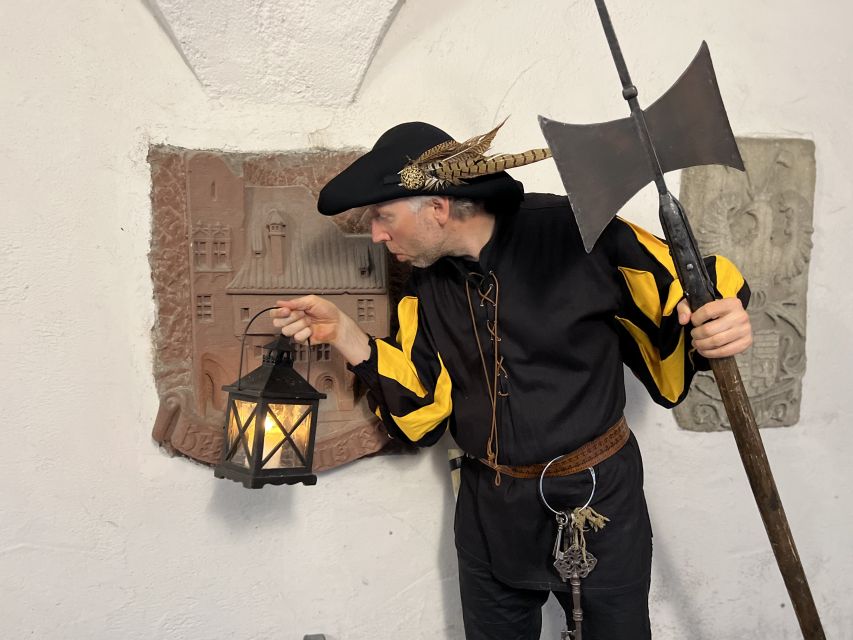
At St. Peter’s Church, look up toward the tops of the towers. The watchman explains why they stand askew, giving you one of those visual details that is easy to overlook when you pass through the center on your own.
The south side of the church brings a sharper change in mood. Here, the old churchyard becomes the setting for stories about gravestones, funeral customs, epitaphs, decomposing bodies, and missing church pews. These subjects are macabre, but they reveal how closely religious life, death, and public space were linked in older Munich.
This section will appeal to anyone who enjoys the stranger side of urban history. It is not sanitized. You are asked to think about how people marked death, remembered the dead, and used churches and churchyards as part of everyday life.
If you are traveling with young children, consider their comfort with spooky material before booking. The tour is not described as a horror production, but it does include dead bodies, sudden death, and grim funeral details.
The Altes Rathaus, Salzstraße, and Munich’s protective saints
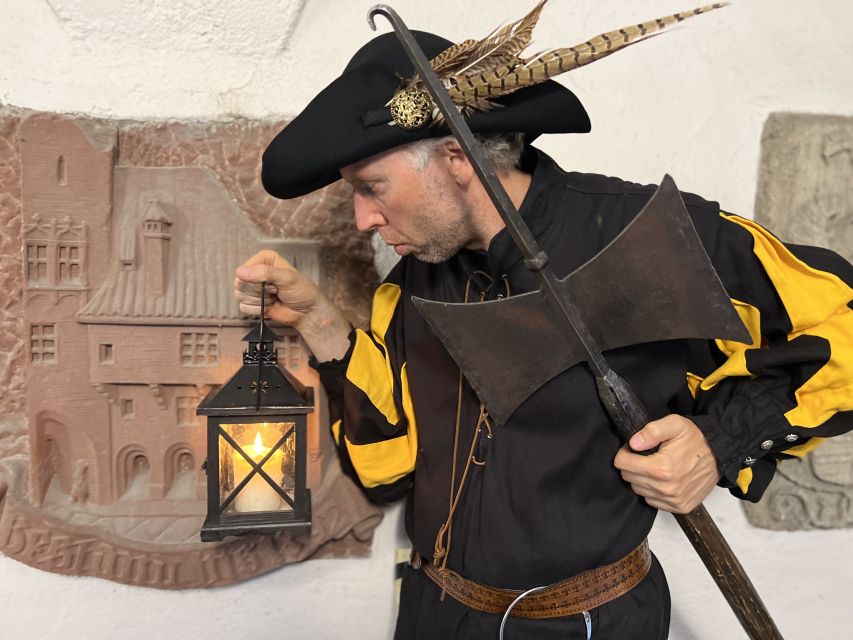
The route continues to the tower of the Altes Rathaus on the historic Salzstraße. The old city gate, or Stadttor, is treated almost like a living character. It complains about its rebuilding in the 1970s, which turns a modern restoration detail into a comic conversation with the past.
The salt road matters because salt was an important trade good, and old routes often explain why a city developed where it did. Here, though, you will receive that setting through the watchman’s performance rather than through a long commercial-history lecture.
The guide also tests your piety. Saints Onuphrius and Henry the Lion enter the story as protectors against sudden death. This gives you a sense of how religious belief once shaped daily fears. Patron saints were not simply names carved into a church wall. They were part of the mental protection system of the city.
I like this stop because it brings together architecture, trade, civic power, and belief in a short stretch. The drawback is that the theatrical delivery may not appeal to everyone. Some people prefer to examine the building quietly, while this tour asks you to listen and play along.
More Walking Tours in Munich
- Munich: Third Reich & WWII Walking Tour
★ 4.6 · 6,181 reviews - Third Reich Walking Tour Munich
★ 4.5 · 4,291 reviews - Munich: Old Town & Viktualienmarkt City Walk in German
★ 4.7 · 2,304 reviews - Munich Ghosts and Spirits Evening Walking Tour
★ 5.0 · 1,900 reviews
Alter Hof, Louis II, and the old prison quarter
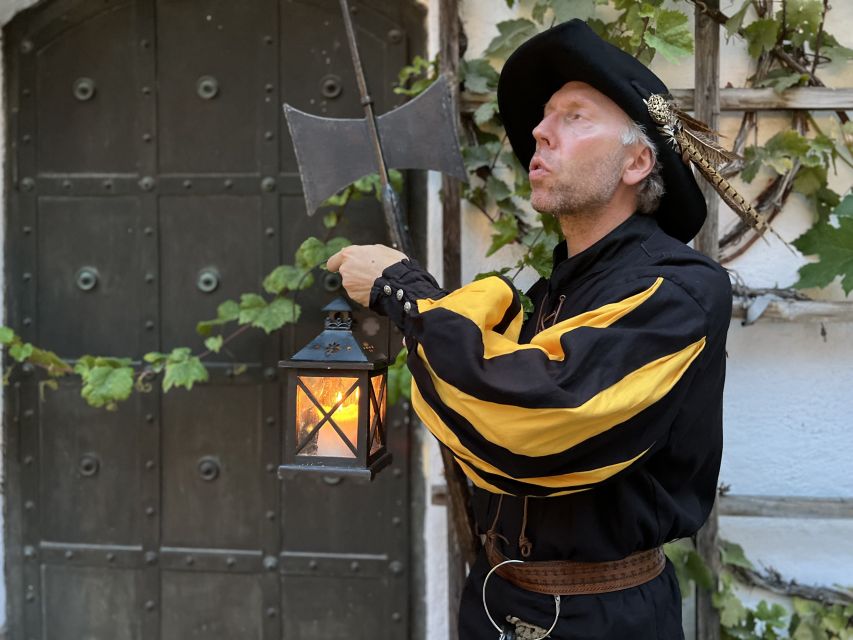
From the Altes Rathaus, the watchman leads you past the torture chamber and prison toward the Alter Hof. This is one of the tour’s darker passages, but it also introduces the Wittelsbach dynasty and the role of Louis II in Munich’s story.
You hear why this ruler was considered so harsh, how the House of Wittelsbach came to Munich, and where the name Zwingerstock came from. These are the kinds of questions that make a walking tour worthwhile. You are not just told that a building is old. You are given a reason to connect its name, use, and political setting.
The mention of torture and prison changes your view of the old town. Central Munich can feel polished and orderly today. The watchman reminds you that city centers once included places of punishment, confinement, religious warning, and public authority within the same compact area.
This part may feel dense if you have no interest in dynastic politics. Still, the stories are short, and the guide’s character keeps the material from becoming a dry family tree. I would listen for the links between power and place rather than trying to memorize every name.
City walls, Gruftgasse, and the tale of Waller
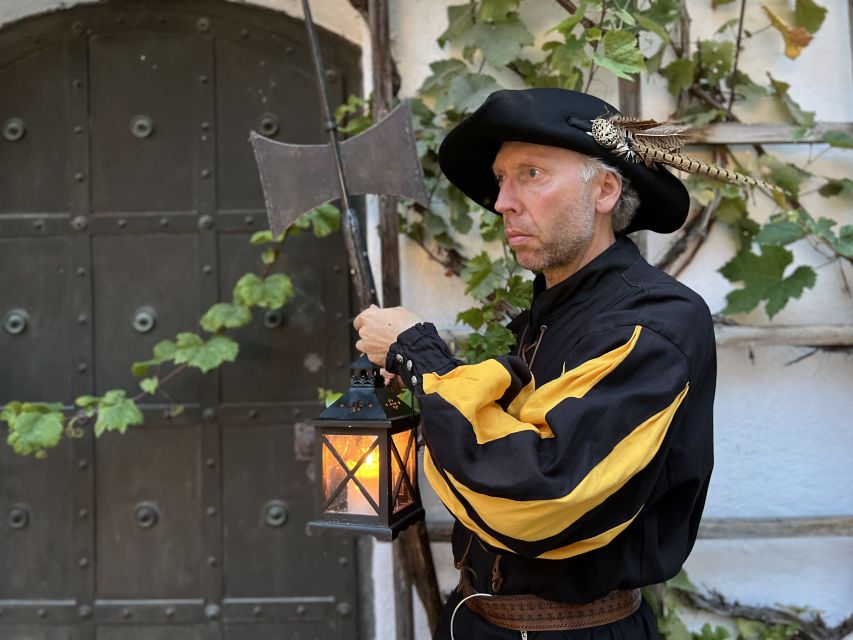
The walk follows traces of the 12th-century city walls and heads west from Wasserburg. You then reach Gruftgasse, where Alois tells the spooky story of Waller in Walchensee, a young lady, and her golden ring.
The supplied route does not give the entire legend, which is probably a good reason to hear it in person. A story tied to a narrow lane works differently from a story read in a guidebook. The setting gives the tale a physical anchor, and the group can picture how a place name and local memory might keep a legend alive.
Gruftgasse is also the kind of lane that gives this activity its special character. You get away from Munich’s best-known postcard views and into the smaller passages that a first-time visitor might otherwise skip. The guide knows where the old stories fit the streets.
The atmosphere depends on darkness and quiet. If the old town is still crowded on your evening, the dramatic effect may be less intense. Even so, the route’s small-scale details should remain useful, especially if you have already seen the main square in daylight.
Schäfflergasse and the medieval drink you may not expect
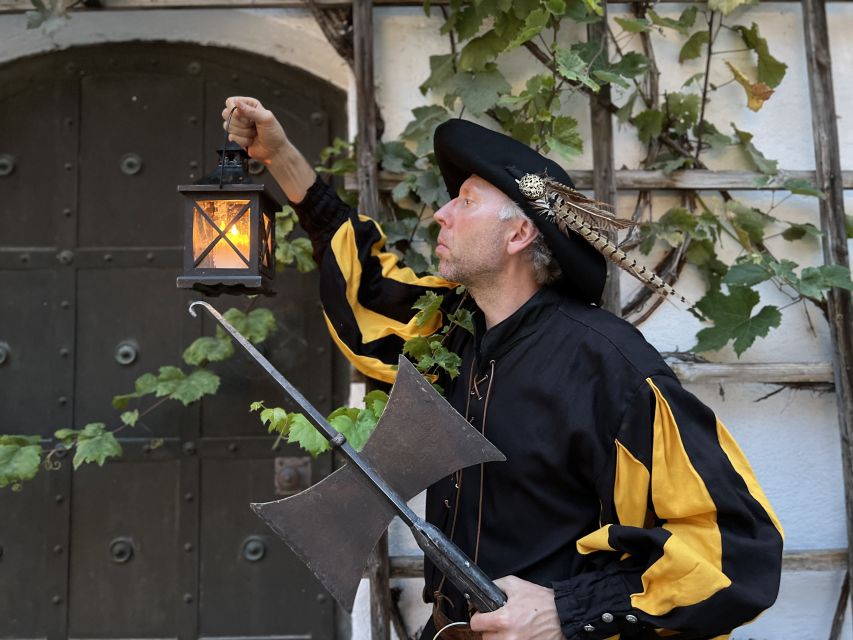
In Schäfflergasse, the watchman explains why wine, not beer, was the preferred drink in the Middle Ages. This is a welcome correction to the easy modern image of Munich as a city defined only by beer.
That detail gives you a more precise picture of changing habits. Food and drink history can seem minor, but it often explains trade, social life, and local identity better than a list of rulers does. The story also lets the guide return to the beer jokes without pretending that Munich’s current reputation describes every period of its past.
This is a good example of the tour’s method. You move through a physical street, hear one focused story, and leave with a fact that can change how you look at the city. You will not get a full course in medieval commerce, but you will collect useful pieces that are easy to remember.
Frauenkirche and stories told from the gravestones
At the cathedral, look up at the two towers and the symbols of Munich. The Frauenkirche is one of the city’s most recognizable buildings, but nighttime attention can shift from the broad façade to the details high above you.
The walk includes the epitaph of a wealthy widow and the story of Fanny von Ickstatt’s unlucky fall from the north tower. These episodes make the cathedral feel connected to individual lives, not just to civic identity.
The story of Fanny von Ickstatt is particularly suited to a night watchman’s tale because it combines architecture, danger, and tragedy. It also reminds you that towers were once practical structures with risks of their own, not simply viewpoints for modern sightseeing.
By this point, the tour’s pattern should be clear. You receive a mixture of local biography, religious belief, grim anecdote, and building history. The variety is a strength. You are less likely to tire of one subject, though anyone seeking a carefully ordered historical timeline may find the route intentionally scattered.
Promenadeplatz, Salzstadel, and Munich’s palace gossip
The route then continues to Promenadeplatz and the old Salzstadel. From there, the watchman passes Palais Porcia and Palais Holstein while telling the story of sovereign lord Karl Albrecht and the palaces built for his mistress.
This is the tour’s palace-gossip moment, but it also points to the way power shaped Munich’s architecture. Grand buildings were not created only for public service or noble dignity. Personal relationships, status, and court life left marks on the streets.
I appreciate this stop because it keeps the tour from treating aristocratic buildings as silent façades. The watchman gives them motives and scandal. You may not remember every architectural detail, but you will understand that these palaces were tied to real ambitions and private arrangements.
The limitation is that the route only lasts 1.5 hours. Each location receives a story rather than a long explanation. If you want interior access, art details, or a full account of Bavarian palace architecture, you will need another tour or a museum visit.
Salvatorkirche and the Theatine Church’s long-awaited heir
Near the Salvatorkirche, the watchman tells the story of an enormous host desecration. This is a serious religious episode, and the subject may feel uncomfortable to some people. The tour presents it as part of the old city’s religious history, but it is worth knowing that the material includes accusation, sacrilege, and strong beliefs about sacred objects.
The final major story comes at the Theatinerkreuzgang. Here you hear about Henriette Adelaide, consort of Electoral Prince Ferdinand Maria, and the couple’s long wait for an heir. After 10 years, the desired heir was born, and the Theatine Church was built.
This gives the ending a different mood. After tales of death, prisons, frightening legends, and accidents, the route closes with dynastic relief and a church created to mark a long-awaited birth. The watchman then releases his flock into the night and returns to his rounds.
That closing image fits the experience. You are not led back into a formal presentation or a modern transport hub. The character simply continues his work, while you return to the present-day city with a head full of old warnings and odd stories.
What $530 means for value
The listed price is $530 for a group of up to 30 people. That is a major consideration. For a large family group, company outing, school group, or gathering of friends, the price can be reasonable because it covers the group rather than charging each person separately.
At 30 people, the cost works out to about $17.67 per person. At 15 people, it is about $35.33 each. For only two people, it becomes $265 per person, which is difficult to justify unless you place a high value on a private performance and personal attention.
The private format is the key value question. You control who joins the group, and the guide can present the stories to your party rather than to a mixed crowd. That can make the theatrical style more comfortable, especially if your group enjoys participating.
Food, drinks, and transport are not included. That is not a serious weakness for a central walking tour, but you should plan your evening around the meeting point, which can vary according to the option booked. Check that detail before setting a restaurant reservation.
The experience has a 4.7 rating from 2,092 bookings, and the strongest praise focuses on humor, information, and authenticity. Elsbeth is singled out for making the evening feel authentic and experience-led while still explaining the city clearly. That combination is the tour’s best selling point.
Timing, language, access, and who should book
The walk lasts 1.5 hours, with starting times available according to the date you select. Because the experience takes place in the late evening, wear shoes suited to old-town streets and bring clothing appropriate for nighttime temperatures. The supplied details do not specify a particular dress requirement, so you only need to prepare for an outdoor walking activity.
Live guiding is available in German and English. If you book in English, it is worth confirming the language option when selecting your time. The humor depends on delivery, and stories told in a language you understand well will make a big difference.
The activity is wheelchair accessible. Since the route includes old lanes, church exteriors, and historic streets, confirm the exact meeting point and route details for your chosen option if someone in your group has specific mobility needs.
I would recommend this tour to:
- First-time visitors who have already seen Munich’s central sights in daylight
- Families with older children who enjoy spooky stories
- Couples and friends who want a playful evening walk
- Groups large enough to share the $530 cost
- People who prefer local legends and character-led storytelling
I would be more cautious about booking it for very young children, visitors who dislike death and religiously grim subjects, or anyone wanting a quiet architectural tour. The watchman’s humor is central, so you need to enjoy a guide who scolds, performs, and plays with the audience.
Should you book the Munich Night Watchman walk?
Book it if you want Munich’s old town presented as a place of watchmen, saints, prisons, palace scandals, graveyards, and narrow lanes. The best parts are the character work, the unusual stories, and the shift from famous landmarks to overlooked corners.
For a small party, the price is the deciding factor. For a large private group, it can be good value, especially when you want a shared evening activity rather than another standard sightseeing walk. For two or three people, compare the cost with other guided options before committing.
I would choose this experience after a daytime tour of Munich, not instead of one. By night, you will recognize the city’s major buildings, but the watchman will give them a stranger and more memorable afterlife.
FAQ
How long does the Munich Night Watchman Walking Tour last?
The tour lasts 1.5 hours.
How much does the tour cost?
The price is $530 per group of up to 30 people.
Is the tour private?
A private group option is available.
What languages are offered?
The live guide can lead the tour in German or English.
Is the tour wheelchair accessible?
Yes, the activity is listed as wheelchair accessible.
Are food, drinks, or transport included?
No. Food, drinks, and transport are not included.
Can I cancel the tour for a refund?
Yes. You can cancel up to 24 hours in advance for a full refund.
Just added around Munich
- Munich: Private or Group Third Reich and WWII Walking Tour★ 4.9 · 13 reviews
- From Munich: Neuschwanstein Castle and Linderhof Private Tour★ 5.0 · 13 reviews
- Private Transfer from Munich to Salzburg with 2 hours for sightseeing★ 4.5 · 13 reviews
- Munich: Historical Walking Tour on the Rise of Hitler★ 5.0 · 13 reviews
- Private Scenic Transfer from Munich to Prague with 4h of Sightseeing★ 5.0 · 13 reviews
- From Munich: VIP day trip to Salzburg★ 5.0 · 14 reviews
- National Socialism WWII with licensed guide – private tour★ 5.0 · 14 reviews
- Munich: Walking Tour Old Town 3D VR Tour in GERMAN★ 4.3 · 14 reviews
Ghost & Night Watchman Tours, compared.
The Original Night Watchman Tour in Lantern Light
Read our review →
1.5-Hour Public Tour with Night Watchman Bremme
Read our review →
The Night Watchman Old Town Walking Tour in German
Read our review →
Browse the lists this tour appears in