
Reviewed · OLD TOWN WALKS
Munich: Walking Tour Old Town 3D VR Tour in GERMAN
Munich has a past you can almost hold. This two-hour walk uses phone-powered VR glasses to place you inside old scenes of the Old Town, with a guide explaining what changed and why. I like the clear focus on four historic locations, and I like that the technology adds a playful visual layer to familiar streets. The main caution is simple: the VR is made from still images, not moving scenes, and some equipment has not worked well.
The best part is the guide-led storytelling. The German-speaking guides have been praised for being warm, lively, and well informed, with one recent rating calling the experience very educational and full of heart. At $37 per person, I see fair value if you want a guided history walk with a novelty twist, but less value if you expect polished, fully animated virtual reality.
In This Review
- Key points at a glance
- What this Munich VR walk is really offering
- Meeting at Platzl and getting ready
- Marienplatz in 1570: grain, punishment, and public life
- Marienplatz in 1870: the Old Town Hall and working Munich
- Platzl in 1895: how a local Munich place took shape
- Hofbräuhaus then and now
- How strong is the VR technology?
- Is $37 a fair price for two hours?
- Who should book this Old Town experience?
- Final call: book it for the guide, not the headset
- FAQ
- Where does the Munich 3D VR walking tour meet?
- How will I recognize the guide?
- How long does the tour last?
- What language is the tour conducted in?
- What does the price include?
- Are food and drinks included?
- Do I need to bring my own smartphone?
- Do I need internet access?
- Are the VR scenes animated videos?
- Is the tour wheelchair accessible?
- Can I cancel for a refund?
- Can I reserve now and pay later?
Key points at a glance
- Four carefully chosen historic views: The tour focuses on four places with 3D renderings, rather than trying to cover every corner of Munich.
- Marienplatz changes by side: One half shows the square around 1570, while the other presents the Old Town Hall area in 1870.
- Platzl appears in 1895: You see how this famous square developed into the Munich institution it is today.
- Hofbräuhaus gets a past-and-present comparison: The stop connects a familiar beer hall with its earlier form.
- The VR uses your own smartphone: You must download an app at the meeting point and place your charged phone into the glasses.
- The tour is conducted in German: It lasts two hours, includes the guide, walk, and glasses, and is wheelchair accessible.
What this Munich VR walk is really offering
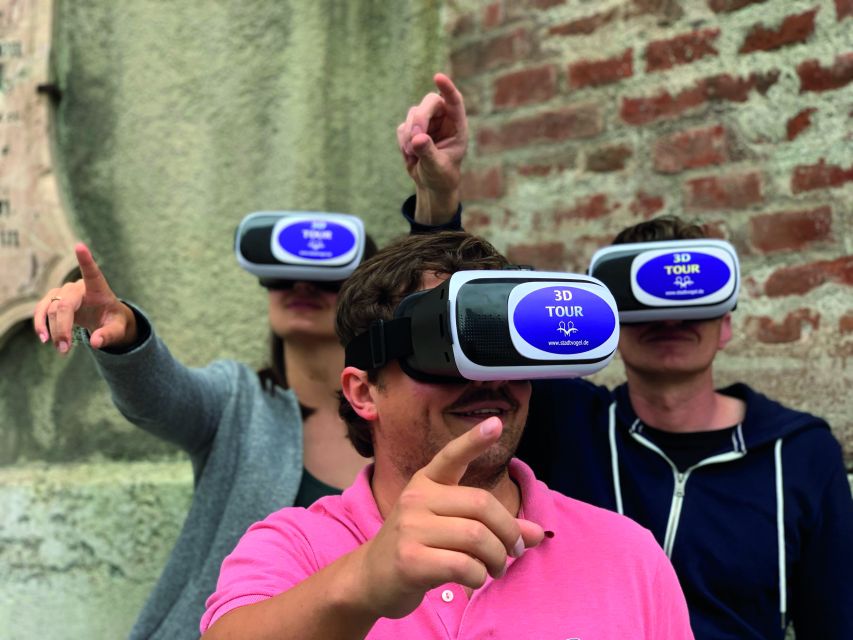
This is not a museum visit with a headset and a fully simulated world. It is a walking tour through Munich’s Old Town, supported by four 3D views that show how selected places looked in earlier periods.
That difference matters. The technology is there to help you compare the street in front of you with an older version of the same location. The guide supplies the context, stories, and small details. I would think of the VR as a visual prompt, not the main attraction.
That setup has a useful advantage. You remain aware of modern Munich as you move through the streets, then use the glasses to picture an earlier city layered over the present one. For a first visit, this can help you look at the Old Town with more purpose instead of simply passing through its famous squares.
The experience is in German, so you should be comfortable following spoken German for the full two hours. It suits families, friends, and visitors who like a little technology with their history. It may be less satisfying if you want a traditional architectural tour in English or a high-end virtual reality production.
More Old Town Walks in Munich
- Munich: Old Town & Viktualienmarkt City Walk in German
★ 4.7 · 2,304 reviews - Munich Old Town Walking Tour
★ 4.5 · 1,287 reviews - Munich: Spooky Tour of Old Town in German
★ 4.6 · 1,112 reviews
Meeting at Platzl and getting ready
The meeting point is directly in front of the Orlandohaus at Platzl 4. Look for a guide carrying a large blue bag marked with the white words Weis(s)er Stadtvogel, along with a 3D Tour sign.
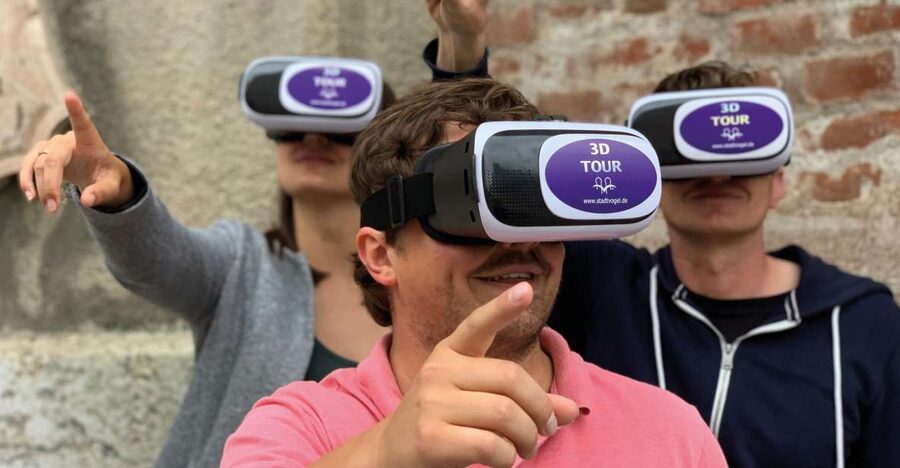
The setup has one extra step that you should not overlook. Every participant downloads an app onto a smartphone at the meeting point, then places the phone inside the VR glasses. Bring a charged phone and internet access. If your battery is low or your phone cannot connect, the visual part of the tour could become difficult.
This phone-based system also explains the mixed reaction to the equipment. Some people found that the phone screen looked clearer than the glasses, and the images are still photographs or renderings rather than moving pictures. At least two participants on one tour had trouble getting the glasses or phones to work.
That does not erase the value of the walk, but it changes how you should approach it. Arrive ready for a guided history tour first and a VR demonstration second. If the headset works perfectly, it adds fun. If it does not, the guide and the Old Town route still carry the experience.
Marienplatz in 1570: grain, punishment, and public life
Marienplatz is split into two historical viewpoints for this tour. On the western side, you enter the square as it appeared around 1570.
This version of the square includes a medieval grain market, which gives you a less polished picture of Marienplatz than the postcard view most people carry in their heads. You also hear about gallows used for special executions and the so-called disgraceful donkey. These details show how public squares once served practical, commercial, and punitive roles at the same time.
That is the kind of material that can make a familiar place feel new. Modern Marienplatz is a grand civic space filled with landmark buildings and city activity. The older view points toward the harder, more public side of medieval urban life.
The VR image should help you see where older features sat in relation to the modern square. Do not expect a film or animated reconstruction. You are looking at a historical image while the guide explains the scene and draws your attention to details you might otherwise miss.
For me, this is where the format makes the most sense. A guide can tell you that the square changed, but a visual comparison helps you grasp the change quickly. The experience gives you a reason to pause and examine the space rather than taking a quick photograph and moving on.
Marienplatz in 1870: the Old Town Hall and working Munich
Crossing to the eastern side of Marienplatz moves the story roughly 300 years forward, to 1870. Here, the focus shifts to the Old Town Hall, including the first completed section of the building.
You also see carriages and old professions in action. That adds movement and human scale to the historical picture, even though the images themselves are not moving. The point is to picture the square as a working place, not only as a backdrop for sightseeing.
This stop is useful because it allows a direct comparison within the same modern location. On one side, you consider medieval trade and punishment. On the other, you look at a later nineteenth-century city with different buildings, transport, and occupations.
The two-sided arrangement is also easy to remember. You do not need to absorb a long timeline all at once. The guide can show you how the same square changed in stages, with the modern buildings around you acting as reference points.
If you already know Marienplatz, this section may be more rewarding than a basic introduction to the city. The tour aims to make you inspect a familiar place closely. If you have never been to Munich before, it gives you historical context early in your visit, though you may still want time afterward to explore the square on your own.
More Walking Tours in Munich
- Munich: Third Reich & WWII Walking Tour
★ 4.6 · 6,181 reviews - Third Reich Walking Tour Munich
★ 4.5 · 4,291 reviews - Munich: Night Watchman Walking Tour
★ 4.7 · 2,092 reviews - Munich Ghosts and Spirits Evening Walking Tour
★ 5.0 · 1,900 reviews
Platzl in 1895: how a local Munich place took shape
The tour then looks at Platzl in 1895. This is a useful choice of location because Platzl feels strongly tied to Munich’s local identity today.
The guide explains how the area came to be and how it changed into the Urmünchner place you see now. That German word points to something especially Munich-like or rooted in local tradition. The historical image helps connect that present-day character with an earlier version of the square.
I like this stop because it avoids treating history as a list of dates. The emphasis is on change: how an area developed, how its role shifted, and why it carries such a strong local feeling now. The guide’s explanation is important here because the image alone will not tell you the full story.
You should expect another comparison between what is in front of you and what appeared there in the past. The 3D rendering is a way to set the older scene against the current buildings and streets. It is not a substitute for entering every historic site, but it can make the surrounding area more legible.
Platzl also gives the tour a natural connection to the meeting point. Since you meet at Orlandohaus, the opening and later historical material take place in the same general area. That keeps the route focused rather than sending you across a wide section of Munich.
Hofbräuhaus then and now
The famous Hofbräuhaus receives its own look at the past and present. Most people recognize it as one of Munich’s best-known beer halls, but the tour asks you to consider how the building and its surroundings appeared in an earlier period.
This is a good stop for visitors who want more than a quick exterior photograph. The guide can explain the older form of the Hofbräuhaus and place it within the story of Platzl. The historical view gives you a visual point of comparison before you decide how much time you want to spend there later.
Do not count on food or drinks being included. They are not part of the tour price, so you can treat the Hofbräuhaus section as a history stop rather than a meal break.
The stop may also be the most familiar part of the walk. That is helpful if you are new to Munich, but repeat visitors may find it less surprising than the medieval Marienplatz material. Its value depends on the guide’s explanation and on how well the image works through your phone and glasses.
How strong is the VR technology?
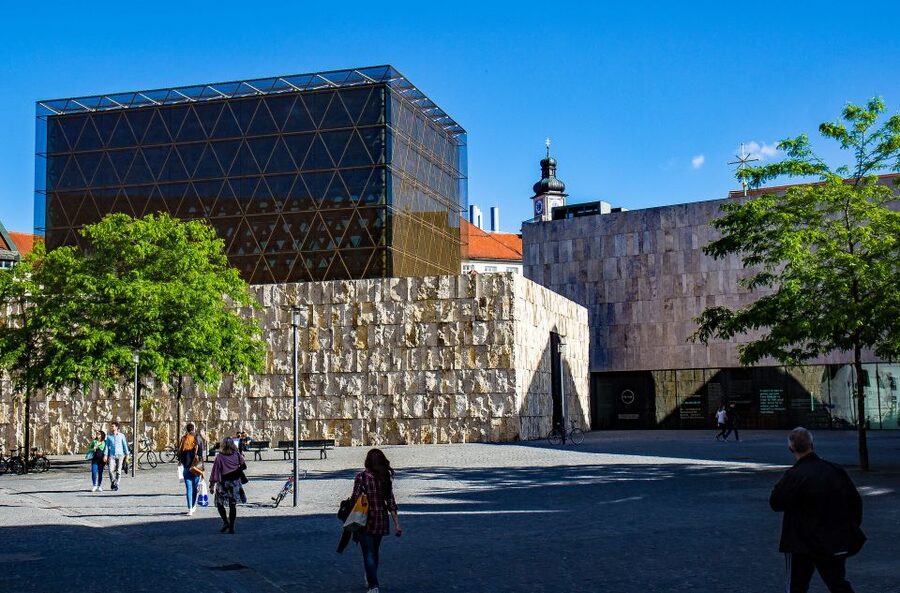
This is the part of the experience to assess carefully before paying $37. The visual material consists of 3D renderings and still images. There are no moving scenes, and the glasses depend on your own smartphone and an app.
Some people have found the technology disappointing, describing the glasses as more like a toy and saying the images looked better directly on the phone. A separate experience also had two glasses or phones that did not work properly. Those details are not minor if you are booking mainly for VR.
At the same time, the technology does not need to carry the full two hours. The walk, commentary, and locations remain central. A friendly and engaged guide has been praised for making the history enjoyable even when the equipment fell short.
My advice is to set your expectations correctly. If you want a serious guided look at Munich’s past with a fun visual aid, this could work well. If you want cinematic animation, interactive scenes, or a modern headset experience, you will probably find the system basic.
Bring your own charged smartphone and make sure you have internet access. You may also want to keep the phone screen in mind as a backup viewing option if the glasses are uncomfortable or unclear.
Is $37 a fair price for two hours?
At $37 per person, the price is above what you might pay for a simple self-guided walk, but it includes a live German-speaking guide, the walking route, and the VR glasses.
The value rests mainly on the quality of the explanation. You are paying for four selected historical views, a structured route, and stories that help you notice details in Marienplatz and Platzl. You are not paying for a meal, drinks, hotel transport, or an advanced virtual reality attraction.
I think the price is reasonable for visitors who enjoy guided city walks and want something different from a standard commentary tour. It is also a good match for families and groups of friends who may enjoy trying the glasses together.
The value is weaker if you speak little German, dislike using your own phone, or consider the visual technology the main reason to book. In that case, the basic images and possible equipment problems may leave you feeling that the experience costs too much.
Free cancellation up to 24 hours before the start and the reserve-now, pay-later option make the booking less rigid. The tour is also wheelchair accessible, which may help with planning, though the supplied information does not describe the exact street conditions or route details.
Who should book this Old Town experience?
I would recommend it most strongly to:
- Families who want history presented in a playful way
- Friends looking for a shared activity in central Munich
- First-time visitors who want context for Marienplatz and Platzl
- Repeat visitors who enjoy seeing familiar places from another period
- German speakers who prefer a live local guide
- Anyone who values stories and visual comparison more than polished technology
I would be more cautious if you want English commentary, fully animated VR, or a quiet museum-style experience. The tour is conducted in German, and the guide talks while the group moves through public Old Town spaces.
The most highly praised element is the human side. A good guide can make the historical scenes clear, funny, and memorable. That matters here because the equipment may be modest, while the commentary gives the images their meaning.
Final call: book it for the guide, not the headset
I would book this tour if you want a two-hour German walk that makes Munich’s best-known Old Town locations easier to read. The 1570 grain market, the gallows, the 1870 Old Town Hall, nineteenth-century carriages, Platzl in 1895, and the earlier Hofbräuhaus give the route a strong range of subjects.
I would not book it expecting a cutting-edge VR attraction. The images are still, the phone setup can be awkward, and some equipment has failed. Think of the glasses as a bonus tool that may sharpen the guide’s stories.
At $37, it is a fair choice for an educational, social walk with a playful idea behind it. If that sounds good, bring a charged phone, enough internet access to download the app, and an open mind about simple technology. If you mainly want advanced virtual reality, spend your money elsewhere.
FAQ
Where does the Munich 3D VR walking tour meet?
Meet directly in front of the Orlandohaus at Platzl 4 in Munich.
How will I recognize the guide?
The guide will carry a large blue bag with the white words Weis(s)er Stadtvogel and a 3D Tour sign.
How long does the tour last?
The walking tour lasts two hours.
What language is the tour conducted in?
The live tour guide and tour commentary are in German.
What does the price include?
The price includes the guide, the walking tour, and the VR glasses.
Are food and drinks included?
No. Food and drinks are not included.
Do I need to bring my own smartphone?
Yes. Each participant must bring a charged smartphone, and the phone is placed into the VR glasses.
Do I need internet access?
Yes. Internet access is listed as something to bring because you must download an app at the meeting point.
Are the VR scenes animated videos?
No. The available images are still photos or renderings rather than moving images.
Is the tour wheelchair accessible?
Yes. The activity is listed as wheelchair accessible.
Can I cancel for a refund?
You can cancel up to 24 hours in advance for a full refund.
Can I reserve now and pay later?
Yes. The reserve-now, pay-later option lets you book without paying immediately.
Just added around Munich
- Munich: Private or Group Third Reich and WWII Walking Tour★ 4.9 · 13 reviews
- From Munich: Neuschwanstein Castle and Linderhof Private Tour★ 5.0 · 13 reviews
- Private Transfer from Munich to Salzburg with 2 hours for sightseeing★ 4.5 · 13 reviews
- Munich: Historical Walking Tour on the Rise of Hitler★ 5.0 · 13 reviews
- Private Scenic Transfer from Munich to Prague with 4h of Sightseeing★ 5.0 · 13 reviews
- From Munich: VIP day trip to Salzburg★ 5.0 · 14 reviews
- National Socialism WWII with licensed guide – private tour★ 5.0 · 14 reviews
- Private Tour to Neuschwanstein & Linderhof, Skip The Line & Lunch★ 5.0 · 14 reviews
Old Town Walks, compared.
Old Town & Viktualienmarkt City Walk in German
Read our review →
The Night Watchman Old Town Walking Tour in German
Read our review →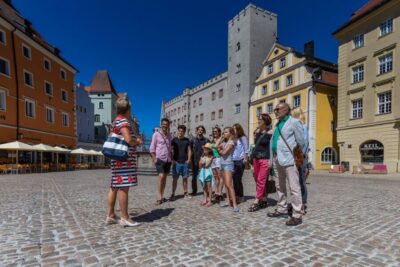
Browse the lists this tour appears in