
Reviewed · THIRD REICH & WWII TOURS
National Socialism WWII with licensed guide – private tour
Munich’s darkest chapters are still visible in plain sight. This private walking tour connects Odeonsplatz, the White Rose resistance, Nazi art policy, and the former party center at Königsplatz into one serious, well-organized history lesson. I like the focus on specific places and events, rather than a vague overview of the Third Reich. I also like the use of extensive photo material, which helps you compare present-day Munich with the city under Nazi rule.
The tour also gives proper attention to resistance, including the White Rose group at Ludwig Maximilian University. That balance matters. You learn not only how National Socialism grew in Munich, but also how some people opposed it. The main drawback is the tight two-hour schedule. You cover a lot of ground and hear many names, so you may want extra time afterward at the NS Documentation Centre.
In This Review
- Key points to know before you book
- Why Munich is the right place for this difficult subject
- Starting at Feldherrnhalle and the failed Hitler coup
- The Court Garden and a monument to resistance
- Ludwig Maximilian University and the White Rose
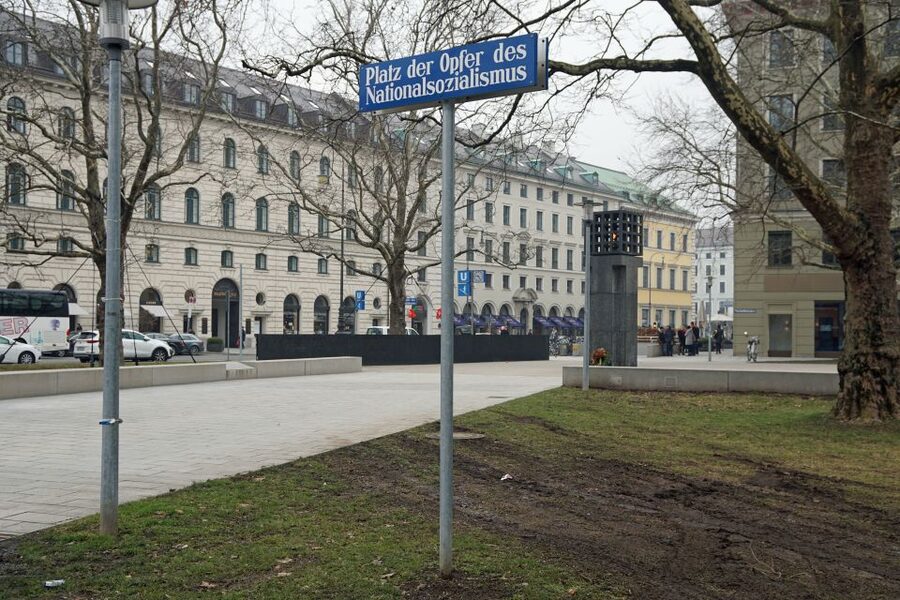
- The Square of the Victims of National Socialism
- Haus der Kunst and Nazi control of art
- Munich Residenz and the city’s political setting
- Karolinenplatz and the people who funded the Nazis
- Königsplatz and the former Nazi party center
- Continuing at the NS Documentation Centre
- Guide quality and use of visual material
- Price, timing, and who gets the best value
- Who should book this Munich history walk?
- Should you book it?
- FAQ
- Where does the tour begin?
- Where does the tour end?
- How long does the tour last?
- What languages are available?
- Is this a private tour?
- How much does the tour cost?
- Is admission to the NS Documentation Centre included?
- Can I visit the NS Documentation Centre after the tour?
- Is the tour wheelchair accessible?
- Who is the named guide and provider?
Key points to know before you book
- It begins at Feldherrnhalle on Odeonsplatz: This is where the 1923 Hitler coup ended, making the starting point unusually important.
- It is a private tour for up to 30 people: The $259 price applies to the group, not each person, so the value improves with a larger party.
- The White Rose gets real attention: At LMU, you learn about the student resistance group, its leaflets, and the executions of its members.
- It covers both Nazi power and opposition: Sites include Nazi art institutions, party buildings, memorials, and a resistance monument.
- Wolfgang Brehm is the named guide: He is a certified guide with more than 10 years of experience, and the strongest feedback focuses on his clear, well-prepared teaching.
- The NS Documentation Centre is an optional final visit: Admission costs extra, but the tour ends nearby at Königsplatz, making a continued visit easy.
Why Munich is the right place for this difficult subject
Munich was not simply another German city caught up in National Socialism. It was where Adolf Hitler arrived, built political connections, helped develop the NSDAP, and turned a local movement into a national force. The tour uses that fact to give the subject a clear geographic shape.
You walk through central Munich and see how government buildings, public squares, cultural institutions, and monuments were used to support Nazi power. That makes the history easier to follow than a classroom lecture alone. The places are close enough to connect on foot, but each one carries a different part of the story.
The subject is naturally heavy. This is not a sightseeing walk with a few grim facts added for atmosphere. It deals with political violence, antisemitism, dictatorship, propaganda, resistance, and murder. The tour provider makes clear that it is not intended for Nazi admirers or right-wing extremists. For you, that means the tone is educational and memorial rather than sensational.
The private format helps here. You can book the tour for your own group, with a maximum of 30 people, and the guide can keep the discussion centered on the group’s interests. At the same time, 30 people is still a fairly large private party, so do not assume the intimacy of a one-on-one walk.
More Third Reich & WWII Tours in Munich
- Munich: Third Reich & WWII Walking Tour
★ 4.6 · 6,181 reviews - Third Reich Walking Tour Munich
★ 4.5 · 4,291 reviews - Munich: Birthplace of the Third Reich Guided Walking Tour
★ 4.6 · 771 reviews
Starting at Feldherrnhalle and the failed Hitler coup
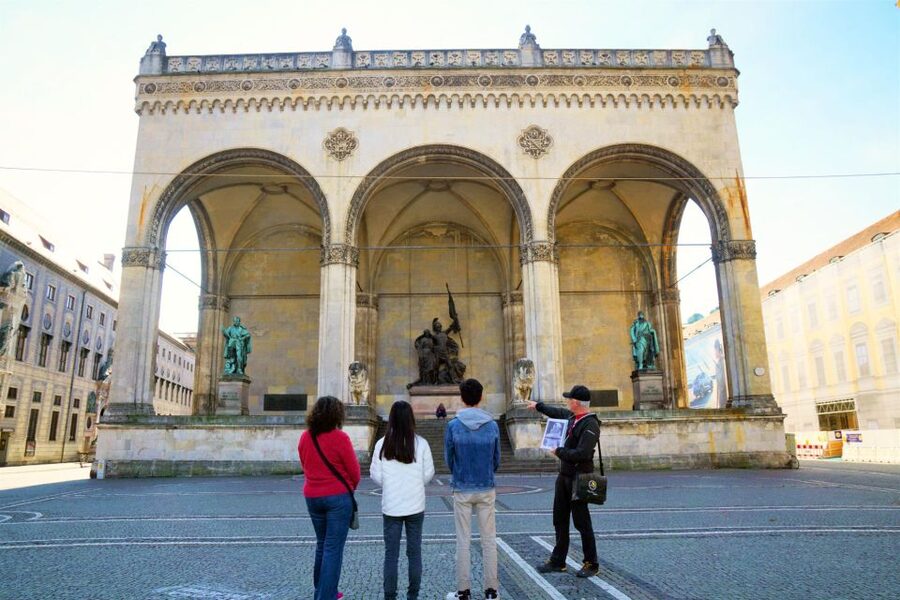
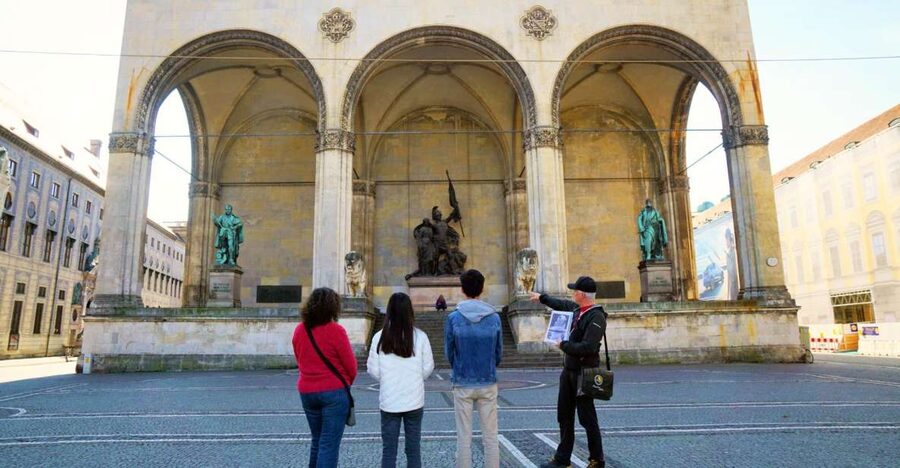
The meeting point is at the steps of Feldherrnhalle on Odeonsplatz. This is a practical location in central Munich, but it is also one of the most important stops on the entire walk.
Here you learn why Hitler came to Munich, where he lived, and how he supported himself before entering politics. The guide then explains the 1923 Hitler coup, often called the Beer Hall Putsch, and shows where the attempt ended. The tour also discusses the former monument erected to those who died during the putsch.
This opening gives you useful context before the tour moves into later Nazi rule. Hitler’s rise did not begin in Berlin. Munich was the setting where he developed his political identity and gathered support. Understanding that early period helps explain why the city later became known as the cradle of National Socialism.
The stop at Feldherrnhalle lasts about 10 minutes, followed by another short five-minute guided segment listed at the same location. That suggests a compact but concentrated introduction. You should arrive ready to listen, since the first stop sets up much of what follows.
The Court Garden and a monument to resistance
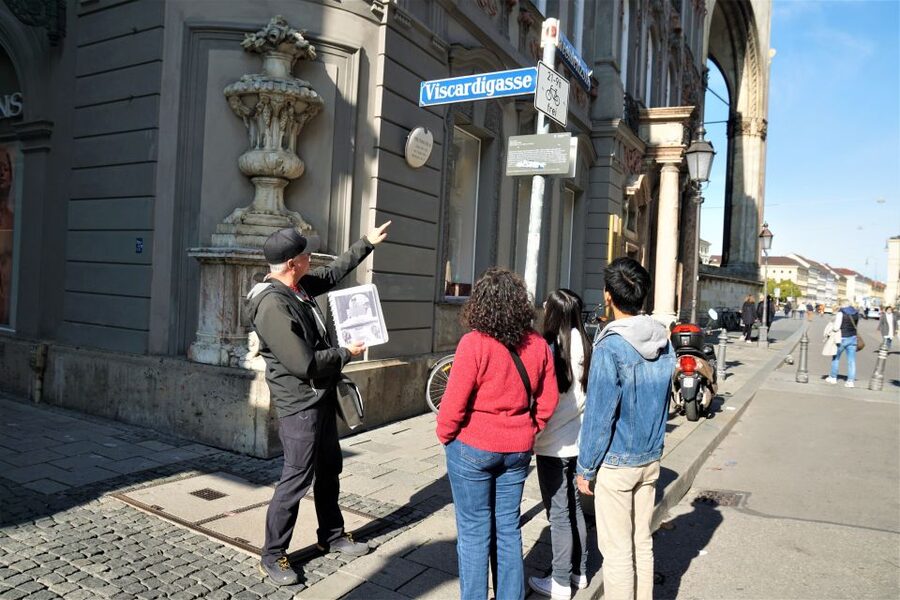
After Feldherrnhalle, the walk continues through the Court Garden. Here the subject shifts from Nazi power to opposition against the regime, with a monument connected to resistance fighters.
That change is important. A tour about Munich’s Nazi past can easily become a parade of party offices, propaganda buildings, and Hitler-related sites. By including resistance early in the walk, the guide avoids suggesting that the whole city accepted Nazi rule without objection.
You may find this section especially useful if you want the tour to address moral choices, not only political chronology. The monument gives the guide a physical place to explain what resistance meant and what risks people faced. Since the supplied details do not identify the monument by name or describe its design, the value here lies mainly in the explanation provided on site.
Ludwig Maximilian University and the White Rose
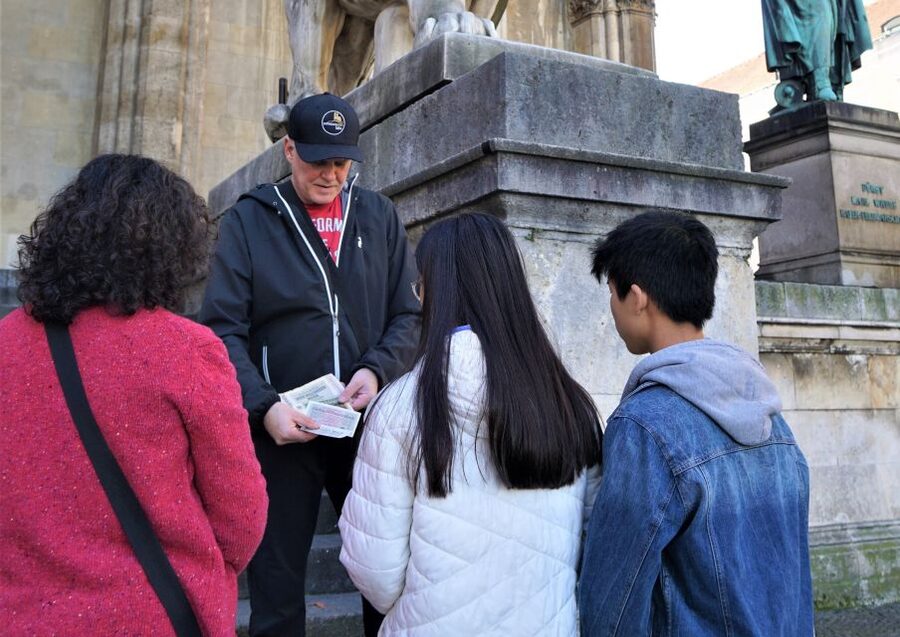
At the Ludwig Maximilian University, one of Germany’s largest universities, you learn about the White Rose. This student resistance group produced leaflets criticizing the Nazi regime. Its members were eventually arrested and beheaded.
The White Rose story is one of the best-known examples of German resistance, but seeing its university setting gives it a more personal scale. These were students using words and printed leaflets against a dictatorship that controlled public life. Their actions were limited in size but enormous in risk.
The tour does not treat resistance as a footnote. The group receives a dedicated part of the route, which helps balance the discussion of Nazi institutions. If you are visiting Munich with a student, this stop may be especially useful. One parent noted that the tour helped a son studying GCSE history, and that practical school connection makes sense here.
The White Rose material can also help younger visitors understand that resistance did not always look like an armed uprising. It could involve writing, printing, distributing, and refusing to remain silent. The guide’s use of photographs adds faces and visual evidence to the story.
Something different for another day:
- From Munich: Neuschwanstein & Linderhof Castle Full-Day Trip
★ 4.5 · 12,494 reviews - Neuschwanstein & Linderhof Castle-Fairytale Day Tour from Munich
★ 4.5 · 7,275 reviews - Dachau Concentration Camp Memorial Site Tour from Munich by Train
★ 4.5 · 5,637 reviews - Neuschwanstein Castle Tour from Munich
★ 4.5 · 5,117 reviews
The Square of the Victims of National Socialism
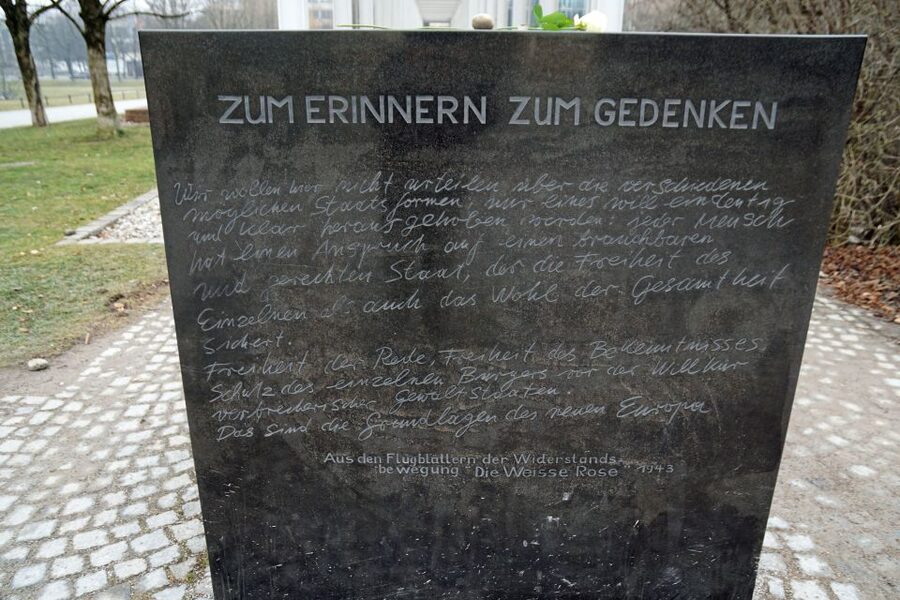
The Square of the Victims of National Socialism is another central stop. Here the guide explains who the victims were, rather than leaving the phrase as a general memorial label.
That distinction matters. The victims of Nazi persecution included different groups targeted for different reasons, and a useful guide should clarify those categories instead of reducing the subject to a single story. The tour description promises an explanation of exactly who the victims were, making this one of the route’s most direct memorial stops.
Expect the mood to become quieter here. Unlike the earlier stops, which focus on political beginnings and resistance, this square turns attention toward the people harmed by the regime. It helps place Munich’s buildings and political history in human terms.
The scheduled explanation lasts about 10 minutes. That is enough for a focused account, but not enough for an extended memorial study. If you want more time to reflect or read additional material, plan to return later on your own.
Haus der Kunst and Nazi control of art
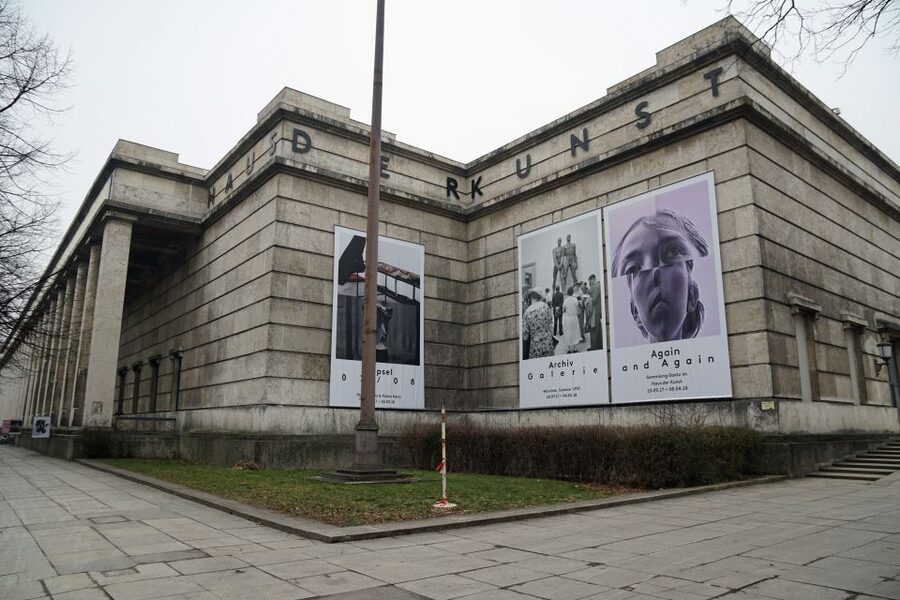
At Haus der Kunst, the guide explains how the Nazis tried to control art. This stop shows that dictatorship was not only enforced through police, party offices, and laws. It also shaped what people were allowed to see, praise, and call German culture.
The route then refers to the former location of the Degenerate Art exhibition in Galeriestraße. That exhibition attacked modern artists and styles rejected by the Nazi regime. Seeing the location helps you understand how public exhibitions could be turned into propaganda tools.
I find this part particularly useful because it broadens the usual Hitler-and-war narrative. You learn how cultural policy helped define acceptable identity and how the regime used ridicule and public display to discredit artists. The 15-minute guided segment at Haus der Kunst gives the guide time to explain the subject without making it the entire tour.
The practical limitation is that the experience focuses on the sites and the guide’s explanation. The information provided does not say that a separate interior visit to Haus der Kunst is included. You should think of this as a historical stop on a walking route, not automatically as an art museum admission.
Munich Residenz and the city’s political setting
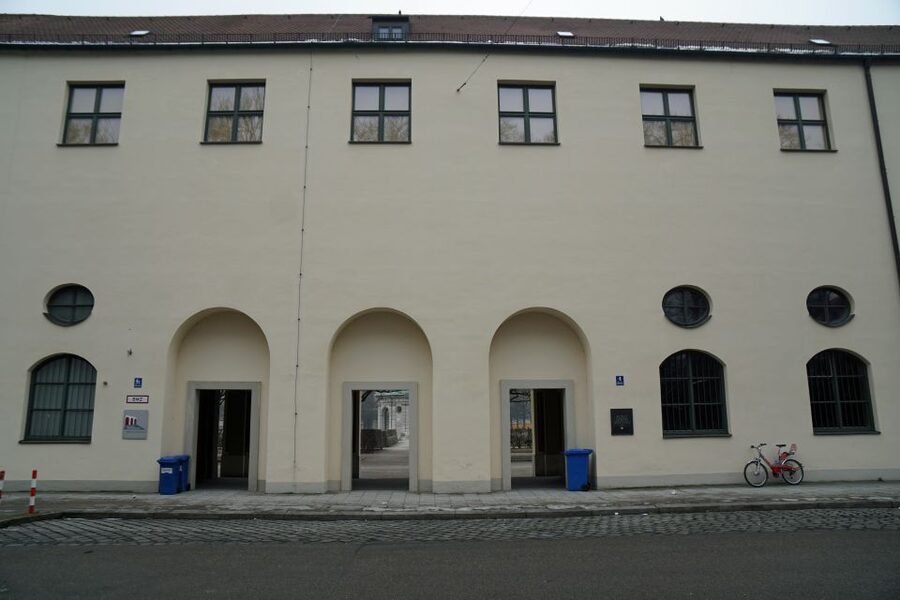
Munich Residenz appears as a 10-minute guided stop. The material provided does not specify a particular interior room or Nazi event inside the residence, so you should expect the guide to use the location as part of the wider story of Munich’s political center.
Its position near Odeonsplatz helps show how the Nazi movement developed among older institutions and established civic spaces. The route does not present National Socialism as something separate from the city. Instead, it traces how the movement occupied, reused, and attached meaning to prominent places in central Munich.
This stop may feel less immediately dramatic than Feldherrnhalle or Königsplatz. Its value depends on how the guide links the building and surrounding area to the city’s political history. Wolfgang Brehm is the named provider and guide, and the feedback about his tours repeatedly points to clear, interesting explanations that avoid becoming dull.
Karolinenplatz and the people who funded the Nazis
At Karolinenplatz, the guide discusses the main sponsors of the Nazi movement. This is an important addition because political power does not grow through speeches alone. Money, connections, and support from influential people also helped the movement expand.
The stop gives you a chance to consider who backed National Socialism and why. That financial and social context can be easy to miss when a history tour focuses only on Hitler. It also connects the movement to the wider city rather than treating it as the work of one man.
The supplied schedule does not assign a separate duration to Karolinenplatz, so this section may be folded into the walk between the major stops. Do not expect a long pause there. Instead, listen for the names and relationships that explain how the party gained strength.
Königsplatz and the former Nazi party center
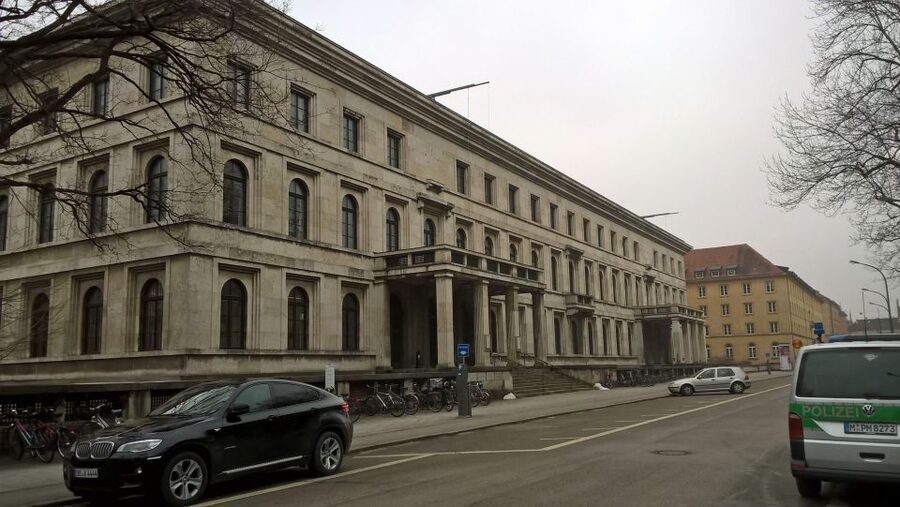
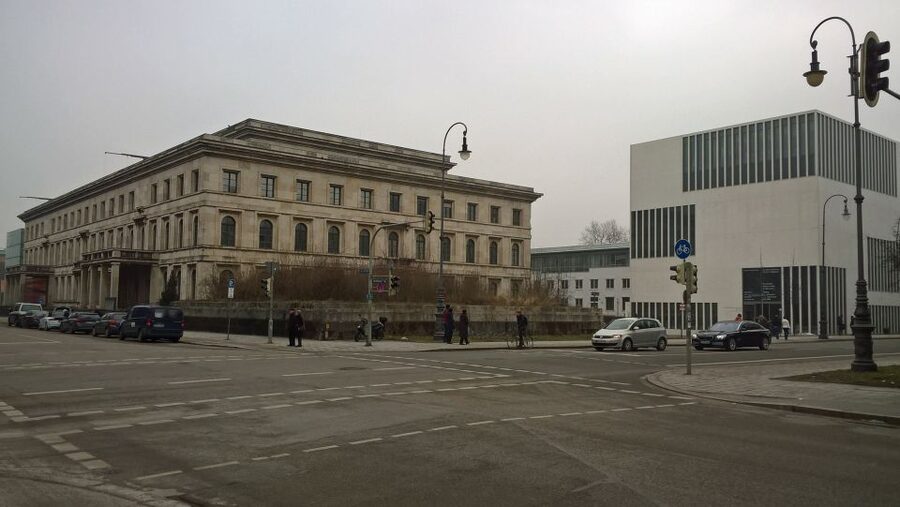
The tour ends at Königsplatz, one of the most important Nazi sites in Munich. Here you learn about the former Brown House, the Führer Building, Hitler’s office, and the NSDAP administration.
This final section brings together several threads from the walk. You have already heard about Hitler’s arrival in Munich, the failed coup, Nazi cultural policy, resistance, and the victims of the regime. At Königsplatz, those strands meet in the physical center of Nazi organization and power.
The Führer Building, also known as the Führerbau, receives about 15 minutes of guided attention. The route also covers the former Brown House and the Nazi administrative offices. These names can blur together during a fast walk, so the extensive photo material is useful. It lets you see how the area looked during the Nazi period and understand the scale of the political complex.
Königsplatz is also the practical ending point at Königsplatz 1. The route does not return to Odeonsplatz, so plan your next move from the final location. Since the tour is entirely a walking experience, comfortable shoes are sensible, although the information confirms that the tour is wheelchair accessible.
Continuing at the NS Documentation Centre
The tour includes the NS Documentation Centre as its final major subject, and you have the option to visit the center after the guided walk. Admission is not included in the $259 tour price.
This is one of the best reasons to choose this particular route. The walking tour gives you the city’s physical evidence and a guide’s narrative. The Documentation Centre can then provide a longer, more structured look at the history of National Socialism in Munich. The two parts work well together, but you need to allow extra time and budget for the museum visit.
The guided portion at the center is listed as about 15 minutes. That should not be confused with a full museum visit. The tour ends at Königsplatz, so you are already in the right area to continue, but the provided information does not state how long you should allow inside.
Guide quality and use of visual material
The strongest praise centers on the guide’s teaching. Comments describe the tour as very interesting, clear, informative, and never boring. Wolfgang Brehm is specifically named, and he is described as a certified guide with more than 10 years of experience.
Those details matter for this subject. A poor guide can turn a complex history into a list of dates and Nazi names. A strong guide helps you understand cause, consequence, and human choices. The comments also include positive feedback from English-speaking visitors, while the tour is offered in both English and German.
The extensive photo material is another practical strength. Historic photographs can show demolished buildings, former monuments, party gatherings, and changes to the streetscape. You should still expect a spoken walking tour, not a presentation with a screen, but the photographs give the guide a useful way to make lost or altered sites visible.
The perfect rating comes from 14 recorded ratings, which is a small sample. It is fair to say the feedback is consistently positive, especially about clarity and the guide’s preparation, but you should not treat the rating as proof that every group will have the same experience.
Price, timing, and who gets the best value
The price is $259 for a private group of up to 30 people, with a duration of two hours. For one or two people, that is a substantial cost compared with joining a shared city walk. For a family, school group, or larger party, the per-person price can become much more reasonable.
The private format is the key value. You are paying for a dedicated certified guide rather than a standard public departure. That can be worthwhile if your group wants the tour in English or German, needs a wheelchair-accessible route, or has a particular interest in the White Rose, Nazi art policy, or Munich’s political history.
Two hours is both a strength and a limitation. It fits neatly into a busy Munich day and covers the main sites without demanding half a day. But the subject is large, and the route includes many stops. You will receive a carefully selected overview, not every detail about Nazi Munich.
The tour allows free cancellation up to 24 hours before departure and offers reserve-now, pay-later booking. Availability depends on the starting time you select. These terms are useful if your Munich plans are still shifting.
Who should book this Munich history walk?
I would recommend it to you if you want a serious introduction to Munich’s Nazi past and prefer learning through actual streets and buildings. It is especially suited to private groups, families with older students, history-focused visitors, and anyone planning to visit the NS Documentation Centre afterward.
It also suits you if a guide’s explanation matters more than entering a large number of buildings. Much of the value comes from connecting sites, photographs, and stories as you walk.
I would hesitate if you want a light sightseeing outing, a long museum visit included in the price, or a relaxed pace with lots of free time at each stop. The subject is difficult, the schedule is compact, and admission to the Documentation Centre costs extra.
Should you book it?
Book this tour if you want Munich’s Nazi history explained by location, with clear attention to both the machinery of power and the people who resisted it. Feldherrnhalle, the White Rose connection at LMU, Haus der Kunst, Karolinenplatz, and Königsplatz create a strong two-hour framework.
The best plan is to reserve enough time after the walk for the NS Documentation Centre and to share the $259 cost with a group. If you value a certified guide, strong visual material, and a private format, this is a worthwhile choice. If you are alone and watching your budget, a shared tour may offer better value.
FAQ
Where does the tour begin?
The meeting point is at the steps of Feldherrnhalle on Odeonsplatz, at Residenzstraße 1.
Where does the tour end?
The tour finishes at Königsplatz 1, 80333 Munich, Germany.
How long does the tour last?
The walking tour lasts two hours.
What languages are available?
The live guide can conduct the tour in English or German.
Is this a private tour?
Yes. It is a private group experience for up to 30 people.
How much does the tour cost?
The price is $259 per group of up to 30 people.
Is admission to the NS Documentation Centre included?
No. Admission to the NS Documentation Centre is not included in the tour price.
Can I visit the NS Documentation Centre after the tour?
Yes. You have the opportunity to visit it after the guided tour.
Is the tour wheelchair accessible?
Yes. The activity is listed as wheelchair accessible.
Who is the named guide and provider?
The experience is provided by schwarzgold.info and Wolfgang Brehm. He is listed as a certified guide with more than 10 years of experience.
Just added around Munich
- Munich: Private or Group Third Reich and WWII Walking Tour★ 4.9 · 13 reviews
- From Munich: Neuschwanstein Castle and Linderhof Private Tour★ 5.0 · 13 reviews
- Private Transfer from Munich to Salzburg with 2 hours for sightseeing★ 4.5 · 13 reviews
- Munich: Historical Walking Tour on the Rise of Hitler★ 5.0 · 13 reviews
- Private Scenic Transfer from Munich to Prague with 4h of Sightseeing★ 5.0 · 13 reviews
- From Munich: VIP day trip to Salzburg★ 5.0 · 14 reviews
- Munich: Walking Tour Old Town 3D VR Tour in GERMAN★ 4.3 · 14 reviews
- Private Tour to Neuschwanstein & Linderhof, Skip The Line & Lunch★ 5.0 · 14 reviews
Third Reich & WWII Tours, compared.
Berlin’s Best: 2 Hour Walking Tour Third Reich and the Cold War
Read our review →
Third Reich Berlin: Hitler and WWII Walking Tour
Read our review →
Walking Tour of Former Nazi Party Rally Grounds
Read our review →
Browse the lists this tour appears in