
Reviewed · THIRD REICH & WWII TOURS
Berlin: Third Reich, Hitler, and WWII Walking Tour
History feels close here. This three-hour Berlin walking tour links Nazi power sites, wartime ruins, Hitler’s bunker, and the Soviet advance in one focused route. I like the way it connects buildings and streets to the decisions made there, and I like the guides’ strong command of difficult material. The main drawback is practical: there are no scheduled water or toilet breaks, and a large group can make it harder to hear.
The tour costs $20 per person, which is a fair price for three hours with a live guide in English, German, or Spanish. Guides such as Hannah, Xavier, Mikhail, Jimmy, Martin, Will, and others have earned praise for clear explanations, lively delivery, and respectful handling of painful subjects. Bring water, wear good shoes, and expect the tour to operate in rain or shine.
In This Review
- Key points to know before you book
- Meeting the guide at Friedrichstraße Station
- Starting with the machinery of Nazi power
- Following the planned Germania axis
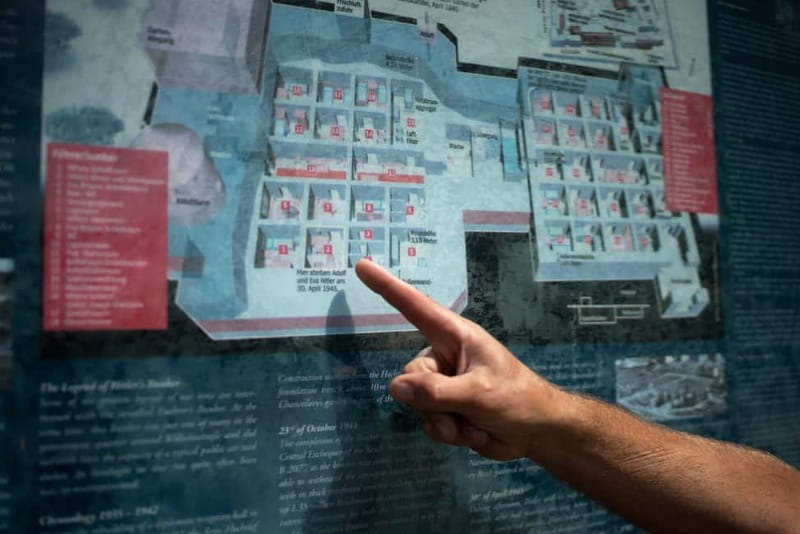
- Standing above Hitler’s Führer Bunker
- Learning at the Topography of Terror
- Reichstag, Brandenburg Gate, and the Soviet assault
- Seeing the Soviet War Memorial and wartime hardware
- Why the guides make or break the walk
- What three hours on foot really means
- Is $20 a fair price?
- Who should book this Berlin history tour?
- Should you book it?
- FAQ
- Where does the tour begin?
- How long does the walking tour last?
- Which languages are available?
- Does the tour visit inside Hitler’s bunker?
- Does the tour operate in bad weather?
- Is the tour private or shared?
Key points to know before you book
- Hitler’s final headquarters: You stand above the former Führer’s Bunker and hear how Hitler’s last days unfolded, including what happened to his remains.
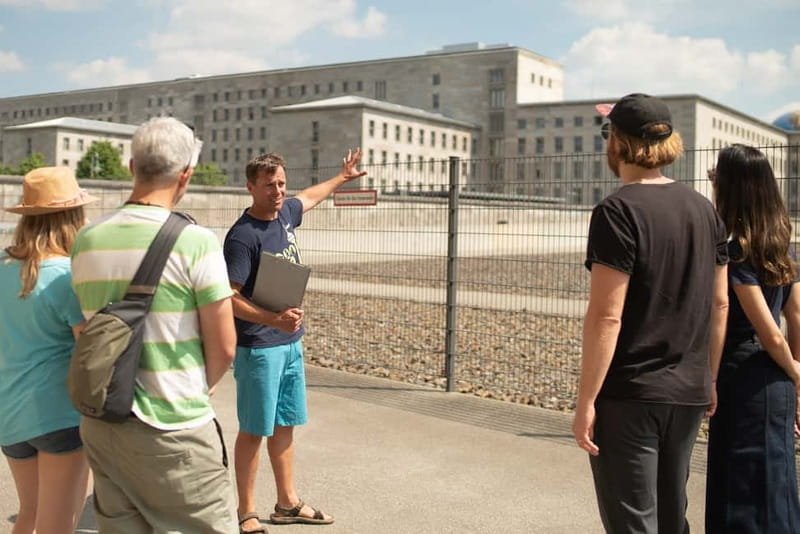
- Nazi power in plain sight: The route passes former sites linked to Goering, Goebbels, Himmler, the SS, the Gestapo, and the Luftwaffe.
- A useful three-hour route: The walk ties together the New Reich Chancellery site, Germania plans, Brandenburg Gate, the Reichstag, and the Soviet War Memorial.
- Topography of Terror stop: This important exhibit helps explain the machinery of Nazi persecution and terror.
- Strong guide performance: Hannah, Mikhail, Jimmy, Martin, Will, and others are praised for clarity, warmth, preparation, and careful answers to questions.
- Good value at $20: You get a guided historical route that would be difficult to understand fully from buildings alone.
Meeting the guide at Friedrichstraße Station
The tour begins outside Friedrichstraße train station, on the square between the station and the Tränenpalast, also called the Palace of Tears. The address provided is Reichstagufer 17, 10117 Berlin.
Look for a guide wearing a blue lanyard and yellow name tag, usually with yellow umbrellas. This meeting arrangement matters because Friedrichstraße is a busy transport point, and the square can be confusing if you arrive without checking the exact side of the station.
The activity ends back at the same meeting point. That makes the tour easy to fit into a day of sightseeing, since you are not left across town looking for your next train or museum. Arrive with enough time to identify the group before the walk begins.
You can book an English, German, or Spanish tour. Private and small-group options are available, though the standard group may feel less intimate. One participant enjoyed the guide but found the group size less comfortable, so choose a smaller option if you want more room for questions and closer contact with the guide.
More Third Reich & WWII Tours in Berlin
- Berlin: Third Reich and Cold War 2 Hour Walking Tour
★ 4.9 · 6,830 reviews - Berlin’s Best: 2 Hour Walking Tour Third Reich and the Cold War
★ 5.0 · 5,486 reviews - Third Reich Berlin: Hitler and WWII Walking Tour
★ 5.0 · 3,301 reviews
Starting with the machinery of Nazi power
The tour is not simply a parade of monuments. It uses former government offices and command centers to show how Nazi rule operated.
You pass the former Air Defence Ministry, connected with Hermann Goering and the Luftwaffe. This is a useful early stop because it places military planning in a physical setting. The Blitz and Germany’s air war can seem like distant textbook subjects, but a guide can explain how the institutions behind them worked from Berlin.
The route also points out the former Propaganda Ministry associated with Joseph Goebbels. Here, the focus shifts from military force to public messaging, censorship, and the shaping of opinion. The tour’s value comes from linking these functions rather than treating the war as a series of disconnected battles.
You also encounter the former headquarters of Heinrich Himmler’s SS and Gestapo. These locations represent the policing and terror system that backed Nazi rule. The subject is grim, and this is not a light sightseeing walk, but the guides are praised for discussing sensitive topics with care and respect.
I particularly like this part of the route because it avoids reducing the Third Reich to Hitler alone. The regime depended on ministries, police units, propaganda offices, military leaders, and civil servants. Seeing where these bodies worked helps you understand the scale of the system.
Following the planned Germania axis
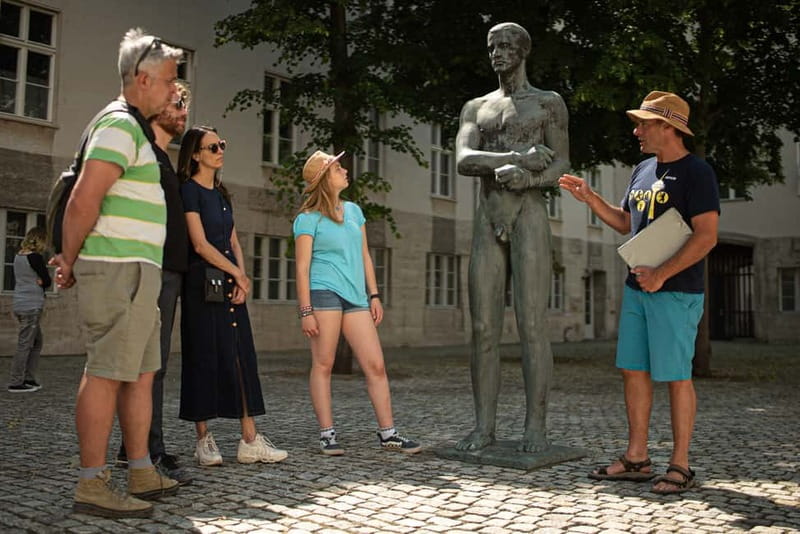
The tour explains Hitler’s vision for rebuilding Berlin as Germania, a vast redesign associated with architect Albert Speer. You walk along parts of the planned axis and hear how architecture was intended to project power.
This section is valuable because it shows that Nazi ambition was not only about war. The regime also tried to reshape the capital into a monumental political stage. The oversized plans reveal how leaders used streets, buildings, and ceremonial spaces to make authority feel permanent.
You should not expect a complete surviving Germania district. Much of the plan was never built, and wartime destruction changed the city. The interest lies in learning how the proposed design would have altered Berlin and how the remaining spaces relate to that vision.
A guide makes a major difference here. Without explanation, a broad avenue or ordinary-looking block may not communicate much. With the right context, you begin to see the city as a place where political ideas were physically planned.
Standing above Hitler’s Führer Bunker
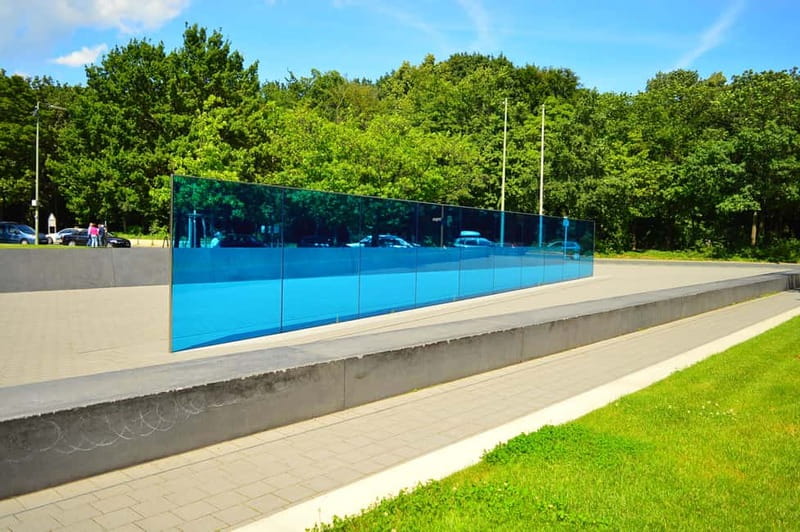
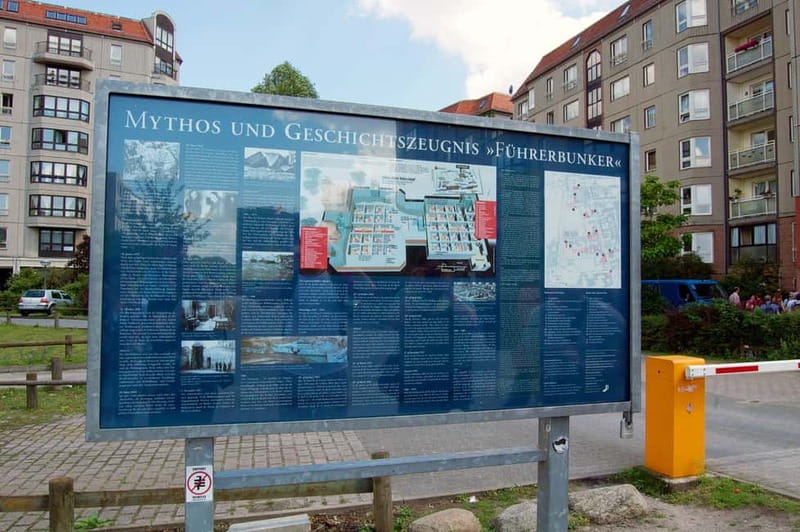
The stop above the Führer’s Bunker is one of the tour’s most striking moments. The bunker itself is not an open museum interior, and you should not expect underground rooms or a preserved command center. Instead, you stand at the location and hear the final chapter of Hitler’s rule.
The guide explains the sequence of Hitler’s last days, the collapse of the regime, and the fate of his remains. This is an important distinction: the power of the stop comes from the story and the location, not from a dramatic surviving structure.
The plainness of the site can surprise you. It does not look like a grand memorial to a dictator, and that is part of its meaning. The absence of a theatrical monument keeps attention on the historical facts rather than turning the location into a shrine.
The subject can attract sensational treatment, but this tour appears to take a more serious route. Hannah was praised for discussing sensitive material respectfully, while Mikhail was praised for bringing locations and events to life without losing a friendly, approachable manner. Those qualities matter at a site where tone is especially important.
More Walking Tours in Berlin
- Discover Berlin Half-Day Walking Tour
★ 5.0 · 9,624 reviews - Berlin: Discover Berlin Walking Tour
★ 4.9 · 5,998 reviews - Berlin: Hidden Backyards Guided Walking Tour
★ 4.8 · 5,360 reviews - Berlin: Alternative Berlin Walking Tour
★ 4.6 · 1,204 reviews
Learning at the Topography of Terror
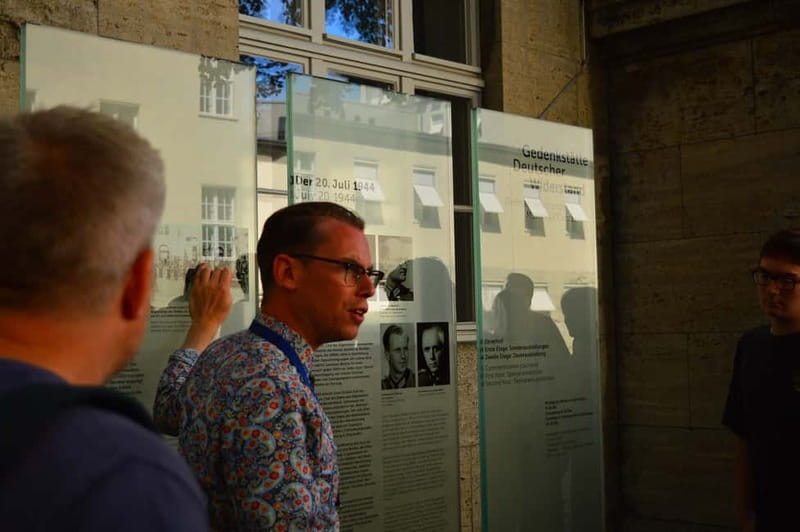
The Topography of Terror exhibit adds depth to the outdoor route. It focuses on the institutions of Nazi terror, including the SS and Gestapo, and helps place the nearby former headquarters into a wider system.
This stop is one reason the tour offers more than a simple walk past famous addresses. You get a chance to connect individual buildings with persecution, surveillance, imprisonment, and state violence. The exhibit gives the tour a stronger documentary base.
Time is the limit. A three-hour walking tour cannot offer the same study time as a full museum visit. If this subject is central to your trip, you may want to return to the Topography of Terror separately and allow more time. During the tour, listen closely and note anything you want to explore later.
The guide-led format works well for first-time visitors because the route gives you a framework. You learn what happened at each site, how the places relate to each other, and why they matter before moving on.
Reichstag, Brandenburg Gate, and the Soviet assault
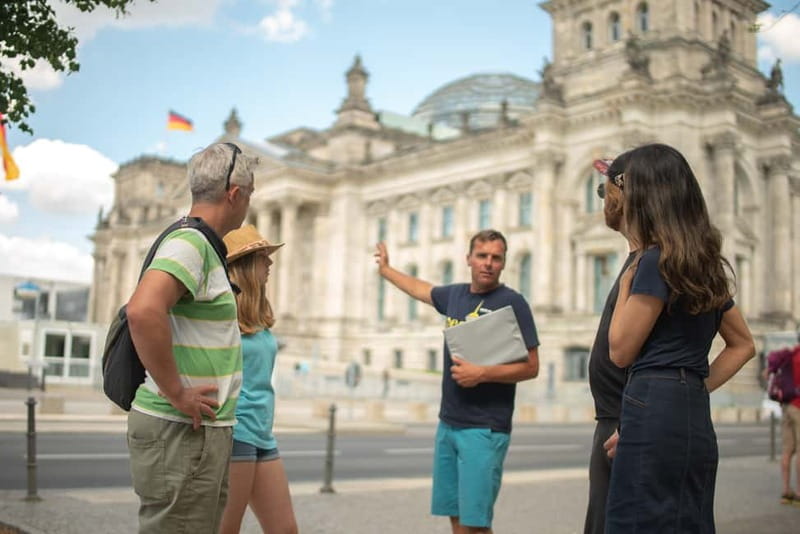
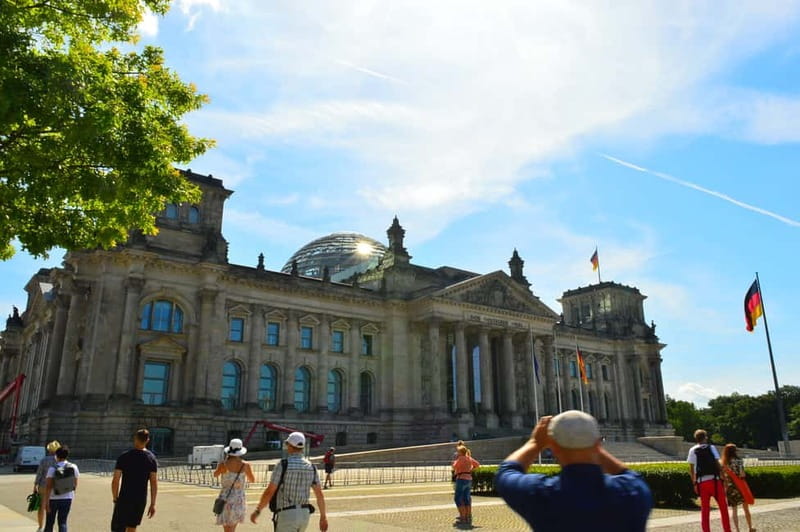
The route continues toward the Reichstag, described as the final battlefield of Nazi Germany. This brings the war to its closing stage and shifts attention from Nazi administration to the Soviet assault on Berlin.
The Reichstag is one of Berlin’s best-known landmarks, but its wartime role is easy to miss when you see it only as a modern parliament building. The guide explains its place in the final fighting and the symbolic importance of the Soviet capture.
You then pass through the Brandenburg Gate. Its story reaches beyond the Third Reich. It became a Nazi symbol, later sat near the Cold War divide, and now serves as one of the city’s most recognizable public spaces.
I like this broader timeline. The tour does not stop in 1945 and pretend the story ended there. By including the Cold War meaning of the Brandenburg Gate, it shows how Berlin repeatedly reused the same places for new political messages.
The route can be especially helpful if you are new to Berlin. Several major sights appear in one walk, but the guide gives them a historical connection instead of leaving you with a collection of photographs.
Seeing the Soviet War Memorial and wartime hardware
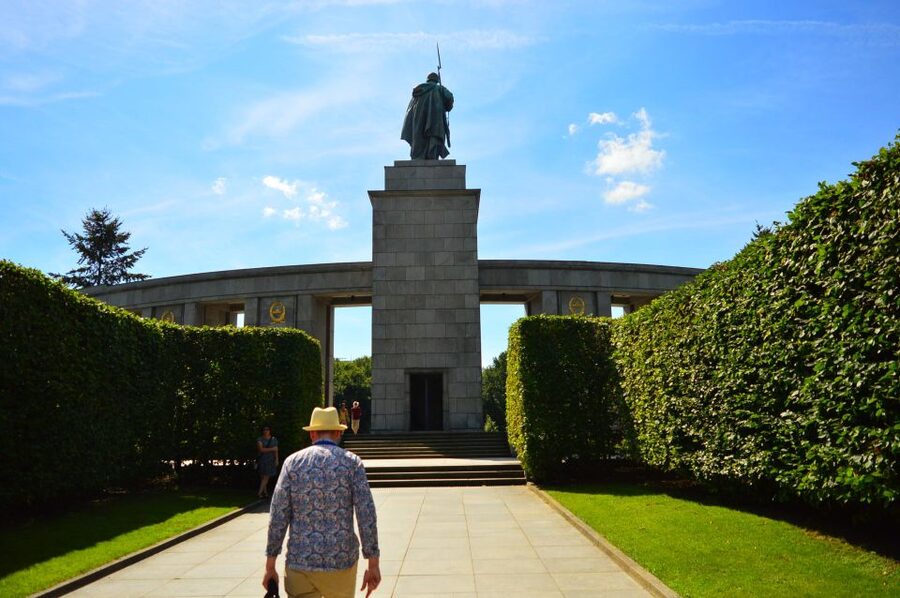
The final major stop is the Soviet War Memorial, with T-34 tanks and Red Army howitzers displayed beside it. The military equipment gives the site a physical presence that photographs cannot fully convey.
Here, the focus is on the Soviet assault and the cost of the battle for Berlin. The memorial also reminds you that the defeat of Nazi Germany came through a vast military campaign, not only through the political collapse inside Hitler’s bunker.
This stop adds balance to the route. The tour examines Nazi power in detail, but it also follows the force that defeated the regime and occupied Berlin. The tanks and artillery make that transition clear.
The memorial is also a place where different layers of twentieth-century history meet. Nazi rule, the destruction of Berlin, the Soviet victory, and the later division of Germany all connect through these central locations.
Why the guides make or break the walk
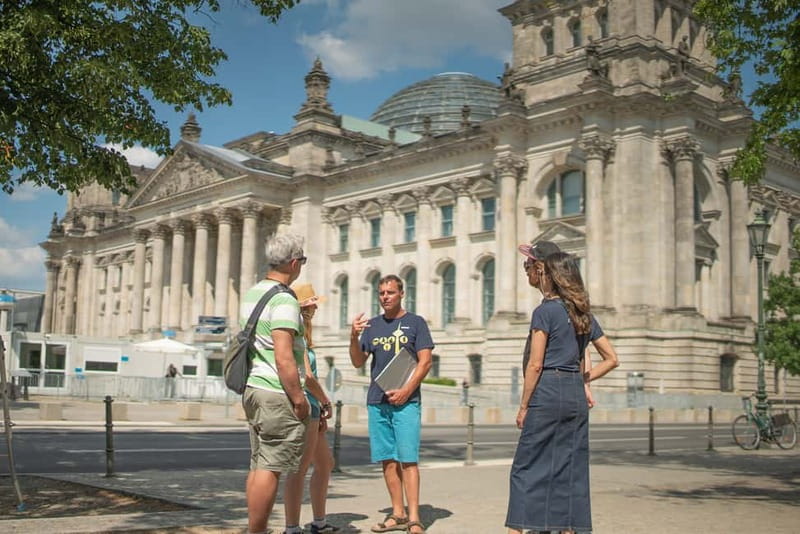
The guide is the heart of this experience. The route contains many important sites, but several are ordinary buildings, empty lots, or altered streets. You need clear storytelling to understand what once stood there and why it mattered.
The strongest praise goes to guides who combine facts with a human delivery. Hannah is described as passionate, patient, and careful with questions. Xavier is praised for noticing details that visitors might miss even at familiar landmarks. Jörg is remembered for his charisma, while Will is praised for bringing the history alive through extensive study.
Mikhail receives especially strong approval for combining Nazi history with Cold War and general Berlin context. Jimmy is praised for speaking clearly, covering many landmarks without rushing, and making three hours pass quickly. Martin is described as friendly, enthusiastic, and willing to encourage questions.
Other guides, including Josh, Rafa, Artie, Callum, Thomas, Mikey, Jasper, Tina, and Marty, are also praised for warmth, humor, strong preparation, and clear explanations. Guide quality can vary from one departure to another, but the repeated pattern is encouraging: the team appears to place real weight on historical accuracy and communication.
A word of caution: a lively guide can also move quickly, especially with a larger group. Stay close, listen for meeting instructions, and do not drift away while taking photographs. One person lost the group after checking work emails, so this is not a good time to multitask.
What three hours on foot really means
This is a walking tour, not a bus tour. Wear comfortable shoes and weather-appropriate clothing. The route operates in rain or shine, so check the forecast and bring what you need rather than hoping the weather will improve.
Plan for three hours without a scheduled water or toilet stop. Bring your own drink, and use facilities before meeting the guide. This is a small detail, but it can make a real difference on a long walk.
The emotional pace matters as much as the physical pace. You move through military planning, propaganda, police terror, dictatorship, war, suicide, Soviet victory, and later Cold War division. Give yourself some quiet time afterward if you need it.
Because the tour ends at the starting point, you can plan a meal or another central Berlin sight afterward. The return to Friedrichstraße also makes the route practical for combining with other parts of the city.
Is $20 a fair price?
At $20, this is good value if you want context rather than a self-guided list of addresses. The fee covers three hours of guiding and a carefully connected route through some of Berlin’s most important twentieth-century sites.
You are not paying for entry to a major museum, private transportation, or access inside the Führer’s Bunker. The value is in the interpretation, route planning, and the ability to ask questions as you go.
A private or small-group option costs more than the basic rate, but it may suit you if you want a slower pace or more time for discussion. The regular group is the better bargain for most people, provided you are comfortable staying close to the guide.
Free cancellation up to 24 hours before the tour and reserve-now, pay-later booking make it easier to fit into a changing Berlin schedule. Those terms are useful if your plans depend on weather, train arrivals, or other timed visits.
Who should book this Berlin history tour?
I would recommend it to first-time Berlin visitors, history students, adults interested in World War II, and anyone who wants the Nazi period explained through places rather than dates alone.
It is also a strong choice for families with older children or teenagers studying the subject. One guide was praised for making the tour useful to a student preparing for GCSE history, which suggests the material can work well in an educational setting.
You should think twice if you dislike long walks, difficult subject matter, or group tours. This is not a casual city stroll. The route deals directly with dictatorship, mass violence, war, and death.
You may also prefer a museum visit if you want extensive time with documents, photographs, and exhibits. This tour gives you locations and explanation, then keeps moving.
Should you book it?
Yes, if you want a serious and well-priced introduction to Nazi Berlin. The tour’s best feature is its connection between places: government offices, terror headquarters, the Germania plan, the bunker site, the Reichstag, Brandenburg Gate, and the Soviet War Memorial.
Book it for the guide’s interpretation, not for dramatic ruins. Much of the physical evidence has disappeared or changed, and the bunker is viewed from above ground. Bring water, wear good shoes, avoid multitasking, and consider a small-group option if you want more personal attention.
At $20 for three hours, this is one of the more useful ways to put central Berlin’s World War II story into order.
FAQ
Where does the tour begin?
It begins outside Friedrichstraße train station, on the square between the station and the Tränenpalast, also called the Palace of Tears. The listed address is Reichstagufer 17, 10117 Berlin.
How long does the walking tour last?
The tour lasts three hours. Starting times depend on availability when you book.
Which languages are available?
The tour is available in English, German, and Spanish.
Does the tour visit inside Hitler’s bunker?
No interior access is provided. You stand above the former Führer’s Bunker and learn about Hitler’s final days and the fate of his remains.
Does the tour operate in bad weather?
Yes. The tour operates rain or shine, so bring weather-appropriate clothing and comfortable shoes.
Is the tour private or shared?
Private and small-group options are available. The activity also offers a standard guided walking format, with the exact group type depending on the option you choose.
Just added around Berlin
- Private Food Tour Experience with a born and bred Berliner★ 5.0 · 14 reviews
- Berlin: Rheinsberg Palace Entrance Ticket★ 4.8 · 14 reviews
- Berlin in one day – day tour with an expert guide★ 5.0 · 14 reviews
- Berlin: Highlights of the City – a Private Bus Tour★ 5.0 · 14 reviews
- Private walking Tour: Berlin Architecture Tour★ 5.0 · 14 reviews
- Berlin Prenzlauer Berg: Scavenger Hunt Self-Guided Tour★ 4.6 · 14 reviews
- Berlin: Hidden gems around the Gendarmenmarkt – Guided walking tour★ 4.7 · 14 reviews
- Berlin: Fun Private Guided Sightseeing Tours with Teambikes★ 4.8 · 14 reviews
Third Reich & WWII Tours, compared.
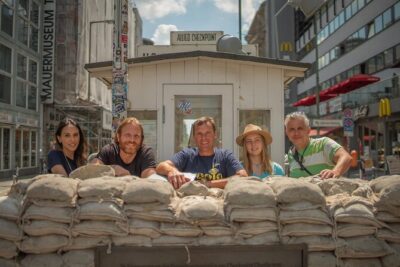
Berlin’s Best: 2 Hour Walking Tour Third Reich and the Cold War
Read our review →
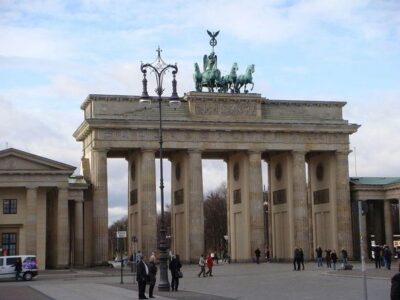
Third Reich Berlin: Hitler and WWII Walking Tour
Read our review →
Walking Tour of Former Nazi Party Rally Grounds
Read our review →

Berlin Third Reich Sites: Half-Day Walking Tour
Read our review →Browse the lists this tour appears in