
Reviewed · WALKING TOURS
Berlin: Hidden gems around the Gendarmenmarkt – Guided walking tour
Berlin keeps its best stories behind familiar facades. This two-hour walk around Gendarmenmarkt looks beyond the postcard view, linking grand buildings with writers, performers, bankers, fashion makers, and political turning points. I like the small-group size of no more than 15 people, and I like how the route reaches nearby streets that many city walks skip.
The main drawback is that the tour is offered in German only, so you will need strong German skills to follow the stories. It is also not suitable for people with visual or hearing impairments, despite being wheelchair accessible.
In This Review
- Key points at a glance
- Why Gendarmenmarkt rewards a closer look
- The German Cathedral, French Cathedral, and Konzerthaus
- E.T.A. Hoffmann and the creative side of the square
- The 1989 moment and Berlin’s changing political life
- Hausvogteiplatz and Berlin’s forgotten fashion center
- Jägerstraße, the Mendelssohn bank, and Berlin’s thinkers
- A small group makes the storytelling easier
- Price, language, and practical fit
- Who will enjoy this Berlin walk most
- Should you book the Gendarmenmarkt tour?
- FAQ
- How long does the walking tour last?
- Where does the tour begin?
- Where does the tour end?
- What language is the tour offered in?
- How large is the group?
- Is the tour wheelchair accessible?
- Can I cancel for a refund?
Key points at a glance
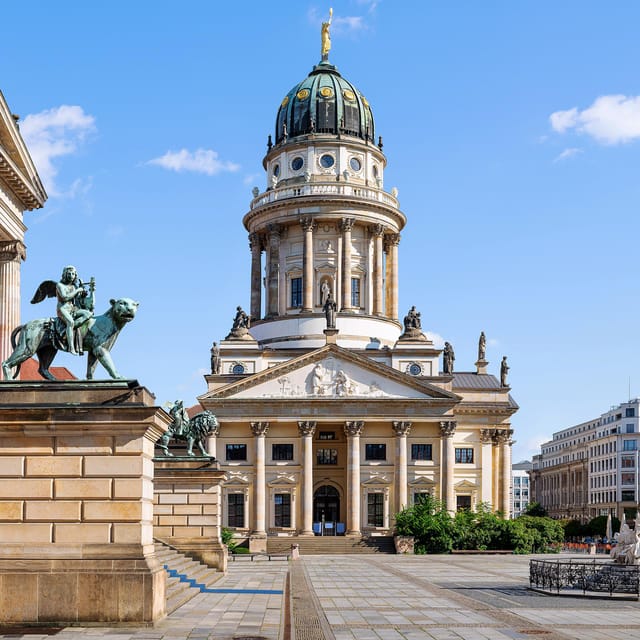
- Three famous buildings in one square: Study the German Cathedral, French Cathedral, and Konzerthaus while learning why each matters.
- A wider route than Gendarmenmarkt alone: The walk continues to Mohrenstraße, Hausvogteiplatz, and Jägerstraße.
- A direct link to 1989: Visit the place where freedom of travel was proclaimed during a major turning point in German history.
- Berlin’s fashion past: Learn how Hausvogteiplatz became a center of the city’s clothing trade.
- Artists and thinkers in the story: E.T.A. Hoffmann, Josephine Baker, Marlene Dietrich, Claire Waldoff, and the Mendelssohn family all enter the tour.
- Good value for a focused walk: At $20 per person, the tour offers two hours of live guiding in a group capped at 15.
Why Gendarmenmarkt rewards a closer look
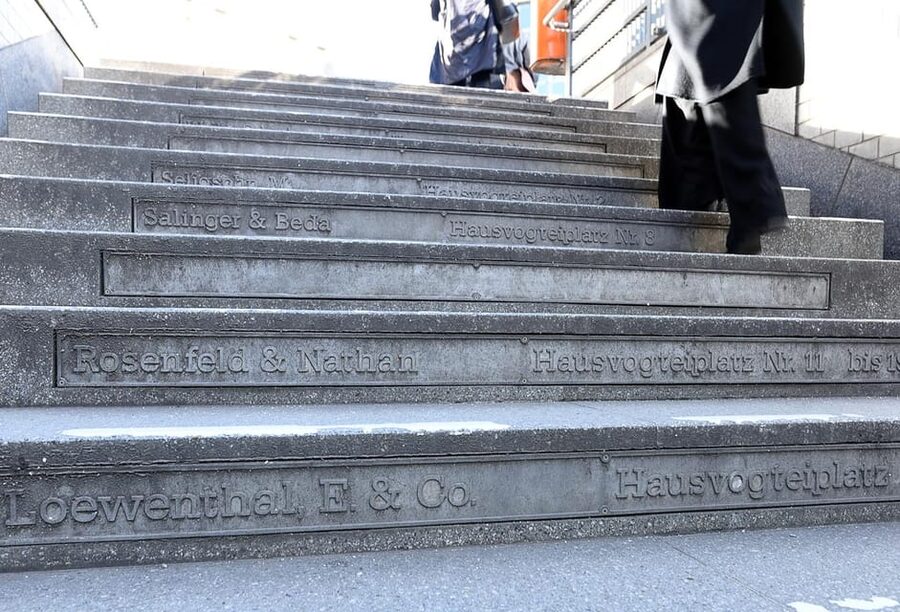
Gendarmenmarkt is often introduced as one of Berlin’s most beautiful squares. That description makes sense once you see the three major buildings arranged around it: the German Cathedral, the French Cathedral, and the Konzerthaus.
Yet the square can feel almost too polished at first. Its symmetrical design and grand stone facades invite a quick photograph, then many people move on. This tour asks you to slow down and ask better questions. Why are there two cathedral buildings? What did the square represent in different periods? Which parts of its appearance are old, restored, or still changing?
That shift in attention is the real strength of the walk. You are not simply being shown attractive architecture. You are being given a way to read the square as a record of Berlin’s changing politics, culture, religion, and commercial life.
The route also explains why Gendarmenmarkt has been a major construction site since 2023. That matters if you are visiting soon, since construction can affect what you see and how the square feels. A good guide helps you understand the current setting instead of pretending the site looks exactly as it did in older photographs.
More Walking Tours in Berlin
- Discover Berlin Half-Day Walking Tour
★ 5.0 · 9,624 reviews - Berlin: Third Reich and Cold War 2 Hour Walking Tour
★ 4.9 · 6,830 reviews - Berlin: Discover Berlin Walking Tour
★ 4.9 · 5,998 reviews
The German Cathedral, French Cathedral, and Konzerthaus
The tour begins with the three buildings that define Gendarmenmarkt. The German Cathedral and French Cathedral face each other across the square, while the Konzerthaus occupies the center between them.
You will hear about their architectural features and their roles in the city. The paired cathedral buildings give the square its unusual balance, but they also point to Berlin’s religious and civic past. Their presence is not just decorative. Each building helps explain how the square developed and why this location became so important.
The Konzerthaus adds another layer. Its cultural role gives the square a different mood from Berlin’s government district or museum quarter. The guide connects the architecture to the people and events associated with the area, which helps prevent the explanation from becoming a list of dates and building names.
I especially like this opening because it gives you a useful visual framework. After the tour, you can look at the square and understand how its buildings relate to each other. You may also notice details you would have passed without a guide.
One practical point: if construction work remains active, views or access may not match the ideal picture in your head. That is not a reason to avoid the walk, but it is worth knowing that the tour includes a square in transition.
E.T.A. Hoffmann and the creative side of the square
Gendarmenmarkt is not told only through rulers, architects, and official institutions. The route brings in E.T.A. Hoffmann, the writer and composer whose connection to the area adds a more personal and artistic note.
This part of the walk helps you picture Berlin as a place shaped by creative lives, not simply by grand plans. Hoffmann’s presence broadens the story beyond the buildings themselves. You begin to see the square and its surrounding streets as places where music, writing, performance, and public life overlapped.
The tour also introduces Josephine Baker, Marlene Dietrich, and Claire Waldoff. Their careers represent different sides of Berlin’s entertainment culture and show how the city developed a strong public identity through stage performance, music, dance, and cabaret.
These names are especially useful for visitors who want more than military or political history. You get a sense of the people who gave Berlin its cultural character. The guide’s job here is to connect each person to the place, rather than simply dropping famous names into the conversation.
A review of the experience praised the way Susanne connected people, personalities, and the development of the area across centuries. That is a useful clue about the style of the tour: expect storytelling that links individual lives to the streets around you.
The 1989 moment and Berlin’s changing political life
One of the most meaningful stops is the place where freedom of travel was proclaimed in 1989. This was a turning point in German history, and the tour gives you a chance to connect a major political event with a specific location in central Berlin.
The value of this stop lies in its scale. Berlin’s division and reunification can feel like very large subjects, told through museums, memorials, and timelines. Here, the story becomes tied to an actual place you can visit on foot.
You will not just hear that 1989 changed Germany. You will learn where a key statement was made and consider what that announcement meant for people whose movement had been restricted. The stop adds emotional weight to an otherwise elegant square.
For me, this is one of the strongest reasons to choose the tour. It shows that Gendarmenmarkt is not frozen in an earlier age of imperial buildings and cultural institutions. The square and nearby streets also belong to the story of a divided city trying to change its future.
The guide’s German-only format matters most here. Political history often depends on careful wording and context, so you will get much more from this stop if you can follow spoken German comfortably.
Something different for another day:
- Berlin: Reichstag, Dome and Government District Guided Tour
★ 4.7 · 18,288 reviews - Berlin: 1-Hour City Tour by Boat with Guaranteed Seating
★ 4.3 · 16,993 reviews - Berlin: Boat Tour Along the River Spree
★ 4.4 · 11,252 reviews - Berlin: Hop-on Hop-off Bus Tour with Live Commentary
★ 4.3 · 8,579 reviews
Hausvogteiplatz and Berlin’s forgotten fashion center
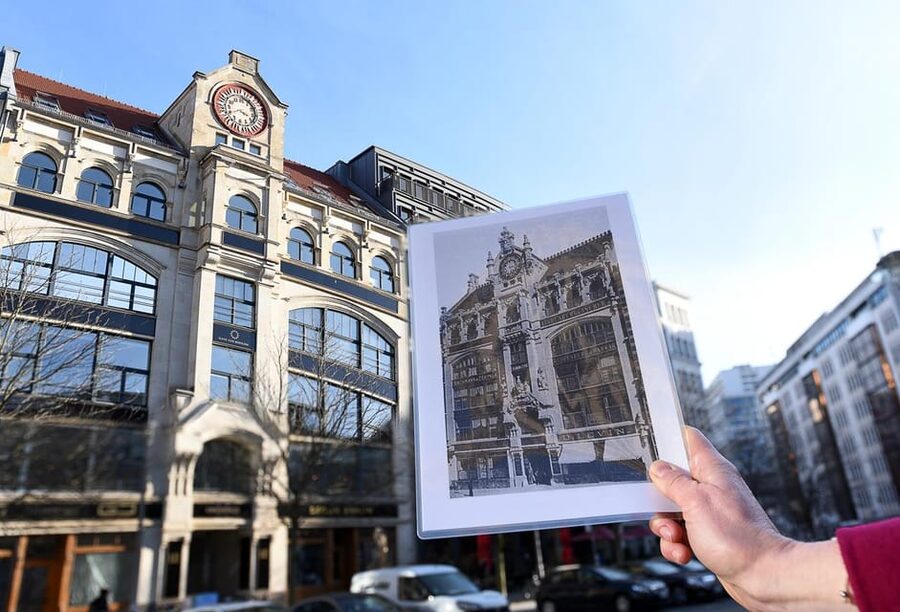
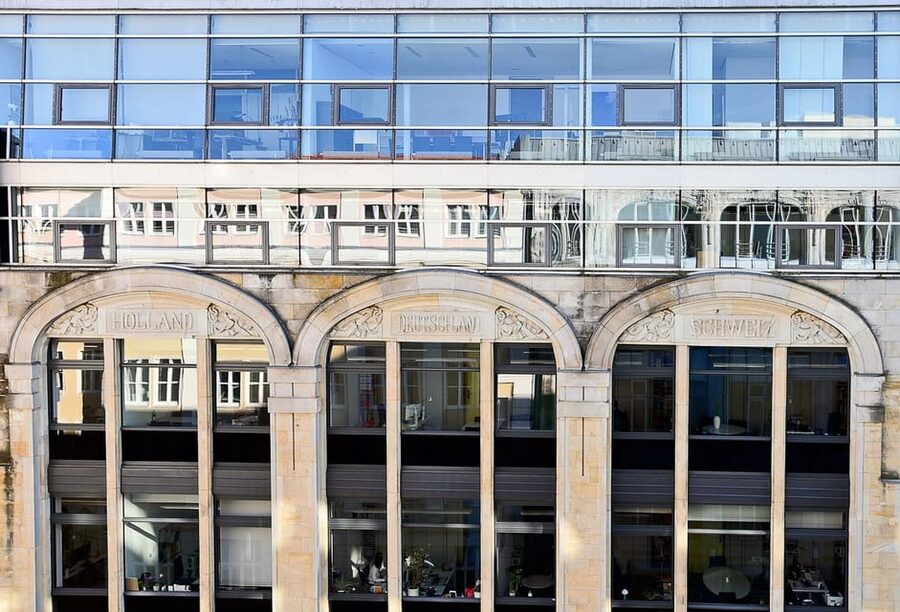
A short walk from Gendarmenmarkt brings you to Hausvogteiplatz, once a center of Berlin’s fashion industry. This is an excellent change of subject after the square’s architecture and political history.
Berlin is now widely associated with fashion and design, but the tour shows that the city’s connection to clothing and style has older roots. You will learn how Berlin developed into a fashion metropolis and which creative people helped shape that world.
Hausvogteiplatz is valuable because it demonstrates how an ordinary-looking urban area can hold a major commercial story. You may not recognize the streets as a fashion district today. That contrast is part of the appeal. The guide helps you imagine the businesses, workers, and creative activity that once gave the area a different identity.
This stop also makes the tour more useful for repeat visitors. If you have already seen the main sights around Berlin-Mitte, a street with a less obvious story can be more rewarding than another familiar monument.
Do not expect a shopping visit or a fashion exhibition. The experience is a walking history lesson about the district and its role in Berlin’s clothing industry. Its strength is context, not retail.
Jägerstraße, the Mendelssohn bank, and Berlin’s thinkers
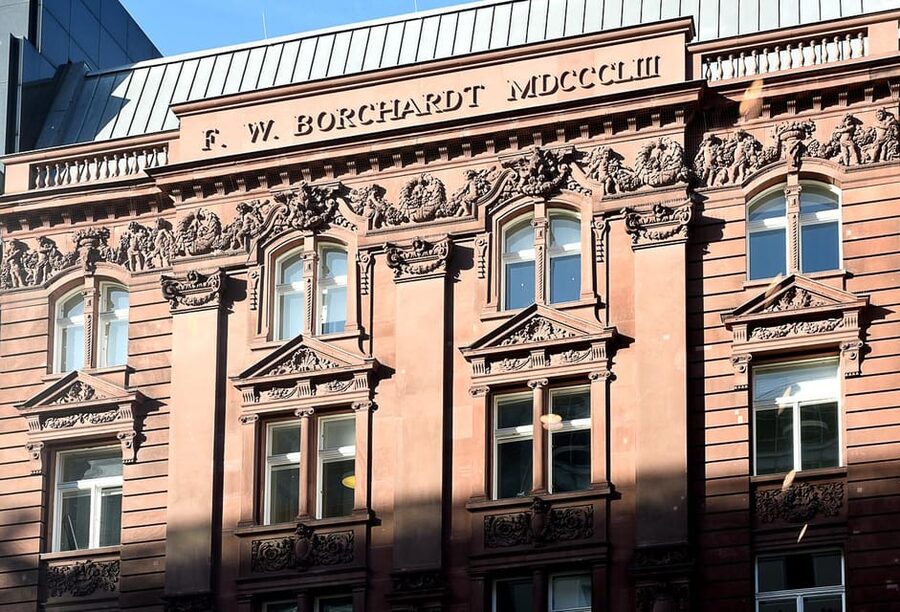
Jägerstraße adds finance and intellectual life to the route. The street was once associated with Berlin’s banking world, including the influential Mendelssohn Bank.
The Mendelssohn family also connects the street to culture and public thought. The tour introduces figures such as Alexander von Humboldt, Rahel Varnhagen van Ense, and Moses Mendelssohn, whose ideas and social circles helped shape Berlin’s intellectual life.
This combination makes Jägerstraße one of the most interesting parts of the route. Banking, philosophy, science, literature, and social debate appear together in one small area. That tells you something important about historic Berlin: commercial power and cultural influence were often close neighbors.
The route does not treat Jägerstraße as a separate subject with no link to Gendarmenmarkt. Instead, it widens your understanding of the district. The square was part of a larger network of financial institutions, private gatherings, cultural figures, and public discussion.
If you enjoy city walks that explain how neighborhoods functioned, you will probably appreciate this section. If your ideal tour is mostly architecture and photographs, the names and connections may feel more demanding. The tour works best when you enjoy listening and building a picture in your mind.
A small group makes the storytelling easier
The group is limited to 15 people. That is a useful middle ground. You still get the social feel of a shared walk, but the guide can speak to a reasonably compact group rather than a crowd spread across a sidewalk.
A small group also suits this particular route. The stories involve several people, streets, and periods, so it helps to stay close enough to hear every explanation. You will want to keep your attention on the guide while moving through central Berlin, especially when the group leaves the main square for the surrounding streets.
The experience lasts two hours. That is long enough to cover Gendarmenmarkt, the 1989 stop, Hausvogteiplatz, and Jägerstraße without turning the outing into a full-day commitment.
You should still wear comfortable shoes and arrive ready to walk continuously. The tour is a guided walking experience, not a seated presentation. The meeting point is at Gendarmenmarkt, opposite the building at Französische Straße 44, and the walk finishes back at that same meeting point.
Price, language, and practical fit
At $20 per person, this is a fair price for a two-hour guided walk in a group of up to 15. The value comes from the connections between subjects: architecture, 1989, fashion, banking, music, performance, and Berlin’s intellectual life.
You are paying for interpretation rather than admission to a major interior attraction. No entry tickets or special transport are part of the experience. If you prefer to explore at your own pace, you could see the square without paying anything, but you would miss the organized story that links the surrounding streets.
The live guide speaks German. This is the single biggest factor in deciding if the tour suits you. If you understand German well, the language gives you direct access to the guide’s storytelling. If you do not, the experience is unlikely to offer enough value, since the main benefit is the spoken explanation.
The walk is wheelchair accessible. However, it is not suitable for people with visual impairments or hearing impairments. That information may seem surprising alongside the wheelchair access, but it is important to take it seriously before booking.
You can cancel up to 24 hours in advance for a full refund, and you can reserve the place while paying later. Tips are not included, so plan to tip separately if you feel the guide has earned it.
Who will enjoy this Berlin walk most
I would recommend this tour to you if you have already seen Berlin’s headline sights and want a more focused look at Mitte. It is also a good first walk if you prefer cultural and social history to a checklist of monuments.
You will get the most from it if you:
- Understand spoken German well.
- Enjoy stories about people as much as buildings.
- Want to connect 1989 with a precise place in Berlin.
- Like learning how fashion, banking, performance, and intellectual life shaped a district.
- Prefer a two-hour activity over a long full-day tour.
- Value a small group with a live guide.
You may want to skip it if you need an English-language tour, dislike walking between several nearby streets, or mainly want to enter buildings and see interiors. The route focuses on outdoor places and explanation.
The rating of 4.7 from 14 reviews fits the experience described here. The strongest praise centers on informative content, a friendly and capable guide, and the way Susanne brought together people, places, and centuries of change. Those are meaningful strengths for a history-focused walk.
Should you book the Gendarmenmarkt tour?
Book it if you want to see Gendarmenmarkt as more than a pretty square. For $20, you get two hours of focused guiding, a small group, and a route that reaches the 1989 freedom of travel site, Hausvogteiplatz’s fashion story, and Jägerstraße’s banking and intellectual past.
I would make the decision based on language first. German speakers who enjoy thoughtful urban history should find this a strong value. For everyone else, the square is still worth visiting independently, but this particular experience depends too heavily on the live German commentary to work well without it.
FAQ
How long does the walking tour last?
The tour lasts two hours.
Where does the tour begin?
It begins at Gendarmenmarkt, opposite the building at Französische Straße 44.
Where does the tour end?
The activity ends back at the meeting point.
What language is the tour offered in?
The live tour guide speaks German, and the listed tour language is German.
How large is the group?
The guided walk is offered in a small group of no more than 15 people.
Is the tour wheelchair accessible?
Yes, the activity is listed as wheelchair accessible.
Can I cancel for a refund?
Yes. You can cancel up to 24 hours in advance for a full refund.
Just added around Berlin
- Berlin: Private Guided Tour of the Main Sights★ 5.0 · 13 reviews
- Private Highlights of Berlin Bike Tour★ 5.0 · 13 reviews
- Modern Berlin Private Walking Tour: Diverse, Vibrant and Exciting German Capital★ 5.0 · 13 reviews
- Tour in Berlin from Warnemünde and Rostock Cruise Port★ 4.1 · 13 reviews
- Berlin: Stasi Museum Private Guided Tour with Entry Ticket★ 4.8 · 13 reviews
- Private Food Tour Experience with a born and bred Berliner★ 5.0 · 14 reviews
- Berlin: Rheinsberg Palace Entrance Ticket★ 4.8 · 14 reviews
- Berlin in one day – day tour with an expert guide★ 5.0 · 14 reviews
Walking Tours, compared.



Berlin’s Best: 2 Hour Walking Tour Third Reich and the Cold War
Read our review →
Third Reich Berlin: Hitler and WWII Walking Tour
Read our review →Browse the lists this tour appears in