
Reviewed · HOP-ON HOP-OFF BUS TOURS
Berlin: Hop-on Hop-off Bus Tour with Live Commentary
Berlin rewards a good first look. This one-day bus tour links major sights with lively commentary from local guides, so you get the city’s broad story without wrestling with its wide streets and scattered landmarks. I especially like the easy hop-on, hop-off format and the chance to hear Berlin explained by guides such as Otti, Dimitri, Steve, and Thilo. The main catch is that English commentary shares time with German, and some buses may be older or run a longer route because of bridge and road restrictions.
For $22, I think this is a strong orientation tour, especially if you have only a day or two in Berlin. You can ride past Potsdamer Platz, Museum Island, the Brandenburg Gate, the Reichstag, and Tiergarten, then get off where you want to look closer. Just start early: buses generally run from about 9:30 AM to 5 PM, and winter service is less frequent.
In This Review
- Key points to know before you board
- Why this bus works well for a first Berlin day
- Kurfürstendamm, KaDeWe, and the western start
- Potsdamer Platz and the Topography of Terror
- Gendarmenmarkt, Alexanderplatz, and the city center
- Museum Island and Unter den Linden
- Brandenburg Gate, the Holocaust Memorial, and the Reichstag
- Tiergarten, Bellevue Palace, and the return west
- Live commentary, language, and bus comfort
- Timetables, delays, and how to use your day
- Who should pay $22 for this tour?
- Should you book it?
- FAQ
- How much does the Berlin hop-on hop-off bus tour cost?
- How long is the ticket valid?
- What languages are available?
- Where can I start the tour?
- What time do the buses usually run?
- How often do buses run during the rest of the year?
- Is a live guide guaranteed?
- Is the bus wheelchair accessible?
- Can I bring luggage or large bags?
- Can the route change?
Key points to know before you board
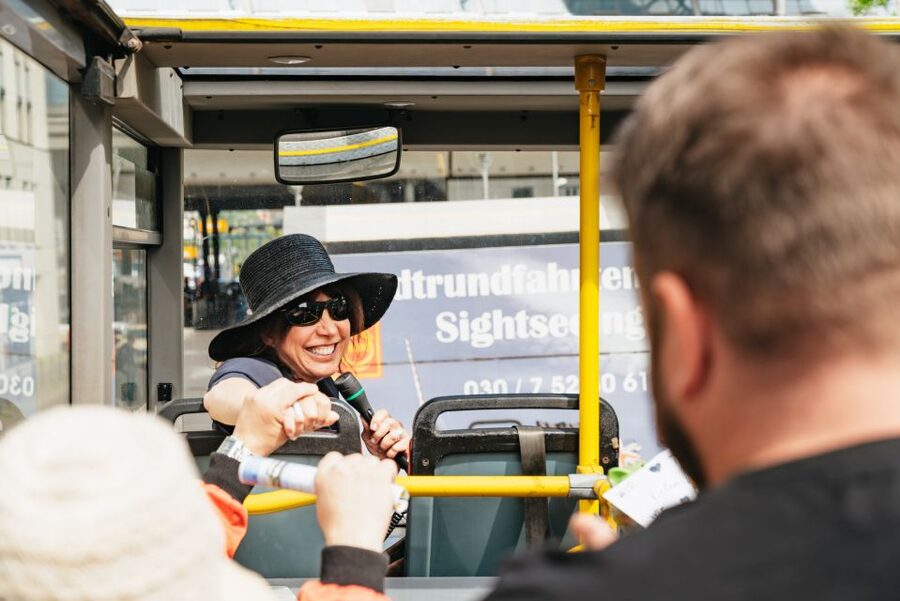
- Live guides make the difference: Guides switch between German and English and often add personal stories, humor, and practical museum advice.
- The route covers Berlin’s big picture: You pass Potsdamer Platz, Checkpoint Charlie, Gendarmenmarkt, Alexanderplatz, Museum Island, the Brandenburg Gate, the Reichstag, and Bellevue Palace.
- A full day gives the best value: Use the bus as both a sightseeing ride and transport between several stops.
- English is not always exclusive: Commentary is bilingual, so you may miss a detail while the guide is speaking German.
- Expect route changes: Heavy-vehicle restrictions near Unter den Linden, plus damaged bridges, can cause detours or delays.
- The service is accessible and flexible: You can board at any listed stop, and wheelchair access is available.
Why this bus works well for a first Berlin day
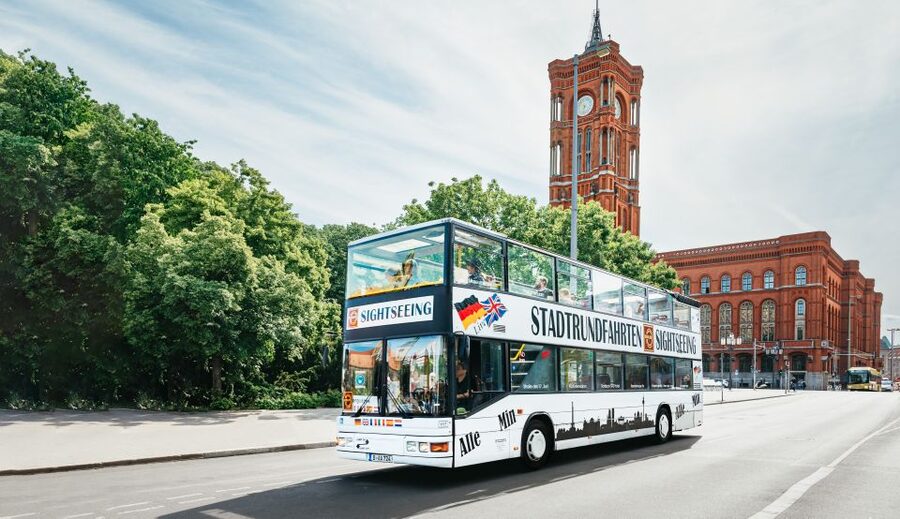
Berlin is spread out. Its sights do not gather around one compact old town, and the city’s story crosses several districts. A bus ride gives you a useful map in your head before you spend time inside museums or memorials.
The tour begins at Kurfürstendamm 231, in front of Galeria, but you can board at any stop. That flexibility matters. If you are staying near the main station, for example, the Hauptbahnhof stop is a practical starting point. You can also begin near KaDeWe, Potsdamer Platz, Alexanderplatz, Museum Island, the Brandenburg Gate, or Zoologischer Garten.
The guides are the heart of the experience. Otti has been praised for funny, engaging commentary and excellent English. Dimitri is warm and helpful, with useful suggestions for museums. Steve, Simon, Kerstin, Stephanie, Martin, and Thilo have also been singled out for clear explanations and lively delivery.
I would not expect every guide to be identical. One guide may offer personal stories and jokes, while another may give a thinner narration. That variation is normal on a live city route, but it is worth knowing if you want a carefully scripted tour.
More Hop-On Hop-Off Bus Tours in Berlin
- Berlin: City Sightseeing Hop-On Hop-Off Bus Tour
★ 4.1 · 4,233 reviews - Berlin: Hop-On Hop-Off Sightseeing Bus with Boat Options
★ 4.3 · 4,012 reviews - Berlin: East and West Hop-On Hop-Off Bus Tour
★ 4.2 · 2,195 reviews
Kurfürstendamm, KaDeWe, and the western start
The western end of the route gives you a modern Berlin opening. Kurfürstendamm is one of the city’s best-known shopping streets, with Galeria at the starting point and KaDeWe nearby. The bus also passes Bikini Berlin and Zoologischer Garten Station before returning to the start.
You do not need to get off here if your priority is Berlin’s political and historical center. Still, the area works well for shopping, a hotel near the western center, or a first ride that lets you settle into the city.
Lützowplatz and the Philharmonic stop lead toward the Kulturforum. From the bus, you get a sense of how Berlin places major cultural buildings beside broad roads and open spaces. If you plan to visit a museum in the Kulturforum, check the route timing before getting off, since you will need to allow for the next bus.
Potsdamer Platz and the Topography of Terror
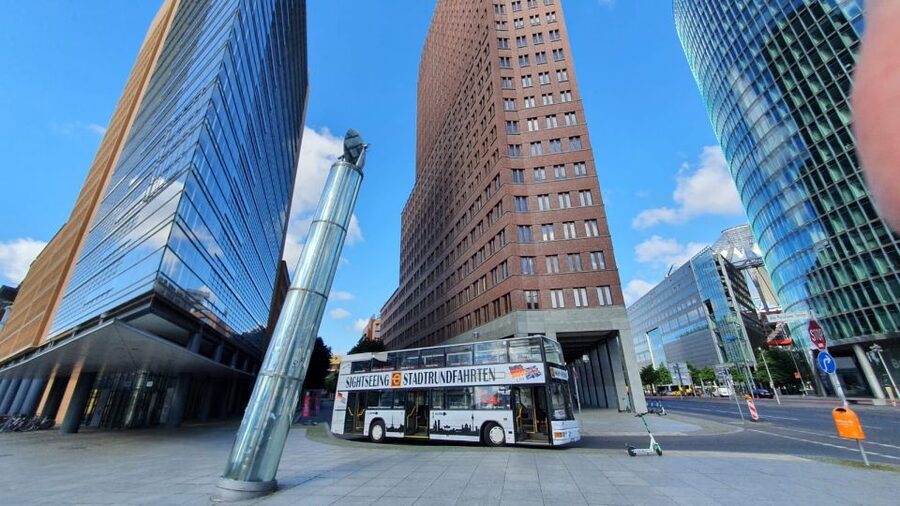
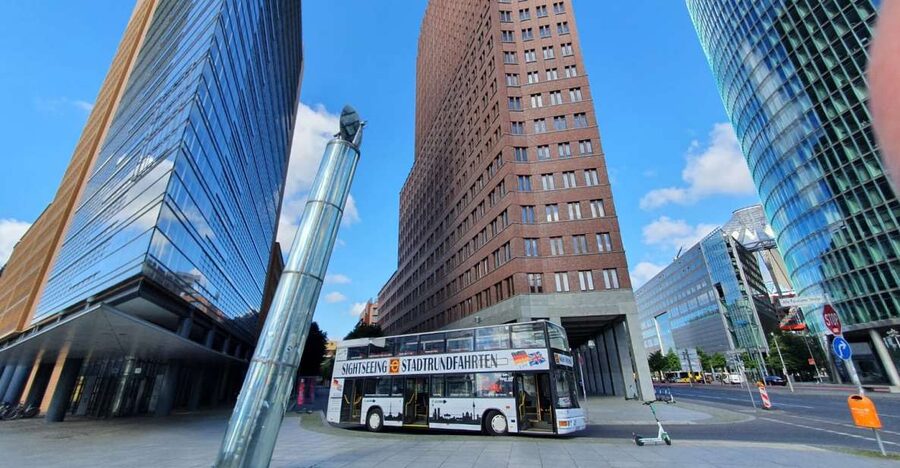
Potsdamer Platz is one of the clearest examples of Berlin’s 20th-century upheaval. Before the Second World War, it was a major public square. After the war, the Berlin Wall cut through the area, leaving a broad strip of restricted ground between East and West Berlin.
Today, towers fill the site, and the square has shops, restaurants, cinemas, and the Legoland Discovery Center. From the bus, the contrast is striking. You are looking at a busy urban district built on land that was once nearly empty and heavily guarded.
Get off at the Kolhoff Tower or the Potsdamer Platz and Linkstraße stops if you want time here. The tour description also points to a boat connection farther along the route, but this is not included in the bus ticket.
Next comes Niederkirchnerstraße and the Topography of Terror. This documentation center examines Nazi persecution and the suffering of Jewish people under the Nazi regime. Nearby are the Berlin parliament, Martin-Gropius-Bau, and the former Nazi Ministry of Aviation, now the Ministry of Finance.
This is an area where a quick bus explanation is useful, but a short stop can feel inadequate. If you want to understand the Topography of Terror, plan time to enter the museum. The bus provides context and orientation, not a substitute for the exhibits.
Checkpoint Charlie is another pass-by stop. It is an important Cold War location, but the present-day setting can feel heavily packaged for sightseeing. I would use the bus commentary to place it in the story, then decide if you want to stop at the Wall Museum.
Gendarmenmarkt, Alexanderplatz, and the city center
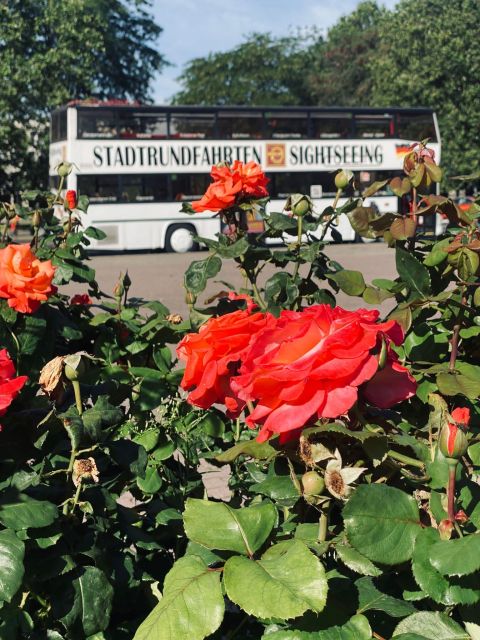
The route continues to Gendarmenmarkt, one of central Berlin’s handsome squares. The surrounding buildings give you a good sense of the city’s formal Prussian and imperial design, though construction, events, or seasonal markets can change the bus stop.
At Alexanderplatz, the TV Tower is the easy landmark. The bus stop is near the Neptune Fountain, between the Red City Hall and the fountain. This area is useful for shopping and for seeing a very different side of Berlin, with large pedestrian spaces, postwar architecture, and the TV Tower rising above it.
The Neptune Fountain area may close during the Christmas market. In that case, use the Karl-Liebknecht-Straße stop instead. It is a small operational detail, but it can save you from waiting at a stop where no bus will arrive.
The next stop, Karl-Liebknecht-Straße 5, is outside the Radisson Hotel. From here, you can transfer to a boat if you have arranged a separate boat experience. You can also look toward the golden dome of the New Synagogue on Oranienburger Straße, with Hackesche Höfe a few minutes away.
Something different for another day:
- Berlin: Reichstag, Dome and Government District Guided Tour
★ 4.7 · 18,288 reviews - Berlin: 1-Hour City Tour by Boat with Guaranteed Seating
★ 4.3 · 16,993 reviews - Berlin: Boat Tour Along the River Spree
★ 4.4 · 11,252 reviews - Discover Berlin Half-Day Walking Tour
★ 5.0 · 9,624 reviews
Museum Island and Unter den Linden
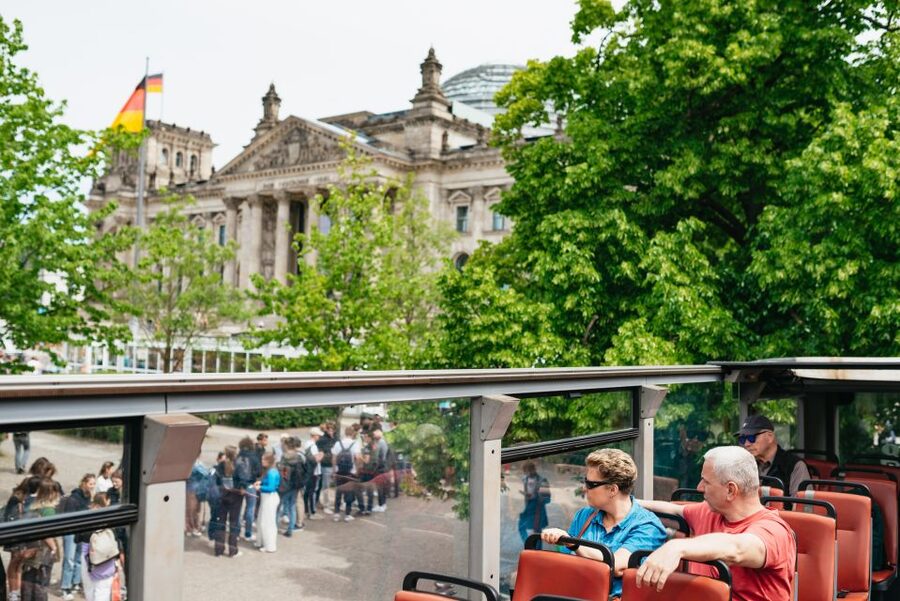
Museum Island and the Humboldt Forum are among the most useful stops for a first visit. The area brings together major museums, the Berlin Cathedral, and the site of the former Berlin City Palace. From the bus, you get the broad layout. On foot, you can spend hours exploring.
The route then follows Unter den Linden, Berlin’s grand central boulevard. Along the way are Humboldt University, Bebelplatz, the Bud Spencer Museum at Unter den Linden 10, Friedrichstraße, the ZDF Capital City Studios, and Madame Tussauds Berlin at number 74.
The route details contain an important warning here. A tunnel structure under Unter den Linden is considered unsafe for heavy vehicles, so some buses must bypass part of the street. At times, stops 11 through 13 cannot be reached. The detour may take you past Hackescher Markt, the New Synagogue, and Friedrichstadt-Palast instead.
I see this as both a drawback and a bonus. You may miss the exact stop you planned to use, but the alternate route still shows worthwhile central sights. Ask the guide or driver where to board next if you are trying to reach Museum Island or one of the Unter den Linden stops.
Brandenburg Gate, the Holocaust Memorial, and the Reichstag
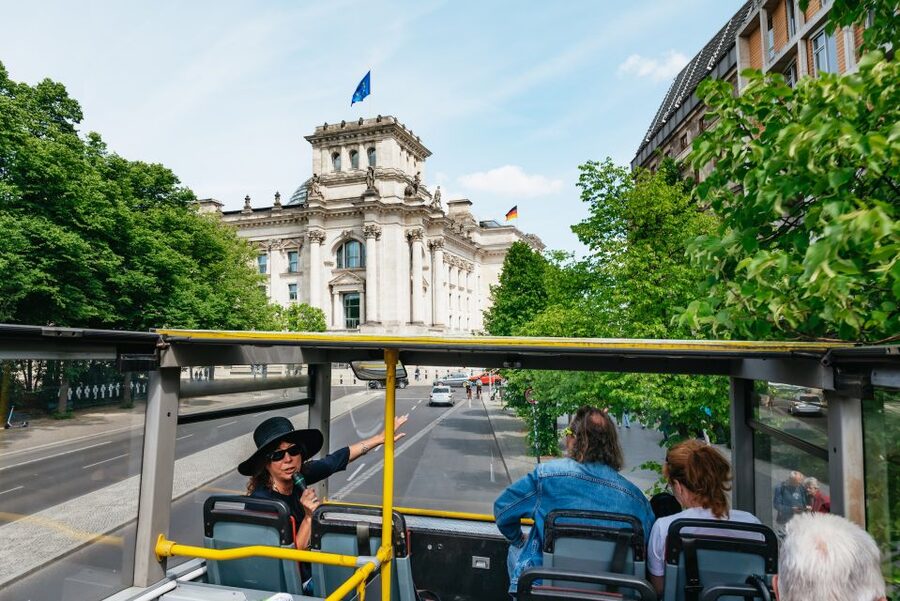
The approach to the Brandenburg Gate is one of the strongest parts of the ride. The bus passes the embassies of the United Kingdom, Russia, France, and the United States, then reaches the Holocaust Memorial and Platz des 18. März.
The memorial needs quiet and time. From the upper deck, you get an overview, but I would get off and walk through the field of concrete blocks if your schedule allows. The bus guide can provide historical framing, while the site itself asks for a slower response.
The Brandenburg Gate is Berlin’s great symbol of division and reunification. The route gives you a clear look at its position at the end of Unter den Linden and beside the former Wall zone. It is also a practical stop for walking to nearby sights.
Next comes the Reichstag and the government district. The bus continues to Berlin Hauptbahnhof, where you can see the German Chancellery and the Reichstag from a different angle. The view from the main station area is especially useful because the government buildings are spread across open spaces rather than gathered in a traditional civic square.
The description also mentions Berlin’s Fujiyama, a playful local reference visible from this section of the route. Your guide may explain the nickname and point it out as the bus passes.
Tiergarten, Bellevue Palace, and the return west
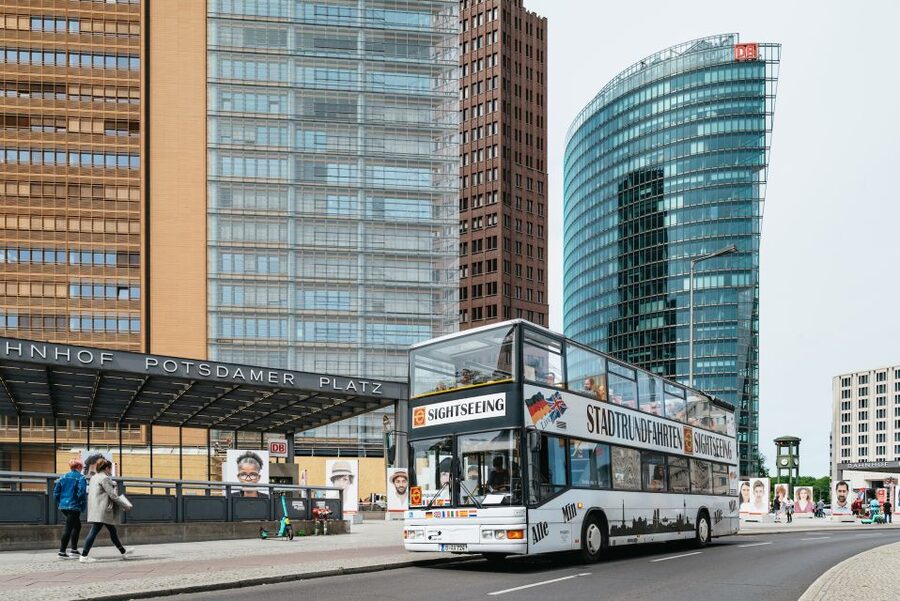
The route then crosses Tiergarten, Berlin’s large central park and the city’s green lung. It is bigger than New York’s Central Park, and the change from government buildings to trees gives the ride a welcome pause.
The bus passes Haus der Kulturen der Welt, also called the Congress Hall, though that stop is currently listed as out of order. It continues to Bellevue Palace, the official residence of Germany’s president. From here, you can also see the Siegessäule, topped by the golden Victoria statue.
Bellevue Palace is not the same kind of stop as the Brandenburg Gate or Museum Island. It is better for seeing Berlin’s political geography and grand park setting than for a long visit. If you want to photograph the column or explore Tiergarten, check the return-bus timing before leaving the vehicle.
The final western stops include Bikini Berlin and Zoologischer Garten Station. From there, the bus returns to Galeria on Kurfürstendamm. You can also board at these stops if you want to begin with the park and government district rather than the shopping streets.
Live commentary, language, and bus comfort
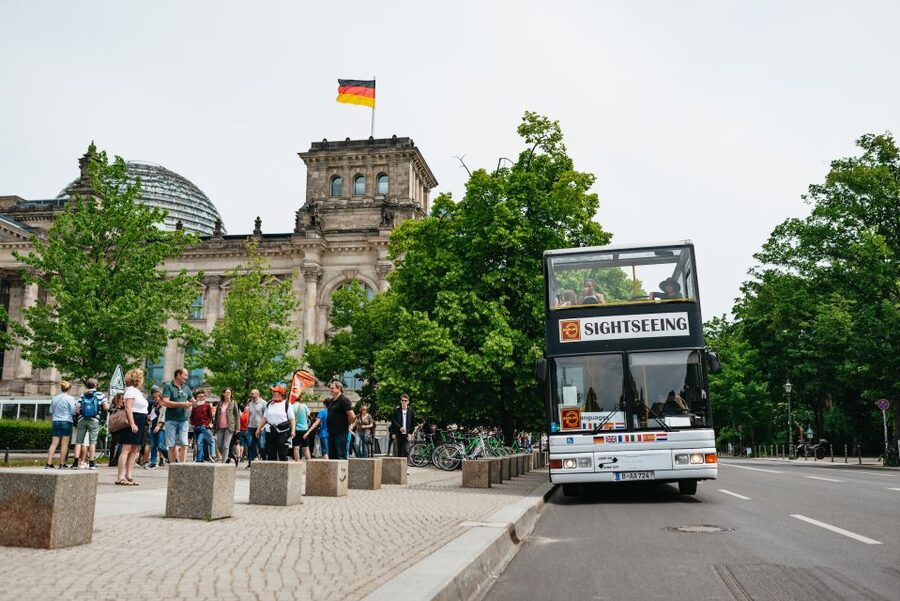
The strongest feature is the live commentary. A real guide can react to traffic, answer questions, point out a building that is easy to miss, and add personal knowledge that a recording cannot provide. Several guides have been praised for switching smoothly between German and English, with humor making the long ride easier.
There is a tradeoff. Since the same guide speaks both languages, English listeners may receive less detail than they would on a dedicated English-only tour. One useful approach is to sit where you can hear clearly and ask for clarification when needed. The guide may be discussing the next sight while the bus is still passing the current one.
The operator may use a bus with only an audio system if a guide is ill or passenger numbers are unusually high. The next bus should have a live guide, but that may not fit your plans.
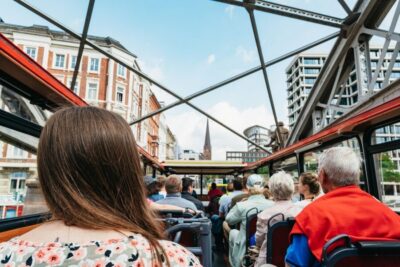
Comfort also varies. Some rides have been described as clean and comfortable, with good choices between sun and shade. Other experiences point to older buses, cold interiors, or an unpleasant smell. I would bring an extra layer in cool weather and avoid assuming every vehicle will feel new.
Smoking is not allowed, and large bags or luggage are not permitted. Bring a passport or identity card, with a copy accepted according to the tour information. Wheelchair access is available, but you should still confirm the current vehicle and stop conditions if you need specific boarding assistance.
Timetables, delays, and how to use your day
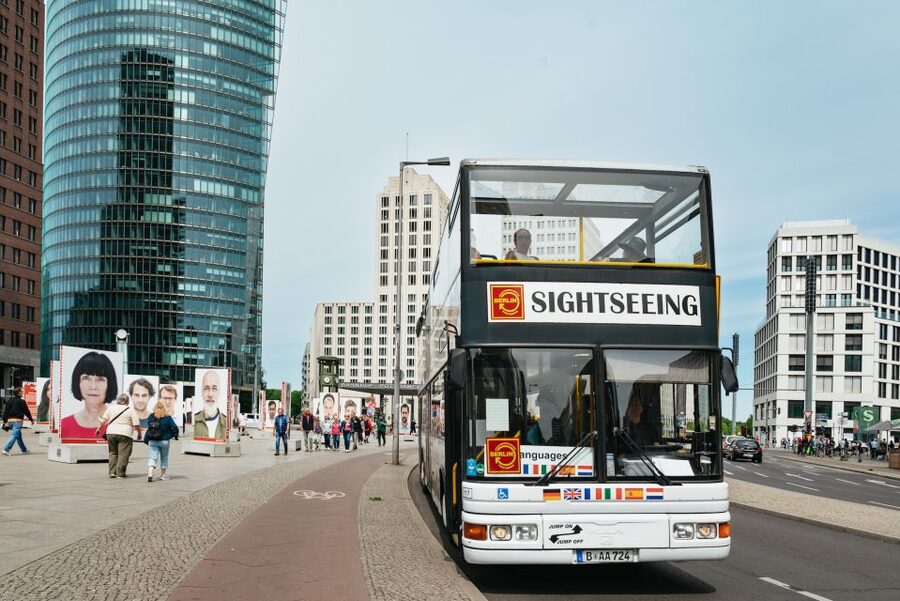
Scheduled buses run at least every 15 to 30 minutes from about 9:30 AM to 5 PM. From November through March, the interval increases to roughly 30 to 45 minutes. Those gaps are manageable in summer but can feel long in winter, especially after sunset or in bad weather.
Bridge repairs and road restrictions can force longer routes. The affected stops remain part of the service, but the bus may arrive late. Unter den Linden is the most important area to watch because the tunnel restriction can alter access to several central stops.
For the best value, I would use the bus in three ways:
- Ride a substantial section early to understand Berlin’s layout.
- Get off for one or two places that need real time, such as the Topography of Terror, Museum Island, or the Brandenburg Gate area.
- Use later buses to connect districts instead of riding every short stretch.
Food and drinks are not included. Plan a café or quick meal near the stop where you intend to get off. Since service ends around 5 PM, do not save your main sightseeing for late afternoon.
Who should pay $22 for this tour?
At $22 for a full day, the tour offers good value if you want orientation, live history, and the freedom to make several stops. It suits first-time visitors, short-break visitors, families, solo visitors who want an easy structure, and anyone with mobility concerns who prefers to see Berlin without walking every kilometer.
It is also useful if your group has different interests. One person can get off near museums, another can continue toward Alexanderplatz, and everyone can reconnect along the route.
I would hesitate if you want a quiet, tightly timed English-only tour. The bilingual format takes time, and detours can disrupt careful plans. You may also prefer public transport and independent sightseeing if you already know Berlin well and only need to reach specific addresses.
Should you book it?
Book this tour if you want a friendly introduction to Berlin’s scale, history, and major sights for $22. The live guide is the reason to choose it, and Otti, Dimitri, Steve, Thilo, Martin, and others have shown how much personality can improve a standard city loop.
Start early, keep your plans flexible, and treat the ride as an overview rather than a replacement for museums and memorials. If you can accept bilingual commentary, occasional detours, and uneven bus condition, this is a practical way to get your bearings fast and make a short Berlin visit count.
FAQ
How much does the Berlin hop-on hop-off bus tour cost?
The listed price is $22 per person for a one-day ticket.
How long is the ticket valid?
The ticket is valid for one day.
What languages are available?
Live commentary is provided in German and English. An audio guide in German and English is also included.
Where can I start the tour?
You can start at any stop on the route, including Galeria on Kurfürstendamm, KaDeWe, Potsdamer Platz, Alexanderplatz, Museum Island, the Brandenburg Gate, Hauptbahnhof, Bellevue Palace, and Zoologischer Garten Station.
What time do the buses usually run?
Scheduled buses generally run from about 9:30 AM to 5 PM. From November through March, buses usually arrive every 30 to 45 minutes.
How often do buses run during the rest of the year?
Outside the November to March period, scheduled buses run at least every 15 to 30 minutes.
Is a live guide guaranteed?
No. If a guide is ill or passenger numbers are higher than expected, a bus may use an audio system instead. The next bus should have a live guide.
Is the bus wheelchair accessible?
Yes, the tour is listed as wheelchair accessible.
Can I bring luggage or large bags?
No. Luggage and large bags are not allowed. Smoking is also prohibited.
Can the route change?
Yes. Bridge conditions and a tunnel structure under Unter den Linden can require detours or prevent some buses from reaching stops 11 to 13. Christmas markets can also move the Alexanderplatz and Gendarmenmarkt stops.
Just added around Berlin
- Berlin: Private Guided Tour of the Main Sights★ 5.0 · 13 reviews
- Private Highlights of Berlin Bike Tour★ 5.0 · 13 reviews
- Modern Berlin Private Walking Tour: Diverse, Vibrant and Exciting German Capital★ 5.0 · 13 reviews
- Tour in Berlin from Warnemünde and Rostock Cruise Port★ 4.1 · 13 reviews
- Berlin: Stasi Museum Private Guided Tour with Entry Ticket★ 4.8 · 13 reviews
- Private Food Tour Experience with a born and bred Berliner★ 5.0 · 14 reviews
- Berlin: Rheinsberg Palace Entrance Ticket★ 4.8 · 14 reviews
- Berlin in one day – day tour with an expert guide★ 5.0 · 14 reviews
Hop-On Hop-Off Bus Tours, compared.
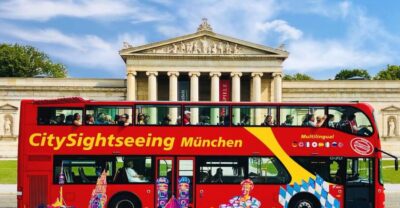
Munich Hop-On Hop-Off Tour: 1-Day or 2-Day Ticket
Read our review →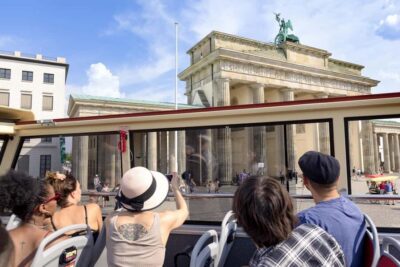
Hop-On Hop-Off Sightseeing Bus with Boat Options
Read our review →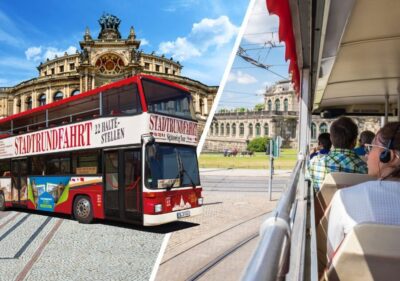
Browse the lists this tour appears in