
Reviewed · WALKING TOURS
Berlin: Discover Berlin Walking Tour
Berlin makes you work for its story. One street can hold centuries of change. This walking tour brings the big picture together, linking Prussian power, imperial Berlin, Nazi crimes, the Cold War, and the modern capital. I especially like the broad range of sights, from the Brandenburg Gate and Museum Island to Checkpoint Charlie, and I like the way the guides connect famous places to people such as Albert Einstein, Marlene Dietrich, and JFK.
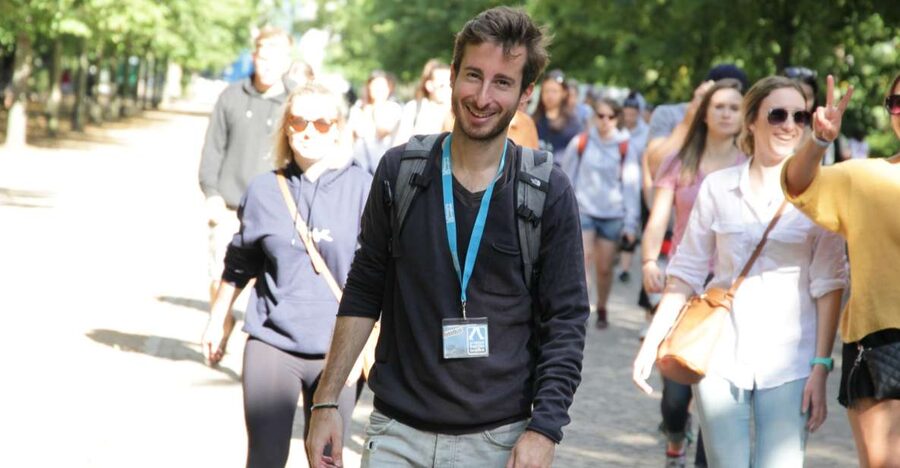
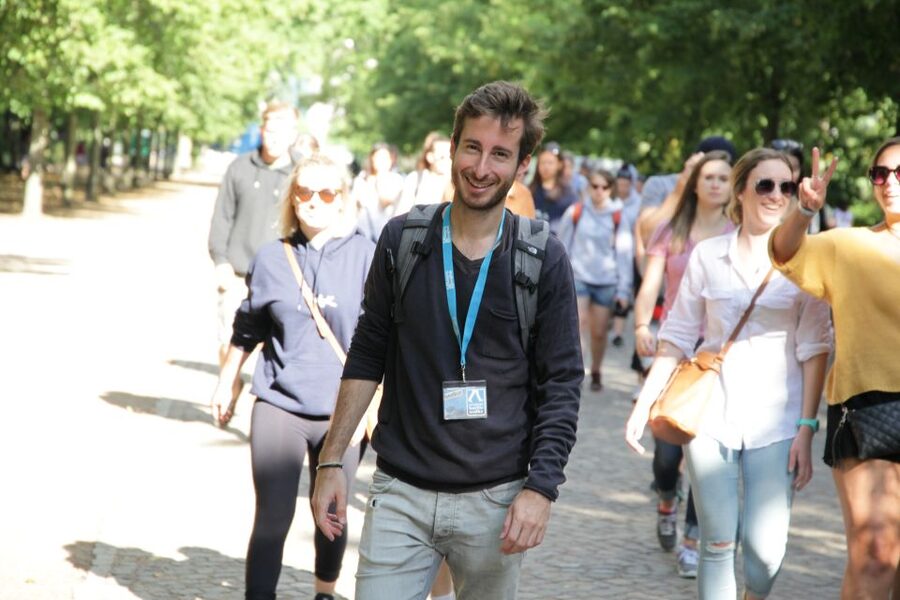
The other strength is the guiding. Recent tours led by Anja, a historian and archaeologist, Philipp, Gregor, Georgia, Tobi, and others were praised for clear explanations, humor, and personal stories. The main consideration is the amount of ground covered: this is an outdoor walking tour in all weather, and the longer option may feel demanding if you are not ready for several hours on your feet.
In This Review
- Key points to know before booking
- Why this Berlin walk makes sense early in your trip
- From medieval Berlin to the modern capital
- Brandenburg Gate and the changing face of power
- Bebelplatz and the Nazi book burning
- The Memorial to the Murdered Jews of Europe
- The site of Hitler’s bunker
- Checkpoint Charlie and the Berlin Wall
- Museum Island, Berlin Cathedral, and Palace Square
- The people who give Berlin a human face
- How the pace and weather affect the experience
- Is $23 a good value?
- Who should book this tour?
- Should you book the Discover Berlin Walking Tour?
- FAQ
- How much does the Discover Berlin Walking Tour cost?
- How long does the walking tour last?
- Which languages are available?
- Which Berlin sights are included?
- Does the tour visit the inside of the museums on Museum Island?
- Is a private group available?
- Does the tour operate in bad weather?
- What should I bring?
- Can I cancel for a full refund?
Key points to know before booking
- Berlin’s main historic sights in one walk: The route brings together the Brandenburg Gate, Checkpoint Charlie, Museum Island, Berlin Cathedral, Palace Square, Bebelplatz, the Berlin Wall, and the site of Hitler’s bunker.
- A useful first-day introduction: The tour gives you a framework for understanding Berlin before you visit museums or explore neighborhoods on your own.
- Two duration choices: Select a shorter or longer version, lasting about two to four hours, depending on your schedule.
- History told through people and places: Expect stories about Nazi Germany, Cold War escape attempts, JFK, Einstein, Marlene Dietrich, and Berlin’s medieval beginnings.
- Guides are the star of the show: The strongest praise goes to guides who explain difficult subjects clearly, use humor with care, and answer questions without losing the thread.
- Rain or shine: Bring weather-appropriate clothing and comfortable shoes. Berlin weather will not negotiate.
Why this Berlin walk makes sense early in your trip
Berlin is not a city you understand by simply ticking off monuments. The Brandenburg Gate is not just a handsome neoclassical arch. Checkpoint Charlie is not just a photo stop. Museum Island is not merely a cluster of grand buildings. Each place gained its meaning through a different chapter of Berlin’s often painful past.
That is why I see this as a strong opening activity. A good guide gives you the sequence: Berlin’s swampy medieval beginnings, the rise of Prussia, imperial ambition, Nazi rule, wartime destruction, division by the Berlin Wall, reunification, and the capital’s present-day identity.
The tour is especially useful if you have only a short stay. In a few hours, you can see much of central Berlin and make a list of places worth returning to. The guide’s explanation also helps you avoid a common Berlin problem: looking at a monument without understanding why it is there.
The experience is offered in English or German. A private group is available, which may suit families or friends who want more freedom to ask questions. Meeting points vary with the option booked, so check your confirmation carefully rather than assuming every tour begins at the same place.
More Walking Tours in Berlin
- Discover Berlin Half-Day Walking Tour
★ 5.0 · 9,624 reviews - Berlin: Third Reich and Cold War 2 Hour Walking Tour
★ 4.9 · 6,830 reviews - Berlin’s Best: 2 Hour Walking Tour Third Reich and the Cold War
★ 5.0 · 5,486 reviews
From medieval Berlin to the modern capital
The tour’s opening theme reaches back to Berlin’s earliest days. That may seem less dramatic than the Nazi and Cold War material, but it matters. Berlin did not begin as the grand capital you see today. Its growth from modest settlements into a Prussian center helps explain the formal avenues, royal buildings, military power, and political ambition that shaped later Berlin.
I like this long view because it keeps the tour from becoming only a succession of wartime sites. You get a sense of how one era built over another. Prussian Berlin fed into imperial Berlin, imperial Berlin helped create the setting for political upheaval, and the twentieth century left marks that still shape the city.
The best guides appear to make this material easy to follow. Anja was praised for placing people and events in a clear context, while guides such as Philipp and Stefan were noted for linking earlier history to modern German society. If you tend to lose track when a guide throws out too many dates, this style should help: the emphasis is on cause, effect, and recognizable places.
Brandenburg Gate and the changing face of power
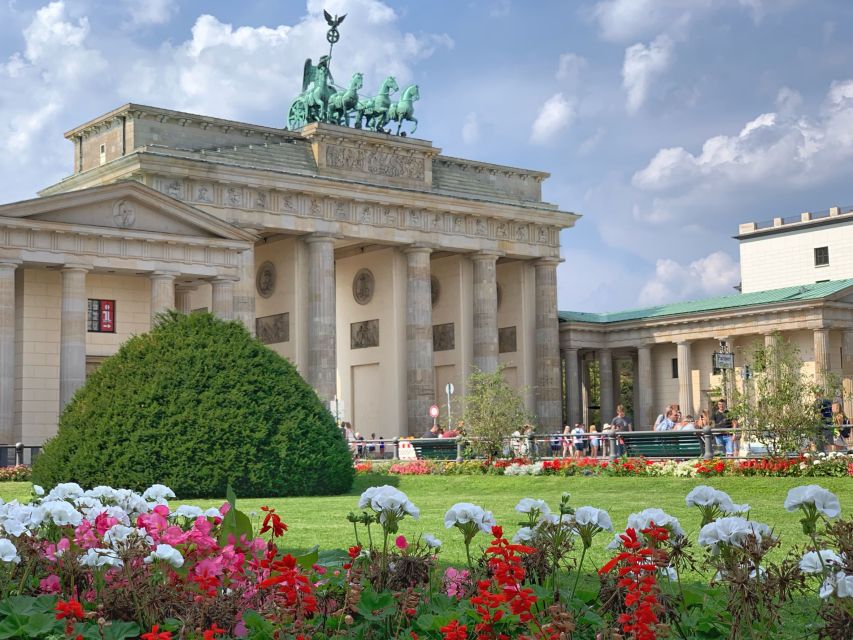
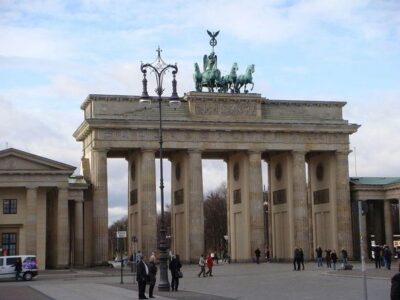
The Brandenburg Gate is one of Berlin’s essential stops. It began as a symbol of Prussian authority, later became tied to the division of Germany, and now represents a reunified city. Seeing it with a guide gives you more than the standard photograph.
This is also a good place to think about how Berlin uses its symbols. The gate has been claimed by different political systems and interpreted in different ways. A guide can explain those changes while you are standing in front of the actual building, rather than leaving you to piece them together from a caption.
Expect a busy central setting and plenty of visual distractions. The value here is not an extended visit inside a building. It is the explanation of how one monument gathered new meaning as Berlin changed around it.
Bebelplatz and the Nazi book burning
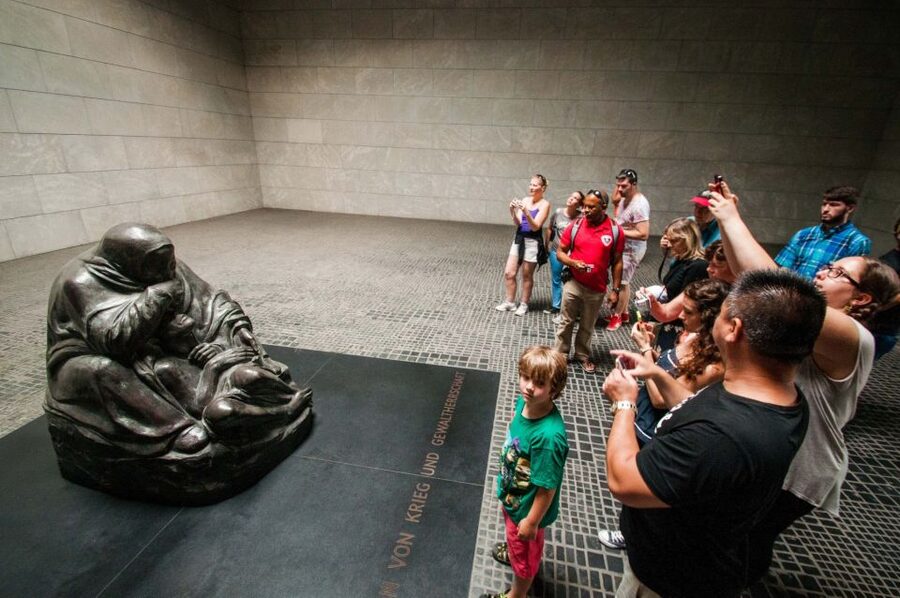
Bebelplatz is one of the tour’s most thought-provoking stops. It is associated with the Nazi book burning of 1933, when works by Jewish, socialist, and other targeted writers were destroyed in a public display of censorship and intimidation.
The square can look calm and elegant today, which makes the story especially unsettling. The tour brings attention to the event and to the memorial connected with it. You may notice an underground room of empty bookshelves through a glass panel in the square. The memorial is deliberately restrained, and its meaning is stronger when a guide explains the controversy and the historical setting.
This is not a light sightseeing stop. It asks you to consider how public spaces can be used to stage political power, and how a modern city chooses to remember an attack on free thought. I appreciate that the tour treats the subject seriously without turning the entire walk into a lecture.
Something different for another day:
- Berlin: Reichstag, Dome and Government District Guided Tour
★ 4.7 · 18,288 reviews - Berlin: 1-Hour City Tour by Boat with Guaranteed Seating
★ 4.3 · 16,993 reviews - Berlin: Boat Tour Along the River Spree
★ 4.4 · 11,252 reviews - Berlin: Hop-on Hop-off Bus Tour with Live Commentary
★ 4.3 · 8,579 reviews
The Memorial to the Murdered Jews of Europe
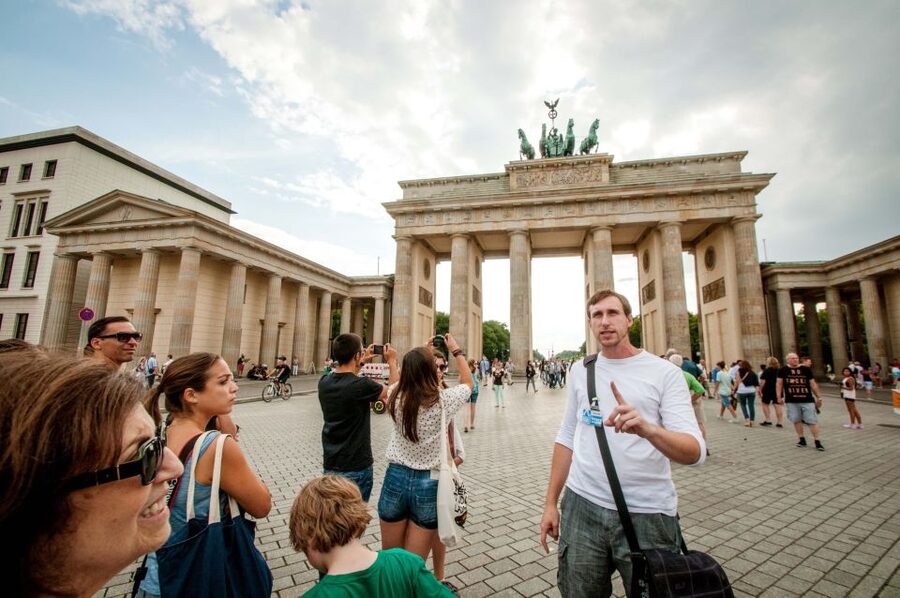
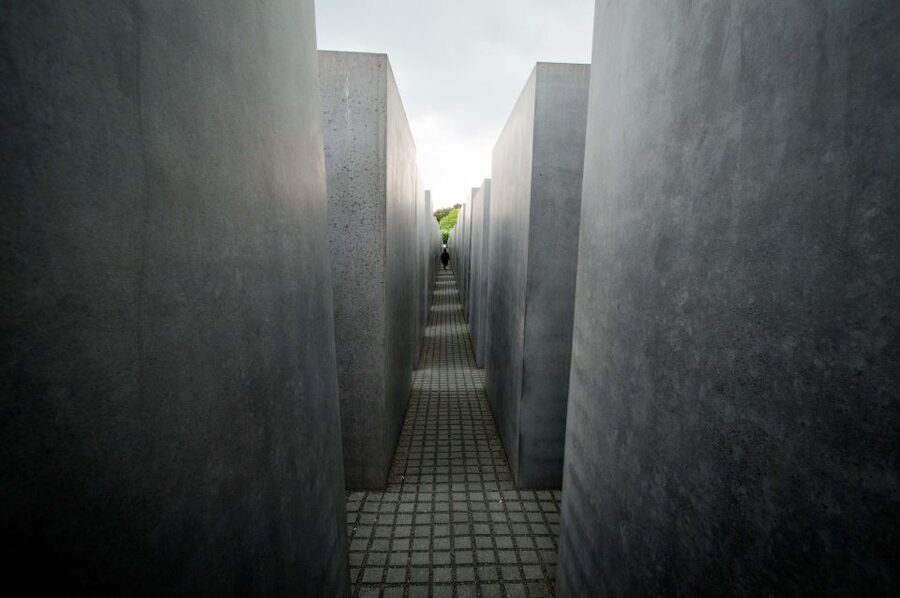
The tour also discusses the memorial to Europe’s murdered Jews near the Brandenburg Gate. Its field of concrete blocks is visually striking, but the design has prompted debate from the beginning.
A guide can help you understand why the memorial looks the way it does, what it does well, and what questions it leaves open. That context is important. Without it, you may simply see an unusual installation and move on. With it, you can think about memory, abstraction, scale, and the challenge of representing a crime that resists simple explanation.
Allow yourself a quiet moment here. The guide’s role is to give the background and point out the controversies, not to force one emotional response. That balance is valuable at a site where solemnity can easily become theatrical.
The site of Hitler’s bunker

One of the most arresting moments comes at the site where Hitler took his life in April 1945. You do not visit a preserved bunker interior. Instead, you stand above the location in the present-day city and hear how the final days of the Nazi regime unfolded.
That plain setting is part of the point. The site does not offer a grand monument to the dictator, and the absence of a dramatic structure leaves room for a careful explanation of what happened. The guide can separate historical fact from the myths and sensational stories that often surround the bunker.
This stop will appeal to anyone interested in the final phase of the Second World War, but it can feel heavy. The tour covers several difficult subjects in a limited time, so families with younger children should consider how much detail they want them to hear. One useful feature is the opportunity to ask questions as the guide explains the site.
Checkpoint Charlie and the Berlin Wall
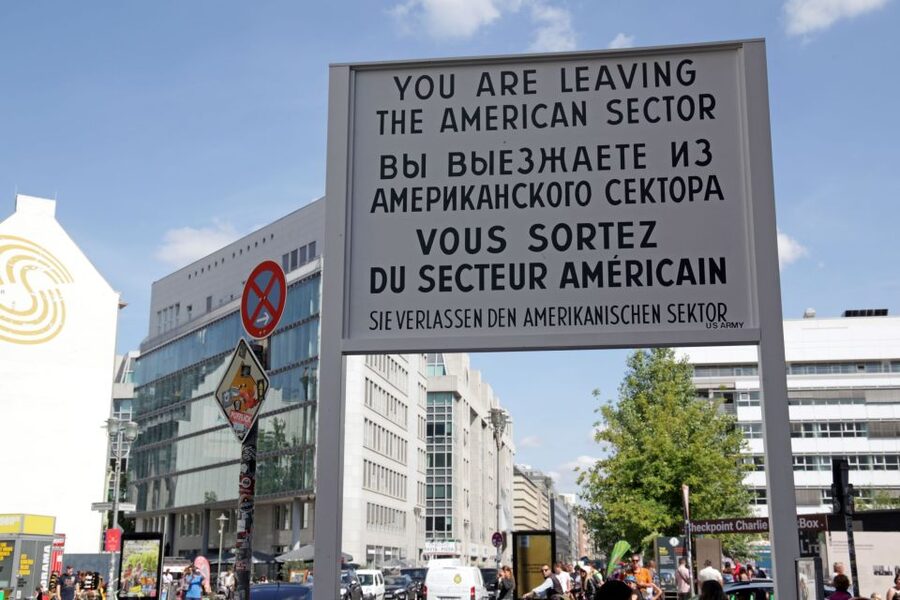
Checkpoint Charlie gives the tour a different mood. This was one of the best-known crossing points between East and West Berlin during the Cold War. The location is closely tied to escape attempts, standoffs, surveillance, and the daily reality of a city split by a political frontier.
The modern setting is busy and commercial, and the current checkpoint booth is a reconstruction rather than an untouched Cold War relic. That is worth knowing before you arrive. The stop remains valuable because the guide explains what the crossing meant and points you toward the stories of daring escapes across the Berlin Wall.
The tour also covers the Wall and its fall in 1989. You begin to see that the Wall was not just a line on a map. It cut through neighborhoods, separated families, and shaped how Berliners moved through their own city. Guides with local or family connections can add a useful personal layer here. Gregor, for example, was praised for sharing family anecdotes about growing up as Berlin changed.
Museum Island, Berlin Cathedral, and Palace Square
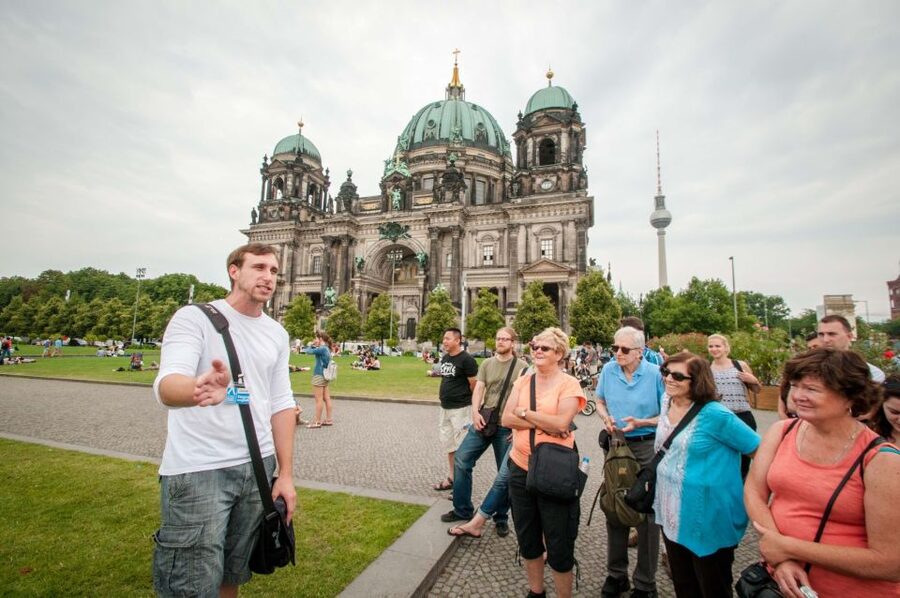
Museum Island brings together several of Berlin’s grand cultural and political landmarks. The tour takes you through this area, including Berlin Cathedral and Palace Square, and explains how the buildings reflect changing ideas about monarchy, culture, war, and reconstruction.
Do not expect a museum visit as part of the walking tour. The strength of this section is the outdoor view and the guide’s explanation of what you are seeing. If you want to enter the museums or cathedral, plan that separately for another time.
Palace Square is particularly useful for understanding Berlin’s shifting identity. It has been shaped by royal ambition, twentieth-century political change, destruction, and later rebuilding. Standing in the area while hearing that story makes the city’s mixture of old and new architecture easier to read.
Berlin Cathedral provides an imposing visual pause on the route. It is also a reminder that Berlin’s history is not only about dictatorship and division. Religion, royal ceremony, artistic ambition, and national identity all appear in the city center.
The people who give Berlin a human face
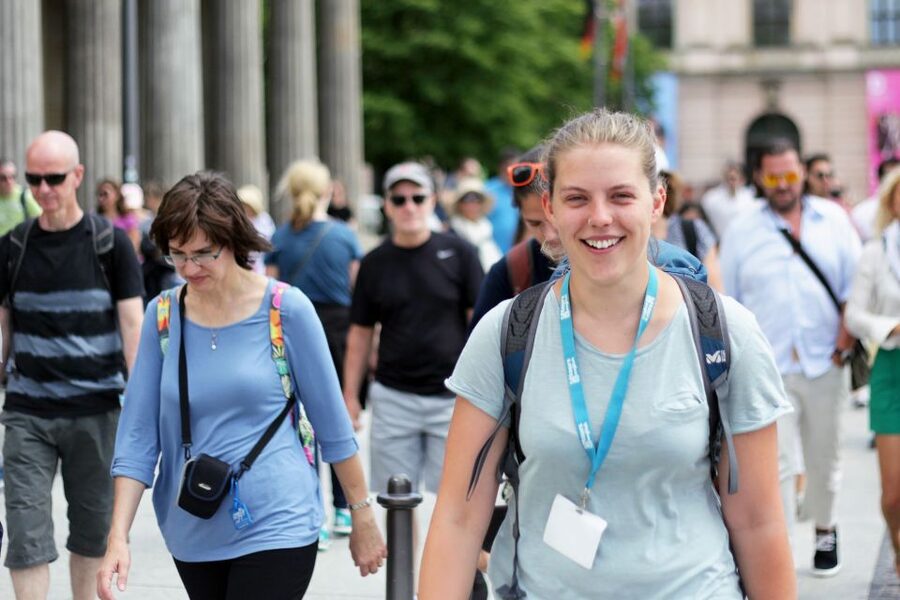
The tour does not focus only on rulers and generals. Stories about Albert Einstein, Marlene Dietrich, and JFK broaden the picture and show how Berlin’s influence reached science, film, politics, and popular culture.
This human approach is one of the strongest parts of the experience. A list of dates can tell you when events happened. A story about a person can help you remember why the city mattered and how individuals responded to its pressures.
The guides also bring different perspectives. Philipp was praised for blending historical detail with current culture. Gregor shared family experiences of Berlin’s changes. Joel was noted for helping the group stay comfortable in freezing weather, pausing in sheltered areas and offering practical advice for the rest of the visit. Those details matter because a walking tour succeeds or fails on the guide’s ability to read the group.
How the pace and weather affect the experience
The tour lasts two to four hours, depending on the option you book. That is a wide range, so check the exact duration before choosing. The shorter version may be enough for a quick orientation, while the longer option gives more room for stories, questions, and additional sights.
You will be outdoors for the entire experience, and it runs rain or shine. Wear shoes suited to city walking and dress for the forecast. Berlin can be cold, wet, or windy, and the tour does not become an indoor activity when the weather turns sour.
The guides generally keep a steady pace and make regular stops. Tobi was praised for mixing humor with historical detail, while Walid was appreciated for stopping often enough to explain buildings and events clearly. On a snowy day, Joel adjusted the rhythm by using warmer sheltered spots for longer explanations. That sort of flexibility can make a major difference.
Still, do not book this expecting a relaxed café-to-café stroll. You are covering major parts of central Berlin on foot. If you need frequent rests, the private option may give you a little more control, but the supplied details do not promise a custom route or a specific pace.
Is $23 a good value?
At $23 per person, this is a strong value if you want a history-led introduction to Berlin. You could walk between many of these sights yourself, but you would not automatically understand the links between them. The fee pays for the guide’s preparation, storytelling, and ability to turn scattered monuments into one readable story.
The value is even clearer if you have just one or two days in Berlin. You can see major locations quickly, then return later to the places that caught your interest. You also save time on planning a route through a city whose historic center is spread across several areas.
The price does not include museum admission or a meal, and the tour is not designed as a full visit to the interiors of Museum Island or Berlin Cathedral. Think of it as an orientation walk with serious historical content, not an all-inclusive sightseeing package.
The rating of 4.9 from 5,998 reviews supports the idea that the guiding is consistently strong. The repeated praise is not just for facts. People value guides who are warm, funny, clear, passionate, and willing to answer questions. That combination is more useful than a guide who simply recites dates.
Who should book this tour?
I would choose this tour if you are visiting Berlin for the first time, especially if you want to understand the city rather than only photograph it. It suits adults interested in political history, architecture, memorials, and the Cold War, but the clear pacing can also work for older children and teenagers.
It is a good match for:
- First-time visitors with limited time
- History-minded visitors who want context at major sights
- Families with older children who can manage a long walk
- Couples or friends who prefer an outdoor introduction
- Visitors who want advice on what to see during the rest of their stay
- Private groups seeking a more personal format
I would think twice if you dislike walking, have no interest in twentieth-century German history, or want extensive time inside museums. The emotional weight of Nazi and Holocaust sites is real, and the tour moves through several difficult subjects. You should be ready for a serious experience, even when the guide uses humor to keep the pace human.
Should you book the Discover Berlin Walking Tour?
Yes, if you want one well-organized walk to explain Berlin’s major historic chapters. At $23, the combination of central sights, flexible duration, English or German guiding, and consistently praised storytelling makes it a sensible first activity.
Choose the longer option if you have the time and enjoy questions and detailed explanation. Choose the shorter version if you mainly want orientation. Bring warm, weather-ready clothing, wear comfortable shoes, and treat the tour as a starting point for the rest of your Berlin visit.
FAQ
How much does the Discover Berlin Walking Tour cost?
The listed price is $23 per person.
How long does the walking tour last?
The available options last between two and four hours. Check the selected option for the exact duration and starting time.
Which languages are available?
The tour is available in English and German.
Which Berlin sights are included?
The tour includes major sights such as Checkpoint Charlie, the Brandenburg Gate, Museum Island, Berlin Cathedral, Palace Square, Bebelplatz, the Berlin Wall, and the site of Hitler’s bunker.
Does the tour visit the inside of the museums on Museum Island?
The tour takes you to Museum Island, but museum admission and an interior museum visit are not listed as included.
Is a private group available?
Yes. A private group option is available, depending on the booking choice.
Does the tour operate in bad weather?
Yes. The tour takes place rain or shine, so bring weather-appropriate clothing.
What should I bring?
Bring clothing suited to the weather and comfortable shoes for city walking.
Can I cancel for a full refund?
Yes. You can cancel up to 24 hours in advance for a full refund. You can also reserve now and pay later, keeping your plans flexible.
Just added around Berlin
- Berlin: Private Guided Tour of the Main Sights★ 5.0 · 13 reviews
- Private Highlights of Berlin Bike Tour★ 5.0 · 13 reviews
- Modern Berlin Private Walking Tour: Diverse, Vibrant and Exciting German Capital★ 5.0 · 13 reviews
- Tour in Berlin from Warnemünde and Rostock Cruise Port★ 4.1 · 13 reviews
- Berlin: Stasi Museum Private Guided Tour with Entry Ticket★ 4.8 · 13 reviews
- Private Food Tour Experience with a born and bred Berliner★ 5.0 · 14 reviews
- Berlin: Rheinsberg Palace Entrance Ticket★ 4.8 · 14 reviews
- Berlin in one day – day tour with an expert guide★ 5.0 · 14 reviews
Walking Tours, compared.
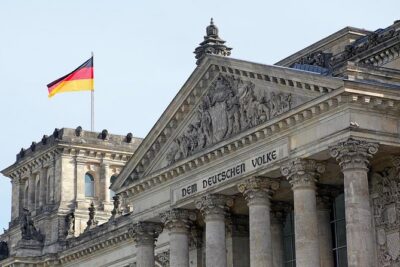
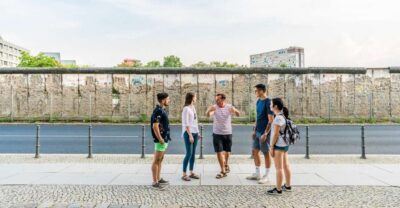

Berlin’s Best: 2 Hour Walking Tour Third Reich and the Cold War
Read our review →
Third Reich Berlin: Hitler and WWII Walking Tour
Read our review →
Browse the lists this tour appears in