
Reviewed · WALKING TOURS
Private walking Tour: Berlin Architecture Tour
Berlin’s buildings tell the city’s story. This four-hour private tour connects imperial squares, Nazi-era scars, Cold War division, socialist housing, and daring modern design. I like the custom route and the way one outing links places that are often visited separately. I also like the choice of walking or biking, which can help cover more ground.
The main drawback is the price: $191.87 per person is a serious spend, especially for a small party. Much of the experience happens outdoors, and several stops last only 10 or 15 minutes. You are paying for a private guide’s insight and flexibility, not for long interior visits or included meals.
In This Review
- Berlin architecture tour: key points at a glance
- Why this tour works for architecture lovers
- Museum Island, where Berlin begins with columns and domes
- Gendarmenmarkt and the art of the architectural trio
- The Berliner Philharmonie, Berlin’s bold modern statement
- Reichstag and the old building with a new message
- Potsdamer Platz and Berlin’s return to the center
- Berliner Dom and the weight of imperial Berlin
- Kreuzberg and Oberbaum Bridge: old brick beside new Berlin
- Friedrichshain and the Berlin Wall’s changing meaning
- Pariser Platz and the Brandenburg Gate
- Hackescher Markt and the courtyards behind the street
- Four hours, ten stops, and a demanding pace
- Price, group size, and what you receive
- Who should book this Berlin architecture tour?
- Should you book it?
- FAQ
- How long does the Berlin architecture tour last?
- What is included in the price?
- Is this a private tour?
- Can I take the tour by bike instead of walking?
- What language is the tour offered in?
- What is the cancellation policy?
Berlin architecture tour: key points at a glance
- A private four-hour route: Your guide can adjust the focus around your interests, from modern design to Cold War planning or grand neoclassical buildings.
- East meets West: Friedrichshain and Kreuzberg help explain socialist and alternative Berlin, while Potsdamer Platz and the Kulturforum show West Berlin’s postwar rebuilding.
- Ten major stops: The route includes Museum Island, Gendarmenmarkt, the Philharmonie, Reichstag, Potsdamer Platz, Berliner Dom, Kreuzberg, Friedrichshain, Pariser Platz, and Hackescher Markt.
- A strong photo outing: Museum Island, the Berliner Philharmonie, Oberbaum Bridge, Gendarmenmarkt, and Pariser Platz offer some of the best visual stops.
- Hotel pickup and drop-off: The guide meets you in your central Berlin hotel lobby and returns you to the hotel at the end.
- A flexible format: You can request particular sights, and the experience may be taken on foot or by bike.
Why this tour works for architecture lovers
Berlin is not a city with one tidy architectural identity. Its streets show Prussian formality, imperial ambition, wartime destruction, socialist planning, post-reunification optimism, and experimental contemporary design. A good guide can make those layers easier to read.
That is the real value here. You are not simply moving from one famous building to another. You are comparing political ideas in stone, glass, concrete, and brick. The apartment blocks of former East Berlin tell a different story from the sleek offices around Potsdamer Platz. The Kulturforum was not placed where it is by accident, and the modern glass dome on the Reichstag carries a political message as well as a visual one.
I would especially consider this tour early in a Berlin stay. One past guest described it as a useful first-day orientation, helping with later decisions about where to spend time. That makes sense. In four hours, you get a broad map of central Berlin and several neighborhoods, then you can return later to the buildings that deserve a closer look.
The private format matters. You are not tied to a fixed group pace, and you can ask for more detail on a subject that catches your attention. Guides have adjusted timing to suit individual interests, and Sara, described as an architect, was praised for combining design knowledge with historical explanation. Names that received particular praise include Ariel, Thomas, Tom, Daniel, Heiko, and Tarek Ibrahim.
More Walking Tours in Berlin
- Discover Berlin Half-Day Walking Tour
★ 5.0 · 9,624 reviews - Berlin: Third Reich and Cold War 2 Hour Walking Tour
★ 4.9 · 6,830 reviews - Berlin: Discover Berlin Walking Tour
★ 4.9 · 5,998 reviews
Museum Island, where Berlin begins with columns and domes
The tour starts with about 20 minutes on Museum Island, a compact cultural center in the Spree. This is one of the best places in Berlin to see how grand public architecture was used to express national ambition.
The Altes Museum gives you a clear opening lesson. Its neoclassical columns and broad portico are calm, orderly, and monumental. The Pergamon Museum adds a heavier classical presence, while the Bode Museum brings a dome and curved Baroque forms to the riverfront.
The Neues Museum is especially useful for understanding Berlin’s modern approach to old buildings. It was damaged during the war and later restored with historical elements alongside newer work. That contrast gives your guide a chance to explain how Berlin handles destruction and repair without pretending the past never happened.
The stop is free, but the tour description presents it as an exterior architecture visit. Do not assume you will have time to enter the museums during this four-hour route. You are mainly getting views, background, and photo angles along the Spree.
Gendarmenmarkt and the art of the architectural trio
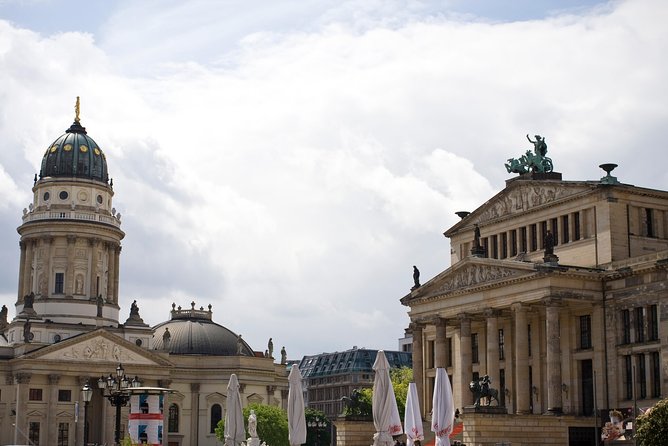
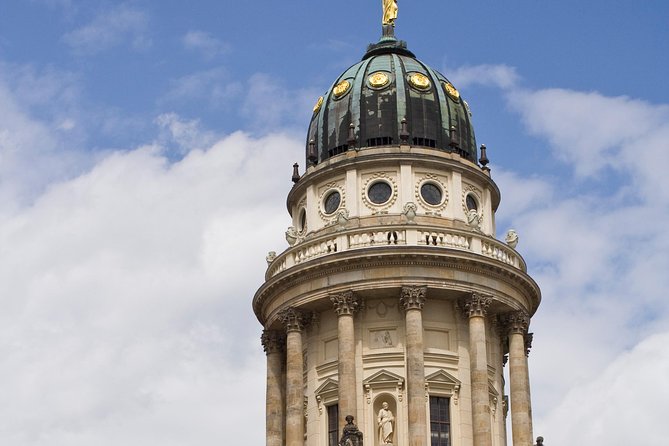
Gendarmenmarkt receives about 15 minutes, enough to understand its layout and take in the main ensemble. The French Cathedral and German Cathedral face one another across the square, with Schinkel’s Konzerthaus between them.
This is a useful place to notice how similar buildings can serve different political and religious identities. The matching domes create visual balance, while the concert hall gives the center of the square a cultural focus. Friedrich Schiller’s statue occupies the middle, adding a literary figure to an otherwise architectural composition.
The square is particularly photogenic when the buildings catch warm evening light, though the tour timing may not coincide with sunset. The short stop means you should focus on the overall arrangement rather than expect a detailed interior visit.
The Berliner Philharmonie, Berlin’s bold modern statement
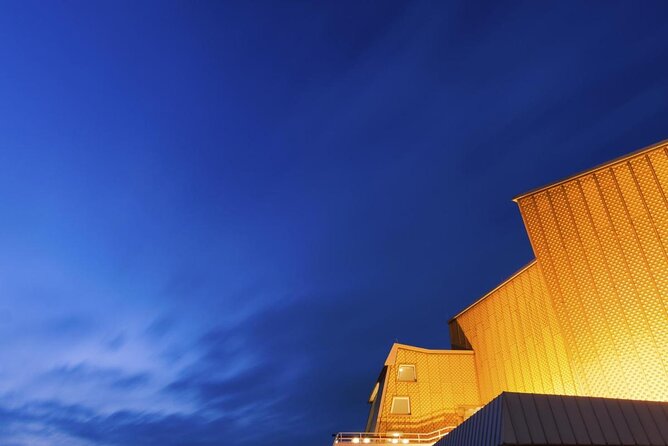
The Philharmonie is one of the clearest reasons to choose an architecture-focused tour rather than a standard city highlights walk. You get about 15 minutes at the Kulturforum to see its unusual tent-like shape and asymmetrical profile.
The building was created for music, but its exterior makes an argument about modern Berlin. It does not rely on the grand symmetry of the old royal buildings. Instead, its forms suggest movement toward a central performance space, and its design helped make the concert hall an international symbol of postwar West Berlin.
The Kulturforum itself adds important context. During the Cold War, West Berlin developed this group of museums, concert halls, libraries, and institutes after major cultural collections were left on the eastern side of the divided city. The result is a cluster of modern cultural buildings at the former edge of West Berlin.
I like this stop because it connects architecture with geography and politics. You are not just photographing an odd-shaped concert hall. You are seeing how a city tried to build a new cultural center under pressure from division.
Something different for another day:
- Berlin: Reichstag, Dome and Government District Guided Tour
★ 4.7 · 18,288 reviews - Berlin: 1-Hour City Tour by Boat with Guaranteed Seating
★ 4.3 · 16,993 reviews - Berlin: Boat Tour Along the River Spree
★ 4.4 · 11,252 reviews - Berlin: Hop-on Hop-off Bus Tour with Live Commentary
★ 4.3 · 8,579 reviews
Reichstag and the old building with a new message
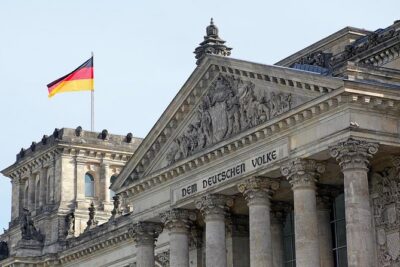
The Reichstag gets roughly 10 minutes, the briefest major stop on the route. Its original 1894 structure has a formal classical façade, grand columns, and the visual weight expected of a national parliament.
The glass dome, designed by Norman Foster during the building’s post-reunification renovation, changes the meaning of the whole structure. Its transparent form is meant to suggest openness and democracy, a pointed contrast with Germany’s authoritarian past. The interior reflections and views across Berlin also make it one of the city’s most photographed modern additions.
The practical point is important: this stop is listed as a free exterior visit, and no dome admission is included. If you want to go inside the Reichstag dome, ask your guide about fitting that into your plans, but do not count on the four-hour tour itself providing entry.
Potsdamer Platz and Berlin’s return to the center
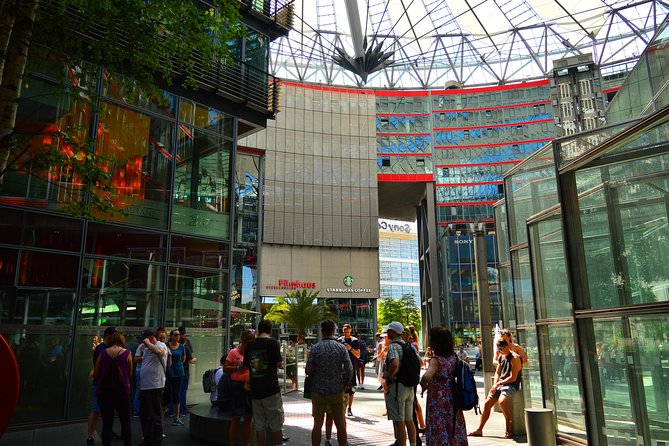
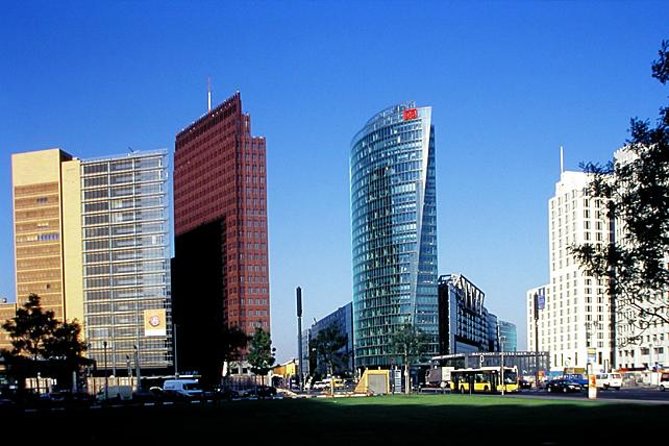
Potsdamer Platz receives about 20 minutes. Before World War II, it was a major urban crossroads. After wartime destruction and Cold War division, it became a large empty zone near the Berlin Wall. Its current glass towers and public spaces represent one of the boldest rebuilding projects in modern Berlin.
The Sony Center is the obvious visual draw, with its sweeping glass roof and open central space. The DB Tower adds a tall, polished corporate presence, while Panoramapunkt offers a higher view of the city, though admission is not included in the tour.
This stop can feel very different from the older parts of Berlin. Some people love its sharp lines and forward-looking design. Others find it more corporate and less intimate than the courtyards, squares, and old apartment streets elsewhere. That is exactly why it belongs on the route: your guide can explain the planning choices and let you judge the result for yourself.
Berliner Dom and the weight of imperial Berlin
The Berliner Dom gets about 15 minutes and provides a strong contrast with the Philharmonie. Its enormous central dome, symmetrical façade, stone ornament, columns, and sculpture reflect Baroque and Renaissance Revival influences.
The cathedral was completed in 1905, when Berlin was presenting itself as a major imperial capital. Its scale is deliberate. From the outside, it dominates the riverfront and Museum Island with a sense of ceremony.
The interior is described as richly decorated, with marble columns, mosaics, and dramatic arches. Still, the listed stop is free and time is short, so treat this as an architectural look rather than a guaranteed interior tour. If the cathedral matters to you, ask the guide whether your customized route can allow more time.
Kreuzberg and Oberbaum Bridge: old brick beside new Berlin
The tour spends about 30 minutes in Kreuzberg, where the mood changes from official Berlin to a more informal neighborhood setting. The area combines 19th-century Altbau buildings, industrial conversions, and newer urban construction.
The Altbau facades are worth noticing. Ornamental details, tall windows, and large proportions give these buildings a very different feel from the plain socialist blocks found farther east. They also help explain why Berlin apartments can look historic from the street while serving very modern lives inside.
Oberbaum Bridge is the architectural prize here. Its red brick towers and pointed Gothic-inspired arches cross the Spree toward Friedrichshain. It is one of the city’s strongest photo locations, and the bridge also helps you understand the physical connection between two districts that once belonged to different parts of divided Berlin.
Kreuzberg is not a polished open-air museum. That is part of its appeal. You get a sense of how historic buildings, changing neighborhoods, and contemporary uses sit side by side.
Friedrichshain and the Berlin Wall’s changing meaning
The next 30 minutes focus on Friedrichshain, a former East Berlin district with prewar apartment buildings, socialist-era structures, and newer development. The contrast helps explain how the city changed after reunification without erasing every earlier layer.
The East Side Gallery is the key stop. It is an open-air collection of colorful murals painted on a remaining section of the Berlin Wall. The art has made the wall a place of public expression rather than only a symbol of control, although the structure’s original purpose still matters.
This part of the tour is useful if you want more than a quick checkpoint photograph. Your guide can connect the physical wall with the urban division around it and explain how the eastern districts developed under a different political and economic system.
The route includes a general look at the neighborhood, not a full local food or nightlife experience. If you want café time, shopping, or a longer East Side Gallery visit, mention that when arranging the customized plan.
Pariser Platz and the Brandenburg Gate
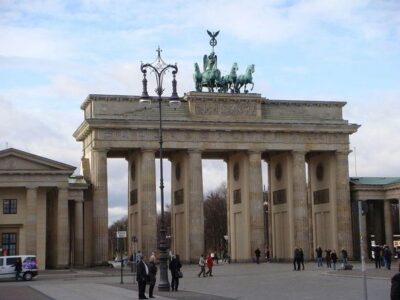
Pariser Platz gets around 20 minutes. The Brandenburg Gate dominates the square, with its neoclassical columns and famous chariot sculpture. It has served as a royal entrance, a Cold War symbol, and a major image of German unity.
The surrounding buildings make this more than a single-monument stop. Hotel Adlon, the French Embassy, and the American Embassy bring different versions of formal architecture to the square. The DZ Bank building, designed by Frank Gehry, adds a fluid modern counterpoint, while the Academy of Arts contributes another design voice.
I like this location for comparing old and new without walking far. The square’s strict rebuilding rules preserve a formal appearance, yet details such as Gehry’s work show that modern architecture has a place inside the historic setting.
Hackescher Markt and the courtyards behind the street
The final listed stop is Hackescher Markt, with about 20 minutes at Hackescher Höfe. Built in 1906 by August Endell, the interconnected courtyards are known for Art Nouveau details, bright ceramic tiles, decorative ironwork, and varied brick patterns.
This is a more intimate finish than the Brandenburg Gate or Reichstag. Instead of a single monumental façade, you see how beauty was added to an everyday urban complex. The courtyards were designed to combine practical uses with careful decoration, and their different styles reward a slow look at doorways, tiles, lines, and windows.
The stop is also a reminder that Berlin architecture is not only about famous government buildings. Some of the city’s most enjoyable details appear in places built for shops, offices, and ordinary city life.
Four hours, ten stops, and a demanding pace
The advertised duration is about four hours, while the listed stop times add up to just over three hours. The remaining time is needed for walking or cycling between locations, guide commentary, photography, and the hotel pickup and return.
That makes the experience broad rather than slow. You will cover much of central Berlin and several eastern and western districts, but you will not study every building at length. The route works best if you want a guided overview and clear explanations, then plan to revisit favorites independently.
A private group can help here. You can ask to linger at the Philharmonie, shorten a stop that interests you less, or focus on a particular period. The guide can also respond to your background. An interior designer may want design analysis, while a first-time visitor may prefer political and historical context.
Choose the bike option only if you want to cover distance more efficiently and are comfortable with the format. The experience is presented as a walking tour, but biking is available. Confirm the preferred mode when booking.
Price, group size, and what you receive
At $191.87 per person, this is not a bargain sightseeing walk. The price includes a professional private guide plus hotel pickup and drop-off, but not food or drinks. Because the activity is private, the value improves when several people share the guide’s time, and group discounts may be available.
For a couple, the cost may feel steep if you mainly want photographs of famous buildings. For a family, design group, or party with a strong interest in Berlin’s political architecture, the flexibility can justify the expense. The strongest praise centers on guides who explain why buildings look the way they do, not just what they are called.
The guide quality is the biggest variable in any private tour. Past praise has singled out Ariel for clear communication and flexibility, Sara for architecture and design expertise, Thomas for explaining an architect’s intentions, and Tom for his warm historical storytelling. Daniel, Heiko, and Tarek Ibrahim also received strong personal praise.
You cannot guarantee a specific guide unless the provider confirms it, but you can request one by name. It is also worth sending your interests in advance. The tour is far more useful when your guide knows if you care most about Bauhaus, socialist planning, concert hall design, urban renewal, photography, or Berlin’s political past.
Who should book this Berlin architecture tour?
I would recommend it to design-minded visitors, first-time Berlin visitors who want a strong orientation, and anyone who enjoys connecting buildings to politics. It also suits families with older children and teenagers, since the route offers plenty of visual variety and does not depend on long museum lectures.
It is less suitable if you want extended time inside museums, a food-focused neighborhood tour, or a relaxed stroll with only a few stops. The schedule moves across a large part of Berlin, and some locations receive only 10 or 15 minutes.
You receive confirmation at booking unless you book within three days of departure, in which case confirmation may arrive within 48 hours, subject to availability. Most people can participate, service animals are allowed, and the tour runs in English. Free cancellation is available up to 24 hours before the start time; changes or cancellations inside that window are not refunded.
Should you book it?
Book this tour if you want Berlin explained through its buildings, especially the sharp contrast between East and West. Its best features are the private format, hotel service, flexible route, and guides who can add serious historical and design context.
Skip it if $191.87 per person feels too high for a mostly outdoor overview or if you prefer to explore one district at a slower pace. If you do book, request your priorities early and ask for a guide such as Sara, Thomas, Ariel, Tom, Daniel, Heiko, or Tarek Ibrahim if available. For the right group, this can turn Berlin’s scattered architectural sights into a clear, memorable story.
FAQ
How long does the Berlin architecture tour last?
The tour lasts approximately four hours, including the guided route, movement between stops, and hotel pickup and drop-off.
What is included in the price?
The price includes a professional guide and hotel pickup and drop-off. Food and drinks are not included.
Is this a private tour?
Yes. Only your group participates in the activity, and the route can be customized around specific requests.
Can I take the tour by bike instead of walking?
Yes. The experience can be done on foot or by bike. Confirm your preferred format when arranging the tour.
What language is the tour offered in?
The tour is offered in English.
What is the cancellation policy?
You can cancel up to 24 hours before the local start time for a full refund. Cancellations or changes made less than 24 hours before the start time are not accepted for a refund.
Just added around Berlin
- Berlin: Private Guided Tour of the Main Sights★ 5.0 · 13 reviews
- Private Highlights of Berlin Bike Tour★ 5.0 · 13 reviews
- Modern Berlin Private Walking Tour: Diverse, Vibrant and Exciting German Capital★ 5.0 · 13 reviews
- Tour in Berlin from Warnemünde and Rostock Cruise Port★ 4.1 · 13 reviews
- Berlin: Stasi Museum Private Guided Tour with Entry Ticket★ 4.8 · 13 reviews
- Private Food Tour Experience with a born and bred Berliner★ 5.0 · 14 reviews
- Berlin: Rheinsberg Palace Entrance Ticket★ 4.8 · 14 reviews
- Berlin in one day – day tour with an expert guide★ 5.0 · 14 reviews
Walking Tours, compared.
Berlin’s Best: 2 Hour Walking Tour Third Reich and the Cold War
Read our review →
Third Reich Berlin: Hitler and WWII Walking Tour
Read our review →Browse the lists this tour appears in