
Reviewed · MEMORIAL & CONCENTRATION CAMP TOURS
Munich World War II Sites Including Dachau Concentration Camp
History feels different in person. This full-day Munich experience joins a visit to the Dachau Concentration Camp Memorial Site with a walking tour of Nazi-era Munich. I like the efficient combination of two major history stops, and I like that the guides, including Jake, Ian, Scott, Connie, and Steve, are often praised for explaining painful material with care. The main drawback is the length: at about eight and a half hours, with extensive walking and public transport, this is a demanding day.
I also appreciate the modest group size, capped at 25 people, and the fact that train and bus transport to Dachau is handled as part of the tour. You should still bring water, snacks, weather-appropriate clothing, and patience. Some sections can feel rushed, while others contain so much information that it is hard to absorb everything at once.
In This Review
- Key points before you book
- One day, two views of Nazi Germany
- Reaching Dachau by train and bus
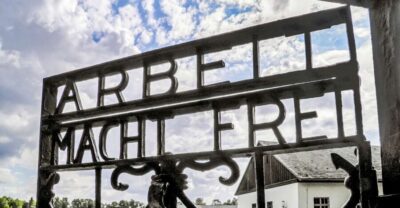
- Entering the Dachau Concentration Camp Memorial Site
- What you will learn at Dachau
- A short break before the Munich history walk
- Following the Nazi movement through central Munich
- The guides make the difference
- How much walking should you expect?
- Is $105.21 a fair price?
- Who should book this experience?
- Should you book the Munich and Dachau combination?
- FAQ
- Where does the tour begin?
- How long does the experience last?
- How do I get to Dachau?
- Is food included?
- What does the Dachau tour include?
- What Munich sites are included?
- Is there an age restriction?
- How large is the group?
- Can I cancel for a refund?
Key points before you book
- Two major history experiences in one day: Visit Dachau in the morning, then trace the Nazi rise and fall through central Munich.
- Public transport is part of the outing: You travel by train from Munich Hauptbahnhof and continue by local bus to the memorial site.
- Expect a serious, emotionally heavy visit: Dachau includes photographs, documents, reconstructed barracks, the crematorium, and former administrative buildings.
- Guides are the tour’s strongest feature: Names praised in feedback include Jake, Ian, Scott, Steve, Connie, Nick, Sam, Josh, and others.
- Plan for a long day on your feet: The Munich walking portion lasts about two and a half hours, while the Dachau visit takes roughly three hours.
- Good value for a history-focused itinerary: At $105.21 per person, the price covers both guided portions, local transport to Dachau, and the memorial visit.
One day, two views of Nazi Germany
This tour gives you two very different settings for understanding the same period. Dachau shows the machinery of imprisonment and persecution at the site of the first Nazi concentration camp in Germany. Munich shows how the Nazi movement gained power in public squares, political buildings, beer halls, and city streets.
That pairing matters. A visit to Dachau can feel isolated from the political world that created it. The Munich walk supplies that missing context by tracing the rise of Adolf Hitler and the Nazi Party through the city where the movement first took root.
The day starts at 9:00 a.m. at Radius Tours, Dachauer Strasse 4, near Munich Central Station. You meet the guide and group there before taking the train north. The overall experience lasts about eight hours and 30 minutes, although the exact pace depends on transport, group movement, questions, and the time spent at each site.
The two parts are separated by a short break in Munich. That pause gives you a chance to eat and rest, but lunch and drinks are not included. I would treat the break as a practical reset rather than a leisurely meal.
More Third Reich & WWII Tours in Munich
- Munich: Third Reich & WWII Walking Tour
★ 4.6 · 6,181 reviews - Third Reich Walking Tour Munich
★ 4.5 · 4,291 reviews - Munich: Birthplace of the Third Reich Guided Walking Tour
★ 4.6 · 771 reviews
Reaching Dachau by train and bus
The trip to the memorial site uses public transportation. You take a train from Munich Hauptbahnhof and then continue by local bus. The transport is covered by the tour operator, so you do not need to work out the tickets yourself.
This arrangement keeps the price lower than a private coach transfer and makes the route part of daily Munich life. It also has a downside. The train and bus can be crowded, and the local bus may offer little room to sit. One person specifically noted that the public bus became very full.
I would arrive at the meeting point early. Munich Central Station is large, and a few extra minutes can save a rushed start. The group has a maximum of 25 people, which is manageable, but you still need to stay close during transfers.
The guide also keeps the group together and points out practical stops along the way. Bathroom breaks are built into the Dachau portion, though this remains an outdoor-heavy visit with plenty of standing.
Entering the Dachau Concentration Camp Memorial Site
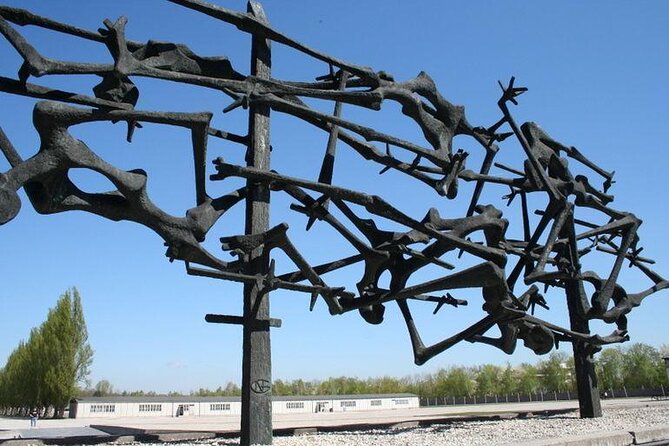
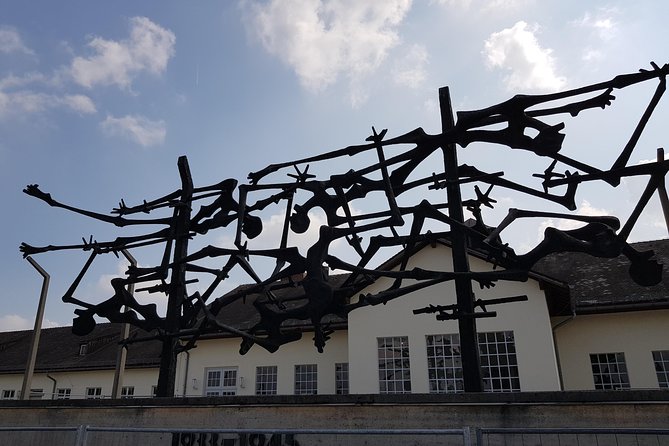
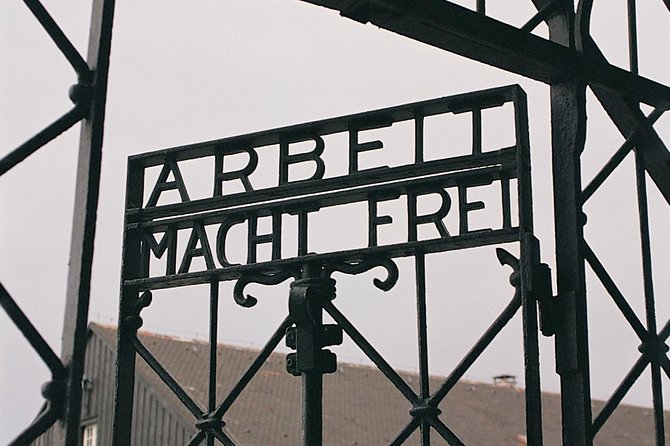
Dachau was the first Nazi concentration camp in Germany and later served as a model for other camps. The memorial site is not simply a single building or exhibit. It combines outdoor grounds, reconstructed structures, preserved areas, photographs, documents, and museum displays.
The guided visit lasts about two and a half to three hours. That is enough time to understand the site’s layout and purpose, but it is not enough for a slow reading of every panel. If you like examining documents closely, you may want to return independently on another day.
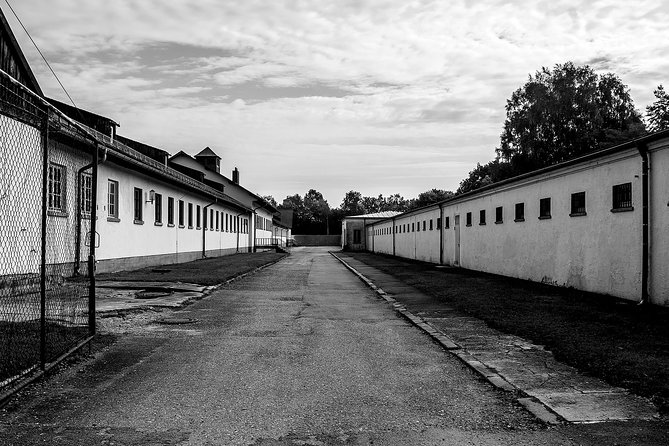
The tour covers the reconstructed cell blocks, the crematorium, and the former administration headquarters. These locations help explain how the camp functioned, but the visit is not presented as a dramatic attraction. The strongest guides keep the tone measured and respectful, using personal accounts and period material to show the human cost of the system.
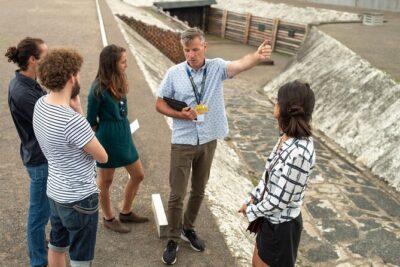
Connie was praised for preparing quotations from people who experienced imprisonment and for finding shaded places to sit during hot weather. That detail points to something important about this kind of visit: the quality of the guide matters not just for facts, but for judgment. A good guide knows when to pause, how to answer difficult questions, and how to keep the group attentive without making the subject feel theatrical.
Guides such as Jake, Ian, Scott, Emmett, Nick, and Sam were repeatedly praised for their command of the subject and their respectful delivery. Emmett, in particular, was noted for managing the train and bus connections, providing bathroom breaks, and keeping the group together.
Still, the experience can vary by guide and by group. One person felt the Dachau guide lacked sufficient command of the subject, while another wanted more time to read the displays. The three-hour format aims to give you a clear understanding without turning the entire day into a museum visit, but it will not satisfy every learning style.
What you will learn at Dachau
The memorial explains more than the physical layout of the camp. You learn about the people tied to its creation and operation, including Heinrich Himmler, the Nazi official associated with founding Dachau.
The guide places the camp within the wider Nazi system, discussing imprisonment, political repression, persecution, and the treatment of people labeled enemies of the state. The photographs and documents make the story specific, while the reconstructed buildings show the scale and organization of the site.
I recommend approaching this part of the day with realistic expectations. Dachau is disturbing and sad. The purpose is education and remembrance, not entertainment, and the subject can be emotionally tiring before the Munich walking tour even begins.
The grounds also require walking and standing. Weather can change the feel of the visit quickly. On a cold day, you will want warm layers. In hot weather, water, a hat, and comfortable shoes become especially useful. The tour welcomes people aged 13 and older, and proof of age may be required. Children under 13 cannot take part.
More memorial visits:
- Dachau Concentration Camp Memorial Site Tour from Munich by Train
★ 4.5 · 5,637 reviews - From Munich: Dachau Memorial Site Day Tour
★ 4.8 · 2,723 reviews - From Munich: Dachau Memorial Site Half-Day Trip
★ 4.7 · 2,526 reviews - From Munich: Dachau Memorial Site Full-Day Tour
★ 4.9 · 1,406 reviews
A short break before the Munich history walk
After returning to Munich, you have a brief break before meeting the second guide at a prearranged point in the city center. The break is useful, but do not expect a long recovery period. The walking tour begins later the same day and lasts about two and a half hours.
You will need to arrange your own food and drinks. A nearby restaurant may work for lunch, but the available time is limited, so keep the meal simple. I would also use the break to refill your water bottle and check your shoes before heading out again.
This split format is both a strength and a weakness. It lets you cover Dachau and Munich in one booking, which is helpful if you have limited time in the city. But the emotional weight of Dachau does not disappear during lunch, and the second half can feel tiring after a morning of travel and standing.
Following the Nazi movement through central Munich
The Munich portion follows the rise and fall of Hitler and the Third Reich through the Old Town. The exact order can vary, but the walk includes important political sites around Marienplatz, Königsplatz, and other central streets.
You see the building where Hitler first joined the Nazi Party and visit the former Gestapo headquarters. You also learn about the Beer Hall Putsch, called the Munich Putsch, which took place in 1923.
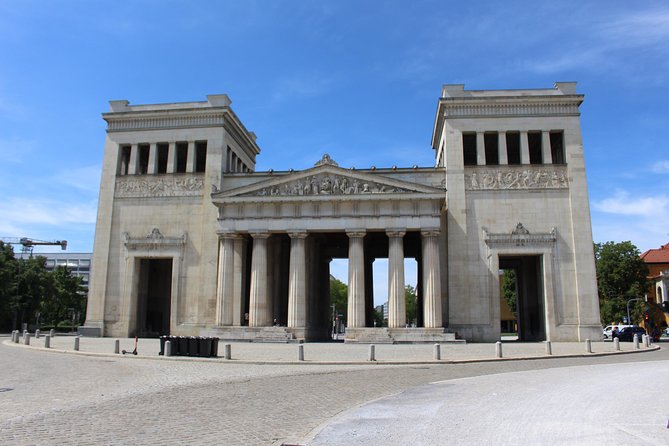
Königsplatz is especially important as a former Nazi Party marching ground. The broad open space helps you understand how architecture and public gatherings were used for political display. Marienplatz and the surrounding Old Town bring the subject back into the center of daily Munich, where the movement built support and influence.
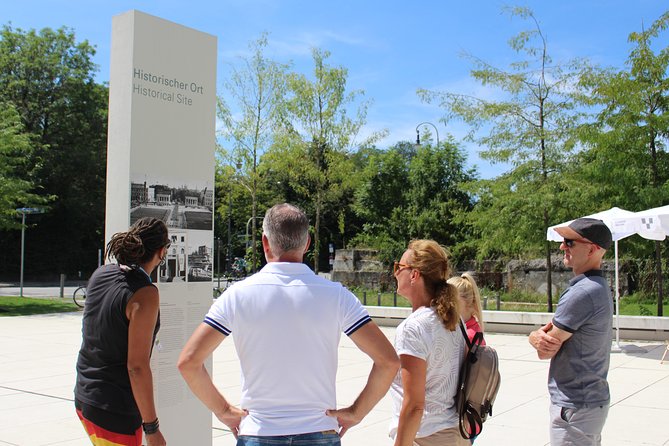
Many of the original buildings or features have changed, been destroyed, or been reconstructed. That can disappoint anyone expecting an untouched historical setting. The guides often use photographs showing Munich then and now, which helps fill in the gaps. Jake was praised for bringing historical images and suggesting books and films for further study.
The best part of this walk is the connection between places. You are not only looking at buildings. You are following a chain of meetings, propaganda, attempted coups, government offices, and public demonstrations. The city becomes a record of how politics shaped ordinary streets.
The guides make the difference
The most consistent strength of this experience is the guide team. Jake is frequently praised for combining serious detail, humor, and respect. Ian is described as personable and engaging, while Scott is noted for making difficult material clear and keeping the history alive in an educational way.
Other guides receive strong praise for different qualities. Nick is appreciated for his clear explanations at Dachau. Sam is described as engaging and considerate. Connie is remembered for her care on a hot day. Josh is praised for academic depth on the Nazi regime and World War II.
That variety is worth keeping in mind. You are not guaranteed a particular guide unless the booking specifically confirms one. The strongest guides do more than recite dates. They answer questions, read the mood of the group, use photographs or personal accounts, and explain why a location matters.
There are weaker possibilities, too. One person found the Munich guide flat and overly dependent on facts. Another found it hard to hear the guide in noisy city areas and inside echoing buildings. The tour does not appear to provide headsets, so staying near the guide is wise.
A few people also felt the pace was quick, especially when the group had to keep moving through the city. If you walk slowly or need frequent sitting breaks, tell the guide early and stay near the front or center of the group.
How much walking should you expect?
This is not a gentle sightseeing day. The Dachau visit includes outdoor walking and standing, public transport involves boarding and transfers, and the Munich section is a continuous city walk of about two and a half hours.
Wear comfortable shoes. Bring water and a snack. Dress for the forecast, since much of the day takes place outside. Cold weather can make the long day unpleasant, while hot weather increases the need for shade and water.
The group size of up to 25 is small enough for a guide to monitor, but it is large enough that the pace may be set by the slowest transfer or the need to keep everyone together. Most people can participate, but the combination of distance, standing, and emotional strain is worth taking seriously.
Is $105.21 a fair price?
At $105.21 per person, this is not the cheapest way to see Dachau or learn about Munich’s Nazi-era sites. You could visit places independently and spend less on admission and transport.
The value comes from the structure. The price includes a full guided visit to the Dachau memorial, the train and bus arrangements, a local guide, and a separate Third Reich walking tour through central Munich. You are paying for interpretation, planning, transfers, and the ability to connect sites that are spread across the city and its outskirts.
For someone with only a few days in Munich, I think the combination offers solid value. It gives you a serious introduction to both the camp memorial and the political story behind it without requiring separate research.
The tradeoff is time. If you want to read every exhibit panel, reflect quietly, or take photographs at your own pace, a self-guided Dachau visit may suit you better. If you want a broad, organized account in one day, the price is easier to justify.
Who should book this experience?
I would recommend it to adults and older teenagers with a strong interest in World War II, the Holocaust, German history, or the rise of Nazi power. It is also a practical choice if you want a guide to handle the route to Dachau and explain the sites in context.
It suits people who prefer learning through stories, photographs, and place-based explanation rather than visiting museums alone. The Munich walk is particularly useful if you would otherwise pass the former Gestapo headquarters or the Beer Hall Putsch site without knowing what happened there.
I would think twice if you dislike long walking days, crowded public transport, or tightly scheduled visits. I would also avoid stacking this experience with another major museum or full-day outing. The history is demanding, and your attention will be better if you leave the evening open.
Free cancellation is available up to 24 hours before the 9:00 a.m. start time. Changes or cancellations made later are not refunded, and the tour requires a minimum number of people to operate.
Should you book the Munich and Dachau combination?
Book it if you want an organized, serious introduction to Munich’s Nazi past and can manage a full day of walking, standing, train travel, and difficult subject matter. The strongest guides make the difference, and the combination of Dachau with central Munich gives you more context than either visit alone.
Choose a separate self-guided Dachau visit if you need a slower pace or want to study every exhibit in detail. For most history-minded visitors with limited time, though, this is a useful and fairly priced way to understand both the site of persecution and the city where the Nazi movement grew.
FAQ
Where does the tour begin?
The tour begins at Radius Tours, Dachauer Strasse 4, 80335 Munich, near Munich Central Station. The scheduled start time is 9:00 a.m.
How long does the experience last?
The full experience lasts approximately eight hours and 30 minutes. The Dachau portion takes about three hours, and the Munich Third Reich walking tour lasts about two and a half hours, with a short break between them.
How do I get to Dachau?
The group travels by train from Munich Hauptbahnhof and then takes a local bus to the Dachau Concentration Camp Memorial Site. The transport is arranged and paid for by the tour operator.
Is food included?
No. Food and drinks are not included. You have a short break between the two tour sections to arrange your own meal.
What does the Dachau tour include?
The guided visit includes the memorial site, museum displays, photographs, documents, reconstructed cell blocks, the crematorium, and the former administration headquarters.
What Munich sites are included?
The walking tour includes sites connected with Nazi Germany in central Munich, including the building where Hitler joined the Nazi Party, the former Gestapo headquarters, the Beer Hall Putsch site, Marienplatz, and Königsplatz.
Is there an age restriction?
Yes. The experience is open to people aged 13 and older. Children under 13 are not permitted, and proof of age may be required.
How large is the group?
The maximum group size is 25 people.
Can I cancel for a refund?
You can cancel at least 24 hours before the local start time for a full refund. Cancellations or changes made less than 24 hours before the start time are not refunded or accepted.
Just added around Munich
- Munich: Private or Group Third Reich and WWII Walking Tour★ 4.9 · 13 reviews
- From Munich: Neuschwanstein Castle and Linderhof Private Tour★ 5.0 · 13 reviews
- Private Transfer from Munich to Salzburg with 2 hours for sightseeing★ 4.5 · 13 reviews
- Munich: Historical Walking Tour on the Rise of Hitler★ 5.0 · 13 reviews
- Private Scenic Transfer from Munich to Prague with 4h of Sightseeing★ 5.0 · 13 reviews
- From Munich: VIP day trip to Salzburg★ 5.0 · 14 reviews
- National Socialism WWII with licensed guide – private tour★ 5.0 · 14 reviews
- Munich: Walking Tour Old Town 3D VR Tour in GERMAN★ 4.3 · 14 reviews
Memorial & Concentration Camp Tours, compared.
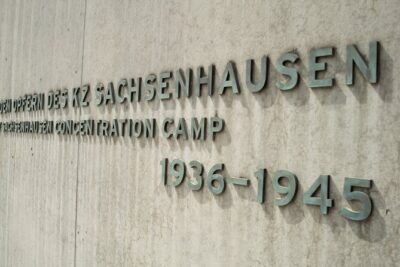
Sachsenhausen Concentration Camp Tour in English
Read our review →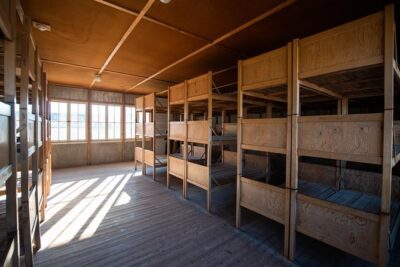
Dachau Concentration Camp Memorial Site Tour from Munich by Train
Read our review →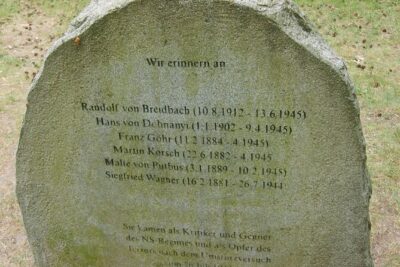
Sachsenhausen Concentration Camp Memorial Tour
Read our review →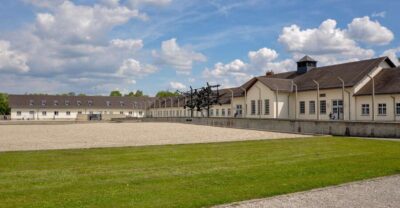
Sachsenhausen Concentration Camp Bus Tour in English from Berlin
Read our review →Sachsenhausen Concentration Camp Tour in English
Read our review →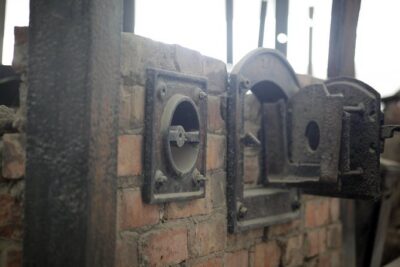
Sachsenhausen Concentration Camp Memorial Tour (Max. 15 Guests)
Read our review →Browse the lists this tour appears in