
Reviewed · MEMORIAL & CONCENTRATION CAMP TOURS
Berlin: Sachsenhausen Concentration Camp Memorial Tour
History is difficult here, and worth facing. This five-hour Sachsenhausen tour takes you from Alexanderplatz to one of Germany’s most important Nazi-era memorials, with a guide beside you for the train journey and the entire site visit. I like the clear structure, from Tower A and the barracks to Station Z and the Soviet memorial, and I like that you can stay longer afterward if you need more time.
The guides receive the strongest praise, especially Peter, Richard, Walid, Felipe, and Paul. They are repeatedly described as clear, respectful, well organized, and helpful with the trains. The main drawback is the subject itself: this is an emotionally heavy visit, and much of the memorial is outdoors, so cold weather, long walking, and difficult material can make the five hours demanding.
The $21 price offers good value because it includes transport guidance, a live guide from Berlin, the memorial tour, and the €3 entrance fee. You still need to buy an ABC-zone train ticket before meeting the group, and the tour is not suitable for wheelchair users or people with mobility impairments.
In This Review
- Key points at a glance
- Why Sachsenhausen deserves a place in your Berlin plans
- Meeting beside Alexanderplatz and getting the ABC ticket right
- Arriving at Tower A and the main camp grounds
- Barracks 38 and 39, where cramped conditions become personal
- Punishment cells and the machinery of control
- The infirmary, morgue, and former prisoner kitchen
- Station Z and the Soviet memorial from 1961
- What five hours really means
- Language, group comfort, and the emotional pace
- Is the $21 price good value?
- Who should book this Sachsenhausen tour?
- Should you book it?
- FAQ
- Where does the Sachsenhausen tour meet in Berlin?
- How long does the activity last?
- Is the train ticket included?
- Where can I buy the ABC train ticket?
- Is the entrance fee to Sachsenhausen included?
- Which languages are available?
- Can I stay at the memorial after the guided tour?
- What should I bring?
- Is the tour suitable for wheelchair users?
- Can I cancel the booking?
Key points at a glance
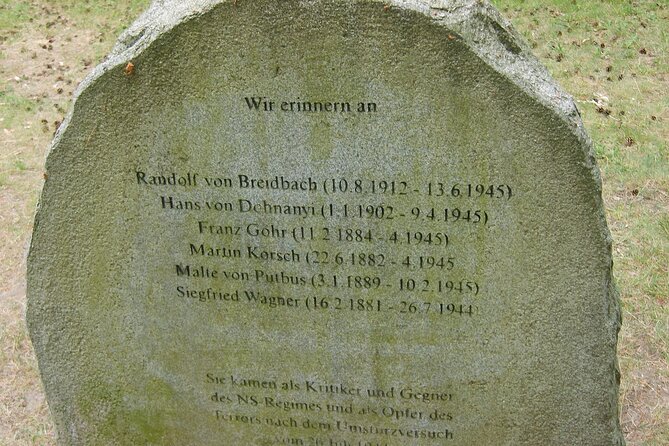
- Meet at Alexanderplatz: Find the guide beside the World Time Clock, marked by Buendía accreditation.
- Train travel is part of the lesson: Your guide explains the camp’s origins and purpose on the way to Sachsenhausen.
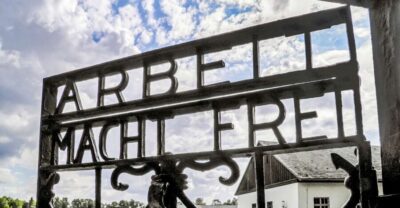
- Tower A sets the tone: The famous Arbeit macht Frei gate leads into the former camp grounds.
- Barracks 38 and 39 add personal detail: The museum in Barracks 38 focuses on the cramped conditions faced by Jewish prisoners.
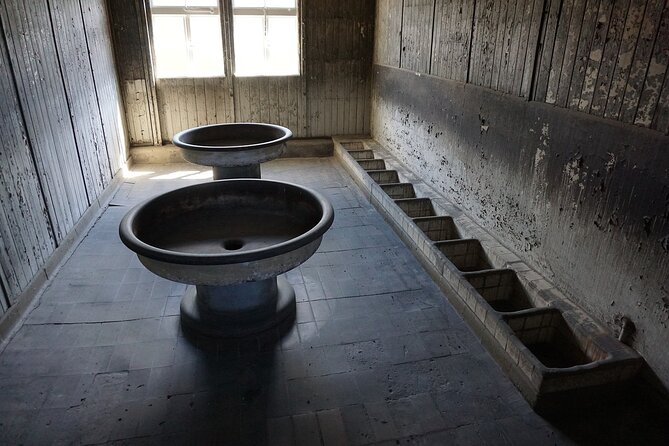
- Station Z and the infirmary are especially difficult: These areas explain the violence, executions, medical experiments, and suffering at the camp.
- You can stay after the guided visit: Return to Berlin with help from the guide or continue exploring independently.
Why Sachsenhausen deserves a place in your Berlin plans
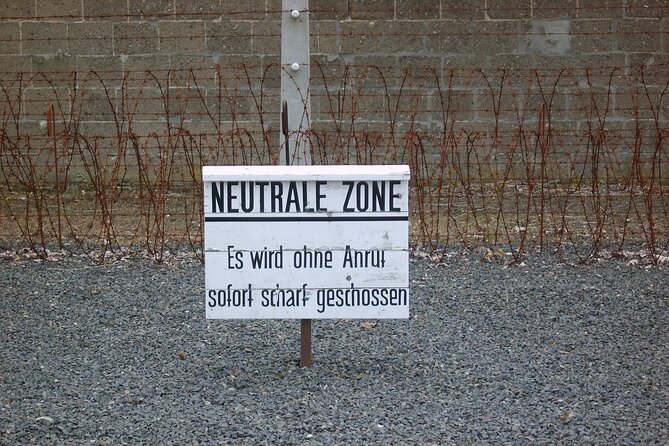
Berlin has museums and memorials scattered across the city, but Sachsenhausen gives you a different kind of lesson. You leave the center by train and reach a former concentration camp outside Berlin, where the physical setting helps you understand how separate this world was from ordinary city life.
Sachsenhausen was created under Nazi rule and was used as part of the concentration camp system. It also served as a model camp for the Nazis, which makes the visit important beyond its individual buildings. The tour explains how the camp was designed, operated, and used to imprison people under a system built on terror and control.
You should not expect a light sightseeing stop. This is a memorial, not an attraction in the usual sense. The visit asks you to pay attention, listen carefully, and allow time afterward to process what you have seen.
The overall rating is 4.7 from 3,716 reviews, with especially strong praise for the guides. That matters here. A site this serious can feel confusing or emotionally overwhelming if you walk through it without context. A good guide helps connect the buildings, monuments, dates, and individual stories without turning the visit into a rushed checklist.
More memorial visits:
- Berlin: Sachsenhausen Concentration Camp Tour in English
★ 5.0 · 5,711 reviews - Sachsenhausen Concentration Camp Bus Tour in English from Berlin
★ 5.0 · 1,962 reviews - Berlin: Sachsenhausen Concentration Camp Tour in English
★ 4.8 · 1,889 reviews
Meeting beside Alexanderplatz and getting the ABC ticket right
The meeting point is beside the World Time Clock at Alexanderplatz. Look for the guide wearing Buendía accreditation. This is a busy part of Berlin, so give yourself enough time to identify the correct person and settle your transport before the group leaves.
The train ticket is not included. You need an ABC-zone ticket, bought before the activity from a station machine or through the Berliner Verkehrsbetriebe website. This is an easy detail to miss, and it is the most important practical task before the tour begins.
The guide accompanies the group from Berlin, rather than meeting you only at the memorial. That makes the trip less stressful, particularly if you are unfamiliar with Berlin’s public transport system. Several guides are praised for checking that everyone had the correct ticket, directing the group through train changes, and helping with the return journey.
The ride also has a purpose beyond getting from one place to another. The guide introduces the camp’s origins, its role in Nazi Germany, and the way it functioned as a model for the wider concentration camp system. By the time you arrive, you have a basic framework for understanding what you are about to see.
Arriving at Tower A and the main camp grounds
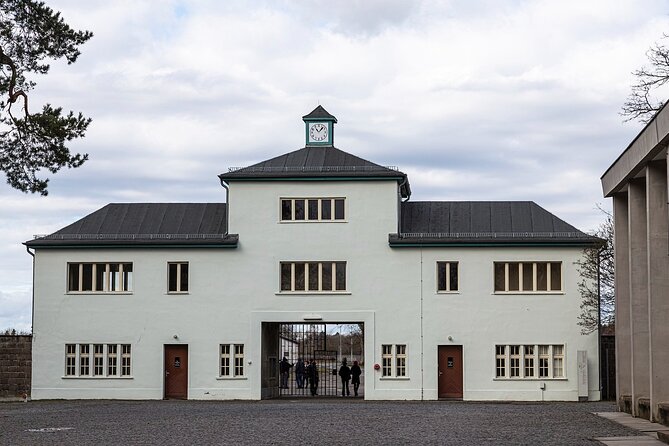
The visit begins at Tower A, the main entrance to Sachsenhausen. The gate carries the phrase Arbeit macht Frei, a deliberately false promise that work would bring freedom. Seeing the entrance in its original setting gives the phrase a grim force that a photograph cannot quite provide.
This first stop helps you understand the camp’s layout. The guide uses the remaining structures and open spaces to explain how the site was organized, while also pointing out that later memorials reflect different periods and political ideas.
That point is especially useful. Sachsenhausen is not marked by one single monument built at one single moment. Different memorials were placed there at different times and under different ideologies. The tour addresses this layered history rather than presenting the site as a simple, frozen snapshot of the Nazi period.
Much of the visit takes place outside. Wear comfortable shoes, and dress for the forecast. In winter, the open grounds can feel bitterly cold. One guide adapted the pace because the group was freezing, but you should still prepare for a long outdoor visit rather than relying on indoor shelter.
Barracks 38 and 39, where cramped conditions become personal
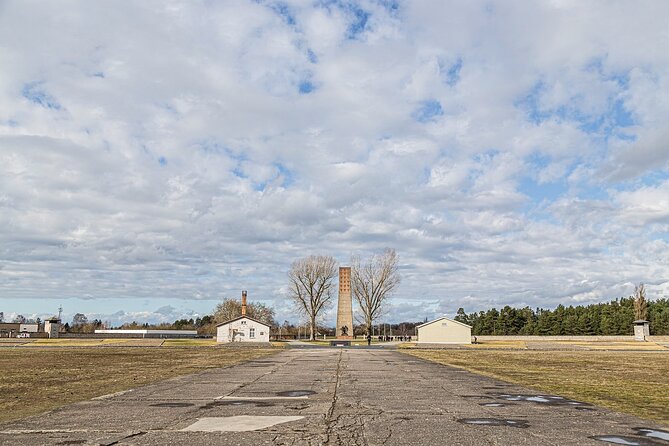
Barracks 38 and 39 are among the most meaningful stops because they focus on Jewish prisoners and their daily lives. Barrack 38 now houses a museum, giving you a closer look at the conditions and experiences behind the larger story of the camp.
The barracks are not simply another pair of buildings to tick off. Their cramped conditions help turn an abstract figure into a human reality. You can listen to the guide explain how prisoners lived, were controlled, and endured a system designed to strip away privacy and dignity.
This is also where guide quality matters most. The strongest guides do not just recite dates. They explain the setting in plain language, answer questions, and add context without making the visit feel like a lecture. Peter, Richard, Walid, Felipe, and Paul are among the guides praised for doing this well, though the guide assigned to your date may be different.
You will hear about notable prisoners during the tour. The supplied information does not promise a fixed list of names, so the exact stories may vary by guide, language, and group questions. That flexibility can be useful because it allows the guide to respond to what interests you, but you should not book expecting one specific prisoner biography.
Something different for another day:
- Berlin: Reichstag, Dome and Government District Guided Tour
★ 4.7 · 18,288 reviews - Berlin: 1-Hour City Tour by Boat with Guaranteed Seating
★ 4.3 · 16,993 reviews - Berlin: Boat Tour Along the River Spree
★ 4.4 · 11,252 reviews - Discover Berlin Half-Day Walking Tour
★ 5.0 · 9,624 reviews
Punishment cells and the machinery of control
The original punishment cells show how minor offenses could lead to detention and further suffering. This stop helps explain that the camp was controlled not only through its walls and guards, but also through arbitrary punishment.
The cells can be a difficult place to visit. You are looking at a small, physical space connected to the daily enforcement of fear. The guide’s role here is to explain how punishment worked without sensationalizing it.
The tour does a good job of connecting individual locations to the wider system. Tower A, the barracks, and the punishment cells are not isolated points. Together, they show how entry, housing, surveillance, and discipline fit into one structure.
Expect questions to arise as you move through the site. The guides are repeatedly praised for answering them carefully and for correcting misconceptions about the period. That is a real benefit on a subject surrounded by propaganda, oversimplification, and false claims.
The infirmary, morgue, and former prisoner kitchen
The infirmary and morgue provide some of the tour’s harshest material. Here, you learn about cruel medical experiments and the conditions connected with illness, death, and prisoner treatment.
The guide should approach this section with care, and the best accounts of the experience describe a respectful, historically accurate presentation. The material is not softened, but it is explained in context. That balance matters. You need to understand what happened without being pushed toward shock for its own sake.
The former prisoner kitchen is now a museum. It offers another way into the camp’s story by bringing together important moments from Sachsenhausen’s history. After the starkness of the punishment and medical areas, the kitchen helps broaden the visit and show more of the camp’s daily operation.
These indoor museums also provide a short break from the weather. Do not count on the entire tour taking place inside, though. You will still spend a substantial amount of time walking across the memorial grounds.
Bring a snack. The activity lasts about five hours, and the information is demanding. Eating beforehand or carrying something simple can help, especially if you are visiting during a cold month.
Station Z and the Soviet memorial from 1961
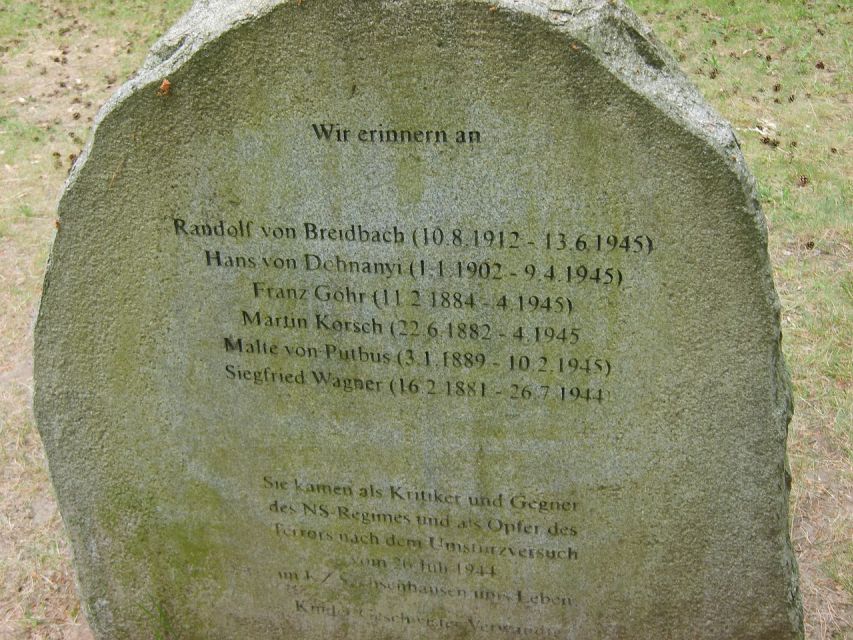
Station Z is one of the most difficult locations at Sachsenhausen. The remains mark an area where many executions took place, and the guide explains its role within the camp.
This is a point where the tour’s sober pace is important. You may want to move quickly, but the guide gives the location meaning and connects it to the broader system of imprisonment and killing. The site does not need dramatic presentation. Its history is severe enough.
The tour ends with the Soviet memorial built in 1961. This monument reflects the camp’s role after World War II and adds a second historical layer to the visit. You are not looking only at what happened during Nazi rule. You are also seeing how the site was later interpreted and commemorated.
That final stop gives the visit a wider frame. Sachsenhausen’s memorials were created at different times and for different political purposes. Understanding that helps you read the site critically, rather than assuming every monument carries the same message.
What five hours really means
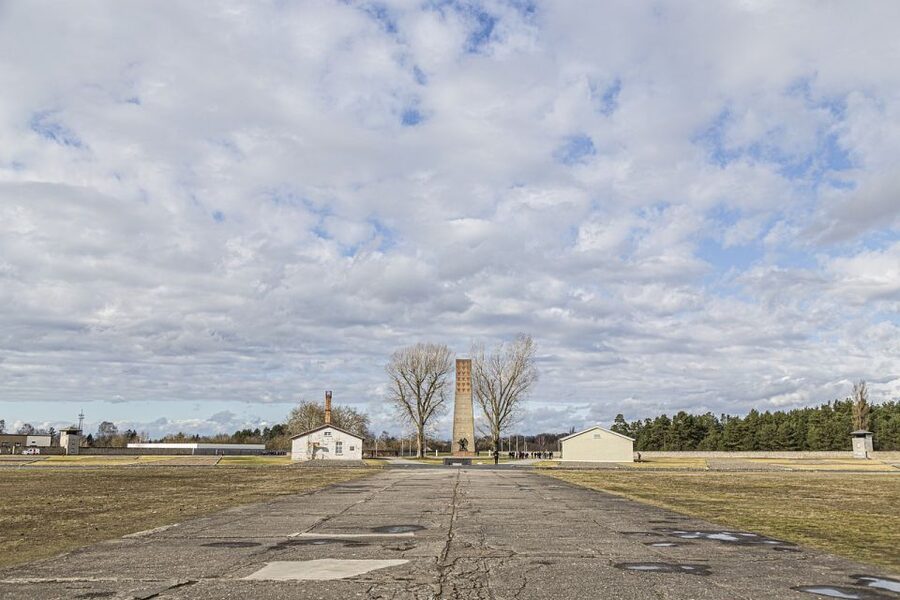
The advertised duration is five hours, including the journey from Berlin, the guided visit, and the return process. The time at Sachsenhausen is substantial enough to cover the principal areas without making you arrange the route yourself.
The tour is organized to maximize the main highlights, but it does not claim to show every part of the memorial in equal detail. At the end, you can return to Berlin with the guide’s help or remain at Sachsenhausen to explore at your own pace.
I like this choice. Some people need to leave once the formal tour ends. Others need more time in the museums, grounds, and memorial areas. You are not forced into one schedule.
Several guides also help with onward directions in Berlin. That may include train guidance and general suggestions for other places to see, though the main service remains the Sachsenhausen visit.
Train delays or cancellations can make the day less predictable. Guides have been praised for handling transport problems and keeping the group moving, but you should avoid scheduling a tight appointment immediately afterward.
Language, group comfort, and the emotional pace
Live tours are offered in Spanish, English, German, French, and Italian. Select your preferred language when booking, then check the available starting time for that option.
The guides are praised for clear speech and for explaining complex events in an understandable way. Amelia, for example, was praised for speaking excellent English while also conversing in other languages during the day. That kind of language ability can be useful in a mixed group, though the exact guide is not guaranteed.
A little appropriate humor may appear during the train ride or at neutral moments. At the memorial itself, the best guides keep the tone respectful. One of the strongest patterns in the feedback is the balance between warmth, organization, and seriousness.
This is not a tour for anyone seeking entertainment. It suits you if you want historical explanation, personal stories, and help understanding how the site connects to Nazi Germany and the wider concentration camp system.
Is the $21 price good value?
At $21 per person, the tour is priced fairly for a five-hour guided outing, especially since the €3 memorial entrance fee is included. You are paying for a guide from the moment you meet in Berlin, not only for a short talk once you reach the camp.
The extra cost is the ABC-zone train ticket. Since the ticket is required and not included, factor it into your total budget. The arrangement still offers good value because you do not have to work out the route alone or navigate the memorial without historical support.
The separate entrance arrangement also helps the group enter without standing in the standard line. The exact flow can depend on conditions at the site, but the separate entrance is a useful time saver.
Free cancellation up to 24 hours in advance and the option to reserve now and pay later make this easier to fit into a changing Berlin schedule. Those booking terms are helpful, but the real value depends on your interest in the subject. If you would rather spend five hours on lighter sightseeing, this is not the right use of your time.
Who should book this Sachsenhausen tour?
I would choose this tour if you want a serious history lesson but do not want to manage Berlin trains, the ABC ticket, and the memorial route alone. It is also a strong choice for students, families with older children, and anyone who wants the site explained with care.
The tour may suit you particularly well if:
- You want context before arriving at the memorial.
- You value a guide who can answer questions and correct common misunderstandings.
- You prefer a structured visit with free time afterward.
- You are comfortable walking outdoors for several hours.
- You want help returning to Berlin by train.
Think twice if you have mobility limitations. The activity is specifically not suitable for wheelchair users or people with mobility impairments. You should also reconsider it if you are looking for a casual half-day outing, because the content is upsetting and the walking can be tiring.
Should you book it?
Book this Sachsenhausen tour if you want to understand the memorial rather than simply pass through it. The strongest reason to choose it is the consistent praise for guides who explain difficult material clearly, respectfully, and without turning the visit into a spectacle.
Buy your ABC ticket before meeting beside the World Time Clock, wear comfortable shoes, carry a snack, and dress warmly if the forecast is cold. If you think you will want quiet time afterward, leave your schedule open and stay at the memorial once the guided portion ends.
For a low-cost, five-hour introduction to Sachsenhausen, this is a thoughtful and practical choice. It will not be easy, but that is part of its value.
FAQ
Where does the Sachsenhausen tour meet in Berlin?
The guide waits next to the World Time Clock at Alexanderplatz. The guide wears Buendía accreditation.
How long does the activity last?
The tour lasts five hours, including travel between Berlin and Sachsenhausen.
Is the train ticket included?
No. You must buy an ABC-zone train ticket before the activity.
Where can I buy the ABC train ticket?
You can buy it at a ticket machine in a station or online through the Berliner Verkehrsbetriebe website.
Is the entrance fee to Sachsenhausen included?
Yes. The €3 entrance fee is included in the tour price.
Which languages are available?
The live tour guide is available in Spanish, English, German, French, and Italian.
Can I stay at the memorial after the guided tour?
Yes. You can stay longer and explore independently, or return to Berlin with help from the guide.
What should I bring?
Bring comfortable shoes and snacks. Warm clothing is also sensible because much of the visit takes place outdoors.
Is the tour suitable for wheelchair users?
No. The activity is not suitable for wheelchair users or people with mobility impairments.
Can I cancel the booking?
Yes. You can cancel up to 24 hours in advance for a full refund. You can also reserve now and pay later.
Just added around Berlin
- Berlin: Private Guided Tour of the Main Sights★ 5.0 · 13 reviews
- Private Highlights of Berlin Bike Tour★ 5.0 · 13 reviews
- Modern Berlin Private Walking Tour: Diverse, Vibrant and Exciting German Capital★ 5.0 · 13 reviews
- Tour in Berlin from Warnemünde and Rostock Cruise Port★ 4.1 · 13 reviews
- Berlin: Stasi Museum Private Guided Tour with Entry Ticket★ 4.8 · 13 reviews
- Private Food Tour Experience with a born and bred Berliner★ 5.0 · 14 reviews
- Berlin: Rheinsberg Palace Entrance Ticket★ 4.8 · 14 reviews
- Berlin in one day – day tour with an expert guide★ 5.0 · 14 reviews
Memorial & Concentration Camp Tours, compared.
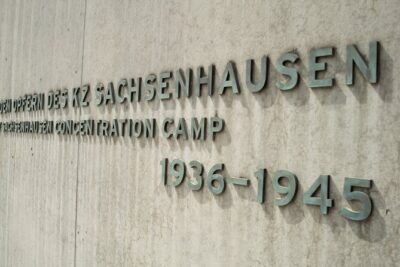
Sachsenhausen Concentration Camp Tour in English
Read our review →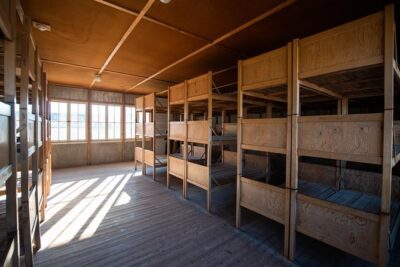
Dachau Concentration Camp Memorial Site Tour from Munich by Train
Read our review →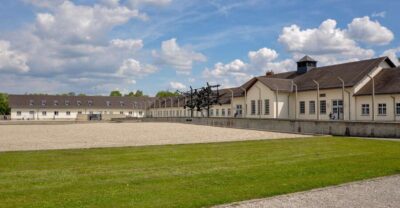
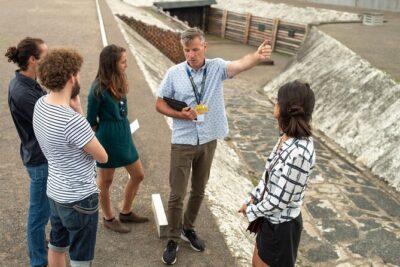
Sachsenhausen Concentration Camp Bus Tour in English from Berlin
Read our review →Sachsenhausen Concentration Camp Tour in English
Read our review →
Sachsenhausen Concentration Camp Memorial Tour (Max. 15 Guests)
Read our review →
Browse the lists this tour appears in