
Reviewed · MEMORIAL & CONCENTRATION CAMP TOURS
Berlin: Sachsenhausen Concentration Camp Tour in English
Sachsenhausen makes Berlin’s past impossible to ignore. I like the clear three-hour guided visit and the fact that your guide stays with you from central Berlin to Oranienburg and back. I also like the public-transport journey, which keeps the outing affordable at $22 and gives you time to prepare for a serious day. The main drawback is the amount of walking, much of it outdoors, so cold, wet weather and limited mobility can make this demanding.
This is not a light sightseeing trip, and that is the point. You will hear about murder, forced labor, resistance, experiments, and the camp’s later Soviet use. Guides such as Daniel, Georgia, Xavier, Irish Paul, Gregor, Tina, and Rebecca have been praised for presenting the subject with care, patience, and a human focus. Bring water, a snack, and shoes that can handle several hours on foot.
In This Review
- Key points to know before you go
- Why Sachsenhausen belongs on a Berlin itinerary
- Meeting at Friedrichstraße and taking the train north
- The 20-minute walk from Oranienburg
- Starting at the Camp Administration Center
- Barracks, Jewish prisoners, and daily life
- Punishment cells, the infirmary, and the pathology laboratory
- Station Z and the machinery of mass murder
- The commandant’s house, watchtower, and SS training grounds
- Special Camp 1/7 and the Soviet period
- Group size, guide quality, and the human side
- Is $22 good value?
- Who should book this Sachsenhausen tour?
- My verdict: book it if you want context, not comfort
- FAQ
- How long does the Sachsenhausen tour take?
- Where does the tour begin?
- How do you get to Sachsenhausen?
- Is the public-transport ticket included?
- What does the tour price include?
- Is the tour wheelchair accessible?
- Does the tour run in bad weather?
- Can I book a private tour?
Key points to know before you go
- Sachsenhausen is about 35 minutes from Berlin by train: The journey is simple, but you need an ABC public-transport ticket.
- The tour covers Nazi and Soviet use of the site: You learn what happened before, during, and after the Second World War.
- The three-hour visit is largely outdoors: Barracks, watchtowers, punishment cells, Station Z, the gallows, and other locations are spread across the memorial grounds.
- The guides are the biggest strength: Daniel, Georgia, Xavier, Irish Paul, and others are praised for calm explanations, strong organization, and sensitivity.
- The price is low for a half-day guided outing: At $22, your main extra cost is the required public-transport ticket.
- This is not suitable for everyone: The site is not wheelchair accessible and is not recommended for people with walking impairments.
Why Sachsenhausen belongs on a Berlin itinerary
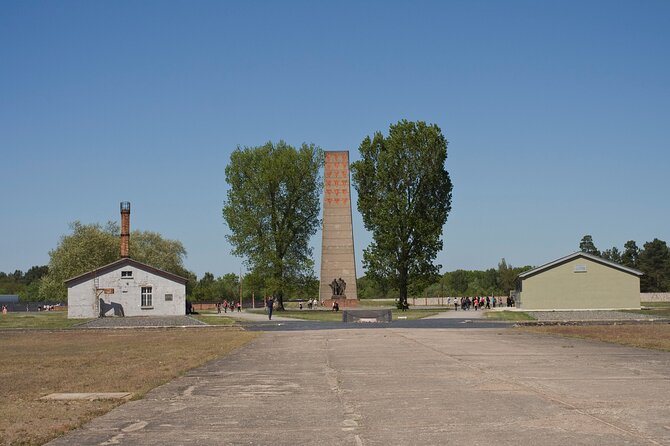
Berlin has no shortage of museums about National Socialism and the Second World War. Sachsenhausen adds something a museum cannot: you walk through the actual grounds, follow the prisoners’ route from the station, and see the distances between the barracks, administrative buildings, punishment areas, and murder site.
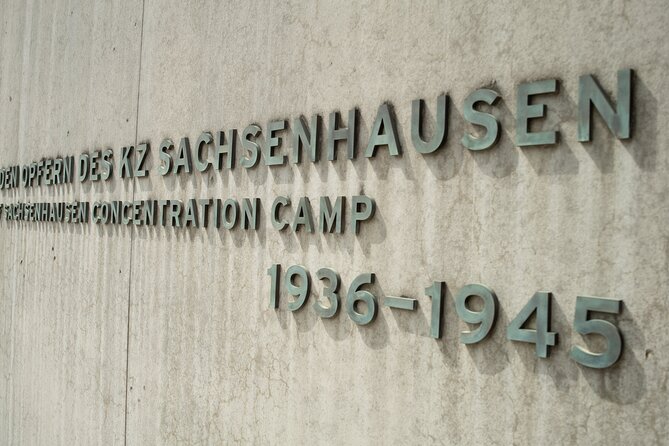
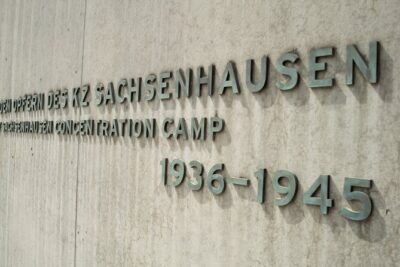
The SS began building Sachsenhausen in 1936. It was first intended for political opponents of the Nazi regime, but the prisoner population soon widened to include people the NSDAP considered a threat to its racial and political ideology. The camp also became an administrative center for the concentration-camp system.
That wider role matters. This was not only a place where prisoners were held. The Camp Administration Center once housed the Concentration Camps Inspectorate, which oversaw the Third Reich’s 32 main camps and more than 1,000 satellite camps. Your guide helps connect what you see on the ground with that larger system.
I would not describe the visit as entertaining. It is educational, direct, and often painful. The purpose is remembrance and understanding, not sightseeing in the usual sense. Go with enough time afterward to sit quietly or visit another Berlin museum at a slower pace.
More memorial visits:
- Berlin: Sachsenhausen Concentration Camp Tour in English
★ 5.0 · 5,711 reviews - Berlin: Sachsenhausen Concentration Camp Memorial Tour
★ 4.7 · 3,716 reviews - Sachsenhausen Concentration Camp Bus Tour in English from Berlin
★ 5.0 · 1,962 reviews
Meeting at Friedrichstraße and taking the train north
The meeting point is outside Friedrichstraße train station, on the square beside the Tränenpalast, also known as the Palace of Tears. Guides carry yellow umbrellas, making the group easier to find.
This central location works well if you are staying anywhere near Berlin’s main transport network. The guide gathers the group, checks that everyone is present, and explains the public-transport plan. You will need an ABC-zone ticket for the journey to Sachsenhausen and the return to Berlin. Staff can help you buy it at the meeting point, but budget a little extra time and money for this separate expense.
The train ride to Oranienburg takes roughly 25 to 35 minutes in the outward direction. The return journey is listed at about 45 minutes, depending on the route and connections. There is no private vehicle included, including with a private tour. Your guide travels with you on public transport, which keeps the cost down and makes the route part of the experience.
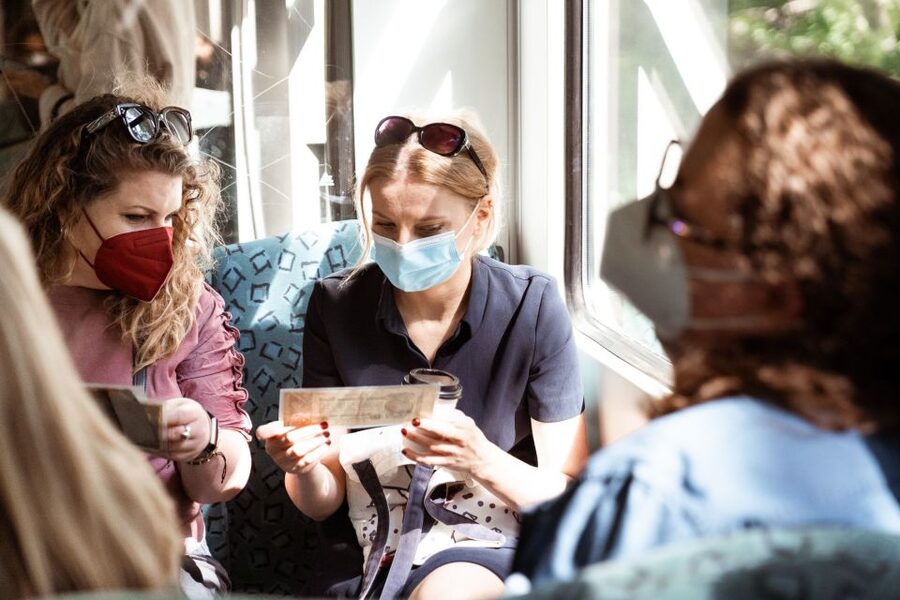
Several people have appreciated how guides handle this practical side of the day. Ariel, Emma, Mikhail, and Gregor were all praised for keeping groups together and making the train journey straightforward. One guide even sorted out a ticket problem for a participant. Still, you should not treat the transport as a private transfer. You will be sharing trains and walking between stations and sites.
The 20-minute walk from Oranienburg
At Oranienburg, you walk for about 20 minutes to reach the memorial site. This is an important part of the visit rather than an annoying gap between transport and sightseeing. The route helps you understand the physical distance between the town, the railway station, and the camp entrance.
It is also where the walking begins in earnest. The route is manageable for many people, but the full outing lasts five and a half to six hours, and the memorial grounds are spread out. If you have trouble walking, ask yourself honestly if this is the right activity. The tour is not wheelchair accessible and is specifically not recommended for people with mobility impairments.
Wear comfortable shoes and clothes suited to the forecast. The tour operates in all weather. Winter visits can be especially stark, with long periods outside in cold wind. A warm coat, gloves, rain protection, and a drink will improve the day considerably. Bring a snack too, since food and drinks are not included.
Starting at the Camp Administration Center
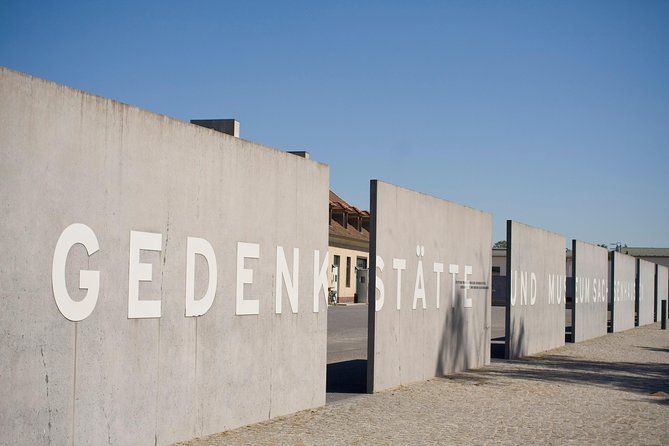
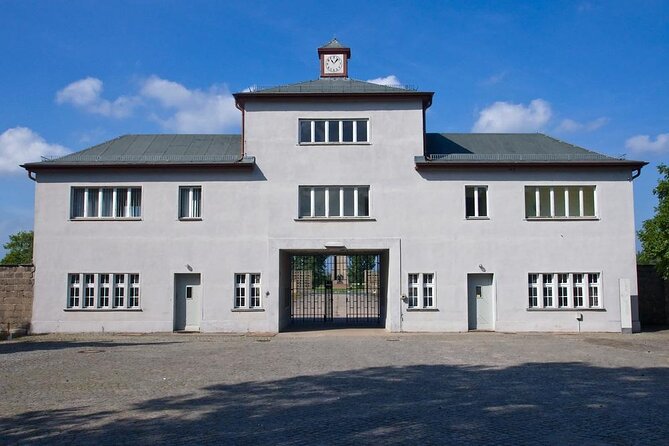
The guided visit begins at the Camp Administration Center, now an on-site museum. This is a useful opening because it gives the site a framework before you begin looking at individual buildings and locations.
Here you learn how Sachsenhausen functioned as part of the camp system. The building’s former administrative purpose shows how organized the machinery of persecution was. It was not random cruelty carried out by a few isolated individuals. It was managed through offices, records, staff, orders, and a network reaching far beyond this one place.
A good guide also helps you avoid treating the camp as a collection of grim points on a map. Daniel, Georgia, and Chris have been praised for connecting dates, institutions, and individual lives. Their approach gives you context without losing sight of the people imprisoned here.
The guide explains the different prisoner groups and the harsh daily conditions. You also hear about notable prisoners, including Stalin’s son. These individual stories make the history less abstract, but the visit keeps them in the wider context of the many people who suffered and died here.
Something different for another day:
- Berlin: Reichstag, Dome and Government District Guided Tour
★ 4.7 · 18,288 reviews - Berlin: 1-Hour City Tour by Boat with Guaranteed Seating
★ 4.3 · 16,993 reviews - Berlin: Boat Tour Along the River Spree
★ 4.4 · 11,252 reviews - Discover Berlin Half-Day Walking Tour
★ 5.0 · 9,624 reviews
Barracks, Jewish prisoners, and daily life
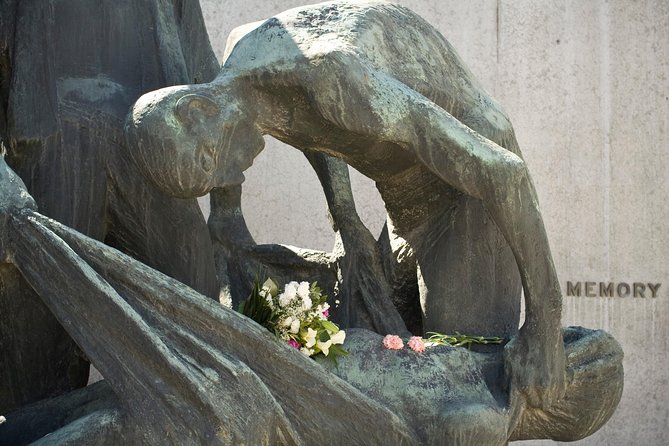
The barracks are among the most affecting parts of the tour. You see where inmates were confined and hear about the conditions under which they lived. The buildings and remaining structures cannot reproduce the past, but walking through the spaces gives scale to the overcrowding, control, and lack of privacy described by the guide.
The Jewish Barracks receive special attention. Your guide explains the persecution faced by Jewish prisoners and places their experience alongside that of other prisoner groups. The Nazi camp system targeted people for different reasons, but the result was imprisonment, abuse, forced labor, and death.
The tour also covers the Jewish prisoners’ revolt in 1942. You hear about British prisoners who resisted and about sabotage carried out by Soviet and Polish prisoners. These accounts are important because they show that prisoners were not simply passive victims. Resistance took many forms, often under conditions where even small acts carried enormous risk.
This is where guide quality matters most. The strongest guides keep the focus on people rather than turning suffering into a list of shocking facts. Tina, Xavier, Rebecca, and Irish Paul have been especially praised for combining detail with a respectful tone. If you have questions, ask them. The guides are used to different levels of prior knowledge and make space for discussion.
Punishment cells, the infirmary, and the pathology laboratory
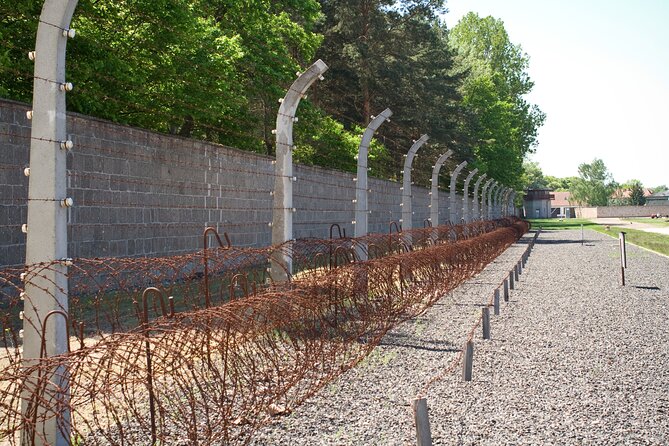
The Punishment Cells show how the camp was used for discipline and intimidation. Your guide explains the role of punishment within the wider system, rather than presenting the cells as an isolated horror. The point is to understand how control operated day after day.
The infirmary and pathology laboratory bring another layer of cruelty. These areas are associated with medical experimentation and the treatment, or mistreatment, of prisoners. The subject matter can be disturbing, and you should expect the guide to describe difficult events plainly.
Some visitors find these interiors more confronting than the open grounds. The buildings are smaller, enclosed, and tied to specific acts carried out against prisoners. I recommend staying with the group but giving yourself permission to step aside briefly if you need a moment.
The tour’s pace appears designed to cover a lot without rushing every stop. The guided portion lasts about three hours, though the full outing includes transport and walking. Depending on group size and conditions, the exact amount of time at each location can vary.
Station Z and the machinery of mass murder
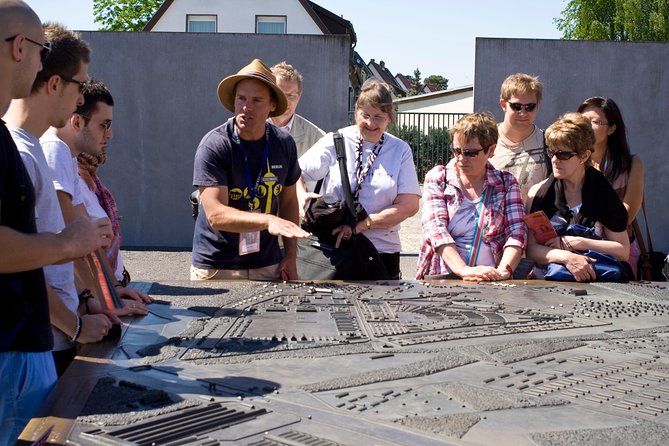
Station Z is the site of mass murder and one of the central stops at Sachsenhausen. The name sounds almost administrative, which reflects the cold language and organization surrounding the camp. Here, your guide explains the killing facilities, including the gas chamber, and the role this area played in the murder of prisoners.
This is a place for quiet attention. It is not a photo opportunity, and the memorial setting calls for respectful behavior. The guide’s role is to explain what happened without sensationalism, while helping you understand why the site matters.
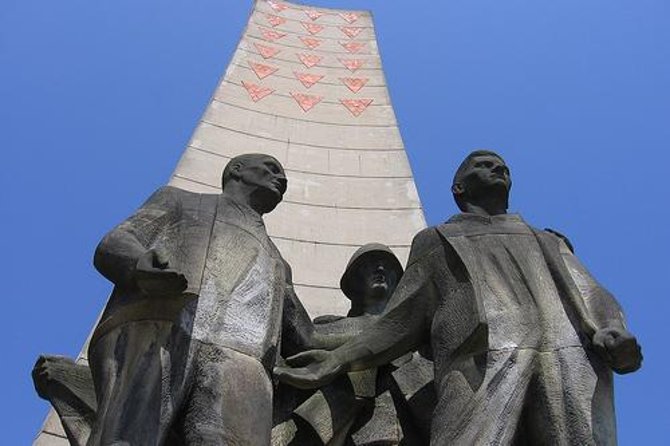
You also see the gallows. Its presence makes the camp’s system of terror visible in a stark way. Along with the watchtower and commandant’s house, it shows how punishment, surveillance, and authority were built into the physical design of the camp.
The tour does not soften the facts, but the best guides do not use shock for its own sake. The strongest feedback has focused on empathy, accuracy, and the ability to make complex history understandable. That balance is especially valuable at Station Z.
The commandant’s house, watchtower, and SS training grounds
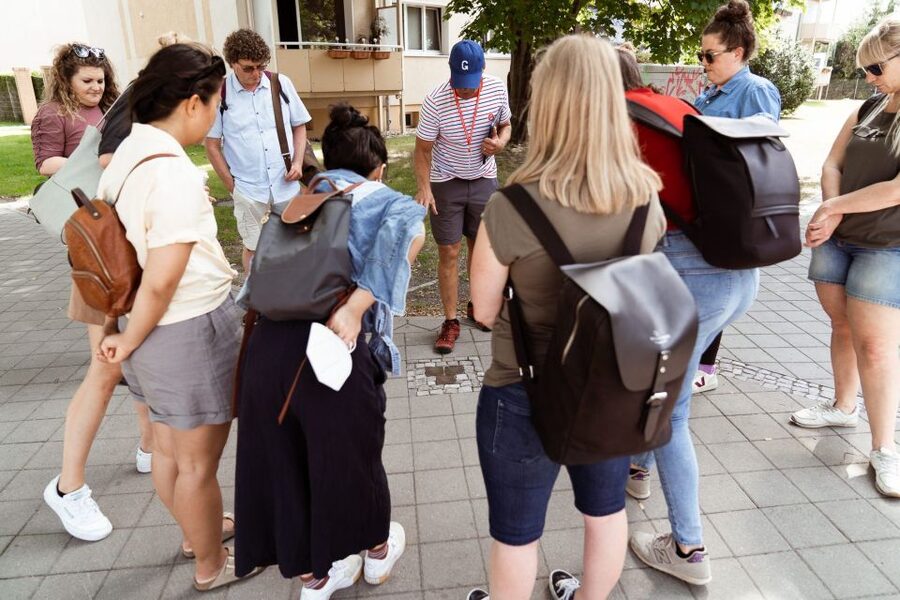
The Commandant’s House and the Watchtower help explain the relationship between the camp staff and the prisoners. The tower represents surveillance and control, while the commandant’s residence points to the administrative and personal side of the camp’s leadership.
You also visit the SS Training Camp. This stop adds useful context because it shows that Sachsenhausen was connected to the training and organization of SS personnel. The camp was not an accidental collection of buildings. Its layout and institutions supported a system designed to imprison, exploit, and kill.
Your guide may use photographs or visual material to help you imagine how the site looked and operated. Daniel has been praised for carrying photographs that made his explanations easier to picture. Details like that can help you understand the past without pretending the present-day memorial looks exactly as it did during the camp years.
The grounds are large and mostly open. In poor weather, you may find yourself concentrating as much on staying warm and dry as on the explanation. That is a real drawback, but it is also part of why practical preparation matters so much.
Special Camp 1/7 and the Soviet period
Sachsenhausen’s story did not end with liberation in 1945. The Soviet authorities later reused the site as Special Camp 1/7. The tour explains this postwar chapter, giving you a fuller account of how the grounds were repurposed and how the site continued to function as a place of detention.
This section is one reason a guided visit is more useful than a quick self-guided walk. Without context, you could easily assume the memorial tells only the Nazi-era story. Instead, you learn that the site has several historical layers and that its meaning changed after the war.
The guide also discusses the Death March that preceded liberation in 1945. Prisoners were forced from the camp as Allied forces approached, and the march became part of the final phase of the camp’s history. Hearing this while standing in the same general setting adds weight to an event that might otherwise remain a paragraph in a textbook.
Group size, guide quality, and the human side
The experience is available as a private or small-group tour, but group size can vary by departure. One especially busy period produced a large overall booking that was divided into smaller groups at the memorial. That arrangement is sensible, since a single large crowd would make it difficult to hear and move respectfully around the grounds.
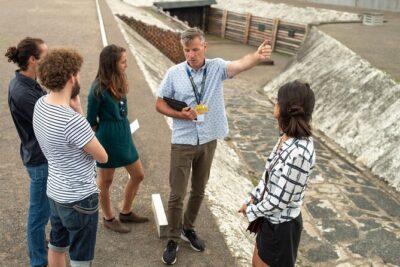
The guides receive the strongest praise. Daniel is repeatedly described as organized, warm, energetic, and able to keep people engaged despite dark subject matter and poor weather. Georgia is praised for careful, sensitive explanations and for considering where the group could stand out of the wind. Xavier, Pete F, Lucia, Ariel, Chris, Jamie, Emma, and Irish Paul are also singled out for clarity, patience, and care.
That does not mean every guide will have the same personality. Some are lively and conversational; others may take a quieter approach. The consistent value is having someone explain the site, answer questions, manage the route, and help you get back to Berlin.
I also like that the guide remains involved during the transport. The train is not simply dead time. Some guides use it to provide background or offer Berlin suggestions. After the formal tour, you may have the option to remain at the memorial and visit museums independently, but confirm the day’s arrangements with your guide.
Is $22 good value?
At $22 per person, this is a strong value for a five-and-a-half to six-hour outing with a licensed English-speaking guide, a guided camp visit, and a €3 donation to the memorial. The public-transport ticket is extra, as are food and drinks, but the base price remains low for the amount of guided time.
The real value lies in interpretation. You can visit the memorial without a guide, but you would need to find and connect the information yourself. At Sachsenhausen, the links between the Camp Administration Center, prisoner groups, Station Z, the Soviet Special Camp, and the 1945 Death March are important. A guide provides that structure.
A private tour may cost more, but it offers a more personal arrangement and hotel or preferred-location pickup by the guide five minutes before the scheduled start. Even then, the transport remains public rather than private. For most people, a small group should provide the best mix of cost and personal attention.
Free cancellation up to 24 hours before the start and reserve-now, pay-later terms also make the booking flexible. The key question is not the price. It is whether you are ready to give a full day to a difficult subject.
Who should book this Sachsenhausen tour?
I recommend it if you want serious historical context, prefer asking questions, or feel uncertain about finding your way around the memorial alone. It is also a good choice if you want to understand the camp’s Nazi and Soviet periods rather than see only a few buildings.
Families with older children may find it useful, since guides have helped children understand the history. Still, you should judge your child’s readiness for descriptions of murder, abuse, and persecution. This is not a casual family outing.
You should think twice if you dislike group schedules, cannot walk for several hours, or are hoping for a comfortable indoor museum visit. The trip involves trains, a 20-minute walk from Oranienburg, extensive walking at the site, and outdoor explanations in all weather.
My verdict: book it if you want context, not comfort
Book this Sachsenhausen tour if you want a careful, structured visit to one of Germany’s most important memorial sites. The price is fair, the route is manageable with preparation, and the guides are the main reason this works so well.
Do not book it expecting a cheerful day out. Go ready to listen, walk, and think. Buy the ABC ticket, wear serious walking shoes, pack water and food, and leave room in your schedule afterward. With those basics handled, this is a worthwhile and deeply sobering addition to a Berlin visit.
FAQ
How long does the Sachsenhausen tour take?
The full experience lasts about five and a half to six hours, including public transport, walking, and the approximately three-hour guided visit at the memorial.
Where does the tour begin?
You meet outside Friedrichstraße train station on the square beside the Tränenpalast, or Palace of Tears. Look for guides carrying yellow umbrellas.
How do you get to Sachsenhausen?
You travel by public train from Berlin to Oranienburg, then walk about 20 minutes to the memorial site. Your guide accompanies you on the journey.
Is the public-transport ticket included?
No. You need an ABC-zone public-transport ticket for the trip to Sachsenhausen and the return to Berlin. Staff can help you purchase it at the meeting point.
What does the tour price include?
The $22 price includes a licensed English-speaking guide, the guided camp visit, and a €3 donation to the memorial.
Is the tour wheelchair accessible?
No. The memorial visit involves a moderate amount of walking and is not recommended for wheelchair users or people with walking impairments.
Does the tour run in bad weather?
Yes. The activity runs in all weather, so you should bring comfortable clothing and prepare for rain, cold, or wind.
Can I book a private tour?
Yes. Private and small-group options are available. With a private tour, the guide can meet you five minutes before the scheduled start at your hotel or another preferred location, but transport to the memorial remains on public transit.
Just added around Berlin
- Berlin: Private Guided Tour of the Main Sights★ 5.0 · 13 reviews
- Private Highlights of Berlin Bike Tour★ 5.0 · 13 reviews
- Modern Berlin Private Walking Tour: Diverse, Vibrant and Exciting German Capital★ 5.0 · 13 reviews
- Tour in Berlin from Warnemünde and Rostock Cruise Port★ 4.1 · 13 reviews
- Berlin: Stasi Museum Private Guided Tour with Entry Ticket★ 4.8 · 13 reviews
- Private Food Tour Experience with a born and bred Berliner★ 5.0 · 14 reviews
- Berlin: Rheinsberg Palace Entrance Ticket★ 4.8 · 14 reviews
- Berlin in one day – day tour with an expert guide★ 5.0 · 14 reviews
Memorial & Concentration Camp Tours, compared.
Sachsenhausen Concentration Camp Tour in English
Read our review →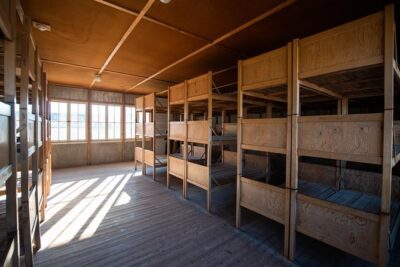
Dachau Concentration Camp Memorial Site Tour from Munich by Train
Read our review →
Sachsenhausen Concentration Camp Memorial Tour
Read our review →
Sachsenhausen Concentration Camp Bus Tour in English from Berlin
Read our review →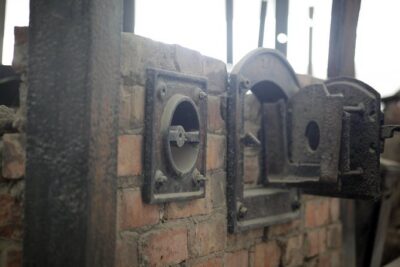
Sachsenhausen Concentration Camp Memorial Tour (Max. 15 Guests)
Read our review →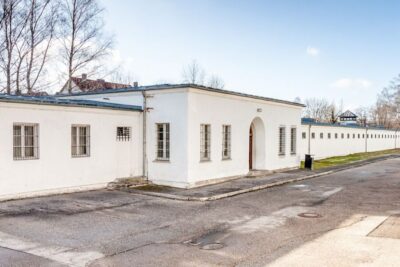
Browse the lists this tour appears in