
Reviewed · WALKING TOURS
Trier: City Walking Tour
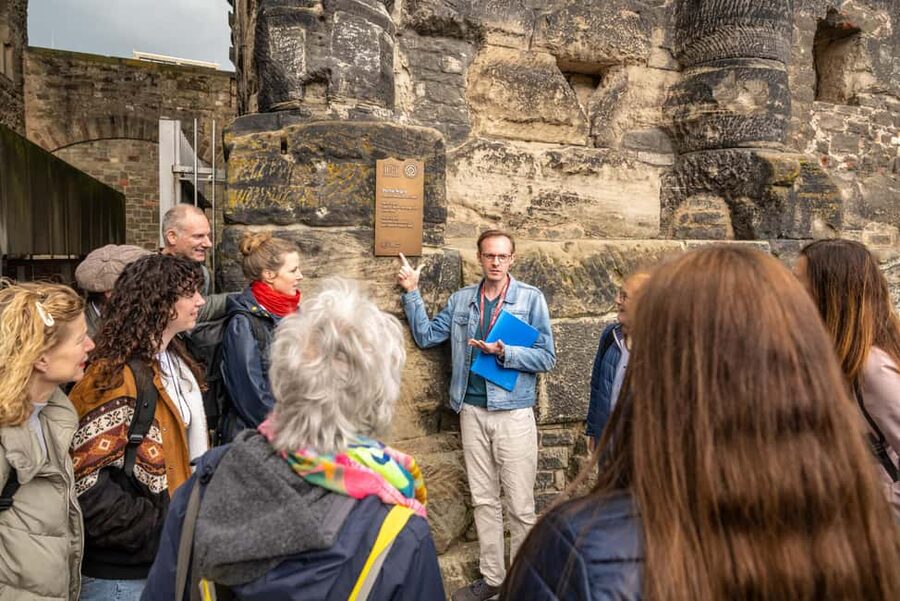
Ancient stones tell Trier’s story. This 1.5-hour walk begins at the Porta Nigra and leads you through Roman, medieval, and baroque Trier with an official local guide. For $17 per person, it gives you a useful first look at the city center without taking up half your day.
I like the direct route through four UNESCO World Heritage monuments, especially the Porta Nigra, cathedral, Church of Our Lady, and Aula Palatina. I also like the mix of big sights and smaller clues, such as the Dreikönigenhaus, Judengasse, and Hauptmarkt, which help turn Trier from a collection of old buildings into a readable city.
The main limitation is time. Ninety minutes is enough for orientation and outside views, but it is not a full visit to Trier’s museums or interiors. If you want lengthy architectural study or quiet time inside each church, you will need to return on your own.
In This Review
- Key points about Trier’s city walk
- Why Trier makes a walking tour worthwhile
- Starting beside the Porta Nigra
- Medieval clues at Dreikönigenhaus and Judengasse
- Hauptmarkt and the city’s medieval power struggles
- Trier Cathedral and the Church of Our Lady
- The cathedral courtyard and baroque Trier
- What $17 buys you
- Timing, language, and practical comfort
- Who should take this Trier walk?
- Should you book Trier’s City Walking Tour?
- FAQ
- Where does the Trier City Walking Tour begin?
- How long does the walking tour last?
- How much does the tour cost?
- Which languages are available?
- Which UNESCO monuments are included?
- Is the tour wheelchair accessible?
- Can I cancel the tour for a refund?
Key points about Trier’s city walk
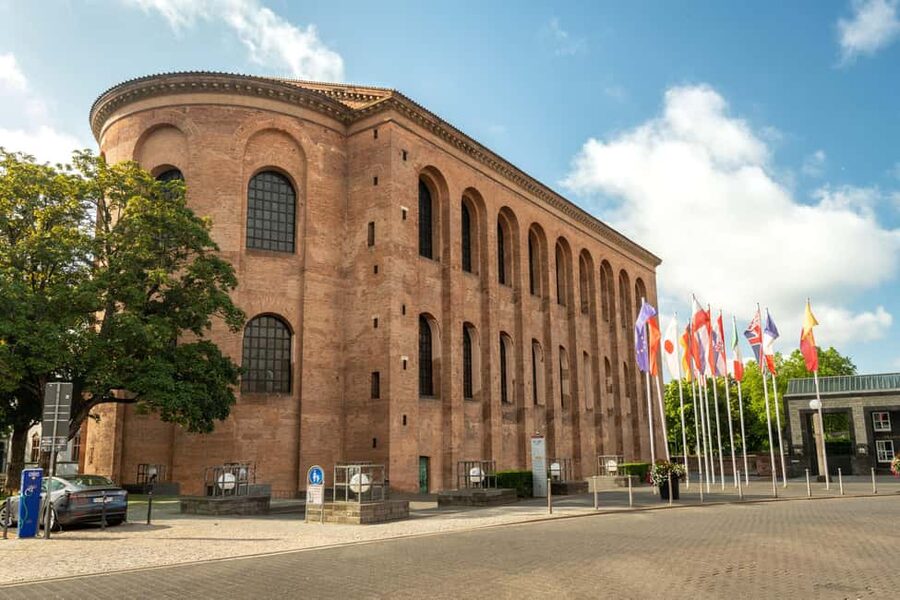
- Four UNESCO monuments in one compact route: See the Porta Nigra, Trier Cathedral, Church of Our Lady, and Aula Palatina as part of the city’s World Heritage group.
- A Roman starting point: The tour begins at the Porta Nigra, Trier’s best-known ancient monument and a natural gateway into the old center.
- Three eras in 90 minutes: The route moves from Roman Trier to medieval power struggles and then to the baroque setting of the Electoral Palace.
- Official local guides: The tour is led by guides connected with Trier’s official tourist organization, with German and English departures.
- Strong value for a short introduction: At $17, the walk costs less than many longer city tours and leaves plenty of time for independent exploring.
- Simple, accessible meeting point: Meet in front of the Tourist Information office, directly beside the Porta Nigra.
Why Trier makes a walking tour worthwhile
Trier rewards a walking tour because its main sights sit close together. You do not spend most of the outing getting from one neighborhood to another. Instead, the route lets you watch the city change character as you move a short distance through the center.
The city’s story begins with Rome, but it does not end there. Roman gates, Christian churches, medieval houses, and baroque palace grounds share the same compact setting. A guide helps you connect those layers instead of seeing them as unrelated stops.
I find that especially useful in Trier because the most famous monument can easily dominate your attention. The Porta Nigra is so large and unusual that it is tempting to photograph it, walk through the nearby streets, and move on. This tour uses it as the opening chapter, then shows you how later generations built around the Roman city.
The route also gives you a practical first orientation. You finish near the Electoral Palace and Palace Garden, close to several important central sights. From there, you can decide where to spend more time, return to a church, or simply continue exploring on foot.
More Walking Tours in Trier
- Trier: Guided City Walk with Wine Tasting
★ 4.8 · 979 reviews - Trier: Guided Old Town Highlights and History Walking Tour
★ 4.7 · 687 reviews - Trier: Private Guided Walking Tour
★ 4.2 · 32 reviews
Starting beside the Porta Nigra
Meet in front of the Tourist Information office, right at the Porta Nigra. This is a convenient arrangement because you do not need to search for a small street or a hotel lobby. If you have questions before the walk, staff at the Tourist Information office can help direct you to the official tour.
The Porta Nigra is the right place to begin. Its name means Black Gate, and the massive Roman structure immediately gives you a sense of Trier’s age and importance. The guide starts here in the spirit of the Romans, using the monument to introduce the city center.
Expect a guided look rather than a long independent visit inside the monument. The supplied schedule identifies the Porta Nigra as the first guided stop, while the tour itself continues through the surrounding streets. If you want to study the gate at length or explore every interior passage, plan to return after the walk.
This first stop is also a good test of the tour’s pace. The guide needs to explain a large amount of background in a short time, so you will get the clearest benefit if you listen for the main ideas rather than trying to memorize every date.
Medieval clues at Dreikönigenhaus and Judengasse
After the Roman opening, the walk shifts to Trier’s medieval period. The Dreikönigenhaus and Judengasse are important because they show how the city’s story appears in ordinary street details, not only in grand monuments.
The Dreikönigenhaus is presented as an example of how fortified citizens protected their property with architectural tricks. That idea adds welcome variety to the tour. You are not simply looking at a palace or church and hearing about rulers. You are also considering how residents designed and defended their homes.
Judengasse brings another part of Trier’s medieval identity into the route. The tour connects this period with the rise of St. Peter as the city’s patron saint and with the complex relationship between citizens and the bishop.
This section should appeal to you if you enjoy social history. It gives the walk a human scale after the imposing Roman gate. The drawback is that these stops may be easier to appreciate with the guide’s explanation than from the buildings alone. Without context, you might pass them without realizing why they matter.
Hauptmarkt and the city’s medieval power struggles
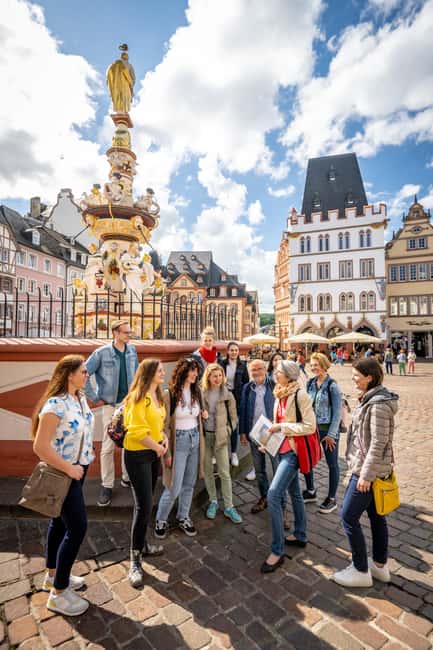
The Hauptmarkt is one of the central sightseeing points and a natural place to pause in the story. Here, the guide explains the struggle between self-confident citizens and the bishop over imperial immediacy, or the right to answer directly to the emperor rather than remain under the bishop’s control.
That political fight sounds dry on paper, but the tour gives it some color. The story includes knights, monkeys, and church towers, details that make medieval civic politics feel less like a list of legal terms and more like a contest played out in public space.
You will likely find this one of the more memorable parts of the route because it explains why Trier’s buildings and civic spaces look the way they do. The Hauptmarkt is not just a pretty square. It becomes a stage for rivalry between religious authority and urban independence.
The guide’s role matters here. The German feedback describes the tour as very informative, while another recent comment praises the guide’s eloquence. Those short comments point to the strongest feature of the experience: the quality of the spoken explanation. The buildings provide the setting, but the narrative gives the square meaning.
More Walking Tours in Germany:
- Discover Berlin Half-Day Walking Tour
★ 5.0 · 9,624 reviews - Berlin: Third Reich and Cold War 2 Hour Walking Tour
★ 4.9 · 6,830 reviews - Munich: Third Reich & WWII Walking Tour
★ 4.6 · 6,181 reviews - Berlin: Discover Berlin Walking Tour
★ 4.9 · 5,998 reviews
Trier Cathedral and the Church of Our Lady
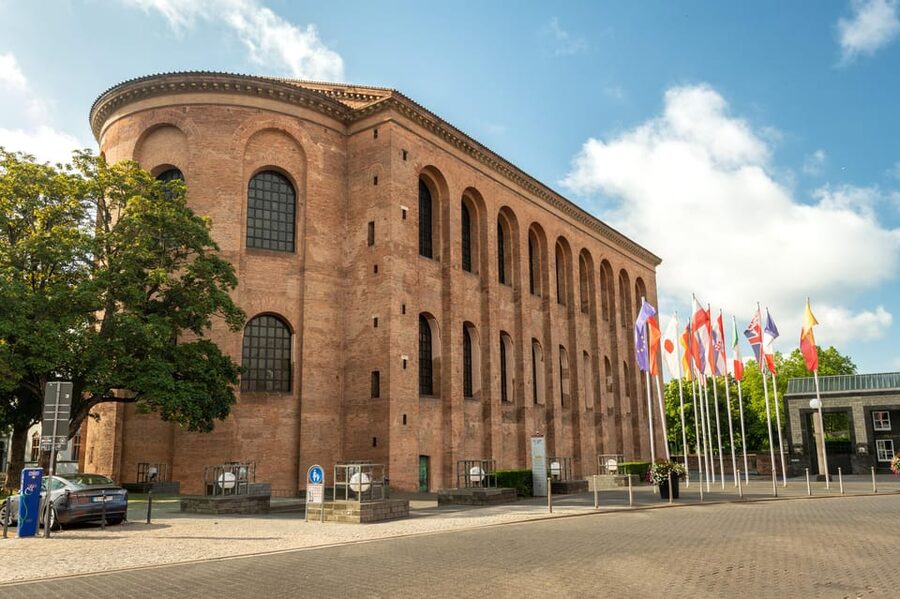
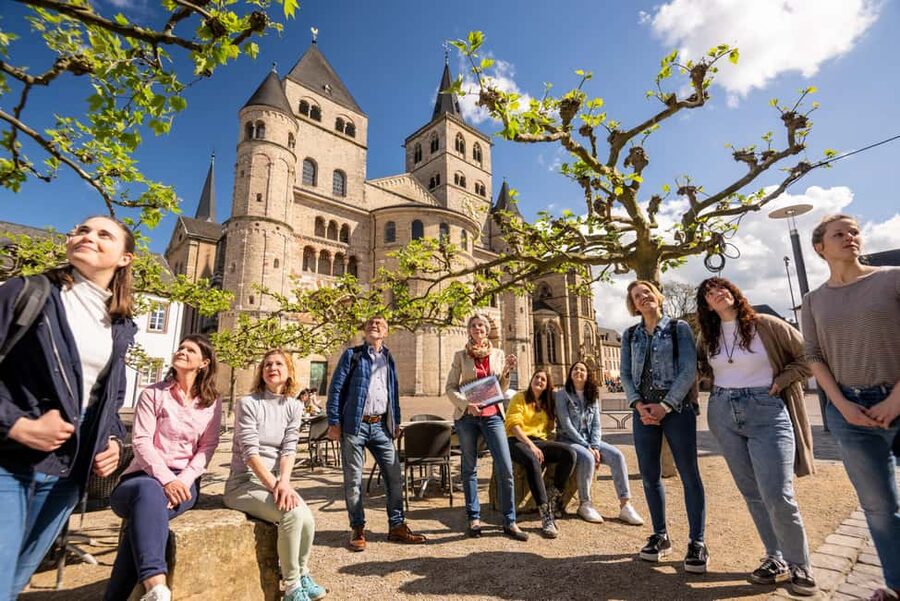
The route then reaches two of Trier’s four UNESCO monuments: the cathedral and the Church of Our Lady. Together, they show the importance of Christianity in the city’s later development.
Trier Cathedral is one of the major highlights. The guide places it within the city center’s long religious story, linking it with St. Peter and Trier’s role as an important church center. You should expect a guided sightseeing stop rather than an extended service-free interior study session, since the tour must continue to several other locations.
The Church of Our Lady provides a strong contrast in form and atmosphere. Its inclusion alongside the cathedral helps you see that the UNESCO designation covers more than one type of religious architecture. The two buildings belong to the same city setting, but they offer different visual impressions.
I like this pairing because it prevents the tour from treating Trier as only a Roman destination. Many first-time visitors come mainly for ancient monuments, yet the cathedral and Church of Our Lady are central to understanding the city that developed afterward.
Keep your expectations practical. The tour includes a visit to the four UNESCO monuments as part of the route, but the available information does not promise a long interior visit to each one. If a particular church is your main reason for coming, check the day’s conditions with the Tourist Information staff and plan extra time after the walk.
The cathedral courtyard and baroque Trier
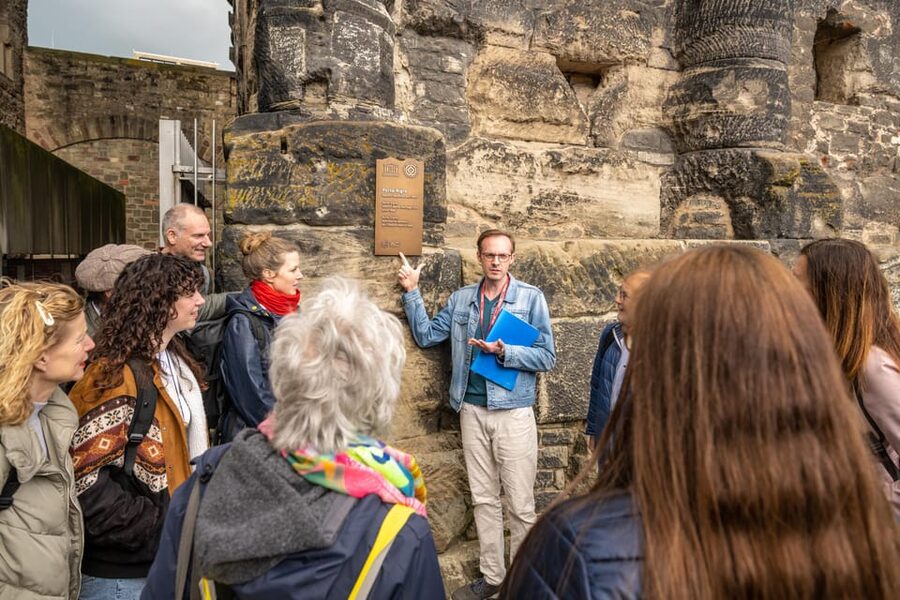
The cathedral courtyard helps carry the story toward the early modern period. From there, the route moves into the baroque setting of the Electoral Palace and its grounds.
This final change in style is one of the tour’s best teaching tools. In a short walk, you move from the heavy Roman Porta Nigra to medieval defensive ideas, then to religious power and the polished ceremonial world of the baroque court.
The Electoral Palace is paired with the Aula Palatina, also known as the basilica. The Aula Palatina is the fourth UNESCO monument included in the tour, along with the Porta Nigra, cathedral, and Church of Our Lady. Seeing these four buildings in one outing gives you a strong framework for Trier’s World Heritage importance.
The tour ends at two possible drop-off points associated with the Electoral Palace and Palace Garden. This is useful because you finish in an area suited to continued sightseeing rather than being returned to the starting point. You can use the rest of your day to revisit a favorite stop or explore the palace grounds at your own pace.
The baroque section may feel faster than the Roman opening because the tour has already covered several periods. If you are especially interested in palace design, gardens, or court life, treat this as an introduction and return afterward.
What $17 buys you
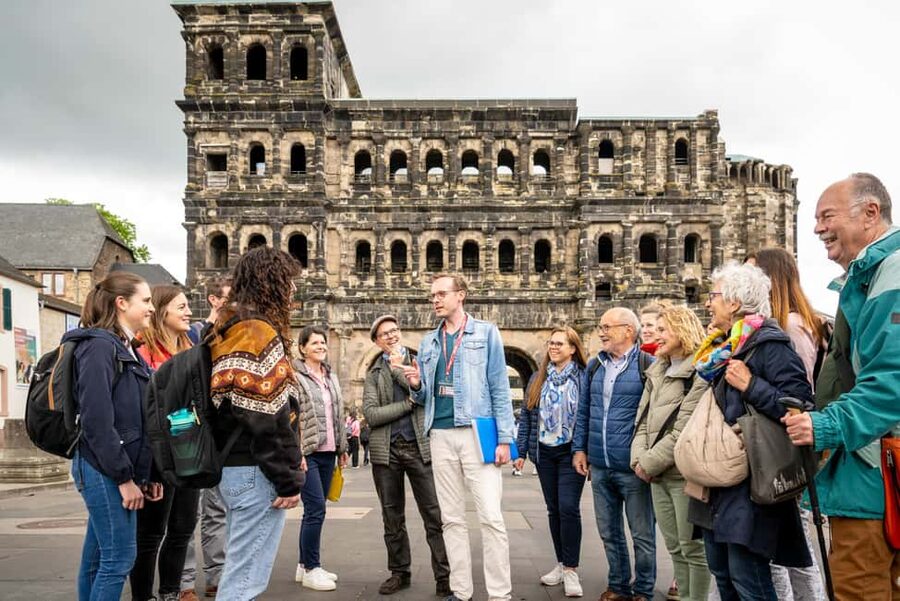
At $17 per person, this is a good-value orientation tour. You receive 90 minutes with a local guide and a route that includes four UNESCO monuments, all in a walkable central area. For a first morning or afternoon in Trier, that is a sensible use of your money.
The value is strongest if you want context. You can see the Porta Nigra, cathedral, and palace on your own, but the tour explains how Roman, medieval, religious, and baroque Trier fit together. That saves you from treating each sight as an isolated photo stop.
The price is less compelling if you already know Trier well or prefer to explore entirely at your own pace. You are paying for the guide’s route and narration, not for a long entrance-based attraction experience. The tour is also short, so you should not expect a full city history course.
I would book it early in your stay. The walk can help you choose which places deserve a second visit, making later independent sightseeing more efficient.
Timing, language, and practical comfort
The tour lasts 1.5 hours, with starting times shown according to availability. That duration works well for several types of schedules. You can fit it between other activities, use it as a first look after arriving in Trier, or take it before a longer independent afternoon.
Live guiding is available in German and English. The strongest feedback points to clear, informative delivery, so the spoken presentation is a central part of the experience. If you are choosing between a self-guided walk and this tour, the guide is the main reason to pay the $17.
The experience is listed as wheelchair accessible. Since this is a walking route through a historic center, you may still want to ask the Tourist Information office about the exact route and current conditions if you have specific mobility needs. The meeting point itself is easy to locate, directly at the Porta Nigra.
Cancellation is flexible up to 24 hours before the start for a full refund, and you can reserve now and pay later. Those terms are useful if your schedule depends on weather, rail connections, or a changing day plan.
Who should take this Trier walk?
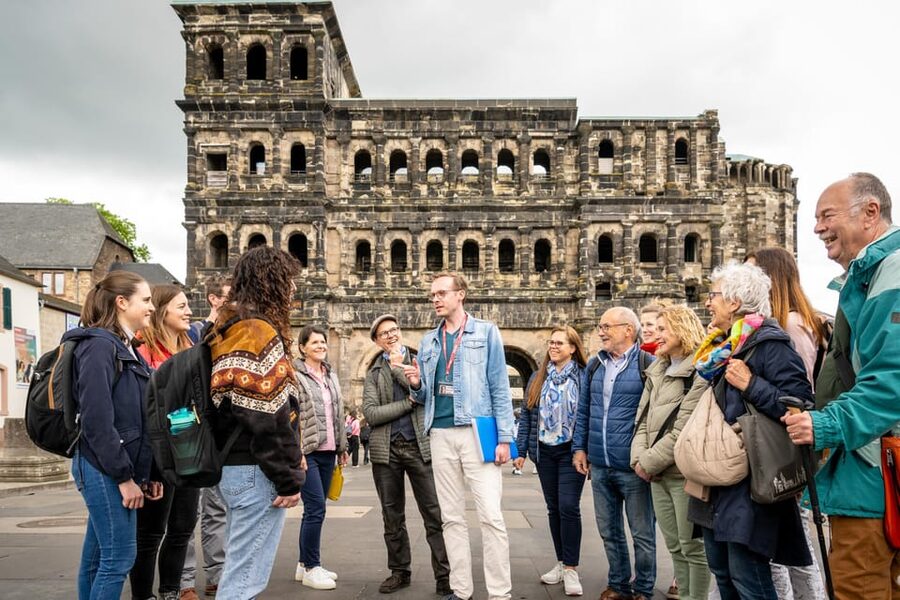
I would recommend it most strongly to first-time visitors who want a clear introduction without giving up a whole day. It also suits anyone who likes history presented through streets and buildings rather than a long museum lecture.
Families and mixed-age groups may appreciate the short duration and the unusual medieval stories involving knights, monkeys, and church towers. The route has enough variety to hold attention, though anyone needing frequent pauses should confirm the practical details before booking.
The tour is also a good fit if you have only a short stay in Trier. In 90 minutes, you see the city’s main historical framework and end near the Electoral Palace, leaving you free to continue.
You may want a different plan if you need extensive interior access, photography time, or a slow architectural study. In that case, take this walk for orientation, then return independently to the places that interest you most.
Should you book Trier’s City Walking Tour?
Book it if you want an affordable, well-organized introduction to Trier’s central sights, especially the four UNESCO monuments. The official local guide, compact meeting point, English option, and clear historical progression make it a practical first activity.
Skip it only if you already understand Trier’s center and prefer complete independence. For most first visits, I think $17 is fair for the connections the guide makes between the Roman gate, medieval streets, cathedral, and baroque palace. Treat the walk as your foundation, not your entire Trier visit.
FAQ
Where does the Trier City Walking Tour begin?
The tour begins in front of the Tourist Information office, directly beside the Porta Nigra.
How long does the walking tour last?
The tour lasts 1.5 hours.
How much does the tour cost?
The listed price is $17 per person.
Which languages are available?
Live tour guiding is available in German and English.
Which UNESCO monuments are included?
The route includes the Porta Nigra, Trier Cathedral, the Church of Our Lady, and the Aula Palatina, also known as the basilica.
Is the tour wheelchair accessible?
Yes, the activity is listed as wheelchair accessible.
Can I cancel the tour for a refund?
Yes. You can cancel up to 24 hours in advance for a full refund.
More City Tours in Germany
- Berlin: 1-Hour City Tour by Boat with Guaranteed Seating
★ 4.3 · 16,993 reviews - Leipzig: City History Canal Sightseeing Tour on a Motorboat
★ 4.7 · 6,232 reviews - Cologne: Panoramic City Cruise
★ 4.3 · 5,698 reviews - Berlin: City Sightseeing Hop-On Hop-Off Bus Tour
★ 4.1 · 4,233 reviews
Just added around Germany
- e-Scavenger hunt Aachen: Explore the city at your own pace★ 4.0 · 13 reviews
- Munich: Private or Group Third Reich and WWII Walking Tour★ 4.9 · 13 reviews
- Canyoning Advanced Day Trip★ 5.0 · 13 reviews
- Wiesbaden Biebrich: Outdoor Escape Game★ 4.7 · 13 reviews
- Berlin: Private Guided Tour of the Main Sights★ 5.0 · 13 reviews
- From Munich: Neuschwanstein Castle and Linderhof Private Tour★ 5.0 · 13 reviews
- Trier, Moselle: Wine excursion with boat trip★ 3.9 · 13 reviews
- From Dresden: Guided Day Tour by Bus of Seiffen Toy Village★ 4.0 · 13 reviews
Walking Tours, compared.
Berlin’s Best: 2 Hour Walking Tour Third Reich and the Cold War
Read our review →
Third Reich Berlin: Hitler and WWII Walking Tour
Read our review →Browse the lists this tour appears in