
Reviewed · WALKING TOURS
Trier: Guided City Walk with Wine Tasting
Trier’s history comes with a glass in hand. This two-hour walk links Roman ruins, medieval squares, grand churches, and local Moselle wine in one easy route through Germany’s oldest city. I especially like the way each tasting connects to a building or place, and I like that the tour reaches several major sights without asking you to climb steps. The main catch is that the tasting is taken outdoors, rain or shine, and the extra charge for a wine glass may surprise you.
Guide Simon receives repeated praise for his humor, patience, and personal connection to Trier. He was born and raised in the city, and that local perspective gives the walk more character than a simple roll call of dates and monuments. At $43 per person, the price is fair if you want both a city introduction and five regional wines, though it is less appealing if you prefer to explore monuments at your own pace.
In This Review
- Key points to know before booking
- Why this Trier tour works so well
- Starting beside Porta Nigra
- Market Cross and Trier’s main square
- Trier Cathedral and Liebfrauenkirche
- The Aula Palatina and Electoral Palace
- Kaiserthermen and the Roman bath story
- Finishing at the Forum Baths
- What you actually taste
- Is $43 a fair price?
- Who should book this walk?
- Practical details that make a difference
- Should you book the Trier wine walk?
- FAQ
- Where does the Trier wine walk begin?
- Where does the tour end?
- How long does the tour last?
- How many wines are included?
- Can I request a nonalcoholic option?
- Is the tour available in English?
- Is the route wheelchair accessible?
- Does the tour run in bad weather?
- Are food and water included?
- What does the restaurant voucher include?
Key points to know before booking
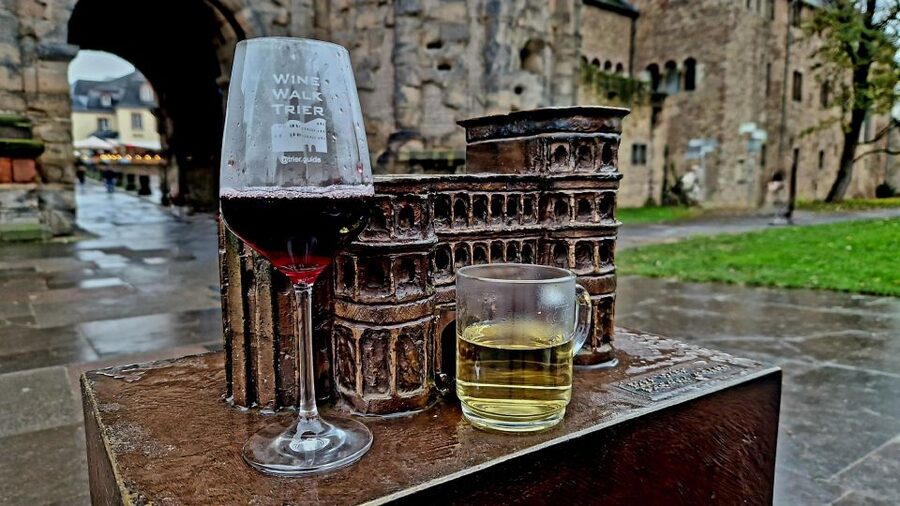
- Five wines, five city connections: In the warmer months, you taste five regional wines, each tied to a historic site or local story.
- A Roman-to-modern city walk: The route runs from Porta Nigra to the Forum Baths, passing the cathedral, churches, palace, and Roman bath ruins.
- Simon is a major part of the experience: His humor, local roots, wine knowledge, and willingness to answer questions are praised again and again.
- Winter changes the mood: From mid-November through the end of January, the tasting may feature four local mulled wines if at least six people register.
- Easy for mobility needs: The route is barrier-free and does not require stairs, with German and English guiding available.
- A useful finish in Trier: You receive a voucher for one glass of wine with a main course at Weinwirtschaft Friedrich-Wilhelm near the Basilica.
Why this Trier tour works so well
Trier can feel like several cities stacked on top of one another. Roman imperial power, early Christianity, medieval trade, church rule, and later German history all appear within a compact central area. It is possible to walk past the major sights and see only old stone. A good guide gives those stones a storyline.
This tour adds wine to that storyline without making the tasting feel separate from the sightseeing. You do not simply stop at a wine bar, drink five samples, and then look at monuments afterward. The wine is presented along the route, with each bottle connected to a place, period, or local theme. That makes the stops easier to remember.
The pace is also sensible. Two hours is enough to get a strong first look at central Trier without turning the outing into an exhausting half-day march. You will pause for photos, explanations, and tastings, but you should still have time afterward to return inside the sights that interest you most.
The group atmosphere can add to the fun. Once the wine begins to flow, conversation tends to come easily, particularly when the group is small. The tradeoff is that busy streets can make it harder to hear, so stay close to the guide and do not be shy about asking him to repeat a point.
More Walking Tours in Trier
- Trier: Guided Old Town Highlights and History Walking Tour
★ 4.7 · 687 reviews - Trier: City Walking Tour
★ 4.6 · 118 reviews - Trier: Private Guided Walking Tour
★ 4.2 · 32 reviews
Starting beside Porta Nigra
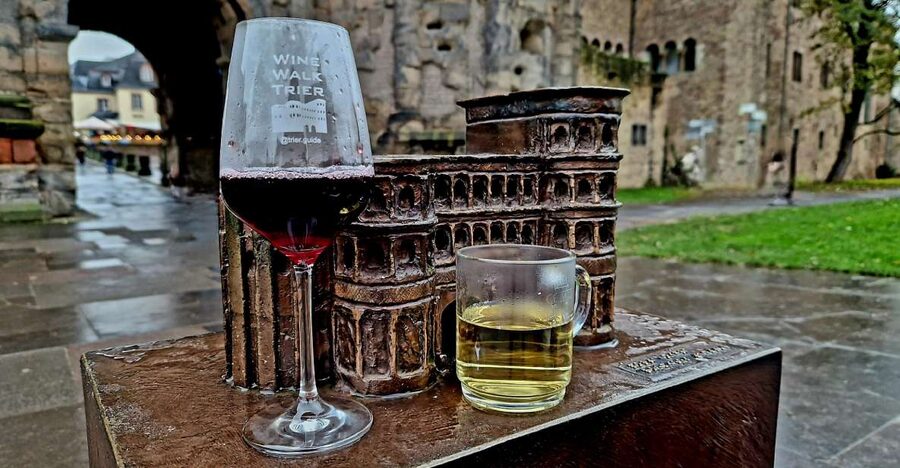
Meet on the left side of the Tourist Information, in front of the city model near the flags. This is close to the Porta Nigra and within easy reach of Trier’s central sights. Look for the independent guide rather than assuming the Tourist Information staff operates the tour.
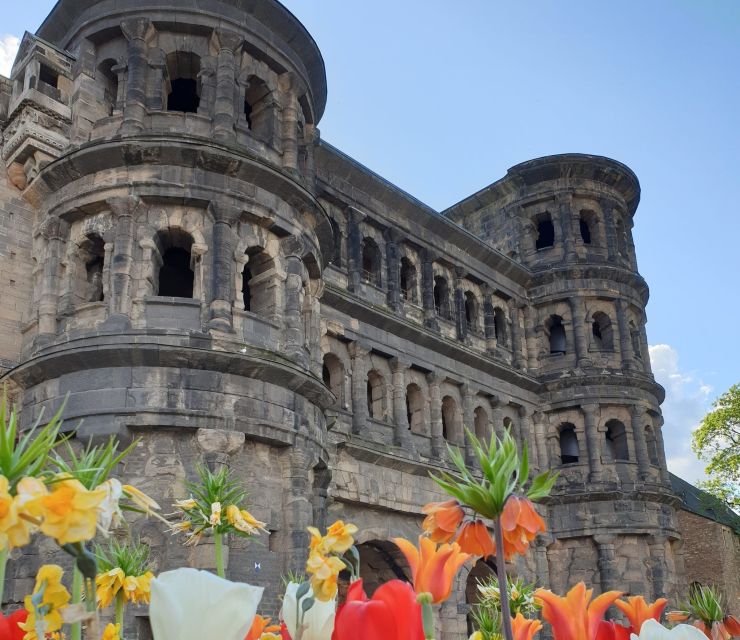
The Porta Nigra is the right place to begin. Its name means Black Gate, and the structure was built by the Romans as part of Trier’s defensive system. It immediately shows the scale and seriousness of Roman Trier, and it gives the guide a natural opening for explaining how old the city is.
The first tasting may happen here or soon after. This opening drink helps set the pattern for the walk: look at a site, hear its story, and connect it with a regional wine. You also receive water and breadsticks, a small but useful touch when you are sampling several drinks on foot.
One practical point matters here: arrive early. A previous participant reached the meeting point about three minutes late and was lucky that Simon waited patiently. That kindness is reassuring, but I would not rely on it. A city center meeting point near flags and a model can still be easy to miss when people are arriving at once.
Market Cross and Trier’s main square
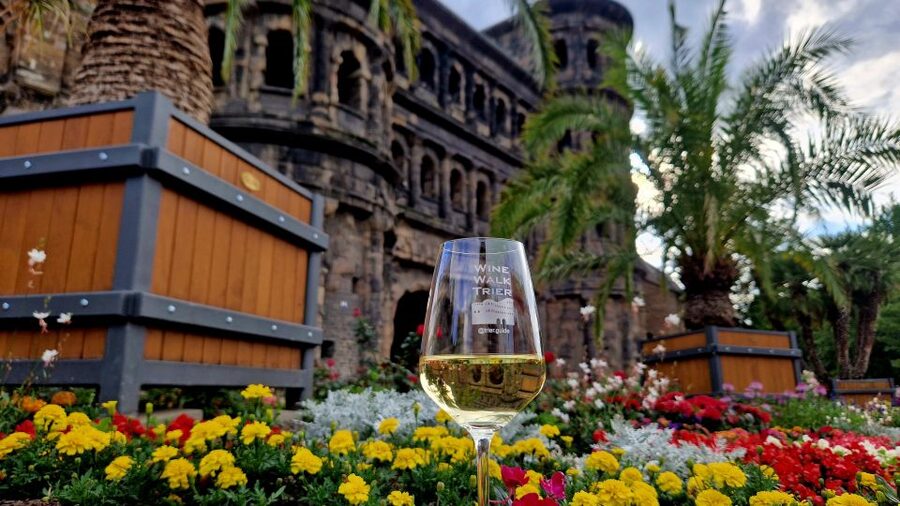
From Porta Nigra, the route moves into the center and reaches the Market Cross on the Main Market. This is one of the best places to feel Trier as a living city rather than an archaeological site. The square brings together civic history, old buildings, and the daily movement of the modern center.
The guide uses this stop to explain how the city developed beyond its Roman foundations. A wine tasting here gives you another regional sample while you listen, and the setting helps connect wine production with the long economic life of the Moselle area.
Do not expect a long private visit inside every building. The schedule includes short sightseeing and photo pauses, so the value comes from the guide’s explanation and the route as a whole. If you want detailed interior visits, note which places appeal to you and return later.
Trier Cathedral and Liebfrauenkirche
The walk continues to Trier Cathedral, one of the city’s major Christian landmarks. This is an important change of mood after the Roman gate and market square. Here, the story turns toward Christianity and the religious power that shaped Trier for centuries.
Nearby Liebfrauenkirche offers a different architectural note. Its connection with the tasting is one of the tour’s strongest ideas: the wine is not random refreshment but part of the explanation of the place. You get a drink, but you also get a reason to remember why that church belongs in Trier’s larger story.
Several people who took the tour valued the chance to step inside certain locations or pause for photographs. The exact opportunity can depend on conditions and timing, so treat the walk as an introduction rather than a substitute for visiting every interior.
You should also pace yourself. Five wines over two hours can be generous, especially when pours are not merely symbolic. Water and breadsticks help, but you will enjoy the history more if you drink slowly and use the pauses to eat.
More Wine Tours in Germany:
- Hamburg: Harbor Cruise with Wine and Cheese
★ 4.7 · 795 reviews - Trier: Discovery Tour – Germany’s Oldest Wine Cellar
★ 4.7 · 218 reviews - Heidelberg: Sightseeing Boat Tour with Mulled Wine
★ 3.6 · 202 reviews - Freiburg: Veni, vidi, vino – wine hike and tasting
★ 4.5 · 144 reviews
The Aula Palatina and Electoral Palace
The Aula Palatina, also called the Basilica, is one of Trier’s most striking Roman survivors. Its huge interior and plain exterior tell an unusual story about Roman power and later use. It is a place where the city’s ancient past feels especially immediate.
Beside it, the Electoral Palace adds a very different chapter. Its ornate style reflects the later rulers and church princes who shaped Trier after the Roman period. Seeing the Roman basilica and the palace together makes the city’s long political shift easy to grasp.
This is also where the wine and history pairing can feel most successful. A regional bottle takes on more meaning when you know something about the institutions, rulers, and local traditions connected with the city. Simon’s strength, according to the many strong ratings for this activity, is his ability to explain those links without turning the walk into a dry lecture.
His delivery matters. He is often described as funny, warm, and willing to answer questions. One person called the tour a quick but thorough way to get to know Trier, while another appreciated details that do not usually appear in guidebooks. That is the kind of added value you are paying for here.
Kaiserthermen and the Roman bath story
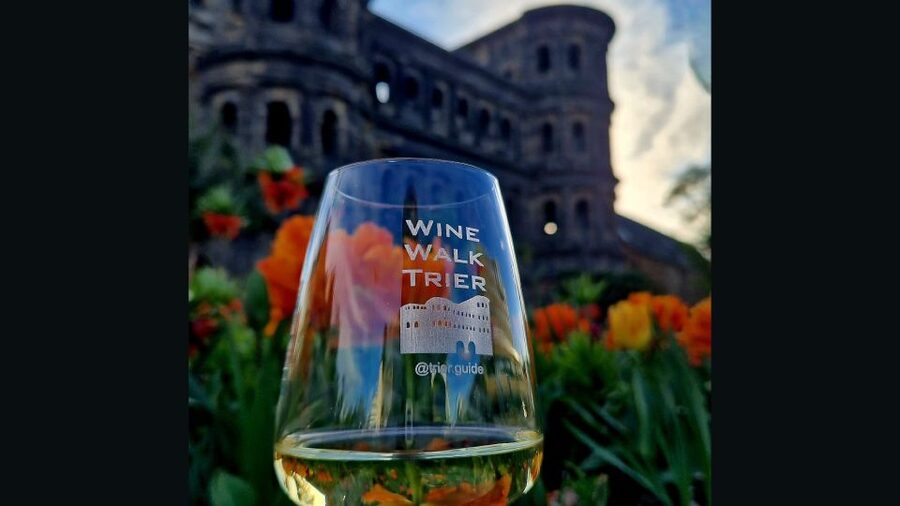
The route then reaches the Kaiserthermen, or Imperial Baths. These ruins return you to Roman Trier, but they also show that the city was more than a military outpost. Large bath complexes required engineering, money, labor, and a population able to support urban life.
The stop is primarily sightseeing and guiding, with the wine tastings placed at selected points rather than at every single landmark. That balance is helpful. If you drank at every stop, the monuments would soon become a blur.
For photographers, the bath ruins offer a strong contrast with the intact Porta Nigra and the later churches. You see Trier’s past in fragments here, which makes the guide’s explanation particularly useful. Without context, exposed foundations and broken walls can be hard to read.
The walk remains barrier-free and does not require stairs. That makes it a practical option for people using wheelchairs or anyone who wants a gentle route through the center. You should still prepare for outdoor conditions and uneven historic surroundings, since the tour goes ahead in rain or shine.
Finishing at the Forum Baths
The final stop is the Forum Baths, where the tour ends. These are the remains of another Roman bath complex near Viehmarkt Square. Ending here gives the walk a clear shape: you begin at a Roman gate and finish among Roman ruins, with Trier’s later centuries filling the space between.
This is a useful ending point for independent sightseeing. You are not returned to Porta Nigra, so plan your next move before the final tasting. The central location makes it practical to continue exploring, find food, or walk back toward other parts of the city.
The included voucher is for one glass of wine with a main course at Weinwirtschaft Friedrich-Wilhelm, next to the Basilica. I see this as a worthwhile extra, especially if you are already planning a meal nearby. It is not a full meal or a replacement for dinner, but it can reduce the cost of continuing the wine theme after the tour.
One participant had such a good experience with the restaurant recommendation that the guide even joined the group for dinner. That is not something you should assume will happen, but it suggests the tour can lead naturally to a pleasant evening plan.
What you actually taste
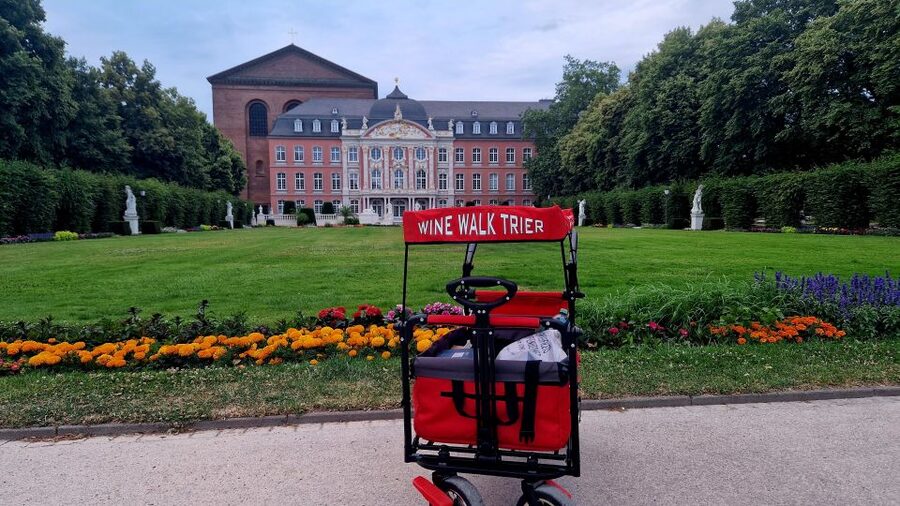
The standard warm-season format includes five regional wines. The focus is strongly associated with the Moselle wine-growing area, and Riesling receives repeated attention in the descriptions of the experience. You do not need to be a wine expert. The guide explains the local connection in plain terms and gives each sample a place in the city’s story.
The tasting is served with water and breadsticks. That is important because this is a walking activity, not a seated winery visit. The snacks are modest, but they help keep the experience comfortable.
From mid-November through the end of January, the tour may switch to four different mulled wines from local wineries. This winter format applies when at least six people register. If fewer than six people sign up, the normal five-wine format is used instead.
The mulled wine version sounds especially fitting for a cold-weather walk through Trier. It changes the experience from a summer-style wine introduction to something warmer and more seasonal. Still, check the exact format when booking if the number of samples matters to you.
Nonalcoholic options are possible. You can request four different grape juices by email, which is useful for people avoiding alcohol or for anyone in the group who wants to participate without drinking wine. Make that request ahead of time rather than waiting until the meeting point.
Is $43 a fair price?
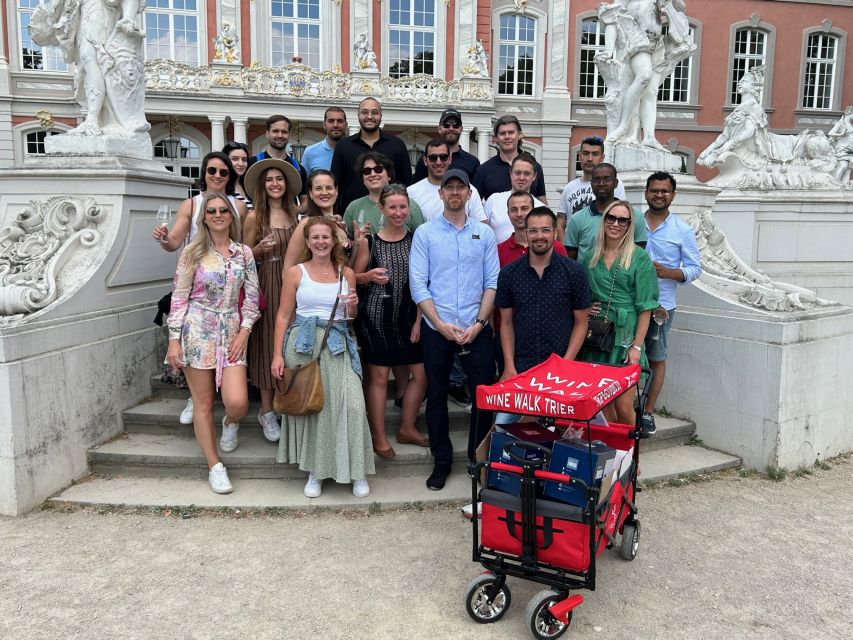
At $43, you are paying for more than a standard city walk. The price covers two hours with a live guide, five regional wines in the usual warm-season format, or four mulled wines in the qualifying winter format, plus water, breadsticks, and the restaurant voucher.
If you planned to buy several tastings separately, the package offers solid value. It also saves you the work of choosing wineries and trying to fit them around the city’s main sights. The history and wine are designed to support each other, which is the main reason to choose this experience over a basic sightseeing walk.
The value is weaker if your main goal is a formal wine education. This is not presented as a technical tasting with long notes on soil, production, or cellar methods. It is a city tour first, with wine used as a local thread.
You also need to account for extras. A tasting glass can be purchased after the tour for €6, and a wine glass holder costs €3. You do not need either item to enjoy the walk, but the added cost is worth knowing before you arrive.
The 4.8 rating from 979 reviews supports the idea that the combination works for most people. The most consistent praise focuses on the guide, the wine choices, the city stories, and the value of seeing several major sights in a short time.
Who should book this walk?
I would recommend it to first-time visitors who want a clear introduction to Trier. It is particularly good for a day trip, since the meeting point is central and the route covers a lot without taking the whole day.
Wine drinkers will get the most from it, especially anyone curious about Moselle Riesling and local wine culture. You do not need advanced wine knowledge. In fact, beginners may appreciate the way the guide explains the samples through places and stories rather than through technical language alone.
It also suits couples, friends, and small groups who like a social outing. The tasting creates easy conversation, and the guide’s humor helps keep the historical material lively.
I would hesitate to recommend it to someone who wants a quiet, private museum-style visit. The walk takes place in public streets, and traffic or city noise can occasionally make hearing difficult. You may need to stay close and concentrate, particularly at busy points.
It is also not ideal for anyone who dislikes outdoor tastings or fixed schedules. The tour goes ahead in bad weather, and the group needs to keep moving to complete the route in two hours.
Practical details that make a difference
The tour is available in English and German. It is completely barrier-free and does not require climbing steps, which makes it easier for a broad range of people to join.
Cancellation is free up to 24 hours before the start, and you can reserve now while paying later. Check the available start times for your date, since the duration is fixed at two hours but the departure time can vary.
Bring weather-appropriate clothing. Even in pleasant conditions, you will be outside for the entire route. In warm weather, chilled Riesling can be especially welcome. In winter, the mulled wine format adds comfort, but a coat and sensible shoes still matter.
Keep your phone or camera ready, but do not let photography distract you from the explanations. The route passes places you may want to revisit, and the guide often gives you enough information to decide where to spend more time afterward.
Should you book the Trier wine walk?
Yes, if you want Trier’s major sights explained by a local guide while tasting Moselle wines along the way. The strongest reason to book is the combination: Roman ruins and medieval churches become easier to understand when each stop has a story, and the wine gives the walk a distinct local flavor.
I would choose this tour early in your stay, or at the start of a day visit, so you can return to the cathedral, Basilica, or bath ruins afterward. Book it with Simon if his scheduled departure is available, arrive early, and request grape juice in advance if needed.
Skip it if you want a long, formal wine seminar or plenty of unstructured time at each monument. For most people seeking a friendly, useful first look at Trier, though, $43 buys a well-filled two hours and a pleasant introduction to both the city and the Moselle wine tradition.
FAQ
Where does the Trier wine walk begin?
Meet on the left side of the Tourist Information, in front of the city model near the flags. The meeting point is close to Porta Nigra.
Where does the tour end?
The tour ends at the Forum Baths near Viehmarkt Square.
How long does the tour last?
The guided walk lasts two hours.
How many wines are included?
The warm-season tour includes five regional wines. From mid-November through the end of January, it may include four different mulled wines when at least six people register.
Can I request a nonalcoholic option?
Yes. Four different grape juices can be requested by email. Arrange this before the tour.
Is the tour available in English?
Yes. Live guiding is offered in English and German.
Is the route wheelchair accessible?
Yes. The tour is described as completely barrier-free and does not require climbing steps.
Does the tour run in bad weather?
Yes. The walk takes place rain or shine.
Are food and water included?
Yes. Water and breadsticks are included with the wine tasting.
What does the restaurant voucher include?
You receive a voucher for one glass of wine with a main course at Weinwirtschaft Friedrich-Wilhelm near the Basilica.
More Walking Tours in Germany
- Discover Berlin Half-Day Walking Tour
★ 5.0 · 9,624 reviews - Berlin: Third Reich and Cold War 2 Hour Walking Tour
★ 4.9 · 6,830 reviews - Munich: Third Reich & WWII Walking Tour
★ 4.6 · 6,181 reviews - Berlin: Discover Berlin Walking Tour
★ 4.9 · 5,998 reviews
More Food Tours in Germany
- Cologne: Brewery Tour with 3 Kölsch Beer Tastings
★ 4.7 · 3,108 reviews - Hamburg: St. Pauli Highlights Guided Tour with Beer for 18+
★ 4.7 · 2,353 reviews - Hamburg: Elbphilharmonie Plaza and HafenCity Food Tour
★ 4.7 · 1,711 reviews - Bavarian Beer and Food Evening Tour in Munich
★ 4.5 · 1,575 reviews
Just added around Germany
- e-Scavenger hunt Aachen: Explore the city at your own pace★ 4.0 · 13 reviews
- Munich: Private or Group Third Reich and WWII Walking Tour★ 4.9 · 13 reviews
- Canyoning Advanced Day Trip★ 5.0 · 13 reviews
- Wiesbaden Biebrich: Outdoor Escape Game★ 4.7 · 13 reviews
- Berlin: Private Guided Tour of the Main Sights★ 5.0 · 13 reviews
- From Munich: Neuschwanstein Castle and Linderhof Private Tour★ 5.0 · 13 reviews
- Trier, Moselle: Wine excursion with boat trip★ 3.9 · 13 reviews
- From Dresden: Guided Day Tour by Bus of Seiffen Toy Village★ 4.0 · 13 reviews
Walking Tours, compared.

Berlin’s Best: 2 Hour Walking Tour Third Reich and the Cold War
Read our review →
Third Reich Berlin: Hitler and WWII Walking Tour
Read our review →Browse the lists this tour appears in