
Reviewed · OLD TOWN WALKS
Trier: Guided Old Town Highlights and History Walking Tour
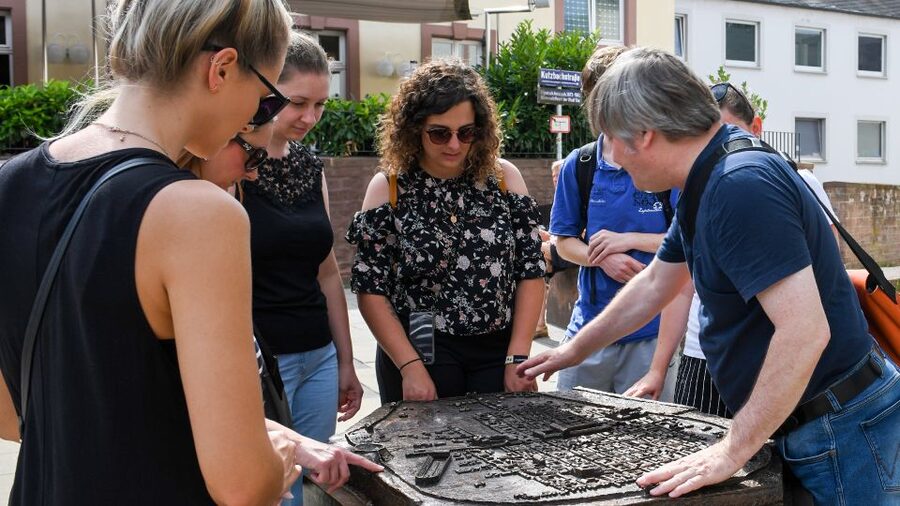
Trier rewards curious walkers. This 1.5-hour tour connects the city’s Roman beginnings with its medieval center and modern identity, using landmarks such as the Porta Nigra, Trier Cathedral, the Main Market, and Karl Marx’s former home. I like the clear route through major sights, and I like that the guide adds stories about daily life instead of simply naming buildings.
The price is appealing at $16 per person, especially if you want a quick introduction before exploring alone. The main consideration is language: the live tour is offered in German, so you need enough German to follow historical explanations and anecdotes comfortably.
In This Review
- Key points about this Trier walking tour
- Starting beside the Porta Nigra
- From Roman Trier to the medieval center
- Trier Cathedral and the Main Market
- Karl Marx’s former home
- What the guiding style is like
- Why the German language matters
- Is 1.5 hours enough for Trier?
- The value of $16 per person
- What to ask your guide after the walk
- Who will enjoy this tour most?
- Booking flexibility and timing
- Should you book the Trier walking tour?
- FAQ
- Where does the Trier walking tour meet?
- How long does the tour last?
- What language is the tour offered in?
- What sights are included?
- Does the tour include the Porta Nigra?
- Are young children allowed to join?
- Can I ask the guide for restaurant advice?
- Can I cancel for a refund?
Key points about this Trier walking tour
- Porta Nigra sets the scene: Begin beside Trier’s famous Roman gate and learn how the city developed under Roman rule.
- A compact 1.5-hour route: The tour covers major old-town sights without taking up half your day.
- History reaches into modern times: Roman Trier, medieval architecture, and Karl Marx’s former home all fit into one walk.
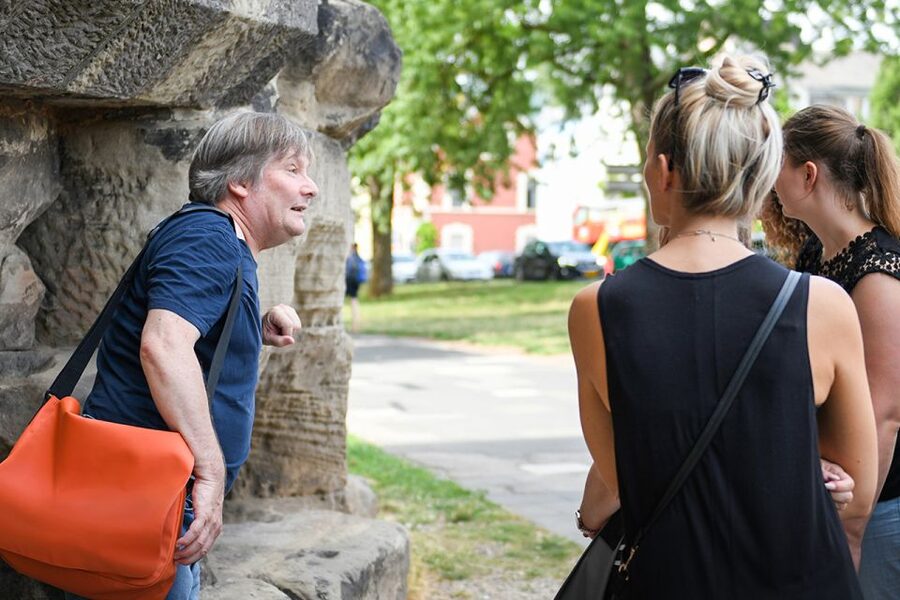
- Patrick and Herbert receive special praise: Their humor, personal style, and ability to answer questions help make the history easy to follow.
- Good value at $16: You get a live guide and a focused introduction to central Trier at a modest price.
- German is the tour language: This is the key factor to check before booking.
Starting beside the Porta Nigra
The meeting point is in front of the Mercure Hotel, opposite the Porta Nigra. That makes the tour easy to find if you are already in central Trier, though you should pay attention to the hotel reference rather than simply waiting beside the monument itself.
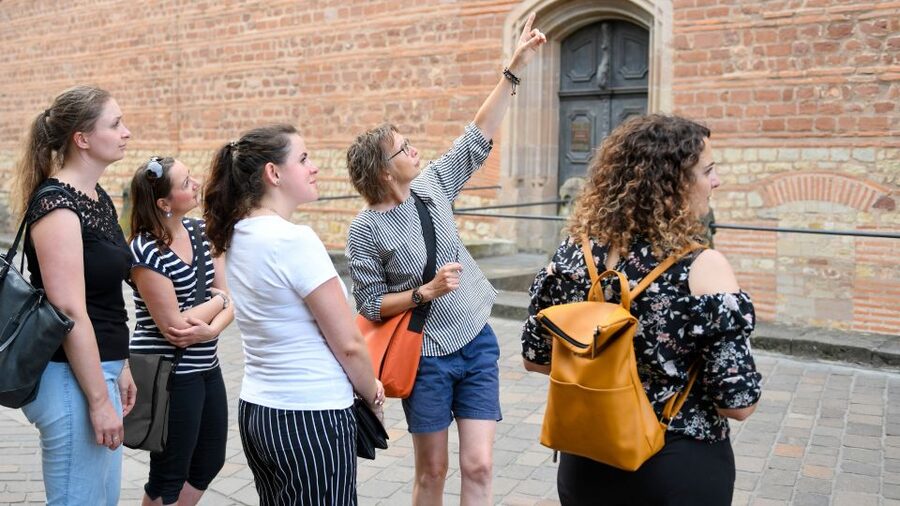
The Porta Nigra is the right place to begin. Built by the Romans as early as 170 AD, this dark stone gate immediately gives you a sense of Trier’s age. It is not just a handsome photo stop. It frames the city’s Roman beginnings and helps explain why Trier developed into such an important urban center.
Your guide uses the gate to discuss daily life under Roman rule. That focus matters. Dates and emperors can blur together, but questions about how people moved through the city, lived, worked, and used its public spaces make the Roman period easier to picture.
I also like the way the starting point gives you instant visual context. You do not begin with a long talk in an unremarkable square. You begin beside one of Trier’s strongest landmarks, then move outward into the streets where later periods are layered on top of the Roman city.
More Walking Tours in Trier
- Trier: Guided City Walk with Wine Tasting
★ 4.8 · 979 reviews - Trier: City Walking Tour
★ 4.6 · 118 reviews - Trier: Private Guided Walking Tour
★ 4.2 · 32 reviews
From Roman Trier to the medieval center
After the Porta Nigra, the walk follows Trier’s long story through its historic center. The point is not to treat each building as an isolated stop. Instead, you watch the city change from Roman foundation to medieval town and then into the modern era.
That approach is useful if this is your first time in Trier. You get a basic timeline that helps the rest of your sightseeing make sense. Roman remains are not presented as disconnected relics, and medieval buildings are not treated as scenery without a story.
The tour highlights architecture from the Middle Ages, along with signs of later change. Your guide explains how Trier’s appearance developed over time, so you can look for contrasts between old stonework, later façades, and the practical changes that shaped the city.
Do not expect a detailed examination of every street or monument. Ninety minutes requires choices. The benefit is a route that keeps moving and gives you a useful overview. The tradeoff is that you may want to return afterward for a slower look at places that catch your eye.
Trier Cathedral and the Main Market
Trier Cathedral is one of the central sights included on the route. Its presence adds a religious and architectural layer to the tour, following the discussion of Roman power and daily life. You get a sense of how the city’s role changed as Christianity and medieval institutions became more important.
The cathedral is also a good reminder that Trier’s story is not simply Roman. A visit focused only on the Porta Nigra can leave you with a narrow picture of the city. Connecting the Roman gate with the cathedral helps show how different periods remain close together in the old town.
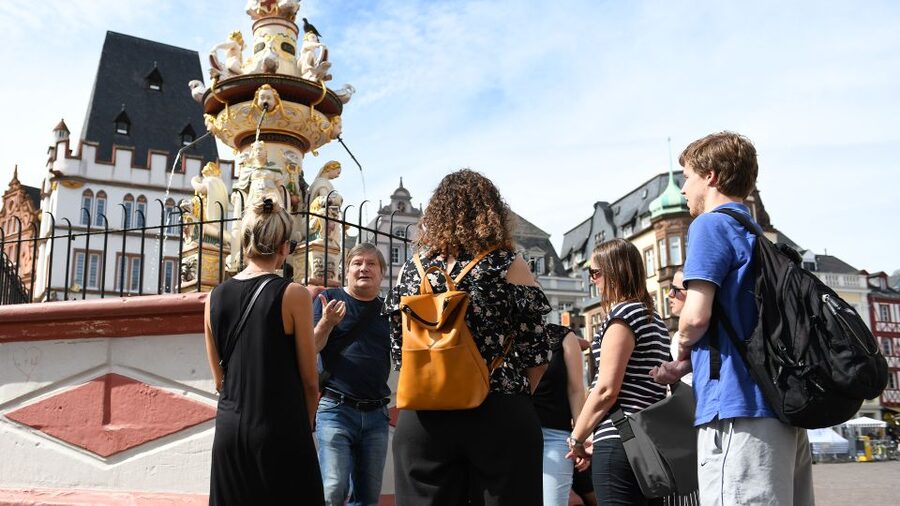
The Main Market brings another change in mood. Here, the focus shifts toward civic life, commerce, and the everyday center of the city. A market square is often where a town feels most legible, because it links grand monuments with ordinary movement through the city.
Your guide adds anecdotes about people who shaped Trier, rather than sticking only to formal architectural facts. That personal touch is one reason the tour has earned a 4.7 rating from 687 reviews. The strongest praise centers on explanations that are both well informed and funny, with history presented in a way that stays lively.
Karl Marx’s former home
The route also includes the residential house where Karl Marx lived. This stop gives the tour a clear link to modern political and intellectual history.
Marx is one of the most influential philosophers associated with the city, and his connection to Trier adds an unexpected turn after the Roman and medieval sections. You move from imperial building projects and religious monuments to the life of a thinker whose ideas shaped political debate around the world.
The value here is the contrast. Trier is not frozen in antiquity. Its identity includes Roman remains, medieval streets, religious landmarks, and modern figures. Seeing the house connected with Marx helps make that point in a simple, memorable way.
The information provided describes the house as a stop on the city route, but it does not promise a museum visit or interior access. Plan on seeing the building and hearing about Marx’s connection to Trier rather than assuming you will enter an exhibition.
More Old Town Walks in Germany:
- Dresden: Semperoper and Old Town Tour
★ 4.8 · 5,735 reviews - Nuremberg: Old Town Guided Walking Tour
★ 4.6 · 2,416 reviews - Munich: Old Town & Viktualienmarkt City Walk in German
★ 4.7 · 2,304 reviews - Dresden: Night Watchman Tour Through The Old Town
★ 4.8 · 1,758 reviews
What the guiding style is like
The guide can make or break a history walk, and the feedback here is especially strong on that point. Patrick is praised for explaining the city clearly, answering questions, and making the 1.5 hours pass quickly. Herbert receives similar praise for combining broad historical knowledge with humor and a personal touch.
That gives you a useful picture of the experience. This is not designed as a silent march from monument to monument. You should expect spoken explanations, anecdotes, and room for questions.
Parents may appreciate that the history has worked well for children on at least some departures. One account describes children enjoying Herbert’s tour, which suggests that his humor and storytelling can keep younger listeners involved. Still, the tour is in German, so children need enough German to follow along.
The tone may vary depending on which guide leads your departure. Patrick and Herbert are the named guides praised in the available feedback, but a particular booking does not guarantee one of them. I would treat their strong comments as an encouraging sign, not as a promise about your exact guide.
Why the German language matters
The live guide speaks German. That is the most important practical point before you reserve.
If you understand German well, the language should be a strength rather than a concern. The tour’s humor, anecdotes, and answers to questions are likely to feel more natural in the language used by the guide. If your German is limited, you may still recognize the main landmarks, but the historical details and jokes will be harder to follow.
There is no information here about an English guide, audio support, written translation, or multilingual departures. Do not book this tour expecting one of those options unless the current departure details specifically confirm it.
Is 1.5 hours enough for Trier?
For an introduction, yes. For a full examination of Trier’s historic center, no.
The short format works well if you have a tight schedule, are visiting on a day trip, or want orientation before visiting sights independently. You will cover the city’s Roman origins, medieval architecture, cathedral, main market area, and Marx connection in a focused period.
The pace also helps prevent history fatigue. Trier has enough centuries and monuments to fill a much longer program, but ninety minutes keeps the experience manageable. The reviews praising how quickly the time passes suggest that the guide’s pacing is one of the tour’s strengths.
You should not expect long interior visits, extensive free time, or a deep study of each landmark. The tour is best viewed as a guided framework. Afterward, you can decide which places deserve more of your own time.
Wear comfortable shoes and be prepared to walk and listen outdoors. The activity is described as a walking tour, but no specific accessibility details are provided. If you have mobility concerns, ask the provider before booking rather than assuming the route will meet your needs.
The value of $16 per person
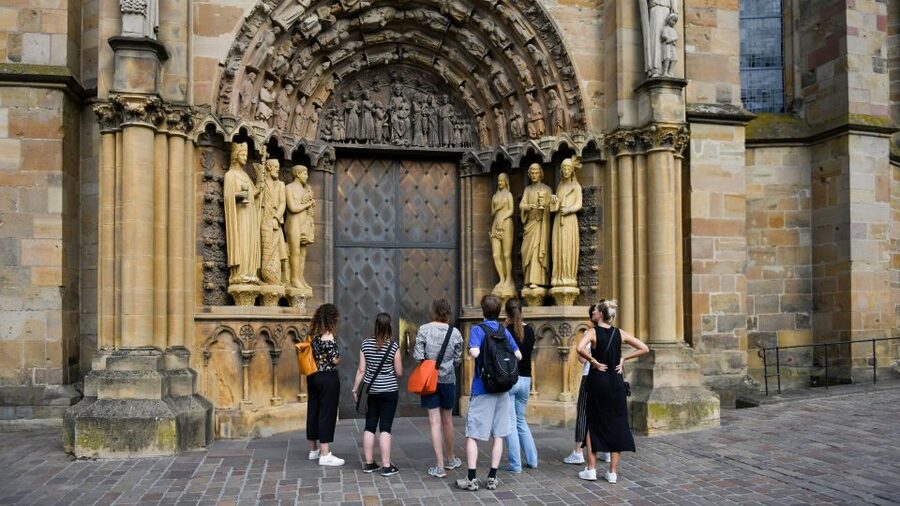
At $16, this is a reasonably priced way to get a live introduction to Trier. You are paying for a guide who links the city’s main sights and answers questions, not for admission to a museum or a long private tour.
The value is strongest when you use the walk as a starting point. A good guide can help you understand what you are seeing, suggest what deserves another look, and point you toward places to eat or drink afterward. The option to ask for restaurant and bar tips adds practical value, especially if you arrive without a plan for the evening.
The price also makes the tour easy to fit into a larger day. You can spend ninety minutes learning the layout and basic story of Trier, then choose between independent sightseeing, a meal, or more time at individual monuments.
Children aged 0 to 5 can join for free. That makes the cost more family-friendly for parents with very young children, though the language issue still applies.
What to ask your guide after the walk
Save a few questions for the end. The guide is specifically available to offer suggestions for restaurants and bars, so you can use the final moments to make the rest of your time in Trier easier.
Ask for advice based on what you want, such as a casual meal, a place for a drink, or somewhere near the old town. The information does not name particular establishments, so the best recommendation will depend on the guide’s current local knowledge and your preferences.
You can also ask which sights deserve a return visit. Since the tour gives you a broad look rather than a long stop at every site, a quick question about what to see next can help you spend your remaining hours wisely.
Who will enjoy this tour most?
I would choose this walk if you want a clear first look at Trier without committing to a half-day program. It suits first-time visitors, people on short stays, and anyone who prefers to understand a city before exploring its museums and monuments alone.
It is also a good fit for history-minded families if the children understand German. The combination of Roman stories, medieval buildings, and Karl Marx gives the route enough variety to hold attention better than a tour focused on only one period.
German-speaking visitors are the natural audience. If you need English, this is not the safe choice based on the information available. You should look for a confirmed English-language tour instead.
I would be more cautious if you already know Trier well or want extensive time inside major monuments. The walk offers orientation and interpretation, not a full museum program or a specialist study of Roman archaeology.
Booking flexibility and timing
You can cancel up to 24 hours before the activity for a full refund. You can also reserve now and pay later, which helps if your schedule is still changing.
The tour lasts 1.5 hours, but starting times depend on availability. Check the specific date before making firm plans around it. Since the meeting point is at the Mercure Hotel opposite the Porta Nigra, allow enough time to identify the correct spot and join the group without rushing.
The provider is k3 stadtführungen. The activity includes the walking tour and live guide. No transportation, meals, or entrance fees are listed, so plan for those separately if you want to continue sightseeing after the walk.
Should you book the Trier walking tour?
Book it if you want a short, affordable, German-language introduction that ties together Trier’s Roman gate, medieval center, cathedral, market square, and Karl Marx connection. The best reasons to choose it are the strong guiding feedback, the humor praised in connection with Patrick and Herbert, and the practical chance to ask for food and drink advice afterward.
Skip it if you need English, want guaranteed interior access to monuments, or prefer a long specialist tour. For everyone else, $16 buys a useful first chapter of Trier’s story, with enough structure to help you explore the city on your own afterward.
FAQ
Where does the Trier walking tour meet?
Meet your guide in front of the Mercure Hotel, opposite the Porta Nigra.
How long does the tour last?
The walking tour lasts 1.5 hours.
What language is the tour offered in?
The live tour guide speaks German.
What sights are included?
The route highlights the Porta Nigra, Trier Cathedral, the Main Market, medieval architecture, and the residential house connected with Karl Marx.
Does the tour include the Porta Nigra?
The tour visits the Porta Nigra and explains its Roman origins and daily life under Roman rule. The provided details do not specify interior admission.
Are young children allowed to join?
Yes. Children aged 0 to 5 years can join for free.
Can I ask the guide for restaurant advice?
Yes. You can ask the guide for tips about restaurants and bars to visit after the tour.
Can I cancel for a refund?
Yes. You can cancel up to 24 hours in advance for a full refund.
More Walking Tours in Germany
- Discover Berlin Half-Day Walking Tour
★ 5.0 · 9,624 reviews - Berlin: Third Reich and Cold War 2 Hour Walking Tour
★ 4.9 · 6,830 reviews - Munich: Third Reich & WWII Walking Tour
★ 4.6 · 6,181 reviews - Berlin: Discover Berlin Walking Tour
★ 4.9 · 5,998 reviews
More Historical Tours in Germany
- Leipzig: City History Canal Sightseeing Tour on a Motorboat
★ 4.7 · 6,232 reviews - Berlin: Natural History Museum Entrance Ticket
★ 4.6 · 3,382 reviews - Leipzig: 1.5-Hour Historical Walking Tour in German
★ 4.7 · 2,217 reviews - Berlin: World Heritage Cruise to Potsdam
★ 4.5 · 1,435 reviews
Just added around Germany
- e-Scavenger hunt Aachen: Explore the city at your own pace★ 4.0 · 13 reviews
- Munich: Private or Group Third Reich and WWII Walking Tour★ 4.9 · 13 reviews
- Canyoning Advanced Day Trip★ 5.0 · 13 reviews
- Wiesbaden Biebrich: Outdoor Escape Game★ 4.7 · 13 reviews
- From Munich: Neuschwanstein Castle and Linderhof Private Tour★ 5.0 · 13 reviews
- Trier, Moselle: Wine excursion with boat trip★ 3.9 · 13 reviews
- Berlin: Private Guided Tour of the Main Sights★ 5.0 · 13 reviews
- From Dresden: Guided Day Tour by Bus of Seiffen Toy Village★ 4.0 · 13 reviews
Old Town Walks, compared.
Old Town & Viktualienmarkt City Walk in German
Read our review →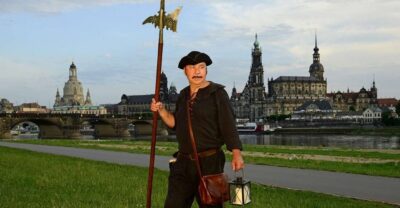
The Night Watchman Old Town Walking Tour in German
Read our review →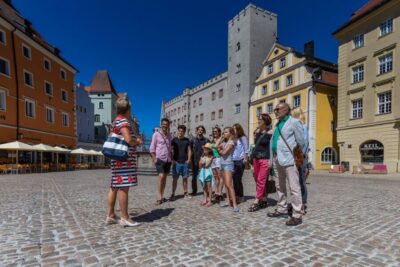
Browse the lists this tour appears in