
Reviewed · HISTORICAL TOURS
Berlin: Natural History Museum Entrance Ticket
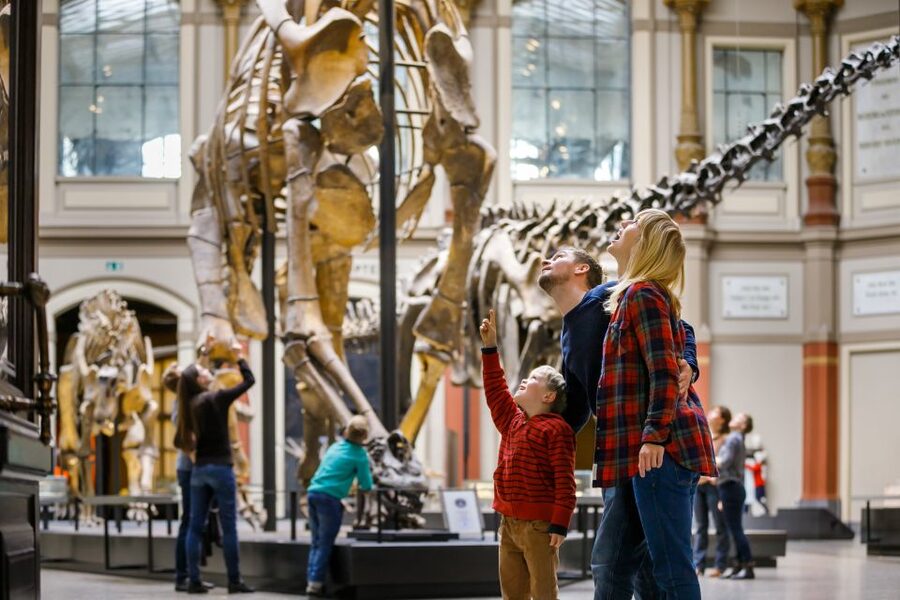
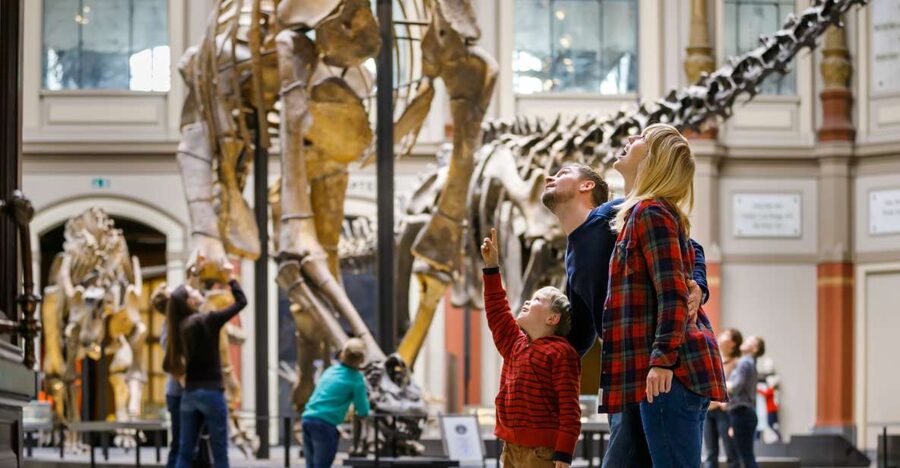
Dinosaurs get you through the door. Berlin’s Museum für Naturkunde then keeps your attention with Giraffatitan brancai, the world’s tallest mounted dinosaur skeleton, and Tristan Otto, one of Europe’s few original T. rex skeletons. I like the mix of dramatic fossils and serious science, and the $12 admission is a fair deal for a central Berlin museum. The main catch is that some displays rely on phone-based audio or online translations, so bring headphones and a charged phone.
The museum works especially well for families because the giant skeletons make an instant impression, while minerals, extinct animals, and the biodiversity displays give adults plenty to study. You can see the main highlights in 30 minutes to an hour, but the collection rewards a slower visit. At busy times, the building can reach capacity, so a reserved ticket does not always mean you can walk straight through the door.
In This Review
- Key points to know before you go
- Arriving at Invalidenstraße 43
- The Dinosaur Hall and Berlin’s giant Jurassic welcome
- Tristan Otto, Berlin’s original T. rex attraction
- The Archaeopteryx fossil and the value of seeing the original
- The East Wing and one million animals in alcohol
- The Biodiversity Wall and the big question behind it
- Minerals, Earth science, and displays beyond dinosaurs
- Audio content, languages, and practical comfort
- How long you should allow
- Is the $12 ticket good value?
- Who should book this museum visit?
- Should you book the Museum für Naturkunde?
- FAQ
- Where is the Museum für Naturkunde in Berlin?
- How much does admission cost?
- How long does the visit last?
- Is a ticket included for the permanent exhibitions?
- Is the audio guide included?
- Which audio languages are available?
- Should I bring headphones?
- Can I see a real T. rex skeleton?
- Is the museum wheelchair accessible?
- Do I need identification?
Key points to know before you go
- Giraffatitan brancai greets you in the Dinosaur Hall: The giant Jurassic skeleton gives the museum its unforgettable first moment.
- Tristan Otto is the star predator: You can see one of the few original T. rex skeletons in Europe, displayed in a dramatic setting.
- The Archaeopteryx is a must-see: This rare fossil is treated as the Mona Lisa of natural history and sits in a protective case.
- The wet collection contains one million animals: About 80 tonnes of alcohol preserve specimens used for scientific research.
- The Biodiversity Wall shows 3,000 species at once: It turns a huge scientific subject into one powerful visual display.
- Bring headphones: The downloadable audio content works through a website, not a supplied physical audio guide.
Arriving at Invalidenstraße 43
The Museum für Naturkunde is at Invalidenstraße 43 in Berlin, with entry through the main entrance. Your mobile ticket is intended to help you bypass the regular ticket line, and several visitors found the scanning process quick and easy.
Keep your passport or ID card with you. You may need identification at entry, and reduced-price ticket holders must show proof of age or status. A cloakroom is included, which is handy if you have coats or small bags during colder Berlin weather.
The skip-the-line benefit is useful, but treat it as a way to avoid the ordinary ticket queue, not as a promise of instant entry in every situation. The museum has reached full capacity at busy times, leaving some people waiting outside even with tickets. Booking ahead is still the sensible move, especially on weekends and during school holidays.
The entrance process has occasionally caused minor trouble with mobile vouchers. Keep the ticket ready in the booking app or on your phone, and make sure the brightness is high enough for scanning. If the app is awkward, have the confirmation page available through your browser as well.
More Historical Tours in Berlin
- Berlin: World Heritage Cruise to Potsdam
★ 4.5 · 1,435 reviews - Berlin Historical Highlights Walking Tour
★ 4.9 · 657 reviews - Berlin Private Complete History All Day Walking Tour
★ 5.0 · 474 reviews
The Dinosaur Hall and Berlin’s giant Jurassic welcome
Your first major stop is the Dinosaur Hall, where the museum presents life from the Upper Jurassic period, roughly 150 million years ago. The design places the fossils in a broad, dramatic setting rather than treating them as small objects in glass cases.
At the center is Giraffatitan brancai, formerly known by another name in older museum material. Its height is the first thing you notice. This is the world’s tallest mounted dinosaur skeleton, and it gives children an easy sense of scale: you do not need a science lesson to understand that this animal was enormous.
The skeleton also provides a good reminder that museums are places of ongoing research. Fossils are not simply finished pieces from the past. Scientists continue to study how the animals lived, moved, and related to other species. The museum’s approximately 200 scientists work with collections containing more than 30 million items, so the displays connect naturally to current research.
You might spend only a few minutes looking up at the main skeleton, but give yourself time to examine the surrounding fossils. The hall includes other prehistoric remains and dinosaur material, with explanations about the animals and the work involved in interpreting their bones.
The dinosaur section is the museum’s strongest draw. It is also the part most likely to become crowded, particularly when school groups are present. Weekend noise can rise quickly, and some visitors found the museum less peaceful when children filled the halls. For families, that energy can be a plus. For adults seeking a quiet scientific study, arrive early if possible.
Tristan Otto, Berlin’s original T. rex attraction
Tristan Otto is the other essential stop. Seeing a real Tyrannosaurus rex skeleton gives the museum a powerful centerpiece for visitors who came mainly for dinosaurs.
The presentation uses subdued lighting, which helps the skeleton feel imposing rather than merely educational. Several people singled out Tristan as the highlight, and it is easy to understand why. The bones make the animal’s size and posture more immediate than a film or model ever could.
The exhibit is also useful for setting expectations. You are not visiting a theme park attraction with constant effects and elaborate rides. The excitement comes from the specimen itself, the rarity of the original bones, and the chance to look closely at a creature that has become a symbol of prehistoric life.
The hall includes some interactive devices, but do not expect every display to invite hands-on play. A few parents hoped for more activities for younger children. The large skeletons and visual displays carry most of the family appeal.
The Archaeopteryx fossil and the value of seeing the original
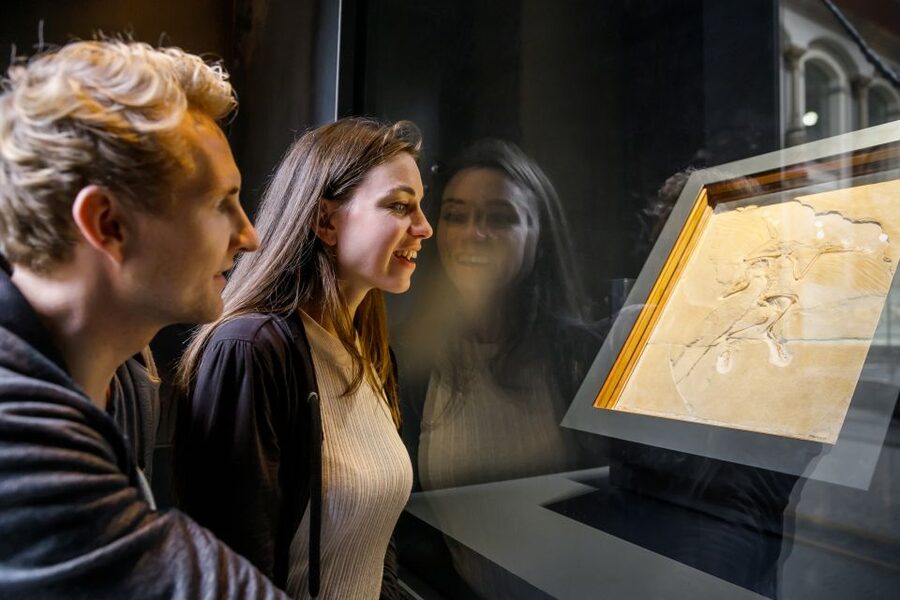
At the back of the Dinosaur Hall, look for Archaeopteryx lithographica in its protective case. The museum describes it as the Mona Lisa of natural history, a fitting comparison for a fossil that is both famous and unusually important.
This is not a giant exhibit. The Archaeopteryx is valuable because of what it reveals about the transition between dinosaurs and birds, and because original fossils of this kind are rare. If you rush through the hall, it is easy to focus only on the huge skeletons and miss the smaller object with the greater scientific delicacy.
I would plan this stop before you arrive. Once you are surrounded by towering bones, the eye naturally goes upward. Use the museum map and look for the case at the rear of the hall. The fossil rewards close attention, especially if you use the audio material or read the accompanying explanation.
English information is available for many displays, but not always in the same way. Some labels use printed English text, while others direct you to QR codes or online material. A few visitors found that QR codes did not work reliably, so do not depend entirely on scanning every label.
More Museums in Berlin
- Berlin: Jewish Museum Berlin Entrance Ticket
★ 4.5 · 8,393 reviews - Berlin: DDR Museum Tickets
★ 4.3 · 3,443 reviews - Berlin: Neues Museum Entry Ticket
★ 4.6 · 3,261 reviews - Skip-the-Line: Berlin Wall Museum at Checkpoint Charlie
★ 4.1 · 2,041 reviews
The East Wing and one million animals in alcohol
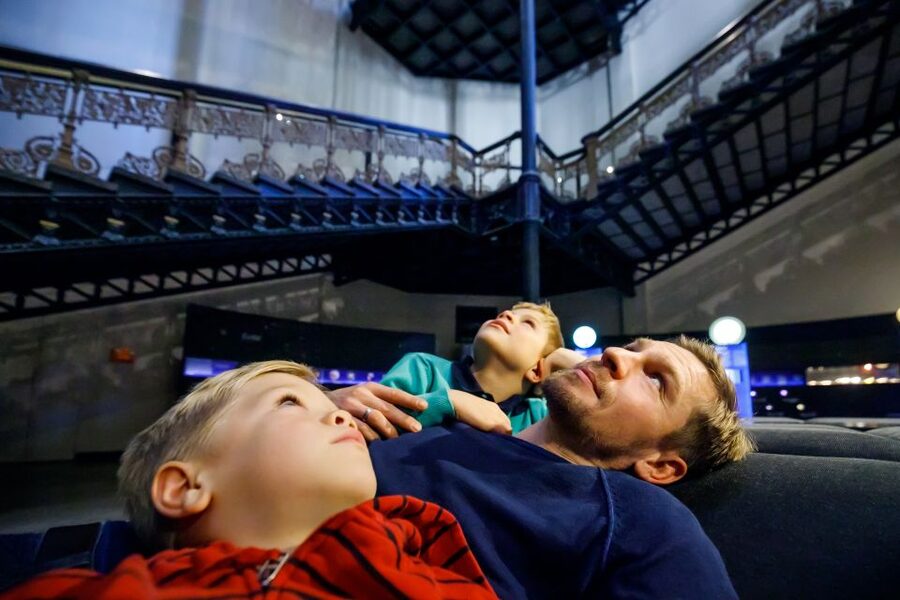
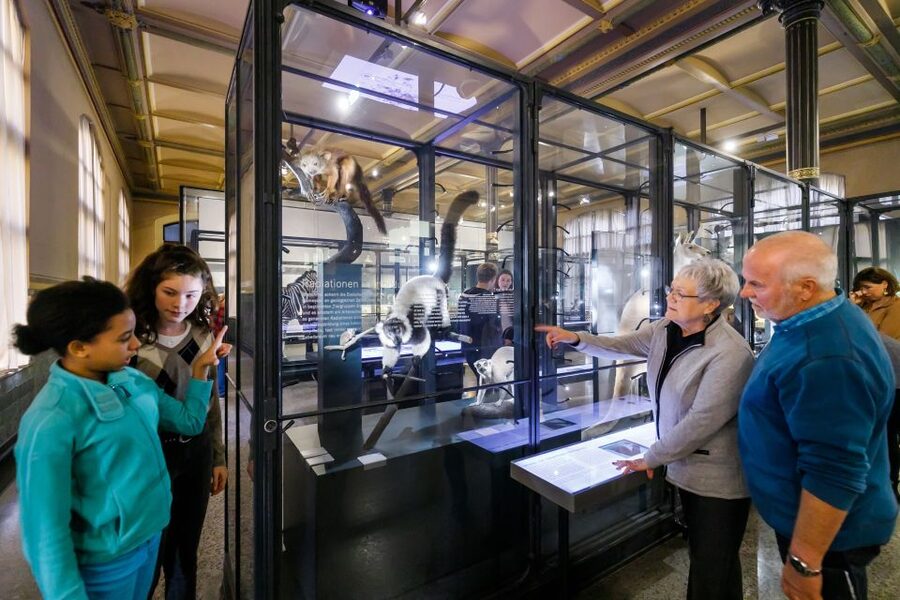
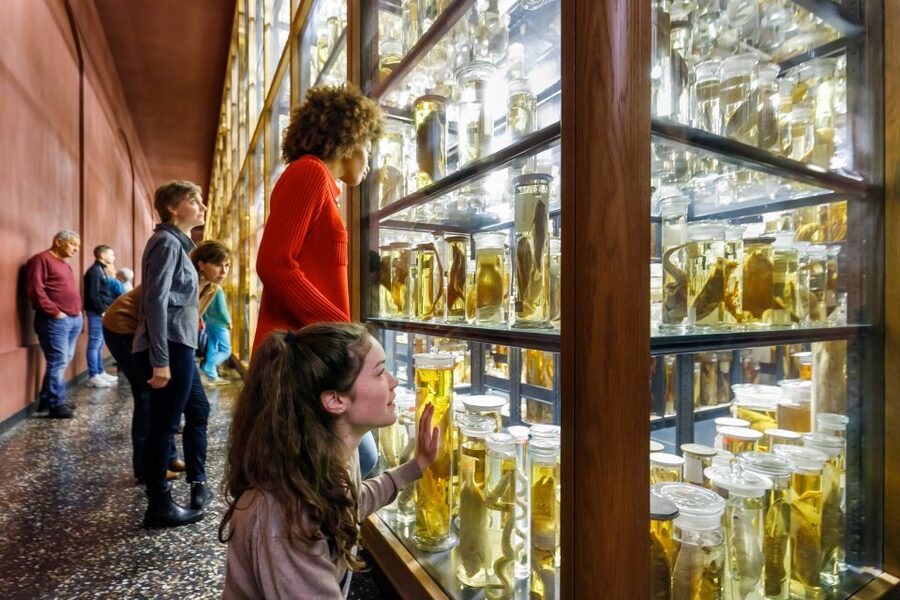
The East Wing shifts the mood from prehistoric spectacle to working science. Here you can see part of a genuine research collection, including about one million animals preserved in alcohol.
The scale is hard to picture until you learn that the collection occupies about 80 tonnes of alcohol. It is an unusual display, and it may appeal more to adults, students, and anyone interested in how scientists record life than to very young children.
Preservation in alcohol allows researchers to examine specimens over time. The display helps explain that a natural history museum is not only a place for polished objects behind glass. It is also a research institution, with collections that support studies of animal diversity and change.
Some people may find preserved animals uncomfortable to look at. That reaction is part of the exhibit’s value, since it raises questions about collecting, scientific methods, and the boundary between a museum display and a working archive. If you are sensitive to taxidermy or preserved specimens, spend more time with the fossils and mineral collections instead.
The Biodiversity Wall and the big question behind it
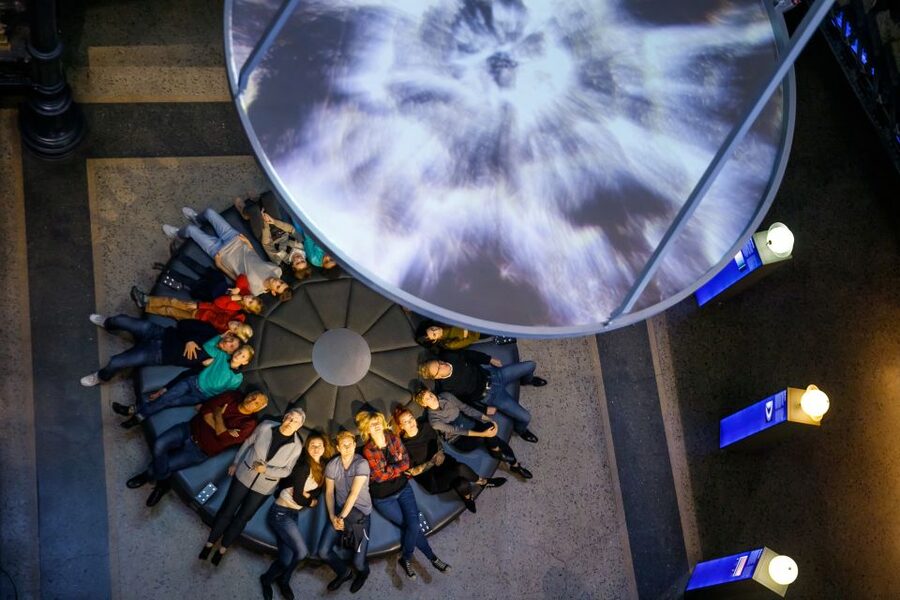
The Biodiversity Wall presents 3,000 different species in one view. It is one of the museum’s most effective displays because it makes the variety of life feel both enormous and finite.
Rather than presenting biodiversity as an abstract school subject, the wall lets you compare many forms at once. The visual effect encourages you to look for differences in size, shape, and adaptation. It also leads directly to the museum’s central concern: biodiversity loss.
This is a good stop for adults who want more than dinosaur photographs. It connects the museum’s historic collections to present-day research and environmental questions without abandoning the visual appeal that makes museums memorable.
You do not need to be a specialist to appreciate it. Children can search for familiar animals, while older visitors can consider how many species are represented by a single collection and how much remains unknown. The display is less about one famous object and more about seeing the natural world as a complex whole.
Minerals, Earth science, and displays beyond dinosaurs
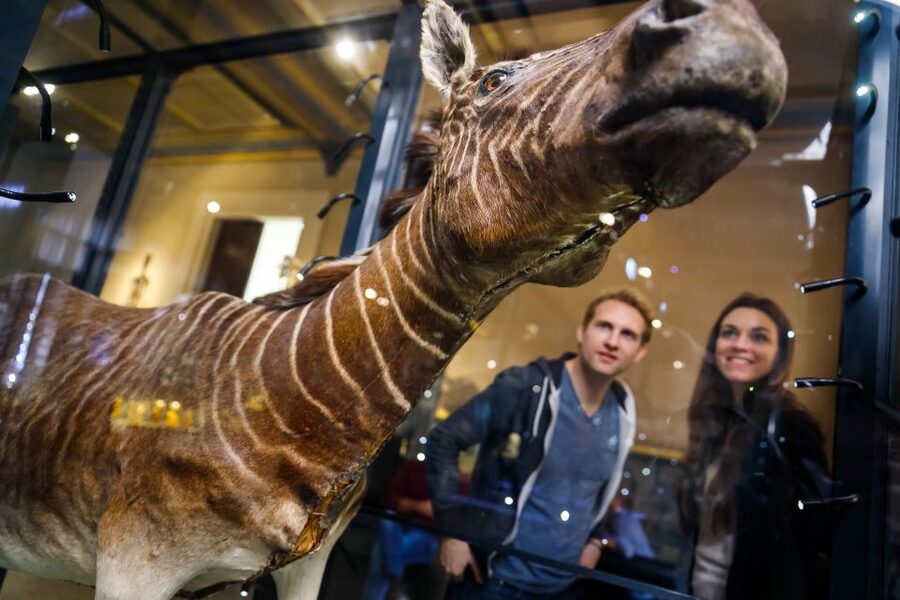
The museum is not only about bones. The Earth section and mineral collection add a useful change of pace after the Dinosaur Hall.
Several visitors praised the minerals, while others enjoyed material connected with geology, geography, biology, and the solar system. These displays broaden the visit and help you place fossils in a larger story about Earth.
The museum’s size can feel modest compared with London’s Natural History Museum. That is worth knowing before you go. You will find plenty to see, but not every gallery is equally large or packed with interactive features. Some areas may feel older or less polished than the headline exhibits.
That unevenness does not ruin the visit. In fact, the contrast between spectacular dinosaur mounts, research collections, minerals, and older displays gives the museum a more traditional character. If you want a huge entertainment complex, you may finish sooner than expected. If you want a focused museum with major fossils and strong scientific collections, the scale works in its favor.
Audio content, languages, and practical comfort
The admission includes access to downloadable audio content in English, French, German, Italian, Japanese, Polish, Portuguese, Russian, Spanish, and Turkish. Ukrainian audio has also been available, which is a welcome option for Ukrainian-speaking visitors.
This is not a physical audio guide handed to you at the desk. You need to log into a website, use your phone, and ideally bring headphones. Free Wi-Fi has been available, but you should still arrive with a charged device.
The phone-based system gives you access to more language choices than printed labels alone. It can also make the visit easier to follow when a display has limited English. The downside is practical: scanning codes and holding a phone becomes irritating when you are visiting with small children or trying to keep your group together.
English translations cover most, and in some areas nearly all, display cases. Still, the coverage is not perfectly consistent. If detailed reading matters to you, allow extra time and use the audio content rather than assuming every label will be fully translated.
The museum is wheelchair accessible. Guided tours, special programs, special events, and a physical audio guide are not included with the basic admission ticket.
How long you should allow
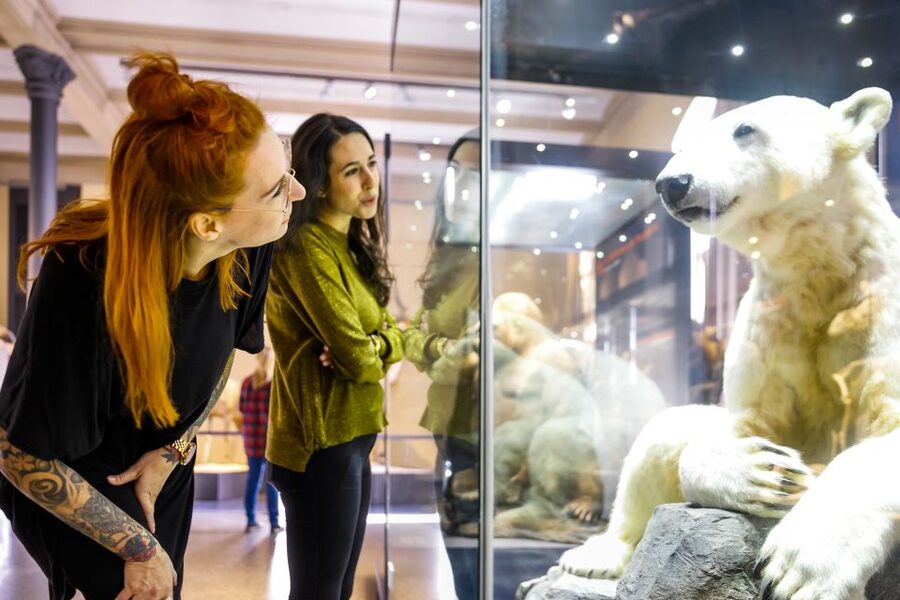
The stated visit duration is 30 minutes to one hour, and that is enough for the main highlights. You can see Giraffatitan, Tristan Otto, Archaeopteryx, the Biodiversity Wall, and several major galleries in that time if you keep moving.
I would allow longer if you enjoy museums or want to use the audio content. The museum holds more than 30 million collection items, though only part of that total is on public display. You can easily spend an afternoon if you read labels, study minerals, and take your time with the research collections.
Families may appreciate the shorter option. One adult and child could see the biggest attractions without demanding a full day from a young attention span. The museum can also work as a practical indoor stop when Berlin weather turns unpleasant.
The building has sometimes had only one floor open, and some sections may be affected by building work or changes. Check the current opening details before setting aside several hours. The displays can also be difficult to follow in a strict sequence, so accept that you may move between rooms by theme rather than following one perfect route.
Is the $12 ticket good value?
At $12 per person, the ticket is good value if dinosaurs, fossils, or natural science interest you. The price gives you access to the permanent museum displays, the cloakroom, and online audio content, with no separate charge for the major exhibits.
The value is strongest for families and first-time visitors who want a clear Berlin activity lasting 30 minutes to a few hours. A child can see enormous dinosaurs without needing a long guided tour, while adults have access to serious collections and research themes.
The value is less certain if you expect a huge museum with nonstop interactive installations. Some visitors finished the main route in about 30 minutes, and some felt the museum was small for the cost. The admission remains reasonable, but your expectations should match the museum’s focused scale.
Flexible booking adds practical value because you can cancel up to 24 hours in advance for a full refund and reserve without paying immediately. Those terms are useful when your Berlin plans are still shifting, but they should not replace checking capacity and current access details.
Who should book this museum visit?
I would recommend it most strongly to families with children, dinosaur fans, museum lovers, and adults curious about fossils, minerals, and animal research. The giant skeletons provide an immediate payoff, while the Archaeopteryx and wet collection reward a more patient eye.
It is also a good choice if you want an indoor activity near central Berlin and do not want to commit an entire day. The museum is wheelchair accessible, and the range of audio languages makes it easier for many international visitors to follow the displays.
You may want to skip it if your main goal is a highly interactive children’s attraction. There are some interactive elements, but not nearly enough for every child. You may also be disappointed if you expect the size and scale of London’s major natural history museum.
Should you book the Museum für Naturkunde?
Yes, if you want to see Berlin’s towering Giraffatitan, the rare Archaeopteryx, and Tristan Otto for a fair $12. Those three stops alone give the visit a strong reason to exist, and the biodiversity and research collections add substance beyond the dinosaur hall.
Book ahead to reduce the chance of a long queue, but remember that capacity limits can still create a wait. Bring identification, headphones, and a charged phone. Allow one hour for the highlights, or longer if you want to read and listen.
For a short, affordable family outing with genuine fossils and a few unforgettable specimens, this museum is an easy choice. Just expect a focused scientific museum, not a giant amusement-style attraction.
FAQ
Where is the Museum für Naturkunde in Berlin?
The museum is at Invalidenstraße 43, 10115 Berlin. You enter through the main entrance.
How much does admission cost?
The listed admission price is $12 per person.
How long does the visit last?
The listed duration is 30 minutes to one hour. You can spend longer if you want to study the collections, use the audio content, or visit more galleries.
Is a ticket included for the permanent exhibitions?
Yes. The museum entrance fee is included.
Is the audio guide included?
Access to downloadable audio content is included. It requires logging into a website and using your own phone. A physical audio guide is not included.
Which audio languages are available?
The listed languages are English, French, German, Italian, Japanese, Polish, Portuguese, Russian, Spanish, and Turkish. Ukrainian audio has also been available.
Should I bring headphones?
Yes. The audio content is accessed through your phone, so headphones will make it much easier to listen in the galleries.
Can I see a real T. rex skeleton?
Yes. You can see Tristan Otto, one of the few original T. rex skeletons in Europe.
Is the museum wheelchair accessible?
Yes, the activity is listed as wheelchair accessible.
Do I need identification?
Bring a passport or ID card. Reduced-price ticket holders must also bring proof of age or status.
Just added around Berlin
- Berlin: Private Guided Tour of the Main Sights★ 5.0 · 13 reviews
- Private Highlights of Berlin Bike Tour★ 5.0 · 13 reviews
- Modern Berlin Private Walking Tour: Diverse, Vibrant and Exciting German Capital★ 5.0 · 13 reviews
- Tour in Berlin from Warnemünde and Rostock Cruise Port★ 4.1 · 13 reviews
- Berlin: Stasi Museum Private Guided Tour with Entry Ticket★ 4.8 · 13 reviews
- Private Food Tour Experience with a born and bred Berliner★ 5.0 · 14 reviews
- Berlin: Rheinsberg Palace Entrance Ticket★ 4.8 · 14 reviews
- Berlin in one day – day tour with an expert guide★ 5.0 · 14 reviews
Historical Tours, compared.
City History Canal Sightseeing Tour on a Motorboat
Read our review →


Bamberg: Guided Beer History Tour with Optional Tasting
Read our review →
Guided Old Town Highlights and History Walking Tour
Read our review →Browse the lists this tour appears in