
Reviewed · HISTORICAL TOURS
Elbfloren: Historical city tour
Dresden’s grand center fits neatly into two hours. I like the way this German-language walking tour links Dresden Castle, the Frauenkirche, Fürstenzug, the Zwinger, and Theater Square into one clear route. I also like the chance to see inside the Frauenkirche and receive guided attention at the castle and Zwinger. The main drawback is simple: if you do not understand German, much of the tour’s value will be lost.
This is a good-priced introduction to Dresden’s Baroque heart, especially at $15 per person. You follow the footsteps of Augustus the Strong while hearing stories about the city’s poetry, power, architecture, and royal excess. Just keep in mind that the tour does not include museum visits or entrance fees for the Zwinger and Semper Opera House, and the Frauenkirche visit depends on opening hours.
In This Review
- Key points to know before booking
- Why Dresden is called Florence on the Elbe
- Meeting at Dresden Castle
- Dresden Castle and the world of Augustus the Strong
- Inside the Frauenkirche, if the doors are open
- Fürstenzug and Saxon history in pictures
- The stable yard and a glimpse of the Taschenbergpalais
- The Zwinger, Dresden’s late Baroque showpiece
- Theater Square, the cathedral, and the Semper Opera House
- What the $15 price really gets you
- The German-language format is the key decision
- Pace, access, and practical comfort
- Who should book this Dresden walk
- Should you book the Elbfloren tour?
- FAQ
- How long does the historical Dresden tour last?
- What language is the tour conducted in?
- Where does the tour begin?
- Where does the tour end?
- Is the Frauenkirche included?
- Are museum admissions included?
- Is admission to the Zwinger included?
- Is the tour wheelchair accessible?
Key points to know before booking
- A compact Baroque route: In two hours, you connect Dresden Castle, the Frauenkirche, Fürstenzug, the stable yard, Zwinger, cathedral, and Semper Opera House.
- German only: The live guide conducts the entire experience in German, so this suits German speakers best.
- The Frauenkirche interior may be included: You can see the church inside if it is open during the tour.
- Strong value at $15: You receive a walking tour, a short castle tour, and guided time at the Zwinger without paying a large upfront fee.
- A central start and finish: Meet at Dresden Castle, at the corner of Schlossstraße and Taschenberg, under the sign, then return there at the end.
- A highly praised storytelling style: The experience has a 4.8 rating from 819 reviews, with special praise for the clear storytelling and amount of background information.
Why Dresden is called Florence on the Elbe
Dresden’s nickname points to its artistic and architectural reputation. The city’s historic center gathers royal buildings, churches, grand courtyards, museums, and opera culture beside the Elbe River.
This tour focuses on the part of Dresden shaped most strongly by Augustus the Strong, the Elector of Saxony and King of Poland. You do not simply walk past handsome buildings. The guide connects them to the ruler’s ambitions and to the Baroque style that gave central Dresden its theatrical appearance.
That context matters because Dresden’s buildings can look almost too polished at first glance. The city center was heavily restored, and a guide helps you understand what you are seeing, why it mattered, and how the pieces fit together.
The tour is also a useful first look at Dresden because it covers several of the city’s essential sights without asking you to plan a complicated route. You get a broad introduction before deciding which places deserve a longer visit later.
More City Tours in Dresden
- Dresden: City & Semperoper Guided Walking Tour
★ 4.8 · 2,293 reviews - Dresden: City Sightseeing Tour with Live Guide
★ 4.6 · 1,730 reviews - Dresden: Guided City Walk with a Cup of Coffee
★ 4.7 · 1,568 reviews
Meeting at Dresden Castle
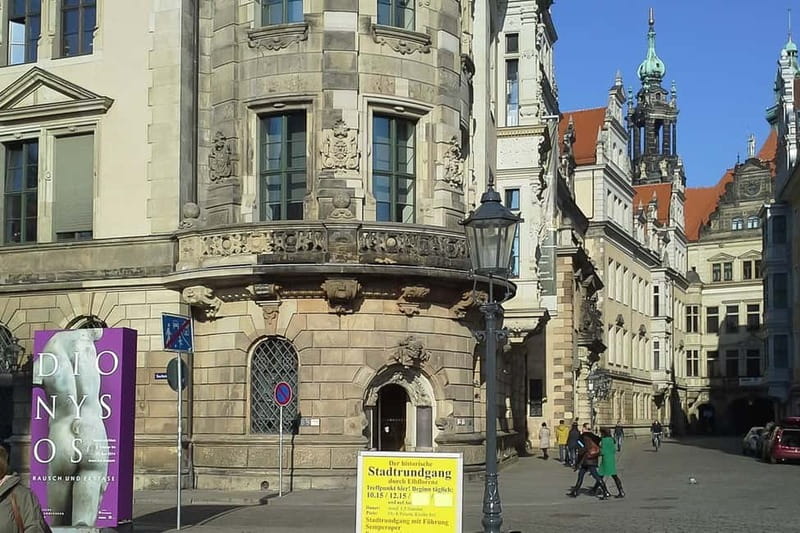
Your starting point is in front of Dresden Castle, at the corner of Schlossstraße and Taschenberg, under the marked sign. This is a practical meeting place because the castle is one of the city center’s main reference points.
Arrive with enough time to identify the exact corner. The tour begins outdoors, and the description does not provide a specific landmark beyond the sign, so checking the meeting instructions before leaving your hotel is sensible.
Dresden Castle is not just a backdrop for the start. You receive a short guided tour of the building, giving the route an early dose of royal history. The castle’s importance comes from its role at the center of Saxon power and from its connection to Augustus the Strong.
Do not confuse this short guided visit with a complete castle museum visit. Museum admission is not included, and the tour does not promise time for the castle’s collections. If you want to explore the castle’s interiors at length, plan that as a separate activity.
Dresden Castle and the world of Augustus the Strong
Augustus the Strong is the central character of the walk. His name appears throughout Dresden’s story, and the guide uses his reign to explain the city’s Baroque transformation.
You can expect a mix of architectural explanation and stories about the ruler himself, including interesting and amusing details. This human touch matters. A long list of dates would make the route feel like a school lesson, while stories about Augustus help explain why Dresden’s royal center took on such a grand style.
The castle section is short, so think of it as an introduction rather than a full historical study. I see that as a reasonable trade-off for a tour that also covers the Frauenkirche, Fürstenzug, Zwinger, cathedral, and opera house.
If you have a strong interest in Saxon history, you may want to return to Dresden Castle later for a museum visit. The walking tour gives you orientation, but the castle deserves more time than this two-hour route can provide.
Inside the Frauenkirche, if the doors are open
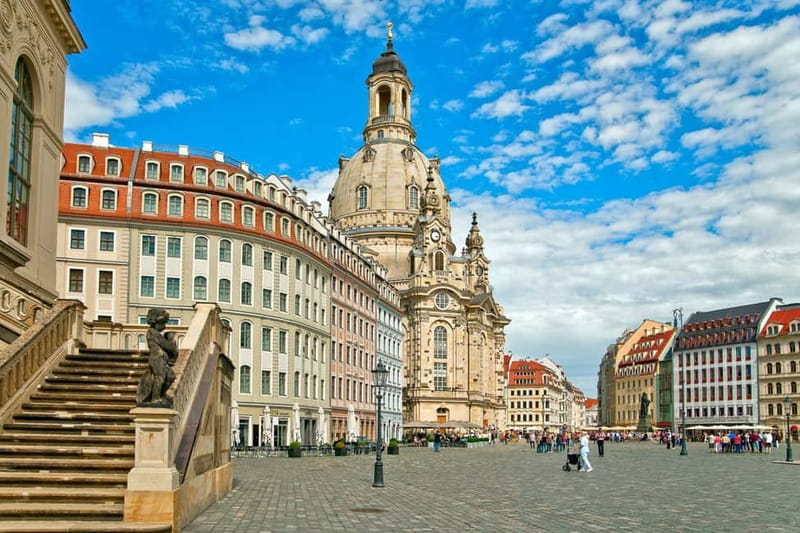
From the castle, the route continues toward Dresden’s most famous church, the Frauenkirche, also called the Church of Our Lady. The building is one of Dresden’s defining sights, and the tour includes the possibility of entering to see its interior.
The church’s restored appearance is impressive from the outside, but the interior gives you a better sense of its scale and design. The tour allows you to appreciate both sides, provided the church is open at the time.
That condition is important. The Frauenkirche visit depends on opening hours, so you should not treat interior access as guaranteed. Religious services, events, or other opening restrictions can affect the stop.
Dogs are not allowed inside churches, and pets are not allowed on the tour. Wheelchair access is listed as available, which makes this route more practical for many visitors, though the overall experience remains a walking tour through a historic city center.
The church stop is one of the tour’s best features because it adds an interior experience to what could otherwise be an outdoor architecture walk. If the doors are closed, you still see the building and hear about its place in Dresden, but the visit will feel less complete.
More Historical Tours in Dresden
- Görlitz: Ghosts and Spooky Historical Night Walking Tour
★ 4.8 · 197 reviews - Historic Dresden Small-Group Walking Tour in English
★ 5.0 · 160 reviews - Dresden: Guided Beer Tour of the Historic Old City
★ 4.8 · 95 reviews - Historic Dresden Private Walking Tour
★ 5.0 · 32 reviews
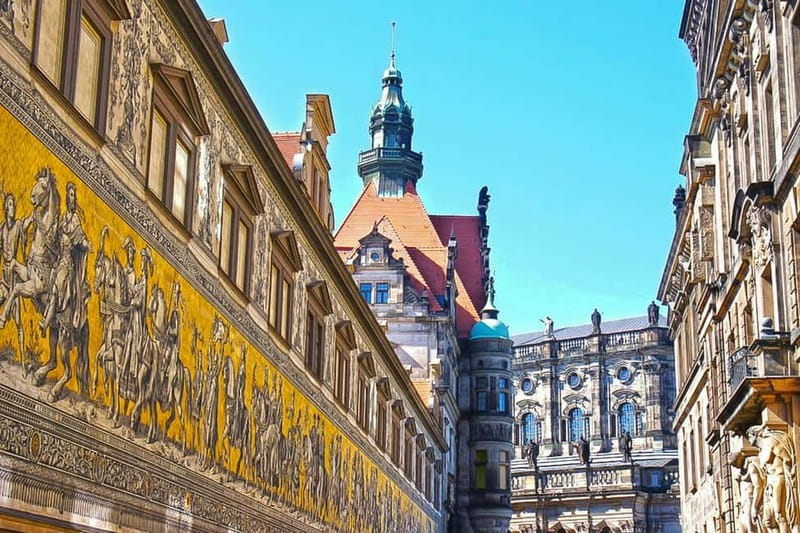
Fürstenzug and Saxon history in pictures
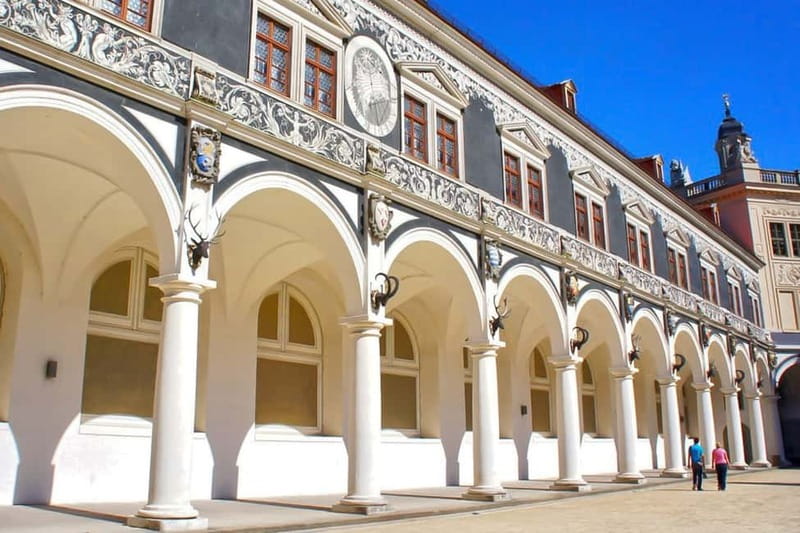
Next comes Fürstenzug, one of the most memorable outdoor displays in Dresden. This long wall picture presents an important part of Saxon history through a procession of rulers.
The stop works especially well with a guide because the artwork contains far more information than you can absorb in a quick glance. You can look at the figures, costumes, arrangement, and royal symbolism while the guide explains the historical setting.
Fürstenzug also shows how Dresden tells its story in public spaces. You do not need a museum ticket to encounter this piece of Saxon history, and its position along the route makes it an efficient stop.
Expect the guide to keep the pace moving. The whole tour covers a great deal in two hours, so Fürstenzug is likely to be explained as part of the wider route rather than treated as a long, quiet viewing session.
The stable yard and a glimpse of the Taschenbergpalais
The walk continues to the stable yard of Dresden Castle. This part of the route gives you a closer look at the castle complex and its working royal setting.
The stable yard helps balance the grand royal image with a more practical side of court life. It is a useful reminder that palaces were not only ceremonial rooms. They also required service areas, movement, storage, and daily operations.
You also get a glance at the Taschenbergpalais. The tour does not describe an interior visit here, so treat it as an exterior sight along the route rather than a separate admission stop.
These smaller architectural details are part of what makes a guided walk worthwhile. On your own, you might photograph the main buildings and move on. With a guide, a courtyard or palace view can become part of the larger story of how Dresden’s royal center functioned.
The Zwinger, Dresden’s late Baroque showpiece
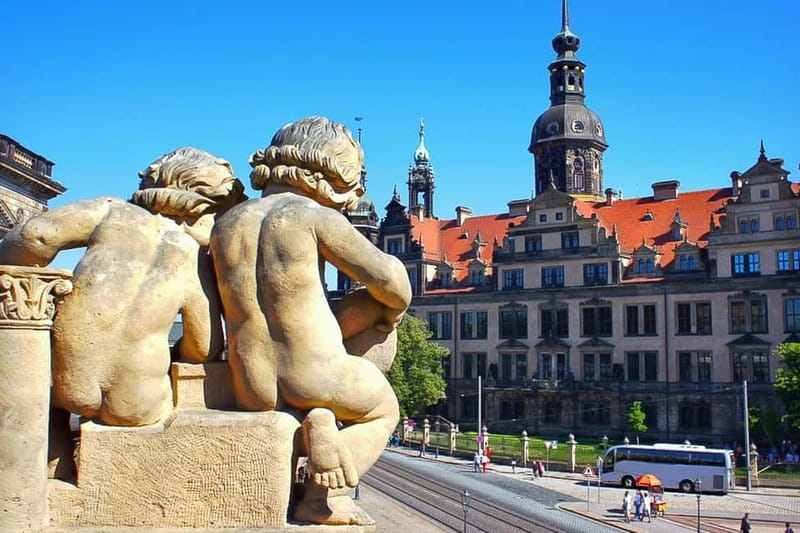
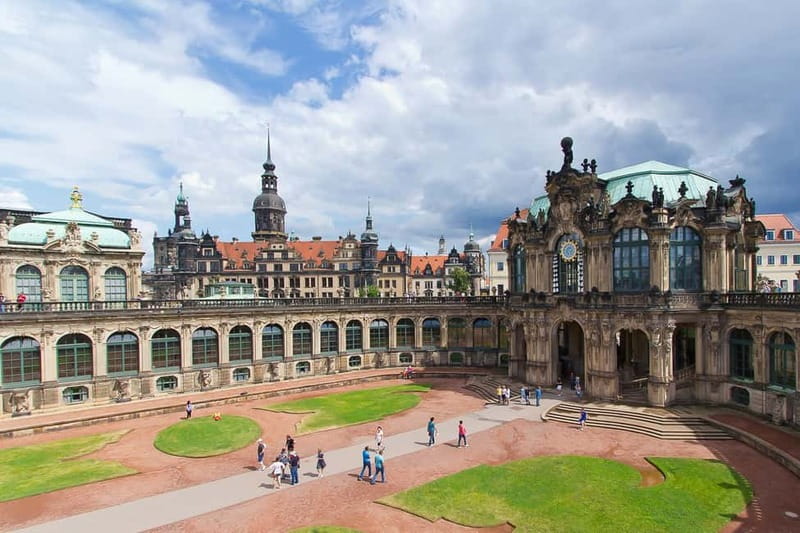
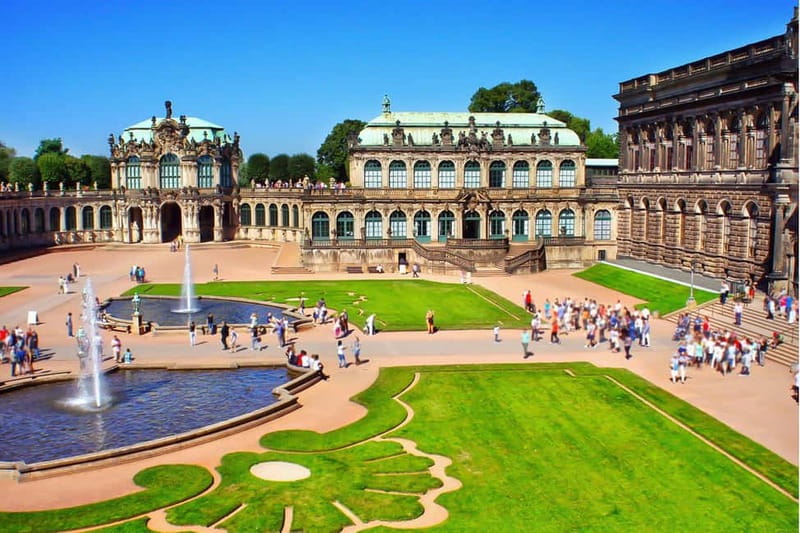
The Zwinger is one of the tour’s major stops and a highlight for anyone interested in Baroque design. Its courtyards and elaborate architectural details were made to impress, and they remain among Dresden’s most recognizable sights.
The tour includes guided time at the Zwinger, but entrance to the Zwinger is not included. That wording matters, so check the exact arrangements when booking. You may receive a guided look at the complex without a separate museum admission, while a longer interior visit would require its own ticket.
The Zwinger is best appreciated slowly, but this tour gives you a structured introduction rather than unlimited time. I like that arrangement for a first visit because you learn what you are seeing and can return later if the building captures your interest.
The late Baroque style here is not shy. Expect decorative forms, formal spaces, and a strong sense of royal display. This is the point in the route where Dresden’s reputation for Baroque grandeur becomes easiest to understand.
Theater Square, the cathedral, and the Semper Opera House
The tour ends at Theater Square, where the cathedral and Semper Opera House create one of Dresden’s most striking city views. It is a fitting final stop because the square gathers religion, royal history, music, and architecture in one place.
The cathedral gives the route another major church exterior, while the Semper Opera House represents Dresden’s continuing cultural identity. You receive an explanation of the buildings, but entrance to the Semper Opera House is not included.
This final setting also gives you a useful sense of how compact the historic center is. Dresden’s key sights are close enough to connect on foot, yet each has a different role in the city’s story.
The tour returns to the original meeting point after ending at Theater Square. That makes it easier to continue sightseeing, return to your accommodation, or plan a separate visit to one of the museums and buildings you have just seen.
What the $15 price really gets you
At $15 per person, the tour offers good value if you want orientation and historical explanation rather than admission to several interiors. You receive a two-hour walking tour, a German-speaking guide, a short guided visit at Dresden Castle, and guided time at the Zwinger.
The strongest value comes from the route. Visiting all these sights independently is possible, but you would need to research the history, plan the order, and decide which buildings are open. The tour removes that planning work and puts the major Baroque sights into a sensible sequence.
The price does not cover museum visits or entrance fees for the Zwinger and Semper Opera House. That keeps the basic cost low, but you should budget separately if you want to go inside those places.
The Frauenkirche is a special case. Its interior visit depends on opening hours, but no separate church admission is listed as part of the tour. Ask about the day’s access if seeing inside the church is important to you.
Free cancellation up to 24 hours before the start gives you useful flexibility. You can also reserve now and pay later, which helps if your Dresden plans are still shifting.
The German-language format is the key decision
This tour is conducted in German, with a live German-speaking guide. That is not a minor detail. The experience depends heavily on the spoken explanations, stories about Augustus the Strong, and background about Saxon history.
If you understand German well, the format may be a major advantage. The guide can provide a more natural local experience, and the strong rating of 4.8 from 819 reviews suggests that the storytelling works especially well for its intended audience.
The praise focuses on good narration and plenty of background information. One especially favorable comment highlights the amount of information and recommends the tour strongly. That points to a tour built around explanation, not just quick photo stops.
If you do not speak German, you can still recognize the buildings and follow the route, but you will miss the main service you are paying for. In that case, an English-language tour would likely be a better choice, even if it costs more.
Pace, access, and practical comfort
Two hours is enough for a strong overview, but it also means the pace will be purposeful. You will move between several nearby sights, listen to explanations, and make short stops rather than settle into long visits.
Wear comfortable shoes. The activity is a walking tour through the historic center, and the value comes from seeing the sights in sequence on foot.
The tour is listed as wheelchair accessible. That is useful information for planning, though historic city centers can include different surfaces and busy pedestrian areas. If you need precise details about every section of the route, contact the provider before booking.
Pets are not allowed, and dogs cannot enter the churches. This is a tour to book without your dog.
The exact starting times vary, so check availability for your date. Since the Frauenkirche stop depends on opening hours, the timing of your tour may affect the chance of entering the church.
Who should book this Dresden walk
I would recommend this tour to German-speaking visitors who want a short, affordable introduction to central Dresden. It suits first-time visitors, people with limited time, and anyone who wants a guide to explain the city before exploring its museums independently.
It also works well for visitors interested in Augustus the Strong and Saxon royal history. The route gives you a clear look at the ruler’s influence without requiring a full day inside museums.
The tour is less suitable if you want long interior visits, an English-language explanation, or a detailed museum experience. The Zwinger and Semper Opera House are seen as part of the walking route, but their entrance fees are not included.
I would also think twice if your main goal is a relaxed photography walk. The tour covers many sights in two hours, so you will have time for photographs, but the guide’s schedule will set the pace.
Should you book the Elbfloren tour?
Book it if you speak German and want to understand Dresden’s Baroque center quickly. At $15, the route offers a lot for the money, especially with guided stops at Dresden Castle and the Zwinger and a possible visit inside the Frauenkirche.
The tour’s best feature is its storytelling. Clear narration and substantial background information can turn a string of beautiful buildings into a connected story about Augustus the Strong, Saxony, religion, royal power, and Dresden’s cultural life.
Skip it if you need English, want full museum admission, or prefer to explore at your own speed. For the right audience, though, this is a practical and well-priced way to get your bearings in Dresden’s historic heart.
FAQ
How long does the historical Dresden tour last?
The tour lasts two hours. Starting times vary, so check availability for your preferred date.
What language is the tour conducted in?
The tour is conducted in German by a live German-speaking guide.
Where does the tour begin?
The meeting point is in front of Dresden Castle, at the corner of Schlossstraße and Taschenberg, under the sign.
Where does the tour end?
The tour ends back at the original meeting point after visiting Theater Square.
Is the Frauenkirche included?
The tour includes a visit to the Frauenkirche if opening hours allow. Entry inside is not guaranteed.
Are museum admissions included?
No. Museum visits are not included in the tour.
Is admission to the Zwinger included?
No. Entrance to the Zwinger is not included, although the tour does include guided time at the Zwinger.
Is the tour wheelchair accessible?
Yes. The activity is listed as wheelchair accessible. Pets are not allowed, and dogs cannot enter the churches.
More Historical Tours
- Historical tour of the old town including a Saxon dinner
★ 4.7 · 23 reviews - Leipzig: City History Canal Sightseeing Tour on a Motorboat
★ 4.7 · 6,232 reviews - Berlin: Natural History Museum Entrance Ticket
★ 4.6 · 3,382 reviews - Leipzig: 1.5-Hour Historical Walking Tour in German
★ 4.7 · 2,217 reviews
Just added around Dresden
- From Dresden: Guided Day Tour by Bus of Seiffen Toy Village★ 4.0 · 13 reviews
- Dresden: Christmas Sightseeing Tour with a ‘Pflaumentoffel’★ 4.5 · 13 reviews
- Dresden: Bike Rental – City Bike with Option Children Seat★ 4.5 · 13 reviews
- Sightseeing tour by ConferenceBike★ 5.0 · 14 reviews
- Dresden Neustadt: Scavenger Hunt for Children★ 4.8 · 15 reviews
- Dresden: Scavenger Hunt to Elbe River & Castles★ 4.7 · 15 reviews
- Street Art Tour Dresden Neustadt★ 4.0 · 15 reviews
- Dresden: 150-minute Trabi tour as a guided city tour★ 4.9 · 15 reviews
Historical Tours, compared.
City History Canal Sightseeing Tour on a Motorboat
Read our review →


Bamberg: Guided Beer History Tour with Optional Tasting
Read our review →
Guided Old Town Highlights and History Walking Tour
Read our review →Browse the lists this tour appears in