
Reviewed · WALKING TOURS
Dresden: Guided City Walk with a Cup of Coffee
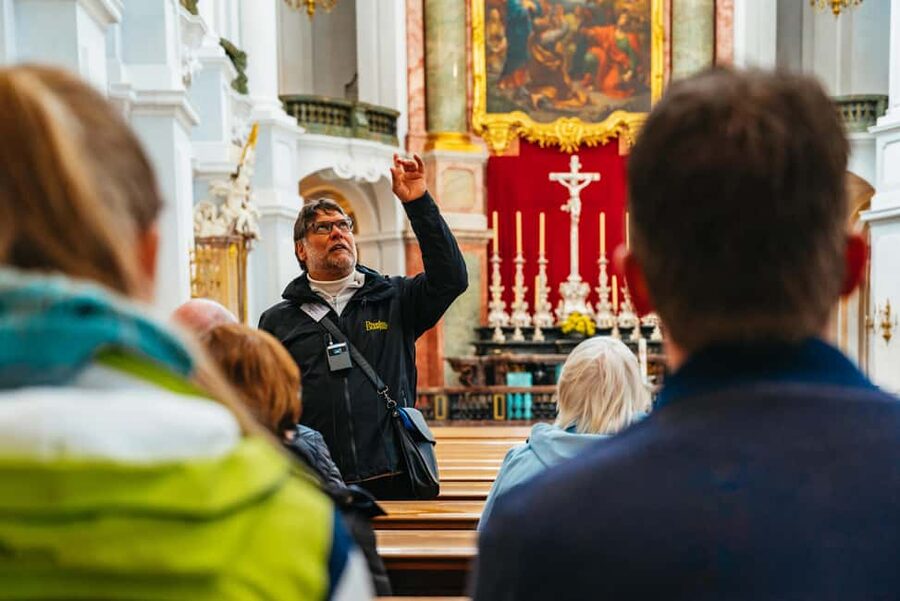
Dresden tells its story in stone. This 1.5-hour walk is a smart way to get oriented in the old town, linking the Frauenkirche, Semperoper, Zwinger, and Dresden Castle with stories from the Middle Ages through the peaceful revolution of 1989. I like the route because it covers the city’s major sights without asking you to spend a full day on your feet.
I also like the mix of grand architecture and personal stories, plus the guide’s tips on restaurants and leisure activities. The main drawback is simple: the tour is German only, so it will not work well if you need English commentary. The coffee coupon is a pleasant extra, but one person reported that it was not handed out, so I would treat it as a bonus rather than the main reason to book.
For $15 per person, this is a strong-value introduction to central Dresden. You see the outside of several major landmarks, hear how the city changed over centuries, and get a live guide supported by a digital audio system. It is best for first-time visitors who want a clear overview before deciding which museums and interiors deserve more time.
In This Review
- Key points to know before booking
- Starting beneath QF Passage at Dresden Information
- Stallhof and the Fürstenzug: Dresden’s royal side
- Brühl’s Terrace and the changing riverfront
- Semperoper: opera, court culture, and grandeur
- The Zwinger and Dresden’s Baroque imagination
- Dresden Castle and the weight of Saxon power
- Dresden Cathedral and Taschenbergpalais
- The Frauenkirche finish and Dresden’s hardest chapters
- What $15 buys you in Dresden
- Who will enjoy this 90-minute walk?
- Practical details that affect your day
- Should you book the Dresden guided walk?
- FAQ
- How long does the Dresden guided city walk last?
- What language is the tour offered in?
- Where does the tour begin?
- Which major sights are included?
- Is coffee included?
- Is the tour wheelchair accessible?
- Can I cancel the booking?
Key points to know before booking
- A concentrated old-town route: In 90 minutes, you walk past Dresden Castle, the Fürstenzug, Brühl’s Terrace, the Semperoper, the Zwinger, and the Frauenkirche.
- German-language guiding only: The tour suits German speakers or anyone comfortable following a German explanation.
- Strong historical range: The stories move from the Middle Ages and Renaissance to Baroque Dresden, East Germany, and the events of 1989.
- Digital audio support: The audio guide system should make it easier to hear the guide while walking through busy city spaces.
- Low price, high sightseeing value: At $15, the tour costs less than many formal sightseeing activities and gives you a useful first look at central Dresden.
- Coffee is included, with one small caution: You receive a free coffee coupon, though it is worth confirming you have it before leaving the meeting point.
Starting beneath QF Passage at Dresden Information
The tour begins in front of Dresden Information, located in the basement of the QF Passage. This is at Neumarkt, one of the most useful places to begin exploring Dresden’s historic center.
Meeting here makes practical sense. You start close to the Frauenkirche and can reach the main old-town sights on foot. The short walk to the first stop takes about three minutes, so you do not lose valuable tour time crossing the city.
I would arrive a little early. The meeting point is indoors at the shopping passage, and finding a guide among other visitors is easier when you are not rushing. Since the tour ends near the Frauenkirche and the activity details also describe the end as returning to the meeting point, confirm the exact finishing arrangement with the guide at the start.
This is a walking tour through central Dresden, not a bus ride. Wear comfortable shoes, especially if you plan to keep exploring after the tour. The route is listed as wheelchair accessible, which is useful for visitors who need step-free access, although you may still want to ask the provider about the exact surface and route conditions before booking.
More City Tours in Dresden
- Dresden: City & Semperoper Guided Walking Tour
★ 4.8 · 2,293 reviews - Dresden: City Sightseeing Tour with Live Guide
★ 4.6 · 1,730 reviews - Elbfloren: Historical city tour
★ 4.8 · 819 reviews
Stallhof and the Fürstenzug: Dresden’s royal side
The walk quickly reaches Stallhof, or the Stable Yard, a historic courtyard connected with Dresden’s former royal complex. This is one of the places where the city’s old court life becomes easier to picture. Rather than viewing Dresden only as a collection of impressive facades, you begin to see how royal power shaped the center.
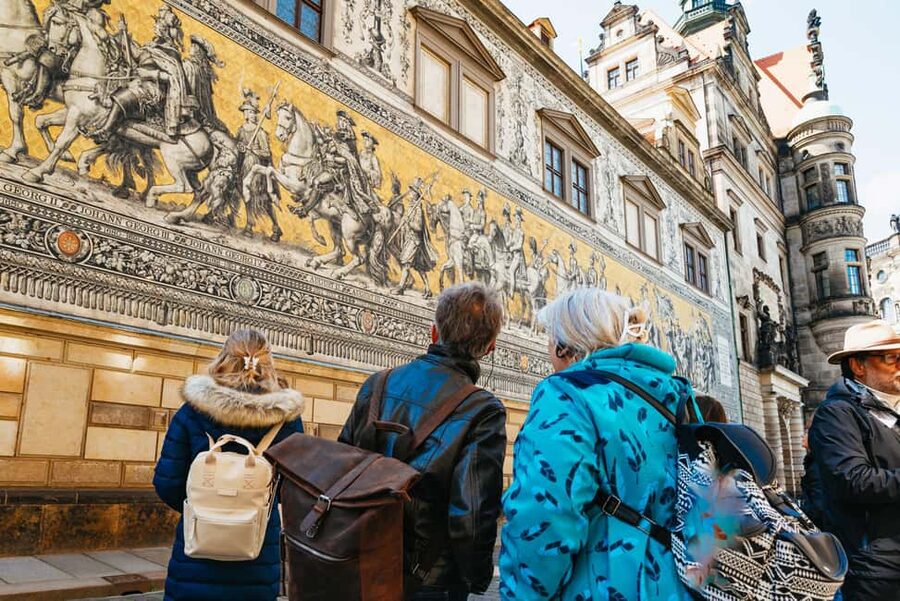
From Stallhof, the route continues to the Fürstenzug, the Procession of Princes. This long wall image is one of Dresden’s most recognizable sights. It presents the rulers of Saxony in a monumental procession, giving you a visual guide to the region’s ruling dynasty.
The value of this stop is not just the artwork itself. A good explanation helps connect the figures to Dresden’s growth, political importance, and changing fortunes. The guide also places the city’s Baroque appearance in context, explaining how earlier periods helped shape the streets and buildings you see today.
Allow yourself a moment to look closely at the procession. The route moves quickly, and this is one of the stops where you may want to stay near the guide while also taking in the detail on the wall.
Brühl’s Terrace and the changing riverfront
Next comes Brühl’s Terrace, the elevated promenade along the Elbe. It is one of Dresden’s best-known viewpoints and a pleasant pause in the walk. From here, you gain a broader sense of the city’s position beside the river rather than seeing only individual monuments.
The guide uses this part of the route to discuss Dresden’s development and its changing architectural character. The experience is not limited to praise for old buildings. It also touches on modern and controversial construction, which gives you a more honest look at how Dresden balances preservation with present-day needs.
That contrast matters. Dresden is often presented as a polished Baroque city, but its story includes destruction, reconstruction, political change, and ongoing debate about what belongs in the historic center. Brühl’s Terrace is a good place to consider those layers because the view opens up beyond the narrow streets.
The walk is still fairly short, but the pace may feel brisk if you want long photo stops. I would save detailed photography for afterward and focus on the guide’s explanation while you are on the route.
Semperoper: opera, court culture, and grandeur
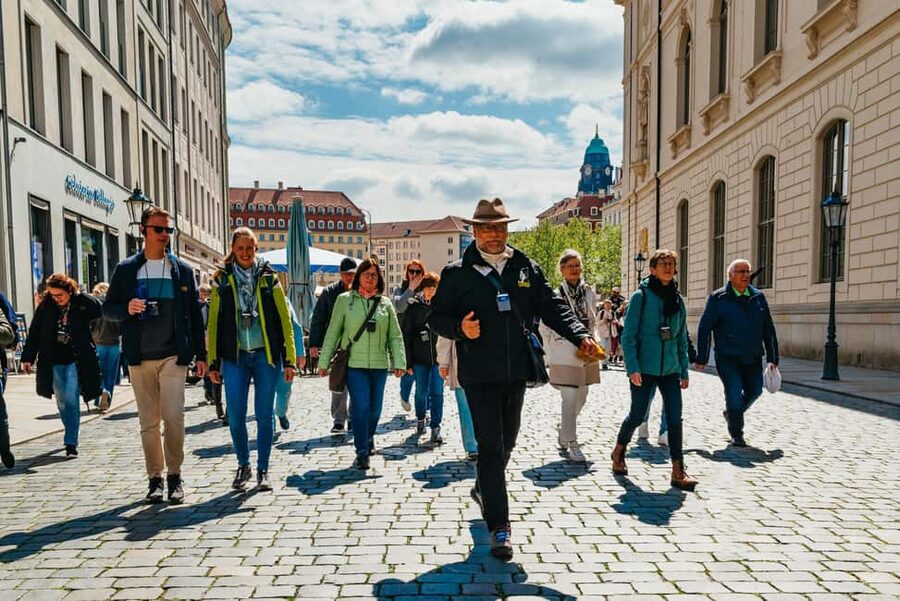
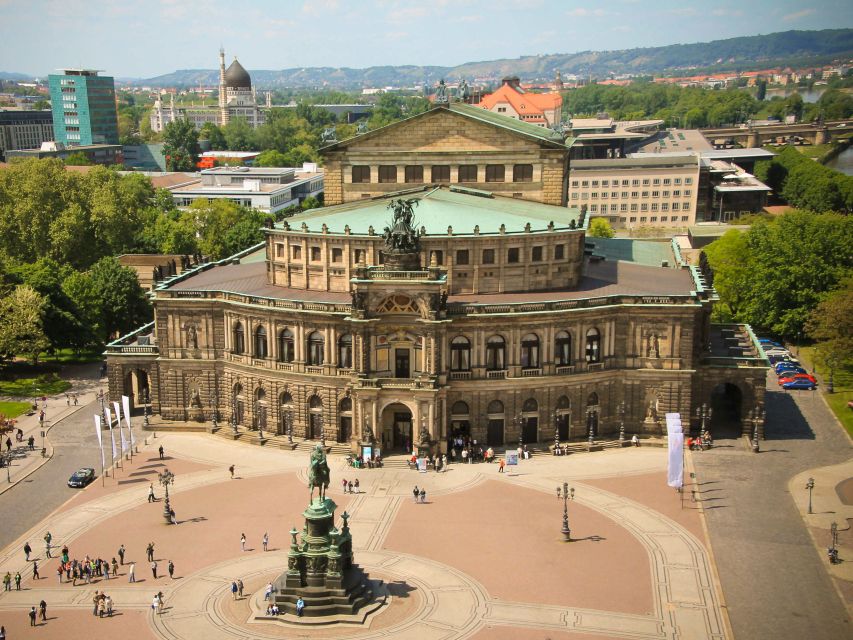
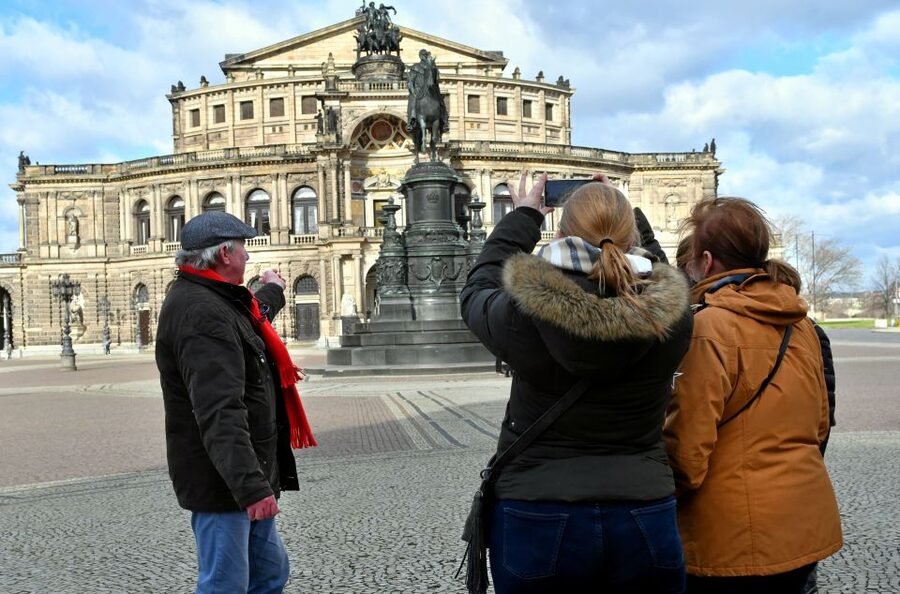
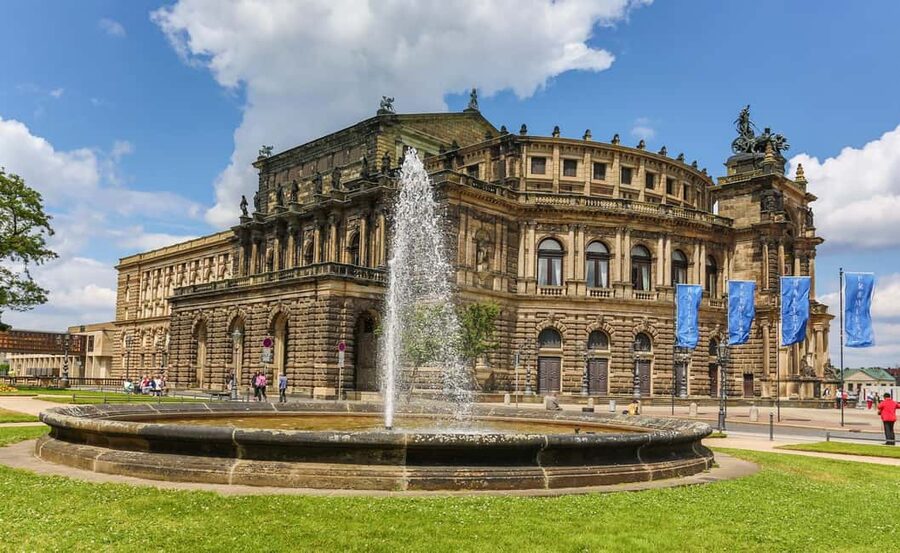
The Semperoper is one of the major architectural highlights on the tour. Its formal exterior reflects Dresden’s taste for ceremony and spectacle, while its role as an opera house connects the building to music, royal patronage, and the city’s cultural life.
You will see the building as part of the wider historic center rather than entering for a performance or interior tour. That distinction matters. If you want to examine the auditorium or attend an opera, you will need a separate plan. This walk gives you the setting and the historical framework.
I like having the Semperoper placed beside the other Baroque landmarks because it helps you compare Dresden’s different kinds of grandeur. The city’s monumental buildings were not created in isolation. Together, they express the ambitions of Saxon rulers who wanted Dresden to rival other European courts.
The guide’s anecdotes are an important part of this stop. The tour is designed to include small stories alongside major historical events, which can make the buildings easier to remember than a list of construction dates.
More Walking Tours in Dresden
- Görlitz: Old Town Guided Walking Tour
★ 4.7 · 723 reviews - Dresden: Complete Walking Tour with Frauenkirche Visit
★ 4.8 · 700 reviews - Dresden: Walking Tour with a Night Watchman and Meal
★ 4.4 · 487 reviews - Dresden: Guided Walking Tour and Chocolate Museum Ticket
★ 4.5 · 385 reviews
The Zwinger and Dresden’s Baroque imagination
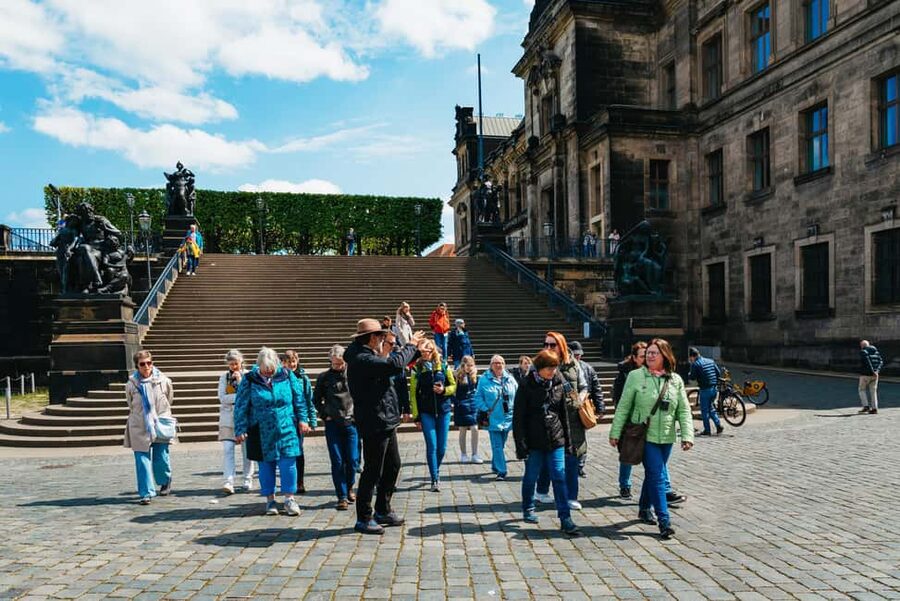
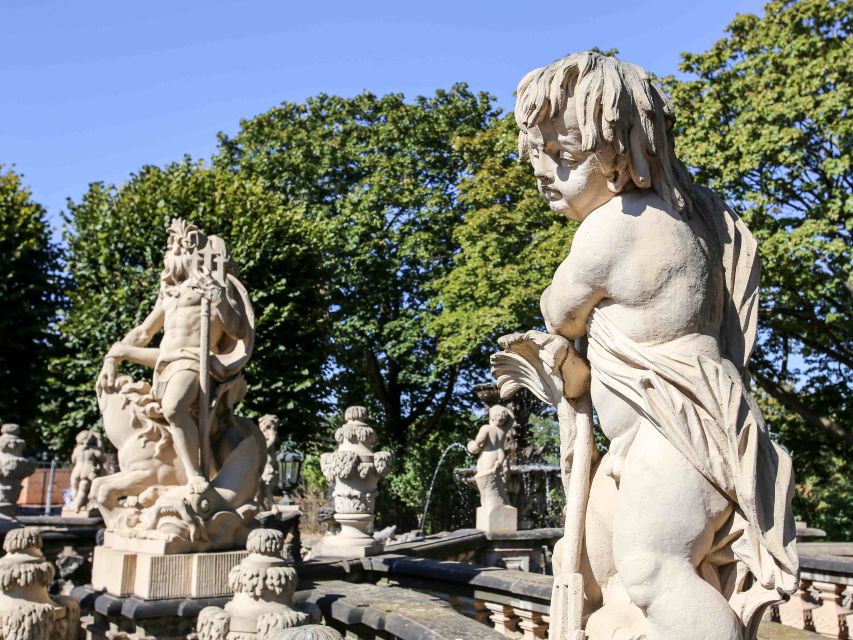
The Zwinger is likely to be one of the visual peaks of the walk. Its elaborate courtyards, pavilions, and decorative details show Dresden at its most theatrical. Even if you only have time to see the exterior spaces during the walk, the scale and design make the stop worthwhile.
Here, the guide explains the development of the city and the force of the Baroque period. You learn why Dresden acquired so many dramatic buildings and how the royal court used architecture to project wealth and authority.
The Zwinger is also a reminder that Dresden is not simply old. Much of what gives the center its distinctive character reflects a particular period of ambition and rebuilding. Listening to the guide’s explanation helps you see the difference between medieval origins, Renaissance energy, and Baroque display.
If you plan to return to the Zwinger museums, use the walking tour to decide how much time you want inside. The route gives you a useful first look, but 90 minutes is not enough for a full museum visit or a careful architectural study.
Dresden Castle and the weight of Saxon power
Dresden Castle, or Residenzschloss, adds another layer to the route. This was the residence and power center of Saxony’s rulers, and its position near the Fürstenzug and Stallhof makes the royal district feel like a connected whole.
The castle is important because it gives the grand buildings a political setting. You are not just looking at ornament. You are seeing the places where rulers lived, worked, displayed their wealth, and shaped the city around them.
The tour passes the castle and explains its place in Dresden’s history. If you want to visit its museums, you will need more time and separate admission, but the outside visit helps you understand why the building matters before you go inside.
This is also a useful point for questions. Ask the guide about the parts of Dresden’s history that interest you most, especially if you are curious about the royal court, reconstruction, or the city’s relationship with Saxony.
Dresden Cathedral and Taschenbergpalais
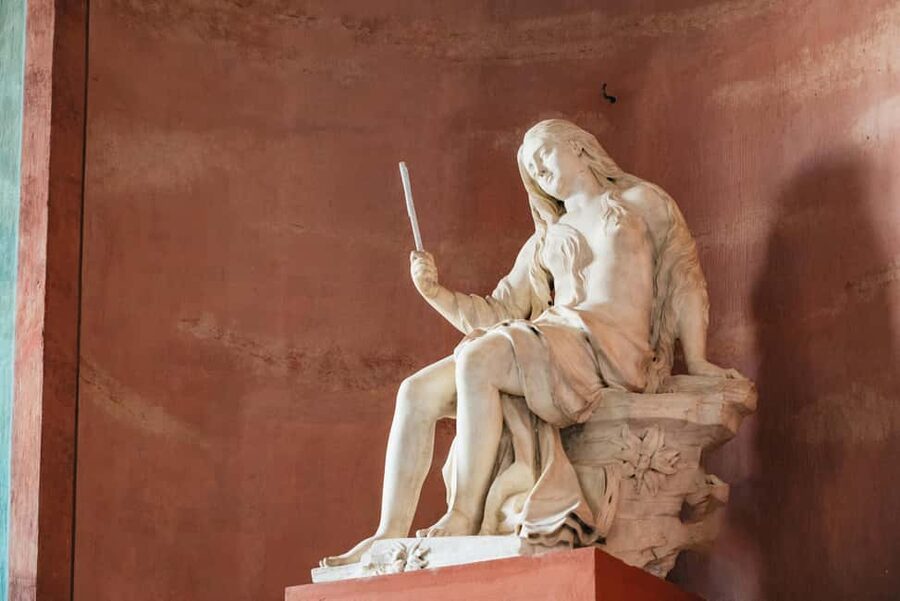
From the castle area, the route continues toward Dresden Cathedral and Taschenbergpalais. These stops broaden the picture beyond the most famous postcard views.
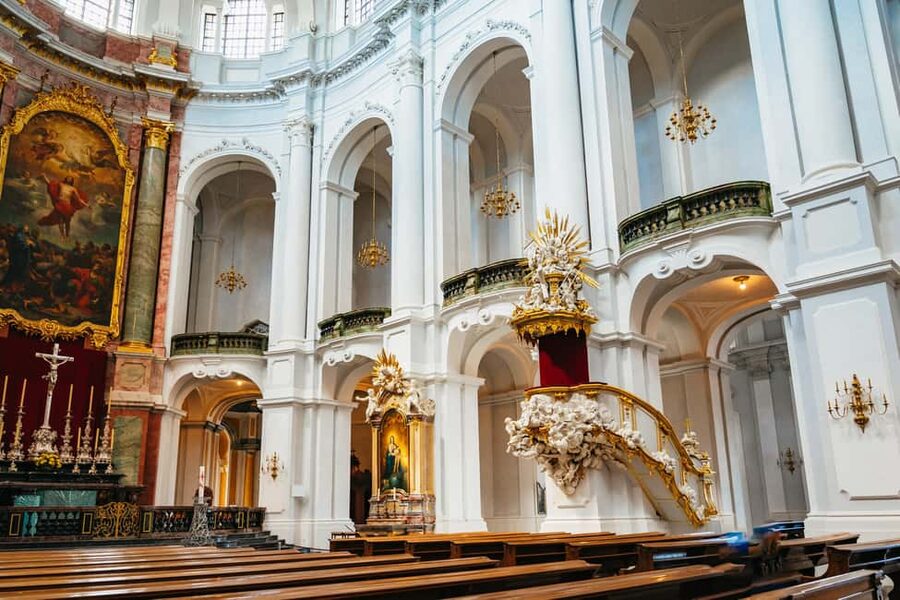
Dresden Cathedral brings religious history into the walk. Its presence near the castle shows how closely political and spiritual authority were linked in the old city. Taschenbergpalais, meanwhile, adds another courtly building to the route and helps you understand the scale of the royal district.
These are brief guided stops rather than long visits inside. That is both a strength and a limitation. You cover more of the center, but you do not get the time for extended interior viewing or quiet reflection at each site.
For a first orientation, I think the trade-off works. You come away knowing where the key buildings are and how they relate to one another. Later, you can return to the places that caught your attention.
The Frauenkirche finish and Dresden’s hardest chapters
The walk finishes near the Frauenkirche, Dresden’s most famous landmark. The church is closely tied to the city’s wartime destruction and later rebuilding, so it offers a natural place to reflect on Dresden’s more difficult past.
The historical range of the tour is one of its best features. The guide covers the Middle Ages, the Renaissance, the Baroque period, the years of former East and West Germany, and the peaceful revolution of 1989. That last subject gives the tour a modern human dimension. You hear what political division and change meant for ordinary people, rather than treating the recent past as a footnote.
The Frauenkirche also shows how Dresden has chosen to present itself today. It is both a religious building and a symbol of reconstruction. Seeing it at the end of a route that has moved through so many periods gives the tour a satisfying shape.
You can continue exploring from here, return toward Neumarkt, or use the guide’s restaurant and leisure tips to plan the rest of your day. The exact coffee arrangement is worth checking before you leave. The experience includes a free coffee coupon, but one reported problem involved the coupon not being provided.
What $15 buys you in Dresden
At $15, the main value is the guide’s explanation, not admission to an attraction. You are paying for a structured walk through the most important part of central Dresden, with historical context that would be difficult to gather on your own in such a short period.
The price is especially fair if you are visiting for the first time. A self-guided walk can show you the same buildings, but it may not explain why the Baroque center looks as it does, how royal power shaped it, or how the city changed after 1989.
The tour also includes a digital audio guide system. This can help you follow the commentary in outdoor spaces, though you should still stay close enough to the guide to hear instructions and see each stop.
The coffee coupon adds a small refreshment at no extra cost. I would not choose the tour for the coffee alone, but it is a pleasant finish to a sightseeing walk, provided the coupon is handed over.
Who will enjoy this 90-minute walk?
I would recommend this experience to:
- First-time visitors who want a fast, clear introduction to Dresden
- German speakers looking for a guided overview of the old town
- History fans who enjoy connecting medieval, Baroque, modern, and political events
- Visitors with limited time who want to see several major landmarks on foot
- Anyone deciding which Dresden buildings deserve a longer visit
- People who prefer a guide’s stories and local suggestions to exploring entirely alone
I would be cautious about booking if you need English commentary. The tour is available in German only, and the historical detail is central to the experience. You may still enjoy the architecture without German, but you would miss much of what makes the walk worthwhile.
The route is also less suitable if you want long visits inside each attraction. It is a highlights walk, not a museum tour or opera-house visit.
Practical details that affect your day
The tour lasts 1.5 hours, with starting times that depend on availability. That makes it easy to fit into a morning or afternoon, but check the schedule before arranging meals, museum visits, or train connections.
The meeting point is Dresden Information in the basement of QF Passage, and the walk starts near Neumarkt. The finish is listed near the Frauenkirche, with the activity also described as returning to the meeting point, so ask for clarification when you arrive.
The tour is wheelchair accessible. It includes a live German-speaking guide and a digital audio guide system. Personal expenses are not included, apart from the stated coffee coupon.
You can cancel up to 24 hours ahead for a full refund, and the reserve-now-pay-later option lets you hold a place without paying immediately. Those policies are useful if your Dresden plans are still shifting.
Should you book the Dresden guided walk?
Book it if you want a low-cost, well-organized introduction to Dresden’s historic center and you understand German. The route covers an excellent group of sights, and the guide adds the political and human context that buildings alone cannot provide.
Skip it if you need English, want interior visits, or prefer to explore at a slow photographic pace. For everyone else, $15 is a small price for a strong first look at Dresden, especially if you use the guide’s restaurant tips and return later to the places that interest you most.
FAQ
How long does the Dresden guided city walk last?
The walk lasts 1.5 hours. Starting times vary, so you need to check availability when choosing a date.
What language is the tour offered in?
The tour is offered in German only. It includes a live German-speaking guide and a digital audio guide system.
Where does the tour begin?
Meet the guide in front of Dresden Information in the basement of the QF Passage. The starting area is near Neumarkt.
Which major sights are included?
The route includes the Frauenkirche, Semperoper, Zwinger, Residenzschloss or Dresden Castle, Fürstenzug, Brühl’s Terrace, Stallhof, Dresden Cathedral, and Taschenbergpalais.
Is coffee included?
Yes. The activity includes a free coffee coupon. Since one person reported not receiving the coupon, confirm it with the guide before leaving the meeting point.
Is the tour wheelchair accessible?
Yes, the activity is described as wheelchair accessible.
Can I cancel the booking?
Yes. You can cancel up to 24 hours in advance for a full refund. The reserve-now-pay-later option allows you to book without paying immediately.
More Coffee Experiences
- Hamburg: Speicherstadt Walking Tour with Coffee Tasting
★ 4.6 · 360 reviews
Just added around Dresden
- From Dresden: Guided Day Tour by Bus of Seiffen Toy Village★ 4.0 · 13 reviews
- Dresden: Christmas Sightseeing Tour with a ‘Pflaumentoffel’★ 4.5 · 13 reviews
- Dresden: Bike Rental – City Bike with Option Children Seat★ 4.5 · 13 reviews
- Sightseeing tour by ConferenceBike★ 5.0 · 14 reviews
- Dresden Neustadt: Scavenger Hunt for Children★ 4.8 · 15 reviews
- Dresden: Scavenger Hunt to Elbe River & Castles★ 4.7 · 15 reviews
- Street Art Tour Dresden Neustadt★ 4.0 · 15 reviews
- Dresden: 150-minute Trabi tour as a guided city tour★ 4.9 · 15 reviews
Walking Tours, compared.




Berlin’s Best: 2 Hour Walking Tour Third Reich and the Cold War
Read our review →
Third Reich Berlin: Hitler and WWII Walking Tour
Read our review →Browse the lists this tour appears in