

Reviewed · WALKING TOURS
Berlin Private Complete History All Day Walking Tour
Berlin gives you a lot to sort out. This six-hour private walk ties the city’s Nazi, Cold War, royal, and cultural stories together across 22 major stops. I like the way it covers the famous sights while also pausing at less obvious places, such as the Johann Georg Elser memorial and the Soviet monument in Tiergarten. I also like the one-group format, which lets your guide adjust the pace and answer your questions instead of delivering a fixed speech.
The main drawback is the amount of walking. One account puts the distance at about 5.5 miles, and the route lasts most of a day. At $253.95 per person, this is not a budget tour, especially for solo visitors, but the price makes more sense for couples or small groups that want a private introduction to Berlin and do not want to spend their first days sorting out the city’s huge story on their own.
In This Review
- Key things to know before booking
- Why this private Berlin walk works so well
- Brandenburg Gate and the government quarter
- Tiergarten, the Victory Column, and a difficult memorial
- Resistance, Nazi power, and the Topography of Terror
- The Berlin Wall and Checkpoint Charlie
- Gendarmenmarkt, Bebelplatz, and the story of old Berlin
- Museum Island and the route toward Alexanderplatz
- Pace, food, and practical planning
- Is $253.95 per person a fair price?
- Who should book this Berlin history tour?
- Should you book it?
- FAQ
- How long is the Berlin private history tour?
- How many sights are included?
- Is this a private tour?
- Is transportation included?
- Where does the tour start and finish?
- Is pickup available?
- Is food included?
- Can I cancel for a full refund?
Key things to know before booking
- A six-hour route links 22 central Berlin sights, from the Brandenburg Gate to Alexanderplatz.
- World War II and the Cold War receive the most attention, including the Führerbunker site, Topography of Terror, the Berlin Wall, and Checkpoint Charlie.
- Your guide walks with only your group, so you can ask questions, request a slower pace, or spend more time on subjects that matter to you.
- The route is historically serious but not narrow, also covering Prussian Berlin, churches, universities, museums, architecture, and the former East German capital.
- No vehicle is used, and pickup means meeting your guide on foot. Wear practical shoes and plan for changing weather.
- Guide quality is a major part of the value, with especially warm praise for guides including Ciaran, Rhys, Paul, Beth, Ken, Eugen, Darren, and Francisco.
Why this private Berlin walk works so well
Berlin is not a city where the big picture comes easily. A grand building may have been a royal palace, a Nazi government office, a Cold War symbol, and a reunification project, all in the space of a century. This tour gives you a guide to connect those layers.
I especially like the route’s chronological sweep. It begins with the Brandenburg Gate and the Hohenzollern era, moves through Nazi rule and the destruction of World War II, then follows Berlin’s division and reunification. By the time you reach Alexanderplatz, the former center of East Berlin, you have a useful framework for understanding what you have seen.
The private format is important here. The guides are described as flexible, patient, funny, and willing to tailor the day around the group. One guide adjusted the experience for a group ranging in age from 14 to 82, even allowing the teenagers a short break at a mall slide. That small detail tells you something useful: the day is not meant to feel like a forced march through dates and monuments.
Several guides receive particular praise. Ciaran is repeatedly singled out for his command of Berlin and World War II. Rhys is described as engaging and adaptable, while Paul is praised for his ability to handle questions and respectful differences of opinion. Beth receives credit for adjusting the route to suit a group’s interests. Your guide will vary, but the pattern is clear: strong storytelling and conversation are central to the experience.
More Historical Tours in Berlin
- Berlin: Natural History Museum Entrance Ticket
★ 4.6 · 3,382 reviews - Berlin: World Heritage Cruise to Potsdam
★ 4.5 · 1,435 reviews - Berlin Historical Highlights Walking Tour
★ 4.9 · 657 reviews
Brandenburg Gate and the government quarter
The tour starts near Ebertstraße, at 10117 Berlin, close to the Brandenburg Gate. The gate itself is free to view, and the planned stop lasts about 15 minutes. That may sound brief, but the guide has a lot to explain before you move on.
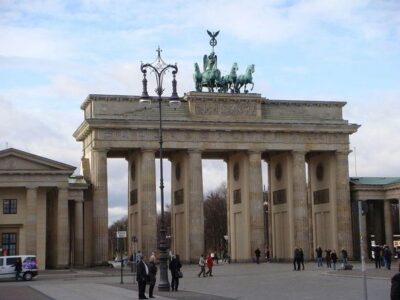
The Brandenburg Gate was built for an earlier Berlin, yet it later became a symbol of changing German power. You will hear how it was connected to the Prussian monarchy, Nazi spectacle, divided Berlin, and reunification. It is one of those places where a good explanation changes the way you look at a familiar photograph.
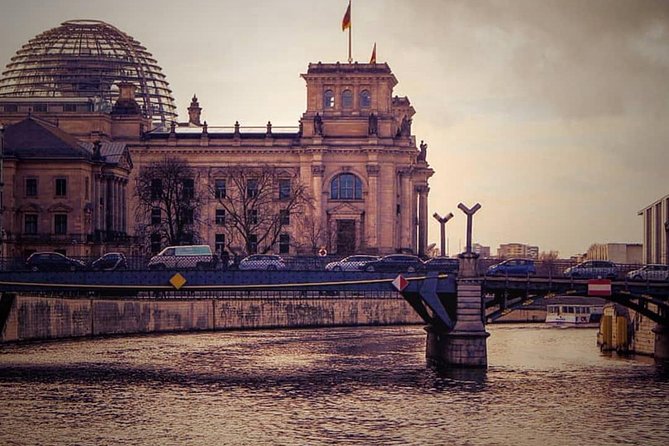
The Reichstag is next, also for about 15 minutes. From outside, you will discuss the Hohenzollerns, the building’s construction, its role in the Nazi seizure of power in 1933, the fierce fighting during the Soviet capture of Berlin, and its place after reunification.
Do not expect a full Reichstag interior visit from this itinerary. The value here is the political story tied to the building, not a long architectural tour. Ask your guide for a group photo at the Brandenburg Gate if you want one, since the guide is specifically available to help with pictures.
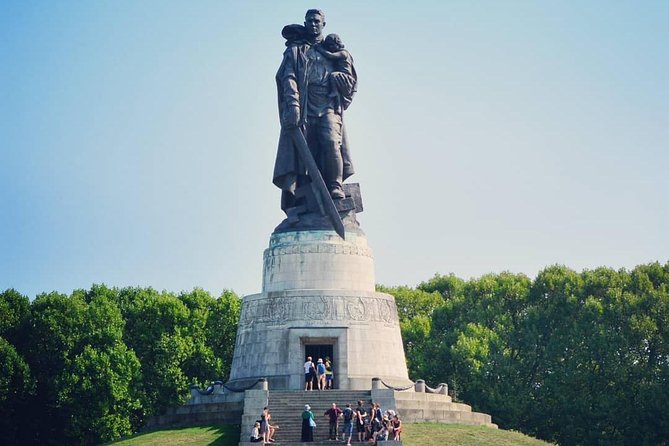
The nearby Soviet Memorial in Tiergarten adds an unusual Cold War wrinkle. It was built in West Berlin, despite commemorating Soviet victory, and its materials have an unexpected connection to the war. Your guide will explain its symbols and the arguments surrounding it.
Tiergarten, the Victory Column, and a difficult memorial
A short walk through Tiergarten follows. This is Berlin’s largest park, but the tour treats it as part of the city’s history rather than simply a green break. You will hear how it developed from medieval times and how war and political change altered the park.
The Victory Column is viewed from a distance. The five-minute stop covers why it was built and where it originally stood. That relocation is a useful reminder that Berlin’s monuments have often been moved to fit new political plans.
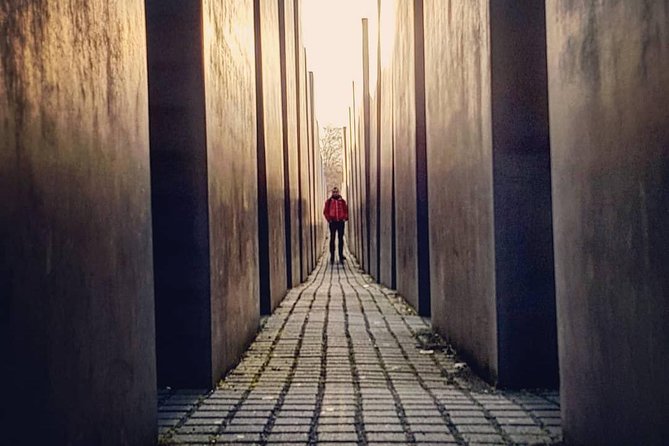
The Holocaust Memorial comes next. The formal name is the Memorial to the Murdered Jews of Europe, and it is one of Berlin’s most important memorial sites. The tour allows about 15 minutes here.
This stop calls for quiet attention. Your guide can provide context, but the memorial works partly through your own response to its rows of concrete blocks and changing ground levels. The visit is not a substitute for a museum focused on the Holocaust, but it gives you a serious place to pause in the middle of the city.
Nearby, you visit the former Führerbunker site, now an ordinary parking area. There is no dramatic structure to enter. That is precisely the point. The guide explains where Adolf Hitler spent his final days and how the place became one of the most infamous locations in modern European history. Expect a plain site and a strong historical explanation, not a preserved bunker attraction.
Resistance, Nazi power, and the Topography of Terror
The Johann Georg Elser sculpture brings attention to a man who came close to changing the course of German history. The 10-minute stop gives you a break from the better-known names and institutions of Nazi Berlin.
You then pass the former Aviation Ministry, a huge building that has remained in continuous use since 1936. Its survival through the Nazi period, the war, and later political eras makes it a useful physical link between different Berlins. The guide explains the building’s long public life rather than treating it as just another imposing facade.
At the Topography of Terror, you enter the former headquarters area of the SS, Gestapo, and SD. This is one of the most serious stops on the route, and it helps explain how Nazi terror was organized through institutions, not only through speeches and rallies.
The tour allows about 15 minutes here. That is enough for an introduction, but not enough for a full museum visit. If you want to study the exhibitions at length, plan a separate return visit. This is one of the clearest examples of the tour’s purpose: it gives you the citywide framework, then helps you decide where to spend more of your own time.
More Walking Tours in Berlin
- Discover Berlin Half-Day Walking Tour
★ 5.0 · 9,624 reviews - Berlin: Third Reich and Cold War 2 Hour Walking Tour
★ 4.9 · 6,830 reviews - Berlin: Discover Berlin Walking Tour
★ 4.9 · 5,998 reviews - Berlin’s Best: 2 Hour Walking Tour Third Reich and the Cold War
★ 5.0 · 5,486 reviews
The Berlin Wall and Checkpoint Charlie
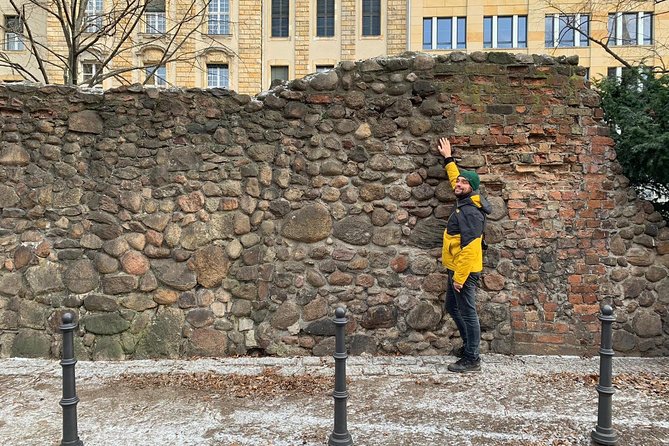
The route continues to a section of the Berlin Wall and its memorial. You will learn why, when, and how the wall was built, along with stories of escape attempts and deaths. A guide adds scale to what can otherwise become a quick photo stop.
This portion is especially helpful if you know the wall mainly through famous images. The discussion connects the physical barrier to the politics of East Germany, the division of Berlin, and the human cost of escape. The planned stop is about 15 minutes, so again, this is an introduction rather than a full museum visit.
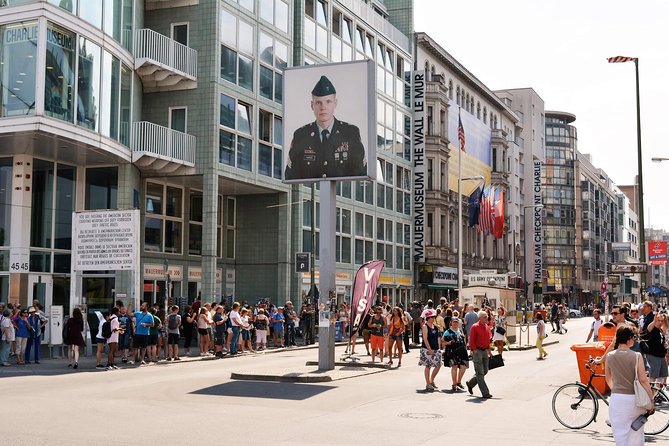
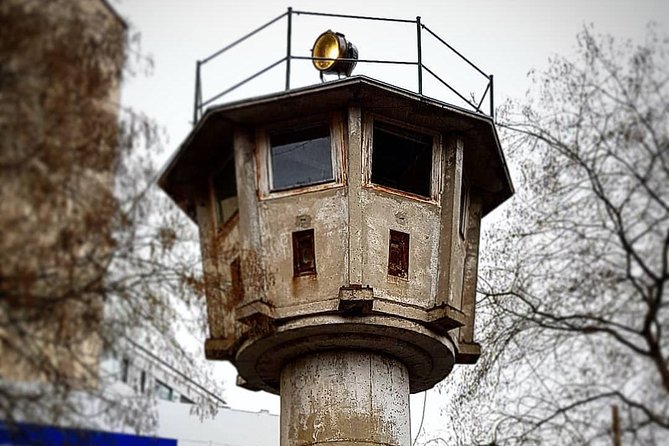
Checkpoint Charlie follows for about 10 minutes. It is the most famous of Berlin’s former checkpoints and one of the city’s best-known Cold War symbols. The area is highly visited and can feel more commercial than reflective, but the guide can separate the historical importance of the crossing from its modern tourist presentation.
Friedrichstrasse comes next, once known as the Cabaret Mile. This short stroll shifts the mood from border politics to Berlin’s entertainment and city life. It also helps you see how the central streets connect rather than treating every sight as an isolated monument.
Gendarmenmarkt, Bebelplatz, and the story of old Berlin
Gendarmenmarkt is scheduled for about 15 minutes. It is one of Berlin’s most elegant squares, with grand buildings arranged around a carefully planned urban space. The guide explains how it developed and why the architecture matters.
This is a good point in the walk to look beyond the twentieth century. After several stops focused on dictatorship and war, Gendarmenmarkt brings you back to the city’s eighteenth-century ambitions and architectural style.
Bebelplatz receives a longer 20-minute stop. The square is surrounded by major buildings, including St. Hedwig’s Cathedral, Humboldt University’s law faculty, and the State Opera House. Your guide explains the role of each and then turns to the Nazi book burning held here.
The memorial to that event is deliberately understated and thought-provoking. It is easy to miss if you walk through the square alone. This is one of the tour’s strongest moments because the guide links a beautiful civic space with the danger of censorship, propaganda, and public persecution.
Humboldt University follows for about 10 minutes. You will hear about the building, the university, and the Humboldt family. This stop adds an educational and intellectual dimension to the route, showing that Berlin’s story is not only one of rulers and wars.
At Neue Wache, you go inside one of the most striking buildings on Unter den Linden. Its meaning has changed with the political era, making it a kind of barometer of German public memory. In its current form, it is a moving memorial. Give yourself a quiet moment here rather than rushing straight to the next stop.
Museum Island and the route toward Alexanderplatz
Outside the German Historical Museum, the guide discusses the oldest surviving building on Unter den Linden and its present role as a museum. Since the itinerary lists this as an exterior discussion, do not expect admission to the museum as part of the tour.
Museum Island is treated as a group of landmarks rather than a museum crawl. The UNESCO World Heritage site includes several museums, Berlin Cathedral, and major buildings by important architects. You will learn how the island developed and how its institutions fit into Berlin’s cultural ambitions.
The Humboldt Forum receives a separate 10-minute stop. Its history is complicated and surprisingly recent, so the guide’s context is useful. The building and institution raise questions about reconstruction, collections, and the way Germany presents its past.
St. Mary’s Church is another brief stop, with the possibility of going inside if conditions allow. It is described as Berlin’s oldest church still in continuous use and a fortunate survivor of the city’s upheavals. Because interior access is not guaranteed, treat the church as an exterior highlight with a possible added visit.
The walk finishes at Alexanderplatz, planned as the endpoint in central Berlin. The square was rebuilt after the war as a major center of the German Democratic Republic. It gives the tour a fitting finish because you have moved from Prussian and imperial Berlin through Nazi rule and divided Germany to the former East German capital.
Pace, food, and practical planning
Six hours is a long time on foot. The route includes 22 stops, but the stated stop times add up to less than the full tour length, leaving room for walking, explanations, questions, photographs, and possibly a lunch break. One guide included lunch during the day, but food and drinks are not included in the price.
The group walks at its own pace, which is a real advantage. If your party includes older adults, teenagers, or people who need breaks, tell the guide early. The experience can be adjusted, but you should still be comfortable walking several miles.
Wear supportive shoes. You will cross central streets, open squares, park paths, and memorial grounds. Berlin weather can change quickly, so a light rain layer is sensible. Since no vehicle is used, do not book this expecting a hop-on, hop-off experience with short walks between stops.
Pickup is offered on foot, and the starting point is near public transportation at Ebertstraße 24. The tour ends at Alexanderplatz, not back at the starting point. That is convenient if you want to continue sightseeing, eat nearby, or use the station to reach your hotel.
The tour is offered in English. Mobile tickets are available, service animals are allowed, and most people can participate, but the distance and duration matter more than any formal restriction.
Is $253.95 per person a fair price?
The cost is high for a walking tour. It becomes easier to justify when you divide it among a couple or small private group and consider how much ground the guide covers in six hours.
You are paying for the guide’s time, exclusive attention, route flexibility, and ability to answer questions. You are not paying for transportation, meals, or museum admission. Most listed stops are free, so the value comes from interpretation and efficient sightseeing rather than included tickets.
I would not choose this for a solo budget visit. I would consider it for a couple, family, or small group visiting Berlin for the first time, especially if you have one full day to build your bearings. The tour can help you decide which places deserve a longer return visit, such as the Topography of Terror, the German Historical Museum, or the museums on Museum Island.
The 99 percent recommendation rate and 5 out of 5 score are impressive, but the more useful point is what people praise: guides stay engaged for the whole day, explain difficult subjects clearly, answer questions, and adjust the pace. One account specifically notes that the guide handled a group spanning ages 14 to 82. Another praises the relaxed pace and the chance to choose how long to spend at different sites.
Who should book this Berlin history tour?
Book it if you want Berlin explained as one connected story. It suits first-time visitors, history-focused couples, families with mixed interests, and anyone who wants to see the central sights without spending hours working out the route.
It is especially useful if World War II, Nazi Germany, the Berlin Wall, and the Cold War are your main interests. You also get enough royal, religious, academic, and architectural context to avoid a narrow focus on twentieth-century trauma.
Think twice if you dislike long walks, prefer unstructured museum time, or want entry to several museums during the day. The tour shows you many places from outside and gives short introductions. It is a city orientation with serious historical content, not a museum admission package.
For the best experience, book early if your dates are fixed. This tour averages 74 days between booking and the experience, which suggests that popular dates can fill well ahead of time. Free cancellation is available up to 24 hours before the start time, but changes or cancellations inside that window are not accepted.
Should you book it?
I would book this as an opening-day tour if you have the stamina for a full day on foot and want a clear guide to Berlin’s complicated past. Its strongest features are the private format, the wide route, and guides such as Ciaran, Rhys, and Paul, who are praised for making serious history understandable and personal.
At $253.95 per person, it is a significant spend. But for a small group that values time, questions, and a flexible pace, it can be a sensible investment. Skip it if you want leisurely museum visits or a cheap overview. Choose it if you want to see much of central Berlin in one day and leave with a better sense of what to explore next.
FAQ
How long is the Berlin private history tour?
The tour lasts approximately six hours.
How many sights are included?
The route includes 22 planned stops, ending at Alexanderplatz.
Is this a private tour?
Yes. Only your group participates, and the guide’s attention is not shared with another tour group.
Is transportation included?
No. This is entirely a walking tour, and no vehicles are used.
Where does the tour start and finish?
It starts near Ebertstraße 24, 10117 Berlin, and finishes at Alexanderplatz, 10178 Berlin.
Is pickup available?
Yes, but pickup takes place on foot with the guide.
Is food included?
No. Food and drinks are not included. A lunch break may be possible during the day, depending on the guide and group.
Can I cancel for a full refund?
Yes. You can cancel at least 24 hours before the local start time for a full refund. Changes or cancellations made less than 24 hours before the start time are not accepted.
Just added around Berlin
- Berlin: Private Guided Tour of the Main Sights★ 5.0 · 13 reviews
- Private Highlights of Berlin Bike Tour★ 5.0 · 13 reviews
- Modern Berlin Private Walking Tour: Diverse, Vibrant and Exciting German Capital★ 5.0 · 13 reviews
- Tour in Berlin from Warnemünde and Rostock Cruise Port★ 4.1 · 13 reviews
- Berlin: Stasi Museum Private Guided Tour with Entry Ticket★ 4.8 · 13 reviews
- Private Food Tour Experience with a born and bred Berliner★ 5.0 · 14 reviews
- Berlin: Rheinsberg Palace Entrance Ticket★ 4.8 · 14 reviews
- Berlin in one day – day tour with an expert guide★ 5.0 · 14 reviews
Walking Tours, compared.




Berlin’s Best: 2 Hour Walking Tour Third Reich and the Cold War
Read our review →
Third Reich Berlin: Hitler and WWII Walking Tour
Read our review →Browse the lists this tour appears in