
Reviewed · CITY TOURS
Luxembourg to Trier: Tour of Germany’s Oldest City.
Roman ruins are only an hour away. This small-group day trip makes crossing from Luxembourg into Germany easy, with a guided look at Trier’s Roman monuments, cathedral, market square, and Karl Marx House. I especially like the round-trip train ticket and the compact group of no more than 15 people. The main consideration is time: five and a half hours is enough for a useful first look, but not enough to explore every museum or ancient site at leisure.
I also like the two hours of free time, which gives you room for lunch, coffee, shopping, or a second look at a favorite place. Guides Ana and Paulina have drawn especially warm praise for clear, engaging history, though the quality of your experience will depend partly on which guide leads your departure.
In This Review
- Key points to know before you book
- Why Trier makes a good day trip from Luxembourg
- Starting at Luxembourg’s Gare Centrale
- Entering Trier through the Porta Nigra
- The Aula Palatina and Constantine’s imperial room
- Roman ruins beyond the main monuments
- Karl Marx House and the city’s modern chapter
- Trier Cathedral and its tenth-century walls
- Market Square and your two free hours
- What the $129 price includes
- The guide can shape the whole day
- Who will enjoy this Trier trip most
- Should you book the Luxembourg to Trier tour?
- FAQ
- Where does the tour begin?
- How long does the trip last?
- How long is the train ride from Luxembourg to Trier?
- Is the train ticket included?
- Which languages are available?
- How large is the group?
- How much free time do I get in Trier?
- What identification should I bring?
- Are pets allowed?
Key points to know before you book
- A simple international day trip: Meet at Luxembourg’s Gare Centrale, then take a direct train ride of about one hour to Trier.
- Roman Trier takes center stage: The Porta Nigra, Basilica of Constantine, amphitheater, and Roman baths connect the modern city to its ancient past.
- The tour is walking-focused: Expect a two-hour guided route through major sights, followed by two hours to explore independently.
- The cathedral is unusually old: Trier Cathedral includes original tenth-century walls, tombs, altars, and a crypt area with a mysterious guardian figure.
- Small groups help with questions: The tour is limited to 15 people and operates in English or Spanish.
- Bring valid identification: You are crossing an international border, so carry your passport or national ID card.
Why Trier makes a good day trip from Luxembourg
Luxembourg is well placed for a quick visit to western Germany, and Trier gives you a clear change of scene without a long journey. The train takes about one hour each way, leaving most of the day for the old city rather than for transport.
Trier is presented as Germany’s oldest city, and its appeal comes from the way Roman, medieval, religious, and modern political history sit close together. In one walk, you can move from a Roman city gate to an imperial basilica, then to Karl Marx’s birthplace and a medieval market square.
That mix gives the tour more range than a simple ruins outing. You are not only looking at stones. You are seeing how Trier changed from an important Roman center to a Christian city and later became linked with one of Europe’s most influential political thinkers.
The trip lasts 330 minutes, or five and a half hours. That is a sensible length for a cross-border introduction, but you should set your expectations correctly. You will see the headline sights and receive context from a guide, yet you will not have time to study every museum collection or spend hours inside each monument.
More City Tours in Trier:
- Trier: Guided City Walk with Wine Tasting
★ 4.8 · 979 reviews - Trier: City Walking Tour
★ 4.6 · 118 reviews - Trier: Express City Walking Tour with Local Guide
★ 5.0 · 5 reviews
Starting at Luxembourg’s Gare Centrale
The meeting point is at the entrance to Luxembourg’s central train station, next to the Oberweis café. This is useful because the station is easy to identify, but do not wander around looking for a separate tour office. Go to the station entrance and look for the guide by the café.
The train ticket is included, both outbound and return. That removes one of the day’s practical chores and makes the price easier to judge. You do not need to arrange separate rail tickets for the group, although you should still arrive with enough time to find the meeting point.
The one-hour train ride is also a comfortable start to the day. You can settle in before the walking begins, but remember that you are crossing from Luxembourg into Germany. A passport or national identity card is required, so keep it accessible rather than packed at the bottom of your bag.
Entering Trier through the Porta Nigra
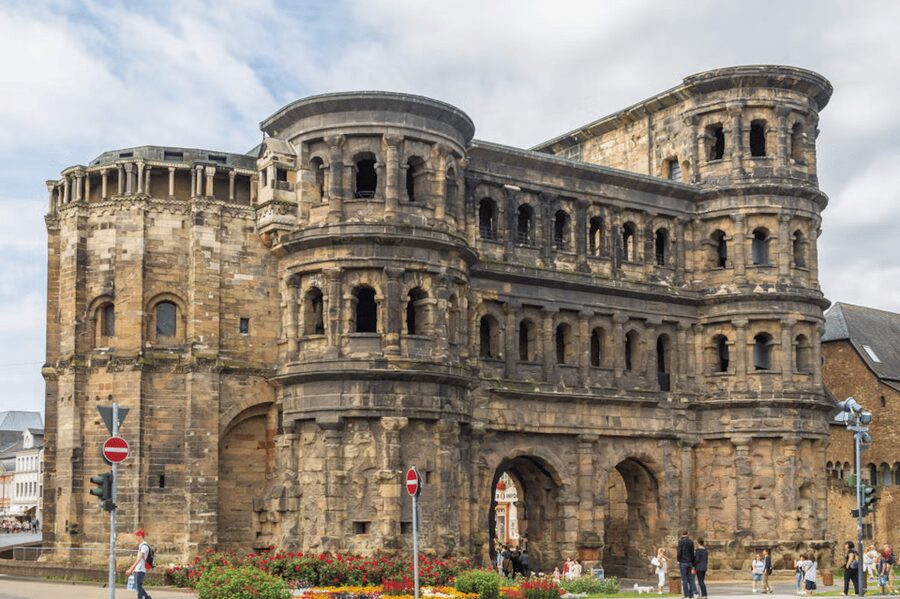
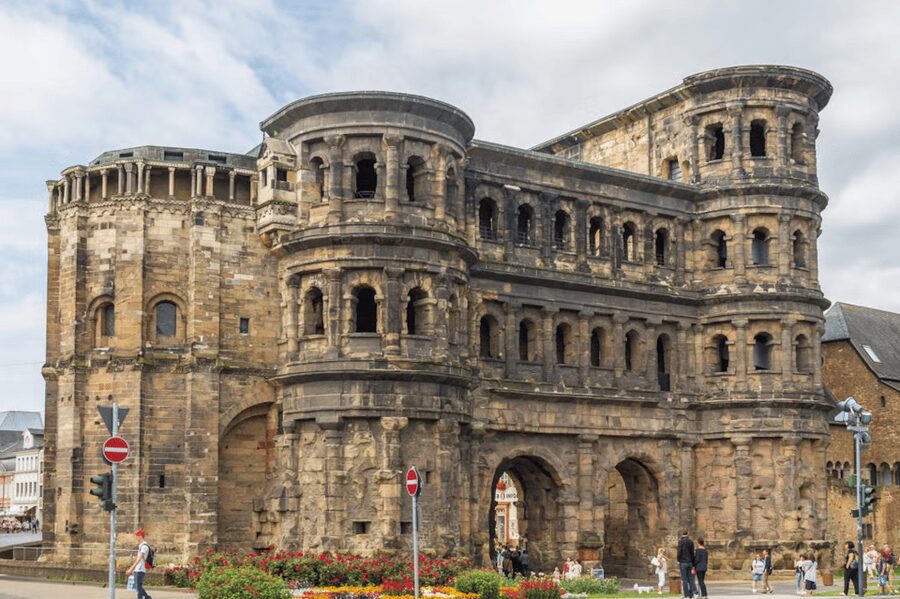
The guided walk begins at Trier’s Porta Nigra, the city’s famous Black Gate. This is one of the strongest openings a city tour can offer. The enormous Roman entrance immediately shows you that Trier was not a minor provincial outpost.
The gate is described as the largest Roman-style entrance in the world. Its dark appearance is part of its character, and the guide explains why the stones became black over time. That small detail helps turn an imposing ruin into a place with a story.
Allow yourself a moment to look closely at the construction. The Porta Nigra is not simply a photogenic arch. It is an example of Roman engineering and urban planning, built to control movement into the city. The 30-minute guided visit gives you a useful introduction without using too much of the day.
The limitation is that half an hour passes quickly. If you want detailed architectural study or a long interior visit, you may wish to return during your free time, assuming the timing and access work for you.
The Aula Palatina and Constantine’s imperial room
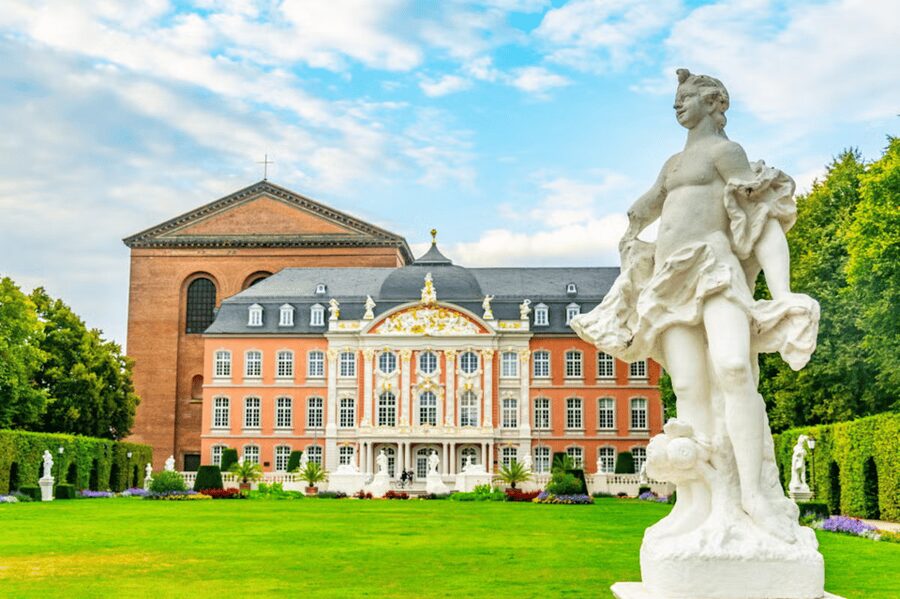
The next major stop is the Basilica of Constantine, also called the Aula Palatina. It was built around the year 310, and its huge interior once held the throne of the Roman emperor. The building gives you a strong sense of imperial scale, even when you know little about late Roman history.
The basilica’s plain, vast interior is very different from a typical church. Its importance comes from its former political role as much as from its later religious use. Your guide can help you read the room as an imperial audience hall rather than simply as an old basilica.
The scheduled guided visit lasts about 25 minutes. That is enough for an explanation of the building’s purpose and key features, but again, it is not a long museum-style examination. I would pay attention to the guide here, because the story of the emperor’s throne is what gives the building meaning.
The route also includes a visit to or discussion of the Roman amphitheater and the St. Barbara Roman Baths. Both are listed among the ancient sights covered during the walk, and the baths are identified as a UNESCO World Heritage Site. The available schedule does not give separate visit times for these two places, so you should not assume that each includes an extended interior tour.
Something different for another day:
- Trier: Guided Old Town Highlights and History Walking Tour
★ 4.7 · 687 reviews - Trier: Discovery Tour – Germany’s Oldest Wine Cellar
★ 4.7 · 218 reviews - Trier: Solve the Mystery of the Merchant’s Gold!
★ 4.2 · 61 reviews - Trier: Private Guided Walking Tour
★ 4.2 · 32 reviews
Roman ruins beyond the main monuments
Trier’s Roman remains are valuable because they are spread through the living city. You are not being taken to one isolated archaeological park. Ancient structures appear as part of an urban route, alongside streets, squares, churches, and museums.
The second-century amphitheater adds a more human and dramatic side to Roman Trier. It recalls public entertainment and the social machinery of the empire. The St. Barbara Roman Baths show another part of city life, where bathing was tied to hygiene, relaxation, and public culture.
These places are especially useful for anyone who finds Roman history easier to understand through buildings than through dates. The guide’s explanations connect the remains to the wider city, giving you a framework for the rest of your walk.
The tradeoff is that the tour moves at a steady pace. If ancient architecture is your main reason for visiting Trier, two hours of guided sightseeing may feel like an introduction rather than a full archaeological visit.
Karl Marx House and the city’s modern chapter
The route then shifts from Roman power to modern political thought at Karl Marx House. Marx was born in Trier, and the building dates to 1727. It now functions as a museum focused on his life and the development of socialism and communism.
This stop gives the tour a useful change of tone. After imperial Rome and early Christian architecture, you are looking at ideas that shaped politics, economics, and social movements around the world. Even if you have no interest in political theory, the museum adds context to Trier’s place in modern European history.
The guided portion is listed at about 20 minutes. That is enough to establish why the house matters and to point out its main themes. It is not enough for a careful reading of every display, so use your free time later if you want to return and spend longer inside.
I like this inclusion because it keeps the tour from becoming a parade of old stones. Trier becomes a city with several important chapters, not just a Roman postcard.
Trier Cathedral and its tenth-century walls
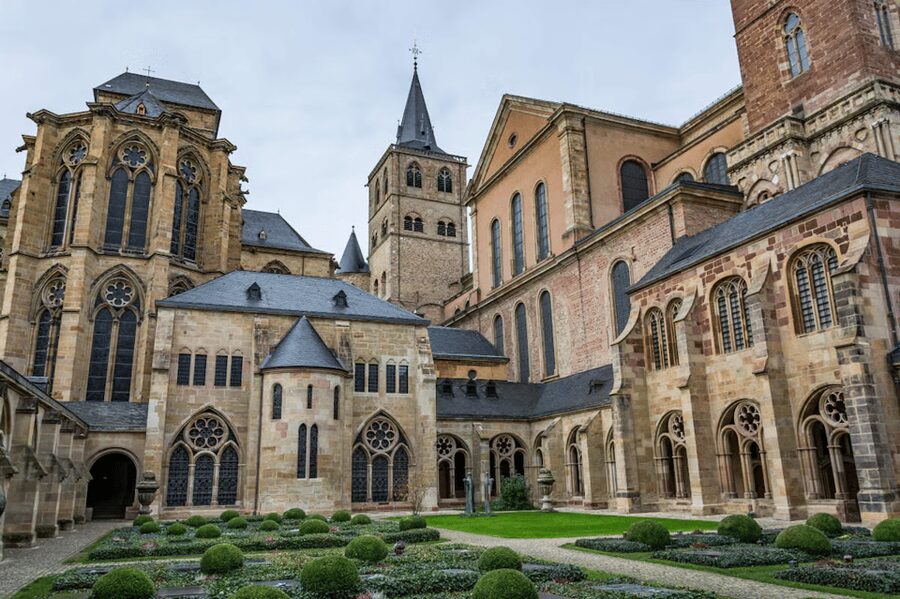
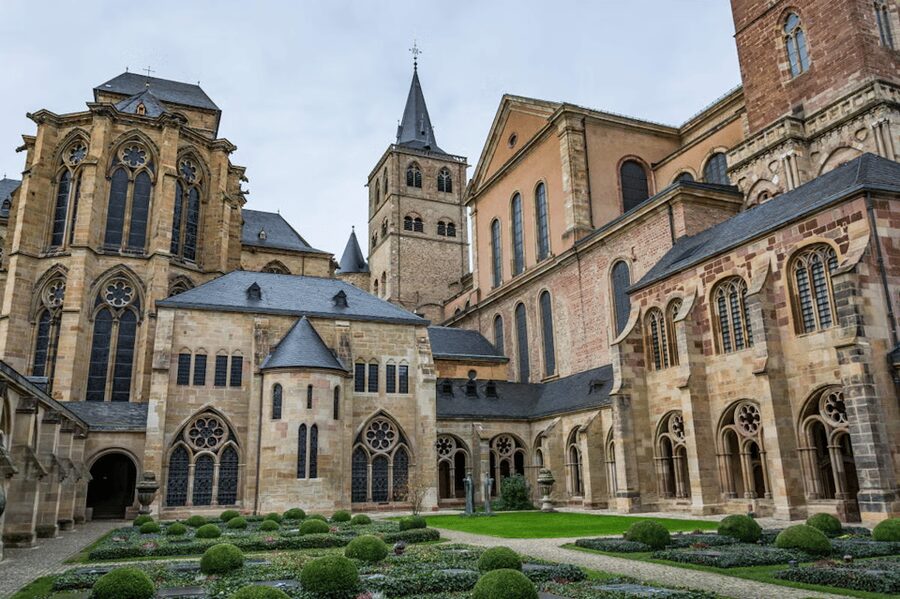
St. Peter’s Cathedral is one of Trier’s essential stops. Inside, you can see altars, tombs, and original walls dating from the tenth century. The cathedral also includes a lower area where you may spot its unusual guardian figure.
The cathedral’s appeal comes from its layers. It is not presented as one perfectly uniform building from one period. Instead, it reflects changes over time, with older fabric, later additions, religious memorials, and spaces below the main level.
The guided visit lasts about 20 minutes. That is a short but worthwhile introduction. Focus on the details the guide points out, especially the old walls and burial features. If the cathedral is open and the schedule allows, your two hours of independent time could give you a chance to look again more slowly.
The program information also includes references to St. Michael’s Cathedral and St. Gudula, the Royal Quarter, and museums associated with Luxembourg. Those descriptions do not fit the Trier route, which focuses on the Porta Nigra, Roman monuments, Karl Marx House, St. Peter’s Cathedral, and the market square. I would treat the Trier stops above as the practical outline for your day and confirm any question about extra sites before departure.
Market Square and your two free hours
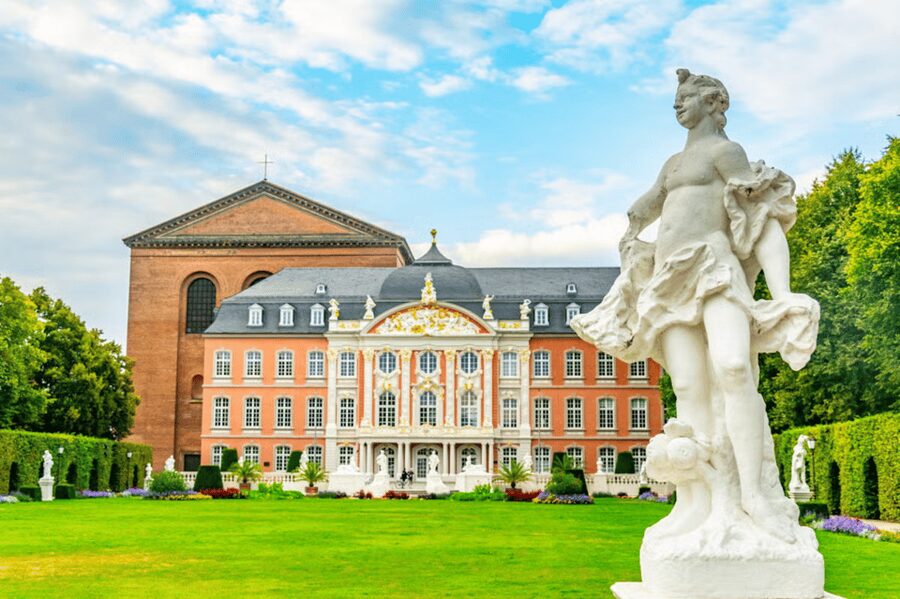
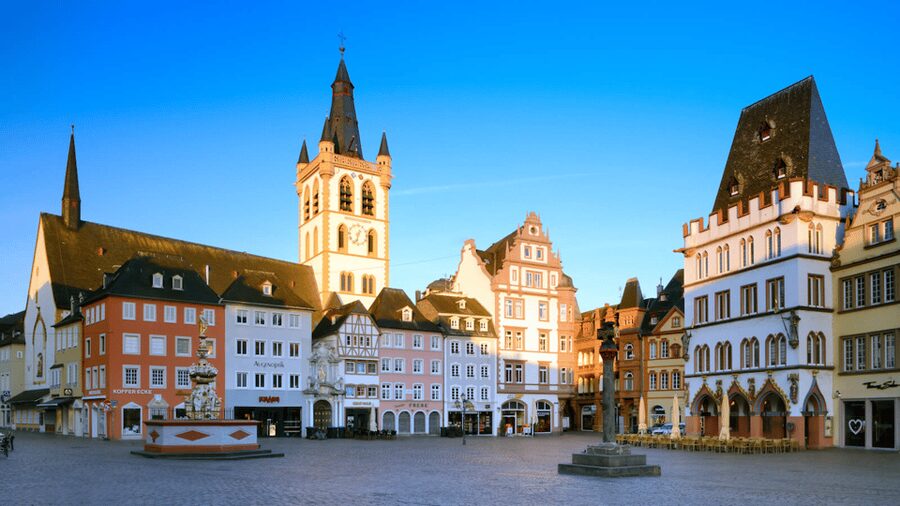
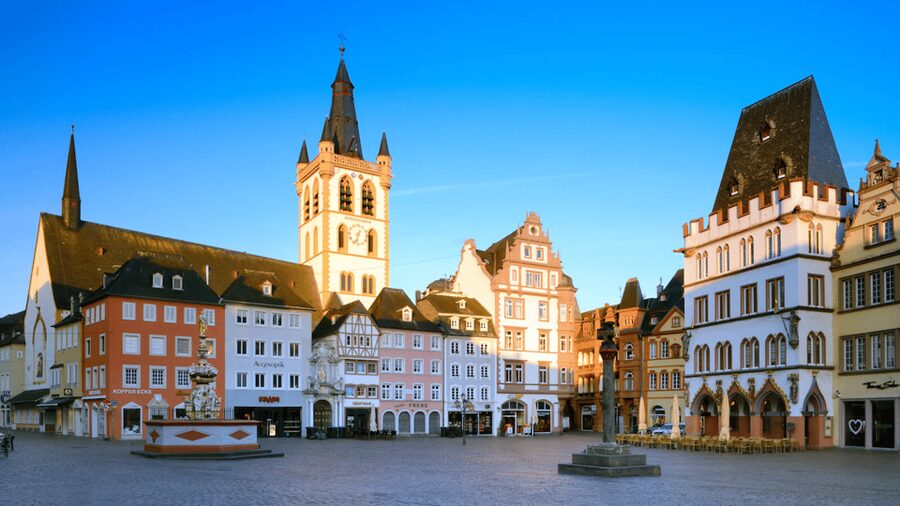
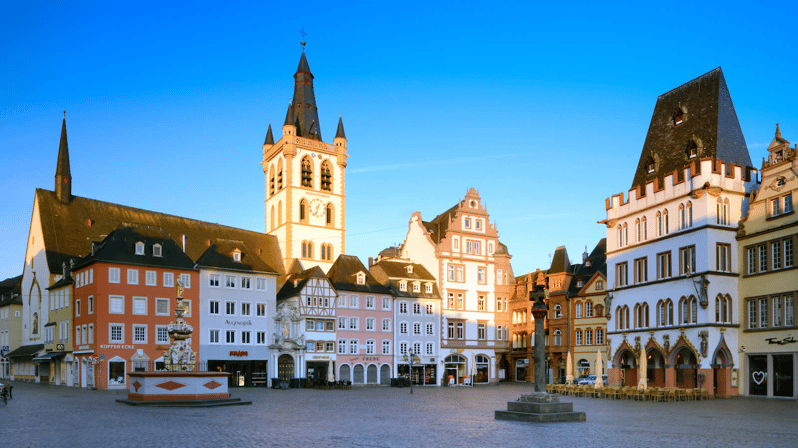
The guided walk ends around Trier’s Market Square, surrounded by colorful façades, flower and fruit stalls, and the St. Peter Fountain. This is a good place to finish the historical portion of the tour because it feels more like a functioning city center than an archaeological site.
The square gives you room to shift gears. After two hours of guided sightseeing, you can stop for coffee, find lunch, browse the shops, or simply sit and watch the city move around you. You are not forced into another tightly timed explanation.
The schedule gives you two hours of free time. That is one of the best features of the trip, especially for independent-minded visitors. You can use it to revisit the cathedral or Porta Nigra, spend more time at Karl Marx House, or simply enjoy Trier without having to follow a flag.
The program refers to Market Square in Mainz at one point, but the rest of the description clearly places the square in Trier. This appears to be a wording error. Ask your guide where the free-time meeting point and return departure will be, so you do not lose track of the group.
What the $129 price includes
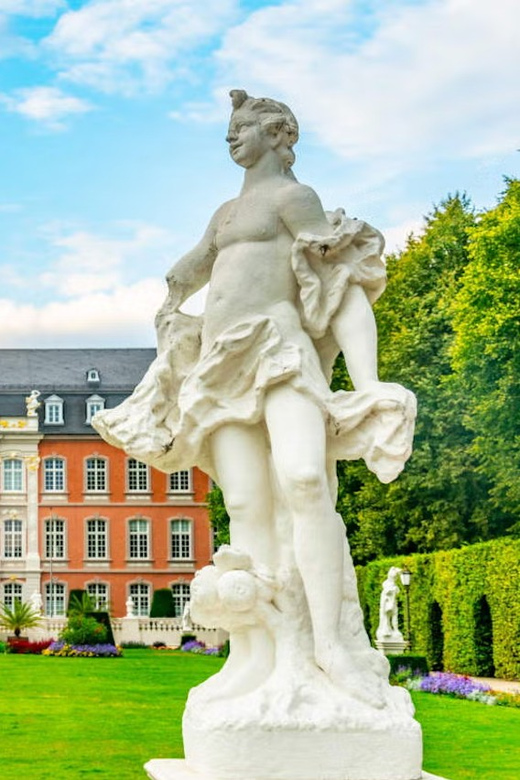
At $129 per person, the tour is not the cheapest way to reach Trier. The value comes from convenience and interpretation rather than from a long list of included admissions.
Your round-trip train ticket is included, as is a guided tour of the route. You also receive a small-group experience, with no more than 15 participants, and a live guide in English or Spanish. For someone staying in Luxembourg and wanting an organized cross-border outing, those pieces can justify the price.
The tour saves you from planning the train connection, finding the key monuments, and working out how the Roman sites relate to one another. A good guide also adds the historical links that you would miss by walking alone with a map.
Still, the price may feel high if you mainly want transport and free time. Two of the five and a half hours are independent, and the guided visits are fairly brief. If you already know Trier well or prefer to explore without commentary, arranging your own train trip may offer more freedom.
I would see the price as fair for a first visit, especially if you value a prepared route and live explanation. It is less compelling for repeat visitors who want long museum visits or detailed photography stops.
The guide can shape the whole day
The strongest personal praise has gone to the guides. Ana was described as warm and informative, and her approach made the city’s major places easier to understand. Paulina was praised for clear historical explanations and an eager presentation style.
Those details matter. Trier’s monuments are impressive, but their stories are not always obvious from the outside. A guide who explains the emperor’s throne in the Aula Palatina, the dark stone of the Porta Nigra, and the political importance of Karl Marx’s birthplace can make the route feel connected rather than scattered.
The language choices are English and Spanish. When booking, select the language that lets you ask questions comfortably. The small group also gives you a better chance to hear the guide and ask for practical help than you would have in a large coach group.
The rating is 4.6 from nine verified ratings, which is encouraging but still a small sample. I would treat the positive guide feedback as the most useful signal, while remembering that group chemistry, weather, and the exact guide can affect the day.
Who will enjoy this Trier trip most
I would recommend this outing to first-time visitors based in Luxembourg who want to see Germany without changing hotels. It is also a good fit if you enjoy history but do not want to build a full day around train schedules, city maps, and monument research.
The tour suits people who like a balance of structure and freedom. You get a clear two-hour introduction, then two hours to choose your own priorities. That arrangement works well for couples, friends, and solo visitors who want company for the historical portion but do not want to spend every minute in a group.
Families with older children may also find the range of topics helpful. Roman gates, an amphitheater, an emperor’s hall, a cathedral, and Karl Marx offer different ways into the city’s story.
I would hesitate if you need step-free access information, long indoor visits, or a relaxed pace. The supplied details do not explain accessibility, admission arrangements, or the amount of walking. Contact the provider before booking if those points affect your decision.
Pets are not allowed. Bring your passport or ID card, wear comfortable shoes, and keep your schedule flexible enough for the train ride back to Luxembourg.
Should you book the Luxembourg to Trier tour?
Book it if you want a well-organized first look at Trier, appreciate historical commentary, and value having the return train handled for you. The combination of Roman monuments, the cathedral, Karl Marx House, and free time gives you a broad introduction to the city in one day.
Skip it if you want to explore every ruin in detail, spend hours in museums, or move entirely at your own pace. For most first-time visitors staying in Luxembourg, though, the $129 cost is reasonable for the transport, small group, bilingual guiding, and simple cross-border plan.
The best reason to choose it is the guide-led context. Trier’s monuments are close enough to visit independently, but the stories linking Roman rule, Christian power, medieval city life, and modern politics are what make the day worth your time.
FAQ
Where does the tour begin?
You meet the guide at the entrance of Luxembourg’s Gare Centrale, next to the Oberweis café.
How long does the trip last?
The total duration is 330 minutes, or five and a half hours.
How long is the train ride from Luxembourg to Trier?
The train journey takes about one hour each way.
Is the train ticket included?
Yes. The price includes a round-trip train ticket between Luxembourg and Trier.
Which languages are available?
The live guided tour is available in English and Spanish.
How large is the group?
The tour is limited to 15 participants.
How much free time do I get in Trier?
You receive two hours of free time after the guided portion of the tour.
What identification should I bring?
Bring your passport or national identity card because the trip crosses from Luxembourg into Germany.
Are pets allowed?
No. Pets are not allowed on this activity.
Just added around Trier
- Trier Private Walking Tour With A Professional Guide★ 5.0 · 4 reviews
- Trier: Express City Walking Tour with Local Guide★ 5.0 · 5 reviews
- Trier: Private Walking Tour with a Local Guide★ 5.0 · 5 reviews
- Trier – Private Guided Walking Tour★ 4.5 · 6 reviews
- Trier: early morning tour without the hustle and bustle and with less noise★ 5.0 · 6 reviews
- Trier Self Guided Sherlock Holmes Murder Mystery Game★ 4.0 · 9 reviews
- For the love of Riesling – Mosel Wine tour★ 5.0 · 11 reviews
- Trier: Your Adventure Awaits – The Return of the Elector★ 4.0 · 12 reviews
City Tours, compared.
1-Hour City Tour by Boat with Guaranteed Seating
Read our review →
City History Canal Sightseeing Tour on a Motorboat
Read our review →
Browse the lists this tour appears in