
Reviewed · THIRD REICH & WWII TOURS
Munich: Third Reich Guided City Walking Tour
History leaves clues everywhere. This Spanish-language walking tour connects Munich’s central squares, Nazi-era buildings, and resistance sites into one clear 2.5-hour route. Starting at Marienplatz, you follow the rise of Adolf Hitler and the Nazi movement through places tied to the Beer Hall Putsch, Nazi propaganda, the German Resistance, and the Munich Agreement.
I like the route’s strong historical focus and its sensible progression from political beginnings to dictatorship and resistance. I also like the price: at about $23 per person, it offers a lot of context for a half-day outing. The main consideration is language. This tour is only for Spanish speakers, and children under 13 cannot join.
The tour is guided by a live Spanish-speaking guide and has earned a 4.9 rating from 34 reviews. The clearest praise is for the amount of important historical information and the well-paced format. That matters here. Munich’s Nazi past is serious and complicated, so a good guide can help you understand the connections without turning the walk into a jumble of dates and names.
In This Review
- Key points to know before booking
- Why this Munich history walk is worth your time
- Marienplatz and the political beginnings
- Hofbräuhaus and the Beer Hall Putsch
- Haus der Kunst and the Nazi use of culture
- Georg Elser, the White Rose, and German resistance
- Führerbau and the 1938 Munich Agreement
- Königsplatz and the end of the walk
- How much value do you get for $23?
- Who should choose this tour?
- Practical advice for a better experience
- Should you book the Munich Third Reich walking tour?
- FAQ
- Where does the tour start?
- How long does the walking tour last?
- What language is the tour conducted in?
- Can people who do not speak Spanish join?
- What age restrictions apply?
- What historical sites are included?
- Does the tour cover the Beer Hall Putsch?
- Does the tour discuss German resistance?
- Is food or drink included?
- What should you bring?
Key points to know before booking
- Marienplatz begins the story: Meet in front of the Tourist Information Office and start with Munich’s role in Hitler’s political rise.
- The Beer Hall Putsch gets proper attention: At the Hofbräuhaus, you learn about the failed 1923 coup and the early Nazi Party.
- Haus der Kunst shows propaganda in built form: The building helps explain how the regime used art and architecture for political control.
- Resistance figures receive real attention: Georg Elser and the White Rose are included, giving the tour a broader view than a simple Hitler biography.
- The route ends with major diplomatic history: The Führerbau is linked to the signing of the 1938 Munich Agreement, followed by Königsplatz.
- Spanish is required: The tour does not accept people who do not speak Spanish, and at least four participants are needed for it to operate.
Why this Munich history walk is worth your time
Munich is often sold through beer halls, palaces, and picture-book streets. Those are worthwhile, but the city also played a central role in the rise of National Socialism. This walk gives you a way to confront that past directly, using places in the city center rather than treating the subject as a distant chapter in a museum.
I like the fact that the tour does not focus only on Adolf Hitler. It also covers the German Resistance, including Georg Elser and the White Rose. That balance matters. You get the story of how the Nazi movement grew, but you also learn about people who opposed it.
The format should suit you if you prefer explanation to simply looking at buildings. Several stops have meaning that is not obvious from the outside. A guide can point out why a location mattered, what happened there, and how one event led to another.
At 2.5 hours, the tour is long enough to build a clear timeline without taking up an entire day. It is also short enough to fit around a museum visit or another Munich plan. You should expect steady walking, however, so wear comfortable shoes as requested.
More City Tours in Munich
- Munich: Old Town & Viktualienmarkt City Walk in German
★ 4.7 · 2,304 reviews - Munich: City Bus Tour & FC Bayern Munich Allianz Arena Tour
★ 4.5 · 2,071 reviews - Munich City Hop-on Hop-off Tour
★ 3.5 · 1,233 reviews
Marienplatz and the political beginnings
The meeting point is in front of the Tourist Information Office at Marienplatz, one of the easiest places in central Munich to find. It is a practical starting point because you can reach it through the city’s central public transport network, though no transport is included in the tour itself.
From here, the guide sets the scene for Munich’s role in the Nazi movement. The useful part is not just hearing that Hitler was active in Munich. You begin to understand how the city became a setting for political organizing, speeches, and the formation of the National Socialist German Workers’ Party.
This first section gives you the framework needed for the rest of the walk. Without it, later stops such as the Hofbräuhaus and Königsplatz would be little more than impressive addresses. With the background in place, they become evidence in a larger story.
You may want to arrive a few minutes early. The meeting point is specific, and a walking tour usually gets moving promptly. Food and drinks are not included, so have water with you, especially if the weather is warm.
Hofbräuhaus and the Beer Hall Putsch
The Hofbräuhaus is one of Munich’s best-known beer halls, but this tour asks you to see it in a different light. Here, the guide explains Hitler’s putsch and the early history of the Nazi Party.
The Beer Hall Putsch, also called the Munich Putsch, was an attempt to seize political power in 1923. It failed, but it became an important event in the Nazi movement’s early story. At this stop, the guide can connect the setting with the political tactics, public meetings, and power struggles that shaped the period.
That is one of the strongest parts of the itinerary. You are not simply told that the putsch happened in Munich. You are brought to a place connected with the political atmosphere of the time. A famous beer hall can seem harmless when you visit it for a meal, so the historical explanation adds necessary weight.
The Hofbräuhaus remains a working venue, not a preserved Nazi site. That means the atmosphere may be busy and ordinary, which can feel strange beside the subject being discussed. Still, that contrast is useful. Munich’s difficult history exists alongside everyday city life, not in a sealed historical bubble.
Haus der Kunst and the Nazi use of culture
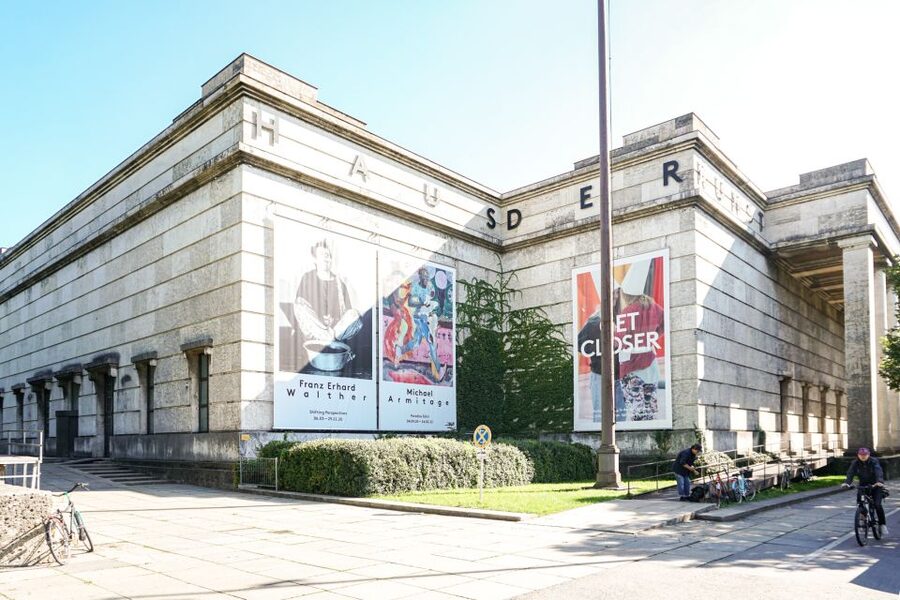
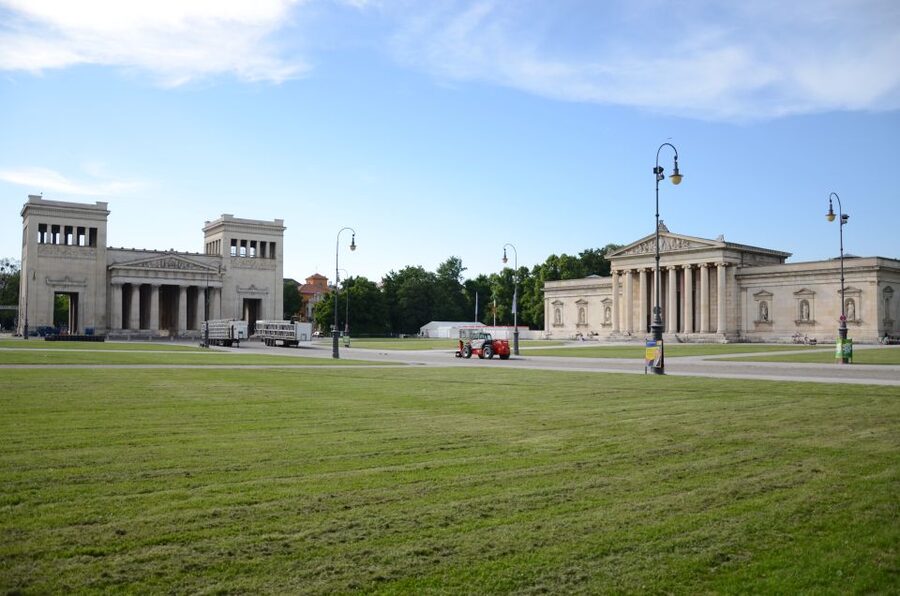
The walk continues to the front of Haus der Kunst. According to the tour description, this was the first propaganda building in Nazi Germany. The stop focuses on the regime’s influence on art and its campaign against what it called degenerate art.
This is an important change of subject. The tour moves beyond political meetings and failed coups to show how dictatorship reaches into culture. Art was not treated as a private matter under the Nazi regime. It was judged according to political ideas, and artists and works that did not fit those ideas could be banned or attacked.
I find this stop especially useful for anyone who has already seen Munich’s grand architecture but has not considered the messages those buildings were meant to send. The building itself becomes part of the lesson. You look at its public role, its design, and the way the regime used cultural institutions to present its preferred image of Germany.
The tour visits the front of the building, so you should not expect an interior museum visit as part of the $23 fee. That keeps the walk focused and affordable, but anyone wanting a full art exhibition should plan a separate visit.
More Third Reich & WWII Tours in Munich
- Munich: Third Reich & WWII Walking Tour
★ 4.6 · 6,181 reviews - Third Reich Walking Tour Munich
★ 4.5 · 4,291 reviews - Munich: Birthplace of the Third Reich Guided Walking Tour
★ 4.6 · 771 reviews - Munich World War II Sites Including Dachau Concentration Camp
★ 4.5 · 570 reviews
Georg Elser, the White Rose, and German resistance
The resistance section gives the tour needed moral and human balance. You learn about Georg Elser and the White Rose, two important names connected with opposition to the Nazi regime.
Georg Elser is associated with an attempt to kill Hitler before the Second World War. The White Rose was a student-led resistance group. Including both shows that resistance did not come from only one kind of person or one political circle.
This part may be the most meaningful for you if you want more than a tour of Nazi power. It shifts the focus from leaders and institutions to individuals who acted against the regime, despite the danger. The story becomes less about the machinery of government and more about personal choice.
The supplied details do not give the exact locations used for each resistance story, so you should not expect a separate memorial visit for every person mentioned. Instead, the guide presents the resistance as part of the route’s wider explanation of Munich during the Third Reich.
I appreciate that the tour includes these stories without losing its main structure. The goal is not to cover every event in German history. It is to show how Munich was involved in both the rise of National Socialism and opposition to it.
Führerbau and the 1938 Munich Agreement
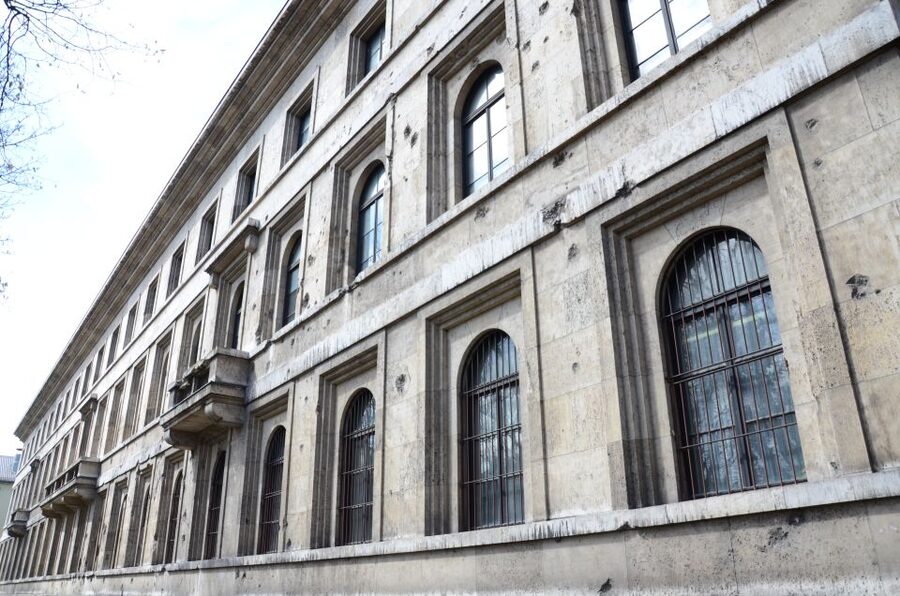
The route then reaches the Führerbau, a building tied to one of the most consequential diplomatic moments in prewar Europe. The Munich Agreement was signed here in 1938.
This stop gives the tour an international dimension. Earlier sections focus on Munich’s local political beginnings, while the Führerbau connects the city to decisions made by European leaders. The building helps show how Munich became associated not only with Nazi organization but also with the foreign policy of the regime.
For you, the value of this stop lies in connecting a familiar name, the Munich Agreement, with a real place. History books often reduce the agreement to a date and a phrase. Standing outside the building gives the event a physical setting, even if the tour does not include an indoor visit.
The site also brings the route toward its final stop at Königsplatz. This creates a logical ending: the walk begins with the Nazi movement’s origins and finishes with the regime’s public and international importance.
Königsplatz and the end of the walk
The tour concludes at Königsplatz, an important location in the story of Nazi Munich. The supplied tour details also say that the activity ends back at the meeting point, so check the exact end arrangement when booking. The route description identifies Königsplatz as the final historical stop, while the meeting information lists Marienplatz as the return point.
That small logistical point is worth confirming because it affects your next plan. If you have a timed museum entry, restaurant booking, or train to catch, leave a cushion after the scheduled finish.
Königsplatz gives the guide a suitable place to wrap up the story. By this stage, you have followed the movement from its political origins through propaganda, resistance, and the Munich Agreement. The final location helps gather those threads in one place.
The tour is not designed as a general sightseeing walk. You will see parts of central Munich, but the historical subject comes first. If you want famous attractions explained mainly for their architecture, choose a broader city tour instead.
How much value do you get for $23?
At $23, this is a reasonably priced guided experience, especially because it lasts 2.5 hours and covers several significant locations. You are paying for a live guide, a planned route, and the explanation linking the stops together. No food, drinks, entrance tickets, or other extras are included.
The value is strongest if you would otherwise walk past these places without understanding their role. Munich’s central streets are easy to explore on your own, but the historical connections are harder to reconstruct. A guide saves you that research time and provides a clear order for the events.
The price is less attractive if you do not speak Spanish, since the tour is not open to non-Spanish speakers. It is also not suitable for children under 13, so families with younger children need another plan.
The tour requires a minimum of four participants. If that number is not reached, the local provider will contact you and offer an alternative. You can reserve now and pay later, which is useful if your Munich schedule is still changing, and cancellation is free up to 24 hours in advance.
Who should choose this tour?
I would recommend it to Spanish-speaking adults and older teenagers who want a focused account of Munich’s Nazi past. It should also suit you if you prefer a compact walking route over a full museum day.
The tour is a good fit for:
- Visitors who want the Beer Hall Putsch explained at the places connected with Munich’s early Nazi politics.
- People interested in propaganda, censorship, and the use of art under dictatorship.
- Anyone who wants resistance stories included, especially Georg Elser and the White Rose.
- Spanish-speaking visitors looking for a guided experience at a moderate price.
- History-minded visitors with only half a day available.
You may want to skip it if you are looking for a lighthearted introduction to Munich, a food experience, or a tour in English or another language. The subject is serious, and the tour requires attention.
Practical advice for a better experience
Wear comfortable shoes. The activity is a walking tour lasting 2.5 hours, and the route covers several central locations. No special equipment is listed, but you should dress for the weather and carry water since food and drinks are not provided.
Keep your schedule flexible around the starting time. You need to check availability for current departure times, and the tour may depend on reaching the minimum of four participants.
Most important, confirm that Spanish is comfortable for you. This is not a multilingual tour with Spanish as one option. It is specifically closed to people who do not speak Spanish.
I would also read the meeting and end details carefully. You begin at the Tourist Information Office in Marienplatz. The route description finishes at Königsplatz, while the activity information says it ends back at the meeting point. That is easy to clarify before you commit to another appointment.
Should you book the Munich Third Reich walking tour?
Book it if you want a serious, well-paced Spanish tour that explains Munich’s Nazi past through real locations. The strongest features are the clear 2.5-hour structure, the attention to the Beer Hall Putsch, the Haus der Kunst stop, and the inclusion of German resistance figures rather than a narrow focus on Hitler alone.
At $23, it is good value for a guided history walk. Just make sure you speak Spanish, are at least 13 years old, can manage the walking, and have no tight appointment immediately afterward. For the right audience, this is a useful way to understand a difficult part of Munich that should not be ignored.
FAQ
Where does the tour start?
Meet your guide in front of the Tourist Information Office at Marienplatz.
How long does the walking tour last?
The tour lasts 2.5 hours.
What language is the tour conducted in?
The live guided tour is conducted in Spanish.
Can people who do not speak Spanish join?
No. The tour is not open to people who do not speak Spanish.
What age restrictions apply?
Children under 13 are not allowed to participate.
What historical sites are included?
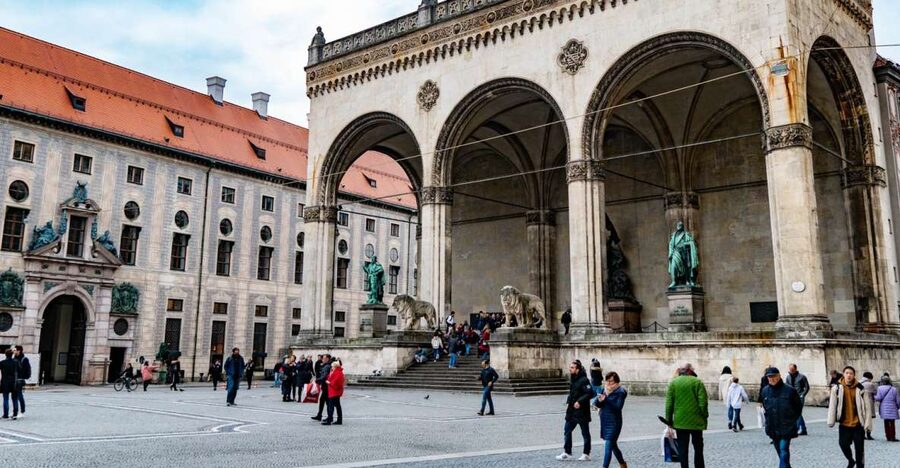
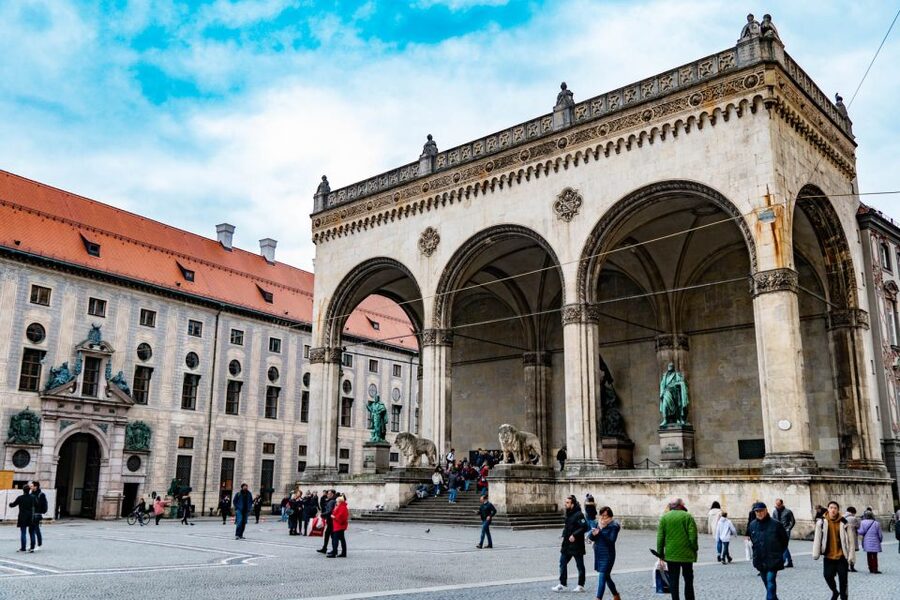
The route includes Marienplatz, Odeonsplatz, the Hofbräuhaus, Haus der Kunst, the Führerbau, and Königsplatz.
Does the tour cover the Beer Hall Putsch?
Yes. The guide explains Hitler’s putsch and the origins of the National Socialist German Workers’ Party, with the Hofbräuhaus included in the route.
Does the tour discuss German resistance?
Yes. The tour includes the German Resistance Movement and figures such as Georg Elser and the White Rose.
Is food or drink included?
No. Food and drinks are not included.
What should you bring?
Bring comfortable shoes for the 2.5-hour walk.
More Walking Tours in Munich
- Munich: Night Watchman Walking Tour
★ 4.7 · 2,092 reviews - Munich Ghosts and Spirits Evening Walking Tour
★ 5.0 · 1,900 reviews - Munich Old Town Walking Tour
★ 4.5 · 1,287 reviews - Munich: Walking Tour Old Town and Viktualienmarkt
★ 4.7 · 839 reviews
Just added around Munich
- Munich: Private or Group Third Reich and WWII Walking Tour★ 4.9 · 13 reviews
- From Munich: Neuschwanstein Castle and Linderhof Private Tour★ 5.0 · 13 reviews
- Private Transfer from Munich to Salzburg with 2 hours for sightseeing★ 4.5 · 13 reviews
- Munich: Historical Walking Tour on the Rise of Hitler★ 5.0 · 13 reviews
- Private Scenic Transfer from Munich to Prague with 4h of Sightseeing★ 5.0 · 13 reviews
- From Munich: VIP day trip to Salzburg★ 5.0 · 14 reviews
- National Socialism WWII with licensed guide – private tour★ 5.0 · 14 reviews
- Munich: Walking Tour Old Town 3D VR Tour in GERMAN★ 4.3 · 14 reviews
Third Reich & WWII Tours, compared.
Berlin’s Best: 2 Hour Walking Tour Third Reich and the Cold War
Read our review →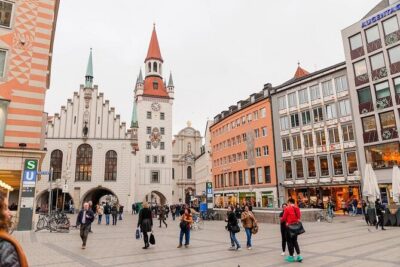
Third Reich Berlin: Hitler and WWII Walking Tour
Read our review →
Walking Tour of Former Nazi Party Rally Grounds
Read our review →
Browse the lists this tour appears in