
Reviewed · THIRD REICH & WWII TOURS
Munich Third Reich and WWII Segway Tour
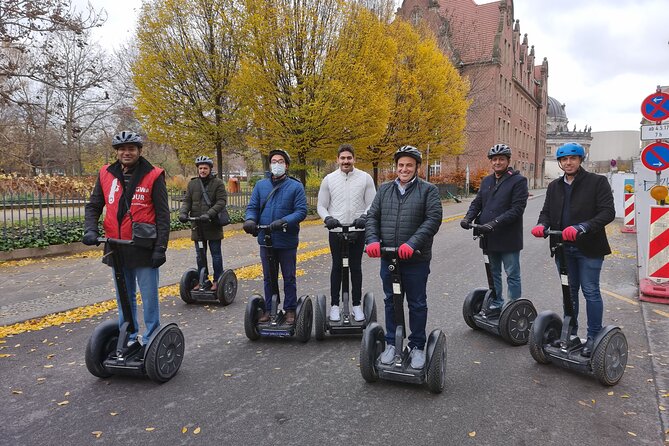
History moves faster on two wheels. This three-hour Munich tour combines a Segway ride with a serious look at the city’s role in Nazi Germany, taking you from Königsplatz and the Führerbau to the White Rose and other key sites. I like the way it covers a wide stretch of central Munich without asking you to spend the whole morning on foot. I also like the personal touch from guides such as Karl, Josef, Claudia, and Rawen, who have helped nervous beginners get comfortable and made time for questions and photos.
The main consideration is that this is still a city ride, not a museum tour with long indoor explanations. One rider found the route crowded and expected more World War II content, while another had a Segway problem and fell backward, though fortunately without serious injury. Cold weather is another real issue, so dress warmly even if the day looks mild.
In This Review
- Key points to know before booking
- Why a Segway works well in Munich
- Getting started at Artur-Kutscher-Platz
- Munich in 1912 and the road to political power
- Königsplatz, the Führerbau, and the Braunes Haus
- Schelling-Salon and the White Rose
- Haus der Kunst and the Angel of Peace
- Hitler’s apartments and Munich’s political geography
- Hofbräuhaus, Hofbräukeller, and the failed Beer Hall Putsch
- Residenz München and Odeonsplatz
- What the $82.82 price gives you
- Cold weather, crowded streets, and safety
- Who should book this Munich tour?
- FAQ
- Where does the Munich Third Reich and WWII Segway Tour start?
- What time does the tour begin?
- Where does the tour finish?
- How long does the Segway tour last?
- Is the tour offered in English?
- How many people can join the tour?
- Should you book it?
Key points to know before booking
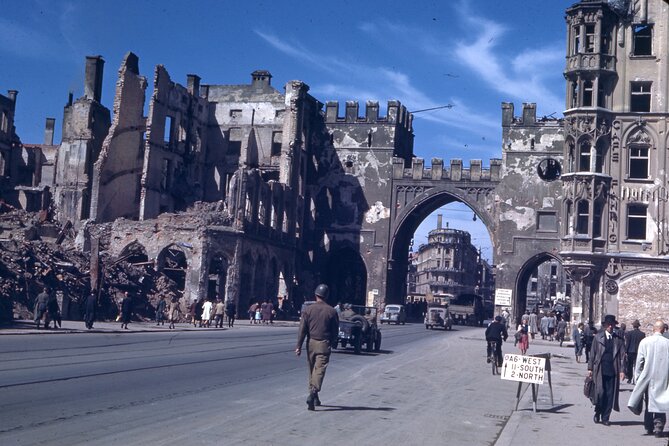
- Three hours on a Segway: You cover much more ground than on a standard walking tour and return to the same meeting point.
- A broad Nazi-era route: Stops include Königsplatz, the Führerbau, the former Braunes Haus site, the White Rose, Hitler’s apartments, and the Hofbräuhaus.
- English-language guiding: The tour is offered in English, with guides praised for patience, clear explanations, and help with photos.
- Good for first-time riders: The training period and calm, reassuring instruction make the machines approachable for many beginners.
- A maximum of 20 people: The group can be fairly large, though the guide may still have time for questions.
- Plan for the weather: You can get very cold while riding, especially if the day is windy or overcast.
Why a Segway works well in Munich
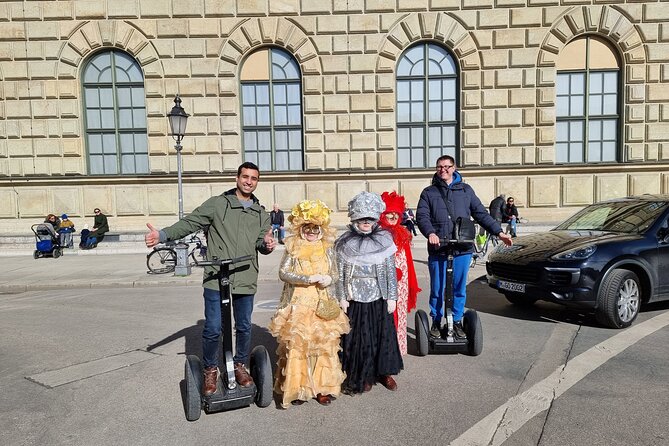
Munich’s historic center is compact on a map but spread out enough to make a full walking route tiring. A Segway lets you move between political sites, memorial places, squares, and major landmarks without spending every few minutes stopping to catch your breath.
I see the biggest benefit in the range of the route. You are not limited to one square or one museum district. In about three hours, the ride links places connected with Hitler’s arrival in Munich, the Nazi movement’s rise, opposition to the regime, and plans to remake the city for political purposes.
That wider view matters. The tour does not treat World War II as a handful of isolated buildings. It uses Munich as the setting for a political story: one young Austrian arriving in Bavaria in 1912, the failed Beer Hall Putsch, the later rise to power, and the attempt to make Munich the capital of the Nazi movement.
The Segway also adds a light, social quality to a difficult subject. That contrast can work well for families and couples who want serious history without spending the entire day inside formal museums. You should still expect some busy streets and ordinary city scenery between the major stops.
More Segway & Scooter Tours in Munich
- Munich: City Highlights Guided Segway Tour
★ 4.6 · 266 reviews - Munich 3-Hour Segway Tour: Nazi Munich & Royal Architecture
★ 4.9 · 194 reviews - Munich Segway Tour
★ 5.0 · 181 reviews
Getting started at Artur-Kutscher-Platz
The meeting point is Artur-Kutscher-Platz 2A, in the 80802 area of Munich. The tour starts at 10:00 a.m., and the activity ends back at the same place, which makes planning the rest of your day easier.
The first part is especially important if you have never used a Segway. Several riders found the machines easy to learn, and guides gave them time to practice and settle their nerves before heading into the city. I would not rush this stage. Feeling steady on the Segway makes it much easier to listen to the guide and watch the streets around you.
The tour allows up to 20 people. That is not a tiny private outing, so you should expect some group movement and occasional waiting. At the same time, individual experiences suggest that the guides can still offer reassurance, answer questions, and stop for photographs.
Claudia was praised for handling a less organized day when another guide did not arrive. Karl received especially warm praise for his friendly manner, detailed answers, and willingness to take pictures. Josef was also singled out for making the history clear and the ride enjoyable for a family with children aged 17 and 14. These names matter because the guide shapes much of the experience.
Munich in 1912 and the road to political power
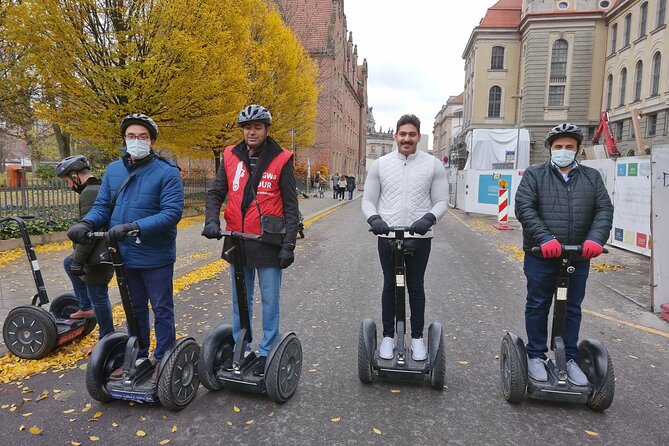
The tour’s opening story begins with Adolf Hitler arriving in Munich in the spring of 1912. The route presents the city as the place where he came after losing the main dream of his life and then built a new political path.
That framing gives the tour a useful human scale, though you should not mistake it for a full biography. The point is to connect a person, a city, and a movement. Munich becomes more than a backdrop. Streets, beer halls, public squares, government buildings, and cultural institutions all enter the story.
I like this approach because it helps you understand why the city appears so often in accounts of Nazi Germany. The tour asks how Munich became the center of the movement, who challenged it, and why Hitler wanted to rebuild the city around his political vision.
The guide’s explanation is likely to matter more here than the scenery itself. Some stops are famous buildings. Others are simply places where the guide can explain what happened and why the location mattered. Pay attention to the transitions, since the route is designed to connect the sites into one story.
Königsplatz, the Führerbau, and the Braunes Haus
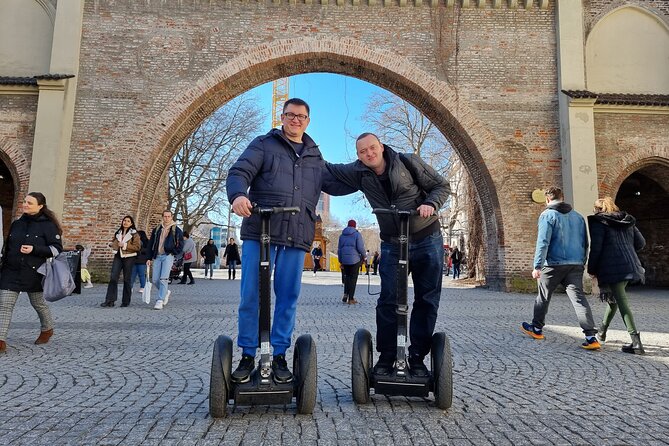
Königsplatz is one of the major early stops. Its broad setting gives the guide room to explain the public face of the Nazi movement and the way political power was presented in Munich.
From there, the route continues to the Führerbau, a site closely tied to the leadership of the regime. This is one of the places many people book the tour to see, and it gives the historical discussion a concrete focus. You are not only hearing about a political organization in the abstract. You are looking at the places used to project authority.
The Braunes Haus is another important stop. The name refers to the former headquarters of the Nazi Party in Munich. Even if you only pause briefly, the location helps you follow the movement’s growth from local politics to national power.
You should keep your expectations realistic. The tour is not advertising admission into each location, and the itinerary lists the stops with free admission. Much of the value comes from the guide’s explanation outside the sites rather than from extended interior visits.
More Third Reich & WWII Tours in Munich
- Munich: Third Reich & WWII Walking Tour
★ 4.6 · 6,181 reviews - Third Reich Walking Tour Munich
★ 4.5 · 4,291 reviews - Munich: Birthplace of the Third Reich Guided Walking Tour
★ 4.6 · 771 reviews - Munich World War II Sites Including Dachau Concentration Camp
★ 4.5 · 570 reviews
Schelling-Salon and the White Rose
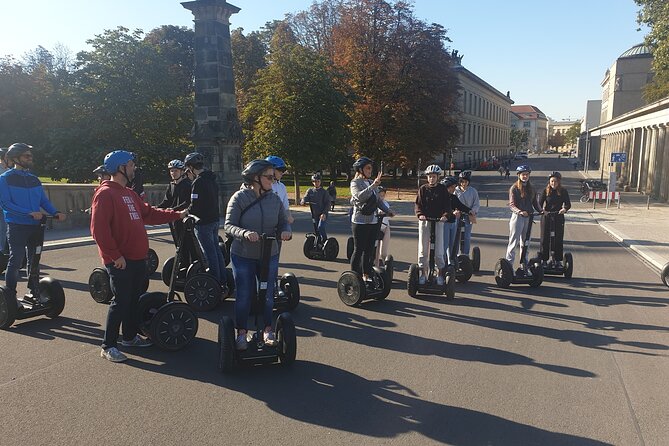
Schelling-Salon changes the tone of the route. The tour uses it while discussing the people who tried to fight the Nazi regime, creating a counterpoint to the buildings linked with Hitler and the party.
The White Rose is an especially important part of the experience. It brings resistance into a tour that could otherwise focus only on the mechanics of Nazi power. For me, this is one of the strongest reasons to choose a route that includes both political leaders and opponents of the regime.
The itinerary gives no promise of a long memorial visit, so listen closely to the guide at this stage. The subject deserves attention, and a moving group on Segways may not create the same quiet atmosphere as a dedicated museum or memorial tour. Still, seeing the resistance site within the wider city route helps you understand that Munich’s wartime story was not one-sided.
Families may find this section useful because it opens a conversation about courage, disagreement, and moral choices. The tour is suitable for most participants, but parents should decide how much Nazi-era history their children are ready to discuss.
Haus der Kunst and the Angel of Peace
Haus der Kunst adds a cultural angle to the route. Its inclusion shows that the tour is not limited to party offices and beer halls. The Nazi attempt to shape Munich also involved public art, civic identity, and the image the regime wanted Germany to present.
The Angel of Peace offers a different visual pause. Its presence gives the guide another way to discuss Munich as a city of monuments and political symbols. You will get a change of pace here, with a landmark that is easier to absorb visually than some of the more politically charged stops.
I would treat these places as part of the wider story rather than as separate headline attractions. The ride works best when you allow the guide to explain how buildings and monuments fit into the city’s changing public life.
Hitler’s apartments and Munich’s political geography
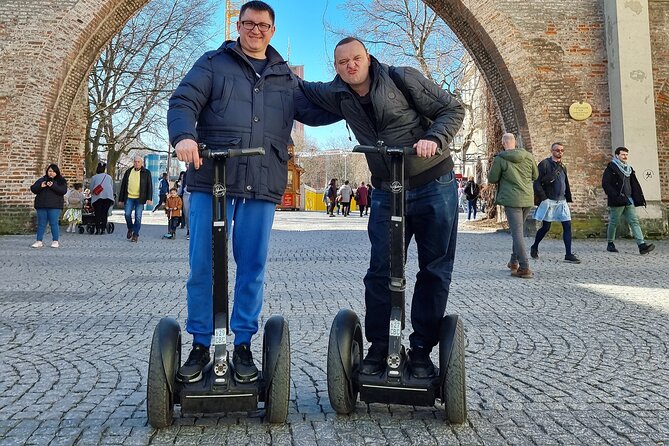
The route includes Hitler’s apartment from 1933, as well as his apartment from 1920 to 1929. These stops help mark different stages of his political career and show how personal addresses can become part of a national story.
The two apartment stops are useful because they make the timeline easier to follow. One belongs to the earlier period of political organizing, while the other connects with the year he gained national power. You can see how the tour moves from beginnings to influence, then from influence to control.
The route also includes Maximilianeum and Maximilianestrasse. These places broaden the view beyond Hitler’s personal history and bring in Munich’s civic and architectural setting. The guide can use them to explain how the city’s grand spaces were folded into political plans.
You may find that some of these locations feel less dramatic than Königsplatz or the Führerbau. That is normal. Their value is in the story they help complete, not necessarily in a single striking sight.
Hofbräuhaus, Hofbräukeller, and the failed Beer Hall Putsch
Munich’s beer halls are central to the city’s identity, and this tour uses the Hofbräuhaus and Hofbräukeller to explain the political activity that unfolded in such settings. The route asks why the Beer Hall Putsch failed, making this one of the clearest historical questions of the morning.
The Hofbräuhaus is also a major Munich sight in its own right. A Segway tour that reaches it lets you connect a familiar tourist landmark with the city’s darker political past. That is useful, but it can also create a drawback: the area may be crowded, and one rider felt the shopping and busy downtown sections took attention away from the promised World War II focus.
I would book this tour if you want a mix of general Munich sightseeing and political history. If you want every minute devoted to wartime sites, a specialist walking tour or museum visit may suit you better.
The Hofbräukeller adds another beer-hall setting to the route. Together, these stops show why public meeting places matter in political history. You are seeing places where people gathered, listened, argued, and organized, rather than only formal government offices.
Residenz München and Odeonsplatz
Residenz München and Odeonsplatz bring the tour back toward Munich’s grand central landmarks. They offer a strong finish because they place the Nazi-era story inside the city’s older civic and royal setting.
Odeonsplatz is also tied to the story of the failed Beer Hall Putsch, so it helps bring the political narrative back to a specific public space. The Residenz adds another layer of Munich identity, reminding you that the city was not created by the Nazi period. Its older institutions and architecture were part of the environment Hitler tried to use and reshape.
The route finishes at the original meeting point rather than leaving you across town. That is practical. You can plan lunch, return to your hotel, or continue sightseeing without working out how to retrieve a car or find a distant end point.
What the $82.82 price gives you
At $82.82 per person, this is not the cheapest way to see Munich. You are paying for the Segway, the guide, the practice time, and a three-hour route that covers far more ground than most walking tours.
The value is strongest if you want efficiency. You can reach the Führerbau, Königsplatz, the White Rose, the Hofbräuhaus, Odeonsplatz, and several other sites in one morning. A walking route covering the same territory could take longer and leave you tired, especially if you want to continue sightseeing afterward.
The price also makes more sense for families and couples who enjoy active tours. A 17-year-old and a 14-year-old reportedly had a great time, and another first-time rider said the experience was safe and easy after a little practice. You should still consider the cost for every member of your group, since this is a per-person activity.
The value is weaker if your main goal is detailed museum access. The tour is built around movement and guiding, not entry to exhibits. It works as a city overview with a strong historical theme, then pairs well with a museum visit or memorial walk later in your Munich stay.
Cold weather, crowded streets, and safety
Dress warmer than you think you need. Riding creates a steady wind, and one rider specifically warned that a cold day became very cold on the Segway. Gloves and a warm outer layer are sensible choices.
Most people can participate, according to the activity information, and the guides give beginners time to get used to the machines. Still, you should take the practice seriously and tell the guide if you feel uneasy. A Segway failure was reported by one rider, followed by a backward fall, so no motorized city activity is entirely risk-free.
Crowds are another factor. The route passes through central Munich, including shopping areas and famous landmarks. That means you may share space with pedestrians and deal with pauses in the group. If you prefer quiet streets and long stops at each monument, this format may feel rushed.
On the positive side, several guides were praised for helping nervous riders, answering questions, and allowing time for pictures. That personal attention can make the difference between a stressful ride and a very enjoyable one.
Who should book this Munich tour?
I would recommend it to couples and families who want to see a large part of Munich in one morning. It is also a good choice for first-time Segway users, provided you are willing to practice before setting off.
History-minded visitors will appreciate the route’s range. You get Nazi Party sites, Hitler’s residences, the failed Beer Hall Putsch, the White Rose, cultural buildings, public monuments, and classic Munich landmarks in one connected outing.
I would be more cautious if you need a quiet, academic treatment of World War II. The tour mixes serious history with a fun outdoor ride, and some of the route passes through busy shopping and sightseeing districts. That balance is part of its appeal, but it will not satisfy everyone.
The tour is offered in English and has a mobile ticket. It is near public transportation, and confirmation arrives when you book. You can cancel for a full refund up to 24 hours before the start time, though changes or cancellations inside that window are not accepted. A minimum group size is required, and if the operator cancels for that reason, you can choose another date or receive a full refund.
FAQ
Where does the Munich Third Reich and WWII Segway Tour start?
It starts at Artur-Kutscher-Platz 2A, 80802 München, Germany.
What time does the tour begin?
The stated start time is 10:00 a.m.
Where does the tour finish?
The activity ends back at the original meeting point.
How long does the Segway tour last?
The tour lasts approximately three hours.
Is the tour offered in English?
Yes. The experience is offered in English.
How many people can join the tour?
The maximum group size is 20 people.
Should you book it?
Book this tour if you want a lively way to connect Munich’s major Nazi-era sites, resistance history, and famous central landmarks. The best reasons to choose it are the wide route, the time saved over walking, and the guides’ strong record of helping beginners feel comfortable.
Skip it if you want long museum visits, a quiet memorial experience, or a route devoted only to World War II. For everyone else, the $82.82 cost buys an efficient and memorable morning, especially if you dress warmly, stay alert in crowded areas, and give yourself time to learn the Segway before the history lesson begins.
Just added around Munich
- Munich: Private or Group Third Reich and WWII Walking Tour★ 4.9 · 13 reviews
- From Munich: Neuschwanstein Castle and Linderhof Private Tour★ 5.0 · 13 reviews
- Private Transfer from Munich to Salzburg with 2 hours for sightseeing★ 4.5 · 13 reviews
- Munich: Historical Walking Tour on the Rise of Hitler★ 5.0 · 13 reviews
- Private Scenic Transfer from Munich to Prague with 4h of Sightseeing★ 5.0 · 13 reviews
- From Munich: VIP day trip to Salzburg★ 5.0 · 14 reviews
- National Socialism WWII with licensed guide – private tour★ 5.0 · 14 reviews
- Munich: Walking Tour Old Town 3D VR Tour in GERMAN★ 4.3 · 14 reviews
Third Reich & WWII Tours, compared.
Berlin’s Best: 2 Hour Walking Tour Third Reich and the Cold War
Read our review →
Third Reich Berlin: Hitler and WWII Walking Tour
Read our review →
Walking Tour of Former Nazi Party Rally Grounds
Read our review →
Browse the lists this tour appears in