
Reviewed · THIRD REICH & WWII TOURS
Munich 3-Hour Segway Tour: Nazi Munich & Royal Architecture
Munich’s past comes alive on two wheels. I like the mix of Nazi-era history and royal architecture, and I like that the route reaches the Eisbach river surfers, the Maximilianeum, and several major museums in one outing. The small groups, capped at eight people, also give you a better chance to ask questions. The main drawback is simple: you need to feel comfortable riding on city streets, and cold or wet weather can make three hours feel long.
This is a lively first look at Munich rather than a museum-style history lesson. Guides such as Canaan, Matt, Thomas, Bob, Steve, and José have earned praise for clear instruction, good stories, patience, and humor. I would book it early in a Munich visit, since the guide’s local tips can help shape the rest of your stay.
In This Review
- Key points at a glance
- Why a Segway works well in Munich
- Meeting at Karlsplatz and learning the machine
- Karolinenplatz, Königsplatz, and Munich’s difficult past
- Munich’s art district: three very different stops
- Odeonsplatz and the royal center
- Haus der Kunst and the Eisbachwelle
- From the Angel of Peace to the Isar River
- The Maximilianeum and Maximilianstraße
- What the guides add to the experience
- Price, timing, and the question of value
- Who should book this Munich Segway tour?
- Should you book it?
- FAQ
- How long is the Munich Segway tour?
- Where does the tour begin?
- How do I find Fat Tire Tours at Karlsplatz?
- Where does the tour finish?
- Is Segway training included?
- Is the tour suitable for first-time Segway riders?
- What languages are available?
- How many people are in each group?
- What sights are included?
- What should I bring?
- Are food and drinks included?
- What is the cancellation policy?
- What weight limits apply?
- Who cannot take part?
Key points at a glance
- Thirty minutes of Segway training: First-time riders get time to practice before heading into the city.
- Eight-person limit: Small groups make it easier to hear the guide and receive riding help.
- A serious look at Nazi Munich: Königsplatz and central Munich provide important context about the city’s wartime role.
- Royal Munich in one sweep: The Residenz, Maximilianstraße, Bavarian State Opera, and Maximilianeum show off the city’s grand side.
- The Eisbachwelle stop: You can watch surfers ride a standing wave in the English Garden, an unusual Munich sight.
- Weather matters: The tour runs in ordinary rain and cold, so bring warm, comfortable clothing and closed shoes.
Why a Segway works well in Munich
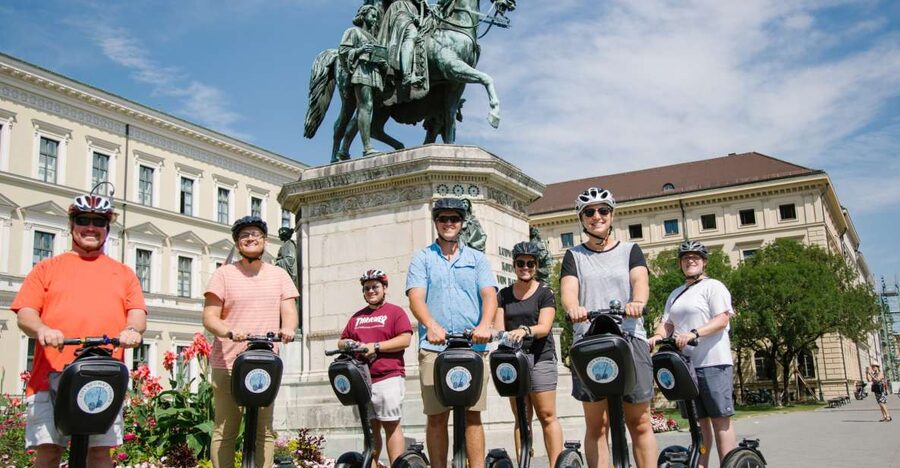
Munich’s central sights are spread across a fairly broad area. Walking between Karlsplatz, Königsplatz, the English Garden, the Isar River, and the Maximilianeum would take more time and energy. A Segway lets you cover that ground without turning the day into a march.
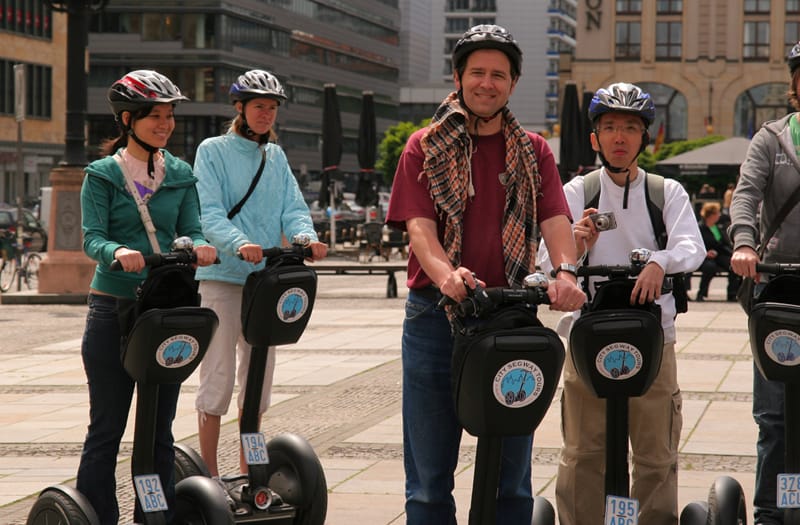
The machine is easier to learn than it first appears. The orientation lasts about 30 minutes, and guides take riders through the controls and safety rules before setting off. First-time riders have described the training as patient and thorough, with one guide giving one-on-one help until everyone felt ready.
That training matters. The route includes roads, paths, and busy city areas. You are not simply rolling around a closed courtyard. One rider specifically noted that the group used both off-road and on-road sections, while another said the guide explained street etiquette clearly. You should expect to share space with normal Munich traffic and pedestrians.
The Segway also changes your view of the city. You can move farther than on foot, but still stop often for photos and explanations. It is a good middle ground between a walking tour and a bus tour. You stay outside, see the city at street level, and avoid spending most of the afternoon indoors.
More Segway & Scooter Tours in Munich
- Munich: City Highlights Guided Segway Tour
★ 4.6 · 266 reviews - Munich Segway Tour
★ 5.0 · 181 reviews - Munich: City Highlights Guided Segway Tour
★ 4.5 · 161 reviews
Meeting at Karlsplatz and learning the machine
The tour begins at Fat Tire Tours, Karlsplatz 4. From the McDonald’s at Karlsplatz, or Stachus, keep the city gate behind you and turn right along Sonnenstraße. After about 50 meters, the shop is on the right in the courtyard of Karlsplatz 4.
Give yourself time to find the courtyard. Karlsplatz is a busy central spot, and a few extra minutes will keep the arrival calm. The tour returns here after about three hours, so you do not need to arrange a separate ride back to your hotel.
The opening safety session takes roughly 30 minutes. You will learn how to mount, stop, steer, and control your speed. The experience is designed for beginners, but it still asks for balance, attention, and a basic level of fitness.
Wear comfortable closed shoes and clothes that let you move easily. Open-toed shoes are not allowed. Cash is listed as something to bring, though food and drinks are not included. Raincoats are supplied, and one cold-weather group received jackets and gloves, but I would not rely on that for all conditions. Bring warm layers, especially in winter or during a wet spell.
Karolinenplatz, Königsplatz, and Munich’s difficult past
The first major sights place you among some of Munich’s most formal architecture. At Karolinenplatz, the route pauses for a short look and photos before continuing to Königsplatz.
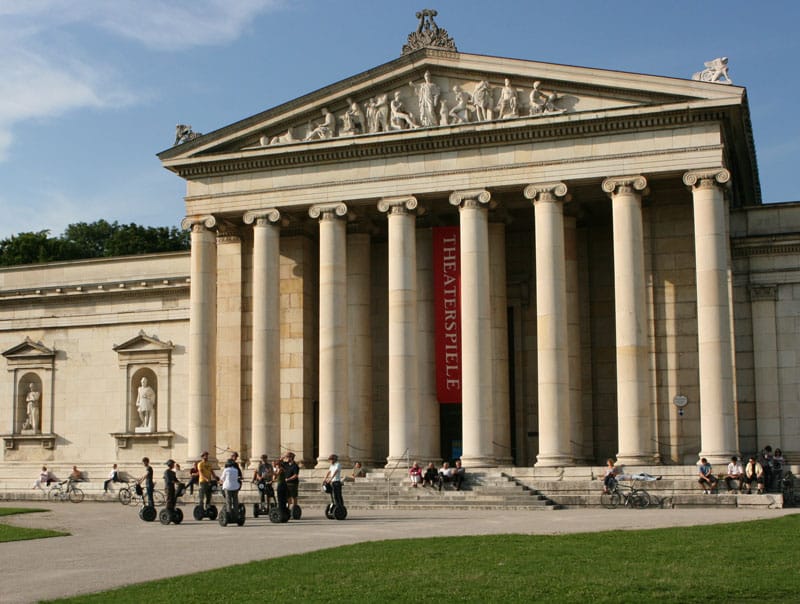
Königsplatz was designed with the Acropolis in Athens in mind. Its broad open space and classical buildings give the stop a grand, almost theatrical feel. The setting is also tied to Munich’s role in the rise of Nazism, so the guide’s explanation adds needed weight to what might otherwise look like a pleasant architectural square.
This section is one of the tour’s most useful features. Munich is often presented through beer halls, palaces, and art museums, but the city also played a major part in Germany’s Nazi period. The guide points out remnants and explains the city’s role during World War II. You get historical context without spending the entire tour in a memorial or museum.
The stops are short, usually about five minutes. That keeps the tour moving, but it also means you should not expect a full treatment of Nazi Munich. If this subject is your main reason for visiting, add a dedicated museum or memorial visit elsewhere in your schedule. Here, the history is one part of a wider city tour.
Munich’s art district: three very different stops
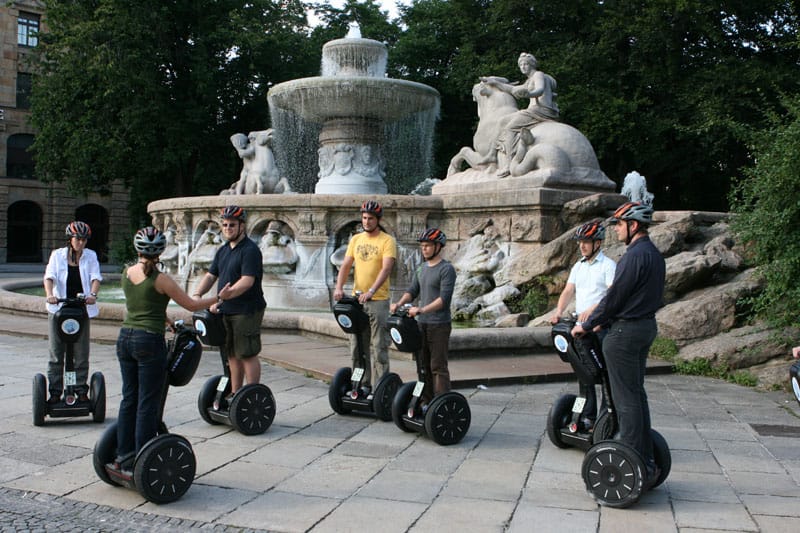
The route continues through Munich’s museum quarter, passing the Alte Pinakothek and the Pinakothek der Moderne. These stops are mainly for viewing the buildings and taking photographs rather than entering the galleries.
The Alte Pinakothek represents Munich’s older art tradition and grand museum culture. The Pinakothek der Moderne offers a more modern architectural contrast. Seeing both from the outside helps you understand how Munich combines historic institutions with newer cultural spaces.
This is a good example of the tour’s reach. You get a quick introduction to places you may want to return to on foot. If you are planning museum visits, note the names as you go and save them for another day. Five-minute photo stops are enough to get oriented, not enough to study collections.
At Siegestor, the route brings you to a triumphal arch associated with Munich’s grand public architecture. The stop helps link the museum district with the city center and the nearby royal quarter.
More Third Reich & WWII Tours in Munich
- Munich: Third Reich & WWII Walking Tour
★ 4.6 · 6,181 reviews - Third Reich Walking Tour Munich
★ 4.5 · 4,291 reviews - Munich: Birthplace of the Third Reich Guided Walking Tour
★ 4.6 · 771 reviews - Munich World War II Sites Including Dachau Concentration Camp
★ 4.5 · 570 reviews
Odeonsplatz and the royal center
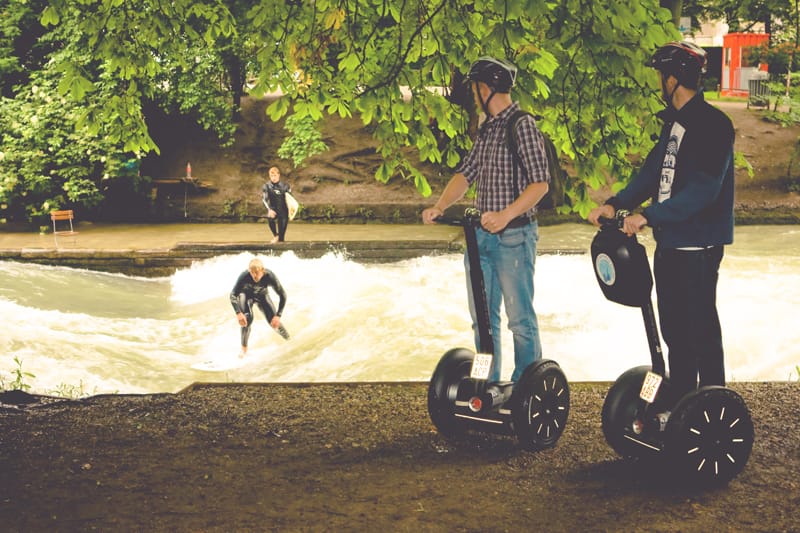
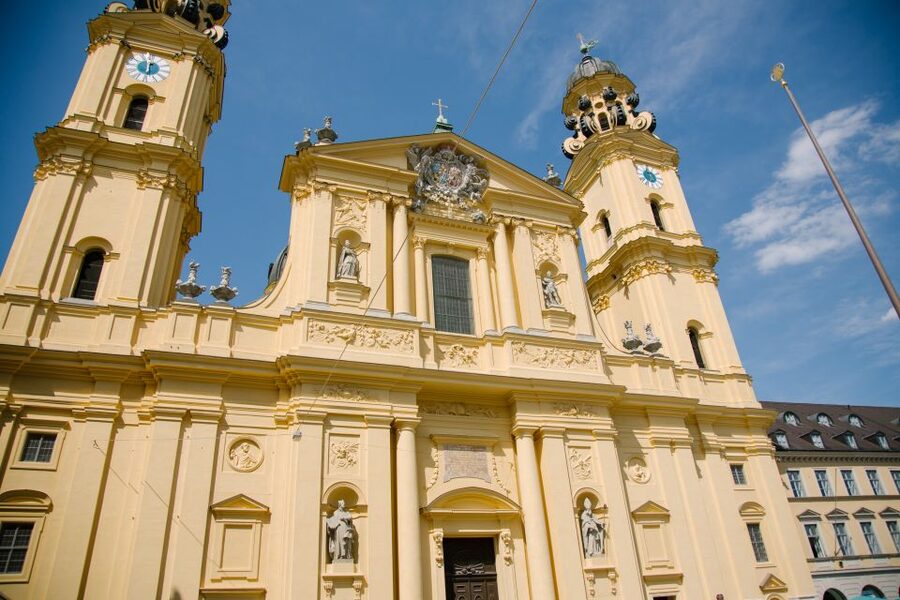
Odeonsplatz is one of the tour’s most photogenic central stops. From here, the route moves toward the Munich Residenz, the former royal palace complex.
The Residenz gives you a clear sense of Bavaria’s former ruling power. Its exterior and setting fit the tour’s royal architecture theme, while the guide’s stories explain how Munich grew from a medieval town into one of Germany’s wealthiest cities. You will not tour the palace interiors on this activity, so plan a separate visit if you want the rooms, treasury, and collections.
The Bavarian State Opera appears near the end of the central-city portion. Its imposing facade completes the royal and cultural picture. Together, the Residenz, opera house, Maximilianstraße, and Maximilianeum show a Munich shaped by court life, government, art, and money.
I like this balance. The tour does not treat Munich as only a city of wartime history, nor does it polish away the darker chapters. You move from Nazi-era sites to royal buildings and modern city life, which gives you a more honest sense of Munich’s character.
Haus der Kunst and the Eisbachwelle
Haus der Kunst adds another layer to the route. Its history is linked to the Nazi period, making it an important stop in a tour that examines how politics shaped Munich’s buildings and public spaces. The visit is brief, but the guide can connect the building to the broader story of the city’s wartime past.
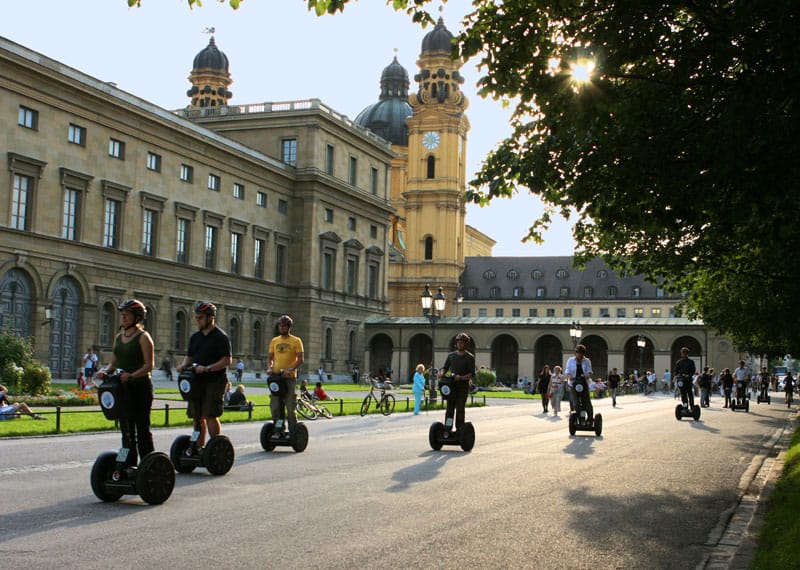
Then the tone shifts at the Eisbachwelle. Here, the Isar River forms a standing wave that local surfers ride year-round. It is one of Munich’s most unexpected sights, and it breaks up the heavier history with something energetic and distinctly local.
The stop lasts about 10 minutes, longer than most photo breaks. That gives you a better chance to watch the surfers and take pictures. Conditions can change, and the experience does not promise a particular surfing display, but the river wave itself is a major reason this route feels different from a standard city tour.
You should stay attentive near the water and follow the guide’s instructions. The tour is about seeing the surfers, not taking part in the activity.
From the Angel of Peace to the Isar River
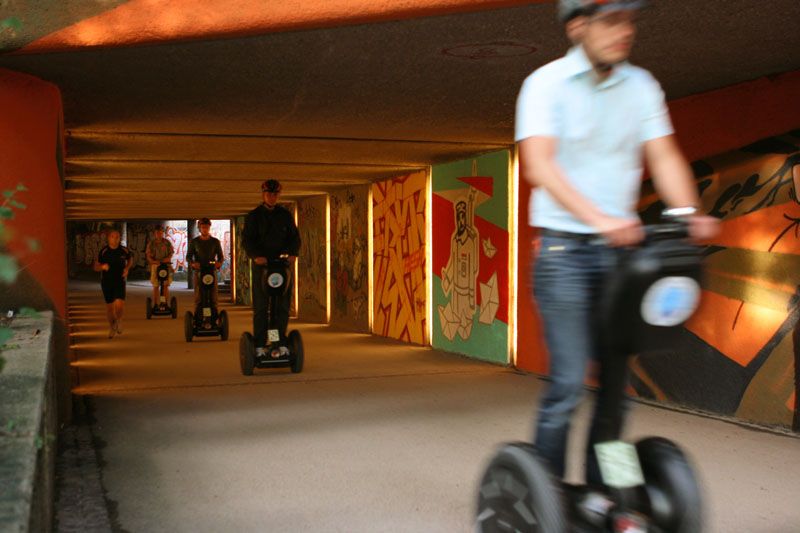
The Angel of Peace is another short photo stop along the route. Its column and golden figure add a decorative landmark to the eastern part of the city. After the darker sections earlier in the tour, this stop shifts attention back to Munich’s civic design and public monuments.
The route then reaches the Isar River. The river gives you a break from dense streets and formal buildings. It also shows how Munich’s outdoor life fits into the city, with the water and surrounding paths forming part of everyday local space.
The stop at the river is brief, around five minutes. Think of it as a scenic pause rather than a riverside walk. You will get a quick look, some fresh air, and another point of reference for exploring Munich later.
The Maximilianeum and Maximilianstraße
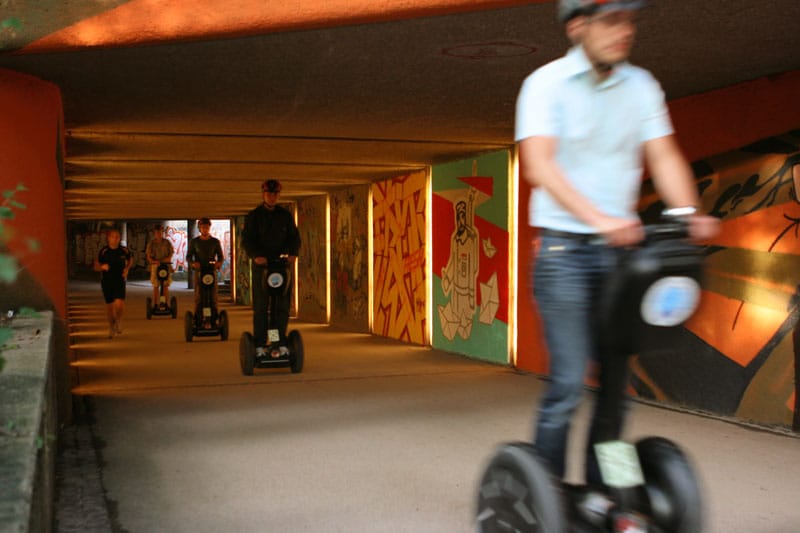
The Maximilianeum is one of the route’s strongest architectural stops. The palatial building has been home to the Bavarian state parliament since 1949, giving it both a royal appearance and a modern government role.
This is where the tour’s themes come together nicely. You see how buildings created for Bavaria’s rulers later became part of the democratic state. The guide can also explain Munich’s rise and the changing role of these grand institutions.
Maximilianstraße offers a different side of the city. The broad avenue is known for luxury shops and formal architecture, and it contrasts with the river paths and museum quarter. The tour does not turn into a shopping excursion, but the street gives you a quick look at Munich’s polished, expensive side.
The route finishes near the Bavarian State Opera before returning to Karlsplatz. You have seen museums, monuments, a palace, a parliament building, a river, and a famous surfing wave, all without spending the day underground or inside a coach.
What the guides add to the experience
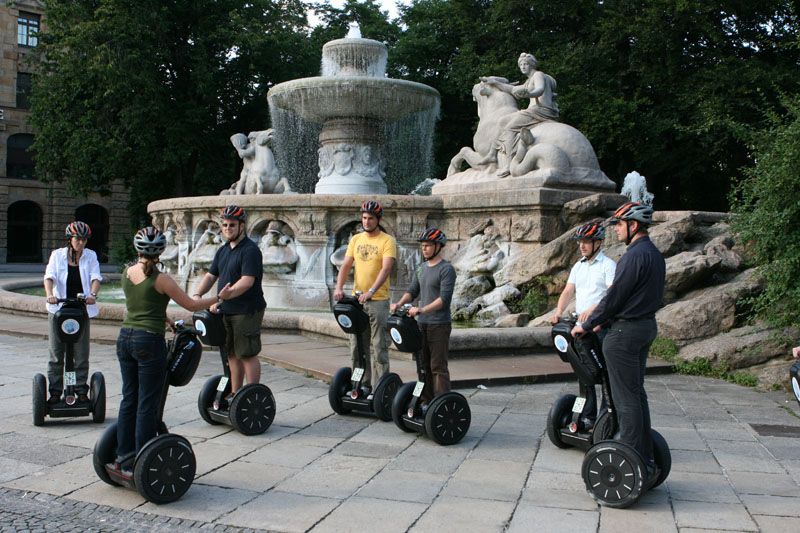
The machine gets you moving, but the guide determines how much you take away. The strongest praise has gone to guides who combine clear training with stories and humor.
Canaan is praised for making the instruction personal and for explaining Bavarian history through memorable stories. Matt is described as both a strong trainer and an entertaining storyteller. One group rode in sleet and still enjoyed the tour, though that experience also shows how much weather can shape the day.
Thomas received praise for explaining the city’s historic buildings and helping first-time riders. Bob made the ride more fun, while Steve helped a mixed German and Canadian couple enjoy the city together. José was remembered for creating a warm, upbeat group mood.
The style may vary by guide. Some people enjoy jokes and a relaxed tone, while others prefer a quiet, serious history lesson. This tour leans toward friendly storytelling rather than an academic lecture. One comment found some opening jokes unnecessary, so you should know the mood may be playful.
The small group limit of eight is valuable here. You are more likely to hear the guide at street stops, ask follow-up questions, and get individual assistance if the Segway feels uncertain. A larger group would make the road sections and instruction less personal.
Price, timing, and the question of value
The price is $91 per person for three hours. That is more than a basic walking tour, but you are paying for the Segway, equipment, safety instruction, a live guide, and a route that covers a large section of Munich.
I consider the price reasonable if you value distance and variety. You see far more than you could comfortably cover on foot in the same period, and the small group improves the experience. The value is weaker if you mainly want long explanations at each sight or plan to visit only the old town.
The listed duration is three hours, though one group reported running beyond four hours. Do not count on an extended tour, but leave a little space afterward in case the ride takes longer than planned. The tour returns to the starting point, which makes it easy to continue your day from Karlsplatz.
Free cancellation is available up to 24 hours before departure, and you can reserve now and pay later. Starting times vary, so check availability when choosing a date.
Who should book this Munich Segway tour?
I would recommend it to adults and teenagers aged 14 or older who want a broad first look at Munich. It suits first-time Segway riders, provided you are willing to spend time practicing before the sightseeing begins.
It is also useful for couples or families with older children, mixed-language groups, and anyone who wants both major sights and less expected stops. The English and German guide options make it practical for international visitors and German speakers.
You should think twice if you have back problems, recent surgery, limited mobility, a low level of fitness, or are pregnant. Participants must weigh between 100 and 250 pounds, or about 45 to 115 kilograms. The activity is not suitable for children under 14 or people over 95.
Cold rain deserves special attention. The tour runs in ordinary rain and other less-than-perfect conditions, except during extremely severe weather. Wind chill can make the ride feel much colder than a normal walk, especially at speed. Closed shoes, warm layers, and rain protection are not minor details here.
Should you book it?
Book this tour if you want Munich’s royal buildings, difficult twentieth-century history, museums, river scenery, and the Eisbach surfers in one active outing. The careful training and small group make it approachable for beginners, and guides such as Canaan, Matt, and Thomas have shown how much a good storyteller can add.
Skip it if you want long museum visits, a strictly serious history lecture, or a slow walk through the old town. For most visitors, I would schedule it near the start of the trip, use the guide’s tips to plan later sightseeing, and choose the mildest weather available.
FAQ
How long is the Munich Segway tour?
The tour lasts three hours, though the exact starting time depends on availability.
Where does the tour begin?
It begins at Fat Tire Tours, Karlsplatz 4, near Karlsplatz, also called Stachus.
How do I find Fat Tire Tours at Karlsplatz?
From the Karlsplatz McDonald’s, keep the city gate behind you and turn right along Sonnenstraße. After about 50 meters, the shop is on the right in the courtyard of Karlsplatz 4.
Where does the tour finish?
The tour ends back at the same meeting point at Karlsplatz 4.
Is Segway training included?
Yes. The activity includes Segway orientation and safety instruction, with about 30 minutes set aside for training.
Is the tour suitable for first-time Segway riders?
Yes. The tour includes instruction before the route begins, and first-time riders can receive individual help from the guide.
What languages are available?
The live guide is available in English and German.
How many people are in each group?
The group is limited to eight participants.
What sights are included?
The route includes Karolinenplatz, Königsplatz, the Alte Pinakothek, the Pinakothek der Moderne, Siegestor, Odeonsplatz, the Munich Residenz, Haus der Kunst, the Eisbachwelle, the Angel of Peace, the Isar River, the Maximilianeum, Maximilianstraße, and the Bavarian State Opera.
What should I bring?
Bring comfortable closed shoes, comfortable clothing, and cash. The tour takes place in rain unless weather becomes extremely severe, so dress for the forecast.
Are food and drinks included?
No. Food and drinks are not included.
What is the cancellation policy?
You can cancel up to 24 hours before the activity for a full refund.
What weight limits apply?
Participants must weigh between 100 pounds and 250 pounds, or approximately 45 to 115 kilograms.
Who cannot take part?
The activity is not suitable for children under 14, pregnant women, people with back problems, mobility impairments, recent surgeries, a low level of fitness, or people over 95 years old.
Just added around Munich
- Munich: Private or Group Third Reich and WWII Walking Tour★ 4.9 · 13 reviews
- From Munich: Neuschwanstein Castle and Linderhof Private Tour★ 5.0 · 13 reviews
- Private Transfer from Munich to Salzburg with 2 hours for sightseeing★ 4.5 · 13 reviews
- Munich: Historical Walking Tour on the Rise of Hitler★ 5.0 · 13 reviews
- Private Scenic Transfer from Munich to Prague with 4h of Sightseeing★ 5.0 · 13 reviews
- From Munich: VIP day trip to Salzburg★ 5.0 · 14 reviews
- National Socialism WWII with licensed guide – private tour★ 5.0 · 14 reviews
- Munich: Walking Tour Old Town 3D VR Tour in GERMAN★ 4.3 · 14 reviews
Third Reich & WWII Tours, compared.
Berlin’s Best: 2 Hour Walking Tour Third Reich and the Cold War
Read our review →
Third Reich Berlin: Hitler and WWII Walking Tour
Read our review →
Walking Tour of Former Nazi Party Rally Grounds
Read our review →
Browse the lists this tour appears in