
Reviewed · CITY TOURS
Munich: City Highlights Guided Segway Tour
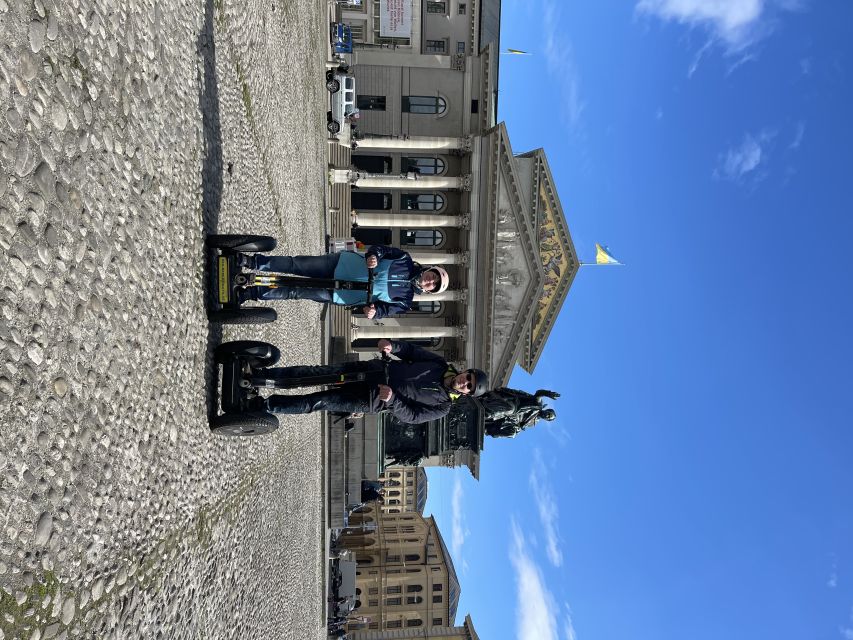
Munich opens up fast on two wheels. This three-hour Segway tour gives you a playful way to cover the English Garden, Isar River, Maximilianeum, Odeonsplatz, and Hofgarten without wearing out your feet. I like the generous practice session before the sightseeing begins, and I like how the route joins major landmarks with broad outdoor spaces rather than keeping you on ordinary city streets.
The main thing to consider is that a Segway is not for everyone. You need to be at least 14 years old, weigh between 45 and 118 kilograms including your load, and feel comfortable balancing on a moving machine. The tour runs in most weather, too, so bring suitable clothing. If you prefer a slow walking tour with long stops inside monuments, this is not your best fit.
Guides have included Rouen, Christian, Paula, and Christine, with strong praise for clear explanations, patience, and friendly local advice. One useful detail: no driving license is needed. You receive instruction, a helmet, a headset, and a proper practice period before the group heads into Munich.
In This Review
- Key points at a glance
- Why a Segway works well in Munich
- Starting at Artur-Kutscher-Platz
- Riding toward the English Garden and Angel of Peace
- The Maximilianeum beside the Isar
- Museum Island and St. Maximilian
- Maximilianstraße, Odeonsplatz, and the Theatine Church
- The Residenz, Hofgarten, and Bavarian State Chancellery
- The Eisbach and final sweep past Siegestor
- What the $99 price really buys you
- Who should book this ride?
- Cancellation, payment, and planning tips
- Should you book the Munich Segway tour?
- FAQ
- How long is the Munich Segway tour?
- Where does the tour start?
- How do I reach Artur-Kutscher-Platz by public transport?
- Do I need a driving license?
- What is included in the tour price?
- What languages are available?
- Are there age or weight requirements?
Key points at a glance
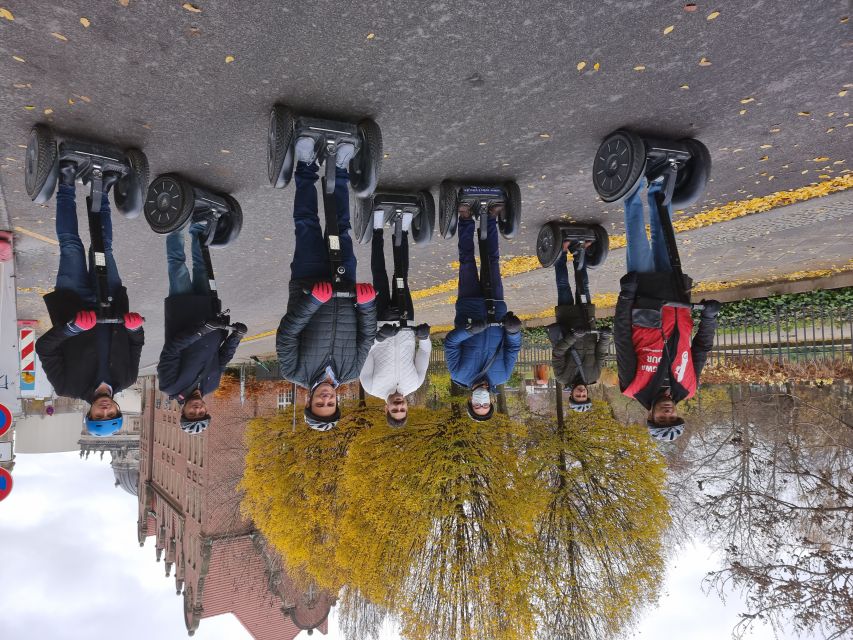
- Practice comes first: Your three hours include Segway instruction and training, so first-time riders are not expected to arrive fully prepared.
- A wide-ranging route: You see the English Garden, Angel of Peace, Maximilianeum, Museum Island, Odeonsplatz, Hofgarten, Eisbach, and Siegestor.
- Good for covering ground: You can reach more central sights than on a typical walking tour, while still hearing explanations from a live guide.
- The Isar adds variety: River paths and open spaces break up the formal squares and grand buildings.
- English and German guides: A headset helps you follow commentary while riding.
- Know the limits: The tour is unsuitable for children under 14, pregnant women, and anyone over 118 kilograms.
Why a Segway works well in Munich
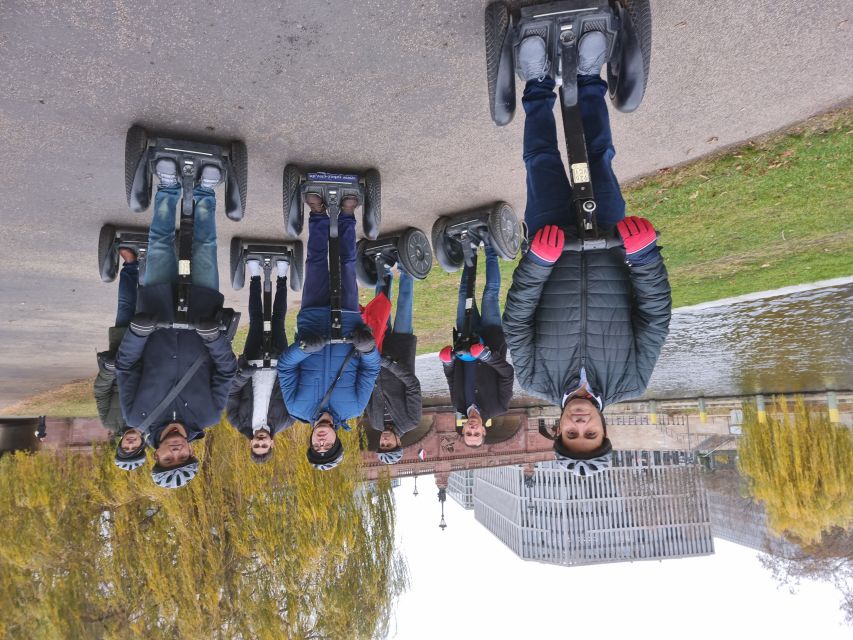
Munich is friendly to this kind of sightseeing. The route links formal royal architecture with leafy public spaces and the Isar River, so you are not simply circling one square after another. A Segway lets you move between these areas at a useful pace, with less effort than walking and more freshness than sitting in a vehicle.
I especially like the balance between sightseeing and motion. You get time to look at the city, but you are also doing something. The ride itself becomes part of the outing, which helps make familiar attractions feel new.
The tour is also a practical first-day choice. You get a broad look at Munich, then can decide which areas deserve a longer return visit. The three-hour length is long enough to provide an overview without taking your whole day.
Still, this is not a substitute for entering the Residenz, visiting the Deutsches Museum, or spending an afternoon in the English Garden. The route gives you outside views and guide commentary. You will need separate time for interiors and longer visits.
More City Tours in Munich
- Munich: Old Town & Viktualienmarkt City Walk in German
★ 4.7 · 2,304 reviews - Munich: City Bus Tour & FC Bayern Munich Allianz Arena Tour
★ 4.5 · 2,071 reviews - Munich City Hop-on Hop-off Tour
★ 3.5 · 1,233 reviews
Starting at Artur-Kutscher-Platz
The tour office is at Artur-Kutscher-Platz 2a in Schwabing. The easiest public transport connection is Münchner Freiheit, reached by tram 23, buses 53, 54, or 144, and metro lines U3 or U6.
From the station, take the exit toward Feilitzstraße and Leopoldstraße. Walk down Feilitzstraße, turn left onto Occamstraße, and continue for about five minutes to Artur-Kutscher-Platz. Give yourself enough time for this walk, especially if you are unfamiliar with Munich or carrying a day bag.
Parking is available at Artur-Kutscher-Platz with a meter. If you cannot find a space there, a parking lot is located on Occamstraße. Public transport is likely the simpler choice for most people, since you avoid the uncertainty of finding a central parking space before a fixed departure.
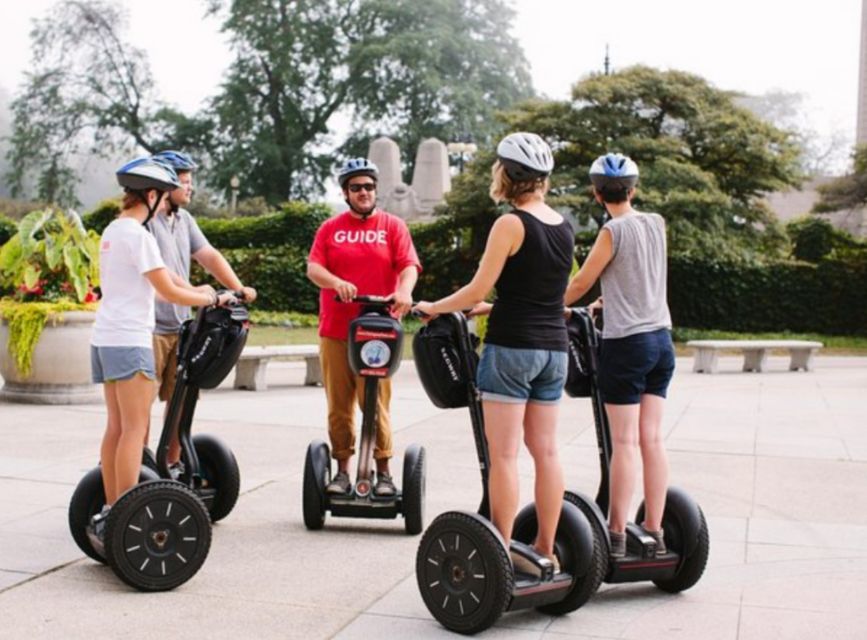
At the office, you receive your Segway, helmet, and headset. The guide explains how to accelerate, slow down, steer, and stop. The training matters. Several riders with no previous Segway experience found the instructions easy to follow, and the practice period gave them time to gain control before setting off.
The total timing can change with group size and individual riding ability. That is worth remembering if you have a restaurant booking or a train to catch immediately afterward.
Riding toward the English Garden and Angel of Peace
The first major part of the route heads toward the English Garden, one of Munich’s defining public spaces. Seeing it from a Segway gives you a broader sense of how much open ground lies within the city. Rather than stopping at a single garden entrance, you ride through the area as part of a longer route.
The tour then follows the Isar River toward the Angel of Peace. This monument, known in German as the Friedensengel, is one of Munich’s most recognizable landmarks. Its position near the river gives the stop a more open feel than the tightly packed central squares.
This section is a good test of how much you enjoy the Segway. You are moving through scenery instead of pausing for a formal lecture at every building. The headset lets you listen while riding, although you may need to concentrate on steering and surroundings at the same time.
The pace also depends on the group. A confident rider may find the route easy, while a beginner may appreciate a slower start. The tour description is clear that training is part of the allotted three hours, so you should not expect every minute to be spent sightseeing.
The Maximilianeum beside the Isar
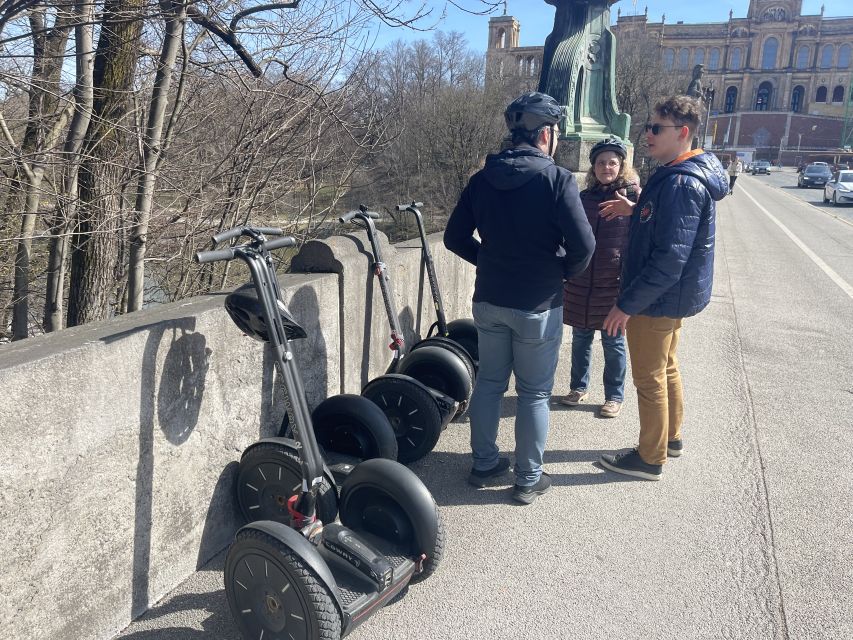
From the Angel of Peace, the route continues to the Maximilianeum, the seat of the Bavarian State Parliament. Its location above the Isar gives it a strong visual presence, and the building is one of the most important architectural sights on this route.
Construction took place from 1857 to 1874 under architect Friedrich Bürklein. The building was designed to fit its setting along the river, which makes the approach especially worthwhile. You see not only the façade, but also the relationship between the grand structure, the water, and the surrounding city.
I like this stop because it adds political and civic context to the tour. Munich is not only palaces, churches, and beer halls. The Maximilianeum reminds you that the city remains a working capital of Bavaria.
You should treat this as an exterior viewing stop. The tour does not include entry to the state parliament, and the route is designed for moving sightseeing rather than extended interior visits.
More Segway & Scooter Tours in Munich
- Munich 3-Hour Segway Tour: Nazi Munich & Royal Architecture
★ 4.9 · 194 reviews - Munich Segway Tour
★ 5.0 · 181 reviews - Munich: City Highlights Guided Segway Tour
★ 4.5 · 161 reviews - Munich’s Highlights 3-hour Segway Tour
★ 5.0 · 76 reviews
Museum Island and St. Maximilian
The ride continues along the Isar toward Museum Island and the Deutsches Museum. The museum is one of Munich’s major institutions, especially for science and technology, but this Segway outing only gives you an outside view.
That is not a flaw if you see the tour as an orientation. You can note the museum’s location and return later when you have several hours for its exhibitions. Trying to combine a full Deutsches Museum visit with this three-hour ride would make for a hurried day.
You also see the parish church of St. Maximilian on the west bank of the Isar. The river corridor gives this portion of the tour a different character from Maximilianstraße and the formal center. You move through several layers of Munich, from public institutions to church architecture and riverfront views.
This is where a guide can add real value. The route passes quickly, so a clear explanation helps you understand what you are seeing rather than simply collecting names. Past guides such as Paula have been praised for providing plenty of information, while Rouen was singled out for strong English and useful explanations of monuments and history.
Maximilianstraße, Odeonsplatz, and the Theatine Church
Next comes Maximilianstraße, one of Munich’s grand avenues. The road leads toward the Residenz Theatre and Odeonsplatz, an area that brings together royal power, military memory, and striking church architecture.
At Odeonsplatz, you ride past the Feldherrnhalle and the Theatine Church. The Feldherrnhalle is a monumental loggia with a strong connection to Bavarian royal symbolism and later political events. The Theatine Church, with its pale façade and elaborate interior, is one of the city’s most memorable churches from the outside.
A Segway is useful here because you can connect several nearby sights without repeatedly checking a map or crossing the center on foot. You get a guide’s running commentary and a route that keeps the day moving.
The tradeoff is that central Munich can feel more demanding than the river sections. You need to pay attention to pedestrians, street layout, and the group around you. The headset helps you hear the guide, but you should not expect to stare at buildings continuously while riding.
The Residenz, Hofgarten, and Bavarian State Chancellery
The route glides past the Munich Residenz and the Hofgarten. The Residenz was the city residence of Bavaria’s rulers, while the Hofgarten offers a more ordered and relaxed setting beside it.
This pairing works well. The Residenz gives you scale and royal formality; the Hofgarten gives you space, greenery, and a chance to see how Munich’s historic center makes room for public life. You see the buildings from outside and keep moving, so plan a separate Residenz visit if ornate rooms and collections are high on your list.
The tour also passes the Bavarian State Chancellery. This adds another civic landmark to a route already featuring the state parliament. Taken together, these stops show Munich as both a historic royal city and the modern political center of Bavaria.
I find this part most useful when you want a mental map of the city. Afterward, you will understand how the Residenz, Hofgarten, Odeonsplatz, and river are connected. That can save time during later independent sightseeing.
The Eisbach and final sweep past Siegestor
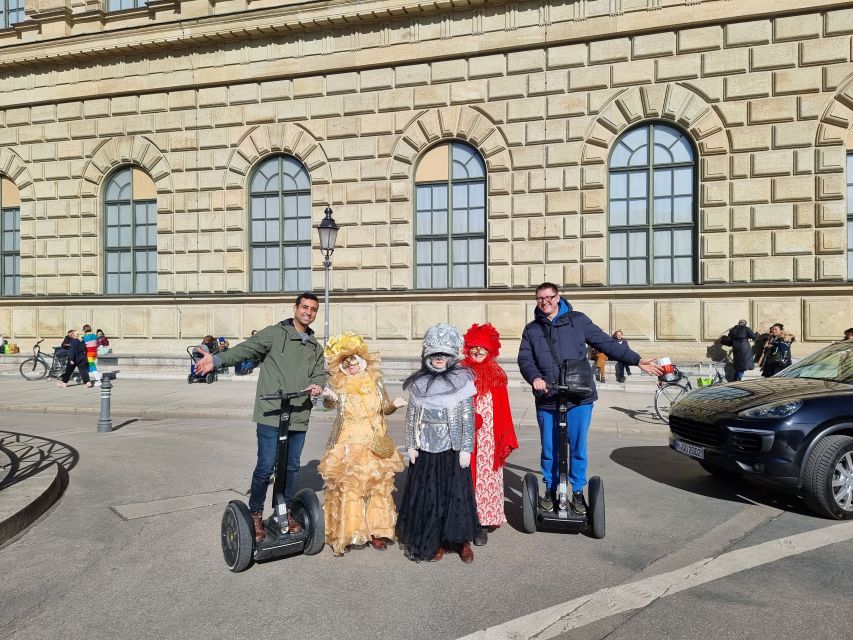
Near the English Garden, the route reaches the Eisbach, Munich’s famous fast-flowing stream. The Eisbach is known for its urban wave, though the supplied tour details do not promise a dedicated stop or viewing period for the surfers. Your experience here may depend on timing, crowd conditions, and the group’s pace.
Even without a long pause, the Eisbach is an enjoyable contrast to the formal buildings earlier in the tour. It shows Munich’s habit of mixing serious architecture with everyday outdoor activity.
From there, the group swings around the Siegestor before returning to Artur-Kutscher-Platz. Siegestor, or Victory Gate, gives the final stretch a grand architectural finish. The return route also brings you back toward Schwabing, making the starting point fairly convenient for continuing your day in that part of Munich.
The tour does not include drinks, so carry water if you need it. One past rider especially enjoyed the early stop near an outdoor beer garden and restaurant, but food and drinks are not listed as part of the included service. Treat any refreshment stop as dependent on the guide and route conditions, not as a guaranteed feature.
What the $99 price really buys you
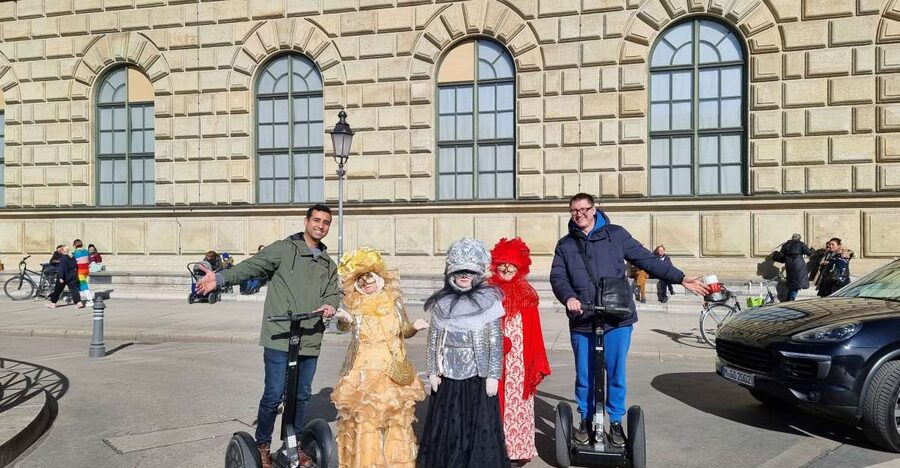
At $99 per person, this is not the cheapest way to see Munich. You can walk through the old center for free, and public transport costs far less. The price makes more sense when you value the Segway rental, helmet, guide, headset, and instruction as one package.
You are paying for more than transport. The guide handles route planning, teaches you the equipment, and connects sights that might take longer to assemble on your own. If you have only a short stay in Munich, that ability to cover ground has real value.
It is also a good choice for people who find a full walking tour tiring but still want to be outside. You are not sitting behind glass, and you get a sense of the city’s scale. The strongest praise has focused on the fun of riding, the patience of the guides, and the number of areas covered.
Value drops if you already know Munich well, dislike group activities, or want extended time at each landmark. In that case, a self-guided day with public transport may suit you better.
Who should book this ride?
I would recommend it most strongly to adults and teens aged 14 or older who want an active introduction to Munich. It works particularly well for first-time visitors, small groups, and anyone who likes mixing sightseeing with a simple physical activity.
The tour can also suit you if you are nervous about riding. The training is not an afterthought, and people without previous experience have found they had enough practice to take part comfortably. You still need to be willing to balance, follow instructions, and ride in an urban setting.
I would hesitate if you are pregnant, over 118 kilograms, under 14, or uncomfortable on wheeled equipment. It is also less suitable for anyone seeking a quiet, highly detailed architectural tour with long stops and indoor access.
Guides speak German and English. Past guide names include Rouen, Christian, Paula, and Christine, but the assigned guide can vary. Christian received especially warm praise for a private tour, while another rider found a guide’s severe cough made commentary hard to understand. That appears to be an isolated communication problem, but it is a useful reminder that the headset and guide’s voice both matter.
Tours operate in all weather unless conditions become extreme. Wear layers and weather-ready clothing rather than assuming Munich will stay sunny. A wet day may reduce the pleasure of riding, even though the tour is designed to continue in ordinary poor weather.
Cancellation, payment, and planning tips
You can cancel up to 24 hours before departure for a full refund. The reserve-now, pay-later option lets you hold a place without paying immediately, which is helpful when your Munich schedule is still shifting.
Check the available starting times before booking, and leave room around the three-hour duration because the end time can vary with group size and riding skills. Arrive at Artur-Kutscher-Platz with enough time to find the office, complete the fitting process, and focus on the training.
Do not bring alcohol or drugs. The tour requires attention and safe riding, so this rule is practical as well as formal.
Should you book the Munich Segway tour?
Book it if you want to see a large slice of Munich in three hours and like the idea of learning a new way to move around. The route is unusually well balanced, combining the English Garden and Isar with the Maximilianeum, Odeonsplatz, the Residenz, Hofgarten, Eisbach, and Siegestor.
Skip it if you want museum entry, a private pace, or a purely historical walking experience. At $99, the tour earns its price through equipment, training, guidance, and coverage rather than through included food or interior admissions.
For most first visits, I see it as a lively orientation ride. You get the city’s big picture, a little local context, and several ideas for what to explore on foot afterward.
FAQ
How long is the Munich Segway tour?
The tour lasts three hours. This time includes the instruction and practice session, and the total duration may vary with group size and individual riding skills.
Where does the tour start?
It starts at the tour office at Artur-Kutscher-Platz 2a, 80802 Schwabing, Munich.
How do I reach Artur-Kutscher-Platz by public transport?
Take tram line 23, bus lines 53, 54, or 144, or metro lines U3 or U6 to Münchner Freiheit. Exit toward Feilitzstraße and Leopoldstraße, walk along Feilitzstraße, turn left onto Occamstraße, and continue for about five minutes.
Do I need a driving license?
No. A driving license is not required for this activity.
What is included in the tour price?
The price includes Segway rental, instruction, a helmet, a live guide, and a headset. Drinks are not included.
What languages are available?
The live tour guide is available in German and English.
Are there age or weight requirements?
Participants must be at least 14 years old and weigh between 45 and 118 kilograms, including their load. The tour is not suitable for pregnant women or people over 118 kilograms.
Just added around Munich
- Munich: Private or Group Third Reich and WWII Walking Tour★ 4.9 · 13 reviews
- From Munich: Neuschwanstein Castle and Linderhof Private Tour★ 5.0 · 13 reviews
- Private Transfer from Munich to Salzburg with 2 hours for sightseeing★ 4.5 · 13 reviews
- Munich: Historical Walking Tour on the Rise of Hitler★ 5.0 · 13 reviews
- Private Scenic Transfer from Munich to Prague with 4h of Sightseeing★ 5.0 · 13 reviews
- From Munich: VIP day trip to Salzburg★ 5.0 · 14 reviews
- National Socialism WWII with licensed guide – private tour★ 5.0 · 14 reviews
- Munich: Walking Tour Old Town 3D VR Tour in GERMAN★ 4.3 · 14 reviews
City Tours, compared.

1-Hour City Tour by Boat with Guaranteed Seating
Read our review →
City History Canal Sightseeing Tour on a Motorboat
Read our review →
Browse the lists this tour appears in