
Reviewed · THIRD REICH & WWII TOURS
Private Walking Tour in Berlin: Hitler’s Germany & WWII
Berlin’s darkest chapters are written into its streets. This private four-hour walk connects major Third Reich sites with a historian guide, and I like its clear focus on the Nazi rise to power, wartime Berlin, resistance, persecution, and the Holocaust. I also like that your private group can spend longer at a place that matters to you, rather than being hurried along with a large crowd.
The main drawback is that every site is viewed from outside. You will not enter the Topography of Terror, the Holocaust Memorial information center, or the Reichstag, and public transport costs about €4 extra per person. At $173.06 per person, the tour makes the most sense for a small group that wants personal attention and a serious, guided discussion.
In This Review
- Key points about this Berlin Third Reich walking tour
- What the four-hour route actually offers
- Museum Blindenwerkstatt Otto Weidt begins with rescue and resistance
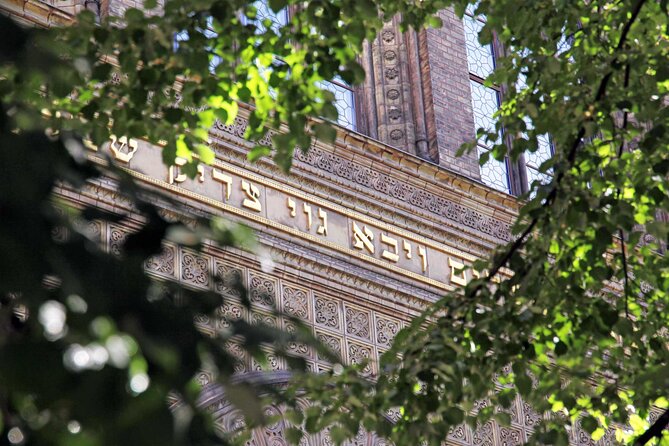
- Neue Synagogue and the human cost of persecution
- Anhalter Bahnhof makes deportation history painfully concrete
- Topography of Terror and the machinery of terror
- Aviation Ministry and a changing Berlin government district
- Johann Georg Elser brings resistance into the story
- Holocaust Memorial asks for quiet attention
- The memorial for homosexual victims widens the picture
- Soviet Memorial Tiergarten adds the war’s aftermath
- The Reichstag finishes the walk at Germany’s parliament
- What the guides add to the experience
- Is $173.06 per person fair?
- Who will get the most from this walk?
- Practical advice before you book
- Should you book this Berlin Nazi history tour?
- FAQ
- How long does the private walking tour last?
- Where does the tour begin?
- Where does the tour finish?
- Are the attractions visited from inside?
- Is public transport included?
- Is this a private tour?
- Can I cancel for a full refund?
Key points about this Berlin Third Reich walking tour
- The route covers ten important sites, from the Museum Blindenwerkstatt Otto Weidt near the start to the Reichstag at the finish.
- The tour is private, so only your own group participates and the pace can respond to your interests.
- Hitler’s bunker site is included from the outside, along with the former Gestapo and SS headquarters area.
- Anhalter Bahnhof adds a personal human link, since the guide explains its role in deportations to concentration camps.
- Resistance receives attention, including the Johann Georg Elser sculpture and people who opposed Nazi rule.
- The price includes the professional guide, fees, and taxes, but not public transport or a tip.
What the four-hour route actually offers
I see this as a walking history lesson spread across central Berlin, not a museum tour. You move between sites while your guide supplies the explanation, connecting locations that can otherwise look like ordinary streets, fragments of buildings, memorials, and government offices.
The advertised duration is about four hours, though one recent account describes a walk lasting three and a half to four hours. The listed stops add up to roughly 105 minutes of scheduled explanation, leaving time for walking, questions, public transport, and longer pauses at selected locations.
That flexible timing matters. A private tour can linger when your group wants more detail, which is especially useful at the Holocaust Memorial or Topography of Terror. The tradeoff is that you should not expect every stop to receive an equally long lecture.
The walk begins at Neue Promenade 3, 10178 Berlin, and usually finishes outside the Reichstag at Platz der Republik 1. Public transport is not included, and the tour information says you need a Berlin AB single ticket costing about €4 per person. Confirm the meeting instructions after booking, since confirmation is subject to availability and is sent within 48 hours.
More Third Reich & WWII Tours in Berlin
- Berlin: Third Reich and Cold War 2 Hour Walking Tour
★ 4.9 · 6,830 reviews - Berlin’s Best: 2 Hour Walking Tour Third Reich and the Cold War
★ 5.0 · 5,486 reviews - Third Reich Berlin: Hitler and WWII Walking Tour
★ 5.0 · 3,301 reviews
Museum Blindenwerkstatt Otto Weidt begins with rescue and resistance

The first stop is the Museum Blindenwerkstatt Otto Weidt. Your guide explains the history of the site during a short visit of about ten minutes, with no admission charge listed.
This is a useful opening because the tour is not limited to Hitler, military decisions, and government buildings. It also points toward people who struggled against the Nazi system and tried to protect others. I value that wider frame: Berlin’s Nazi past was shaped not only by official power, but also by individual choices made under terrible pressure.
Since the stop is guided from the outside, you should not expect a museum visit during this tour. If the story catches your interest, note the name and consider returning independently for a longer look.
Neue Synagogue and the human cost of persecution
At Stiftung Neue Synagoge Berlin, also known as Centrum Judaicum, the guide gives another ten-minute explanation. Admission is free for this stop, but the experience described here remains an exterior visit.
The synagogue adds an important Jewish Berlin setting before the route reaches larger memorials. I like the way this keeps the subject tied to a living city rather than treating the Holocaust as a distant chapter with no connection to present-day streets.
You may find this stop brief for such a significant site. The guide’s explanation gives you context, but it cannot replace time inside a museum or a full visit to the institution. If Jewish Berlin is a major reason for your trip, plan separate time here.
Anhalter Bahnhof makes deportation history painfully concrete
The ruined remains of Anhalter Bahnhof are one of the most affecting points on the route. The guide explains that the station was used to deport prisoners to concentration camps, making this more than a transport landmark or picturesque ruin.
I find sites like this valuable because they connect policy to movement. Deportation required trains, stations, schedules, and systems that operated in the real city. Standing near the remains can help you understand how persecution moved people out of Berlin and into the camp system.
The scheduled explanation is about ten minutes. That is enough for a focused account, but it is not a long memorial visit. Ask for extra time here if this part of the story is especially important to you, since the private format allows the group to adjust the pace.
More Walking Tours in Berlin
- Discover Berlin Half-Day Walking Tour
★ 5.0 · 9,624 reviews - Berlin: Discover Berlin Walking Tour
★ 4.9 · 5,998 reviews - Berlin: Hidden Backyards Guided Walking Tour
★ 4.8 · 5,360 reviews - Berlin: Alternative Berlin Walking Tour
★ 4.6 · 1,204 reviews
Topography of Terror and the machinery of terror
The tour then reaches the Topography of Terror, the site of the former Gestapo and SS headquarters. Your guide explains the site from outside during another ten-minute stop.
This is one of the central locations for understanding how Nazi terror was organized. The value of having a guide here is not simply identifying a building. It is hearing how this location fits into the larger story of state persecution, surveillance, and violence.
The obvious limitation is that the tour does not include entry. If you want the displays and documents inside the Topography of Terror, you will need to return on your own. I would strongly consider doing so, since the exterior explanation can give you a useful preview and help you know what to look for inside.
Aviation Ministry and a changing Berlin government district

The former Aviation Ministry of Berlin receives about ten minutes of explanation. The tour presents it as another site tied to the period, allowing you to see how Nazi-era power occupied Berlin’s government center.
This stop helps break up the memorial sequence with a large institutional building. You are not just visiting monuments to victims. You are also looking at the places where authority operated and where the Nazi state presented itself through offices and official architecture.
Again, you view the building only from outside. The guide’s account is the main reason to stop here, so this part will suit you best if you enjoy connecting architecture and political history.
Johann Georg Elser brings resistance into the story
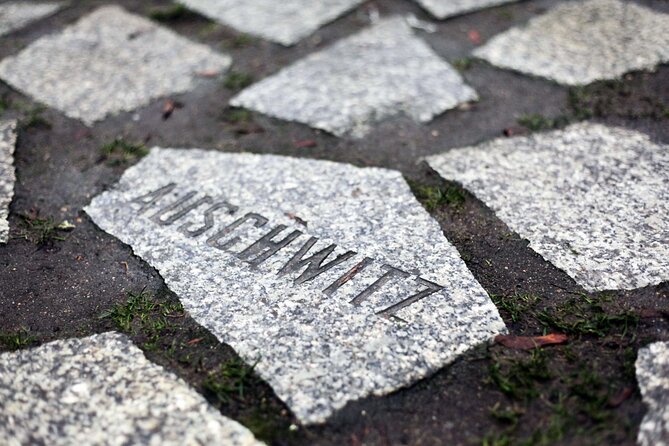
The Johann Georg Elser sculpture gives the tour a direct focus on resistance. Your guide explains the history of the sculpture and the person it represents during a ten-minute stop.
I appreciate this inclusion because tours about Hitler’s Germany can become too centered on the dictator. Resistance was dangerous, varied, and often unsuccessful, but it still matters to the story. This sculpture gives the guide a natural point for discussing someone who acted against the Nazi system.
The tour summary promises attention to people who struggled against the terror system, and this stop is where that promise becomes especially visible. If resistance is a priority for you, tell your guide early so the flexible time can be used well.
Holocaust Memorial asks for quiet attention
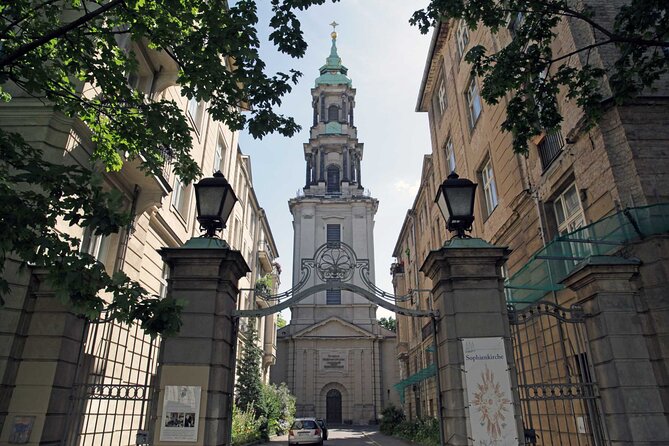
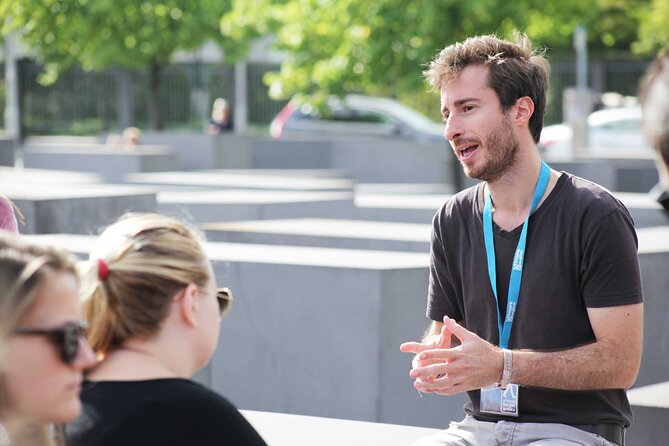
The Memorial to the Murdered Jews of Europe receives the longest scheduled pause, about fifteen minutes. The memorial is free to visit, though the tour does not include entry to any associated indoor exhibition.
The field of concrete slabs is powerful, but it can be hard to interpret without context. Your guide can explain the memorial’s place in Berlin’s public memory and help you approach it with the seriousness it requires. I would not treat this as a quick photo stop.
Fifteen minutes may feel short, especially if you want to walk through the memorial at your own pace. The private format helps here, since the tour can stay longer depending on your group’s interest. If you want the indoor documentation center, plan another visit beyond the tour.
The memorial for homosexual victims widens the picture
The Monument to Homosexuals Persecuted Under National Socialist Regime is another ten-minute stop. Its inclusion gives the tour a wider account of persecution under the Nazis and makes clear that the Holocaust and Nazi terror affected more than one targeted community.
This is a small but meaningful part of the route. I like that the tour does not stop at the best-known memorial and then move on. It recognizes another group persecuted by the regime, giving you a fuller sense of how Nazi racial and social control worked.
The explanation is brief, so you may want to ask questions if this subject is new to you. As with the other memorials, the site itself is viewed from outside.
Soviet Memorial Tiergarten adds the war’s aftermath
At the Soviet Memorial Tiergarten, the guide explains the site during a ten-minute stop. This brings the tour into the final phase of the war and the immediate meaning of Berlin as a defeated Nazi capital.
The memorial also helps shift the story from Nazi rule to the conflict’s aftermath. You are still following the Second World War, but the focus has begun to move toward what happened to Berlin after the regime collapsed.
Because the tour covers many subjects in four hours, this stop will be concise. I see it as a bridge to the final location rather than a long examination of postwar Berlin.
The Reichstag finishes the walk at Germany’s parliament
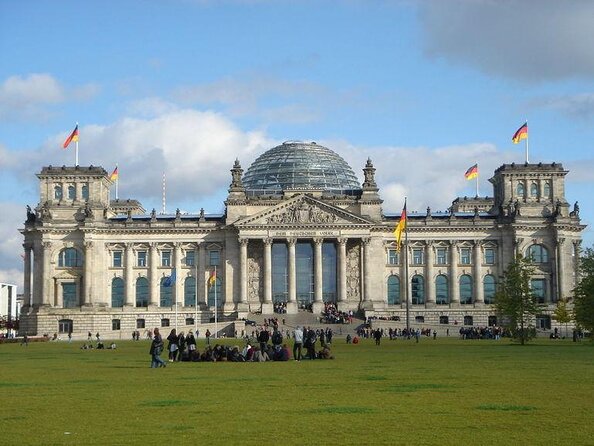
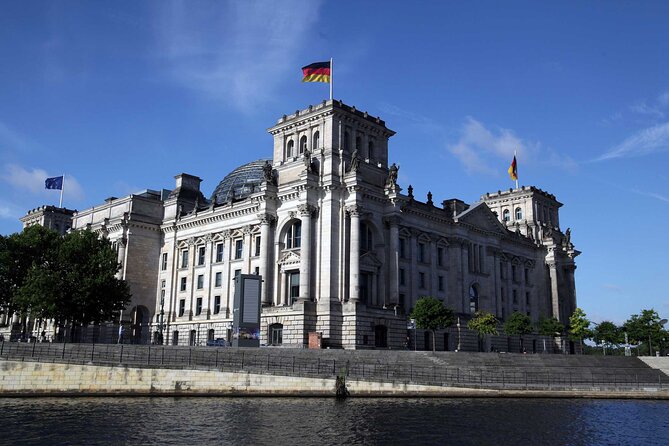
The final stop is the Reichstag Building, where the guide explains its history from outside for about ten minutes. The tour usually ends here, at Platz der Republik 1.
Finishing at the Reichstag gives the route a strong contrast. You begin with sites connected to Nazi power and persecution, then end at the home of Germany’s parliament. The guide does not take you inside, and admission is not included, so treat this as the closing point for the walk rather than a Reichstag visit.
The ending is practical, too. You can continue exploring Berlin after the tour, arrange your own Reichstag visit if available, or simply use the location as a clear point for your next plan.
What the guides add to the experience
The guide is the heart of this tour. The strongest praise centers on clear explanations, friendly conversation, and the ability to answer questions rather than recite dates.
Several guide names appear in the feedback: Jasper, Stefan, Rohan, Lewis, and Xavier. Jasper is praised for a thorough account of the sites and the Nazi rise to power. Stefan is described as friendly and engaged with questions, while Rohan received especially strong approval for making the subject work for a 15-year-old with school-level history knowledge.
Lewis is praised with unusual warmth, and Xavier is described as bringing both expertise and emotion to a difficult period. You cannot assume which guide you will receive, but these names give you a useful sense of the guide team’s reported strengths.
I would tell your guide at the start what you already know and what you most want to understand. A private walk works best when you treat it as a conversation, not just a procession from plaque to plaque.
Is $173.06 per person fair?
At $173.06 per person, this is not a cheap way to see Berlin. It is a private tour, though, so the value changes with the size of your group and the quality of the discussion.
For a family, couple, or group of friends sharing the experience, the price can make sense if you want a personal pace and a guide focused only on your questions. Group discounts are offered, but the available information does not state the discount amount.
The cost includes all fees and taxes and a professional guide. It does not include the roughly €4 AB public transport ticket or a tip. Since all ten sites are seen from the outside and no admission tickets are included, you are paying mainly for the guide’s time, route planning, and interpretation.
I would compare this with the cost of assembling the route yourself. You can walk past many of these locations independently, but you would need to research the connections and decide how much time to give each one. If you value explanation over entry tickets, the private format is the main reason to pay the premium.
Who will get the most from this walk?
I recommend it most for you if you:
- Want a focused introduction to Berlin under Hitler and during the Second World War
- Prefer a private guide to a large scheduled group
- Learn best by asking questions as you walk
- Are interested in both persecution and resistance
- Have limited time and want several major sites connected in one morning or afternoon
- Are visiting with a teenager who already has some school history
I would look elsewhere if you mainly want indoor museums, long periods at each memorial, or a relaxed sightseeing walk. Four hours and ten stops create a brisk structure, even with the option to linger.
The subject is also emotionally heavy. You will be discussing deportation, concentration camps, state terror, and the murder of European Jews. That is appropriate to the places, but you should leave room afterward if you prefer not to rush straight into another demanding activity.
Practical advice before you book
Wear comfortable shoes and bring water, since this is a walking tour lasting about four hours. On a hot day, the lack of shade or seating at some stops may affect your comfort, so plan clothing and breaks with care.
Keep your schedule flexible. The tour is described as a half-day experience, and the remaining time depends on your group’s interests. You may spend longer at one attraction, but that can mean a shorter explanation elsewhere.
Download or keep your mobile ticket ready, and allow time to reach Neue Promenade 3. Service animals are allowed, the meeting area is near public transport, and most people can participate. If you need a specific arrangement, contact the provider before booking rather than assuming the route can be changed.
Free cancellation is available up to 24 hours before the start time for a full refund. Changes or cancellations made less than 24 hours before the start time are not accepted for a refund, with cut-off times based on Berlin local time.
Should you book this Berlin Nazi history tour?
I would book it if you want a serious, guide-led introduction to Nazi Berlin and prefer a private group. The route covers a lot: deportation, government power, resistance, memorials, the bunker site, the Soviet memorial, and the Reichstag.
I would not book it expecting a museum day. You see every listed attraction from outside, and the price is high if you are traveling alone or mainly want entry tickets.
For a small group that values a strong guide, the flexibility is the real benefit. Ask questions, request extra time at Anhalter Bahnhof or the Holocaust Memorial, and tell the guide what you already know. Done that way, this walk can give you a clear, sober framework for exploring Berlin’s Nazi past on your own afterward.
FAQ
How long does the private walking tour last?
The tour lasts approximately four hours. One account describes the walk as lasting about three and a half to four hours.
Where does the tour begin?
The meeting point is Neue Promenade 3, 10178 Berlin, Germany.
Where does the tour finish?
The tour usually ends outside the Reichstag Building at Platz der Republik 1, 11011 Berlin, Germany.
Are the attractions visited from inside?
No. The tour views the attractions from outside, and the guide explains their history at each stop.
Is public transport included?
No. A Berlin AB single ticket is required and costs about €4 per person.
Is this a private tour?
Yes. Only your own group participates in the activity.
Can I cancel for a full refund?
Yes, if you cancel at least 24 hours before the experience start time. Cancellations or changes made less than 24 hours before the start time are not refunded.
Just added around Berlin
- Kreuzberg Private Walking Tour: Immigrants, Artists & Hipsters★ 5.0 · 3 reviews
- Private Photo Tour in Kreuzberg★ 5.0 · 3 reviews
- Individual city tour Berlin for max. 8 persons★ 5.0 · 3 reviews
- Berlin’s Jewish Heritage: Private Tour of the Vibrant Jewish District★ 5.0 · 3 reviews
- Berlin & The Third Reich Private Guided Tour★ 5.0 · 3 reviews
- Private Analogue Photography Experience in Berlin★ 5.0 · 3 reviews
- Spy Mission in Berlin: Self-Guided Espionage Puzzle Quest★ 5.0 · 3 reviews
- Berlin Christmas Markets Walking Tour with Local Guide★ 5.0 · 3 reviews
Third Reich & WWII Tours, compared.



Berlin’s Best: 2 Hour Walking Tour Third Reich and the Cold War
Read our review →

Third Reich Berlin: Hitler and WWII Walking Tour
Read our review →
Walking Tour of Former Nazi Party Rally Grounds
Read our review →
Browse the lists this tour appears in