
Reviewed · HISTORICAL TOURS
Berlin’s Jewish Heritage: Private Tour of the Vibrant Jewish District
Berlin’s stones tell hard stories. This three-hour private walk connects the former Jewish quarter, the New Synagogue, Stolpersteine, and memorials at Friedrichstraße Station with a guide focused on clear historical context. I especially like the private format, which lets you ask questions at your own pace, and the chance to visit the Otto Weidt Museum, a small but powerful site about rescue during Nazi rule. The main consideration is that the New Synagogue admission is not included, and the tour is more about seeing key places and understanding them than spending long periods inside museums.
You can choose a morning or afternoon departure, and pickup is offered. The route suits anyone who wants an honest introduction to Berlin’s Jewish past without committing to a full-day program. A three-hour walk can still feel emotionally heavy, so give yourself time afterward before rushing to your next sight.
In This Review
- Key points to know before booking
- Why this Berlin walk matters
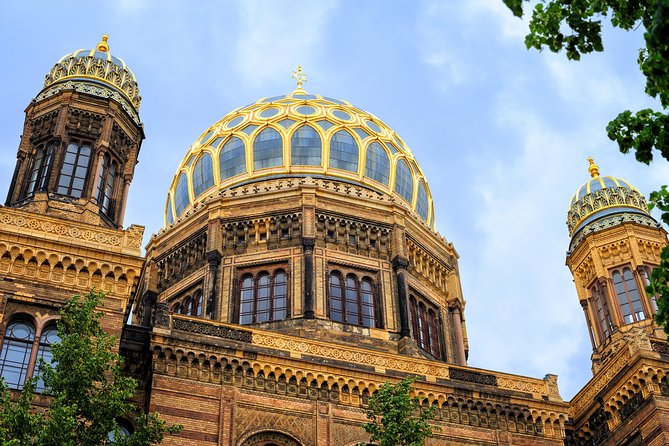
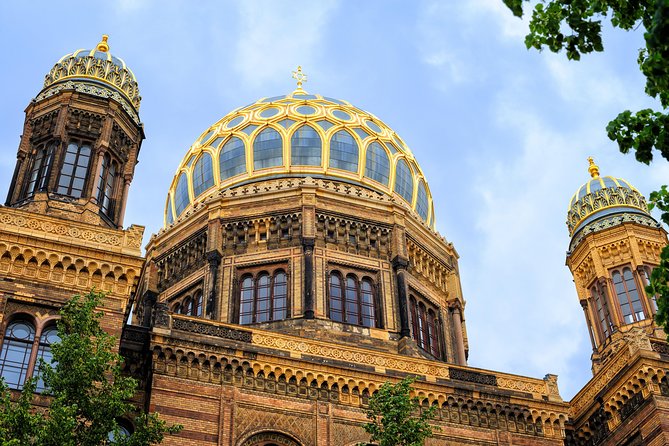
- Starting beneath the golden domes of the New Synagogue
- Walking Scheunenviertel, where memorials meet ordinary streets
- Remembering children at Friedrichstraße Station
- Meeting Otto Weidt and the people he tried to protect
- How the private format changes the walk
- Is $23 good value for three hours?
- Who will get the most from this tour?
- Practical planning for your three hours
- Should you book Berlin’s Jewish Heritage walk?
- FAQ
- How long does the private Jewish heritage tour last?
- What places are included on the route?
- Is admission to the New Synagogue included?
- Is this a private tour?
- Are morning and afternoon departure times available?
- Can I cancel for a full refund?
Key points to know before booking
- The New Synagogue begins the story: See the golden domes and learn why this was once Germany’s largest Jewish place of worship.
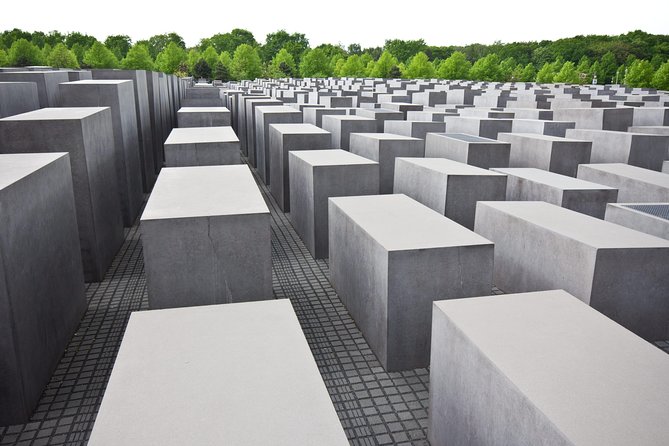
- Scheunenviertel links daily life with persecution: Walk through the former Jewish quarter, visit the city’s oldest Jewish Cemetery, and look for Stolpersteine set into the pavement.
- Friedrichstraße Station carries two painful stories: The memorial recalls children sent west to safety and Jewish children deported east to extermination centers.
- Otto Weidt’s workshop offers a personal story of rescue: The museum explains how a factory owner protected mainly blind and deaf Jewish workers.
- Your guide shapes the experience: Orit is praised for sharing her own personal story, while Walid is described as personable and professional.
- The $23 price is strong for a private walk: The value depends on the option you choose, since vehicle use, public transport, and pickup arrangements can vary.
Why this Berlin walk matters
Berlin’s Jewish story is not confined to one museum. It appears in grand buildings, quiet courtyards, small brass plaques, former cemeteries, railway stations, and ordinary streets. That makes a walking tour useful here. You are not simply moving from one indoor exhibit to another. You are seeing how Jewish life was part of the city before the Holocaust, and how Nazi persecution later altered the same places.
This tour focuses on the area historically known as Scheunenviertel, part of Berlin’s former Jewish quarter. The route gives you a basic timeline: Jewish life before World War II, the destruction brought by Nazi rule, and the ways Berlin remembers those who were murdered or forced from their homes.
I like that the tour does not treat the Holocaust as a detached chapter in a textbook. The Stolpersteine and Friedrichstraße memorial are encountered in the city itself. The setting makes the subject harder to keep at a distance.
At the same time, you should know what this tour is not. It is not a full survey of every Jewish site in Berlin, and it does not promise extended museum visits. The stops are fairly short, with about 10 minutes at the New Synagogue and Friedrichstraße memorial, and about 30 minutes each in Scheunenviertel and at the Otto Weidt Museum.
More Historical Tours in Berlin
- Berlin: Natural History Museum Entrance Ticket
★ 4.6 · 3,382 reviews - Berlin: World Heritage Cruise to Potsdam
★ 4.5 · 1,435 reviews - Berlin Historical Highlights Walking Tour
★ 4.9 · 657 reviews
Starting beneath the golden domes of the New Synagogue
The New Synagogue is a striking opening point. Its ornate golden domes are among the clearest visual markers of Berlin’s former Jewish quarter, and the building was once the largest Jewish place of worship in Germany.
Your guide uses the synagogue to set the scene before the walk moves into more intimate memorials. That order makes sense. You first see the scale and public presence of Jewish life in Berlin, then follow the route into streets and sites connected with individual people and families.
The scheduled visit here is about 10 minutes, and admission is not included. The tour information also states that no museum entries are required, so you should expect an explanation and exterior viewing rather than a long indoor visit as part of the standard route.
That limitation matters if you are hoping to tour the entire building or spend time with exhibitions. You may want to plan a separate visit, if available, rather than assuming the private walk includes full entry.
Still, the synagogue works well as a first stop. Its appearance can make Jewish Berlin feel visible and established, not like a subject that began only with persecution. That framing is important, and a good guide can help you hold both parts of the story together.
Walking Scheunenviertel, where memorials meet ordinary streets
The Scheunenviertel section lasts about 30 minutes. This is where the tour becomes a street-level lesson in Berlin’s Jewish past, with stops at the oldest Jewish Cemetery in the city and at Stolpersteine memorials.
The cemetery is connected with the gravesite of Moses Mendelssohn, an important figure in Jewish intellectual life. The stop is brief, but it gives the tour a link to the city’s earlier Jewish community, long before the Nazi period.
The Stolpersteine offer a different kind of encounter. These small memorial stones are placed in the pavement to remember victims of Nazism. You may pass one without noticing it on your own, but with a guide you are more likely to understand what these markers mean and why they are placed at the sites connected with individual lives.
I find this part especially valuable because it moves the focus away from statistics. A plaque or stone set into a sidewalk suggests a person who once lived in that exact neighborhood. It turns a broad historical subject into something attached to homes, streets, and daily routines.
The tradeoff is that walking through an urban district can feel less structured than visiting a museum. There may be noise, traffic, or interruptions, and the route does not provide a single exhibition space with every fact arranged in order. Your guide is therefore central. The two guide names connected with the experience are Orit and Walid. Orit is praised for being professional and for sharing her own personal story, while Walid is described as personable and professional when explaining the sights.
Those comments point to the most important feature of a private tour: the person leading it. The route is meaningful, but the quality of the explanation will shape how much you take away.
Remembering children at Friedrichstraße Station
The stop called Trains to Life, Trains to Death is at Friedrichstraße Station and takes about 10 minutes. It is one of the most difficult moments on the route because the memorial holds two sharply different parts of Berlin’s wartime story.
After the Nazi pogroms of 1938, children were transported west to safety. From 1942 onward, other children were deported east by the Nazi regime to extermination centers such as Auschwitz-Birkenau.
The memorial asks you to consider how the same railway system could represent rescue for some children and death for others. That contrast is the point, and it gives the stop an emotional force that a simple date list cannot provide.
Because the scheduled time is short, do not expect a long formal ceremony or an extended museum-style presentation. The value comes from pausing, listening, and allowing the location to register. If you are traveling with children, the subject may require some thought about how much detail is appropriate for them.
This is also a practical place to remember that Berlin’s memorials are not all grand monuments. Some are set beside transport hubs or along normal city routes. The setting can feel jarring, but it is part of how the city keeps the past in public view.
Something different for another day:
- Berlin: Reichstag, Dome and Government District Guided Tour
★ 4.7 · 18,288 reviews - Berlin: 1-Hour City Tour by Boat with Guaranteed Seating
★ 4.3 · 16,993 reviews - Berlin: Boat Tour Along the River Spree
★ 4.4 · 11,252 reviews - Discover Berlin Half-Day Walking Tour
★ 5.0 · 9,624 reviews
Meeting Otto Weidt and the people he tried to protect
The Museum Blindenwerkstatt Otto Weidt is scheduled for about 30 minutes and is likely the most personal stop on the tour. It tells the story of a German factory owner who employed mainly blind and deaf Jewish workers during the Nazi period.
The subject gives you a different angle on survival. Instead of focusing only on laws, deportations, and mass murder, the museum centers on a workplace and on one man’s effort to protect people from certain death at the hands of the Nazis.
That setting makes the stop especially useful after the cemetery and railway memorial. You have already considered the wider community and the fate of children. Here, the story narrows to a factory owner, his workers, and the choices made under a murderous regime.
The museum entry is listed as free, and no museum entry fee is required for the tour. Even so, the half-hour visit is not long. I would treat it as a focused introduction, not as a replacement for a full museum afternoon.
The stop also helps balance the route. A tour devoted only to destruction can leave you with a narrow picture of Jewish life and German society. Otto Weidt’s story does not soften the crimes of the period, but it shows that individual actions still mattered, even when the wider system was built for persecution.
How the private format changes the walk
A private tour means only your group participates. That is a real advantage in a subject where questions often come up naturally and where you may want a pause at a memorial rather than a rushed explanation.
With a large group, the guide has to keep moving and repeat the same speech. Here, you can ask for more context about the New Synagogue, the cemetery, or the Stolpersteine. You can also tell the guide if you need a quieter pace during the more painful sections.
The private format is particularly useful for families, couples, and small groups with different levels of background knowledge. Someone who already knows the broad outline of the Holocaust can ask more specific questions, while someone new to Berlin’s Jewish history can request a simple explanation.
There is also a practical advantage: morning and afternoon departure choices make it easier to fit the walk around other plans. Pickup is offered, and the route is near public transportation. Still, check the exact option when booking. A private vehicle with a professional driver is included only depending on the chosen option, and public transportation costs may also depend on that selection.
That wording matters. Do not assume every booking includes a car or that transport costs are covered. The tour is fundamentally a walking experience, with vehicle service available for some choices.
Is $23 good value for three hours?
At $23, this is an appealing price for a private three-hour introduction, especially if your group can share the cost. You receive a professional local guide, a route through several important sites, and access to the guide’s personal attention rather than a standard group lecture.
The price is strongest for people who want orientation. You can use the walk to decide which sites deserve a longer return visit, including the New Synagogue or the Otto Weidt Museum.
The value is less clear if you expect every entrance, meal, and transport cost to be included. Food and drink are not covered. Museum entries are not required, but the New Synagogue admission is not included, and vehicle or public transport arrangements depend on the option selected.
Group discounts are available, which may make the tour even more attractive for a family or small party. I would compare the private price with the total cost for your group, not just the per-person figure.
The three-hour length is also a sensible middle ground. A shorter walk might feel rushed, while a full day focused on persecution and memorials could be exhausting. This route gives you several important stops without taking over your whole day.
Who will get the most from this tour?
I would recommend this experience if you want:
- A clear introduction to Berlin’s Jewish past before World War II
- A private guide who can answer questions during the walk
- A mix of architecture, streets, memorials, cemetery history, and a museum
- A short experience that fits into a larger Berlin itinerary
- A thoughtful route for a couple, family, or small private group
- A way to visit the former Jewish quarter without planning every stop yourself
You may want something else if your main goal is a long indoor museum visit, a full tour of the New Synagogue, or a specialist academic lecture. The schedule allows about 30 minutes at the Otto Weidt Museum and only about 10 minutes at the synagogue, so the emphasis is on connections between places.
I would also think about your energy for serious subjects. This is not a light sightseeing stroll. The memorials address persecution, deportation, extermination, and the fate of children. That weight is part of the tour’s purpose, but it is worth planning a quieter activity afterward.
Practical planning for your three hours
Wear comfortable shoes. The route covers streets in the former Jewish quarter, and the experience is built around walking between sites rather than sitting in one location.
Choose the departure time that gives you room to pause. A morning walk leaves the afternoon open for another museum, while an afternoon departure can work well after a relaxed start to the day.
Bring questions. A private tour gives you more freedom than a fixed group visit, and the guide’s ability to explain the history is one of the main reasons to book. You may want to ask about the relationship between prewar Jewish life, the Nazi period, and Berlin’s memorial culture today.
Also, confirm the transport arrangement tied to your selected option. Pickup is offered, but the information does not establish that every departure includes private car service. Public transportation costs may apply depending on the choice you make.
Free cancellation is available if you cancel at least 24 hours before the start time. Cancellations within 24 hours are not refunded, and changes made during that period are not accepted.
Should you book Berlin’s Jewish Heritage walk?
I would book it if you want a compact, private introduction to Berlin’s Jewish quarter and the Holocaust memorials connected with it. The strongest reasons are the thoughtful route, the personal guide format, and the contrast between major sites such as the New Synagogue and smaller memorials such as the Stolpersteine.
The Otto Weidt Museum gives the walk a human center, while Friedrichstraße Station adds a painful reminder of how children experienced both rescue and deportation. Guides Orit and Walid have been praised for their professionalism and personable manner, and Orit’s willingness to share her own personal story may add an especially direct connection.
Choose another experience if you need extensive indoor access or a longer specialist visit. For most people seeking a focused three-hour walk at a modest $23 price, this is a thoughtful way to begin understanding Berlin’s Jewish past.
FAQ
How long does the private Jewish heritage tour last?
The tour lasts approximately three hours.
What places are included on the route?
The route includes the New Synagogue Berlin, Scheunenviertel, the Trains to Life Trains to Death memorial at Friedrichstraße Station, and the Museum Blindenwerkstatt Otto Weidt.
Is admission to the New Synagogue included?
No. Admission to the New Synagogue is not included. The tour does not require museum entry for the scheduled experience.
Is this a private tour?
Yes. Only your group participates in the private activity.
Are morning and afternoon departure times available?
Yes. You can choose between morning and afternoon departure times.
Can I cancel for a full refund?
Yes, if you cancel at least 24 hours before the experience start time. Cancellations made less than 24 hours before the start time are not refunded.
Just added around Berlin
- Kreuzberg Private Walking Tour: Immigrants, Artists & Hipsters★ 5.0 · 3 reviews
- Private Photo Tour in Kreuzberg★ 5.0 · 3 reviews
- Individual city tour Berlin for max. 8 persons★ 5.0 · 3 reviews
- Berlin & The Third Reich Private Guided Tour★ 5.0 · 3 reviews
- Private Analogue Photography Experience in Berlin★ 5.0 · 3 reviews
- Spy Mission in Berlin: Self-Guided Espionage Puzzle Quest★ 5.0 · 3 reviews
- Berlin Christmas Markets Walking Tour with Local Guide★ 5.0 · 3 reviews
- Berlin By Night by Private Minivan Highlights and Taylor made★ 5.0 · 3 reviews
Historical Tours, compared.

City History Canal Sightseeing Tour on a Motorboat
Read our review →


Bamberg: Guided Beer History Tour with Optional Tasting
Read our review →Browse the lists this tour appears in