
Reviewed · THIRD REICH & WWII TOURS
Berlin & The Third Reich Private Guided Tour
Berlin remembers its darkest years in plain sight. This four-hour private walking tour links Nazi power sites, wartime ruins, Holocaust remembrance, and Cold War division into one clear story. I like the route because it covers major sights without treating them as disconnected photo stops.
I also like the private format, which lets your group of up to 15 ask questions and set the pace. Guides including Walid, Campbell, and Gregor have been praised for making a long walk both interesting and easy to follow. The main drawback is the non-refundable booking policy, so you will want firm plans before paying.
In This Review
- Key points at a glance
- Why this four-hour route works
- Pariser Platz and the Brandenburg Gate
- The Reichstag and the collapse of democracy
- The Holocaust Memorial and the space between the stones
- The Führerbunker site and Berlin’s plainest memorial
- Potsdamer Platz and Berlin rebuilt
- Checkpoint Charlie and the Cold War after 1945
- The private format and the guide’s role
- Is $329.92 a fair price?
- Who should choose this Berlin tour?
- My verdict: book it if the story matters
- FAQ
- How long does the Berlin and the Third Reich tour last?
- Where does the tour begin?
- Where does the tour end?
- Is the tour private?
- Is hotel pickup available?
- Are admission tickets included?
- Can service animals join the tour?
- Can most people participate?
Key points at a glance
- A four-hour walk through Berlin’s 20th-century turning points, from the Nazi rise to power through the Cold War.
- Private groups of up to 15 people, useful for families, couples, or friends who want direct access to their guide.
- The Führerbunker site is now an ordinary parking area, a striking reminder of how much Berlin has changed.
- The Holocaust Memorial receives proper time, with about 20 minutes among its stone stelae.
- The route connects famous sights with overlooked details, including the Reichstag fire, wartime damage, and the former Berlin Wall divide.
- Guides are a major part of the experience, with Walid, Campbell, and Gregor receiving especially warm praise for their storytelling.
Why this four-hour route works
Berlin can feel like a history book spread across a large city. The Brandenburg Gate points to Prussian royalty, the Reichstag recalls the collapse of democracy, the Holocaust Memorial confronts genocide, and Checkpoint Charlie brings you into the Cold War. Seen separately, these places can blur together. Linked by a single guide, they form a much more useful timeline.
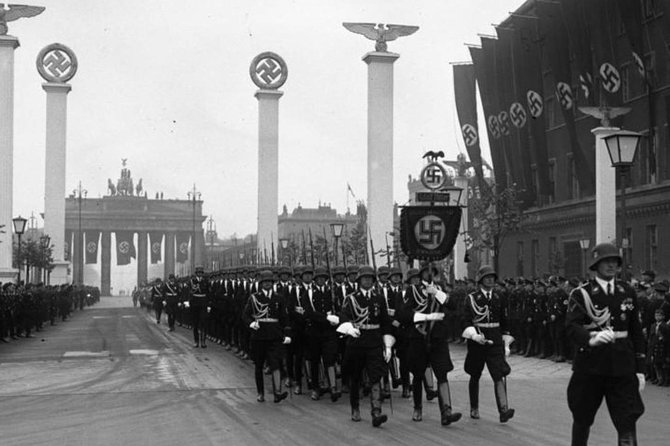
This tour focuses on how Hitler and the Brownshirts fought their way into power, how the Nazi government operated, how the Second World War scarred Berlin, and how the city was divided afterward. You are not simply looking at monuments. You are being shown how political decisions reshaped the streets around you.
The tour lasts about four hours and is conducted privately, with only your group taking part. That matters here. The subject is complicated, and you may want to pause at a site, ask about a detail, or return to a point your guide made earlier. A large public group can make that harder.
The route is primarily a walking experience. One particularly strong description calls it a four-hour stroll with stops for conversation at key sites. Wear comfortable shoes, and expect the historical content to be serious. This is not a light sightseeing loop with a few dramatic stories added for effect.
More Third Reich & WWII Tours in Berlin
- Berlin: Third Reich and Cold War 2 Hour Walking Tour
★ 4.9 · 6,830 reviews - Berlin’s Best: 2 Hour Walking Tour Third Reich and the Cold War
★ 5.0 · 5,486 reviews - Third Reich Berlin: Hitler and WWII Walking Tour
★ 5.0 · 3,301 reviews
Pariser Platz and the Brandenburg Gate
The meeting point is at Brandenburg Gate on Pariser Platz, a sensible place to begin because several major themes meet here. Pariser Platz is Berlin’s grandest square, located at the end of Unter den Linden and framed by one of Europe’s most familiar landmarks.
The gate itself began as a royal entrance for the Hohenzollern family. It was one of 18 former city gates, but its meaning changed repeatedly. Napoleon passed through Berlin after his victory over Prussia. During the 20th century, the gate survived the destruction of war and later sat beside the Berlin Wall.
Your guide can use this one monument to explain the city’s changing political identity. It was once tied to monarchy, later associated with Nazi spectacle and wartime ruin, then trapped at the edge of divided Berlin. Today it represents reunification, but that meaning is fairly recent.
The planned time here is about 15 minutes, with another 15 minutes listed for Pariser Platz. Since the two locations overlap physically, the guide may treat them as one opening chapter rather than two fully separate stops. That is useful, because the history makes more sense when the square and gate are discussed together.
The Reichstag and the collapse of democracy
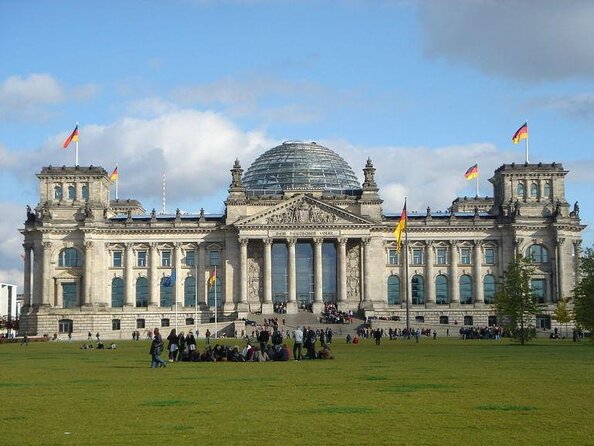
The Reichstag Building is only scheduled for about 10 minutes, so you should expect an exterior explanation rather than an extended visit inside. The building is Germany’s national parliament, but its importance on this tour comes from the fire that helped Hitler take total control.
That event is a key part of the story because it connects a physical building with the destruction of democratic safeguards. Your guide can place the Reichstag fire within the wider struggle between the Nazi movement and its political opponents, showing how fear and emergency measures helped transform government.
The building also carries the marks of the Battle of Berlin. German and Soviet forces fought over it during the final phase of the Second World War. Looking at the Reichstag from outside, you are seeing a parliament that survived monarchy, dictatorship, total war, division, and reunification.
A glass dome designed by British architect Sir Norman Foster now tops the building. The dome gives the Reichstag a modern appearance, but it also creates a sharp contrast with the building’s violent past. If you are hoping to enter the dome, do not assume that this tour includes admission. The route lists free admission at the stop, but the visit is presented as part of a guided outdoor itinerary.
The Holocaust Memorial and the space between the stones
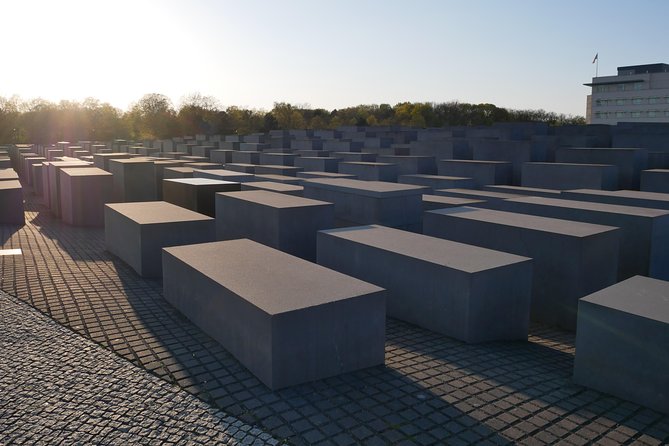
The Memorial to the Murdered Jews of Europe is given about 20 minutes, more time than several of the other stops. That is appropriate. This is not a monument you should rush past on the way to the next landmark.
The site is covered with concrete stelae arranged across an open area. As you move among them, the ground and the height of the blocks alter your sense of space. The memorial does not tell the entire story in a single inscription. Its force comes from the setting, the scale, and the stark absence of decorative comfort.
Your guide’s role here is important. A good explanation can connect the memorial to the persecution and murder of Europe’s Jews without turning the stop into a lecture detached from the place itself. You will have time to look, listen, and consider what you are seeing.
This is also a point where the tone of the tour becomes especially serious. Families should decide how much historical detail is suitable for younger children. The experience is open to most people, but the subject matter is difficult by its nature.
Something different for another day:
- Berlin: Reichstag, Dome and Government District Guided Tour
★ 4.7 · 18,288 reviews - Berlin: 1-Hour City Tour by Boat with Guaranteed Seating
★ 4.3 · 16,993 reviews - Berlin: Boat Tour Along the River Spree
★ 4.4 · 11,252 reviews - Discover Berlin Half-Day Walking Tour
★ 5.0 · 9,624 reviews
The Führerbunker site and Berlin’s plainest memorial
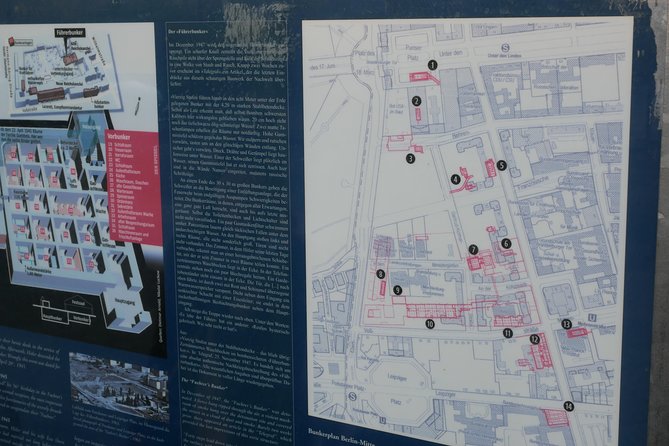
One of the most unsettling stops is also the least dramatic visually. The Führerbunker site is now a parking lot with a simple sign. This is where Hitler spent his final days, married Eva Braun, and committed suicide near the end of the war in Europe.
Do not arrive expecting a preserved bunker interior or an imposing ruin. You will see an ordinary modern setting. That plainness is the point. The site has not been turned into a grand shrine, and the lack of theatrical decoration makes the guide’s explanation carry the weight.
This stop can correct a common misunderstanding about Berlin’s Nazi sites. Many important locations no longer look important. Buildings were destroyed, rebuilt, repurposed, or covered by later city development. Without a guide, you could walk through the area and never know what happened beneath or around it.
The scheduled time is about 15 minutes. That should be enough to understand the location and its final wartime chapter, though anyone wanting a detailed study of bunker construction or Nazi leadership will need a more specialized experience.
Potsdamer Platz and Berlin rebuilt
Potsdamer Platz adds a useful change of pace. In the 1920s, it was one of Europe’s busiest traffic intersections. The Second World War then left the area almost completely destroyed.
The modern district was rebuilt during the 1990s and early 2000s as one of Berlin’s most contemporary precincts. You are therefore looking at two cities at once: the prewar crossroads and the modern redevelopment that replaced a shattered zone.
The planned stop lasts about 10 minutes. That is short, but enough for your guide to point out the contrast between wartime destruction and post-reunification construction. This stop also helps explain why Berlin can feel visually uneven. Old monuments, empty spaces, Soviet-era buildings, and modern architecture often sit within a few minutes of one another.
I find this kind of stop valuable because it moves beyond the Nazi period alone. Berlin’s story did not end in 1945. The city had to rebuild, divide, and later reconstruct itself again after the Wall fell.
Checkpoint Charlie and the Cold War after 1945
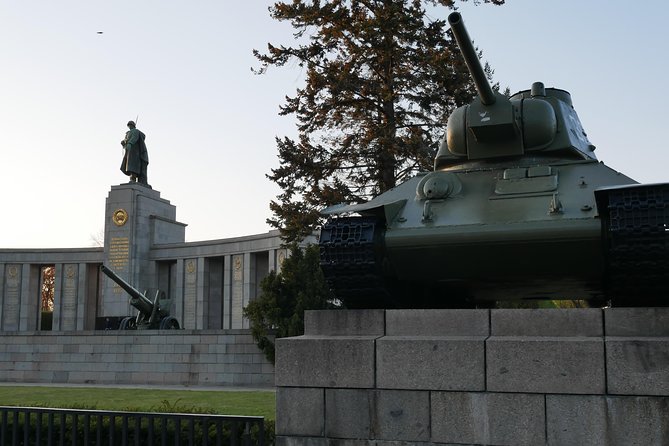
Checkpoint Charlie was the famous frontline crossing manned by American and Soviet forces during the Cold War. It is the final listed stop, and it gives the tour a clear endpoint: Nazi dictatorship and wartime defeat led not to a quiet peace, but to decades of division.
The checkpoint is tied to the Berlin Wall, which divided the city for almost 30 years. The Brandenburg Gate, introduced at the start of the tour, was also caught in that division. Seeing both sites in one walk helps you understand that Berlin’s political geography changed long after the Second World War ended.
The stop is scheduled for about 10 minutes. That works for a concise explanation, though you may find the area busier and more commercial than the quieter memorial sites. The tour’s strength is not that it turns Checkpoint Charlie into a full Cold War seminar. It is that the guide places it within the larger sequence of Berlin’s modern history.
After Checkpoint Charlie, the activity ends back at the meeting point according to the supplied details. The practical information also says pickup is offered, while the stated start is Brandenburg Gate on Pariser Platz. Confirm the exact pickup arrangement when booking if you need door-to-door collection.
The private format and the guide’s role
The strongest part of this experience is likely to be the person leading it. The route contains plenty of landmarks, but the quality of the visit depends on whether the guide can connect them without losing the thread.
Walid has been praised for turning the four hours into a steady walk with useful pauses at important locations. Campbell guided a private tour in early June and was singled out for making the experience feel essential. Gregor was praised for explaining Berlin’s modern history with impressive command of the subject.
I would choose the private option if you are traveling as a couple, family, or small group and want to ask direct questions. The maximum group size is 15, which still allows a fairly large party, so do not assume every private booking will feel intimate. The advantage is that no unrelated group joins you.
A private tour also lets your guide respond to your interests. You can ask for more detail about Nazi government, wartime destruction, Jewish persecution, the Berlin Wall, or the rebuilding of Potsdamer Platz. The supplied route gives each stop a rough time, but a private guide may adjust the emphasis within the four-hour window.
Is $329.92 a fair price?
The price is $329.92 per group of up to 15 people. That sounds expensive if you are comparing it with a free public walking tour or a museum entrance fee. It becomes more reasonable when split among a group.
For 15 people, the cost works out to about $22 per person. For 10 people, it is about $33 each. For four people, it is about $82 each, and for two, nearly $165 per person. The value therefore depends heavily on your group size.
You are paying for a private guide, not for admission to a series of paid attractions. The listed stops have free admission, and the route is built around outdoor sites and explanations. I see the value in the organization, the historical connections, and the chance to ask questions, not in included tickets.
If you are traveling alone or as a couple on a strict budget, the cost may be hard to justify. If you have a family or group of friends, the price looks much better. It can also be a smart first-day activity because it gives you a map of Berlin’s central historical sights and may help you decide where to return later.
The tour is often booked about 12 days ahead. That suggests you should not leave it until the final morning of your trip if the timing matters to you. Since the booking is non-refundable and cannot be changed, check your dates carefully before committing.
Who should choose this Berlin tour?
I would recommend it most strongly if you want Berlin’s history explained as one connected story. It suits first-time visitors who keep passing major monuments without knowing why they matter, and it works well for people who prefer a guide to reading plaques on their own.
It is also a good fit for families with older children, history-focused couples, and groups that want a private experience rather than a large scheduled walk. Service animals are allowed, the meeting area is near public transportation, and most people can participate.
You may want a different format if you dislike walking, want to spend a long time inside museums, or prefer a narrow focus on one period. Four hours is enough for a strong overview, but not enough for detailed interior visits or a full study of every site.
The emotional tone also deserves attention. This is a serious tour about dictatorship, genocide, war, and division. The guide may make the route engaging and clear, but the subject itself remains heavy. That is a reason to choose it, not a flaw, as long as you know what kind of afternoon you are booking.
My verdict: book it if the story matters
I would book this tour if you want Berlin’s Nazi and Cold War history placed in a clear sequence, especially with a group large enough to share the private fee. The route is efficient, the stops are central, and the best guides appear to make the long walk feel purposeful rather than exhausting.
The biggest strengths are the personal format, the carefully linked locations, and the guide’s ability to explain sites that now look ordinary. The main cautions are the walking time, the serious subject matter, the brief treatment of each stop, and the strict no-refund rule.
Choose it early in your Berlin visit if you want context for the city. Choose another experience if your priority is entering buildings, visiting museums, or spending an hour at each memorial. For a focused four-hour introduction to Berlin’s darkest modern chapters, this is a strong and useful choice.
FAQ
How long does the Berlin and the Third Reich tour last?
The tour lasts approximately four hours.
Where does the tour begin?
The stated meeting point is Brandenburg Gate, Pariser Platz, 10117 Berlin, Germany.
Where does the tour end?
The activity ends back at the meeting point.
Is the tour private?
Yes. Only your group participates, with a maximum group size of 15 people.
Is hotel pickup available?
Pickup is offered, although the stated meeting point is Brandenburg Gate. Confirm the exact pickup arrangement when booking.
Are admission tickets included?
The listed stops show free admission. The experience focuses on the guided route and does not list paid entrance tickets.
Can service animals join the tour?
Yes. Service animals are allowed.
Can most people participate?
Yes. The tour information says most people can participate, and the meeting area is near public transportation.
Just added around Berlin
- Kreuzberg Private Walking Tour: Immigrants, Artists & Hipsters★ 5.0 · 3 reviews
- Private Photo Tour in Kreuzberg★ 5.0 · 3 reviews
- Individual city tour Berlin for max. 8 persons★ 5.0 · 3 reviews
- Berlin’s Jewish Heritage: Private Tour of the Vibrant Jewish District★ 5.0 · 3 reviews
- Private Analogue Photography Experience in Berlin★ 5.0 · 3 reviews
- Spy Mission in Berlin: Self-Guided Espionage Puzzle Quest★ 5.0 · 3 reviews
- Berlin Christmas Markets Walking Tour with Local Guide★ 5.0 · 3 reviews
- Berlin By Night by Private Minivan Highlights and Taylor made★ 5.0 · 3 reviews
Third Reich & WWII Tours, compared.



Berlin’s Best: 2 Hour Walking Tour Third Reich and the Cold War
Read our review →

Third Reich Berlin: Hitler and WWII Walking Tour
Read our review →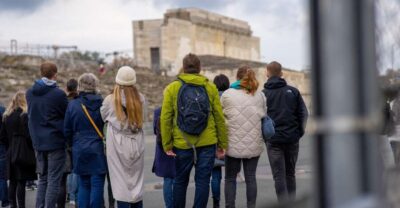
Walking Tour of Former Nazi Party Rally Grounds
Read our review →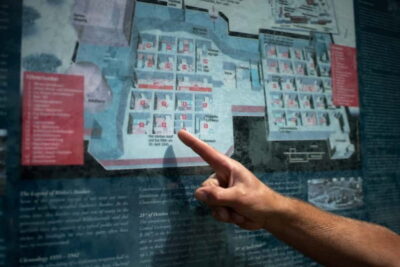
Browse the lists this tour appears in