
Reviewed · WALKING TOURS
Kreuzberg Private Walking Tour: Immigrants, Artists & Hipsters
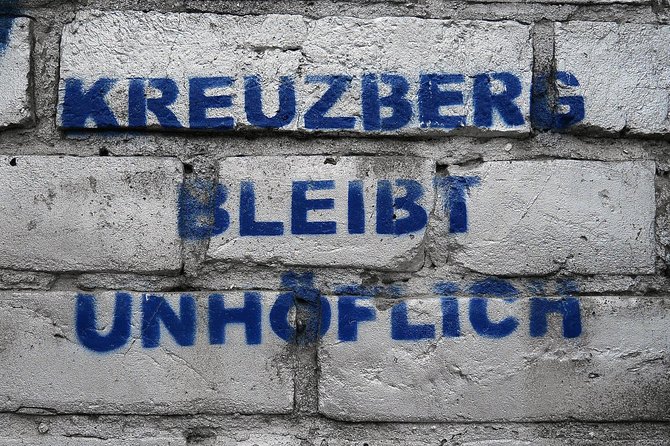
Kreuzberg changes block by block. This private, three-hour walk brings together street art and Turkish culture, then adds the less polished story of bombs, border walls, anarchists, artists, and rising property prices. I like the small group size, capped at 10, and the historian guide who can shape the walk around your interests. The main catch is that you will need public transport between some stops, and food, drinks, and bike rental cost extra.
I also like the mix of famous sights and ordinary neighborhood life. Oberbaum Bridge, SO36, Oranienstrasse, Viktoriapark, and remnants of the Berlin Wall give the tour a clear route, while local businesses and creative spaces make it feel less like a checklist. Guide Klaus earned special praise for being friendly, fun, and willing to match the pace of a parent and 12-year-old child, so this looks like a good choice for families and curious first-time visitors.
In This Review
- Five things to know before walking Kreuzberg
- Why Kreuzberg makes a better walking subject than a postcard district
- Starting beside the Spree at Oberbaum Bridge
- Berlin Wall fragments and the creative use of empty space
- Oranienstrasse and the SO36 spirit
- Viktoriapark offers a quieter change of pace
- The future of Kreuzberg is part of the tour
- What a private guide adds to the experience
- Is $450 a fair price for three hours?
- Timing, meeting point, and practical comfort
- Who should book this Kreuzberg walk?
- Should you book it?
- FAQ
- How long is the Kreuzberg private walking tour?
- How many people can join the private tour?
- What is the price of the tour?
- Where does the tour start?
- Where does the tour end?
- Are morning and afternoon departures available?
- Do I need to use public transportation?
- Is bike rental included?
- Are food and drinks included?
- Can most people participate?
- What is the cancellation policy?
Five things to know before walking Kreuzberg
- Kreuzberg is the subject, not just the setting: The walk explains how immigrants, workers, artists, anarchists, war, and the Cold War shaped the district.
- Oberbaum Bridge provides a dramatic start: You begin near one of Berlin’s most recognizable bridges, spanning the Spree on two levels.
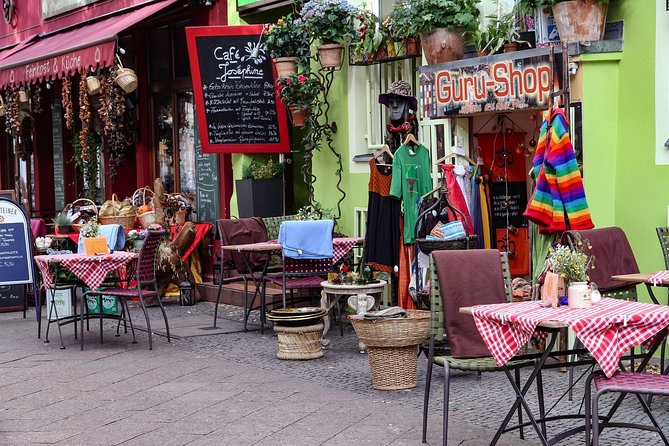
- SO36 shows Kreuzberg’s counterculture: The eastern part of the district combines cafes, boutiques, street art, and a long record of political conflict.
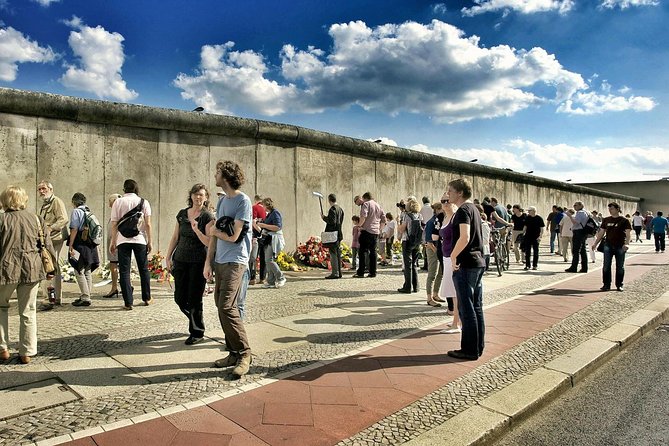
- The Berlin Wall story is still visible: You pass surviving fragments and former border areas now used for art and community life.
- The future matters as much as the past: The guide discusses riverside development and the pressure it may put on Kreuzberg’s identity.
- The $450 price favors a full group: With up to 10 people, the per-person cost can be reasonable for a private, tailored walk, but high for a solo visitor or couple.
Why Kreuzberg makes a better walking subject than a postcard district
Kreuzberg is not one tidy attraction. It is a district shaped by collision: a former worker’s area, part of West Berlin during the Cold War, a home for immigrant communities, and a magnet for artists, anarchists, musicians, cafes, and new investment.
That mix gives the tour its purpose. You are not simply looking at painted walls or stopping for photographs. You are learning why abandoned buildings and empty plots helped creative work take root, and why the same neighborhood now faces pressure from development.
The tour focuses especially on SO36, the eastern section of Kreuzberg named after its former postal code. The name has become shorthand for a part of Berlin with a strong counterculture identity. You will hear about street battles between anarchists and police around Oranienstrasse, as well as the district’s long habit of pushing back against authority and commercial change.
I like this approach because it gives context to sights you could otherwise miss. A mural becomes part of a story about vacant buildings. A Turkish shop becomes part of the district’s postwar population changes. A new riverside project becomes a question about who can still afford to live in Kreuzberg.
More Walking Tours in Berlin
- Discover Berlin Half-Day Walking Tour
★ 5.0 · 9,624 reviews - Berlin: Third Reich and Cold War 2 Hour Walking Tour
★ 4.9 · 6,830 reviews - Berlin: Discover Berlin Walking Tour
★ 4.9 · 5,998 reviews
Starting beside the Spree at Oberbaum Bridge
The meeting point is Schlesische Strasse 18, 10997 Berlin, near public transportation. The route includes Oberbaumbruecke, also written as Oberbaum Bridge, a double-decker crossing over the Spree.
The bridge is a strong visual opening. It is often described as Berlin’s most beautiful bridge, and its two levels give it an unusual profile. From here, the guide places you in the eastern half of Kreuzberg and introduces the main SO36 area.
This first stop also helps you understand the district’s geography. Kreuzberg is not presented as an isolated pocket of cafes and murals. It sits beside the river, close to former border zones, and within a part of Berlin where old divisions still shape new construction.
Your exact order may vary by guide and timing, but the experience is planned as a three-hour walk through several connected parts of the district. Since some distances are too long to cover entirely on foot, you should expect to use public transportation a few times. That is useful to know before you arrive, particularly if you prefer a continuous walk without transfers.
Berlin Wall fragments and the creative use of empty space
One section of the walk focuses on what remains of the Berlin Wall. You will pause to consider the former border before continuing past walls covered in street art, abandoned buildings, and plots of land turned toward creative projects.
The value here is not the size of the surviving fragments. The tour uses them to explain how Kreuzberg’s position beside the Wall affected daily life and development. Areas close to the border were often less attractive to major investment, leaving room for unusual uses and experimental art.
That story also explains why Kreuzberg became a home for artists. Empty buildings and overlooked spaces can give creative groups room to work. Once a district becomes fashionable, though, those same spaces become targets for new construction and higher rents.
This is one of the more useful parts of the experience for you if you want to understand Berlin beyond its major museums. The Wall is not treated as a single monument with a fixed meaning. Instead, you see how its former route shaped the city’s social and artistic life long after reunification.
The drawback is that this is a walking discussion rather than a formal museum visit. If you want extensive displays, documents, or a large preserved section of the Wall, you will need a separate Berlin Wall site.
Oranienstrasse and the SO36 spirit
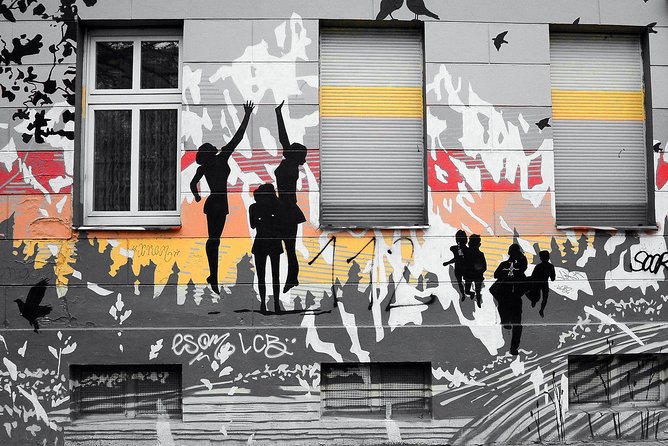
Oranienstrasse is one of Kreuzberg’s best-known streets. Its name comes from the Dutch princely House of Orange, but today the street is better known for cafes, small shops, boutiques, and an eclectic local scene.
The guide also connects Oranienstrasse with historic clashes between Berlin’s anarchists and police. That detail gives the street a little more bite. You are not only seeing where people eat and shop. You are walking through a place tied to protest, political tension, and the district’s long distrust of outside control.
SO36 is particularly good for noticing the contrast between older immigrant businesses and newer retailers. The area has a strong Turkish influence, with market goods and food adding to the district’s social mix. The description of Kreuzberg as a salad bowl of immigrant communities is apt: its character comes from many groups sharing the same streets rather than from one carefully planned theme.
I would allow yourself time to look around during this part of the route. The tour is private, so your guide can point out places that match your interests. If food matters to you, Klaus was specifically praised for knowing where to find excellent spaetzle. That does not mean a meal is included, but it is a useful reason to ask about a food stop or follow-up suggestion.
Something different for another day:
- Berlin: Reichstag, Dome and Government District Guided Tour
★ 4.7 · 18,288 reviews - Berlin: 1-Hour City Tour by Boat with Guaranteed Seating
★ 4.3 · 16,993 reviews - Berlin: Boat Tour Along the River Spree
★ 4.4 · 11,252 reviews - Berlin: Hop-on Hop-off Bus Tour with Live Commentary
★ 4.3 · 8,579 reviews
Viktoriapark offers a quieter change of pace
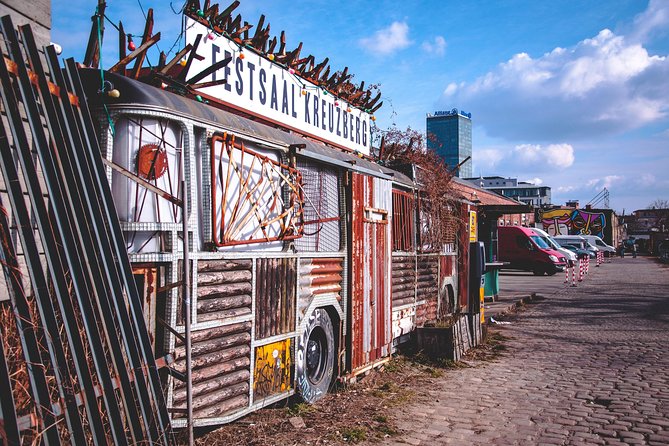
Viktoriapark is one of Kreuzberg’s best-known green spaces, and the stop lasts about 20 minutes. After the street art, traffic, cafes, and political stories, the park gives the walk a calmer setting.
The park matters because it shows another side of the district. Kreuzberg is not only hard-edged streets and creative disorder. It also includes a popular green space where you can pause and see how public areas fit into city life.
You should not expect a long park visit. Twenty minutes is enough for an introduction and a short look around, but not enough for a slow exploration. The value comes from the change in mood and from seeing the neighborhood as a place where people live, rest, and gather, not simply a backdrop for nightlife.
The tour’s overall pace can be adjusted more easily than on a large group excursion. Klaus was praised for going at the group’s pace and focusing on the interests of the people he was guiding. That flexibility can matter if you are traveling with a child, an older relative, or anyone who would rather stop for questions than hurry between points.
The future of Kreuzberg is part of the tour
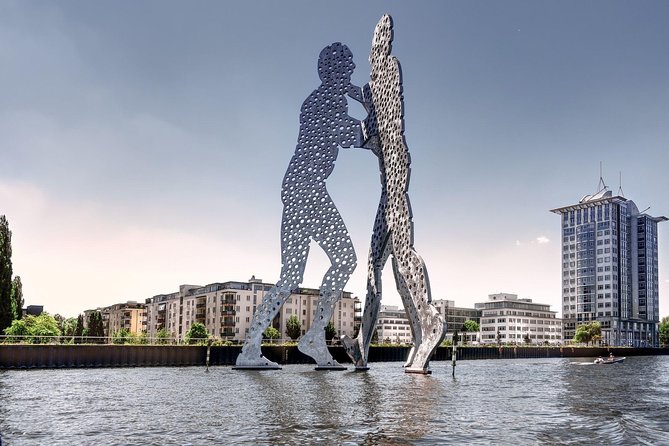
Many neighborhood walks end with the past. This one looks ahead. The guide discusses plans for riverside development and how those projects could speed up gentrification.
That forward-looking discussion is important because Kreuzberg’s appeal is tied to the very qualities development can change. Immigrant businesses, low-cost creative spaces, independent retailers, and a strong local identity helped draw artists and public attention. Rising investment can then make those same qualities harder to maintain.
You will not get a simple good-versus-bad answer. New development can bring improved buildings and public spaces, but it can also put pressure on established residents and businesses. A private guide can explain how Kreuzberg may change while you are standing in the places affected by those plans.
I especially like this part for repeat visitors to Berlin. If you have already seen the Brandenburg Gate, Museum Island, and the main Wall memorials, a discussion of present-day change gives you a different way to read the city.
What a private guide adds to the experience

The tour is limited to 10 people, but the main advantage is privacy rather than a very small guaranteed party. Your group receives its own historian guide, and the route can respond to your questions and interests more directly than a large public walk.
That matters in Kreuzberg because many of its most useful details are explanatory. You need someone to connect a street, building, business, or empty lot to a larger story. The guide’s role is less about delivering a list of dates and more about helping you read the neighborhood.
Klaus is the named guide associated with the strongest praise. He was described as friendly, fun, and attentive to pace, and he tailored stops to the interests of the people in his group. Those are practical qualities, especially when the group includes children. A 12-year-old enjoyed the mix of history and neighborhood highlights, which suggests that the tour can work for families if the child is comfortable with three hours of walking and discussion.
The guide is also a useful source for food ideas. Since meals are not included, ask about local options if you want to turn the walk into a longer Kreuzberg outing.
Is $450 a fair price for three hours?
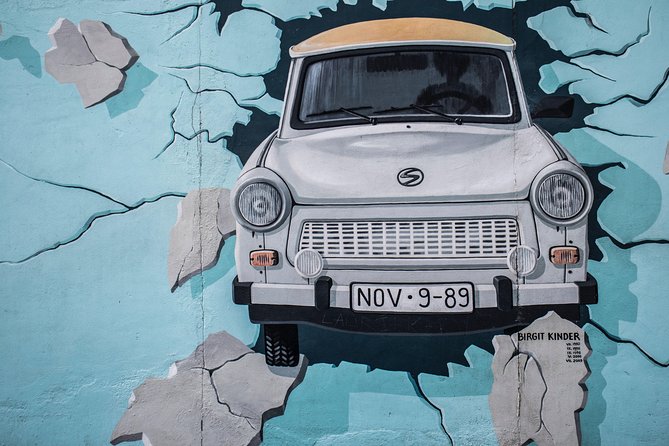
The listed price is $450 per group of up to 10 people. That makes the calculation important. A full group would pay about $45 per person, while two people would effectively pay $225 each. For a family or group of friends, the private format can offer solid value. For one or two people, the cost is much harder to justify unless a personal guide and flexible discussion are especially important to you.
The price includes a three-hour private walking tour with a historian guide. It does not include public transportation, food, drinks, or the optional bike rental, which costs 10 euros per person.
The optional bike is worth thinking about only if it suits your plans. The tour is designed as a walk, and some transport is already needed because the stops are spread out. You should not assume the bike rental is part of the standard price.
Because the experience is commonly booked about 10 days ahead, reserve early if you need a particular morning or afternoon departure. Confirmation arrives within 48 hours, subject to availability.
Timing, meeting point, and practical comfort
You can choose a morning or afternoon departure, but you need to state your preference when booking. The meeting point is Schlesische Strasse 18 in Kreuzberg, and the tour ends in Berlin without a more precise final address.
A mobile ticket makes arrival simple, but plan to reach the starting point with enough time to orient yourself. Since public transportation is used during the route, keep your ticket and local transit plans separate from the tour price.
Three hours is long enough to build a real picture of Kreuzberg, but it is still only an introduction. Wear comfortable shoes and expect a mixture of walking, pauses, street observation, and short transit connections. Most people can participate, and the tour is near public transportation.
There is no included meal or drink, so eat beforehand or plan a stop afterward. The neighborhood’s Turkish businesses, cafes, and food options are part of its appeal, but your purchases are your responsibility.
Who should book this Kreuzberg walk?
I would choose this tour if you want Berlin history tied to everyday streets rather than confined to major monuments. It suits first-time visitors who want a different side of the city, repeat visitors looking for a new district, and families who prefer questions and conversation over a fixed group script.
It is also a good fit for anyone interested in street art, immigration, urban politics, counterculture, or gentrification. The tour does not treat Kreuzberg as a polished entertainment zone. It explains the forces that made the area appealing and the forces now putting that identity under pressure.
I would hesitate if you want a low-cost tour for just yourself and one companion, or if your priority is a formal museum-style presentation. You should also reconsider if you dislike public transport during walking tours or want every minute spent on foot.
Should you book it?
Book this Kreuzberg private tour if your group can share the $450 cost and you want a thoughtful guide-led look at Berlin’s creative, immigrant, and politically charged side. Its best features are the personal format, the focus on SO36, the Wall connection, and the honest look at future development.
For the best value, bring several people, choose the departure time that fits your day, and arrive ready to ask questions. If you are a couple on a tight budget, explore Kreuzberg independently and spend the money on food or a smaller paid museum instead. If you are a family or group of friends, the private format makes much more sense, especially with a guide such as Klaus who can adjust the pace and follow your interests.
FAQ
How long is the Kreuzberg private walking tour?
The tour lasts approximately three hours.
How many people can join the private tour?
The maximum group size is 10 people.
What is the price of the tour?
The price is $450 per group of up to 10 people.
Where does the tour start?
The meeting point is Schlesische Str. 18, 10997 Berlin, Germany.
Where does the tour end?
The tour ends in Berlin, but a more specific final address is not provided.
Are morning and afternoon departures available?
Yes. You can choose either a morning or afternoon departure and should provide your preference when booking.
Do I need to use public transportation?
Yes. Public transportation is needed a few times because some of the stops are too far apart to walk between.
Is bike rental included?
No. Optional bike rental costs 10 euros per person.
Are food and drinks included?
No. Food and drinks are not included unless specifically stated.
Can most people participate?
Yes. Most people can participate, and the tour is near public transportation.
What is the cancellation policy?
You can cancel for a full refund up to 24 hours before the experience starts. Cancellations or changes made less than 24 hours before the start time are not accepted for a refund.
Just added around Berlin
- Private Photo Tour in Kreuzberg★ 5.0 · 3 reviews
- Individual city tour Berlin for max. 8 persons★ 5.0 · 3 reviews
- Berlin’s Jewish Heritage: Private Tour of the Vibrant Jewish District★ 5.0 · 3 reviews
- Berlin & The Third Reich Private Guided Tour★ 5.0 · 3 reviews
- Private Analogue Photography Experience in Berlin★ 5.0 · 3 reviews
- Spy Mission in Berlin: Self-Guided Espionage Puzzle Quest★ 5.0 · 3 reviews
- Berlin Christmas Markets Walking Tour with Local Guide★ 5.0 · 3 reviews
- Berlin By Night by Private Minivan Highlights and Taylor made★ 5.0 · 3 reviews
Walking Tours, compared.





Berlin’s Best: 2 Hour Walking Tour Third Reich and the Cold War
Read our review →


Third Reich Berlin: Hitler and WWII Walking Tour
Read our review →Browse the lists this tour appears in