Reviewed · THIRD REICH & WWII TOURS
Munich: Third Reich and World War II Segway Tour of the City
Munich’s past moves fast on two wheels. This three-hour tour is a clever way to cover a large part of the city while hearing about Bavarian kings, Hitler’s years in Munich, and the damage and memory of World War II. I like the broad route and the chance to reach places that would take much longer on foot.
I also like the patient instruction, especially for first-time Segway riders. Guides such as Abdel and Jamal have been praised for clear training, friendly care, and strong English. The main drawback is that riding beside traffic can make nervous beginners uneasy, and the history commentary may not be equally detailed at every stop.
In This Review
- Key points to know before booking
- Why a Segway works well in Munich
- Starting with training at Robot City Segway Tour München
- Königsplatz and the royal face of Munich
- Odeonsplatz and the political center
- The old synagogue site and the cost of memory
- Hitler’s Munich apartments from 1920 to 1933
- Schelling-Salon and Munich’s everyday survival
- Hofbräuhaus and traditional Bavarian stops
- How much city you see in three hours
- Guides, group size, and the human factor
- Rain, snow, and choosing the right day
- Is $100 a fair price?
- Who should book this Munich tour?
- Should you book the Third Reich and World War II Segway Tour?
- FAQ
- How long is the Munich Third Reich and World War II Segway Tour?
- How much does the tour cost?
- Where does the tour meet?
- What is included in the price?
- Is hotel pickup included?
- What languages are available?
- Who cannot join the tour?
Key points to know before booking
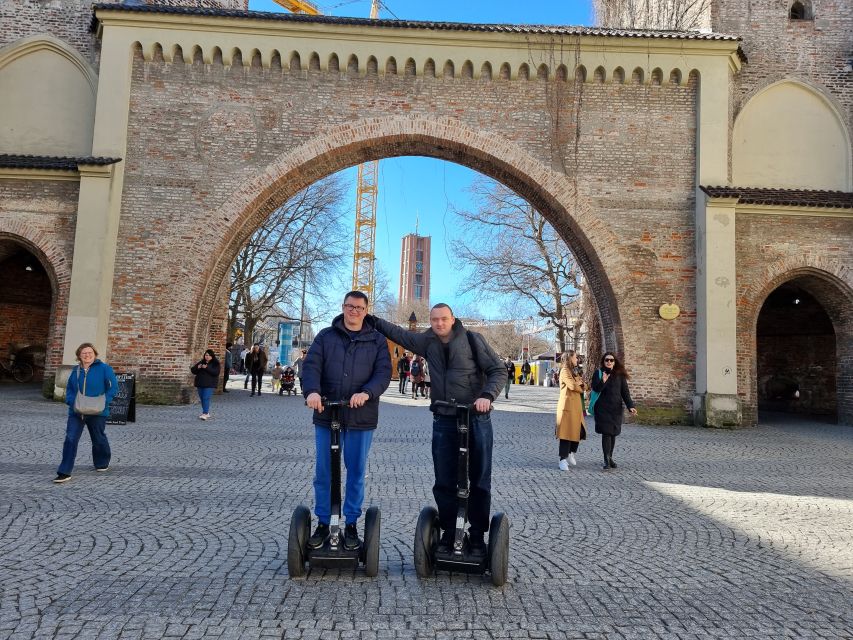
- Three hours covers a wide stretch of central Munich, including Königsplatz, Odeonsplatz, the old synagogue site, Hitler-related locations, and the Hofbräuhaus area.
- First-time riders receive practice and safety instruction before the group leaves the office.
- The route mixes royal Munich with Nazi-era history, giving you more context than a tour focused only on World War II.
- A small group of no more than 10 people makes it easier to hear the guide and get help with the Segway.
- The experience costs about $100 per person, a fair price if you want transport, a guide, and city orientation in one outing.
- You must be at least 14 and not pregnant, and hotel pickup is not included.
Why a Segway works well in Munich
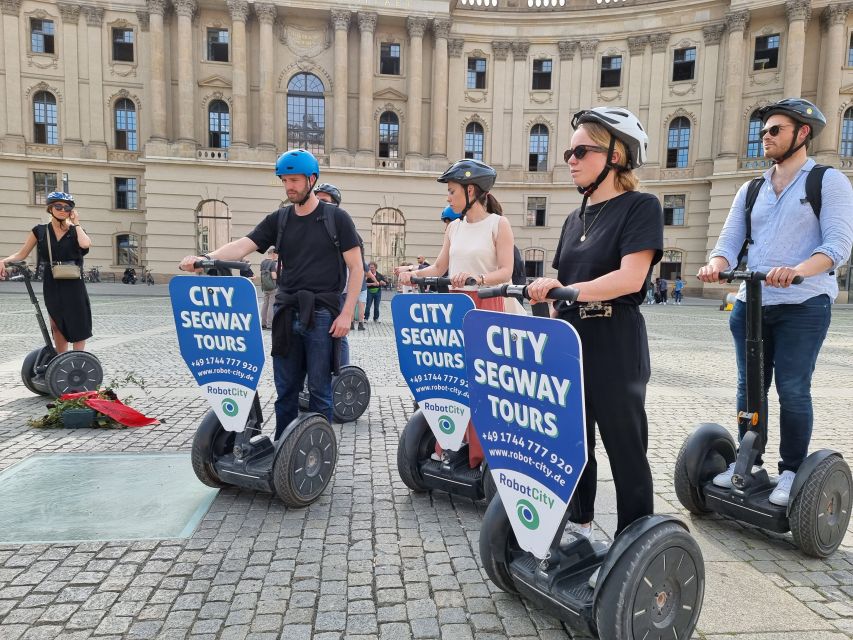
Munich’s central sights are spread across several districts and grand squares. Walking between them is pleasant, but it takes time. A Segway lets you cover more ground without committing to a long walking tour, and you can pause at important locations without dealing with a large sightseeing bus.
I see the main value in the combination of movement and explanation. You are not simply rolling past buildings with a headset. The guide points out places tied to Bavarian royal life, Hitler’s political rise, wartime Munich, and the city’s postwar memory.
There is also a simple fun factor. Once you get used to leaning slightly forward and back, the Segway feels playful and quick. That said, it is not quite as effortless as a bus. You need to pay attention to the road, other people, and the guide’s instructions.
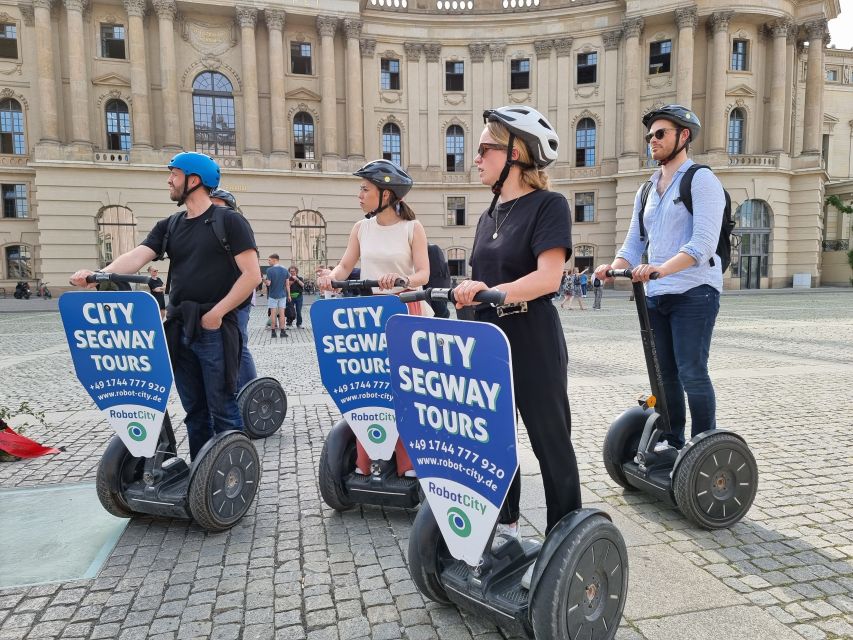
The group is limited to 10 participants. That matters because the guide can watch the riders more closely, stop to answer questions, and help anyone who needs another moment of practice. Several guides have been especially praised for patience, which is important when a member of the group has never used a Segway.
More City Tours in Munich
- Munich: Old Town & Viktualienmarkt City Walk in German
★ 4.7 · 2,304 reviews - Munich: City Bus Tour & FC Bayern Munich Allianz Arena Tour
★ 4.5 · 2,071 reviews - Munich City Hop-on Hop-off Tour
★ 3.5 · 1,233 reviews
Starting with training at Robot City Segway Tour München
You meet the guide at Robot City Segway Tour München in Munich. The first part is not sightseeing. It is a safety briefing and practical lesson on how to control the machine.
This training is one of the most useful parts of the experience for beginners. You get time to learn the basic movements before heading into the city, and the guide checks that the group is ready. First-time riders have described feeling nervous at the start, then quickly becoming comfortable after the instruction.
Do not rush this stage. If you are unsure, tell the guide. A good fit for this tour is someone willing to listen, practice, and ride at the pace of the group. The guide provides the Segway and helmet, so you do not need to arrange equipment separately.
The tour is offered in English or German. English-language guiding has generally been well received, though one group had a language mix-up and needed an interpreter to help. If precise historical detail is important to you, confirm your preferred language when booking.
Königsplatz and the royal face of Munich
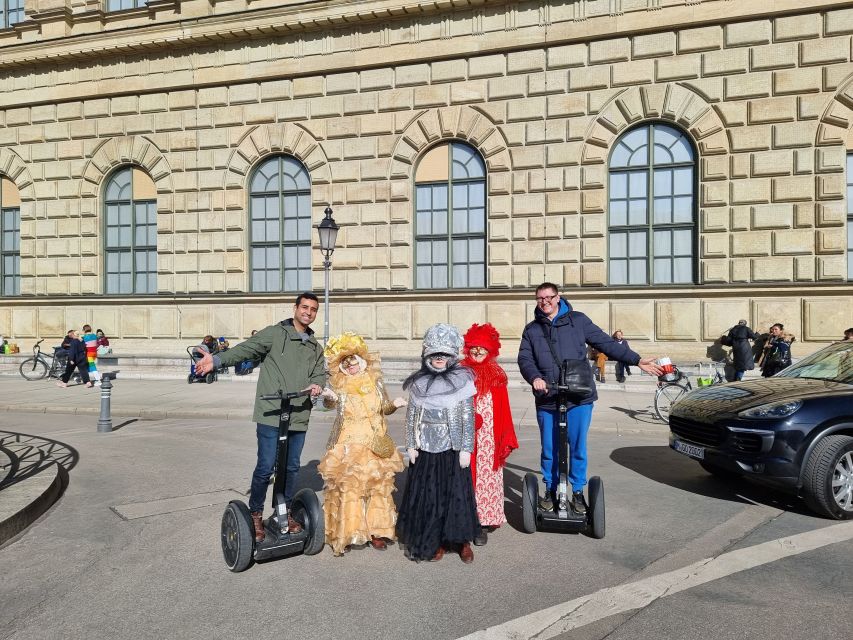
The route includes Königsplatz, one of Munich’s grandest public spaces. This is where the tour begins to widen beyond Hitler and World War II, placing the city’s Nazi period against its older royal and architectural setting.
The square helps explain Munich’s ambition and style. The Bavarian capital was shaped by monarchs who wanted impressive public buildings, broad ceremonial spaces, and a city that could rival other European courts. Your guide also talks about the Bavarian kings, giving you a useful introduction before the tour turns to the twentieth century.
Königsplatz is especially valuable on a guided ride because the scale can be hard to understand while you are simply walking through it. From the Segway, you can take in the buildings and open space quickly, then stop for an explanation.
The tradeoff is that a short stop cannot cover every architectural detail. If you want a full treatment of Munich’s royal buildings, add a separate museum or walking visit. Here, the point is to connect the location to the larger story of the city.
Odeonsplatz and the political center
Odeonsplatz brings you closer to Munich’s role in Hitler’s rise. It is one of the city’s best-known squares, and its location links important public buildings, political demonstrations, and the Nazi movement’s Munich base.
The guide also points out the Führer’s building and the former Brown House. These places help you see how political power was presented and organized, rather than treating Hitler’s story as a series of isolated addresses.
This section will suit you if you want history tied to physical places. Hearing about a movement in a classroom is different from being shown where its offices and public symbols were located. At the same time, be ready for a serious tone. These stops concern dictatorship, propaganda, persecution, and war, not just famous buildings.
The tour does not replace a museum visit. It gives you an outdoor framework, and you can later explore Munich’s documentation centers or memorial sites on your own if you want more evidence and detail.
More Segway & Scooter Tours in Munich
- Munich: City Highlights Guided Segway Tour
★ 4.6 · 266 reviews - Munich 3-Hour Segway Tour: Nazi Munich & Royal Architecture
★ 4.9 · 194 reviews - Munich Segway Tour
★ 5.0 · 181 reviews - Munich: City Highlights Guided Segway Tour
★ 4.5 · 161 reviews
The old synagogue site and the cost of memory
A stop at the site of the old synagogue adds an important Jewish history to the route. The tour explains what happened in Munich during World War II and helps connect the city’s wartime story to people and communities, not only to military and political events.
This stop is one reason the tour has more weight than a simple city ride. You are asked to consider what disappeared, how the city changed, and how locations can retain meaning even after the original building is gone.
The amount of information may depend on the guide. One positive guide can make a short stop clear and moving, while another may offer only the basic facts. The tour is best seen as an introduction that points you toward further visits, not as a complete study of Munich’s Jewish history.
Hitler’s Munich apartments from 1920 to 1933
The itinerary includes the apartment where Hitler lived from 1920 to 1929, along with the apartment associated with his life in Munich in 1933. These stops focus on his personal connection to the city and the period when his political influence grew.
The value here is location and chronology. The guide can explain how Munich served as a base for Hitler’s political activity and how his public role changed over time. Seeing the addresses helps you place those years in the city rather than treating them as distant textbook events.
Do not expect a preserved interior or a museum display at the apartments. The interest is in the address and its place in the story. You will be stopping outside, listening, and then moving on.
This part suits anyone with a strong interest in twentieth-century European history. If you prefer lighter sightseeing, the tour may feel heavy at points. The guide balances the subject with royal history and city recommendations, but World War II and the Nazi period remain central themes.
Schelling-Salon and Munich’s everyday survival
Schelling-Salon offers a different kind of historical detail. The pub remained open throughout both World War I and World War II, making it a useful reminder that ordinary city life continued alongside enormous political and military events.
A place like this can be more revealing than another official building. It gives you a glimpse of Munich as a lived-in city, where people still met, ate, and talked during years of crisis. The guide points it out as part of the route, and you can return later if you want to see it more closely.
This is also a good example of the tour’s range. You are not riding from one Nazi-era site to the next without a break. The route includes food, beer halls, royal squares, old neighborhoods, and places connected with political history.
Hofbräuhaus and traditional Bavarian stops
The guide recommends places to revisit after the tour, including Hofbräuhaus am Platzl and Hofbraukeller. Hofbräuhaus was originally built in 1589, and both locations offer traditional Bavarian food and beer culture.
These recommendations add practical value. After three hours of riding and history, you may want a meal rather than another formal attraction. A guide who knows when to suggest a return visit is helping you plan the rest of your day, not just completing a route.
Hofbräuhaus is famous and often crowded, so do not expect a quiet local dining room. The tour does not include food or drinks, and the recommendations are separate from the ticket. Still, the suggestions help connect the historical route with Munich’s social life.
How much city you see in three hours
The biggest practical advantage is coverage. You can see many major locations in one outing, including Königsplatz, Odeonsplatz, the Führer’s building, the Brown House, the old synagogue site, Schelling-Salon, and both Hitler-related apartment locations.
That makes this a strong first or second-day activity. You get a basic mental map of central Munich and a list of places worth revisiting. One rider described seeing far more of the city than would have been possible alone, which is exactly the point of using a Segway here.
The route may also include cycle tracks and park sections. Confident riders may wish there were more time in the English Garden, especially if they enjoy the riding itself as much as the history. The tour is designed around city sights, though, so the historical stops take priority over extended free riding.
Road conditions are the main concern. A rider in the group may feel scared beside traffic, even if the guide is careful. You should choose this tour if you are comfortable learning a new vehicle and staying alert, not if you want a completely passive sightseeing experience.
Guides, group size, and the human factor
The guide can make or break a history tour, and the strongest feedback has centered on patience, humor, care, and clear instruction. Abdel has been praised for helping nervous first-time riders, giving strong historical explanations, and keeping the mood friendly. Jamal has also been singled out for detailed training before setting off.
The guide’s English is generally described as excellent, but the depth of the commentary may vary. One rider wanted more explanation of certain sights, including the archway at the end of Leopoldstrasse. That is a fair reminder that a guide may be very good at managing the group without covering every architectural question.
With a maximum of 10 people, you are not lost in a crowd. You can ask questions and receive direct help. A private booking is not promised, but a small group can sometimes feel personal, especially outside the busiest periods.
Rain, snow, and choosing the right day
The tour operates in changing weather. It has gone ahead in rain, snow, and freezing conditions, and participants have still enjoyed the experience. That does not mean every rider will feel the same way.
A Segway leaves you exposed to the weather, and cold air is noticeable when you are moving. Dress for the forecast and consider your own tolerance before booking a winter time slot. In wet weather, road surfaces and visibility can make riding less comfortable.
Summer has its own issue. Munich can be crowded during Oktoberfest, though the Segway can still help you move through busy areas more efficiently. If you are visiting during a major event, allow extra patience for crowded streets and remember that the guide must keep the whole group together.
Is $100 a fair price?
At about $100 per person, this is not a budget activity. The price includes the guide, Segway, and helmet, but not hotel pickup, food, drinks, or entry to a museum.
I think the value is good if you want three things at once: city orientation, historical commentary, and a fun way to move between sights. Booking separate transport and a private history guide could cost more, while walking the same route alone would take longer and leave you without the local explanations.
The value is weaker if you already know Munich well or mainly want open-air Segway time. You may prefer a shorter ride or a park-focused outing. This tour spends much of its time stopping for history, so the machine is a transport tool as much as an attraction.
Free cancellation is available up to 24 hours before the tour for a full refund, and you can reserve now while paying later. Check the available starting times because the duration is fixed at three hours.
Who should book this Munich tour?
I would recommend it to first-time Munich visitors who want a broad introduction without spending half a day on foot. It is also a good match for people interested in Hitler’s Munich, World War II, and the way political history is tied to real city addresses.
Families need to note the age rule: children under 14 cannot join. Pregnant women are also excluded, and anyone with serious concerns about balance, traffic, or cold weather should choose another way to see the city.
You should also be comfortable with a mix of riding and standing stops. This is not a museum tour with seats, and it is not a freewheeling Segway race through Munich. The guide sets the pace and keeps the group focused on the history.
Should you book the Third Reich and World War II Segway Tour?
Book it if you want to see a lot of Munich in three hours and you like history with a little motion. The patient training, small group, wide route, and guides such as Abdel make it a strong choice for beginners.
Skip it if traffic makes you very nervous, if you want a quiet walking tour, or if you expect a detailed lecture at every stop. For most suitable riders, though, the $100 price buys a useful city overview, memorable locations, and a genuinely entertaining way to understand Munich’s difficult twentieth-century past.
FAQ
How long is the Munich Third Reich and World War II Segway Tour?
The tour lasts three hours. Starting times vary, so you need to check availability for the date you want.
How much does the tour cost?
The listed price is $100 per person.
Where does the tour meet?
You meet the guide at Robot City Segway Tour München in Munich.
What is included in the price?
The tour includes a live guide, a Segway, and a helmet.
Is hotel pickup included?
No. Hotel pickup and drop-off are not included.
What languages are available?
The live tour is available in English and German.
Who cannot join the tour?
Children under 14 and pregnant women cannot participate. The group is limited to 10 people.
More Third Reich & WWII Tours in Munich
- Munich: Third Reich & WWII Walking Tour
★ 4.6 · 6,181 reviews - Third Reich Walking Tour Munich
★ 4.5 · 4,291 reviews - Munich: Birthplace of the Third Reich Guided Walking Tour
★ 4.6 · 771 reviews - Munich World War II Sites Including Dachau Concentration Camp
★ 4.5 · 570 reviews
Just added around Munich
- Munich: Private or Group Third Reich and WWII Walking Tour★ 4.9 · 13 reviews
- From Munich: Neuschwanstein Castle and Linderhof Private Tour★ 5.0 · 13 reviews
- Private Transfer from Munich to Salzburg with 2 hours for sightseeing★ 4.5 · 13 reviews
- Munich: Historical Walking Tour on the Rise of Hitler★ 5.0 · 13 reviews
- Private Scenic Transfer from Munich to Prague with 4h of Sightseeing★ 5.0 · 13 reviews
- From Munich: VIP day trip to Salzburg★ 5.0 · 14 reviews
- National Socialism WWII with licensed guide – private tour★ 5.0 · 14 reviews
- Private Tour to Neuschwanstein & Linderhof, Skip The Line & Lunch★ 5.0 · 14 reviews
Third Reich & WWII Tours, compared.
Berlin’s Best: 2 Hour Walking Tour Third Reich and the Cold War
Read our review →
Third Reich Berlin: Hitler and WWII Walking Tour
Read our review →
Walking Tour of Former Nazi Party Rally Grounds
Read our review →