
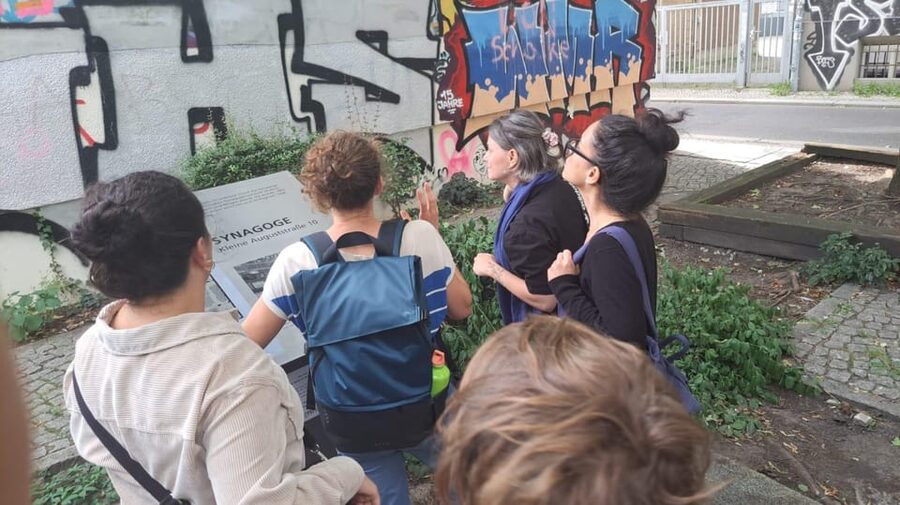
Reviewed · THIRD REICH & WWII TOURS
Berlin: Jewish Walking Tour including World War II
Berlin remembers its Jewish past in streets, courtyards, schools, cemeteries, and memorials. This private 3.5-hour walking tour connects those places into one thoughtful story, from Moses Mendelssohn’s era to the Holocaust and the Jewish community’s life today.
I like the focus on real locations, especially the Old Jewish Cemetery, Otto Weidt’s workshop, and the New Synagogue. I also like that Tal can adjust the route to your interests. The main drawback is the $318 per-person price, which is a serious splurge unless you value a private guide and detailed discussion.
In This Review
- Key things to know before you book
- Why this Berlin Jewish history walk matters
- Meeting Tal at Hackescher Markt
- The Block of Women and a brave 1943 protest
- Otto Weidt’s workshop, a small place with a powerful story
- The old cemetery and Moses Mendelssohn
- The New Synagogue and Berlin’s golden era
- Schools, community institutions, and everyday Jewish life
- A route that connects persecution with life today
- Optional extensions beyond Mitte
- What the $318 price buys you
- Walking conditions, language, and accessibility
- Who will get the most from this tour?
- Should you book the Berlin Jewish Walking Tour?
- FAQ
- How long does the Berlin Jewish Walking Tour last?
- What languages does Tal speak?
- Is the tour private?
- Is entry to the New Synagogue museum included?
- What is included in the price?
- What should I bring?
Key things to know before you book
- Moses Mendelssohn’s grave gives the tour an early human focus, rather than beginning only with World War II.
- Hackescher Markt helps explain the arrival of Eastern European Jews, known as Ostjuden, and the tensions within Berlin’s Jewish community.
- Otto Weidt’s workshop brings the Holocaust period down to one small workplace and its efforts to protect Jewish employees.
- The Block of Women memorial recalls the 1943 protest by non-Jewish women demanding the release of their Jewish relatives.
- Tal leads in English or Hebrew and can tailor the tour to specific interests in Berlin’s Jewish and German past.
- Optional extensions add Schönhauser Allee Cemetery, the Kindertransport Memorial, or the Grunewald Deportation Memorial for an extra fee and more time.
Why this Berlin Jewish history walk matters
Berlin’s Jewish story did not begin with Nazi persecution. That is one of the strongest features of this route. You start with the community’s rebuilding in the second half of the 17th century, then follow its intellectual, religious, and social growth before confronting the destruction of the 1930s and 1940s.
That wider frame matters. Without it, Berlin’s Jewish history can become a grim procession of deportation sites and memorial stones. This tour gives you the people and institutions that came first: schools, synagogues, cemeteries, charitable organizations, and debates over religious practice.
Tal brings both academic and professional experience to the subject. Her work includes a post-doctorate examining how present-day staff at Berlin’s Charité Hospital deal with the hospital’s role in the 1930s and 1940s. That background should appeal to you if you want more than dates and names.
The tone also appears to be one of the tour’s strongest points. Tal is praised for her passion, clear historical context, personal stories, and ability to make the subject engaging without treating it lightly. That combination is especially useful in Berlin, where the material can become emotionally heavy very quickly.
More Third Reich & WWII Tours in Berlin
- Berlin: Third Reich and Cold War 2 Hour Walking Tour
★ 4.9 · 6,830 reviews - Berlin’s Best: 2 Hour Walking Tour Third Reich and the Cold War
★ 5.0 · 5,486 reviews - Third Reich Berlin: Hitler and WWII Walking Tour
★ 5.0 · 3,301 reviews
Meeting Tal at Hackescher Markt
The tour begins in front of Starbucks, near Hackescher Markt in Mitte. This is a practical meeting point, though the area can be busy and crowded, so give yourself enough time to locate the exact spot.
Hackescher Markt is more than a place to gather. It was an important center for Berlin’s Jewish community, particularly for Ostjuden who came west from Eastern Europe after persecution and pogroms. Their arrival changed the social character of the community and exposed sharp class and cultural divisions.
You will hear about the uneasy feelings some German Jews had toward their Eastern European neighbors. This is an important, less polished part of the story. Berlin’s Jewish community was not one united group with identical customs or political views.
The walk also touches on religious disagreements, including disputes over the introduction of an organ. These arguments may sound narrow at first, but they reveal a community negotiating modernity, German identity, tradition, and acceptance in wider society.
The Block of Women and a brave 1943 protest
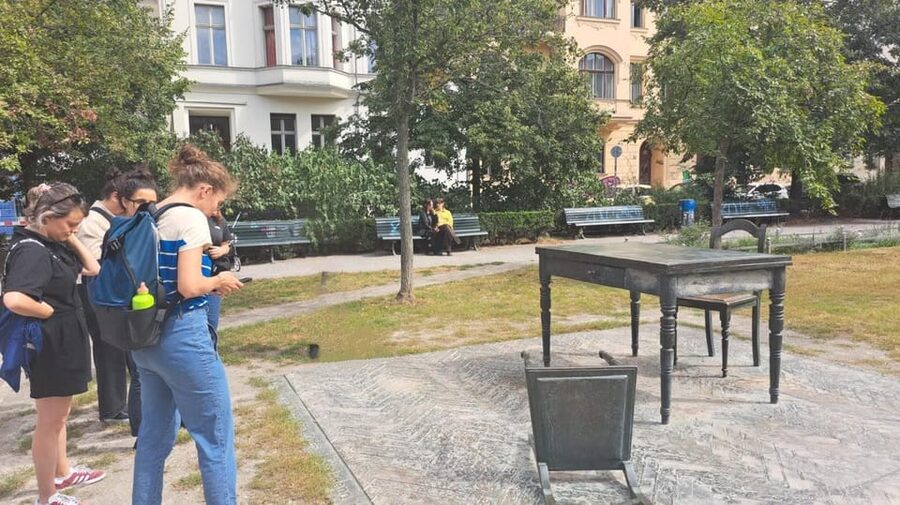
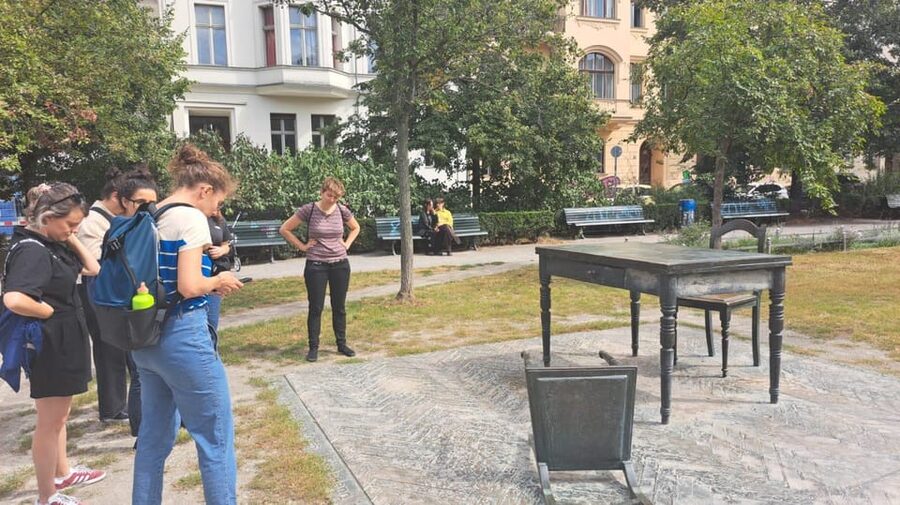
The stop known as the Block of Women recalls a remarkable protest in 1943. Non-Jewish German women gathered to demand the release of their Jewish husbands and relatives who had been arrested.
The memorial is valuable because it shows that individual choices still mattered under dictatorship. It does not turn the protest into a simple story of widespread resistance. Instead, it gives you a specific example of people acting publicly when silence would have been safer.
Tal allows about 20 minutes here. That is enough time to explain the event and its setting without letting one stop swallow the entire walk.
This is also a point where comfortable shoes begin to matter. The route covers several locations on foot, and the total tour lasts about three and a half to four hours, including a short break.
Otto Weidt’s workshop, a small place with a powerful story
The Otto Weidt Museum is one of the most affecting stops. It occupies the former workshop of Otto Weidt, who employed blind and deaf Jewish workers and tried to protect them during the Holocaust.
The setting gives the history a human scale. Instead of hearing only about government policy and mass deportations, you learn how one employer worked to shield specific people. The story also raises difficult questions about courage, risk, compromise, and the limits of what one person could do.
About 30 minutes are set aside for the museum. Entry is included when the museum is open, which improves the value of the tour. Check the opening situation before booking your expectations around this stop, since the museum may be closed on some days.
Flash photography is not allowed. You should also expect a serious, quiet atmosphere rather than a quick photo opportunity. The museum works best when you take time with the details and listen closely to Tal’s explanation.
More Walking Tours in Berlin
- Discover Berlin Half-Day Walking Tour
★ 5.0 · 9,624 reviews - Berlin: Discover Berlin Walking Tour
★ 4.9 · 5,998 reviews - Berlin: Hidden Backyards Guided Walking Tour
★ 4.8 · 5,360 reviews - Berlin: Alternative Berlin Walking Tour
★ 4.6 · 1,204 reviews
The old cemetery and Moses Mendelssohn
The Old Jewish Cemetery is another highlight. It was the community’s first cemetery, and Moses Mendelssohn is buried there.
Mendelssohn is central to the story of Jewish life in Berlin. Beginning with him allows Tal to discuss the period when Jewish thinkers and families were finding new ways to participate in German intellectual and civic life.
A cemetery can seem like a modest stop, but here it anchors the tour in actual people. Mendelssohn is not just a name in a lecture. His grave links the city’s Jewish story to a physical place that you can see.
Entry is included except on Jewish holidays and Saturdays. Since cemetery access may affect the route, check the date carefully if this stop is especially important to you.
The tour also visits the site of the community’s first synagogue. The building itself may not provide a grand spectacle, but the location helps you understand how the community developed its institutions over time.
The New Synagogue and Berlin’s golden era
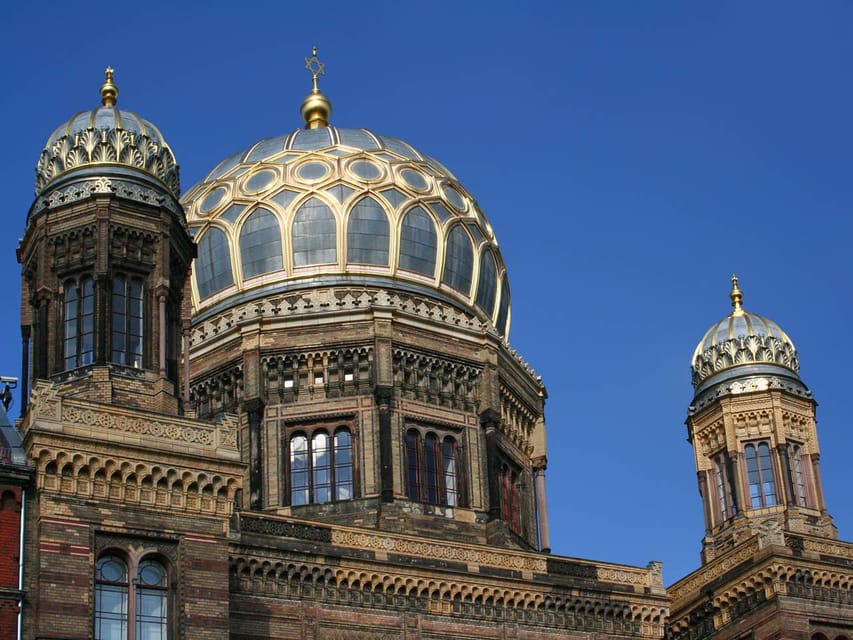
The New Synagogue is the visual centerpiece of the walk. You see the building from the outside, including its striking dome, and hear how it represented the confidence and success of Berlin’s Jewish community during its golden era.
The building also carries the story of that era’s collapse. Its presence makes the contrast plain: a grand public institution, once a sign of security and achievement, later caught in the violence and destruction of Nazi Germany.
The tour includes an exterior visit, not admission to the Centrum Judaicum museum inside. If you want to see the interior exhibitions, you must buy a separate ticket. This is an important distinction because the $318 price does not cover that museum entry.
I would treat the outside visit as a strong part of the walking route, but not as a substitute for the museum. If architectural details, synagogue history, or Jewish life in modern Berlin are a major reason for your visit, consider adding the museum on your own, subject to opening hours.
Schools, community institutions, and everyday Jewish life
The route includes sites connected with the Mendelssohn School, a girls’ school, and other community institutions in Mitte. These locations help move the story away from famous men and major monuments.
Schools reveal how a community prepared its children for both Jewish life and participation in German society. They also show the role of education in building a stable urban community.
These stops may be less immediately dramatic than the New Synagogue or the Holocaust memorials. Their value lies in showing how much ordinary infrastructure had to exist for a community to function: classrooms, religious services, social aid, and organizations for different groups.
You might find this section especially rewarding if you already know something about German Jewish history. It adds social detail to the more familiar political story.
A route that connects persecution with life today
The tour does not stop with the Holocaust. It also addresses the Jewish community’s re-establishment after the war and its presence in Berlin today.
That final shift is important. Berlin’s Jewish history is not only a story of disappearance. It is also a story of rebuilding, institutional survival, and continued debate over identity and memory.
Tal’s professional interest in how Berlin institutions handle their Nazi-era past adds weight to this part of the discussion. You are encouraged to think about how a city deals with responsibility, not only how it records tragedy.
The description says the route ends at the Jewish Memorial Cemetery, while the meeting information also says the activity ends back at the meeting point. Because those details do not match perfectly, confirm the final location with Tal before setting a tight appointment afterward.
Optional extensions beyond Mitte
If the main walk leaves you wanting more, you can extend it for additional time and cost. The options focus on burial grounds, deportation, and children separated from their families.
Schönhauser Allee Cemetery is the final resting place of notable members of Berlin’s Jewish community from its golden era. It offers another way to consider the people and institutions discussed earlier.
The Kindertransport Memorial at Friedrichstraße Station recalls the children sent out of Nazi-controlled Europe. The station setting gives the subject a direct connection to travel, separation, and the forced movement of families.
The Grunewald Deportation Memorial commemorates the deportation of Berlin’s Jews. It is a suitable extension if you want the Holocaust portion to include the mechanics of removal from the city, not only the persecution that preceded it.
These additions make the tour longer and more expensive. I would choose one based on your interests rather than trying to fit everything in. If you are most interested in community life, choose Schönhauser Allee. If family separation matters most, choose Friedrichstraße. For deportation history, choose Grunewald.
What the $318 price buys you
At $318 per person, this is not a budget walking tour. The price makes more sense for a private group that wants a tailored experience, a specialist guide, and time for questions.
You are paying for more than transport between monuments. Tal can adapt the emphasis to your interests, including Jewish religious debates, the arrival of Eastern European Jews, the Holocaust, present-day Berlin, or institutional memory.
The value depends heavily on your group. For one person or a couple, the cost is difficult to justify unless this subject is a central reason for visiting Berlin. For a family or private group dividing the cost among several people, the price may feel more reasonable.
The included Otto Weidt Museum and Old Jewish Cemetery entries add some value, but the Centrum Judaicum ticket is extra. Meals and drinks are not included, so bring water and use the short break sensibly.
You also receive free cancellation up to 24 hours before the tour and can reserve while paying later. Those terms help if your Berlin schedule is still changing, but they do not change the basic fact that this is a premium private tour.
Walking conditions, language, and accessibility
The tour is offered in English or Hebrew. It is a private group, which should make it easier to ask questions and adjust the pace than on a large scheduled walk.
Wear comfortable walking shoes, bring water, and check the forecast. A hat and sunscreen are useful in warm weather. A head covering or kippah is also listed among the recommended items, particularly because the route includes Jewish religious sites and a cemetery.
There is conflicting accessibility information. The activity details describe it as wheelchair accessible, but the additional information says it is not suitable for wheelchair users or people with mobility impairments. Do not assume the route works for you without confirming directly with Tal before booking.
Smoking and flash photography are not allowed. The cemetery may be closed on Saturdays and Jewish holidays, and the Otto Weidt Museum may be closed on certain days, so the exact route can vary.
Who will get the most from this tour?
I would recommend this experience to you if you want a serious, place-based introduction to Jewish Berlin and prefer conversation over a large group lecture.
It suits:
- First-time visitors who want historical structure rather than isolated memorials.
- People interested in both Jewish life before the Holocaust and the destruction that followed.
- Families or private groups who want to ask sensitive questions at their own pace.
- Visitors curious about religious divisions, Eastern European migration, and Berlin’s present-day Jewish community.
- Anyone who values a guide with academic and professional experience in German Jewish history.
It may not suit you if you want a short, inexpensive overview or a museum-heavy experience. Much of the tour is outdoors, and the pace may be demanding for anyone with mobility limitations.
The subject also requires attention. This is not a light sightseeing walk with a few historical references added on. You will hear about persecution, deportation, protest, and loss. The rewards are substantial, but you should plan the rest of your day with some breathing room.
Should you book the Berlin Jewish Walking Tour?
Book it if you want a private, carefully connected story of Berlin’s Jewish community, from Moses Mendelssohn and the first synagogue to the Holocaust and the city’s Jewish life today. Tal’s passion and personal stories are the strongest reasons to choose it, while the Old Cemetery, Otto Weidt Museum, and New Synagogue give the route memorable anchors.
Skip it if $318 per person feels too steep, if you need a fully accessible route, or if you mainly want to enter the New Synagogue museum. In that case, choose a less expensive general walking tour and visit the Jewish museums separately.
For the right audience, this is a worthwhile splurge. Ask about the ending point, cemetery access, museum opening days, and accessibility before you pay. Then bring good shoes, water, and enough time to listen.
FAQ
How long does the Berlin Jewish Walking Tour last?
The tour lasts about three and a half hours, though the full description gives an approximate range of three and a half to four hours. It includes a short break.
What languages does Tal speak?
The tour is offered in English and Hebrew.
Is the tour private?
Yes. It is arranged for a private group, and the route can be adjusted to include additional sites based on your interests.
Is entry to the New Synagogue museum included?
No. The tour visits the New Synagogue from the outside. Entry to the Centrum Judaicum museum requires a separate ticket.
What is included in the price?
The walking tour, guide, entry to the Otto Weidt Museum when it is open, and entry to the Old Jewish Cemetery when it is open are included. Meals, drinks, and the Centrum Judaicum ticket are not included.
What should I bring?
Bring comfortable walking shoes, water, a hat, sunscreen, and a head covering or kippah. Dress for the weather, and do not use flash photography.
Just added around Berlin
- Private Photo Tour in Kreuzberg★ 5.0 · 3 reviews
- Kreuzberg Private Walking Tour: Immigrants, Artists & Hipsters★ 5.0 · 3 reviews
- Individual city tour Berlin for max. 8 persons★ 5.0 · 3 reviews
- Berlin’s Jewish Heritage: Private Tour of the Vibrant Jewish District★ 5.0 · 3 reviews
- Berlin & The Third Reich Private Guided Tour★ 5.0 · 3 reviews
- Private Analogue Photography Experience in Berlin★ 5.0 · 3 reviews
- Spy Mission in Berlin: Self-Guided Espionage Puzzle Quest★ 5.0 · 3 reviews
- Berlin Christmas Markets Walking Tour with Local Guide★ 5.0 · 3 reviews
Third Reich & WWII Tours, compared.



Berlin’s Best: 2 Hour Walking Tour Third Reich and the Cold War
Read our review →

Third Reich Berlin: Hitler and WWII Walking Tour
Read our review →
Walking Tour of Former Nazi Party Rally Grounds
Read our review →
Browse the lists this tour appears in