
Reviewed · THIRD REICH & WWII TOURS
Third Reich & WWII Walking Tour
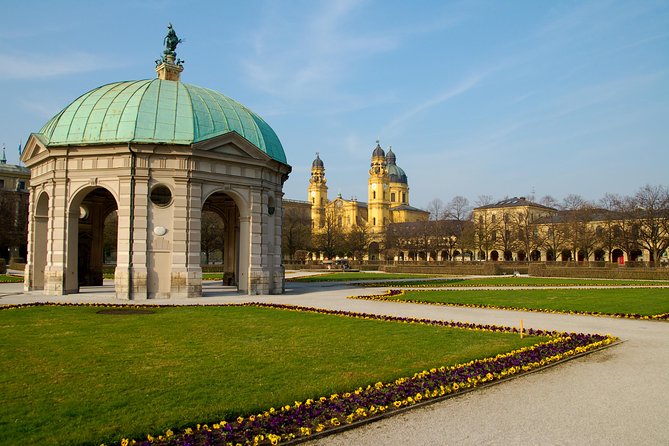
Munich’s darkest chapter begins in ordinary streets. This 2-hour-45-minute walking tour traces the rise of the Nazi movement through central Munich, linking places such as Hofbräuhaus, Feldherrnhalle, Königsplatz, and the Hofgarten. I like its clear focus on local events, and I like that guides make room for questions rather than delivering a rushed lecture. The main drawback is the amount of standing and walking, with little time to rest.
You start near Marienplatz and finish at Königsplatz, close to Hitler’s former headquarters. That route gives you a useful view of how Munich became the Nazi Party’s political center, then how the city faced destruction by the end of World War II. Cold weather, crowded streets, and a hard-to-find meeting point can make the day less smooth, so arrive early, dress warmly, and bring water.
In This Review
- Key points to know before booking
- Why Munich is the right place for this tour
- Starting near Marienplatz
- Hofbräuhaus and the Nazi Party’s early public life
- Feldherrnhalle and the failed 1923 coup
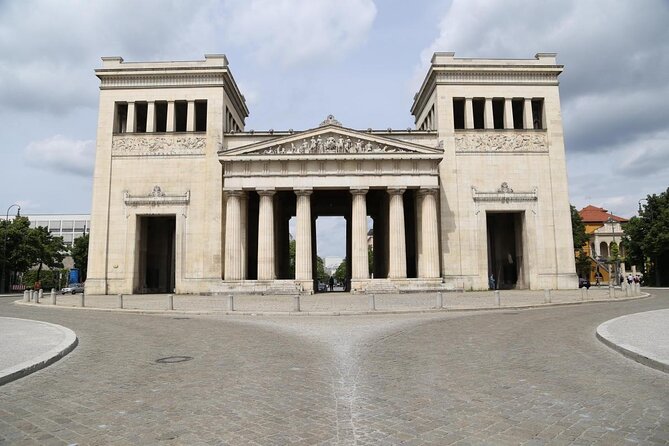
- Königsplatz and the machinery of mass spectacle
- The Hofgarten and the White Rose resistance
- What the guides do best
- Timing, walking, and weather
- Is $35.09 a fair price?
- Who should book this Munich history walk?
- Should you book the Third Reich and WWII Walking Tour?
- FAQ
- How long does the Third Reich and WWII Walking Tour last?
- Where does the tour begin?
- Where does the tour end?
- Which language is the tour offered in?
- What places does the tour visit?
- Is the tour suitable for children?
- Is food or drink included?
- Can I cancel for a full refund?
Key points to know before booking
- Munich’s Nazi story is told on location: You visit the places where early party meetings, the failed 1923 coup, mass rallies, and resistance activity unfolded.
- The tour covers several major sites: The route includes Marienplatz, Hofbräuhaus, Feldherrnhalle, Königsplatz, and the Hofgarten, with the final stop near Hitler’s former headquarters.
- Guides receive the strongest praise: Josh, Michael, Alex, Ulrich, Bridget, Danielle, and others are noted for clear explanations, thoughtful pacing, and honest treatment of painful subjects.
- Plan for nearly three hours outdoors: You will walk and stand for most of the experience, with only a short chance to sit or warm up.
- Small-group details need checking: The experience is promoted as limited to 10 people, while the booking information also gives a maximum of 30 participants.
- The price is modest for a history-focused tour: At $35.09 per person, the value comes from the guide’s storytelling and the connections between sites, not from included admissions or refreshments.
Why Munich is the right place for this tour
Munich was not simply a backdrop to the Nazi era. It was one of the movement’s main birthplaces and later became its official capital. That makes a walking tour here especially useful because the story is tied to real squares, halls, government buildings, and public spaces rather than being presented only behind museum glass.
The tour begins with Germany in 1919, after defeat in World War I. Munich and Bavaria were dealing with revolution, assassinations, political fear, and severe inflation. These conditions helped create an opening for extremist movements, including Adolf Hitler’s Nazi Party.
I value this starting point because it gives you cause and context. The tour is not just a list of Nazi sites. It explains how anger, instability, propaganda, and political ambition helped turn a fringe movement into a force that seized power.
The route also looks at what happened afterward. Munich became a city of party offices, ceremonies, rallies, and symbolic buildings. By the end of the war, much of the city had been damaged or destroyed. Seeing the same city center through both stages gives the story a strong sense of place.
More Third Reich & WWII Tours in Munich
- Munich: Third Reich & WWII Walking Tour
★ 4.6 · 6,181 reviews - Third Reich Walking Tour Munich
★ 4.5 · 4,291 reviews - Munich: Birthplace of the Third Reich Guided Walking Tour
★ 4.6 · 771 reviews
Starting near Marienplatz
The meeting point is at Marienplatz in central Munich. This is an easy area to reach by public transportation, but the exact meeting instructions deserve care. One booking detail has reportedly been difficult to find, and the map pin near the tourist office may not be accurate.
I would not leave this until the last minute. Check the full meeting instructions before setting out, then allow extra time to locate the guide. If you are unfamiliar with Munich, Marienplatz can feel confusing because it is a major public square with plenty of pedestrians and nearby landmarks.
Starting here works well for orientation. You are in the heart of Munich, surrounded by places that look cheerful and modern, yet the guide soon draws attention to the political conflicts that shaped the city after World War I.
The tour is offered in English and includes a professional guide. No food, drinks, or hotel pickup are included, so bring your own water and a small snack. One of the most practical points is easy to miss: the walk has little downtime.
Hofbräuhaus and the Nazi Party’s early public life
Hofbräuhaus is one of the tour’s most memorable stops because it connects a famous Munich beer hall with the early public life of the Nazi movement. The tour explains how the party used mass meetings and public speeches to build support.
You are not being asked to admire the setting. The point is to understand how political movements use familiar public spaces, strong slogans, emotional appeals, and group energy. In a place now associated with food, beer, and sightseeing, the guide helps you picture its earlier political role.
This is also where the tour’s local focus pays off. You are not hearing only about national events in Berlin or on the battlefields. You are learning how national politics took shape in Munich, among people living through economic hardship and political disorder.
Guides such as Michael and Josh have been praised for making complicated events easy to follow. Alex is also singled out for encouraging questions and conversation, which matters here because the subject can quickly become a blur of dates and names.
If you have little prior knowledge of World War II, this section may feel dense. The tour covers a lot in one morning or afternoon. Still, the guide-led format gives you a chance to ask for clarification instead of trying to absorb everything from a sign or audio recording.
Feldherrnhalle and the failed 1923 coup
At Feldherrnhalle, the story reaches one of its most important early turning points. The tour covers the Nazi attempt to seize power in 1923, an effort that failed and led to Hitler’s arrest.
This stop helps explain that Nazi control was not inevitable. The movement had to test its strength, recover from failure, and change its methods. The failed coup became part of the party’s mythology, and the site later took on major symbolic meaning under the Nazi regime.
I find this kind of stop more useful than simply visiting a building with a famous name. The guide can explain what happened there, why it mattered at the time, and how the Nazis later used memory and ceremony to shape public opinion.
The area may be busy, especially during popular seasons and Christmas market periods. Josh has been praised for managing groups through crowded streets and keeping people together. That is a practical benefit in central Munich, where it is easy to lose sight of a guide.
You should also expect to stand while the story is told. The walk is not difficult in the sense of strenuous hiking, but it is tiring because the route combines movement with long periods on your feet.
More Walking Tours in Munich
- Munich: Old Town & Viktualienmarkt City Walk in German
★ 4.7 · 2,304 reviews - Munich: Night Watchman Walking Tour
★ 4.7 · 2,092 reviews - Munich Ghosts and Spirits Evening Walking Tour
★ 5.0 · 1,900 reviews - Munich Old Town Walking Tour
★ 4.5 · 1,287 reviews
Königsplatz and the machinery of mass spectacle
Königsplatz is the tour’s major symbolic destination. The square was used for Nazi party rallies and ceremonies, turning a public space into a stage for political theater.
Here, the guide explains how architecture, crowds, flags, speeches, and ritual were used to project power. The setting helps you see how the Nazi regime tried to make ideology feel permanent and unavoidable.
The stop is also a reminder that public places can be reshaped by politics. A square that might otherwise seem like a pleasant urban space carried a very different meaning during the Third Reich. The guide’s task is to make that change clear without treating the past as spectacle.
The route description gives Königsplatz a central role, but the tour ends here rather than beginning here. One practical point raised about the route is that some people might prefer to start at Königsplatz and walk back toward Marienplatz. The present arrangement still works, but the final stretch can leave you thinking about the city’s physical remains and wartime destruction.
The end point is listed as Königsplatz 1, near Hitler’s former headquarters. That location gives the tour a serious closing note. It also places you near Munich’s documentation and museum resources, which can help you continue studying the subject afterward.
The Hofgarten and the White Rose resistance
The Hofgarten section broadens the tour beyond Nazi power. Here, you learn about the White Rose resistance movement and the people who opposed the regime from within Germany.
This is an important part of the route because it prevents the story from becoming a simple account of Nazi leaders and institutions. It brings attention to moral choices, personal risk, and the small number of people who acted against a dictatorship.
The subject is painful, but the strongest guides handle it with restraint. Alex has been praised for using factual detail, allowing quiet moments, and encouraging reflection without forcing a dramatic reaction. That tone is well suited to a resistance story.
The White Rose section can be especially valuable if you already know the broad outline of the Third Reich. It adds a local human dimension to the political history and shows that opposition existed, even when the cost was severe.
You should not expect a separate museum visit as part of the walking tour. The route stays outdoors, though you may have a short indoor break during the experience. At the end, Ulrich recommended visiting the documentation museum near the finishing area, an option worth considering if you want photographs, films, and further material from the period.
What the guides do best
The guide can make or break a walking tour, and this experience has received particularly strong praise for its staff. Josh is often described as passionate, clear, and engaging. Michael is praised for answering detailed questions and adding information beyond the basic route.
Alex receives credit for handling a serious topic with care while also helping with directions, museums, and places to visit after the tour. Ulrich is noted for combining historical explanation with an entertaining delivery. Danielle, Bridget, Joel, and others are also described as prepared, kind, and able to keep the group involved.
That range of guide names suggests a shared standard, but your exact experience will depend on who leads your departure. The best guides do more than recite facts. They explain how events connect, show historical images or visual material when available, and leave room for questions.
One small weakness is sound. At least one person found it hard to hear the guide clearly. In a noisy city center, this can matter. Stay close to the guide, especially at crowded stops, and politely ask for repetition if you miss a point.
The subject requires care, and the guide’s tone matters. This is not a light sightseeing walk with a few dramatic anecdotes. It deals with dictatorship, persecution, war, destruction, and resistance. Guides have been praised for treating those subjects with respect and without softening the facts.
Timing, walking, and weather
The advertised duration is approximately 2 hours 45 minutes, though one description refers to about 2.5 hours and some participants found the total walking and standing closer to three hours or more. Plan your schedule with a little flexibility.
There is not much time for a proper meal or long rest. Bring water and a snack, and use the restroom before you meet the guide. Comfortable shoes are essential, even though the route remains within central Munich.
Weather affects this tour more than it would a museum visit. People have completed it in freezing conditions, and guides have worked hard to keep the group engaged. Still, you will have a better experience with a warm coat, gloves, and footwear suited to extended standing.
The tour is not recommended for children under 12. That advice makes sense because the content is serious and sometimes upsetting. Older teenagers may appreciate it if they already have an interest in modern European history, but parents should consider the tone and length.
Most people can take part, and service animals are allowed. The walk is near public transportation. The supplied group details are slightly inconsistent: the experience is presented as a small group limited to 10, while the maximum listed elsewhere is 30. If group size matters to you, confirm it before booking.
Is $35.09 a fair price?
At $35.09 per person, this is a reasonable price for nearly three hours with a professional English-speaking guide. You are paying for interpretation, route planning, and the ability to ask questions at the places where events occurred.
The value is strongest if you want a structured introduction to Munich’s Nazi past. A guide can connect Hofbräuhaus, Feldherrnhalle, Königsplatz, and the Hofgarten in a way that would take research and careful map reading to reproduce on your own.
The price does not include food, drinks, hotel transfers, or admission tickets. That keeps the base cost down, but you should budget separately if you plan to visit a museum after the walk.
I would not choose this tour simply because it is inexpensive. Choose it because you want context and a local route. If you prefer a quiet museum visit, dislike group walks, or have trouble standing for long periods, the format may not suit you.
Free cancellation is available when you cancel at least 24 hours before the local start time. Cancellations or changes made within 24 hours are not refunded or accepted, so keep that deadline in mind.
Who should book this Munich history walk?
I would recommend it to first-time visitors who want a clear introduction to Munich’s role in the Nazi era. It also suits people who already know the basic timeline but want to see the key sites in person and ask questions along the way.
It is a good choice if you value a serious guide, local context, and a route that includes resistance as well as Nazi power. The English format makes it practical for international visitors, and the central start and finish points fit easily into a day of sightseeing.
I would hesitate if your group includes young children, anyone who cannot comfortably walk and stand for nearly three hours, or anyone looking for a relaxed city stroll. The pace is generally described as good, but the subject matter and outdoor conditions demand attention.
Should you book the Third Reich and WWII Walking Tour?
Book it if Munich’s modern political history matters to you. For $35.09, you get a focused route through the city’s Nazi past, with the strongest value coming from guides such as Josh, Michael, Alex, and Ulrich, who are praised for clear explanations and respectful delivery.
Bring water, a snack, warm clothes, and comfortable shoes. Double-check the Marienplatz meeting instructions, stay near the guide in crowded areas, and consider adding the documentation museum after finishing at Königsplatz.
This is not a casual sightseeing add-on. It is a serious history walk, but one that gives you a clearer understanding of how Munich helped shape the Third Reich and how people later remembered, resisted, and confronted that past.
FAQ
How long does the Third Reich and WWII Walking Tour last?
The tour lasts approximately 2 hours and 45 minutes. Some descriptions refer to about 2.5 hours, so you should allow roughly three hours for walking, standing, and any small timing changes.
Where does the tour begin?
The tour begins at Marienplatz in Munich, Germany. Check the detailed meeting instructions carefully because the exact meeting point and map pin may not be immediately clear.
Where does the tour end?
The tour ends at Königsplatz 1, near Hitler’s former headquarters. The final area is also close to Munich’s documentation and museum resources.
Which language is the tour offered in?
The tour is offered in English.
What places does the tour visit?
The route covers important sites connected with Munich’s Nazi history, including Hofbräuhaus, Feldherrnhalle, Königsplatz, and the Hofgarten, where the White Rose resistance movement is discussed.
Is the tour suitable for children?
The tour is not recommended for children under 12 because it deals with serious and sometimes disturbing historical subjects.
Is food or drink included?
No. Food and drinks are not included. Bring water and a snack because the tour has little time for a rest break.
Can I cancel for a full refund?
Yes, if you cancel at least 24 hours before the experience start time. Cancellations made less than 24 hours in advance are not refunded, and changes within that period are not accepted.
Just added around Munich
- Munich: Private or Group Third Reich and WWII Walking Tour★ 4.9 · 13 reviews
- From Munich: Neuschwanstein Castle and Linderhof Private Tour★ 5.0 · 13 reviews
- Private Transfer from Munich to Salzburg with 2 hours for sightseeing★ 4.5 · 13 reviews
- Munich: Historical Walking Tour on the Rise of Hitler★ 5.0 · 13 reviews
- Private Scenic Transfer from Munich to Prague with 4h of Sightseeing★ 5.0 · 13 reviews
- From Munich: VIP day trip to Salzburg★ 5.0 · 14 reviews
- National Socialism WWII with licensed guide – private tour★ 5.0 · 14 reviews
- Munich: Walking Tour Old Town 3D VR Tour in GERMAN★ 4.3 · 14 reviews
Third Reich & WWII Tours, compared.
Berlin’s Best: 2 Hour Walking Tour Third Reich and the Cold War
Read our review →
Third Reich Berlin: Hitler and WWII Walking Tour
Read our review →
Walking Tour of Former Nazi Party Rally Grounds
Read our review →
Browse the lists this tour appears in