
Reviewed · THIRD REICH & WWII TOURS
Third Reich Berlin Walking Tour with a French-Speaking Guide
A difficult past becomes clearer on foot. This three-hour Berlin tour connects Nazi-era sites with personal stories, and I like its French-speaking guide and strong focus on places that are easy to miss alone. I also like the way it moves from German resistance to Jewish life and deportation, rather than treating the Third Reich as one narrow story. The main drawback is that public transport is not included, and one advertised museum stop is not listed in the detailed route.
The tour earns a very strong 4.9 rating from 59 reviews, with 100 percent recommending it. The praise centers on guides who make a painful subject clear, lively, and human. Julie is singled out by name for combining major historical events with individual lives, a useful approach in a city where facts can otherwise blur together.
You should be comfortable walking for about three hours and changing from the original meeting point near Potsdamer Platz to the Jewish Quarter by train. A Berlin AB day ticket is recommended, and the group can include up to 24 people, so this is a structured group outing rather than a private conversation.
In This Review
- Key points to know before booking
- Why this route gives Berlin’s Nazi past more shape
- Potsdamer Platz and the road to German resistance
- Anhalter Bahnhof and the mechanics of deportation
- The Neue Synagogue and Jewish life before the Nazi era
- Auguststrasse and the institutions that vanished
- Grosse Hamburger Strasse and the former Sammellager
- Otto Weidt’s workshop and a more personal story
- The Topography of Terror question
- What $31.99 buys you
- Timing, walking, and the group experience
- Who should choose this Berlin walk
- FAQ
- What language is the tour conducted in?
- How long does the tour last?
- Where does the tour start?
- Where does the tour end?
- Is public transportation included?
- What happens if the weather is bad?
- Should you book this Third Reich Berlin tour?
Key points to know before booking
- French-language history walk: The tour is led in French and covers the Third Reich through sites in central Berlin.
- Resistance comes first: You visit the Bendlerblock and the German Resistance Memorial Center, linked to Operation Valkyrie.
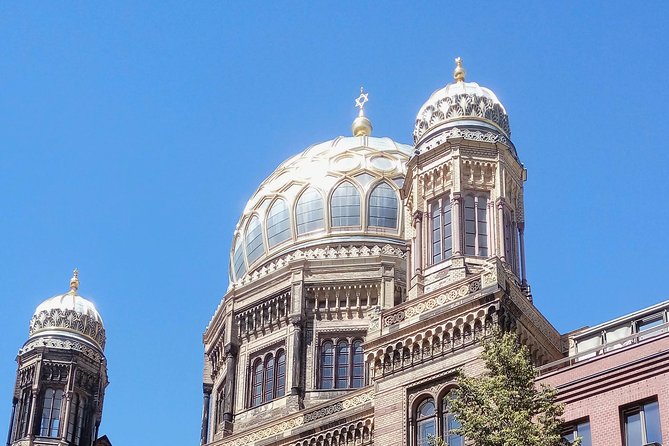
- Jewish Berlin gets real attention: The route includes the Neue Synagogue area, Auguststrasse, Grosse Hamburger Strasse, and the Otto Weidt museum.
- Personal courage is part of the story: Otto Weidt protected blind and deaf Jewish workers in his brush workshop during World War II.
- Public transport costs extra: You need transportation between parts of the route, including the ride from Anhalter Bahnhof toward the Jewish Quarter.
- Check the museum details: The general description names the Topography of Terror, but the timed itinerary provided for the tour does not list it as a stop.
Why this route gives Berlin’s Nazi past more shape
Berlin has no single site that explains the Third Reich by itself. You need the government district, resistance locations, deportation points, Jewish institutions, and memorial museums to see how policy affected daily life. I like that this walk tries to make those links in one morning.
The route begins at Potsdamer Platz, a useful starting point because it puts you in central Berlin before moving toward the Bendlerblock. From there, the tour shifts to Anhalter Bahnhof and then into the former Jewish Quarter. That change matters. You are not simply hearing about Nazi leaders and military decisions. You are also following the places where people lived, worked, worshipped, were detained, and were sent away.
The subject is serious, and the guide’s role matters greatly. The strongest praise is for explanations that are both clear and lively without making the period feel casual. That balance is important here. The tour is not designed as entertainment, but it should help you understand how Berlin’s streets connect to events that can feel abstract in a textbook.
More Third Reich & WWII Tours in Berlin
- Berlin: Third Reich and Cold War 2 Hour Walking Tour
★ 4.9 · 6,830 reviews - Berlin’s Best: 2 Hour Walking Tour Third Reich and the Cold War
★ 5.0 · 5,486 reviews - Third Reich Berlin: Hitler and WWII Walking Tour
★ 5.0 · 3,301 reviews
Potsdamer Platz and the road to German resistance
The first substantial stop is the memorial to Varian Fry, an American journalist who helped people escape Nazi persecution. The visit then continues to the German Resistance Memorial Center at the Bendlerblock, with about 50 minutes allocated to this section.
The Bendlerblock is closely tied to Operation Valkyrie, the 1944 attempt to remove Adolf Hitler from power. The memorial now honors Germans who opposed Nazism, including people involved in military and civilian resistance. This gives the opening section a clear purpose: before the route turns to Jewish Berlin, it considers the Germans who rejected or fought the regime.
I find this a useful choice because it avoids presenting German society as a single block of willing supporters. Resistance was dangerous, limited, and often divided, but it existed. A guide can explain those differences better than a quick look at a plaque.
You should give this stop your full attention. Fifty minutes is a substantial part of a three-hour tour, and the Bendlerblock is likely to feel more reflective than the street portions that follow. If you want only a fast list of famous Nazi sites, this may feel slow. If you want context about opposition within Germany, it is one of the strongest parts of the morning.
Admission is listed as free. The tour includes a professional local guide, but you are responsible for any personal expenses outside the tour.
Anhalter Bahnhof and the mechanics of deportation
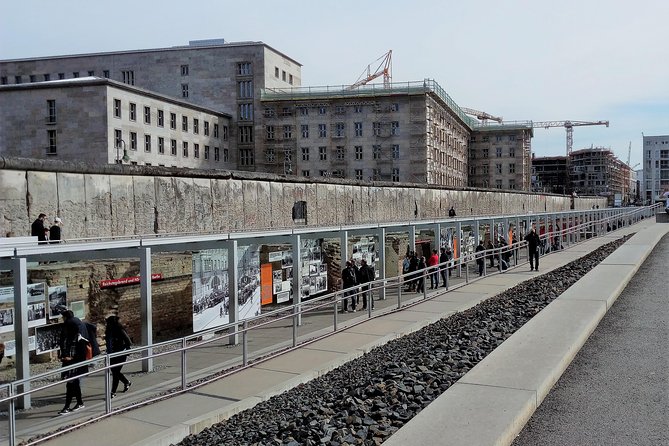
The route next reaches Anhalter Bahnhof, where a ruined section of the former station remains. About 10 minutes are planned here.
This is a short stop, but its meaning is heavy. The station was one of the places from which Berlin’s Jewish population was deported. The surviving ruin gives you a physical point of reference for a process that can otherwise sound distant and administrative.
The stop is not meant to replace a long museum visit. Instead, it links the city’s transport system with deportation. That connection is one of the most valuable parts of the route. A railway station was not just a place for ordinary journeys. Under the Nazi regime, transport helped turn persecution into an organized system.
From Anhalter Bahnhof, the group takes a train to reach Berlin’s Jewish Quarter. A Berlin public transport ticket is not included, so buy an AB day card before the tour if that is the best value for your plans. You will want to avoid spending the morning sorting out a ticket while the group is ready to move.
The Neue Synagogue and Jewish life before the Nazi era
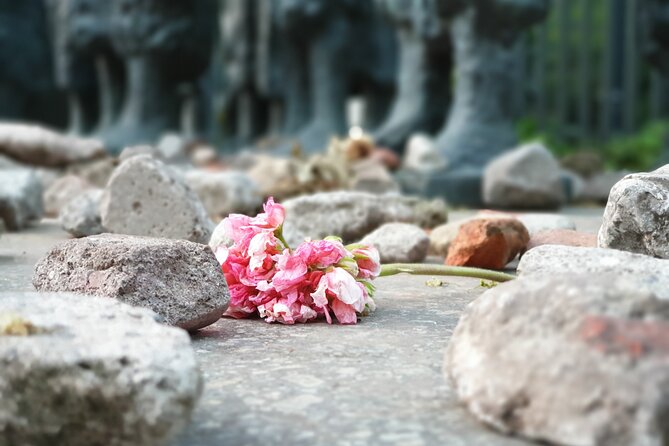
The next section brings you to the Stiftung Neue Synagoge Berlin, also called Centrum Judaicum. About 15 minutes are planned here.
The guide discusses Berlin’s Jewish community in the 19th and 20th centuries, along with the history of the synagogue. This is an important pause because the story does not begin with persecution. Jewish Berlin had institutions, schools, businesses, religious life, and families long before the Nazi period.
That broader setting helps you understand what was destroyed. A tour that mentions only deportation can leave you with an image of Jewish life as something that appeared briefly before disappearing. This stop gives that community a longer timeline.
The schedule allows only a short visit, so expect an introduction rather than an extended museum session. The tour information does not promise a full interior visit or a separate admission experience. I would treat it as a guided historical stop in the neighborhood and listen closely to the explanation of the synagogue’s role.
More Walking Tours in Berlin
- Discover Berlin Half-Day Walking Tour
★ 5.0 · 9,624 reviews - Berlin: Discover Berlin Walking Tour
★ 4.9 · 5,998 reviews - Berlin: Hidden Backyards Guided Walking Tour
★ 4.8 · 5,360 reviews - Berlin: Alternative Berlin Walking Tour
★ 4.6 · 1,204 reviews
Auguststrasse and the institutions that vanished
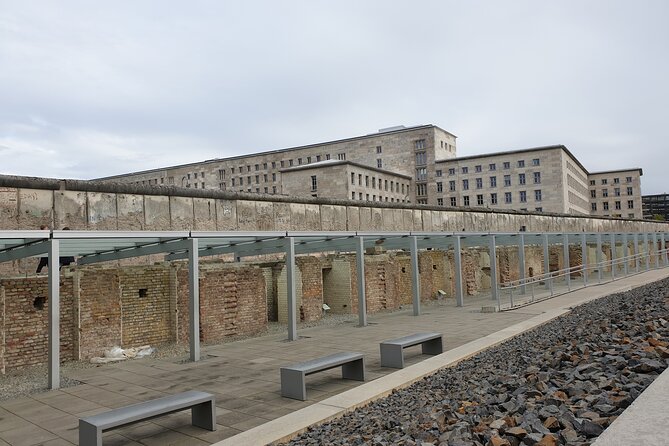
Auguststrasse receives around 20 minutes. Here, the guide discusses institutions that once served Jewish residents, including a school for Jewish girls and an orphanage that existed during the Nazi period.
This part of the route is valuable because ordinary institutions often explain persecution better than official speeches do. A school and an orphanage point to children, education, care, and family life. They remind you that Nazi policies damaged local communities street by street, not just through grand national decrees.
You may find this stop less visually dramatic than a memorial or ruined station. That is normal. Walking tours often rely on the guide to make an address meaningful. The quality of the explanation matters more than a large monument here, which is why the praise for clear, vivid guides is especially relevant.
The short timing also keeps the tour moving. You are covering several locations in one morning, so the guide has to explain enough to give the place meaning without turning every stop into a lecture.
Grosse Hamburger Strasse and the former Sammellager
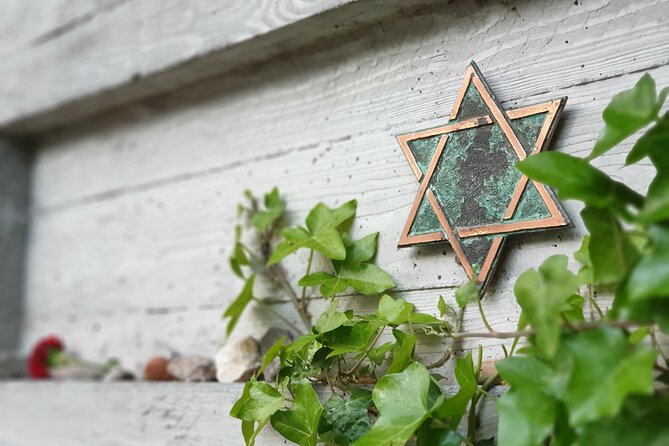
The route continues to Grosse Hamburger Strasse for about 30 minutes. You see the old Jewish cemetery and a former Sammellager, a collection point where Jews were detained before deportation.
This is among the most sobering sections of the walk. The cemetery connects the neighborhood to centuries of Jewish life, while the detention site shows how that community was later terrorized and removed. The contrast is stark, and it helps you see the Nazi period as an assault on an established society rather than an isolated wartime event.
Thirty minutes gives the guide room to explain more than the basic facts. You can expect discussion of the cemetery, the detention function of the site, and the route toward deportation. Because the tour takes place outdoors, the experience depends on the weather and on your ability to listen while standing or walking.
The tour operates in all weather. Wear shoes suited to city walking and dress for conditions, especially if rain or cold is in the forecast. There is no promise of food or drink, so have breakfast before the 10 a.m. start.
Otto Weidt’s workshop and a more personal story
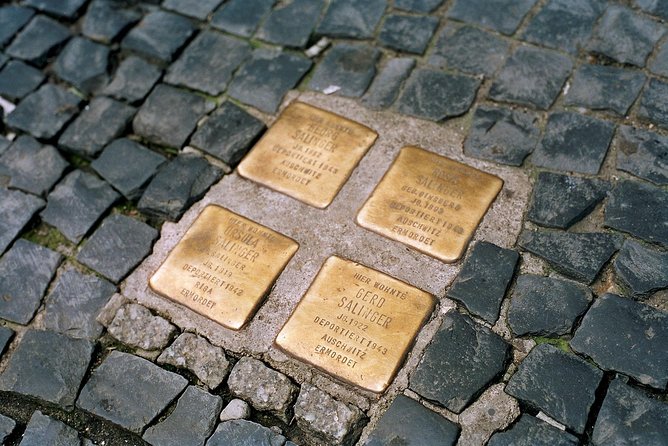
The final major stop is the Museum Blindenwerkstatt Otto Weidt, with about 20 minutes allocated for the visit. Otto Weidt ran a small workshop that made brooms and brushes and employed mainly blind and deaf Jewish workers during World War II.
The museum tells the story of how Weidt tried to protect his employees. That personal focus gives the tour a different emotional register after the larger discussions of resistance, deportation, and institutions. You are no longer looking only at military plots or state policy. You are considering what one person did to help people under his care.
I like this stop because it shows courage in practical terms. Weidt’s workshop was not a symbolic site built after the war. It was a workplace, and the story centers on efforts to protect real employees from a murderous system.
The visit is listed as free. Twenty minutes is not enough for an exhaustive museum visit, but it can provide a focused introduction. If this story interests you, you may want to note the museum’s name and return at another time, if your schedule permits. The tour itself finishes near Hackescher Markt after this part of the route.
The Topography of Terror question
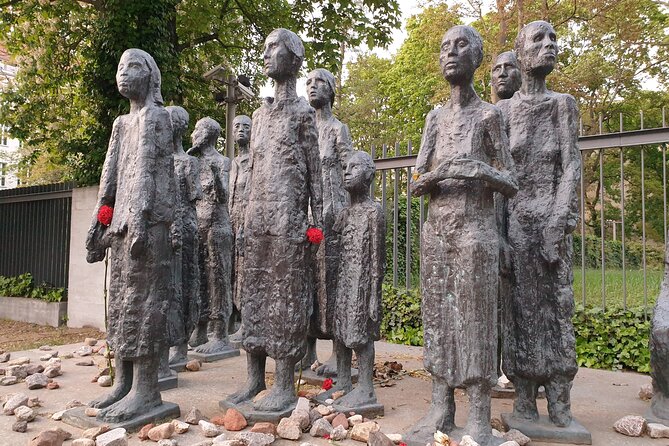
The broad description of the experience also names the Topography of Terror, a major Berlin site about Nazi persecution and terror. However, the detailed sequence of stops provided for this tour lists the Bendlerblock, Anhalter Bahnhof, the Neue Synagogue, Auguststrasse, Grosse Hamburger Strasse, and the Otto Weidt museum, but does not give the Topography of Terror a separate stop or time allocation.
That difference is worth checking before you pay. If the Topography of Terror is the main reason you want this walk, confirm with Vive Berlin Tours whether it is included on the date you choose or whether the reference describes a variation of the route. The listed route already contains plenty of relevant sites, but you should know exactly what your morning covers.
What $31.99 buys you
At $31.99 per person, the price is reasonable if you value a French-speaking guide and want a connected route through several locations. You are paying for about three hours of guiding, local and professional guide service, and a planned journey across central Berlin. Admission is listed as free at the main stops, so the cost is mainly for the interpretation and organization.
The value is strongest for French-speaking visitors who want more than a self-guided walk. The guide must connect the Bendlerblock to Jewish Berlin, explain the change from community life to persecution, and put the personal story of Otto Weidt into that larger frame. That kind of connection is hard to get from isolated plaques.
The price is less attractive if you already know the subject well, speak another language comfortably, or prefer to visit museums at your own pace. The group may include up to 24 people, which is manageable but not intimate. You also pay for public transport separately, and food and drinks are not included.
The tour is booked an average of 16 days ahead, so it is sensible to reserve early if your Berlin dates are fixed. Free cancellation is available up to 24 hours before the start time. Changes or cancellations inside that period are not accepted for a refund.
Timing, walking, and the group experience
The tour begins at 10 a.m. at Potsdamer Platz 10, 10785 Berlin. It ends near Hackescher Markt, 10178 Berlin, beside the Hackescher Markt S-Bahn station. This one-way design is useful because you do not return to your starting point, and you finish in an area with onward transport.
You should have a moderate level of physical fitness. The route combines walking, standing, and a train transfer, with no promise of a vehicle between the sites. Plan on wearing comfortable shoes, carrying water, and keeping your morning free for the full three hours.
A group of up to 24 people can affect how easily you hear the guide, especially outdoors. Stay near the guide when the group moves and arrive at Potsdamer Platz a little early. The mobile ticket makes entry and meeting arrangements easier, but it does not remove the need to find the correct starting point.
Service animals are allowed, and the tour is near public transportation. It operates in all weather, so Berlin rain is not a reason for the tour to stop. It is a reason to bring a coat.
Who should choose this Berlin walk
I would recommend this tour to French-speaking visitors who want a serious introduction to Berlin’s Nazi past without spending a full day in museums. It suits people who appreciate a clear route and want both political history and personal stories.
It is also a good choice if you are new to Berlin. The walk helps you get your bearings between Potsdamer Platz, the former Jewish Quarter, and Hackescher Markt while giving those places historical meaning.
You may want a different plan if you need extensive museum time, dislike group tours, or want the Topography of Terror as a guaranteed central stop. The three-hour schedule is necessarily selective. It gives you a framework, not every detail.
FAQ
What language is the tour conducted in?
The tour is conducted in French with a French-speaking local professional guide.
How long does the tour last?
The walking tour lasts approximately three hours and begins at 10 a.m.
Where does the tour start?
The meeting point is Potsdamer Platz 10, 10785 Berlin, Germany.
Where does the tour end?
The tour ends at Hackescher Markt, 10178 Berlin, near the Hackescher Markt S-Bahn station.
Is public transportation included?
No. You should buy a Berlin public transport day card for zones AB because the route includes a train ride from Anhalter Bahnhof toward the Jewish Quarter.
What happens if the weather is bad?
The tour operates in all weather conditions, so you should dress appropriately. A moderate level of physical fitness is recommended.
Should you book this Third Reich Berlin tour?
Book it if you want a French-language introduction that links resistance, Jewish community life, deportation, and individual courage in one carefully planned morning. The Bendlerblock, Anhalter Bahnhof, Grosse Hamburger Strasse, and Otto Weidt museum give the route real substance, while the guides’ clear and human style is a major strength.
Before booking, confirm the Topography of Terror point if that museum matters to you. Also budget for public transport and prepare for a full morning of walking in a group. For French-speaking visitors who want Berlin’s Nazi past explained with both facts and personal stories, $31.99 is a fair price for the structure and guidance.
Just added around Berlin
- Berlin: Private Guided Tour of the Main Sights★ 5.0 · 13 reviews
- Private Highlights of Berlin Bike Tour★ 5.0 · 13 reviews
- Modern Berlin Private Walking Tour: Diverse, Vibrant and Exciting German Capital★ 5.0 · 13 reviews
- Tour in Berlin from Warnemünde and Rostock Cruise Port★ 4.1 · 13 reviews
- Berlin: Stasi Museum Private Guided Tour with Entry Ticket★ 4.8 · 13 reviews
- Private Food Tour Experience with a born and bred Berliner★ 5.0 · 14 reviews
- Berlin: Rheinsberg Palace Entrance Ticket★ 4.8 · 14 reviews
- Berlin in one day – day tour with an expert guide★ 5.0 · 14 reviews
Third Reich & WWII Tours, compared.
Berlin’s Best: 2 Hour Walking Tour Third Reich and the Cold War
Read our review →
Third Reich Berlin: Hitler and WWII Walking Tour
Read our review →
Walking Tour of Former Nazi Party Rally Grounds
Read our review →
Browse the lists this tour appears in