
Reviewed · THIRD REICH & WWII TOURS
Munich: Third Reich and World War II Private Guided Tour
Munich’s old center carries a grim political story. This private tour connects Marienplatz, Hofbräuhaus, Feldherrnhalle, and Königsplatz with the rise of Hitler and the Nazi Party, helping you see familiar city sights in a far more serious light. I like the route because it follows real events through the streets, and I like having a private guide who can answer difficult questions without turning the subject into a dry lecture.
The tour also gives proper space to resistance groups such as the White Rose and to Munich’s destruction in 1945. The main consideration is price: at $311 per person, this is a major cost for three hours, especially if you are traveling alone or as a couple. The longer 4.5-hour version adds the NS Documentation Center, which makes the fee easier to justify for serious students of the period.
In This Review
- Key Points to Know Before You Book
- Why This Munich Tour Matters
- Starting at Marienplatz and the New Town Hall
- Hofbräuhaus and the Party’s Origin Story
- Following the Beer Hall Putsch to Feldherrnhalle
- Munich’s Resistance and the White Rose
- The Monument to the Victims of National Socialism
- Führerbau and the Munich Agreement
- Königsplatz and the End of the Walking Route
- What the 4.5-Hour Version Adds
- Price, Pace, and Private Tour Value
- Who Should Choose This Experience?
- Should You Book the Munich Third Reich Tour?
- FAQ
- Where does the tour meet?
- Should I enter Hotel BEYOND by Geisel?
- How long is the standard tour?
- What does the 4.5-hour option include?
- Is the NS Documentation Center included in the three-hour tour?
- Which languages are available?
- Is this a private group tour?
- Can I cancel for a full refund?
Key Points to Know Before You Book
- Marienplatz begins the story: The tour opens where Nazi propaganda events took place, beside the reconstructed New Town Hall.
- Hofbräuhaus links beer hall culture to politics: You see the famous venue connected with Hitler’s 1920 speech about the National Socialist German Workers’ Party.
- The Beer Hall Putsch route adds political context: Feldherrnhalle and Odeonsplatz help explain the failed 1923 attempt to seize power in Bavaria.
- The tour includes resistance and responsibility: The White Rose, the Monument to the Victims of National Socialism, and Munich’s role in the regime receive attention.
- Königsplatz closes the three-hour walk: Former Nazi mass rallies and book burnings took place here.
- The 4.5-hour option adds museum evidence: At the NS Documentation Center, photographs, documents, films, and media stations extend the story from World War I through the postwar period.
Why This Munich Tour Matters
Munich is often sold through palaces, beer halls, and handsome squares. That is fair, but incomplete. The city was also the birthplace and early power base of the Nazi movement. A tour focused on the Third Reich gives you a way to confront that past in the same places where speeches were made, marches were held, and political violence began.
I value the private format here. You are not tied to a large group’s pace, and you can ask direct questions about Munich’s citizens, Nazi supporters, resistance groups, and the city’s role during the war. A private guide can also adjust the emphasis, spending more time on politics, military events, local resistance, or postwar memory as your interests dictate.
The subject needs a careful guide. The supplied information describes the guide as a five-star private historian, and Mireya received particular praise in one booking note. The available ratings are strong overall, at 4.8 from 20 reviews, with several five-star scores and comments describing Mireya as great and the experience as perfect. That is useful reassurance, though the small number of published comments does not tell you everything about each individual guide.
More Third Reich & WWII Tours in Munich
- Munich: Third Reich & WWII Walking Tour
★ 4.6 · 6,181 reviews - Third Reich Walking Tour Munich
★ 4.5 · 4,291 reviews - Munich: Birthplace of the Third Reich Guided Walking Tour
★ 4.6 · 771 reviews
Starting at Marienplatz and the New Town Hall
Meet your guide in front of Hotel BEYOND by Geisel at Marienplatz 22, opposite St. Peter’s Church. Do not go inside the hotel. The hotel is only the meeting point, and its staff is not informed about the tour.
Marienplatz is an effective place to begin because it looks like classic Munich, yet it was also used for Nazi propaganda events. Your guide sets the city’s political story against the square’s familiar architecture, including the Neues Rathaus, or New Town Hall.
The building was reconstructed after the bombing of Munich in 1945. That detail gives the first section of the tour two threads to follow. You learn how the city became a center of National Socialism, then see how the war damaged the same urban setting.
This opening also helps you understand the tour’s purpose. It is not simply a collection of Nazi-era addresses. The guide is asked to explain how a city functioned before, during, and after the regime. You begin with public space, political theater, and the physical traces left by the war.
Hofbräuhaus and the Party’s Origin Story
The walk continues to Hofbräuhaus am Platzl, one of Munich’s best-known beer halls. Here you hear about Hitler’s speech in 1920 connected with the founding of the National Socialist German Workers’ Party.
The site is useful because it shows how political movements can grow in ordinary social places. Hofbräuhaus is not presented only as a sightseeing stop. It becomes part of the story about meetings, speeches, supporters, and the early public life of the party.
You should expect the stop to be more about explanation than a formal interior visit. The provided information says you see the beer hall, but it does not promise a reserved table, food, or a drink. If you hope to eat here, treat that as a separate plan rather than part of the tour.
This is one reason a private guide adds value. You can ask how Munich’s beer hall culture helped shape the party’s public image, or how ordinary supporters related to its leaders. You can also ask the harder question: how much responsibility belonged to political leaders, and how much belonged to the people who supported them?
Following the Beer Hall Putsch to Feldherrnhalle
From Hofbräuhaus, the route follows the path associated with the Beer Hall Putsch toward Feldherrnhalle and Odeonsplatz. The failed attempt in 1923 to storm the Bavarian Defense Ministry became an important event in Hitler’s rise.
The guide explains how the failed putsch influenced Hitler’s later political strategy and inspired his semi-autobiographical book Mein Kampf. You get more than a date and a dramatic anecdote. The route shows how a failed act of force could be turned into political mythology and used to strengthen a movement.
Feldherrnhalle also makes the past feel physical. Instead of hearing about the putsch in a classroom, you follow the route through central Munich. That can make the sequence easier to remember, especially if you ask your guide to place the events in order.
The main limitation is time. The basic version lasts three hours, so each location must share the clock with a large amount of political and military history. If your interest is focused on the Beer Hall Putsch alone, you may want to ask for extra explanation during the stop rather than expecting a long lecture at every location.
Something different for another day:
- From Munich: Neuschwanstein & Linderhof Castle Full-Day Trip
★ 4.5 · 12,494 reviews - Neuschwanstein & Linderhof Castle-Fairytale Day Tour from Munich
★ 4.5 · 7,275 reviews - Dachau Concentration Camp Memorial Site Tour from Munich by Train
★ 4.5 · 5,637 reviews - Neuschwanstein Castle Tour from Munich
★ 4.5 · 5,117 reviews
Munich’s Resistance and the White Rose
This tour does not treat Munich only as the birthplace of Nazi power. It also covers opposition to the regime, including the White Rose group led by five university students.
That balance matters. A serious visit to Nazi-era Munich should explain both collaboration and resistance, without suggesting that resistance was widespread or easy. The White Rose story gives the tour a human scale, showing the risks faced by young people who challenged the government.
Your guide can also help place the group within the wider story of the city. The supplied details do not specify every White Rose location on the route, so you should not expect a dedicated visit to each site. Still, the subject adds an essential counterpoint to the party offices, rally grounds, and official buildings elsewhere on the walk.
I especially like this part of the itinerary because it prevents the tour from becoming a parade of Nazi architecture. You hear about people who opposed the regime, not only the people who built and defended it.
The Monument to the Victims of National Socialism
The route includes the Monument to the Victims of National Socialism. This stop shifts attention from political personalities and government offices to the people harmed by the regime.
The monument is a useful place to pause. The Nazi era can easily become too centered on Hitler, his speeches, and his inner circle. A memorial keeps the focus on persecution, violence, and the human cost of government policy.
The available details do not describe the monument’s exact design or the length of the stop. Your guide will explain its place in Munich’s public memory and connect it with the wider story of National Socialism. You can use this moment to ask how Munich remembers the period today.
Führerbau and the Munich Agreement
You also see former Nazi Party office buildings, including Führerbau, known as the Führer’s building. The building is tied to the 1938 Munich Agreement, signed there by Hitler and British Prime Minister Neville Chamberlain.
This stop connects Munich’s local Nazi story with international diplomacy. The building was not only part of the party’s city presence. It was also the setting for a major agreement made as Europe moved toward war.
The value of this stop lies in the contrast between appearance and consequence. A formal government building can look calm and respectable, while the decisions made inside it carry enormous consequences. Your guide can explain the building’s role and the agreement’s place in the path toward World War II.
Do not expect the tour to present Führerbau as a fully restored museum interior. The information describes seeing the historic building, not entering every room. The experience is mainly about the location, the event, and the political meaning attached to it.
Königsplatz and the End of the Walking Route
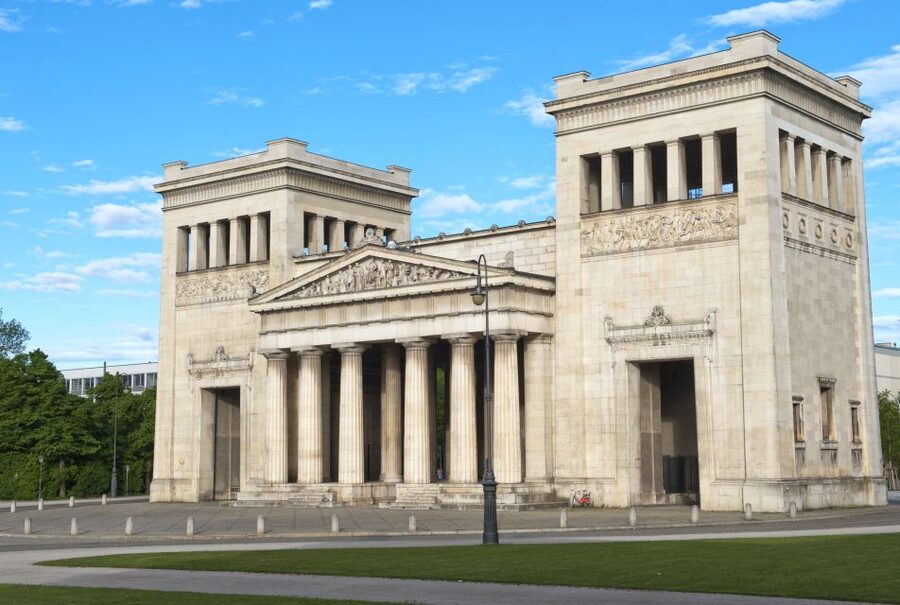
The three-hour route finishes at Königsplatz. Under the Nazi regime, the square hosted mass rallies and book burnings.
Königsplatz is a fitting final stop because it brings together public spectacle, ideology, and censorship. The square’s use for rallies shows how architecture and open space could be turned into political theater. The book burnings show how the regime attacked ideas as well as people.
Ending here also gives your guide a chance to connect the beginning and end of the story. You have followed the Nazi movement from its Munich roots through its attempt to seize power, its control of public life, the war, and the city’s bombing and liberation in 1945.
The walk covers a lot. Wear comfortable shoes and expect to spend the full time outdoors in the basic option. Munich’s central streets are easy to reach, but the subject is emotionally heavy, so this is not a casual sightseeing stroll with a few historical facts added on.
What the 4.5-Hour Version Adds
The longer option includes the Munich Documentation Center for the History of National Socialism with your private guide. This is the better choice if you want evidence and explanation, not only locations.
The center presents photographs, documents, written material, film projections, and media stations. Its coverage includes the origin and rise of the Nazi movement, World War I, World War II, the war and postwar period in Munich, and the causes and consequences of National Socialism.
The museum portion changes the balance of the experience. The three-hour walk gives you place and atmosphere. The 4.5-hour option adds primary material and a more organized account of events. You can pause over images and documents, then ask your guide to explain what you are seeing.
I would choose the longer version for anyone with a serious interest in 20th-century European history, school or university study, or the question of how democratic societies can fail. It also makes more sense for a first-time visitor who wants one focused experience rather than several short introductions to Munich’s past.
The cost is the key issue. At $311 per person, the longer visit may offer stronger value because you receive additional museum time and guide attention. Still, the price remains high. If you mainly want to see the city center and hear the basic story, the three-hour route may be enough.
Price, Pace, and Private Tour Value
At $311 per person, this is not a budget walking tour. You are paying for a private group, a live historian guide, flexible questions, and the option of museum interpretation. The price may work best for a family, small group, or visitors who care enough about the subject to want a tailored conversation.
The private format is less useful if you prefer a cheap overview or plan to read the history independently. Munich has many free public spaces connected with this period, and you can visit the documentation center separately if you want to control your own pace. The tour earns its price through interpretation, not transport or luxury extras.
The experience is listed as three hours, with a 4.5-hour version available. The summary also gives a duration range of three hours to 270 minutes, so check the exact option and starting time when booking. The walking format means you should plan around the meeting point at Marienplatz rather than expect hotel pickup.
Languages include English, German, French, Italian, and Spanish. The tour is also listed as wheelchair accessible, which is important for anyone planning a central Munich walk, though you should still confirm the selected route and museum arrangement when booking.
Free cancellation is available up to 24 hours before the start, and you can reserve now and pay later. Those policies help if your Munich schedule is still changing, but they do not reduce the fairly high base price.
Who Should Choose This Experience?
I would recommend this tour to you if you want Munich’s Nazi past explained by a person rather than pieced together from plaques. It suits visitors who want to ask questions about political support, resistance, wartime destruction, and public memory.
The 4.5-hour option is best for history students, educators, families with older children, and anyone who wants the Documentation Center included. The three-hour walk works better if you have limited time or want a focused introduction before visiting other Munich sights.
You should think twice if your main goal is entertainment, food, or a relaxed beer hall tour. The subject includes propaganda, persecution, war, bombing, liberation, and resistance. It asks for attention and respect.
The private setup is also useful for mixed-interest groups. One person can ask about the Beer Hall Putsch, another can ask about the White Rose, and a third can focus on the Munich Agreement. A guide can respond to those different needs more easily than a fixed audio route.
Should You Book the Munich Third Reich Tour?
Book it if you want an honest, place-based explanation of how Munich became the early center of the Nazi movement and how the city experienced the war’s end. I like the route’s mix of political sites, resistance history, memorial space, and wartime context.
For the best value, I would choose the 4.5-hour version if the extra cost fits your budget. The NS Documentation Center adds photographs, documents, films, and media stations that give substance to what you see outdoors.
Choose the three-hour option if you need a shorter introduction or care most about walking the central sites. Either way, arrive at the Hotel BEYOND by Geisel meeting point, opposite St. Peter’s, and do not enter the hotel to ask for the tour.
FAQ
Where does the tour meet?
Meet your guide in front of Hotel BEYOND by Geisel at Marienplatz 22, 80331 Munich, opposite St. Peter’s Church.
Should I enter Hotel BEYOND by Geisel?
No. The hotel is only the meeting point, and its staff is not informed about the tour.
How long is the standard tour?
The standard walking tour lasts three hours. The available information also lists a 4.5-hour option.
What does the 4.5-hour option include?
It includes entry to the Munich Documentation Center for the History of National Socialism with your private guide.
Is the NS Documentation Center included in the three-hour tour?
No. The Documentation Center is included only with the 4.5-hour option.
Which languages are available?
The tour is available in English, German, French, Italian, and Spanish.
Is this a private group tour?
Yes. The experience is listed as a private group tour with a live guide.
Can I cancel for a full refund?
Yes. You can cancel up to 24 hours in advance for a full refund.
Just added around Munich
- Munich: Private or Group Third Reich and WWII Walking Tour★ 4.9 · 13 reviews
- From Munich: Neuschwanstein Castle and Linderhof Private Tour★ 5.0 · 13 reviews
- Private Transfer from Munich to Salzburg with 2 hours for sightseeing★ 4.5 · 13 reviews
- Munich: Historical Walking Tour on the Rise of Hitler★ 5.0 · 13 reviews
- Private Scenic Transfer from Munich to Prague with 4h of Sightseeing★ 5.0 · 13 reviews
- From Munich: VIP day trip to Salzburg★ 5.0 · 14 reviews
- National Socialism WWII with licensed guide – private tour★ 5.0 · 14 reviews
- Munich: Walking Tour Old Town 3D VR Tour in GERMAN★ 4.3 · 14 reviews
Third Reich & WWII Tours, compared.
Berlin’s Best: 2 Hour Walking Tour Third Reich and the Cold War
Read our review →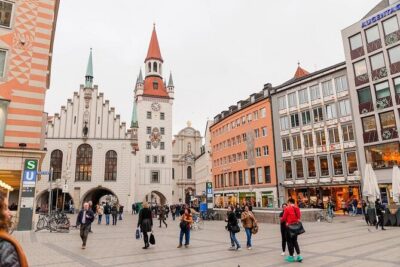
Third Reich Berlin: Hitler and WWII Walking Tour
Read our review →
Walking Tour of Former Nazi Party Rally Grounds
Read our review →
Browse the lists this tour appears in