
Reviewed · THIRD REICH & WWII TOURS
Berlin: Third Reich & Cold War Walking Tour
Berlin keeps its hardest stories close to the city center. This private two-hour walking tour links the Brandenburg Gate, Reichstag, Holocaust Memorial, Hitler’s bunker site, Topography of Terror, and Checkpoint Charlie in one focused route. I like the clear historical thread and the chance to ask your own questions instead of following a large group.
I also like the local advice from guides such as Eugen and Carlo, who speak English, French, and Spanish. Carlo has offered suggestions for Berlin neighborhoods, food, and local experiences, while Eugen has earned praise for his clear French explanations. The main drawback is the short length: two hours can introduce these major sites, but it cannot give each one the time it deserves.
In This Review
- Key points at a glance
- Starting beneath the Brandenburg Gate
- Reichstag and the machinery of power
- The Holocaust Memorial asks for quiet attention
- Hitler’s bunker site and the final days of war
- Topography of Terror confronts Nazi crimes
- The Berlin Wall, escapes, and Checkpoint Charlie
- Why the private format changes the experience
- What $35 buys you
- Who will get the most from this walk
- Practical details before you book
- Should you book this Berlin history walk?
- FAQ
- Where does the tour begin?
- How long does the walking tour last?
- Which sights are included on the route?
- Is this a private tour?
- Which languages are available?
- Are food, drinks, and attraction tickets included?
Key points at a glance
- A private route through Berlin’s darkest chapters: You move from Nazi dictatorship and the Holocaust to the Berlin Wall and German reunification.
- Six major sights in a compact walk: The route includes the Brandenburg Gate, Reichstag, Holocaust Memorial, Hitler’s bunker site, Topography of Terror, and Checkpoint Charlie.
- A guide who can shape the conversation: Because the group is private, you can focus more on military history, Jewish history, Berlin Wall escapes, or present-day Germany.
- Useful for a first day in Berlin: The walk places several central sights in context and gives you ideas for what to explore later.
- Good language choice: Live guiding is available in English, French, and Spanish.
- Strong value at $35 per person: The price is especially appealing if you want personal attention rather than a large shared group.
Starting beneath the Brandenburg Gate
The meeting point is in front of Wellendorff Berlin at Hotel Adlon, on Unter den Linden 77. This is a practical place to begin because the Brandenburg Gate is close by, and the location is easy to identify in central Berlin.
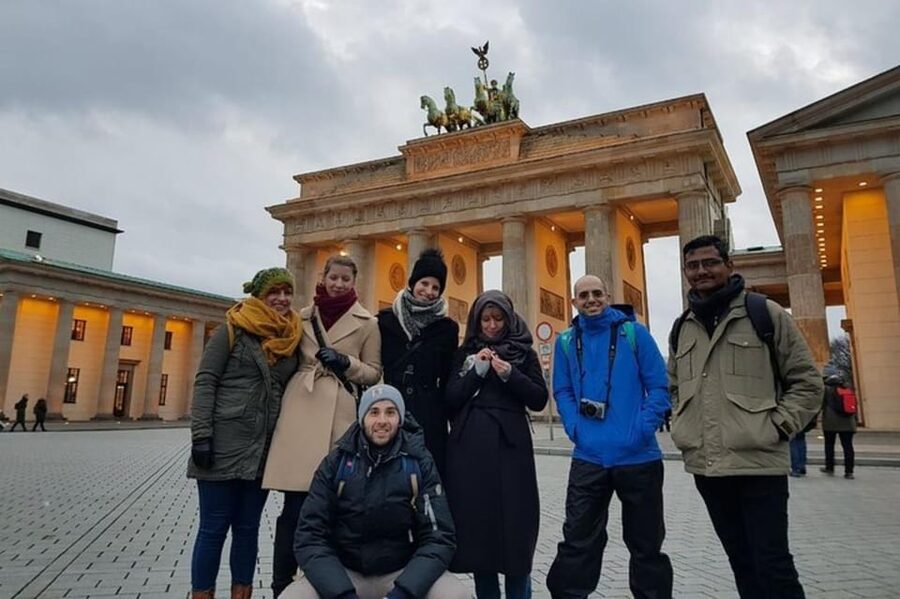
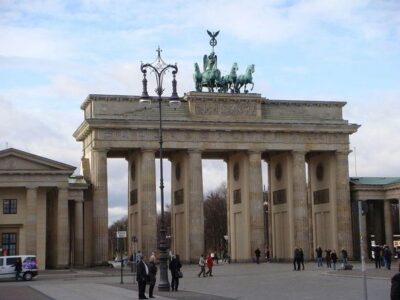
Your guide begins with the gate, one of Germany’s best-known symbols. Its present meaning is tied to German unity, but the tour uses it to show how the same monument has carried different political meanings across changing periods. That is the right way to approach Berlin: not as a city with one fixed story, but as a place where symbols were repeatedly claimed and reinterpreted.
I like starting here because you immediately get your bearings. If this is your first time in Berlin, the gate gives you a familiar reference point before the tour moves into less obvious sites. It also sets up the main question of the walk: how did Berlin move from dictatorship and war to division, then to reunification?
The meeting point is near Hotel Adlon, not inside a museum or railway station. Still, give yourself time to reach the area. A two-hour tour leaves little room for a late arrival, especially when the guide is working with a private schedule.
More Third Reich & WWII Tours in Berlin
- Berlin: Third Reich and Cold War 2 Hour Walking Tour
★ 4.9 · 6,830 reviews - Berlin’s Best: 2 Hour Walking Tour Third Reich and the Cold War
★ 5.0 · 5,486 reviews - Third Reich Berlin: Hitler and WWII Walking Tour
★ 5.0 · 3,301 reviews
Reichstag and the machinery of power
The next stop is the Reichstag, home of Germany’s Parliament. Here, the guide explains its role during the Nazi dictatorship and places the building within the political story of the period.
You should not expect a full interior visit as part of this walking experience. The listed activity describes a guided stop, not an included entrance or parliamentary tour. That distinction matters if you want to see the building from inside. The tour team can help book tickets for desired visits, but entrance arrangements are separate from the $35 walking price.
The Reichstag works well on this route because it turns political history into something visible. You are not only hearing about decisions made in distant offices. You are standing at a building connected with Germany’s national government and its troubled political past.
Your guide can also help connect the Reichstag to the nearby Brandenburg Gate and the later story of German unity. Since this is a private group, you can ask for more background here if political history interests you. If your group prefers to move quickly toward the Berlin Wall, you can avoid spending too long on one stop.
The Holocaust Memorial asks for quiet attention
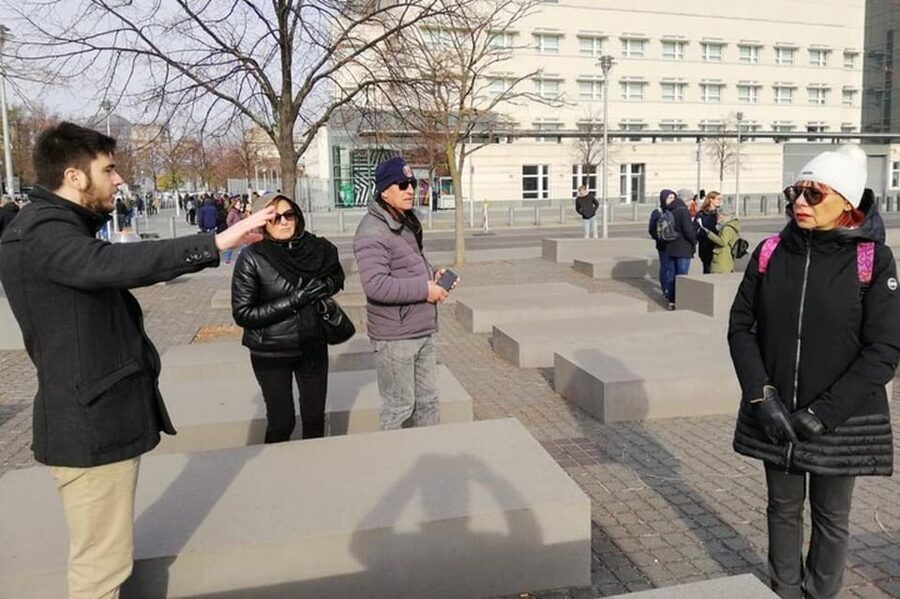
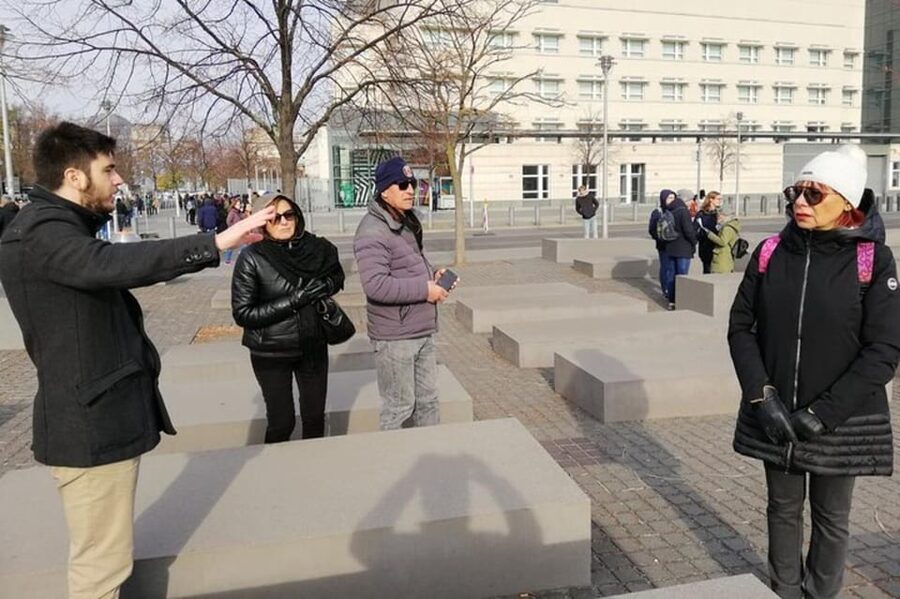
The Memorial to the Murdered Jews of Europe is one of the most serious stops on the route. It honors Jewish victims of the Holocaust and is designed to make you think rather than simply collect another photograph.
A guide adds value here by explaining the memorial’s purpose and its place in Berlin’s effort to face Nazi crimes. You may find the site more affecting when you understand the historical responsibility behind it. The memorial is not a substitute for a museum visit, and the tour cannot cover every aspect of the Holocaust in a few minutes. Its value is in giving you a respectful framework before you continue.
This is one point where the private format helps. You can ask difficult questions without feeling that you are holding up a large group. At the same time, you should be prepared for a serious tone. This is not a light sightseeing walk with history added as decoration.
If you want a longer examination of the Holocaust, you will need a separate museum visit. The tour gives you a clear introduction, but the memorial itself deserves time and quiet. The guide can help you decide what to see next in Berlin, including other sites connected with the city’s Jewish history.
Hitler’s bunker site and the final days of war
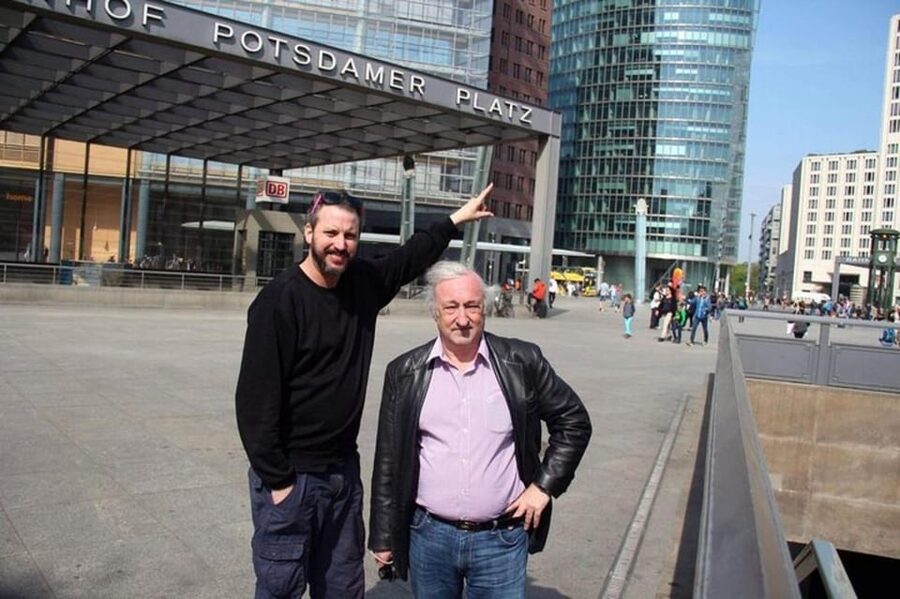
The route continues to the site of Hitler’s bunker. The guide explains the last days of World War II and Hitler’s suicide, giving you context for the end of the Nazi regime.
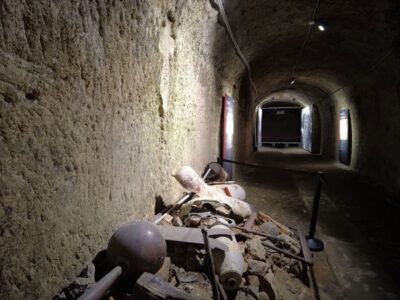
The important practical point is that this is a site, not a preserved underground attraction. You should expect an explanation of what happened at this location rather than a dramatic bunker interior. That can feel anticlimactic if you arrive expecting rooms, tunnels, or a museum display. Yet the plain setting is part of the lesson. A place associated with one of the twentieth century’s most destructive dictatorships is now an ordinary part of central Berlin.
I like this stop because it corrects a common mistake in historical sightseeing. The bunker should not be treated as a shrine or spectacle. A good guide keeps the focus on the collapse of the regime, the suffering caused by the war, and the political consequences that followed.
The tour’s short duration means the stop will be concise. You will hear the essential account, then move on. If your main interest is the final days of World War II, ask your guide to spend more of your private time here and accept less detail at another stop.
More Walking Tours in Berlin
- Discover Berlin Half-Day Walking Tour
★ 5.0 · 9,624 reviews - Berlin: Discover Berlin Walking Tour
★ 4.9 · 5,998 reviews - Berlin: Hidden Backyards Guided Walking Tour
★ 4.8 · 5,360 reviews - Berlin: Alternative Berlin Walking Tour
★ 4.6 · 1,204 reviews
Topography of Terror confronts Nazi crimes
At the Topography of Terror exhibition, you visit the site of the former Gestapo and SS headquarters. The exhibition deals with crimes committed during World War II and provides one of the clearest links between Nazi institutions and the violence they organized.
This is an especially useful stop because it moves beyond famous leaders and monuments. You learn about the organizations that carried out repression and terror. The setting helps show that Nazi rule was not only a matter of speeches and symbols. It depended on offices, police power, and systems of persecution.
The exhibition is a major subject in its own right, so two hours is not enough for a full visit. The walking tour offers an introduction and explains why the site matters. If you want to read the displays closely, plan to return independently. The included tour should be treated as a guided orientation rather than a complete museum session.
Public transport may be used during the walk, except with certain selected options. The supplied details do not set out a fixed transport schedule, so ask your guide at the start how much of the route will be on foot. Comfortable shoes remain a sensible choice, even if a short public transport ride is included.
The Berlin Wall, escapes, and Checkpoint Charlie

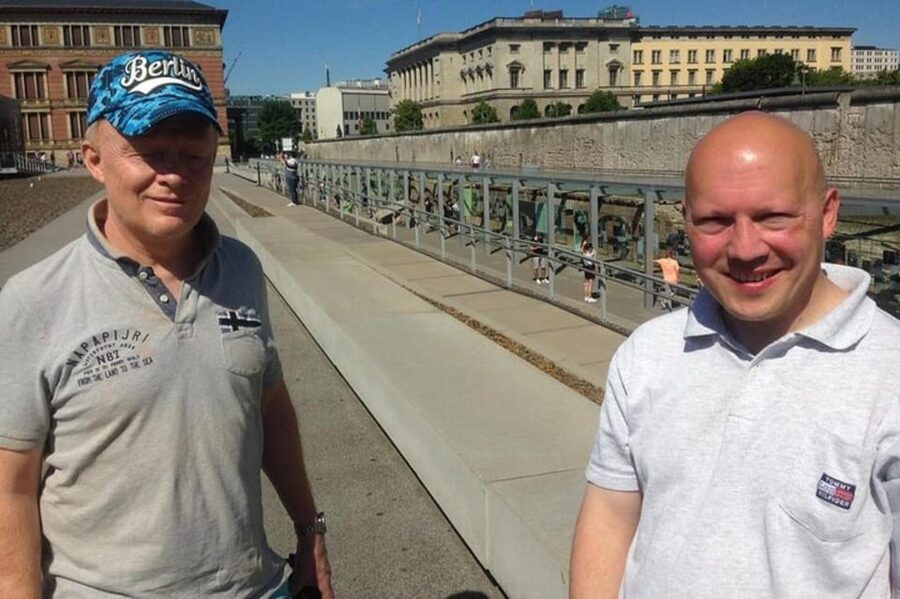
The Cold War section of the tour explains the Berlin Wall’s construction in 1961 and the daring escapes made over it. This changes the mood of the walk. You move from the crimes of the Nazi era to a divided city shaped by Soviet and American power.
The guide also explains the 1961 standoff between Soviet and American forces. That episode shows how close Berlin came to a direct confrontation between the two major Cold War powers. You then hear about the fall of the Wall in 1989 and the path toward German unity.
Checkpoint Charlie is the best-known endpoint for this part of the story. It is also one of Berlin’s most commercialized historical sites, so guided context matters. Without explanation, you might see a famous name and a photo opportunity. With a guide, you get the political background, the meaning of the checkpoint, and the connection between the 1961 standoff and the Wall’s later collapse.
The tour description places Checkpoint Charlie at the end, while the detailed stop list highlights the earlier central sites through Topography of Terror. Treat the route as a flexible private walk rather than a rigid museum timetable. Your guide can confirm the exact finish and adjust the order if needed.
Why the private format changes the experience
The private group is the strongest feature for many people. You are not sharing the guide with strangers, and the tour can be adjusted around your interests. That makes a real difference on a subject where one person may want military history, another may want the Holocaust, and someone else may care most about the Berlin Wall.
A private guide can also answer practical questions about the rest of your stay. Carlo, one of the guides praised in the supplied feedback, has suggested Berlin neighborhoods, places to eat, and local experiences. That sort of advice can be more useful than a generic list because it comes during a conversation about what you already enjoy.
Eugen has also received particular praise for French-language guiding, with descriptions emphasizing his clear teaching style and friendly manner. The service is available in English, French, and Spanish, so you can choose the language that lets you follow difficult material most comfortably.
There is a tradeoff. A private tour usually gives you flexibility, but the two-hour format limits depth. You are paying for focused attention and a smart route, not for a full museum day or an exhaustive account of Berlin from 1933 to 1989.
What $35 buys you
At $35 per person, the price is reasonable for a private experience that covers so many central sights. The value is highest when two or more people book together, since you get an exclusive guide rather than a shared group. It is also a good fit if you want to use your first day in Berlin efficiently.
The price includes the walking tour, private arrangement, customization, and public transport when needed, except with selected options. Food and drinks are not included. Museum or other attraction tickets are not listed as included either, although the team can help you book desired visits.
That means you should see the $35 as the cost of historical guidance and route planning. You are not paying for entry to every place mentioned. If you want to tour the Reichstag interior or spend extended time at Topography of Terror, budget separately for any required tickets and extra time.
I find the price most attractive for couples, families, or friends who want a private introduction. Solo visitors should compare the cost with a shared walking tour, since private pricing can feel less economical for one person. The benefit is personal attention, not a long list of included admissions.
Who will get the most from this walk
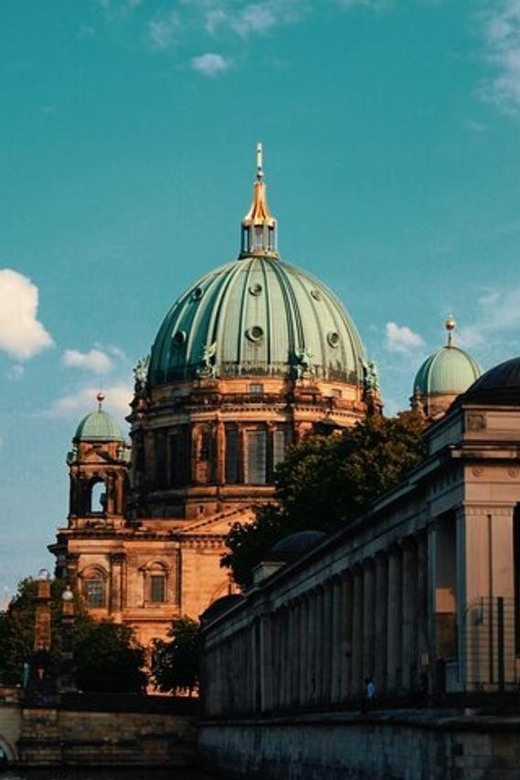
I would recommend this tour to you if Berlin’s twentieth-century history is a main reason for your visit. It is also useful for a first-time visit because the route covers several central landmarks and gives each one a place in the larger story.
It suits:
- Couples or families who want a private guide
- First-time visitors who want an efficient orientation
- History-minded visitors who prefer discussion to audio guides
- English, French, or Spanish speakers
- People who want advice about neighborhoods, food, and further sights
You may want something else if you prefer slow museum visits. The tour moves quickly, and several stops deserve more than the available time. It is also not the best choice if you want a relaxed architecture walk, a food tour, or a broad introduction to Berlin beyond Nazi and Cold War history.
The subject matter requires attention. The Holocaust Memorial, Hitler’s bunker site, and Topography of Terror are not casual sightseeing stops. You will get more from the experience if you approach the route with patience and respect.
Practical details before you book
The activity lasts two hours, with starting times based on availability. Meet your guide in front of Wellendorff Berlin at Hotel Adlon, Unter den Linden 77.
English, French, and Spanish guiding is available. The tour is wheelchair accessible, and private groups are available. Since public transport can be part of the route, confirm the exact plan with your guide at the beginning, especially if mobility needs affect how you prefer to travel.
You can cancel up to 24 hours before the tour for a full refund. You can also reserve now and pay later, which helps if your Berlin schedule is still changing.
Bring water and wear comfortable shoes. Food and drinks are not included, but central Berlin offers plenty of places to stop before or after the walk. If you want a museum interior visit, ask about ticket help before the day of the tour rather than assuming admission is part of the price.
Should you book this Berlin history walk?
Book it if you want a private, focused introduction to Berlin’s Nazi and Cold War past, especially if you value questions and personal recommendations. The $35 price is fair for a customized route with a live guide, and the strong 4.7 rating from 30 ratings supports the impression of dependable guiding.
Skip it if you want long, detailed visits inside museums or a slower examination of each memorial. For most people, the best plan is to use this walk as a foundation, then return to the Topography of Terror, the Holocaust Memorial area, or another historical site with more time. It gives you the map and the framework. You decide where to spend the rest of your Berlin hours.
FAQ
Where does the tour begin?
It begins in front of Wellendorff Berlin at Hotel Adlon, Unter den Linden 77, in Berlin.
How long does the walking tour last?
The tour lasts two hours. Starting times depend on availability.
Which sights are included on the route?
The route covers the Brandenburg Gate, Reichstag, Memorial to the Murdered Jews of Europe, Hitler’s bunker site, Topography of Terror, and Checkpoint Charlie.
Is this a private tour?
Yes. The activity is offered as a private and exclusive tour, with no one else added to your group.
Which languages are available?
Live guiding is available in English, French, and Spanish.
Are food, drinks, and attraction tickets included?
Food and drinks are not included. Attraction tickets are also not listed as included, but the tour team can help you book tickets for visits you want to make.
Just added around Berlin
- Berlin: Private Guided Tour of the Main Sights★ 5.0 · 13 reviews
- Private Highlights of Berlin Bike Tour★ 5.0 · 13 reviews
- Modern Berlin Private Walking Tour: Diverse, Vibrant and Exciting German Capital★ 5.0 · 13 reviews
- Tour in Berlin from Warnemünde and Rostock Cruise Port★ 4.1 · 13 reviews
- Berlin: Stasi Museum Private Guided Tour with Entry Ticket★ 4.8 · 13 reviews
- Private Food Tour Experience with a born and bred Berliner★ 5.0 · 14 reviews
- Berlin: Rheinsberg Palace Entrance Ticket★ 4.8 · 14 reviews
- Berlin in one day – day tour with an expert guide★ 5.0 · 14 reviews
Third Reich & WWII Tours, compared.
Berlin’s Best: 2 Hour Walking Tour Third Reich and the Cold War
Read our review →
Third Reich Berlin: Hitler and WWII Walking Tour
Read our review →
Walking Tour of Former Nazi Party Rally Grounds
Read our review →
Browse the lists this tour appears in