
Reviewed · WALKING TOURS
Berlin: Historic Jewish walking tour through the city center
Berlin’s vanished fashion district still has stories. This one-hour walk follows the former Jewish economic center around Hausvogteiplatz, where tailoring, fashion, and trade once helped drive the capital’s economy. I like the focus on the lost Konfektion industry, and I like that the route connects Prussian Berlin, the Roaring Twenties, the Nazi era, the years before the Wall fell, and the city today.
The tour is short, inexpensive, and centered on real places rather than a long list of dates. The main consideration is its limited length: one hour gives you a sharp introduction, not a complete study of Berlin’s Jewish history. You should also confirm your arrival by email or phone, call, message, or WhatsApp, before setting out.
In This Review
- Key points to know before you go
- Why this small district matters
- Starting at Hausvogteiplatz near the U2
- Thirty minutes at Hausvogteiplatz
- Werderscher Markt and the city’s changing center
- Jägerstraße and the final part of the route
- The story of the lost Konfektion industry
- A short route with a serious message
- Price, donation booking, and overall value
- Who will enjoy this tour most
- Useful planning advice for the hour
- Should you book this walking tour?
- FAQ
- Where does the tour start?
- How can I identify the guide?
- How long does the walking tour last?
- Which locations does the route visit?
- What language is the tour conducted in?
- What is the tour about?
- Is the tour wheelchair accessible?
- Are young children allowed to join?
- Can I cancel the booking?
Key points to know before you go
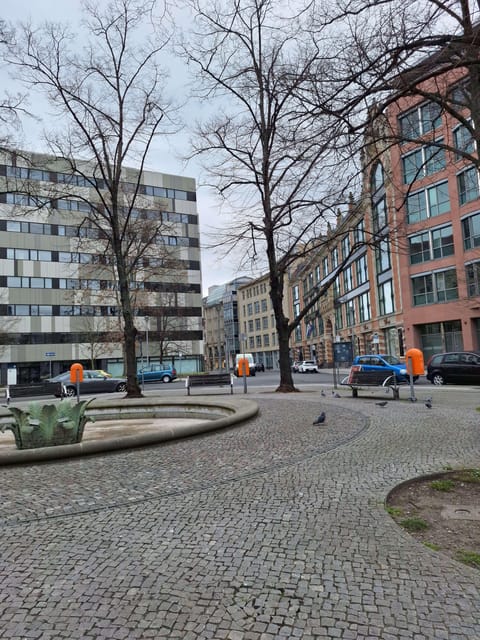
- Hausvogteiplatz is both the meeting point and the historical heart of the walk, near the U2 station and the square’s water fountain.
- The lost Konfektion industry is the main subject, showing how Jewish businesses shaped Berlin’s fashion and economic life before the Second World War.
- The route covers three central locations, Hausvogteiplatz, Werderscher Markt, and Jägerstraße, then returns to the starting point.
- The tour lasts one hour and is conducted in English, making it easy to fit into a morning or afternoon in central Berlin.
- The price is listed at $1.70 per person, while the provider also describes donation-based booking, so confirm the payment arrangement before you go.
- The tour is wheelchair accessible, but children under six are not permitted.
Why this small district matters
Berlin’s Jewish history is often told through memorials, synagogues, cemeteries, and sites of persecution. This walk takes a different route. It looks at work, trade, clothing, money, and the daily business that helped shape central Berlin.
That focus matters. A city’s economic life can reveal how people built careers, created companies, supported families, and influenced public culture. The former Konfektion industry offers a way to understand Jewish Berlin as a place of enterprise and creativity, not only as a story of destruction.
You’ll hear how Jewish residents developed and prospered in the city, then how political extremism damaged both a community and an entire sector of the economy. Some people survived. Many did not. The result is a story that links personal lives with Berlin’s changing streets.
I find this approach useful because it puts history at eye level. You are not only hearing that Berlin changed under different regimes. You are looking at the central district where those changes affected shops, businesses, buildings, and the people who worked there.
More City Tours in Berlin
- Berlin: 1-Hour City Tour by Boat with Guaranteed Seating
★ 4.3 · 16,993 reviews - Berlin: City Sightseeing Hop-On Hop-Off Bus Tour
★ 4.1 · 4,233 reviews - Potsdam: City and Castles Tour
★ 4.7 · 3,721 reviews
Starting at Hausvogteiplatz near the U2
Meet your guide at Hausvogteiplatz, close to the U2 train station. The exact meeting point is near the water fountain in the square. Look for a guide carrying a white side bag.
This is a practical meeting place for a walking tour. The U2 gives you a simple connection through central Berlin, and the square provides a clear outdoor landmark. Arrive with enough time to find the fountain and identify the guide. Since you must verify your arrival by email or phone, do not leave that step until the last minute.
The tour begins and ends here, so you do not need to plan a separate return journey. That is helpful if you have another museum, meal, or appointment afterward.
Hausvogteiplatz also sets the tone immediately. You are in central Berlin, surrounded by streets that connect the city’s political, commercial, and architectural past. The guide uses this starting area for about 30 minutes, making it the longest part of the route.
Thirty minutes at Hausvogteiplatz
The opening section is the main historical briefing. Here you begin tracing Berlin during the Prussian Empire, the prosperous years of the 1920s, the period before the Wall fell, and the city’s later changes.
The subject is not simply where Jewish people lived. It is how the district functioned. The Konfektion industry was a major economic force before the Second World War, and the walk explains the part it played in Berlin’s commercial life.
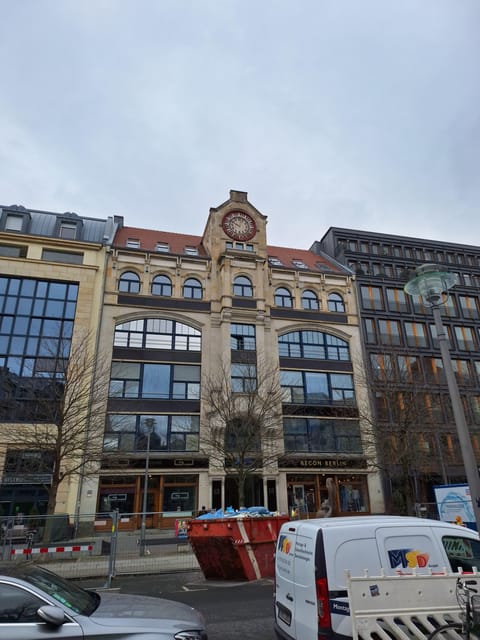
You should expect the guide to point out historic buildings and areas connected with that former industry. The emphasis is on the physical city, so the information has a useful anchor. Instead of hearing about a vanished business world in the abstract, you can connect it to the square and surrounding streets.
This part should suit you if you like history explained through urban change. You’ll see how political power can affect a local economy, not just government offices or battlefields. The tour also gives attention to the brutal effects of regimes on Berlin’s Jewish population and on the industry that had helped the city grow.
The 30-minute opening is also where the tour’s limits become clear. The supplied route does not promise interior visits, museum collections, or extended time at individual buildings. If you want a detailed architectural tour or a full account of Jewish Berlin, you’ll need to add other sites on your own.
Still, as a compact introduction, Hausvogteiplatz does a lot. It gives you the setting, the timeline, and the central question: how could an industry and community that once played such an important role be pushed out, broken apart, and largely erased?
Werderscher Markt and the city’s changing center
The next stop is Werderscher Markt, with about 15 minutes for a visit. The shorter stop keeps the tour moving, but it also means you should listen closely and use the provided map to follow the route.
Werderscher Markt helps broaden the story beyond one square. You’ll continue looking at Berlin’s central streets as places shaped by commerce, politics, and rebuilding. The tour links the earlier economic life of the district with the city’s later development, including the changes that came after the fall of the Berlin Wall.
That post-Wall perspective is valuable. Berlin did not simply return to its old form after reunification. Streets, districts, businesses, and public memory all changed. This tour gives you a way to think about those changes alongside the earlier history of Jewish Berlin.
You may particularly appreciate this stop if you have already seen Berlin’s major political sights and want a different angle on the city center. The route is not built around famous attractions alone. It asks you to pay attention to areas that might otherwise become background scenery during a day of sightseeing.
Because the visit lasts only 15 minutes, do not expect a long pause for photographs or independent exploration. Think of Werderscher Markt as a focused stop within a larger explanation, not a separate attraction with a long visit.
More Historical Tours in Berlin
- Berlin: Natural History Museum Entrance Ticket
★ 4.6 · 3,382 reviews - Berlin: World Heritage Cruise to Potsdam
★ 4.5 · 1,435 reviews - Berlin Historical Highlights Walking Tour
★ 4.9 · 657 reviews - Berlin Private Complete History All Day Walking Tour
★ 5.0 · 474 reviews
Jägerstraße and the final part of the route
The walk continues to Jägerstraße, also scheduled for about 15 minutes. This keeps the tour within an easy one-hour format and gives you another central location for understanding the former Jewish economic district.
Jägerstraße is part of the route’s effort to show how the industry and community extended through the city center. The guide’s task here is to connect another street with the larger story of tailoring, fashion, and the changing fortunes of Jewish Berlin.
The strongest idea of the entire tour appears again at this point: a thriving industry can disappear when a regime targets the people who built it. That is a difficult lesson, but it is also an important one. You’ll hear about development, success, persecution, and survival in the same short walk.
At the end, you return to Hausvogteiplatz. This makes the route easy to understand and easy to combine with the rest of your day. You will not finish at an unfamiliar street or need to arrange transport back to central Berlin.
The story of the lost Konfektion industry
The tour’s special subject is the Konfektion industry, described as the economic powerhouse that helped run Berlin before the Second World War. The word refers to ready-made clothing and the wider business of garment production and fashion.
That subject gives the tour a strong practical connection to city life. Clothing businesses need designers, makers, sellers, suppliers, and customers. They also depend on transport, finance, advertising, workshops, and retail streets. When such an industry grows, it changes more than wardrobes. It affects jobs, neighborhoods, and the public image of a city.
The tour presents Jewish participation in this industry as a story of achievement and vulnerability. Jewish residents developed and prospered in Berlin, but their success did not protect them from extremist politics. Once a regime began targeting Jewish people, the damage reached businesses, livelihoods, families, and the city’s economic structure.
I like that the tour does not treat persecution as an isolated event disconnected from ordinary life. The tailoring industry shows what was taken away. It also helps you understand why the loss was economic as well as human.
The subject may be unfamiliar to many people visiting Berlin. That is part of the appeal. You are learning about a major part of the city’s past that is easy to miss when your sightseeing is limited to the Brandenburg Gate, Museum Island, or the former Wall.
A short route with a serious message
The tour covers a lot of time in one hour. It reaches back to the Prussian Empire, moves through the Roaring Twenties, addresses the years before the Wall fell, and ends with Berlin’s modern development.
That broad timeline helps you see the city as a place that keeps changing. At the same time, it can feel compressed. You will receive an overview rather than a long, detailed account of each period.
I would choose this tour if I wanted a strong historical introduction before exploring Berlin independently. The map and ordered list of activities can help you keep track of the route and may give you ideas for further sightseeing.
I would not choose it as my only Jewish history experience in Berlin. The material is serious and the route is short. To understand the subject fully, you would need more time elsewhere, but this walk can give those later visits a clearer frame.
The tour’s 4.4 rating from five reviews suggests a generally positive reception, with the strongest praise focused on fresh insights and the story of the lost Jewish tailoring industry. That matches the tour’s real selling point: it offers an angle on Berlin that you may not get from a standard city walk.
Price, donation booking, and overall value
The listed price is $1.70 per person, which is remarkably low for a guided one-hour walk. At that price, the tour offers excellent value if you want a brief introduction to central Berlin’s Jewish economic history.
There is one point to clarify. The booking information also says that donation-based tours are available by contacting the provider, Stitching The Past – Tour Berlin. Since the listed price and donation arrangement may work differently, contact the provider before booking so you know how payment is handled.
The low cost also makes this an easy addition to a larger Berlin itinerary. You can fit it between major attractions without committing half a day or spending much of your sightseeing budget.
The tradeoff is depth. A one-hour route with three locations cannot cover every building, biography, and historical event. You are paying for a focused introduction and a live explanation, not an all-day seminar.
Who will enjoy this tour most
This walk is a good choice for you if you enjoy:
- Jewish history presented through workplaces and city streets
- Berlin’s economic and social development
- Short guided walks with a clear route
- Lesser-known subjects connected to major historical events
- Walking tours conducted in English
- Central locations that are easy to reach by public transport
It should also suit first-time visitors who want something beyond Berlin’s most familiar sights. The route gives you another way to read the city center, especially if you like understanding how a city worked before looking at how it looks today.
Families should note that children under six are not permitted. Older children may or may not enjoy the serious material, depending on their interest in history, but the age restriction is clear.
The tour is wheelchair accessible, which makes it a practical option for many visitors. Since the experience takes place outdoors and involves walking between central locations, you should still consider your own comfort and pace when planning the day.
Useful planning advice for the hour
Wear comfortable shoes, even though the tour is short. You’ll be walking between Hausvogteiplatz, Werderscher Markt, and Jägerstraße, then returning to the first square.
Arrive at the fountain near the U2 station with your arrival confirmation ready. The white side bag is the guide’s identifying feature, so keep an eye out for it in the square.
Because the tour is in English, it works well for English-speaking visitors who want a live explanation rather than a self-guided route. A map and an ordered activity list are provided, which can help you follow the sequence and remember the places afterward.
The tour is also easy to pair with other central Berlin sights. Since it returns to Hausvogteiplatz, you can continue your day without needing to find a new transport connection. Check the available starting times before planning your museum visits or meals.
Free cancellation is available up to 24 hours in advance for a full refund, and you can reserve now while paying later. Those terms are useful if your Berlin schedule is still shifting.
Should you book this walking tour?
Book it if you want a low-cost, one-hour introduction to Berlin’s former Jewish tailoring and fashion district. The tour’s best feature is its subject: you’ll see how Jewish enterprise helped shape the city, then learn how extremism damaged both a community and an important industry.
I especially recommend it if you have already seen Berlin’s major landmarks and want a more specific story. The walk offers fresh insight, a central route, and a serious look at the people and businesses behind the city’s economic past.
Skip it if you need a long, detailed tour with interior visits, extensive architecture, or a broad survey of every part of Jewish Berlin. For everyone else, this is a small commitment with real historical value. Confirm the donation or listed-price arrangement, verify your arrival, meet the guide by the fountain, and give the city center an extra hour of attention.
FAQ
Where does the tour start?
The tour starts at Hausvogteiplatz square, near the water fountain and close to the U2 train station.
How can I identify the guide?
The guide will be carrying a white side bag.
How long does the walking tour last?
The tour lasts one hour.
Which locations does the route visit?
The route includes Hausvogteiplatz, Werderscher Markt, and Jägerstraße, then returns to Hausvogteiplatz.
What language is the tour conducted in?
The live tour guide conducts the experience in English.
What is the tour about?
The tour focuses on Berlin’s former Jewish economic center and the city’s lost Konfektion, or tailoring and fashion, industry. It also covers Berlin’s changes from the Prussian Empire and the Roaring Twenties through the period before the Wall fell and the present day.
Is the tour wheelchair accessible?
Yes, the activity is wheelchair accessible.
Are young children allowed to join?
The tour is not suitable for children under six years old.
Can I cancel the booking?
Yes. You can cancel up to 24 hours in advance for a full refund. The activity also allows you to reserve now and pay later.
More Walking Tours in Berlin
- Discover Berlin Half-Day Walking Tour
★ 5.0 · 9,624 reviews - Berlin: Third Reich and Cold War 2 Hour Walking Tour
★ 4.9 · 6,830 reviews - Berlin: Discover Berlin Walking Tour
★ 4.9 · 5,998 reviews - Berlin’s Best: 2 Hour Walking Tour Third Reich and the Cold War
★ 5.0 · 5,486 reviews
Just added around Berlin
- Kreuzberg Private Walking Tour: Immigrants, Artists & Hipsters★ 5.0 · 3 reviews
- Private Photo Tour in Kreuzberg★ 5.0 · 3 reviews
- Individual city tour Berlin for max. 8 persons★ 5.0 · 3 reviews
- Berlin’s Jewish Heritage: Private Tour of the Vibrant Jewish District★ 5.0 · 3 reviews
- Berlin & The Third Reich Private Guided Tour★ 5.0 · 3 reviews
- Private Analogue Photography Experience in Berlin★ 5.0 · 3 reviews
- Spy Mission in Berlin: Self-Guided Espionage Puzzle Quest★ 5.0 · 3 reviews
- Berlin Christmas Markets Walking Tour with Local Guide★ 5.0 · 3 reviews
Walking Tours, compared.





Berlin’s Best: 2 Hour Walking Tour Third Reich and the Cold War
Read our review →


Third Reich Berlin: Hitler and WWII Walking Tour
Read our review →Browse the lists this tour appears in