
Reviewed · THIRD REICH & WWII TOURS
Berlin Cold War & World War II Third Reich Walking Tour
Berlin’s scars are hiding in plain sight. I like this tour for its wide sweep from Hitler to the Berlin Wall and for the chance to connect famous landmarks with less obvious wartime traces. I also like the guides’ friendly, story-driven approach, especially the praise for Miguel and Arthur. The main caution is that the timing and route need clarification: it is advertised at about six hours, while some descriptions from past participants put it closer to two and a half or three and a half.
This is a history-heavy day with a lot of walking, outdoor stops, and serious subject matter. You get a useful first look at Berlin’s Nazi and Cold War past, but anyone wanting museum-level detail at every stop may find the pace broad rather than deeply focused.
In This Review
- Key points at a glance
- What this Berlin history tour is trying to show you
- Starting at the Reichstag and reading Berlin’s political center
- World War II sites, memorials, and the Battle of Berlin
- Why the guides matter more than the route
- Palace of Tears and the mechanics of a divided city
- Berlin Wall Memorial and East Side Gallery
- The DDR Watch Tower and the final Cold War stories
- Price, pace, and what you actually receive
- Who should book this tour
- Practical advice before you go
- My booking verdict
- FAQ
- How long does the Berlin Cold War and World War II tour last?
- Where does the tour start?
- What time does the tour begin?
- Where does the tour finish?
- Are admission tickets included?
- What should I wear?
- Can I cancel for a full refund?
Key points at a glance
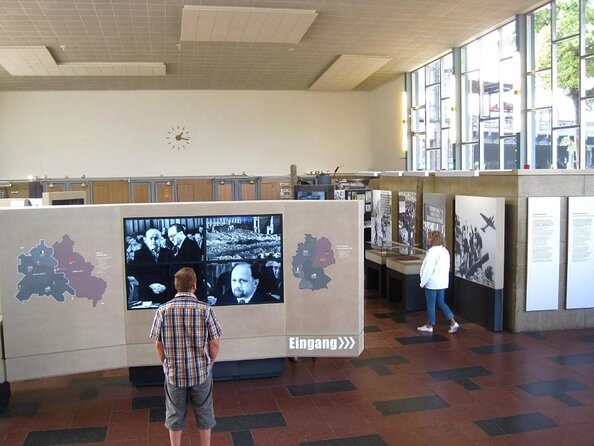
- From the Reichstag to the Berlin Wall: The tour links major political sites with wartime scars and Cold War landmarks.
- Guides make the difference: Miguel and Arthur receive particular praise for clear explanations, humor, patience, and useful local tips.
- A long outdoor experience: Wear sturdy shoes, bring water, and prepare for changing weather.
- Free sights keep the price reasonable: At $35.64 per person, the guide and full-day structure provide solid value if the tour runs near six hours.
- Expect an overview, not a specialist seminar: You can ask follow-up questions, but the wide route means some subjects receive only a short introduction.
- The route needs checking: The published stops cover far-flung parts of Berlin, and the stated duration does not perfectly match every account.
What this Berlin history tour is trying to show you
Berlin can feel like a modern European capital one minute and an open-air history lesson the next. A blank wall, a surviving tower, a line of cobblestones, or a bunker entrance can point to the Nazi dictatorship, the Battle of Berlin, Soviet occupation, divided government, or the Wall.
This tour tries to join those pieces into one story. It begins with the Reichstag and moves through places connected with World War II, the Third Reich, the Cold War, East Germany, and the Wall. The goal is not simply to collect landmarks. It is to help you understand how Berlin changed from Hitler’s capital to a divided city and finally to the reunified capital you see today.
That broad aim is the tour’s greatest strength. If you have only a short stay in Berlin, a guide can save you from seeing important places as disconnected sights. You will hear about major events, political figures, architecture, music, urban legends, and personal stories tied to the locations.
The trade-off is easy to see. Ten stops in six hours can offer a strong framework, but not every place can receive a long explanation. One rating of 4.4 from 30 ratings suggests a generally positive experience, though not every participant wanted the same level of detail.
More Third Reich & WWII Tours in Berlin
- Berlin: Third Reich and Cold War 2 Hour Walking Tour
★ 4.9 · 6,830 reviews - Berlin’s Best: 2 Hour Walking Tour Third Reich and the Cold War
★ 5.0 · 5,486 reviews - Third Reich Berlin: Hitler and WWII Walking Tour
★ 5.0 · 3,301 reviews
Starting at the Reichstag and reading Berlin’s political center
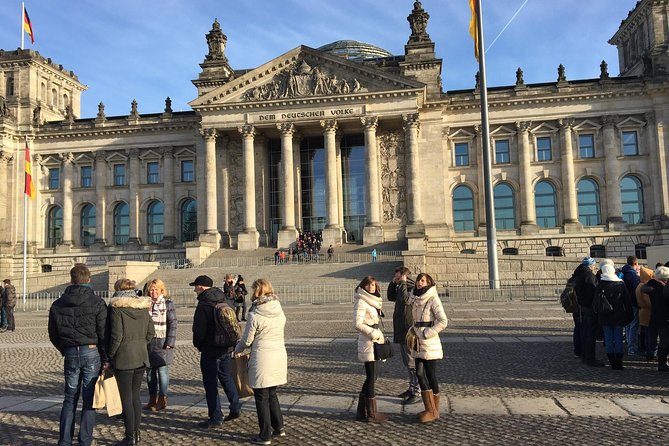
The meeting point is outside Generator Berlin Alexanderplatz at Otto-Braun-Straße 65, with a noon start. The first listed stop is the Reichstag Building, where you spend about 30 minutes.
The Reichstag matters because it represents the German state across several very different eras. A guide can use it to explain the political setting around Hitler’s rise, the destruction and division of Berlin, and the building’s role in modern Germany. The stop is also a useful opening because it places the city’s later conflicts against a national backdrop.
Admission is included because the tour visits the exterior rather than taking you inside. That keeps the group moving and avoids turning the day into a formal museum visit. If you are hoping for an interior tour or a visit to the dome, you will need to arrange that separately.
A good guide should help you look beyond the building itself. The tour’s strength is said to come from this kind of explanation, with guides adding stories about famous events, people, architecture, and even music rather than giving only dates.
World War II sites, memorials, and the Battle of Berlin
The World War II portion includes the Museum Berlin-Karlshorst, Humboldthain Flak Tower, Prenzlauer Berg, and the Berlin Story Bunker. Each stop offers a different way to understand the war.
At Museum Berlin-Karlshorst, the focus is on wartime events and memorials. The museum is closely associated with the end of the European war, making it a meaningful place to discuss Germany’s defeat and surrender. The scheduled visit is about 30 minutes, so expect an introduction rather than time for a full museum visit.
That distinction matters. If you want to study displays at length, read every panel, or examine military documents, half an hour will feel short. If you want a guide to place the site in the wider story, the stop can be useful.
Humboldthain Flak Tower gives the tour a more physical sense of the war. The remains are a reminder that Berlin was not just a place where decisions were made. It was also a city prepared for bombing and air defense. The guide points out details that you might otherwise walk past, which is exactly where a walking tour can earn its fee.
The stop in Prenzlauer Berg focuses on the scars and battlefields left by the Battle of Berlin. The city’s wartime damage is not always presented as one neat memorial. You may instead encounter traces spread through ordinary streets and parks. A guide helps you connect those fragments to the final fighting of the war.
The Berlin Story Bunker brings the subject closer to Hitler’s underground headquarters. The experience is likely to be sobering rather than entertaining, and that is appropriate. The bunker story is tied to the end of the Nazi regime and the last days of the dictatorship.
The tour description also mentions stories and urban legends. That can make the past easier to remember, but you should listen for the difference between documented events and local lore. The strongest guides, including those praised for answering follow-up questions, can make that distinction clear.
Why the guides matter more than the route
The most consistent praise goes to the guides’ command of the subject and their personal style. Miguel is described as passionate, friendly, hospitable, and funny. Arthur is also praised for a good sense of humor and clear explanations. Those qualities matter on a six-hour history walk, when a dry lecture would quickly become hard work.
You are encouraged to ask questions, and that seems to be one of the tour’s best features. One participant valued being able to ask as many questions as needed, while another appreciated that the guide could go further when the group wanted more detail.
That gives the tour some flexibility. If your interest is the Cold War, you can ask about escapes, border crossings, forced conscription, or daily life in East Berlin. If you are more focused on World War II, you can ask about the surrender, the Battle of Berlin, or the Third Reich sites.
The local advice is another nice touch. Miguel was specifically praised for restaurant, bar, and book suggestions. That is useful at the start of a Berlin stay, when you still need help deciding what to do after the tour.
Still, a guide’s strengths cannot erase every practical concern. A large group can make questions harder to hear and can slow movement between stops. The maximum group size is 100, which is a substantial crowd for a walking tour. Ask at the start how questions will be handled and stay close enough to hear the commentary.
More Walking Tours in Berlin
- Discover Berlin Half-Day Walking Tour
★ 5.0 · 9,624 reviews - Berlin: Discover Berlin Walking Tour
★ 4.9 · 5,998 reviews - Berlin: Hidden Backyards Guided Walking Tour
★ 4.8 · 5,360 reviews - Berlin: Alternative Berlin Walking Tour
★ 4.6 · 1,204 reviews
Palace of Tears and the mechanics of a divided city
The Palace of Tears is the Cold War turning point in the route. The tour uses it to explain border crossings, escape attempts, and important East Berlin landmarks.
The name refers to the sadness of departures at a former crossing point, and the subject is more personal than a simple account of political borders. Here you can begin to picture how the Wall affected families, friendships, work, and ordinary movement through the city.
The stop lasts about 20 minutes, so the guide will need to keep the explanation focused. That short visit can still be effective if it gives you the basic structure of divided Berlin before you reach the longer Wall-related stops.
You will also hear about escape points and stories of triumph and horror. These details help show that the Cold War was not merely a dispute between governments. It shaped real choices and carried real risks for people trying to cross from East to West.
Berlin Wall Memorial and East Side Gallery
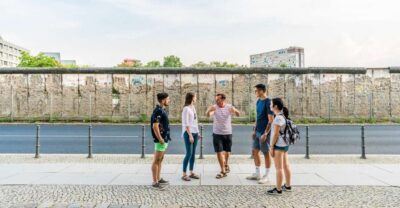
The Berlin Wall Memorial offers the clearest place to understand how the border worked. The tour points out surviving sections and visible reminders of the political division, explaining the wall’s construction, daily impact, and eventual destruction.
This is where the wide historical story becomes physical. You can see how barriers, guard systems, and controlled crossings changed the city. The guide’s explanation is especially useful because many parts of the former border have disappeared, leaving only scattered markers and fragments.
The East Side Gallery presents a different mood. Its painted sections turn a former symbol of repression into a public art site. The tour connects the gallery to the larger conflict between East and West and explains what life was like on the eastern side of the Wall.
Do not expect the East Side Gallery to provide a quiet memorial atmosphere. It is a popular public sight, and the art can pull your attention in several directions. The guide’s role is to keep the political meaning attached to the paintings and the Wall itself.
The tour also promises less obvious Wall locations, guard towers, and other remnants. That promise is appealing because Berlin’s best Cold War lessons are not always at the most famous photo stops. At the same time, the exact order and travel method between these places are not fully clear, so confirm the route before booking if the Wall is your main interest.
The DDR Watch Tower and the final Cold War stories

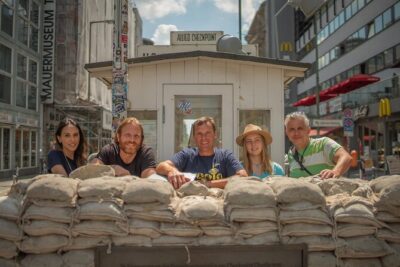
The DDR Watch Tower adds another physical reminder of the former border. The guide explains where the Wall once stood and shares stories about escape attempts and forced conscription.
A watchtower may look small compared with a famous museum or memorial, but it can make the border system easier to picture. You can see the infrastructure that supported a political barrier running through a city. The short 20-minute stop is best treated as a final piece of the Cold War framework rather than a full historical visit.
The stated route also includes Teufelsberg. The description associates this stop with major Wall-related landmarks and off-the-beaten-path sights. Because Teufelsberg is not presented with a precise stop length or clear transport details beyond the listed 30 minutes, you should ask the operator how this portion works.
That is not a minor issue. Berlin is large, and the distance between Karlshorst, central sites, Teufelsberg, and the East Side Gallery can affect how much time you spend walking, waiting, or moving between locations. The advertised duration is about six hours, but several accounts describe tours lasting around two and a half to three and a half hours. Treat the schedule as something to verify rather than assume.
Price, pace, and what you actually receive
At $35.64 per person, this is reasonably priced for a guided history experience if you receive close to the advertised six hours. All listed stops have free admission, and the fee covers a local guide rather than entry tickets.
The value comes from interpretation. You are paying someone to explain why a location matters, connect separate events, and answer questions. That is especially useful in Berlin, where a simple street corner can carry several layers of history.
The value drops if the tour ends after only a few hours or if the group is so large that you cannot hear. The conflicting duration reports make this the biggest booking question. If the activity is actually closer to three hours, the price is still fair for a guided overview, but it is not the full-day experience the six-hour description suggests.
Food and drinks are not included. Bring water and a snack, and expect a chance to stop for drinks along the way. The walking pace is described as leisurely, but the physical demand remains moderate because of the duration and number of stops.
Wear comfortable shoes with good support. Bring an umbrella or rain layer too. The tour operates in all weather, and a cloudy Berlin day can quickly become unpleasant if you are not prepared.
Who should book this tour
I would choose this tour if you want a structured introduction to Berlin’s Nazi and Cold War past, especially on a first visit. It suits students, families with older children, and curious adults who prefer stories and questions to reading every museum panel alone.
It is also a good match for someone with limited time. You can see many important locations and leave with a useful plan for returning to the places that interest you most. The guides’ restaurant, bar, and book suggestions add practical value beyond the history itself.
The tour may not suit you if you want a small, quiet group or specialist-level detail at each site. A maximum of 100 people is large, and a broad route cannot give every subject equal attention. The 3-out-of-5 rating specifically points to this issue: the experience can feel too high-level if you are hoping for detailed treatment of one event.
Parents should also consider the tone. The tour covers dictatorship, war, death, escape attempts, and repression. It is educational, but not light entertainment.
Practical advice before you go
Meet at Generator Berlin Alexanderplatz at Otto-Braun-Straße 65. The start time is noon, and the tour returns to that meeting point.
Plan for outdoor exposure and moderate physical effort. Comfortable shoes, water, a snack, and weather protection will make a real difference. Since drinks and snacks are not included, do not assume refreshments are provided.
If the exact length matters to you, confirm it before paying. The published time is approximately six hours, while some accounts describe a shorter experience. Also ask how the distant stops are connected and whether any part involves public transport, since transport is not listed as an included item.
Free cancellation is available up to 24 hours before the start time for a full refund. Changes or cancellations made less than 24 hours before the start time are not accepted for a refund.
My booking verdict
I would book this tour for a clear, energetic introduction to Berlin’s World War II and Cold War sites, particularly if Miguel, Arthur, or a similarly engaging guide is leading it. The best feature is the chance to ask questions while moving through real places instead of studying the city from a bus window.
Book with realistic expectations. You will get a broad historical map of Berlin, not an exhaustive study of every memorial. Confirm the duration and route first, bring proper shoes and rain gear, and choose it if you value a strong guide, many landmarks, and an honest look at the city’s difficult past.
FAQ
How long does the Berlin Cold War and World War II tour last?
The advertised duration is approximately six hours. Some accounts describe the tour as lasting about two and a half to three and a half hours, so confirm the expected schedule before booking.
Where does the tour start?
The meeting point is Generator Berlin Alexanderplatz, Otto-Braun-Straße 65, 10178 Berlin, Germany.
What time does the tour begin?
The stated start time is 12:00 pm.
Where does the tour finish?
The activity ends back at the meeting point.
Are admission tickets included?
The listed stops have free admission, and a local guide is included. Beverages and snacks are not included.
What should I wear?
The tour operates in all weather conditions. Wear comfortable walking shoes and dress for the weather. An umbrella or rain protection is useful on wet or cloudy days.
Can I cancel for a full refund?
Yes. You can cancel at least 24 hours before the local start time for a full refund. Cancellations or changes made less than 24 hours before the start time are not accepted for a refund.
Just added around Berlin
- Berlin: Private Guided Tour of the Main Sights★ 5.0 · 13 reviews
- Private Highlights of Berlin Bike Tour★ 5.0 · 13 reviews
- Modern Berlin Private Walking Tour: Diverse, Vibrant and Exciting German Capital★ 5.0 · 13 reviews
- Tour in Berlin from Warnemünde and Rostock Cruise Port★ 4.1 · 13 reviews
- Berlin: Stasi Museum Private Guided Tour with Entry Ticket★ 4.8 · 13 reviews
- Private Food Tour Experience with a born and bred Berliner★ 5.0 · 14 reviews
- Berlin: Rheinsberg Palace Entrance Ticket★ 4.8 · 14 reviews
- Berlin in one day – day tour with an expert guide★ 5.0 · 14 reviews
Third Reich & WWII Tours, compared.
Berlin’s Best: 2 Hour Walking Tour Third Reich and the Cold War
Read our review →
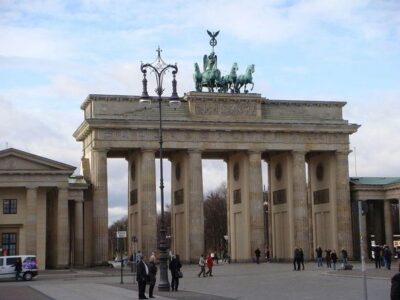
Third Reich Berlin: Hitler and WWII Walking Tour
Read our review →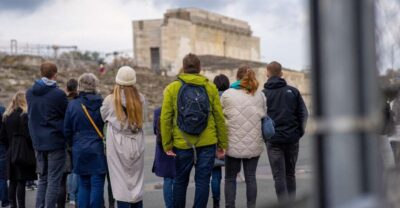
Walking Tour of Former Nazi Party Rally Grounds
Read our review →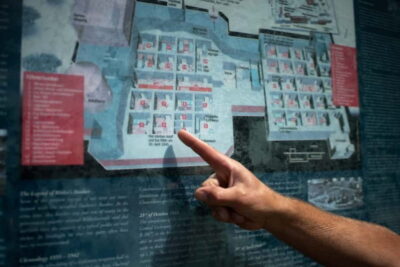
Browse the lists this tour appears in