

Reviewed · THIRD REICH & WWII TOURS
Third Reich and the Holocaust in Berlin Private Guided Tour
Berlin tells this story in stone. I like the way this private tour joins the Topography of Terror with major memorials and political landmarks, giving you both documented history and the city streets where it happened. I also like the five-hour option, which adds the Jewish Quarter and Otto Weidt’s Blindenwerkstatt Museum. The main drawback is the price: at $219 per person, it is a serious expense, especially for one person, though a private group can make the cost easier to justify.
The subject matter is painful, and this is not a light sightseeing walk. That is part of its value. A history-specialist guide can explain Nazi propaganda, persecution, resistance, and the war without reducing the past to a list of dates. The pace and focus can also be adjusted to your interests, but you should expect a substantial amount of walking and emotionally difficult material.
In This Review
- Key points at a glance
- Why a private history tour works well in Berlin
- Starting at Wilhelmstraße and the Topography of Terror
- Potsdamer Platz and the scars of a divided city
- The Memorial to the Murdered Jews of Europe
- Brandenburg Gate and the Reichstag Building
- Ending at the Soviet War Memorial
- Friedrichstrasse and the children remembered by trains
- Spandauer Vorstadt and Berlin’s Jewish Quarter
- Otto Weidt’s Blindenwerkstatt Museum
- The guides and the value of personal explanation
- Is $219 per person a fair price?
- Practical details before you go
- Should you book this Berlin history tour?
- FAQ
- How long is the tour?
- What sites are included in the five-hour option?
- Is this a private tour?
- Which languages are available?
- Where does the tour meet?
- What is the cancellation policy?
Key points at a glance
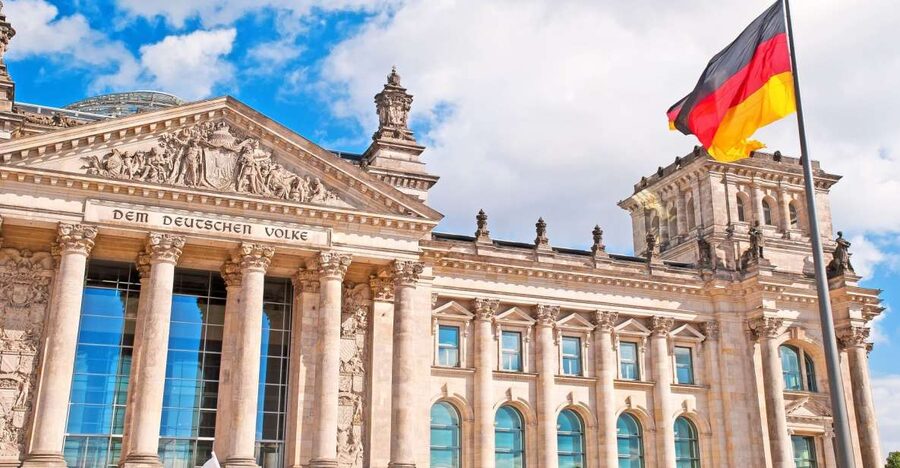
- The former Gestapo and SS headquarters: The Topography of Terror presents Nazi persecution at the very place where parts of that machinery were directed.
- A private guide in your language: English, French, Russian, Spanish, Italian, German, and Polish are available.
- Two tour lengths: The shorter option covers central war sites and memorials, while the five-hour version adds Friedrichstrasse, the Jewish Quarter, and the Blindenwerkstatt Museum.
- Otto Weidt’s story: The small museum devoted to Weidt offers a personal account of someone who employed mostly blind and deaf Jewish workers during the war.
- A route through changing Berlin: Potsdamer Platz, the Brandenburg Gate, the Reichstag, and the Soviet War Memorial connect Nazi rule, wartime destruction, liberation, and postwar division.
- Strong guide feedback: Individual praise has singled out Silvia, Gunnar, and Manfred for clear explanations, warmth, and strong command of Berlin’s past.
Why a private history tour works well in Berlin
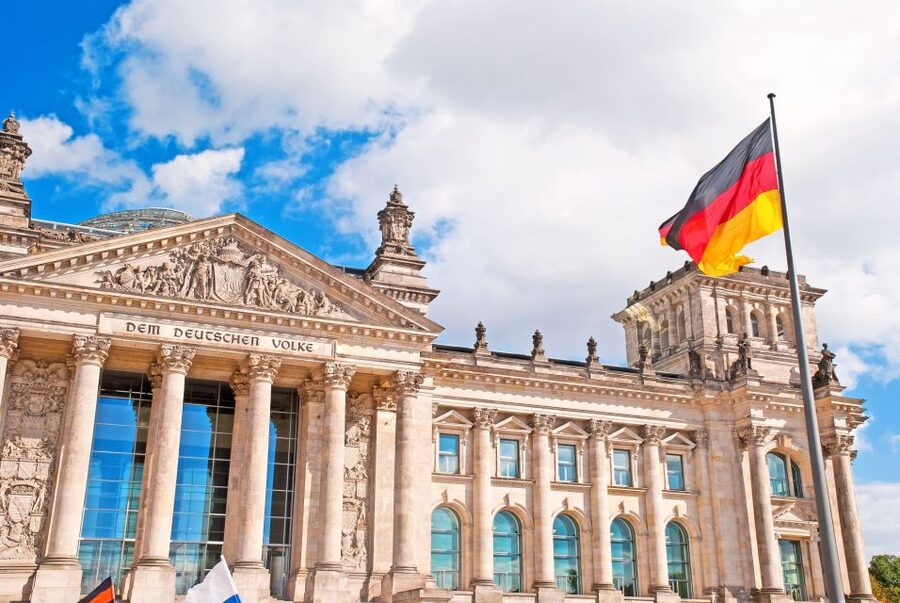
Berlin can be confusing if you are trying to understand the Third Reich on your own. Important sites are spread across the center, and many of them look ordinary at first glance. A guide gives the places a timeline, explains what changed, and helps you connect the Nazi period with the war and the later division of Berlin.
A private group also changes the tone. You can ask direct questions, pause when a subject needs more explanation, or move at a slower pace. The guide can adjust the tour to your interests, which is useful if you want more on Nazi propaganda, Jewish life, military history, resistance, or the physical destruction of Berlin.
The subject demands care. You will hear about the Holocaust, Nazi persecution, World War II, and the murder of six million Jewish people. The tour is educational rather than theatrical, but several stops are designed to make you think about individual lives and choices. Give yourself quiet time afterward if you can.
The five-hour option is likely the better choice if this is your main Berlin history tour. The shorter route covers the essential central landmarks, but the longer version adds a more personal Jewish history stop and a look at the former Jewish Quarter.
More Third Reich & WWII Tours in Berlin
- Berlin: Third Reich and Cold War 2 Hour Walking Tour
★ 4.9 · 6,830 reviews - Berlin’s Best: 2 Hour Walking Tour Third Reich and the Cold War
★ 5.0 · 5,486 reviews - Third Reich Berlin: Hitler and WWII Walking Tour
★ 5.0 · 3,301 reviews
Starting at Wilhelmstraße and the Topography of Terror
The meeting point is in front of Typisch Berlin cafe at Wilhelmstraße 42. Do not go inside the cafe, since it is only being used as a meeting place and the cafe staff are not involved with the tour.
From there, the route begins at the Topography of Terror. The museum occupies the former headquarters area of the Gestapo and SS, making the location unusually direct. You are not simply looking at photographs in a neutral gallery. You are learning about Nazi institutions at a place tied to the administration of terror.
The exhibition covers the Nazi Party’s rise to power and the crimes carried out under the regime. Your guide can help place the material in order: the growth of Nazi control, the use of propaganda, the persecution of Jewish people and other targeted groups, and the wider violence of the war.
I find this kind of opening useful because it gives the rest of the walk a firm base. Memorials can be moving, but they do not always explain who made decisions or how those decisions became policy. The Topography of Terror focuses attention on the people, offices, and systems behind the crimes.
Allow time for the emotional weight of this stop. You may find the museum more demanding than a quick photo stop, and the amount of information can be heavy. That is one reason a private guide helps. You can ask for context instead of trying to absorb every panel at once.
Potsdamer Platz and the scars of a divided city
The route continues through central Berlin to Potsdamer Platz. The square is important not only for its wartime story but also for what happened after the war. It marked the point where the American, British, and Soviet Allied zones met when Berlin was liberated.
That detail gives you a wider view of the city. The tour is not limited to Nazi rule in isolation. It follows the passage from dictatorship to war, liberation, occupation, and division. Berlin’s later Cold War story grew out of the wreckage left by the Nazi period and World War II.
Potsdamer Platz today is a busy city center, so you may find the contrast striking. The present-day setting can make the past feel distant, while the guide’s explanation brings the political importance of the location back into focus.
The tour does not turn every place into a memorial. Instead, it uses key points to show how the city changed. That is valuable if you want to understand Berlin as a living capital rather than a collection of isolated monuments.
The Memorial to the Murdered Jews of Europe
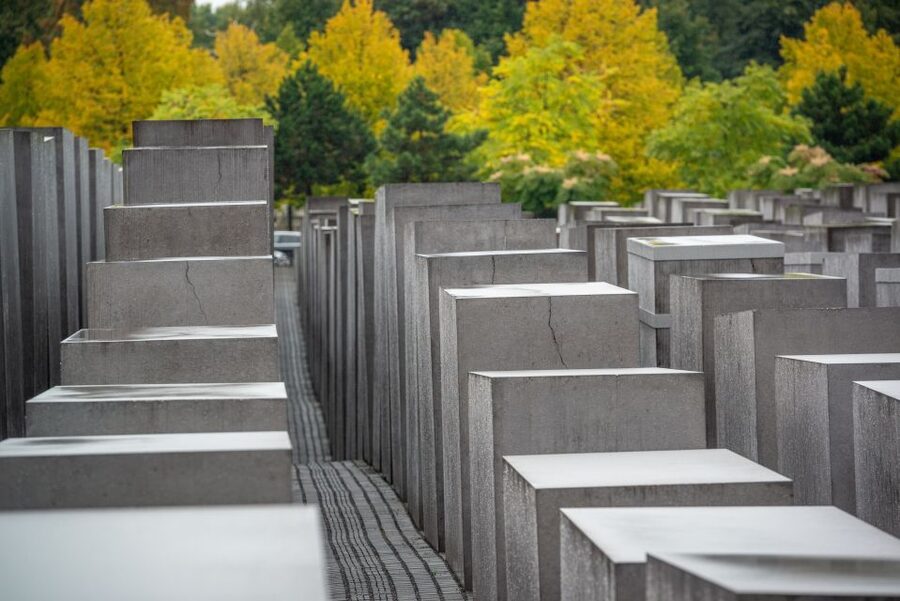
The Memorial to the Murdered Jews of Europe is one of the most important stops. Its field of concrete slabs creates an uneasy, shifting space in the middle of the city. The memorial honors the six million Jewish victims of the Holocaust.
This is a place where you should slow down. The layout can feel disorienting as the ground changes and the slabs rise around you. Your guide can explain the memorial’s purpose and place it within the larger story of Nazi persecution and mass murder.
There is no single correct emotional response here. Some people find the physical design powerful. Others want more historical information than the memorial itself provides. The advantage of visiting with a guide is that you receive the surrounding context instead of treating the site as a quick stop for photographs.
I appreciate that this tour places the memorial alongside the Topography of Terror. One site explains the machinery of Nazi persecution. The other asks you to confront the scale of the human loss. Together, they provide a more complete visit than either stop would provide alone.
Something different for another day:
- Berlin: Reichstag, Dome and Government District Guided Tour
★ 4.7 · 18,288 reviews - Berlin: 1-Hour City Tour by Boat with Guaranteed Seating
★ 4.3 · 16,993 reviews - Berlin: Boat Tour Along the River Spree
★ 4.4 · 11,252 reviews - Discover Berlin Half-Day Walking Tour
★ 5.0 · 9,624 reviews
Brandenburg Gate and the Reichstag Building
The Brandenburg Gate is one of Berlin’s best-known symbols, but its connection to Nazi history is less obvious if you see it without explanation. The Nazis used the gate as a backdrop for propaganda rallies, turning a national monument into a stage for political theater.
That is a useful lesson in how regimes use familiar symbols. A building or monument does not carry only one meaning forever. Its significance can be changed by the events staged around it, and your guide can explain how the Nazis tried to shape public opinion through images, ceremony, and mass gatherings.
Nearby, the Reichstag Building adds another major piece of the story. It was Germany’s parliament building and was burned in 1933. The fire became a key event during the early Nazi period, and it is one of the places where a guide’s timeline matters. You will get more from the stop if you understand what the building represented before Nazi power hardened.
The Reichstag and Brandenburg Gate are both familiar sights, so the historical explanation is essential. Without it, you might simply take two more central Berlin photographs. With it, you see how political power and propaganda were displayed in the city.
Ending at the Soviet War Memorial
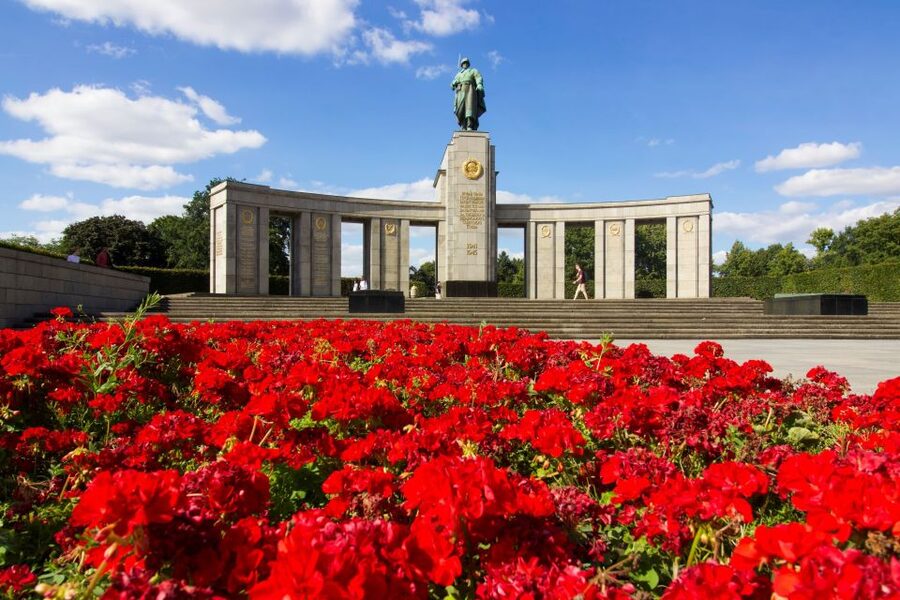
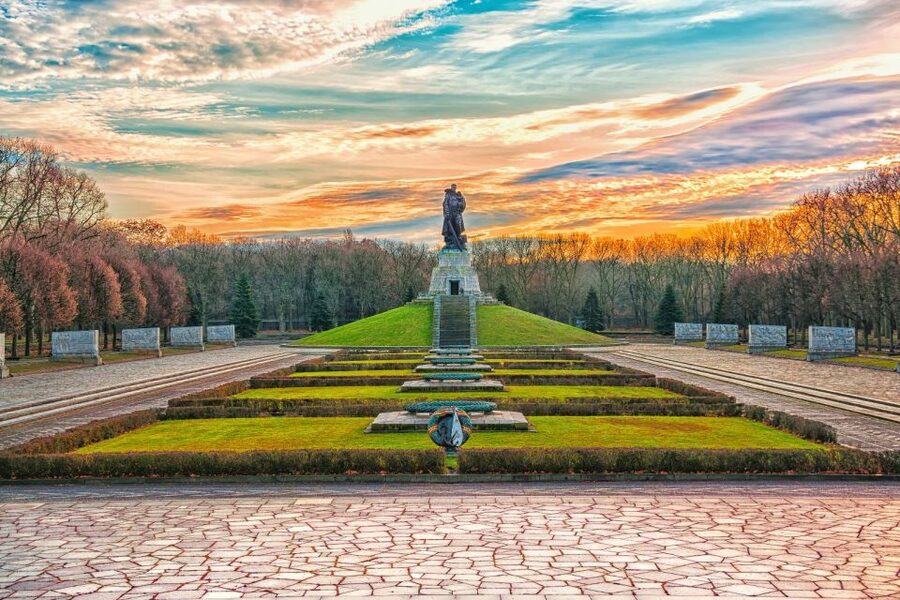
The shorter route ends at the Soviet War Memorial, one of several monuments in Berlin erected by the Soviet Union to honor its war dead. It provides a different viewpoint from the Holocaust memorial and the Nazi sites.
The memorial reflects the Soviet role in defeating Nazi Germany, while also reminding you that liberation did not lead to a simple or unified postwar Berlin. The Allied zones and later division shaped the city for decades.
This stop broadens the tour beyond German and Jewish experiences. The history of Berlin in the 1930s and 1940s involved many nations, armies, civilians, and political systems. A private guide can help you hold those different perspectives together without losing sight of the victims of Nazi persecution.
The route includes a lot of major names, but the experience is not just a checklist. Its best moments come when your guide explains how one event led to another and how the city’s landmarks were used, damaged, rebuilt, or reinterpreted.
Friedrichstrasse and the children remembered by trains
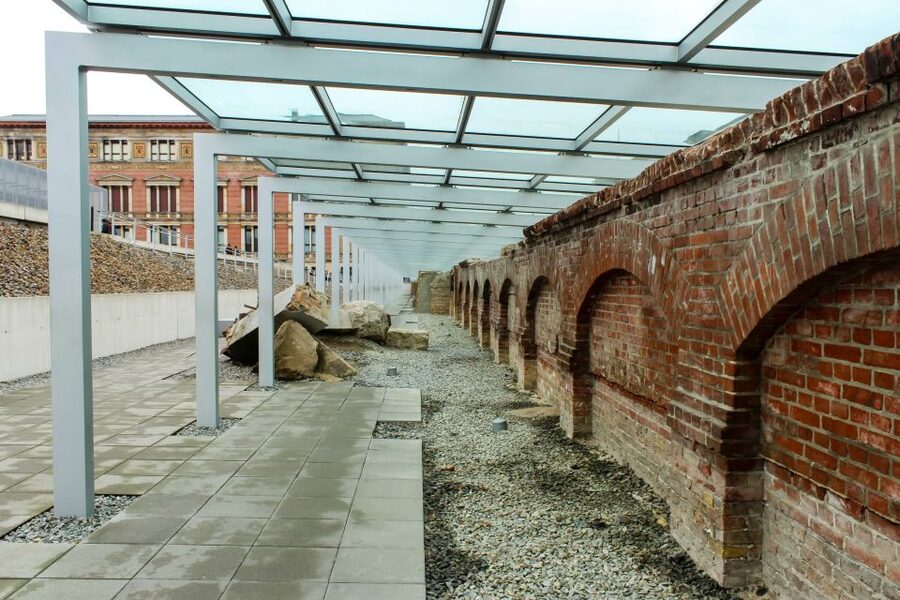
The five-hour tour adds Friedrichstrasse, one of Berlin’s most famous streets. Here you see the monument Trains to Life, Trains to Death, which commemorates children murdered during the Holocaust.
This stop gives the history a particularly personal focus. Large numbers can become hard to grasp, even when the number is six million. A monument devoted to children forces you to consider the young lives behind the statistics.
Friedrichstrasse also adds another layer to the route because it connects the city’s public streets with the experience of deportation and loss. Your guide can explain how the railway system and state administration were used during the Holocaust.
The extended tour is worth considering for this stop alone if you want a stronger focus on Jewish history and individual lives. It is not simply more walking. It changes the balance of the tour from political and military sites toward personal stories.
Spandauer Vorstadt and Berlin’s Jewish Quarter

The extended route continues through Spandauer Vorstadt and Berlin’s Jewish Quarter. This section helps you see Jewish life as more than a subject defined by persecution and murder.
The surviving New Synagogue is an important landmark in this area. Its presence points to the long history of Jewish communities in Berlin, while the surrounding streets show how Jewish life was part of the city before the Nazi period.
I value this part of the tour because it adds a before and after to the usual wartime story. You begin to see what was attacked and destroyed, not only the fact that destruction took place.
The Jewish Quarter is also where a private guide can tailor the conversation well. If you want more on religious life, community history, Nazi persecution, or postwar memory, you can ask for the emphasis that suits you. The provided tour languages include English, French, Russian, Spanish, Italian, German, and Polish.
Otto Weidt’s Blindenwerkstatt Museum
The five-hour option includes a visit to Otto Weidt’s Blindenwerkstatt Museum. This museum tells the story of Otto Weidt, who employed mostly blind and deaf Jewish workers in his workshop during World War II.
It is one of the most human parts of the extended tour. Instead of looking only at institutions and armies, you encounter a small workshop and a man who used his position to protect people facing persecution.
The story does not make the period simple. One person’s actions cannot erase the scale of Nazi crimes, but personal accounts help you understand how people lived under pressure and how choices mattered. The museum gives you a more intimate view of courage, vulnerability, and survival.
This is also where the extra two hours earn their keep. The shorter tour offers a strong central route, but the Blindenwerkstatt adds a focused story that you are unlikely to get from simply walking past Berlin’s major monuments.
The guides and the value of personal explanation
The strongest praise connected to this experience focuses on the guides’ communication and command of the subject. Silvia was described as a historian who specialized in World War II, with a teaching style that made the period feel immediate and understandable. Gunnar received praise for making the tour informative and enjoyable, while Manfred was noted for explaining Berlin’s past in a relaxed conversation.
Those details matter because this subject can be taught in two poor ways. A guide can recite dates without meaning, or turn tragedy into spectacle. The available feedback points instead to guides who answer questions, explain clearly, arrive on time, and remain approachable.
You should still remember that private tours depend partly on the guide assigned to your booking. The experience is conducted in the language you select, and the private format gives you more control over the conversation than a large group tour.
Is $219 per person a fair price?
At $219 per person, this is not a budget walk. Its value depends heavily on your group size, the importance of the subject to you, and whether you choose the five-hour option.
For a solo visitor, the price may feel hard to defend. For a private group, the cost can make more sense because you are paying for a dedicated guide rather than a seat in a large public group. You also receive a tailored pace and the chance to ask detailed questions throughout the route.
The five-hour option offers the strongest value because it includes the Jewish Quarter and Blindenwerkstatt Museum, along with Friedrichstrasse and the children’s memorial. If you already know Berlin’s main landmarks, the extra time gives you more substantial material.
The shorter option may suit you if your schedule is tight or you want a focused introduction to central Nazi and wartime sites. Just confirm the duration and inclusions when booking, since the information describes both a three-hour route and a five-hour extended version.
Practical details before you go
The tour lasts five hours in the extended format, with starting times based on availability. It is a private walking tour, so wear shoes suited to a long city walk and be ready for a serious amount of standing.
Check your email the day before. Important tour information is sent then, and the meeting point is specific: in front of Typisch Berlin cafe at Wilhelmstraße 42. Do not enter the cafe expecting staff to direct you.
Free cancellation is available up to 24 hours before the tour for a full refund. You can also reserve now and pay later, which helps if your Berlin schedule is still shifting.
This is best for adults, older children, students, history-minded visitors, and anyone who wants a clear account of Berlin’s Nazi past. It may not suit you if you want a casual city stroll, a quick overview, or an experience that avoids distressing subjects.
Should you book this Berlin history tour?
I would choose the five-hour version if you have a strong interest in the Third Reich, the Holocaust, and Jewish Berlin. The Topography of Terror gives you the political machinery, the central landmarks show how power was displayed, and the Blindenwerkstatt Museum adds a personal story of protection and survival.
Choose the shorter route if you mainly want the central memorials and wartime landmarks. At $219 per person, I would book only if a private guide, your preferred language, and a custom pace matter to you. If those features fit your travel style, this is a serious, focused way to understand Berlin’s darkest history without reducing it to a string of photo stops.
FAQ
How long is the tour?
The extended tour lasts five hours. A shorter three-hour option is also described, covering the main central war sites and memorials.
What sites are included in the five-hour option?
The five-hour tour includes the Topography of Terror, Potsdamer Platz, the Memorial to the Murdered Jews of Europe, Brandenburg Gate, the Reichstag Building, the Soviet War Memorial, Friedrichstrasse, the Jewish Quarter, and Otto Weidt’s Blindenwerkstatt Museum.
Is this a private tour?
Yes. The tour is for a private group, and the guide can adjust the pace and focus to suit your interests.
Which languages are available?
Live guiding is available in English, French, Russian, Spanish, Italian, German, and Polish.
Where does the tour meet?
Meet your guide in front of the Typisch Berlin cafe at Wilhelmstraße 42, 10963 Berlin. The cafe is only the meeting point, so you should not enter expecting the staff to know about the tour.
What is the cancellation policy?
You can cancel up to 24 hours in advance for a full refund. The booking option also allows you to reserve now and pay later.
Just added around Berlin
- Kreuzberg Private Walking Tour: Immigrants, Artists & Hipsters★ 5.0 · 3 reviews
- Private Photo Tour in Kreuzberg★ 5.0 · 3 reviews
- Individual city tour Berlin for max. 8 persons★ 5.0 · 3 reviews
- Berlin’s Jewish Heritage: Private Tour of the Vibrant Jewish District★ 5.0 · 3 reviews
- Berlin & The Third Reich Private Guided Tour★ 5.0 · 3 reviews
- Private Analogue Photography Experience in Berlin★ 5.0 · 3 reviews
- Spy Mission in Berlin: Self-Guided Espionage Puzzle Quest★ 5.0 · 3 reviews
- Berlin Christmas Markets Walking Tour with Local Guide★ 5.0 · 3 reviews
Third Reich & WWII Tours, compared.



Berlin’s Best: 2 Hour Walking Tour Third Reich and the Cold War
Read our review →

Third Reich Berlin: Hitler and WWII Walking Tour
Read our review →
Walking Tour of Former Nazi Party Rally Grounds
Read our review →
Browse the lists this tour appears in