
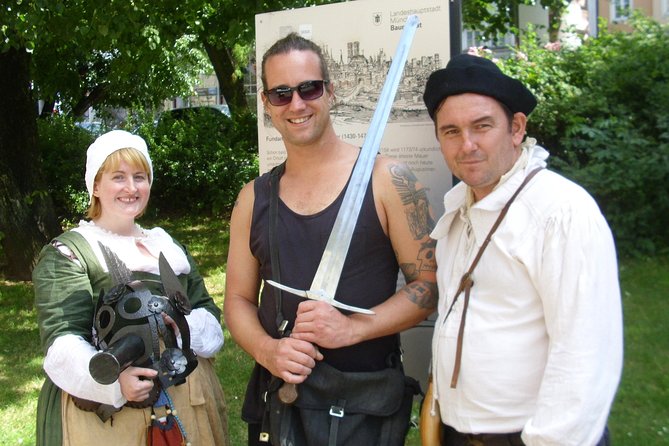
Reviewed · WALKING TOURS
Munich Macabre Group Walking Tour
History gets stranger after sunset. The Munich Macabre Group Walking Tour takes you through the old center with archaeologist and historian Taff Simon, using medieval stories, original artifacts, replica weapons, archaeological evidence, and samples of historical beer to reveal a side of Munich that normal sightseeing often skips. The focus is medieval Munich, not the better-known twentieth-century story.
I like the hands-on approach and Taff’s lively storytelling. You do not simply look at an old church or square while a guide recites dates. You handle coins, pottery, replica swords, and possibly armor while hearing about plague, persecution, murder, burial customs, brewing laws, and witch trials. The main drawback is the subject matter: some stories and archaeological images are graphic, and the walking route includes uneven surfaces.
The tour costs $42.24 per person, lasts about two and a half hours, and begins at 6:00 p.m. at the Fischbrunnen in Marienplatz. It is limited to 15 people and offered only in English. If you enjoy history with a dark edge, this is one of Munich’s more unusual evening activities.
In This Review
- Key details before you book
- Why this Munich tour feels different
- Starting at Marienplatz with Munich’s origins
- Landschaftstraße and the medieval Jewish quarter
- St. Peter’s Church and the language of graves
- Viktualienmarkt, beer, and medieval punishment
- Alter Hof, royal crime, and medieval weapons
- The Old Town Hall and the Pappenheimer witch trial
- A guide who brings archaeology into the street
- Price, group size, and practical value
- Who should book the Munich Macabre tour?
- FAQ
- Where does the Munich Macabre Group Walking Tour begin?
- Where does the tour end?
- What time does the tour start?
- How long does the tour last?
- Is the tour offered in German?
- How many people can join the tour?
- Is beer included?
- Is the tour suitable for children?
- Should you book it?
Key details before you book
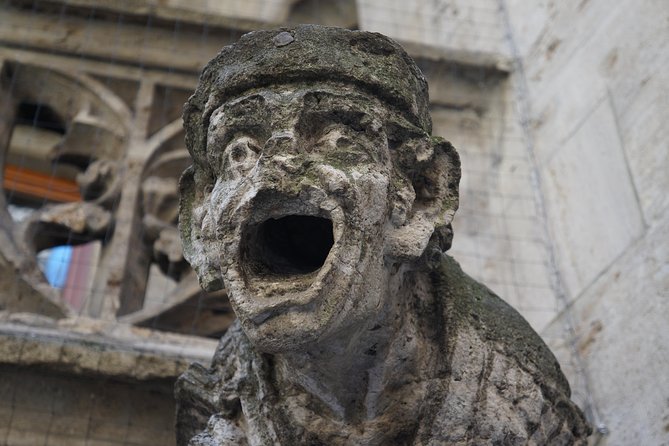
- A real archaeologist leads the walk: Taff Simon draws on archaeological work, not only a memorized sightseeing script.
- You handle historic objects: Original coins and ancient pottery, along with replica medieval arms and armor, make the past more tangible.
- The stories go beyond the usual Munich tour: Expect the Black Death, medieval antisemitism, burial rites, brewing laws, murder, and the Pappenheimer witch trial.
- Medieval beer is part of the experience: You receive samples of historical beer styles, though supply issues can sometimes require substitutions.
- The route begins and ends at Marienplatz: The central meeting point is easy to reach by public transportation.
- The mood is theatrical but not purely spooky: Costumes, humor, and anecdotes keep the material approachable, though the content is still serious at times.
Why this Munich tour feels different
Many city walks explain what a building was used for and then move on. This one asks you to think about the people who lived, worked, worshiped, suffered, and were punished in these places.
The word macabre is accurate, but it does not mean the tour is a parade of horror stories. Taff uses dark subjects to explain how medieval society worked. A plague accusation opens a discussion about fear and scapegoating. A gravestone reveals social class and trade. A beer sample leads into food laws, public health, and the penalties for making poor-quality products.
Taff’s style is a major part of the experience. He arrives in period clothing, uses props, tells jokes, and encourages questions. Families with teenagers have found that the interactive format holds attention better than a formal lecture. Adult groups also appreciate that the humor does not erase the seriousness of persecution, death, and torture.
The tour can adapt its emphasis to the group. If your party asks many questions about archaeology, Taff can spend more time on artifacts and excavation methods. If your interest is social history, he can focus more on guilds, religious conflict, crime, and punishment.
More Walking Tours in Munich
- Munich: Third Reich & WWII Walking Tour
★ 4.6 · 6,181 reviews - Third Reich Walking Tour Munich
★ 4.5 · 4,291 reviews - Munich: Old Town & Viktualienmarkt City Walk in German
★ 4.7 · 2,304 reviews
Starting at Marienplatz with Munich’s origins
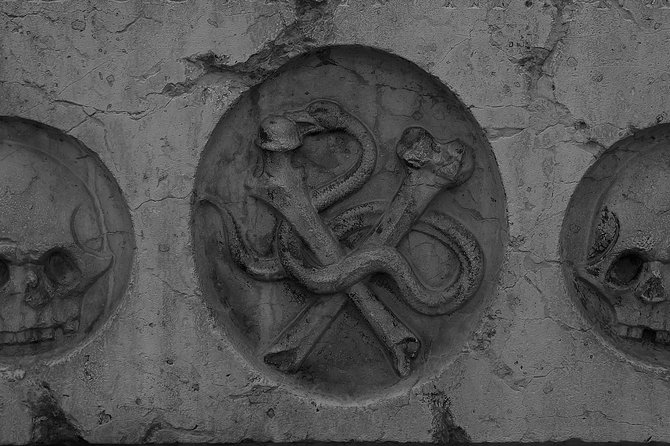
The tour begins beside the Fischbrunnen at Marienplatz, Munich’s central square. You spend about 15 minutes getting oriented and hearing how the city began and why the center looks as it does today.
This opening is useful because Marienplatz is often treated as a photo stop. Here, it becomes the starting point for understanding the older city beneath the polished facades. You get a short introduction rather than a long architectural lecture, which helps the group move into the darker material without wasting time.
The meeting point is in a busy central area, so arrive with enough time to identify the fountain and guide. The 6:00 p.m. start gives the walk an evening feel, but the timing also means you should dress for changing conditions. In poor weather, or if a concert, rally, or protest blocks the usual route, the path may change.
Landschaftstraße and the medieval Jewish quarter
At Landschaftstraße, the setting is less visually impressive than Marienplatz or St. Peter’s Church. That is part of the point. This ordinary-looking street occupied an area beside Munich’s medieval Jewish quarter, and Taff uses it to explain a community that played an important role in the city’s economic and cultural life.
The subject matter here is difficult but important. You hear how Jewish communities were blamed for blood libel, the spread of the Black Death, and connections to criminals and witches. These accusations were baseless, but they shaped policy, violence, and public memory for generations.
This part of the walk gives the tour more weight than a simple collection of gruesome tales. You are not just hearing that something terrible happened. You are shown how rumor, fear, and authority worked together.
Taff also connects the area to recent archaeological excavations linked to a new U-Bahn project. That connection helps you see archaeology as a living discipline. New transport work can disturb old layers of a city, revealing evidence that changes how historians understand a neighborhood.
St. Peter’s Church and the language of graves
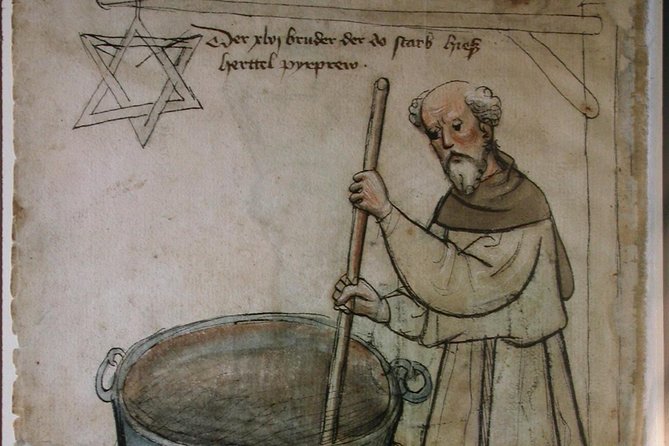
St. Peter’s Church is Munich’s oldest church, and its burial ground provides one of the tour’s strongest settings. You spend about 25 minutes learning how to read gravestone symbols and how burial practices changed from the earliest Bavarian period to later centuries.
Taff explains how religion, occupation, class, and guild membership appear in grave markers and church architecture. The result is a practical lesson in reading the city. Once you know what certain symbols suggest, a cemetery or church wall becomes a record of social life rather than a collection of old stones.
You also get to examine original ancient coins. These were used as alms, and handling them gives you a better sense of their scale, wear, and physical character than looking at a photograph in a museum case.
This stop includes photographs from archaeological excavations involving early medieval burial practices. Some images show human remains and grave goods such as jewelry and weapons. The guide treats the material as evidence of religious belief and social structure, but it may be upsetting if you have a vivid imagination or dislike graphic archaeology.
There may be seating at some points, but not everywhere. If standing for long periods is difficult, tell the operator when booking so the route can be adjusted as far as possible.
Something different for another day:
- From Munich: Neuschwanstein & Linderhof Castle Full-Day Trip
★ 4.5 · 12,494 reviews - Neuschwanstein & Linderhof Castle-Fairytale Day Tour from Munich
★ 4.5 · 7,275 reviews - Dachau Concentration Camp Memorial Site Tour from Munich by Train
★ 4.5 · 5,637 reviews - Neuschwanstein Castle Tour from Munich
★ 4.5 · 5,117 reviews
Viktualienmarkt, beer, and medieval punishment
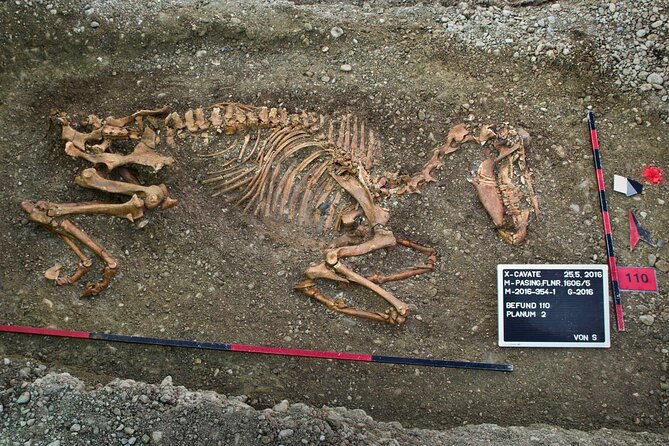
Viktualienmarkt is now a pleasant food market with pretzels, cheese, and a popular beer garden. The tour asks you to imagine a very different past, when this area was associated with social exclusion and outcasts.
The contrast between today’s market atmosphere and its medieval associations makes this stop memorable. You see how a familiar public place can carry layers of meaning that are easy to miss.
This is also where you sample authentic medieval beer, usually at least two historical beverages. These are samples, not full servings, so you should not treat the tasting as a substitute for an evening at a beer hall. The purpose is to connect brewing history with taste.
You learn why beer mattered so much in Munich and about the rules that controlled its production. The tour also covers the penalties for making bad beer and pretzels. The jokes help, but the underlying lesson is serious: food and drink were tied to law, public trust, health, and civic control.
Beer supplies can vary. If a historical style is unavailable, a more modern style may be substituted to illustrate the same brewing theme. If you do not drink alcohol, the supplied information does not specify a nonalcoholic alternative, so ask before booking if this matters to you.
Alter Hof, royal crime, and medieval weapons
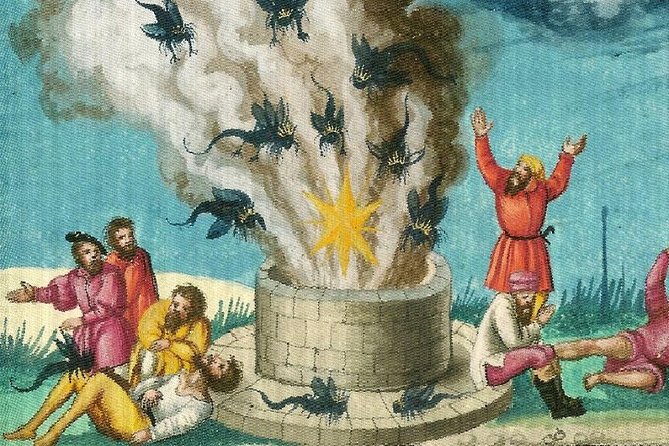
At Alter Hof, the former castle of the Wittelsbach family, the tour turns to a murder that shocked medieval Europe. Taff explains the crime and its effect on later generations of Munich residents.
This stop works because the setting connects private violence with dynastic power. Medieval murder was not only a personal tragedy. When royal families, inheritance, and political authority were involved, the consequences could reach well beyond the people at the scene.
The discussion then moves into medieval combat through the theories of Hans Talhoffer, a late medieval sword master. You can handle replica swords and possibly pieces of replica armor. These objects are not original weapons, but they help explain weight, grip, balance, and the practical limits of fighting equipment.
Time permitting, Taff also discusses an archaeological discovery made here in 1944. An Allied bomb accidentally exposed very old artifacts, including pottery. You may be able to compare different types of ancient pottery and other objects.
The phrase time permitting matters. The tour contains more material than can always receive equal attention, especially when the group has many questions. That is not necessarily a flaw, but you should expect the route to breathe and adjust rather than run like a strict museum schedule.
The Old Town Hall and the Pappenheimer witch trial
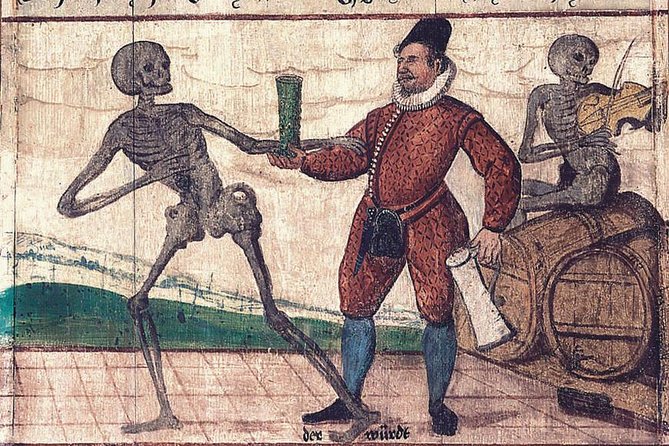
The Old Town Hall is the setting for the tour’s most disturbing story: the Pappenheimer witch trial, described as one of the most vicious witch trials in German history.
Taff explains the accusations, the methods used to obtain evidence, and the fate of the family involved. The value of this stop is not simply the shock of the story. It shows how courts, public fear, forced confessions, and political pressure could combine to produce an official version of events with little connection to truth.
The story also has wider reach. The events in Munich influenced attitudes toward witchcraft far beyond Bavaria, with consequences felt as far away as colonial Massachusetts. That link gives the stop a broader historical frame and helps you see that local persecution could shape ideas across oceans.
This section is one reason the tour is not ideal for very young children. Families with older children and teenagers have enjoyed it, especially because Taff adjusts his presentation to the group. Still, the content involves torture, accusations, and executions. Ask yourself how much detail your family is comfortable hearing before you reserve.
A guide who brings archaeology into the street
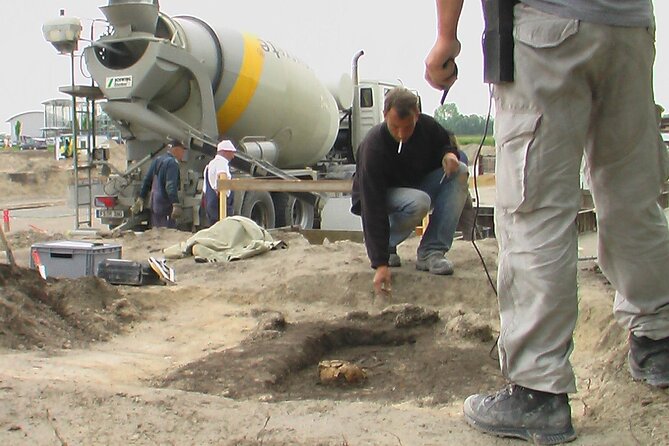
Taff’s archaeological background is the tour’s clearest strength. He explains how broken pottery, worn coins, grave goods, and construction-site discoveries can answer questions about ordinary life.
The objects also change the pace. Instead of listening for two and a half hours, you stop to look closely, ask questions, and handle selected pieces. That physical contact is especially useful for children and teenagers, who may remember the feel of a coin or sword better than a list of dates.
The approach is informal. This is not a university lecture, even though the subject matter has real depth. Taff uses costume, humor, acting, and what one review described as bad jokes to keep the group moving. If you prefer a quiet, strictly academic presentation, the theatrical style may not suit you.
For most people, the mix works well. Taff has been praised for answering obscure questions, adjusting the route to a family’s interests, and helping with practical problems such as public transport disruptions. That level of attention matters in a small group, where you are more likely to get a genuine conversation than a quick answer shouted over a crowd.
Price, group size, and practical value
At $42.24 per person, the tour costs more than a basic city orientation walk. The value comes from the small group, the specialist guide, the original objects, replica weapons, beer samples, and the focused subject matter.
A maximum of 15 people is a useful limit. It gives you a better chance of seeing the artifacts and hearing the stories clearly. It also allows Taff to tailor parts of the walk, though the experience will vary depending on the group’s pace and questions.
The tour lasts approximately two hours and 30 minutes to two hours and 45 minutes. Because it is a walking experience with periods of standing, wear practical shoes. The route includes uneven surfaces, and the operator asks people with mobility or speed concerns to mention this at booking so adjustments can be considered.
The walk starts and ends at Marienplatz, near public transportation. That makes it easy to connect with dinner or another evening plan. At the end, Taff offers suggestions for nearby places to eat and drink, which is handy after a beer-focused tour.
The experience is usually booked well ahead, around 40 days in advance on average. If your schedule is fixed, reserve early rather than assuming you can find a last-minute place.
Free cancellation is available up to 24 hours before the 6:00 p.m. start. Poor weather or failure to reach the minimum number can lead to a new date or a full refund, but changes made within 24 hours are not accepted.
Who should book the Munich Macabre tour?
I would choose this walk if you like history that deals with ordinary people, difficult choices, and uncomfortable truths. It is especially good for families with older children, couples seeking something beyond standard sightseeing, and anyone interested in archaeology, medieval law, religious conflict, or brewing.
It is also a smart choice if you have already seen Munich’s major landmarks. The route gives familiar places a new meaning, and the stories help you notice details you might otherwise pass without a second thought.
I would hesitate if you want a gentle evening stroll, dislike graphic material, need guaranteed seating, or prefer tours in another language. The walk is English-only, and German-language alternatives are suggested by the operator, but they are not the same hands-on experience.
FAQ
Where does the Munich Macabre Group Walking Tour begin?
It begins at the Fischbrunnen, Marienplatz 8, 80331 Munich, Germany.
Where does the tour end?
The tour ends back at the Marienplatz meeting point.
What time does the tour start?
The scheduled start time is 6:00 p.m.
How long does the tour last?
It lasts approximately two hours and 30 minutes to two hours and 45 minutes.
Is the tour offered in German?
No. This experience is offered only in English.
How many people can join the tour?
The maximum group size is 15 people.
Is beer included?
Yes. The tour includes samples of historical beer. The samples are not full servings, and substitutions may be made if certain historical styles are unavailable.
Is the tour suitable for children?
Some children can participate, but parts of the tour include graphic historical subjects and archaeological images. The operator says the presentation can be softened for younger children, but the experience is not recommended for people with an especially vivid imagination.
Should you book it?
Book the Munich Macabre Group Walking Tour if you want an evening of serious history with theatrical energy. Taff Simon’s use of real artifacts, replica arms, archaeological examples, and humor gives the walk a personal feel that a standard script cannot match.
The price is fair for a small, specialist-led experience, especially if you value conversation and hands-on learning. Go prepared for uneven streets, standing, beer samples rather than full drinks, and stories that can be grim. If that sounds like your kind of Munich evening, this tour offers a memorable way to see the old center through its crimes, customs, fears, and surviving objects.
Just added around Munich
- Munich: Private or Group Third Reich and WWII Walking Tour★ 4.9 · 13 reviews
- From Munich: Neuschwanstein Castle and Linderhof Private Tour★ 5.0 · 13 reviews
- Private Transfer from Munich to Salzburg with 2 hours for sightseeing★ 4.5 · 13 reviews
- Munich: Historical Walking Tour on the Rise of Hitler★ 5.0 · 13 reviews
- Private Scenic Transfer from Munich to Prague with 4h of Sightseeing★ 5.0 · 13 reviews
- From Munich: VIP day trip to Salzburg★ 5.0 · 14 reviews
- National Socialism WWII with licensed guide – private tour★ 5.0 · 14 reviews
- Munich: Walking Tour Old Town 3D VR Tour in GERMAN★ 4.3 · 14 reviews
Walking Tours, compared.

Berlin’s Best: 2 Hour Walking Tour Third Reich and the Cold War
Read our review →
Third Reich Berlin: Hitler and WWII Walking Tour
Read our review →Browse the lists this tour appears in