
Reviewed · WALKING TOURS
Lübeck: Private Historical and Architectural Walking Tour
Medieval Lübeck rewards a slow look. This private 90-minute walk gives you a clear introduction to the city’s brick Gothic buildings, Baltic trading past, literary connections, and famous marzipan. You begin at the Holsten Gate and finish near the Town Hall, with several important sights packed into a short route.
I like the private format, especially for families or small groups who want to ask questions without keeping pace with strangers. I also like the mix of major sights and small local details, from St. Mary’s Church to a taste of freshly made marzipan. The main drawback is time: 90 minutes passes quickly, and entry tickets are not included, so this is more of a well-guided orientation than a long museum visit.
The experience has a 4.5 rating from six bookings, with especially warm praise for the guide’s command of Lübeck. One German-language comment described the guide as someone who had lived and breathed the city and knew almost every brick. That is exactly the kind of local attention this tour aims to provide, though you should make yourself easy to spot at the meeting point, since one guest wished the guide had been more clearly identifiable.
In This Review
- Key points before you book
- Why Lübeck works so well on foot
- Starting at the Holsten Gate
- Seeing Lübeck’s skyline and merchant wealth
- Buddenbrook House and the Mann family connection
- St. Mary’s Church and the little devil
- A marzipan break with a local flavor
- Lübeck Town Hall brings the route together
- Is $265 a fair price for a private group?
- Who will get the most from this walk?
- What the guide quality seems to mean
- Should you book the Lübeck walking tour?
- FAQ
- Where does the Lübeck walking tour meet?
- How long does the tour last?
- What languages are available?
- How many people can join the private group?
- Are attraction entry tickets included?
- Is the tour suitable for wheelchair users?
Key points before you book
- Holsten Gate begins the story: Meet in front of Lübeck’s most famous surviving medieval gate near Museum Holstentor.
- Private groups of up to 15: You get a guide dedicated to your party, with German or English available.
- Marzipan is part of the history lesson: Taste different varieties while learning why this sweet became linked with Lübeck.
- Five churches shape the skyline: The route offers views of the city’s church towers, salt storehouses, and merchant homes.
- Literature joins architecture: Buddenbrook House connects the city with German writers Thomas Mann and Heinrich Mann.
- Short, central walking route: The 90-minute itinerary covers major sights but does not include entry tickets.
Why Lübeck works so well on foot
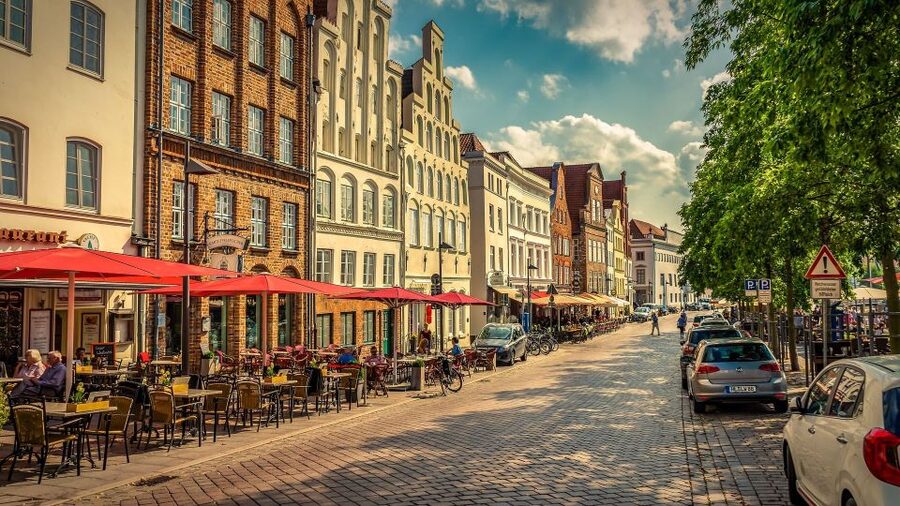
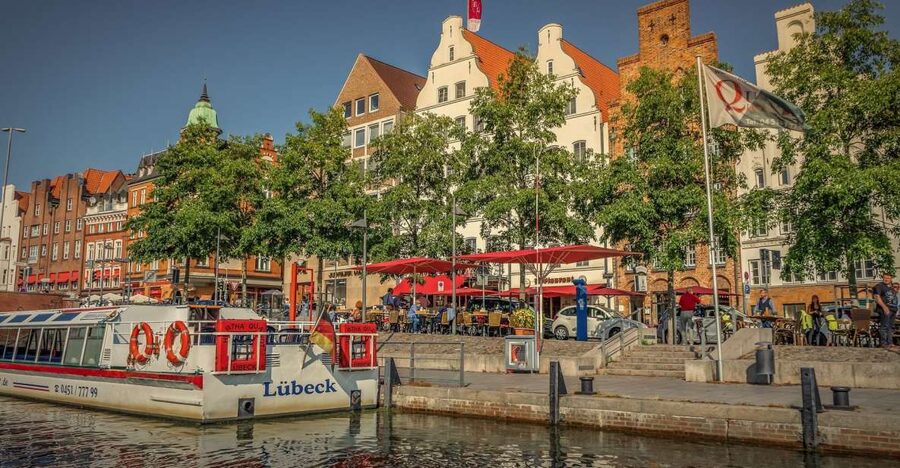
Lübeck is known as the Gateway to the North and the City of Seven Spires. Those names make more sense once you are inside the old center, where brick churches, narrow streets, merchant buildings, and historic civic spaces fit together in a compact area.
I like this tour because it explains the city as a working port and trading center rather than treating it as a collection of pretty façades. The Baltic Sea trade routes helped shape Lübeck’s wealth and influence, and the guide connects that economic story to the homes, churches, and public buildings you see along the way.
The old center is a UNESCO World Heritage Site, and the designation feels understandable as you walk across cobbled streets surrounded by brick Gothic architecture. You are not simply checking off monuments. You are seeing how religious buildings, merchant districts, storage buildings, and city government occupied the same small urban space.
Bring comfortable shoes. Cobblestones can make even a short walk feel longer, and the tour is not suitable for wheelchair users or people with mobility impairments. Comfortable clothing is also advised, since this is an outdoor walking experience rather than a seated sightseeing program.
More Historical Tours:
- Lübeck: Hanseatic League History Walking Tour
★ 4.9 · 57 reviews - Leipzig: City History Canal Sightseeing Tour on a Motorboat
★ 4.7 · 6,232 reviews - Berlin: Natural History Museum Entrance Ticket
★ 4.6 · 3,382 reviews
Starting at the Holsten Gate
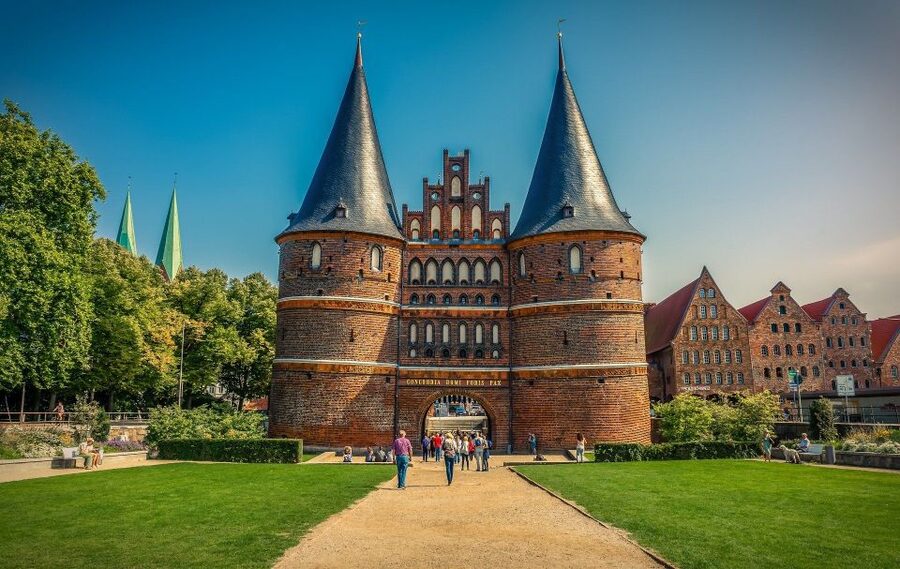
The tour begins in front of the Holsten Gate, near Museum Holstentor. This is a practical meeting place because the gate is easy to recognize, but you should still confirm exactly where your guide will wait and look for a clear identifying sign or badge.
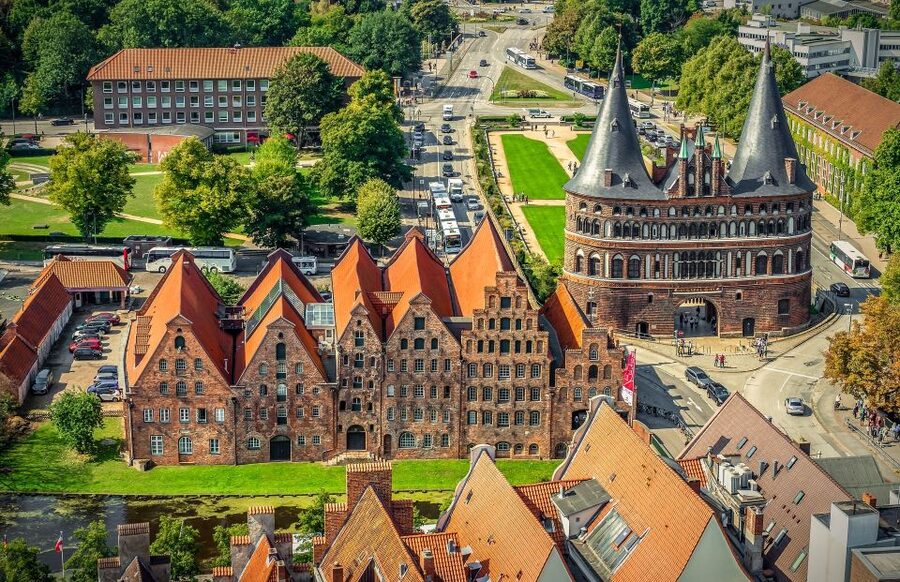
Built in 1464, the Holsten Gate is one of the last surviving Gothic pieces of Lübeck’s medieval fortifications. It is also one of only two remaining city gates. Its heavy brick construction gives you an immediate sense of the defensive city that once controlled movement into the old center.
The gate also carried a symbolic meaning. It was built to represent freedom, an idea that adds political weight to what might otherwise look like a grand entrance. I find this a strong opening because the guide can introduce Lübeck’s independence, trade, and civic confidence before you walk farther into the city.
You should expect an exterior discussion here rather than an included museum visit. Entry tickets are not part of the tour, so anyone wanting to see museum displays inside the Holsten Gate would need to arrange that separately.
Seeing Lübeck’s skyline and merchant wealth
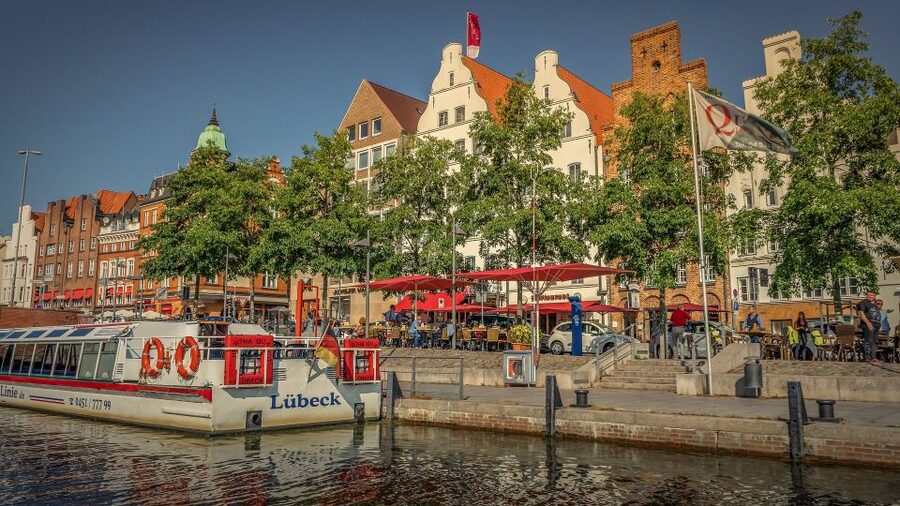
As you continue, the guide points out views across the historic skyline. Five churches, salt storehouses, and luxurious brick homes form the visual core of the city, and the route uses these buildings to explain how merchants shaped Lübeck’s growth.
The salt storehouses are especially useful for understanding that Lübeck’s wealth was tied to goods and routes, not just banking or local commerce. The Baltic Sea trading network brought money, products, and influence into the city. That helps explain why merchants could build large homes and support substantial churches.
The merchant buildings also show how architecture can reveal social class. Their size and finish signal the power of families whose business reached beyond Lübeck itself. The guide’s job here is not only to name buildings, but to link them to the economic system that paid for them.
The city’s brick style gives Lübeck a look that is different from the pale stone centers found elsewhere in Europe. Brick was practical, durable, and widely used in northern Germany. On this walk, you get to see how the material shaped churches, gates, homes, and civic buildings across the old center.
Buddenbrook House and the Mann family connection
The stop at Buddenbrook House adds a literary layer to the tour. The building is associated with Thomas Mann and Heinrich Mann, two important German writers, and it connects Lübeck’s merchant society with the family stories and social worlds that later appeared in literature.
Thomas Mann’s Buddenbrooks is closely linked with Lübeck’s commercial upper class, so this stop makes more sense after you have seen the merchant homes and learned about Baltic trade. The house is not just a writer’s address. It helps you think about how a city’s business families, customs, and ambitions can become material for novels.
The tour focuses on the history connected with the building. Entry tickets are not included, so you should not assume that the walking tour includes an interior visit or an exhibition. If Buddenbrook House is a major reason for your visit, check separately whether you want to return for a longer indoor experience.
Still, even a short exterior explanation can be valuable. You will have a clearer idea of why Lübeck matters in German literature, and you will see how the city’s real streets and merchant culture shaped the Mann family story.
More Walking Tours:
- Lübeck: Express Walk with a Local
★ 4.9 · 10 reviews - Lübeck: Old Town Highlights Private Walking Tour
★ 4.8 · 8 reviews - Discover Berlin Half-Day Walking Tour
★ 5.0 · 9,624 reviews - Berlin: Third Reich and Cold War 2 Hour Walking Tour
★ 4.9 · 6,830 reviews
St. Mary’s Church and the little devil
St. Mary’s Church is one of the major architectural stops. It is described as the third-largest brick Gothic church in Germany, and its scale helps explain why Lübeck could support such ambitious religious buildings.
The church also illustrates the city’s close connection between faith and commerce. A wealthy trading center could finance large churches, while the churches in turn helped define the skyline and public identity of the city. From outside, you can appreciate the brick construction and Gothic form without needing a long technical lecture.
A lighter detail makes this stop especially memorable: the little devil outside the church. Your guide explains the story of this small figure, giving the tour a touch of local folklore rather than a sequence of dates and architectural terms.
This is one of the places where a live guide adds real value. A written guidebook can tell you the church’s size and style, but a local storyteller can point out the devil and explain why people remember him. You should expect to see the church as part of the walking route, not a guaranteed interior visit, since admission is not included.
A marzipan break with a local flavor
The marzipan stop is the tour’s most distinctive touch. At a traditional bakery, you taste different varieties of the sweet while learning about its importance in Lübeck.
Many city walks offer a quick food sample with little context. Here, the tasting is tied to the city’s identity and commercial past. Marzipan is more than a sugary souvenir in Lübeck. It has become one of the city’s best-known specialties, and the guide explains the story behind its popularity.
I like this pause because it breaks up the architecture. After several churches, gates, and merchant buildings, a small taste gives you a direct connection with local tradition. It also gives you a chance to compare varieties rather than buying the first box you see.
The supplied details do not specify the bakery’s name, the exact amount included, or whether purchases are expected. Treat the tasting as a modest part of the tour, not as a full food tour. If you already know you want to take marzipan home, you can use the stop to decide which style suits you.
Lübeck Town Hall brings the route together
The walk ends at Lübeck’s Town Hall, described as one of the most beautiful town halls in Germany and part of the UNESCO-listed old center. It is a fitting final stop because the building brings the city’s trade, government, and public life into one place.
After seeing the gate, churches, merchant buildings, and writers’ house, you can read the Town Hall as a symbol of civic power. Lübeck’s merchants needed institutions to manage trade and city affairs, and the Town Hall reflects that organized urban strength.
The ending also works well for planning the rest of your day. You finish in the historic center rather than being taken out to a distant meeting point. The precise endpoint beyond the Town Hall is not specified, so ask your guide for directions if you need to continue to another sight.
Is $265 a fair price for a private group?
The price is $265 per group of up to 15 people. That is not a bargain for one or two people, but the calculation changes quickly with a larger party. A full group of 15 would pay less than $18 per person, before any separate admission costs. A group of six would pay about $44 per person, while a couple would carry the full cost between them.
I see the price as reasonable for a family, private party, or group of friends who value their own guide and a flexible question-and-answer setting. The private arrangement is the main benefit. You are not paying for a large group transfer, a lengthy attraction ticket, or a meal. You are paying for a focused introduction to Lübeck.
The value is weaker if you are traveling alone or as a couple and are comfortable reading about the city on your own. The route is short, and several sights are viewed from outside. You may prefer a longer public walking tour if your priority is the lowest possible per-person cost.
The tour does offer free cancellation up to 24 hours before the start, along with a reserve-now-and-pay-later option. Those terms are useful if your northern Germany schedule may change, but they should not be the main reason to book.
Who will get the most from this walk?
I would recommend this experience to first-time visitors who want their bearings quickly. In 90 minutes, you get the city’s major visual markers, a basic explanation of Baltic trade, a literary connection, a food tasting, and a clear introduction to the old center.
It also suits families and mixed-interest groups. One person can focus on architecture, another on German literature, and someone else can look forward to marzipan. The little devil at St. Mary’s Church adds a story that may keep younger walkers interested.
The tour is a good choice for anyone arriving with limited time. It may fit well before an afternoon of independent sightseeing, provided you allow extra time if you want to enter the Holsten Gate museum, Buddenbrook House, or St. Mary’s Church. None of those admissions is included.
You should think twice if anyone in your group has a mobility impairment or uses a wheelchair. The experience is explicitly not suitable for wheelchair users or people with mobility impairments, and the cobbled streets may be tiring even for people who can walk comfortably.
The language options are German and English. If you want the most detailed local commentary, booking in the language in which you can easily ask questions will matter more than the exact length of each stop.
What the guide quality seems to mean
The strongest praise centers on the guide’s command of Lübeck and ability to make the city understandable. One German-speaking booking described the team member as knowing almost every brick and bringing Lübeck close to the group. That is high praise for a city where the details matter as much as the headline sights.
Another booking simply described the experience as perfect and very interesting. A third praised the guide as friendly and competent, while pointing out a practical issue: the guide should have been easier to recognize.
That combination gives you a fair expectation. The guide appears to be the heart of the experience, especially when explaining the economic links between buildings and trade. At the meeting point, look actively for the guide and contact the provider if you cannot identify the right person promptly.
Should you book the Lübeck walking tour?
Book it if you want a private, compact introduction to Lübeck with a local guide, especially when you are traveling with a group large enough to share the $265 cost. The route covers the Holsten Gate, St. Mary’s Church, Buddenbrook House, the merchant district, marzipan, and the Town Hall, giving you a useful framework for exploring on your own afterward.
Skip it if you mainly want museum interiors, a long food experience, or the cheapest possible sightseeing option. Entry tickets are extra, the walk lasts only 90 minutes, and mobility limitations can make the route unsuitable.
For most first visits, I like the balance of big architecture, trade history, literature, and a small taste of marzipan. Just wear good shoes, arrive at the Holsten Gate with a clear meeting plan, and remember that the real value comes from the guide’s interpretation rather than from admission to the buildings.
FAQ
Where does the Lübeck walking tour meet?
You meet your guide in front of the Holsten Gate near Museum Holstentor.
How long does the tour last?
The walking tour lasts 90 minutes.
What languages are available?
The live guide is available in German and English.
How many people can join the private group?
The price covers a private group of up to 15 people.
Are attraction entry tickets included?
No. Entry tickets are not included in the tour price.
Is the tour suitable for wheelchair users?
No. The experience is not suitable for wheelchair users or people with mobility impairments. Comfortable shoes and comfortable clothing are recommended.
Just added around Lubeck
- Lübeck: Architecture and Local Craft Private Guided Tour★ 4.0 · 6 reviews
- Lübeck: Old Town Highlights Private Walking Tour★ 4.8 · 8 reviews
- Lübeck: Express Walk with a Local★ 4.9 · 10 reviews
- In Lübeck ist Weihnachten zu Haus.★ 4.6 · 10 reviews
- Lübeck Day Pass – Day ticket for Lübeck museums★ 4.0 · 15 reviews
- Lübeck: Backyards and Town Houses Private Guided Tour★ 4.9 · 23 reviews
- Lübeck zwischen Grusel und Geschichte Truecrime zu Halloween★ 4.9 · 35 reviews
- Lübeck: Hanseatic League History Walking Tour★ 4.9 · 57 reviews
Walking Tours, compared.





Berlin’s Best: 2 Hour Walking Tour Third Reich and the Cold War
Read our review →


Third Reich Berlin: Hitler and WWII Walking Tour
Read our review →Browse the lists this tour appears in