
Reviewed · WALKING TOURS
Lübeck: Hanseatic League History Walking Tour
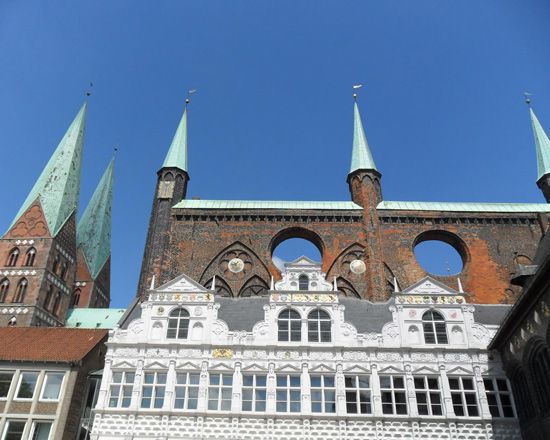
Lübeck tells its story in brick and narrow lanes. This private walk makes the city’s Hanseatic past easy to follow, linking the Holsten Gate, Trave Harbour, Rathausmarkt, St. Mary’s Church, and old guild buildings in a compact route. I like the clear focus on Lübeck’s merchant-city story, and I especially like the chance to step into traditional courtyards and lanes that are easy to miss alone.
The tour also gets high marks for flexible guiding. Bernd, Chris, and Karin are praised for explaining the city clearly, keeping the pace lively, and adjusting the walk to suit the group, including extra attention to courtyards when requested. The main drawback is the price: $259 is reasonable for six people, but costly for a couple or solo traveler, especially since the 90-minute visit includes no food, drinks, or transfers.
In This Review
- Key points to know before booking
- Why Lübeck’s Hanseatic story works so well on foot
- Starting beneath the Holsten Gate
- Salt storehouses and the Trave Harbour
- Große Petersgrube and Lübeck’s stepped gables
- St. Mary’s Church and the Baltic connection
- Rathausmarkt, the Buddenbrook House, and civic Lübeck
- Schiffergesellschaft, where sailors found a welcome
- Finishing at the Hospital of the Holy Spirit
- Guide quality and the value of a private group
- Is $259 a fair price for 90 minutes?
- Who will get the most from this Lübeck walk?
- Should you book this tour?
- FAQ
- Where does the Lübeck walking tour begin?
- How long does the tour last?
- How many people can join the private group?
- Which languages are available?
- What is included in the price?
- Are transfers, food, or drinks included?
- Can I cancel the tour for a refund?
Key points to know before booking
- The route begins at the Holsten Gate, Lübeck’s best-known fortified entrance and an easy landmark for meeting your guide.
- You follow the Hanseatic story through real working places, including the Trave Harbour, salt storehouses, merchant streets, and the Schiffergesellschaft guild hall.
- The walk is private for up to six people, so you can ask questions and request extra attention to courtyards or architecture.
- The 90-minute route covers a lot quickly, making it useful for a first look, though it leaves little time for long interior visits.
- St. Mary’s Church reveals Lübeck’s wider influence, since its design became a model for churches around the Baltic region.
- The tour ends at the Hospital of the Holy Spirit, where the final courtyards offer a quieter, more intimate look at old Lübeck.
Why Lübeck’s Hanseatic story works so well on foot
Lübeck is a natural classroom for the Hanseatic League because the old city still shows how trade shaped streets, buildings, churches, and public spaces. From the 12th through the 17th century, North German merchants built connections to protect sea routes and trade. Over time, those merchant associations grew into a confederation of cities.
At its height, the Hanseatic League included about 300 maritime and inland cities across Northern Europe, stretching from Riga to Bruges. That sounds like a grand political subject, but the tour keeps it tied to things you can see: a harbour, a warehouse, a guild hall, a church, and the homes of wealthy families.
I like this approach because you do not need to arrive with a background in medieval trade. Your guide can explain the League as you move through the city, showing how Lübeck’s location and architecture fit into the larger network.
The walk lasts 90 minutes, which is a useful length for a port stop, a first morning in town, or a short introduction before exploring on your own. You get a strong orientation without giving up half a day. The trade-off is simple: several places are viewed from the outside or discussed briefly rather than explored at length.
More Historical Tours in Germany:
- Leipzig: City History Canal Sightseeing Tour on a Motorboat
★ 4.7 · 6,232 reviews - Berlin: Natural History Museum Entrance Ticket
★ 4.6 · 3,382 reviews - Leipzig: 1.5-Hour Historical Walking Tour in German
★ 4.7 · 2,217 reviews
Starting beneath the Holsten Gate
Meet your guide at the Holsten Gate, or Holstentor, one of Lübeck’s defining landmarks. It is an especially good starting point because the gate immediately frames the city as a fortified trading center, not just a collection of pretty old buildings.
The gate was one of four city fortification gates at this wall passage alone. That detail gives you a quick sense of Lübeck’s defensive concerns and the value of the goods moving through its streets. The gate also provides a clear meeting point, which is helpful in a city you may not yet know.
From here, the tour moves toward the salt storehouses and the Trave Harbour. These stops connect the city’s commercial success to the movement of goods. You are not simply hearing that Lübeck traded widely. You are seeing the places where cargo, storage, water access, and city protection worked together.
The harbour portion should appeal to anyone who prefers practical history. The story is about routes, merchants, and supply chains, but it is told through the physical edge of the city. Your guide can help you picture Lübeck as part of a network that linked northern ports with inland markets.
Salt storehouses and the Trave Harbour
The salt storehouses are an important early stop because salt was a valuable trade product and a reminder that Hanseatic commerce depended on ordinary goods as much as luxury items. Their presence near the water helps explain why Lübeck’s harbour mattered so much.
The Trave Harbour adds another layer. This is where geography becomes part of the story. The city’s connection to waterways helped merchants move products and maintain links with other ports. The tour gives you enough context to understand why Lübeck became a leading Hanseatic city.
I would pay close attention here if you enjoy economic history. The guide’s job is not just to name buildings but to show how the city functioned. The strongest moments of this tour come when an architectural detail is tied to a practical purpose.
Do not expect a harbour cruise or a long stop devoted to shipping. This is a walking tour, and the harbour is one part of a fast-moving route. You will get context and views, then continue into the old streets.
Große Petersgrube and Lübeck’s stepped gables
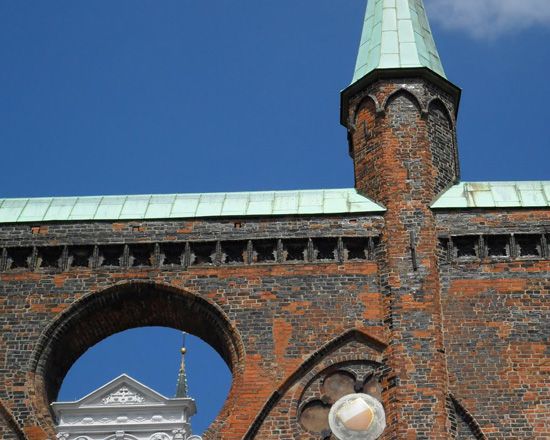
The route then reaches Große Petersgrube, one of Lübeck’s oldest streets. This is where the walk shifts from broad city history to close-up architecture.
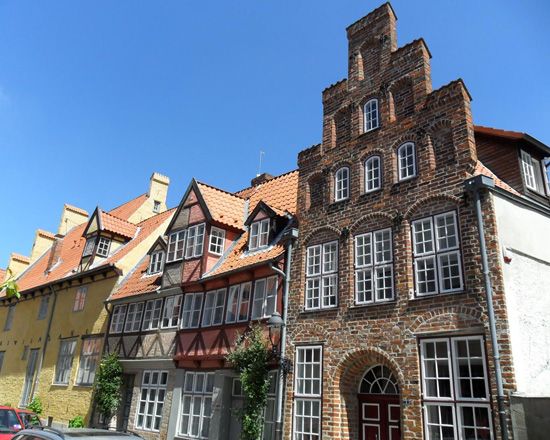
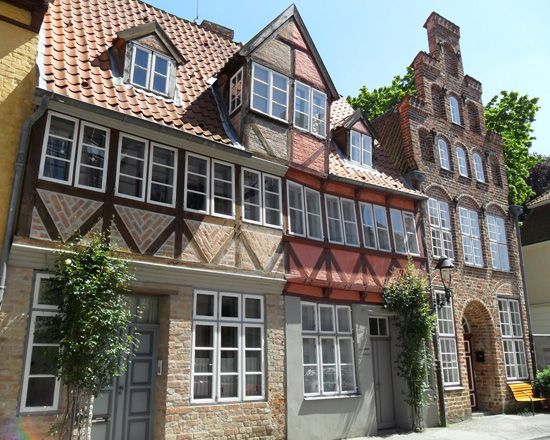
Look for the old brick buildings and stepped gables. These shapes are among Lübeck’s most recognizable features, and the narrow street gives you a better feel for the historic center than a wide modern avenue could. I like that the tour includes ordinary street views rather than only the city’s famous monuments.
The lanes also show how Lübeck’s traditional architecture fits together. Tall façades, brick construction, and compact passages create a distinct northern German character. Your guide can point out details you might pass without noticing, especially if you are focused on reaching the next major sight.
This part of the route is also one reason a private group can be useful. The guides have been praised for responding to requests, and Bernd in particular is noted for showing extra courtyards when asked. If backyards and residential architecture interest you, mention that early in the walk rather than waiting until the final stop.
The narrow streets are atmospheric, but they also mean the tour is best taken at a comfortable walking pace. The route is not presented as a strenuous hike. Still, you should expect continuous walking through historic lanes and public streets.
More Walking Tours in Germany:
- Discover Berlin Half-Day Walking Tour
★ 5.0 · 9,624 reviews - Berlin: Third Reich and Cold War 2 Hour Walking Tour
★ 4.9 · 6,830 reviews - Munich: Third Reich & WWII Walking Tour
★ 4.6 · 6,181 reviews - Berlin: Discover Berlin Walking Tour
★ 4.9 · 5,998 reviews
St. Mary’s Church and the Baltic connection
St. Mary’s Church is one of the major landmarks on the route. Its importance reaches beyond Lübeck because it became a model for numerous churches in Hanseatic cities around the Baltic region.
That makes the church more than a photo stop. It shows how Lübeck’s influence traveled. Trade networks carried not only goods but also building ideas, religious styles, and civic ambitions. A guide can help you see the church as part of the city’s wider role in Northern Europe.
The supplied details do not promise a full interior visit, so you should plan on learning about the church and seeing it as part of the walking route. If entering churches is important to you, check the day’s arrangements before booking. The tour’s main strength is its connected story, not long visits inside every building.
I like the placement of St. Mary’s in the route. By this point, you have seen the defensive gate, harbour, storage buildings, and merchant streets. The church then gives you a clear example of the wealth and influence that the Hanseatic system helped create.
Rathausmarkt, the Buddenbrook House, and civic Lübeck
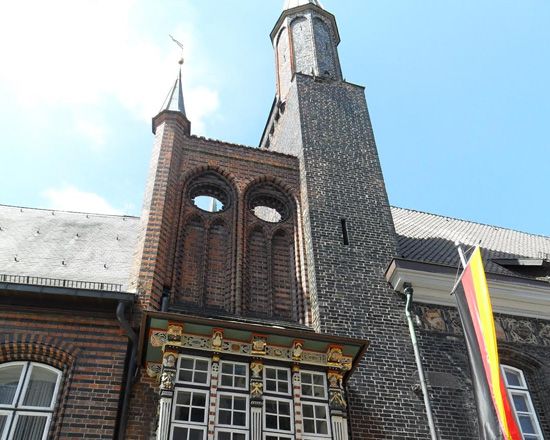
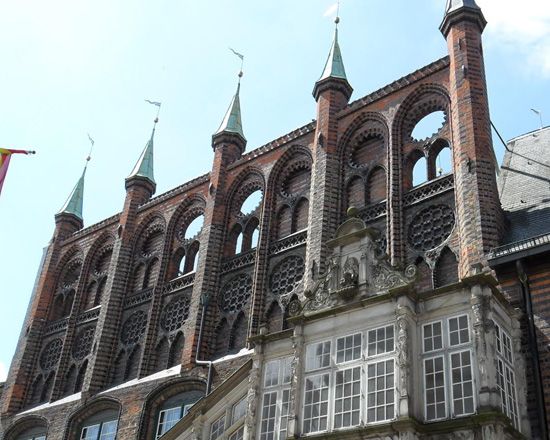
Rathausmarkt square brings the tour into the civic heart of Lübeck. City halls were not merely decorative buildings. They represented the authority and confidence of a wealthy trading city, where merchants had a strong role in public life.
The exact amount of time spent at the square depends on your guide and group interests. Karin has been praised for explaining a great deal in a short time and for suggesting things to do after the official walk ends. That is useful if you are treating this tour as your orientation rather than your entire Lübeck visit.
The route also passes Buddenbrook House, connected with the Mann family. This stop adds a literary and social angle to the city. It helps show that Lübeck’s story does not end with medieval merchants. The old center continued to shape the city’s cultural identity.
You may want to note places that deserve a return visit. A 90-minute tour cannot give equal attention to every church, square, museum, and historic home. The benefit is that you leave with a map in your head and a better sense of what deserves more of your time.
Schiffergesellschaft, where sailors found a welcome
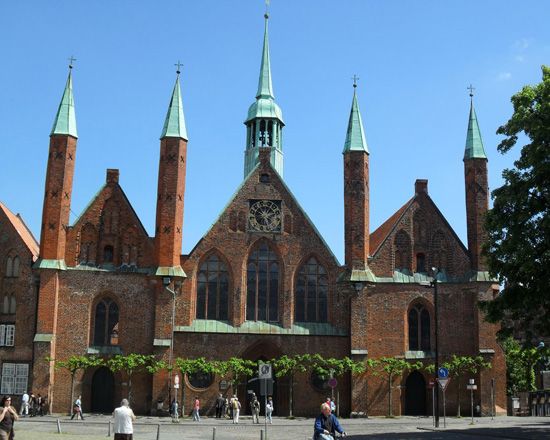
The Schiffergesellschaft guild hall is one of the most distinctive stops. Sailors connected with the Hanseatic League used to stop here, giving the building a direct link to the working maritime world behind Lübeck’s wealth.
This is a valuable counterpoint to grand churches and city halls. The Hanseatic League depended on people who sailed, loaded, sold, stored, and protected goods. A guild hall makes that human side easier to picture.
The name can be easy to miss when you explore independently, which is another reason a guide helps. You receive the context at the right place instead of trying to match a building with a paragraph in a guidebook.
The tour does not include meals or drinks, so do not expect a tasting or restaurant visit here. You are seeing the guild hall as part of the city’s story. If you want to eat afterward, the end of the route gives you a good point to continue exploring on your own.
Finishing at the Hospital of the Holy Spirit
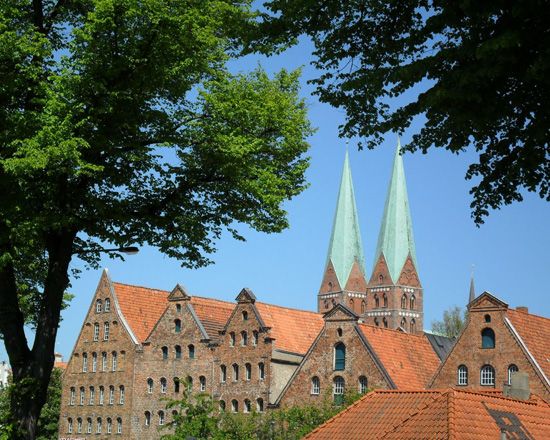
The final stop is the Hospital of the Holy Spirit, one of Lübeck’s oldest social institutions. This changes the tone of the tour again. After fortifications, trade, churches, and guilds, you finish with a place connected to care and community.
You can look into one or two romantic backyards here. That small detail may be one of the most enjoyable parts of the walk because it takes you away from the main monuments and into the quieter spaces behind the street façades.
I would save a little attention for the ending rather than treating it as a quick walk to the finish. The courtyards offer a different view of Lübeck, one based on private spaces and daily life instead of public power.
The tour formally ends at the hospital, so you should be ready to continue independently from there. The guides can offer suggestions for what to do next, as Karin did for one group. That makes the ending practical, especially if you are building a full day around the walk.
Guide quality and the value of a private group
The strongest praise centers on the guides. Bernd is described as an entertaining walking encyclopedia who brought energy, knowledge, and obvious enjoyment to the job. He also adjusted the route to group wishes, including requests to see courtyards.
Chris is praised for helping an English-speaking group learn a great deal about Lübeck. Karin receives similar praise for clear explanations, enthusiasm, efficient sightseeing, and useful suggestions for the rest of the day.
That pattern matters more than a generic promise of a professional guide. A private tour works best when the person leading it listens to you. You can ask why a gable looks the way it does, request more detail about Hanseatic trade, or signal that you want extra attention to courtyards and architecture.
The tour is available in German and English. Since the group is private and limited to six people, you are not sharing the route with a large crowd. That can make it easier to hear explanations and ask questions, though the value depends partly on how many people are in your booking.
Is $259 a fair price for 90 minutes?
At first glance, $259 may seem steep for a 90-minute walk. The price is for a private group of up to six, however, not for one person. At six people, the cost works out to about $43 per person. At three people, it is about $86 each, and for two people it is $129 each.
That makes the tour most attractive for families, friends, or a small business group. A company group has already used it to add history and local context to a meeting in Lübeck. For a couple, the private format may still be worth it if you value direct questions and a tailored pace, but you should compare it with a regular group walk if keeping costs low is your main goal.
The price includes a professional city guide. Transfers, food, and drinks are not included, so you need to reach Holsten Gate on your own and plan any refreshments separately.
The strongest value comes from the route design and the guide’s local explanation. You are not paying for transport or a long attraction admission. You are paying for a compact, private introduction that connects many parts of Lübeck instead of presenting isolated facts.
Who will get the most from this Lübeck walk?
I would choose this tour if you have only a short time in Lübeck and want the old town explained in a logical order. It is also a good fit if you prefer a private experience, want to ask plenty of questions, or care about architecture and courtyards as much as headline sights.
Families and mixed-age groups may like the 90-minute length. It is long enough to feel substantial but short enough to fit around lunch or another activity. A business group can also use it as a thoughtful break from meetings.
History fans should appreciate the Hanseatic focus, especially the connection between trade, urban defenses, harbour activity, guilds, and church design. Literature fans will enjoy the Buddenbrook House stop, while architecture lovers should pay special attention to Große Petersgrube and the final courtyards.
I would hesitate if you want long interior visits, a food component, or transportation between sights. I would also think twice about the price if your group has only one or two people and you do not need a private guide.
You can cancel up to 24 hours before the tour for a full refund, and you can reserve now while paying later. Those terms make it easier to fit the walk into a changing Northern Germany itinerary.
Should you book this tour?
Book it if you want Lübeck to make sense quickly. The route links the Holsten Gate, harbour, salt storehouses, Große Petersgrube, St. Mary’s, Rathausmarkt, Buddenbrook House, Schiffergesellschaft, and the Hospital of the Holy Spirit into one clear story.
The best reason to choose it is the guide quality and private format. Bernd, Chris, and Karin have been praised for clear explanations, good energy, and attention to individual wishes. Ask for extra courtyard time if that interests you.
Skip it if you want a low-cost group walk, a museum-heavy visit, or a longer tour. At $259, the value is strongest when six people share the fee. For the right group, this is a brisk, well-planned introduction to the city that leaves you ready to explore Lübeck on your own.
FAQ
Where does the Lübeck walking tour begin?
The tour begins at the Holsten Gate in Lübeck.
How long does the tour last?
The walking tour lasts 90 minutes.
How many people can join the private group?
The price covers a private group of up to six people.
Which languages are available?
The tour is available in German and English.
What is included in the price?
A professional city guide is included.
Are transfers, food, or drinks included?
No. Transfers, food, and drinks are not included.
Can I cancel the tour for a refund?
Yes. You can cancel up to 24 hours in advance for a full refund.
Just added around Germany
- e-Scavenger hunt Aachen: Explore the city at your own pace★ 4.0 · 13 reviews
- Munich: Private or Group Third Reich and WWII Walking Tour★ 4.9 · 13 reviews
- Canyoning Advanced Day Trip★ 5.0 · 13 reviews
- Wiesbaden Biebrich: Outdoor Escape Game★ 4.7 · 13 reviews
- Berlin: Private Guided Tour of the Main Sights★ 5.0 · 13 reviews
- From Munich: Neuschwanstein Castle and Linderhof Private Tour★ 5.0 · 13 reviews
- Trier, Moselle: Wine excursion with boat trip★ 3.9 · 13 reviews
- from Frankfurt – romantic Black Forest & brewery, private tour★ 5.0 · 13 reviews
Walking Tours, compared.



Berlin’s Best: 2 Hour Walking Tour Third Reich and the Cold War
Read our review →
Third Reich Berlin: Hitler and WWII Walking Tour
Read our review →Browse the lists this tour appears in