
Reviewed · WALKING TOURS
Kreuzberg Walking Tour: Immigrants, Artists & Hipsters
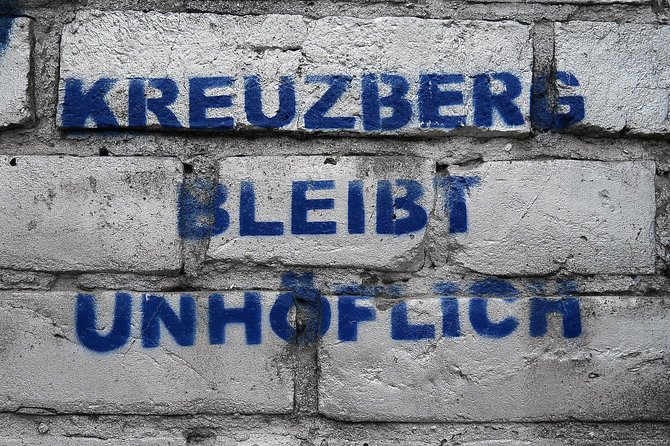
Kreuzberg rewards curious walkers. This three-hour tour moves beyond Berlin’s famous center to explain how a Cold War border district became a home for immigrants, artists, musicians, and today’s hip crowd. I like the focus on local history and the chance to see Kreuzberg through an art historian’s eyes rather than simply ticking off sights. I also like the small-group format, which leaves room for questions and conversation.
The tour includes Oberbaumbrücke, remnants of the Berlin Wall, Görlitzer Park, Markthalle 9, Turkish shops, food markets, graffiti, and controversial riverside plans. The main drawback is the price: at $153.85 per person, you are paying a premium for a three-hour neighborhood tour, and public transport, food, and an optional bicycle cost extra.
The strongest part is the human scale. Peter has been praised for his local insight and useful Berlin recommendations, while Ronan is described as patient, thoughtful, and excellent in conversation. Expect a discussion-led walk, not a fast parade of photo stops.
In This Review
- Key points at a glance
- Why Kreuzberg deserves three hours
- Starting at Schlesische Strasse and Oberbaumbrücke
- SO36 and Kreuzberg’s rougher past
- Berlin Wall remains and creative reuse
- Graffiti, street art, and the Kreuzberg look
- Görlitzer Park and everyday Kreuzberg
- Markthalle 9 and Turkish food culture
- Riversides, redevelopment, and an unsettled future
- What the guides add to the experience
- Walking, biking, transport, and pace
- Is $153.85 a fair price?
- Who will enjoy this Kreuzberg tour?
- Should you book the Kreuzberg Walking Tour?
- FAQ
- How long does the Kreuzberg Walking Tour last?
- Where does the tour start?
- Is the tour offered in English?
- Is there a bicycle option?
- Are public transport and food included?
- What is the group size?
- Can I cancel for a full refund?
Key points at a glance
- Kreuzberg beyond the postcard center: You explore SO36, a former Cold War-era edge district shaped by migration, protest, music, and urban change.
- Oberbaumbrücke sets the scene: The tour begins on one of Berlin’s most attractive bridges, linking the geography of Kreuzberg with its divided past.
- Street art gets context: Graffiti and creative uses of vacant buildings are treated as part of the neighborhood’s social story, not just colorful backdrops.
- Turkish food adds flavor: Markets, spices, flowers, shops, and snacks such as spinach-and-cheese gözleme bring the district’s immigrant culture into the tour.
- Markthalle 9 is a useful food stop: The 120-year-old market hall gives you a good place to understand Kreuzberg through what people buy and eat.
- Small means personal: The advertised group size is six, though booking and activity limits also list larger maximums, so confirm the exact group size before paying.
Why Kreuzberg deserves three hours
Kreuzberg is one of Berlin’s best districts for understanding change. It was once pressed against the Berlin Wall and widely treated as a rough, isolated corner of West Berlin. After the Wall fell, its vacant buildings, cheap spaces, and unusual mix of residents drew artists, musicians, squatters, immigrants, and later a new wave of bars, boutiques, and fashionable businesses.
That shift is the point of this tour. You are not just looking at murals or ordering a snack. You are asked to consider who shaped Kreuzberg, who benefited from its changes, and what may disappear as the district becomes more expensive and polished.
I would choose this experience after seeing Berlin’s major historical sights, especially if you already know the Brandenburg Gate and Museum Island. It gives you a different Berlin, one built from neighborhood streets, migration, political tension, and everyday life.
More Walking Tours in Berlin
- Discover Berlin Half-Day Walking Tour
★ 5.0 · 9,624 reviews - Berlin: Third Reich and Cold War 2 Hour Walking Tour
★ 4.9 · 6,830 reviews - Berlin: Discover Berlin Walking Tour
★ 4.9 · 5,998 reviews
Starting at Schlesische Strasse and Oberbaumbrücke
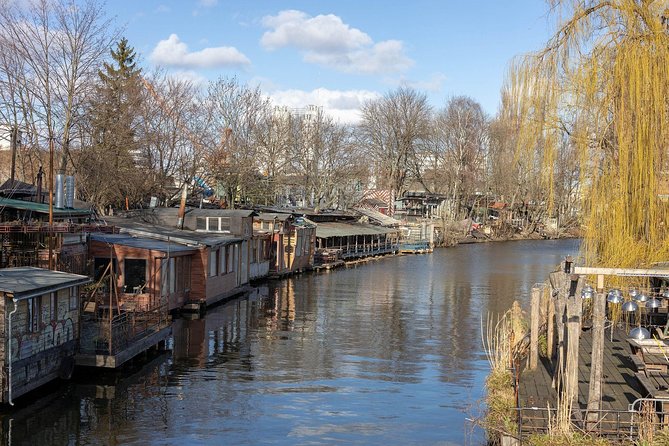
The listed meeting point is Schlesische Strasse 18, in the Kreuzberg area and close to public transport. From there, the route begins with a walk over Oberbaumbrücke, a striking bridge that helps connect Kreuzberg with Friedrichshain.
This is a smart opening. The bridge is attractive, but it is also useful for orientation. You begin by looking at the district from a broad geographic angle before moving into its streets and smaller stories.
The bridge can be busy, and the tour is not designed as a quiet architectural visit. Still, its location makes it a good place to introduce Berlin’s former division and the links between the two districts. Your guide can explain how political borders once shaped ordinary movement through this part of the city.
The experience is offered as a walking tour or a bicycle tour. The bike version covers more ground while remaining within Kreuzberg. You pay an optional €10 per person for bicycle rental, so ask about the current arrangement when booking if cycling is important to you.
SO36 and Kreuzberg’s rougher past
From the bridge, the tour moves through the main areas associated with SO36. The name refers to an old postal district, but it has come to mean much more than a mailing zone. It is tied to Kreuzberg’s working-class identity, immigrant communities, protest movements, music scene, and alternative culture.
This is where the tour’s historical angle matters most. You hear how an area near the Wall became a place that many Berliners once avoided, then became attractive to artists and visitors looking for something less polished than the city center.
Rock musicians also passed through Kreuzberg during the Cold War years, drawn by its unusual atmosphere and outsider reputation. The guide uses these stories to show why the district became famous without reducing it to a collection of celebrity anecdotes.
You should expect some discussion of social change here. The old Kreuzberg and the current Kreuzberg are not the same place, and the tour asks you to notice that tension. Cheap creative spaces can attract new investment, which can then make the neighborhood harder for the original residents and artists to afford.
Berlin Wall remains and creative reuse
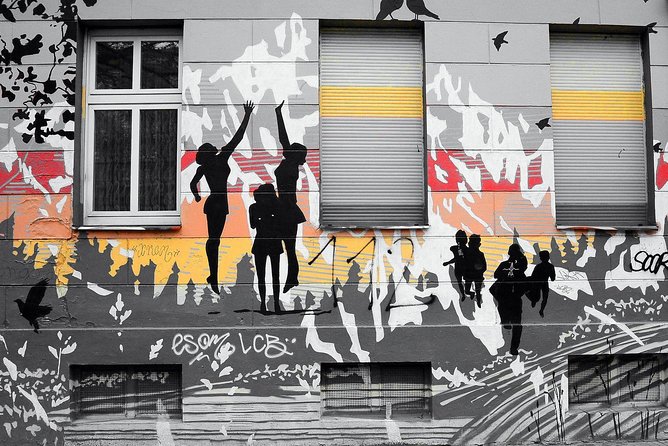
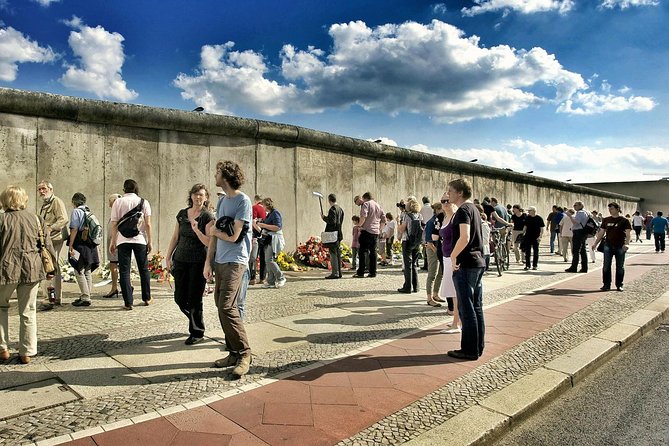
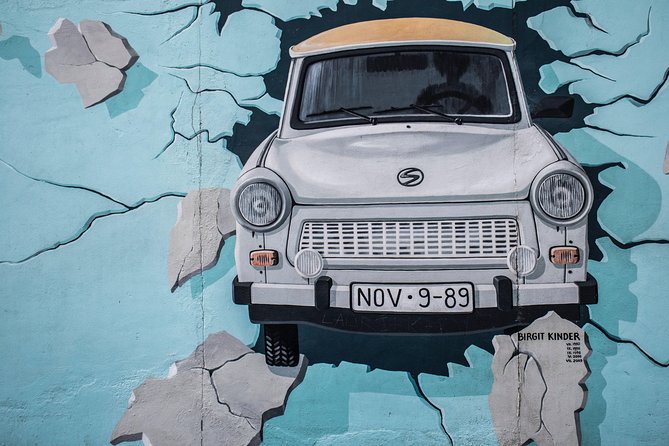
The route includes surviving sections or traces of the Berlin Wall. These are not presented as isolated monuments. Instead, you look at how the Wall affected the streets around it and how empty plots and abandoned buildings were later used.
That connection gives the Wall a more grounded meaning. Berlin’s division was not only a major political event. It shaped housing, jobs, transport, public space, and the identity of entire neighborhoods.
Kreuzberg’s vacant sites later became places for gardens, art projects, informal gatherings, and other creative uses. I like this part because it explains why the district looks the way it does. A patch of open land can tell you about war, division, neglect, experimentation, and redevelopment all at once.
The downside is that a three-hour tour cannot give every site a long stop. If you want a detailed military or political history of the Wall, choose a dedicated Berlin Wall tour instead. This experience uses the Wall as one thread in a much larger neighborhood story.
Something different for another day:
- Berlin: Reichstag, Dome and Government District Guided Tour
★ 4.7 · 18,288 reviews - Berlin: 1-Hour City Tour by Boat with Guaranteed Seating
★ 4.3 · 16,993 reviews - Berlin: Boat Tour Along the River Spree
★ 4.4 · 11,252 reviews - Berlin: Hop-on Hop-off Bus Tour with Live Commentary
★ 4.3 · 8,579 reviews
Graffiti, street art, and the Kreuzberg look

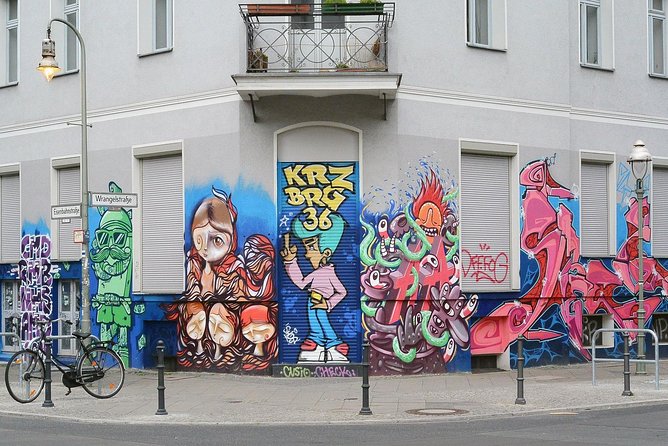
Street art is central to Kreuzberg’s visual identity, and the guide explains why. The focus is not simply on finding the biggest mural. You learn how graffiti became tied to youth culture, protest, territorial claims, artistic expression, and the district’s alternative reputation.
That context changes how you look at the walls. Some marks are planned artworks. Others may be spontaneous, political, unwanted, or temporary. A guide can help you read the neighborhood without treating every painted surface as the same kind of art.
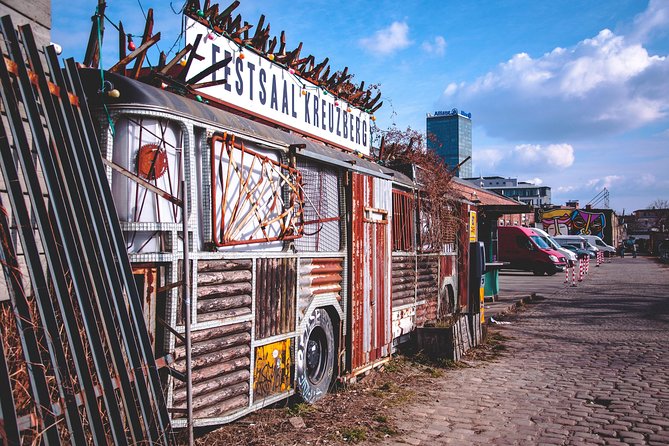
The tour also examines creative uses of abandoned buildings and unused land. These examples show how Kreuzberg’s artistic culture often grew from necessity, not from a city branding plan.
Photography should be easy, but the tour is not built around stopping for perfect shots. If your priority is street-art photography, you may want extra time before or after the tour. The value here is the explanation behind the images.
Görlitzer Park and everyday Kreuzberg
Görlitzer Park brings the route into a more open public space. The park is graceful in its own way, but its importance comes from how people use it and how it fits into the surrounding district.
Your guide discusses the park as part of Kreuzberg life rather than treating it as a formal garden attraction. That means the conversation can touch on public space, changing neighborhoods, and the different ways residents experience the same area.
Do not expect a polished sightseeing park with a fixed sequence of monuments. Görlitzer Park is better understood as a living part of the district. Its value on the tour is social and urban, not just scenic.
This is also a point where weather can affect your enjoyment. One account describes a successful tour in cold rain, thanks to the guide’s engaging storytelling. Still, bring suitable clothing. The walk spends much of its time outdoors, and poor weather can make the three hours feel longer.
Markthalle 9 and Turkish food culture
Markthalle 9 is a 120-year-old market hall and one of the route’s most appealing stops. It gives you a chance to see Kreuzberg through food, shopping, and local routines rather than through history alone.
The tour also passes shops and colorful markets shaped by Turkish culture. You may see flowers, spices, prepared food, and small stores that reflect the long presence of Berlin’s Turkish community.
One suggested snack is gözleme, a flatbread filled with ingredients such as spinach and cheese, then cooked and served hot. Food is not included in the tour price, so bring money if you want to sample something. You also pay for drinks separately unless the booking details specifically say otherwise.
I like the food element because it keeps the tour from becoming too academic. Kreuzberg’s identity is not just in archives, wall fragments, or political slogans. It is also in what people cook, sell, and eat.
At the same time, do not book this as a food tour. The focus is culture and history, with food as an important part of the story. The number of samples and the exact market activity can vary.
Riversides, redevelopment, and an unsettled future
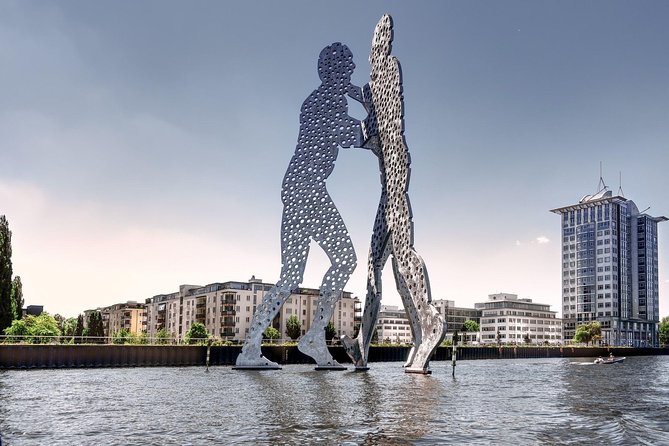
The tour ends with a discussion of controversial development plans along the river. This is a strong way to finish because it brings the story into the present.
Kreuzberg is not a preserved museum district. New buildings, investment, public access, creative spaces, and long-term residents all compete for room. Riverside projects can bring jobs and attractive public areas, but they can also raise questions about rent, ownership, and who the city is being built for.
The discussion makes clear that Kreuzberg’s future is still being argued over. You are not left with a simple message that old Kreuzberg was perfect or that all change is bad.
One experience ended at the Friedrichshain-Kreuzberg Museum, which would make a fitting conclusion, although the supplied route description emphasizes a final riverside discussion. The exact ending may vary with the guide, schedule, and current conditions. Ask at the start if the museum is important to you.
What the guides add to the experience
The tour includes a professional art historian guide, and that background suits Kreuzberg well. The district requires more than dates and labels. You need someone who can connect murals, migration, buildings, music, public space, and political debates.
Peter is repeatedly singled out for his strong local knowledge, affection for the neighborhood, and practical suggestions for the rest of your time in Berlin. That last point is useful. A good neighborhood guide should leave you with ideas for what to explore next, not just facts you forget by dinner.
Ronan is described as patient, sensitive, and particularly good at conversation. That suggests the tour works best when you ask questions and take part in discussion. It is less suitable if you want a guide to deliver a nonstop lecture while you quietly follow.
The experience is offered in English. Since the tour depends on stories and conversation, a comfortable command of English will help you get the most from it.
Walking, biking, transport, and pace
The walking version lasts about three hours. Distances between some important sites are too far to cover entirely on foot, so you need to use public transport a few times. Public transport is not included, and hotel pickup and drop-off are not provided.
This matters when planning your day. Wear comfortable shoes, allow a little extra time for transfers, and keep a transit ticket or payment method ready. The route is not a single uninterrupted stroll from one attraction to the next.
The bicycle option covers more ground but remains within the district. It may suit you if you want a broader view of Kreuzberg or prefer cycling to walking. The tradeoff is that bike rental costs an additional €10 per person, and cycling may make it harder to pause for long conversations or food stops.
The tour is near public transportation, and most people can participate. Children must be accompanied by an adult. No special accessibility details are provided, so ask the operator directly if you have mobility needs or concerns about walking, transfers, or cycling.
Is $153.85 a fair price?
At $153.85 per person, this is an expensive three-hour outing. You also need to budget for public transport, food and drinks, and possibly the €10 bike rental. The price is hard to justify if you only want a quick orientation or a list of photo locations.
The value improves if you want a private-feeling experience with a specialist guide. A group advertised at six people allows more questions and a more flexible conversation than a large coach tour. You are paying for interpretation, not admission tickets.
Check the group-size wording carefully. The tour description says the small group has a maximum of six, while the booking information lists a maximum of eight people per booking and up to ten participants for the activity. That may reflect different booking limits, but I would confirm the expected size before committing at this price.
Free cancellation is available if you cancel at least 24 hours before the start time. Changes or cancellations made within 24 hours are not refunded, so keep that deadline in mind.
Who will enjoy this Kreuzberg tour?
I would recommend it most to you if you:
- Want Berlin history outside the main sightseeing center
- Enjoy art, migration stories, architecture, and urban politics
- Prefer a small group and plenty of conversation
- Like connecting food and daily life with historical events
- Have already seen Berlin’s major central sights
- Want recommendations for exploring Berlin afterward
It may not suit you if you want a cheap walking tour, a major museum visit, or a food experience with many tastings. It also may disappoint if you expect every stop to be a formal attraction with a long viewing period.
The tour can work for Berlin residents too. One particularly strong account came from someone who had lived in Berlin for three years and still found the experience eye-opening. That is a good sign for the depth of the discussion, though your enjoyment will depend on the guide and the questions you bring.
Should you book the Kreuzberg Walking Tour?
Book it if you want to understand how Kreuzberg became Kreuzberg. The best reasons are the small group, the art historian guide, the mix of Cold War history and immigrant culture, and the honest look at redevelopment.
I would not book it simply because you want to see street art or eat Turkish food. You can do those things on your own for much less. Book this tour when you want the connections explained: why the Wall mattered here, how artists and immigrants shaped the district, and why the neighborhood’s future remains contested.
At $153.85, the tour needs to deliver thoughtful guiding, and the available feedback points strongly in that direction. Confirm the group size, prepare for public transport and outdoor walking, and bring extra money for snacks. If those details fit your plans, this is a worthwhile, personal way to spend a morning or afternoon in Berlin.
FAQ
How long does the Kreuzberg Walking Tour last?
The tour lasts approximately three hours.
Where does the tour start?
The listed meeting point is Schlesische Str. 18, 10997 Berlin, Germany.
Is the tour offered in English?
Yes. The tour is offered in English.
Is there a bicycle option?
Yes. You can take the tour on foot or choose a bicycle tour. Bicycle rental costs an additional €10 per person.
Are public transport and food included?
No. You need to use public transport several times, and public transport is not included. Food and drinks are also not included unless specified.
What is the group size?
The tour is described as a small-group experience with a maximum of six people. The booking information also lists a maximum of eight people per booking and up to ten travelers for the activity, so confirm the expected group size before booking.
Can I cancel for a full refund?
Yes, if you cancel at least 24 hours before the experience start time. Cancellations or changes made less than 24 hours in advance are not refunded or accepted.
Just added around Berlin
- Kreuzberg Private Walking Tour: Immigrants, Artists & Hipsters★ 5.0 · 3 reviews
- Private Photo Tour in Kreuzberg★ 5.0 · 3 reviews
- Individual city tour Berlin for max. 8 persons★ 5.0 · 3 reviews
- Berlin’s Jewish Heritage: Private Tour of the Vibrant Jewish District★ 5.0 · 3 reviews
- Berlin & The Third Reich Private Guided Tour★ 5.0 · 3 reviews
- Private Analogue Photography Experience in Berlin★ 5.0 · 3 reviews
- Spy Mission in Berlin: Self-Guided Espionage Puzzle Quest★ 5.0 · 3 reviews
- Berlin Christmas Markets Walking Tour with Local Guide★ 5.0 · 3 reviews
Walking Tours, compared.





Berlin’s Best: 2 Hour Walking Tour Third Reich and the Cold War
Read our review →


Third Reich Berlin: Hitler and WWII Walking Tour
Read our review →Browse the lists this tour appears in