
Reviewed · WALKING TOURS
Karl-Marx-Allee Walking Tour: Berlin’s Socialist History
Berlin’s grandest socialist avenue tells uncomfortable stories. This two-hour walk along Karl-Marx-Allee connects monumental East German architecture with the workers’ uprising of 1953, Stasi surveillance, Cold War politics, and today’s housing protests. I like the way the route treats the boulevard as more than a collection of oversized buildings. It shows how architecture was used to sell an idea of society.
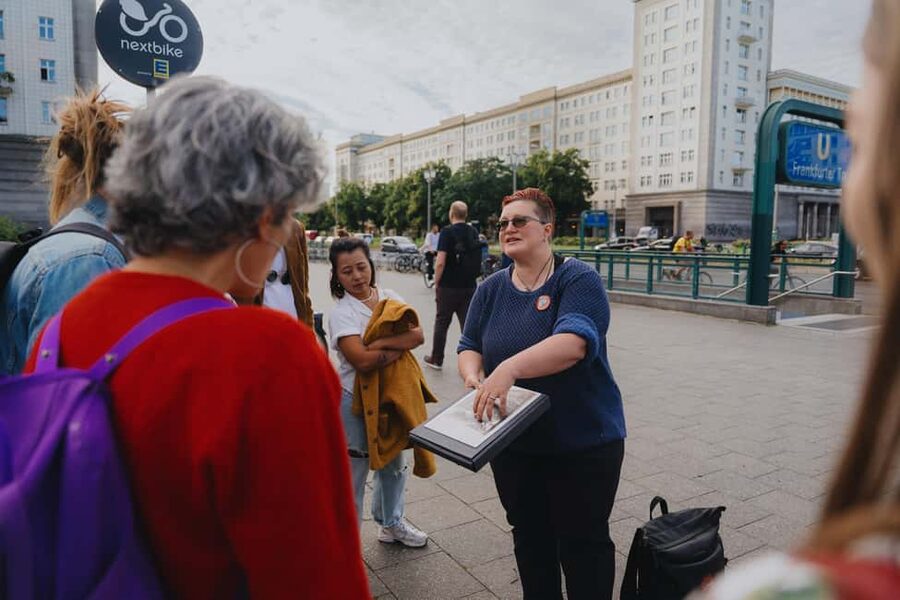
I also like the practical route, which begins at U Frankfurter Tor and follows the avenue toward Strausberger Platz. The guide brings the setting to life, and Martina has been praised for listening closely to questions instead of simply rushing through a prepared speech. The main consideration is that this is a history-focused walk, not a general introduction to Berlin, so you should be ready for serious political subjects and plenty of time on your feet.
In This Review
- Key things to know before you book
- Why Karl-Marx-Allee matters beyond its grand facades
- Starting at U Frankfurter Tor
- Reading the socialist classicism of Karl-Marx-Allee
- The 1953 uprising and the cost of rebuilding
- From modernist ideals to a controlled public image
- Behind the perfect facade: Stasi surveillance
- After the Wall: neglect, real estate, and protest
- What the route feels like on foot
- Is $23 a fair price?
- Practical details before you go
- Who should book the Karl-Marx-Allee walk?
- Should you book this Berlin walking tour?
- FAQ
- How long does the Karl-Marx-Allee walking tour last?
- Where does the tour begin?
- Where does the walking tour finish?
- Which languages are available?
- Is the tour wheelchair accessible?
- What should I bring?
- Can children join the tour?
- How much does the experience cost?
- Can I cancel the booking?
Key things to know before you book
- The buildings are the main event: Karl-Marx-Allee’s huge blocks were designed to project confidence, order, and socialist prosperity.
- The 1953 uprising gives the avenue its drama: The construction project helped trigger a revolt that nearly brought down East Germany’s young government.
- You see two competing architectural ideas: Early postwar modernism gives way to grand socialist classicism, revealing a sharp change in political taste.
- The Stasi story is part of ordinary home life: Wiretaps in flats and listening posts in attics show how surveillance operated behind the polished facades.
- The boulevard has a new political role: Once used for socialist parades, it now provides a setting for protests about rent and gentrification.
- Film fans get extra context: The route includes locations connected with The Lives of Others and The Queen’s Gambit.
Why Karl-Marx-Allee matters beyond its grand facades
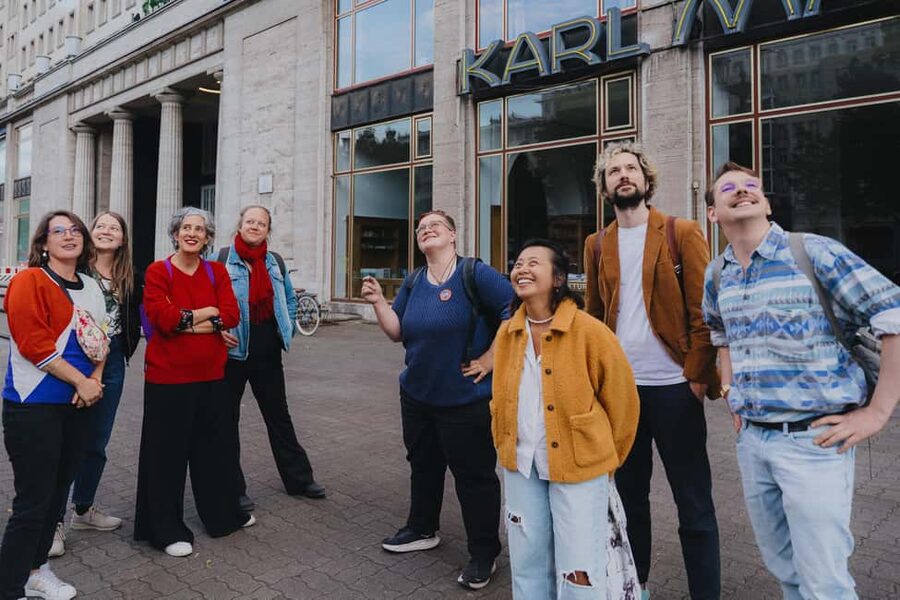
Karl-Marx-Allee is one of the clearest places in Berlin to see political ideas turned into streets, apartments, shops, and public space. The avenue was the biggest building project of former East Berlin, and its scale was deliberate. The regime wanted a rebuilt capital that could display strength after the destruction of World War II.
As you walk beside the housing blocks, you may feel physically small. That reaction is useful. The architecture was meant to impress people, guide their attention, and communicate that the state could provide a modern life for working families.
The boulevard was first known as Stalinallee before being renamed Karl-Marx-Allee. Its early postwar sections reflected modernist ideas about rebuilding a damaged city. Later, the government rejected that style and favored socialist classicism, a more ceremonial approach with monumental proportions and decorative detail.
This change was not just about design. It reflected a change in what East German leaders wanted socialism to look like. Modernist buildings could suggest experimentation and a new beginning. The later blocks offered a more controlled image: a grand avenue, carefully ordered housing, and a capital city that appeared confident and complete.
More Historical Tours in Berlin
- Berlin: Natural History Museum Entrance Ticket
★ 4.6 · 3,382 reviews - Berlin: World Heritage Cruise to Potsdam
★ 4.5 · 1,435 reviews - Berlin Historical Highlights Walking Tour
★ 4.9 · 657 reviews
Starting at U Frankfurter Tor
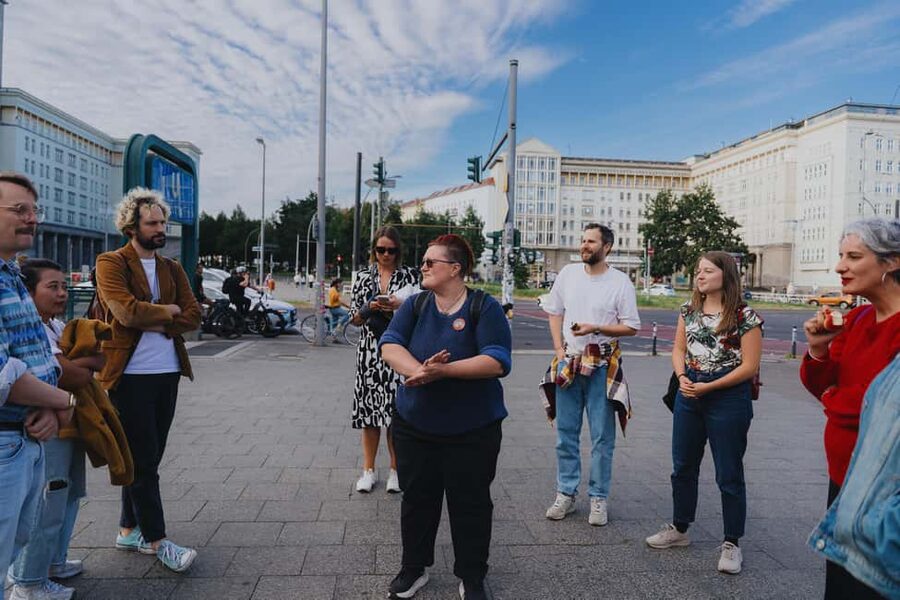
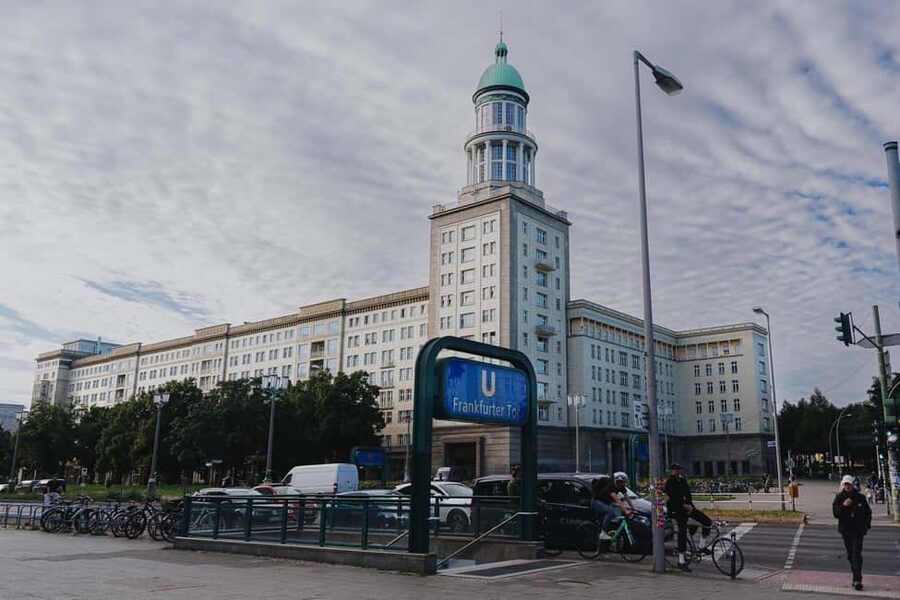
Your meeting point is outside the Frankfurter Tor U-Bahn station, on the corner of Warschauer Straße and Karl-Marx-Allee. Look for the guide holding an orange umbrella. That small detail matters at a busy city intersection, especially if you are arriving by public transport and want to find the group without delay.
Frankfurter Tor is a fitting place to begin because the architecture announces itself immediately. The avenue opens into a broad urban space framed by monumental forms, rather than the narrow streets and intimate courtyards found in many older parts of Berlin.
Give yourself a moment to look around before the walk begins. You are not simply meeting beside a train station. You are entering a planned display of East German power, housing policy, and public life.
The guide leads in English or German, so choose the language that lets you follow political details without strain. Since the walk lasts two hours, comfortable shoes are a sensible choice. The tour is wheelchair accessible, which makes the broad route easier to approach, though you should still consider your own comfort with an extended outdoor walk.
Reading the socialist classicism of Karl-Marx-Allee
The main guided portion lasts about an hour and a half, within the two-hour experience. That gives the guide enough time to explain the buildings instead of reducing them to a quick photo stop.
The avenue’s scale is its first lesson. The housing blocks were meant to be impressive, but they were also intended to provide desirable homes, shops, cafes, and restaurants. Karl-Marx-Allee was presented as the best East Berlin had to offer, a place where working people could enjoy a modern and comfortable life under socialism.
That public image was important. The boulevard functioned as architecture, housing policy, and political advertising at the same time. The state wanted residents and visitors to see evidence of progress in the buildings around them.
You will hear how thousands of volunteers worked day and night to help rebuild the street from the ruins. That detail gives the project a human side, but it also raises a harder question. How voluntary was the effort in a society where the government controlled work, housing, and public life so closely?
A good guide will help you hold both ideas at once. The buildings could offer real improvements in living conditions, while the political system behind them limited personal freedom. This tension is one of the tour’s strongest features.
The 1953 uprising and the cost of rebuilding

The boulevard’s construction almost cost the young East German state its existence. In June 1953, dissatisfied workers began a mass uprising that spread beyond a local workplace dispute.
The project was linked to demanding work conditions and broader economic pressure. As the guide explains the uprising along the avenue, the architecture takes on a different meaning. The same street that symbolized socialist progress also became associated with anger toward the government.
This is where the tour moves beyond architecture. You learn that grand public projects can hide the strain required to build them. A government may celebrate a new boulevard, while workers see long hours, strict demands, and rising pressure.
The 1953 revolt is also a reminder that East Germans were not simply passive subjects. People challenged the system, organized, and took risks. The uprising was suppressed, but it exposed a major gap between official promises and daily life.
For me, this is one of the best reasons to choose a guided walk rather than simply photograph the buildings. Without the political story, Karl-Marx-Allee can look like a striking collection of apartment blocks. With the story, each section carries evidence of conflict.
More Walking Tours in Berlin
- Discover Berlin Half-Day Walking Tour
★ 5.0 · 9,624 reviews - Berlin: Third Reich and Cold War 2 Hour Walking Tour
★ 4.9 · 6,830 reviews - Berlin: Discover Berlin Walking Tour
★ 4.9 · 5,998 reviews - Berlin’s Best: 2 Hour Walking Tour Third Reich and the Cold War
★ 5.0 · 5,486 reviews
From modernist ideals to a controlled public image
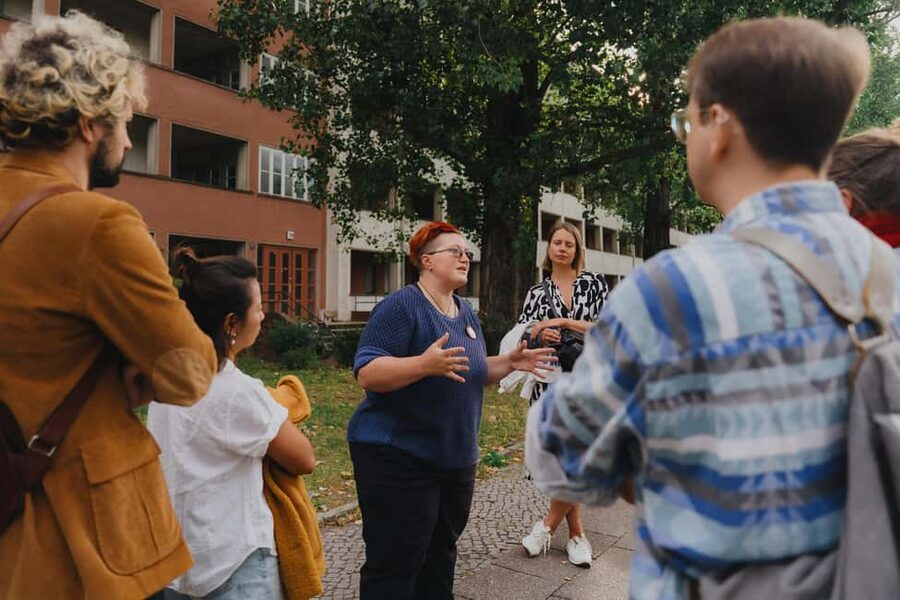
The avenue’s history begins before the grand 1950s blocks. In the immediate postwar period, architects explored modernist ideas for a new Berlin. The city had been badly damaged, and rebuilding offered a chance to rethink streets, housing, and public space.
Later, the East German regime rejected that direction. The government wanted an architecture that appeared more formal and imposing. Fast-growing poplar trees were used to hide some of the earlier modernist buildings from people passing along the avenue.
That small urban detail makes the political shift visible. A government did not simply change its architectural policy in theory. It changed what people were meant to see.
The contrast between the modernist sections and the later socialist classicism helps you understand why Berlin can feel like several political eras placed side by side. The guide can point out how the street was shaped by decisions about visibility, prestige, and control.
If you enjoy architecture, this part of the walk will likely be especially rewarding. You do not need specialist training to follow it. The useful question is simple: what does each building ask you to feel about the society that built it?
Behind the perfect facade: Stasi surveillance
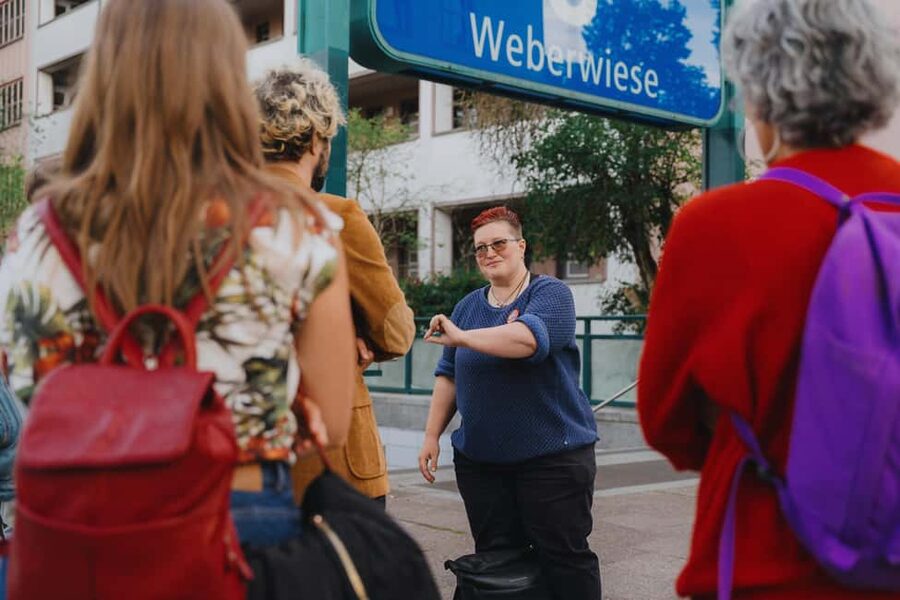
Karl-Marx-Allee was designed to project comfort and stability. It had cafes, restaurants, and shops that helped create an image of an ideal socialist lifestyle. Yet the polished public face concealed the surveillance state.
The tour explains how the Stasi monitored people from inside the buildings. Wiretaps could be placed in flats, while listening stations in attics allowed secret police officers to observe and record. These tools were intentionally kept out of sight, which makes the ordinary appearance of the housing blocks part of the story.
This section may be unsettling because it brings Cold War surveillance into domestic life. The issue was not only what happened at official meetings or political demonstrations. It was also what people said at home, who they trusted, and how safe they felt in their own apartments.
The connection with The Lives of Others adds a film angle, but the real value is historical. The movie’s themes of suspicion and intrusion become easier to understand when you are standing among the actual types of buildings associated with East Berlin life.
You will also see a filming location connected with The Queen’s Gambit. That reference gives the route a lighter cultural note, although the main focus remains the street’s architecture and political past.
After the Wall: neglect, real estate, and protest

After German reunification, Karl-Marx-Allee lost its role as a ceremonial boulevard for socialist parades. The buildings fell into disrepair, and the avenue began to look like an awkward leftover from a vanished system.
Berlin changed again as property values rose and the city faced a housing crisis. Real estate interest returned to the avenue, bringing new pressure to an area once treated as an architectural relic.
Today, Karl-Marx-Allee has become a setting for local protests about gentrification and rising living costs. That development gives the walk a strong present-day ending. The avenue is not frozen in East German history. It remains part of arguments about who gets to live in central Berlin and how much housing should cost.
I appreciate this final chapter because it avoids treating socialism as a sealed-off past. The political slogans may have changed, but questions about housing, power, and public space remain very current.
The avenue’s new role is also an amusing twist. A street once built for official parades now provides a stage for community opposition. Berlin has a habit of giving old spaces new arguments.
What the route feels like on foot

This is an outdoor walking tour, so your experience depends partly on weather and footwear. The route covers a major boulevard rather than a compact historic quarter, and you should expect to spend the full two hours standing or walking.
The broad spaces make the architecture easier to see, but they can also make the walk feel exposed. Comfortable shoes are specifically recommended, and you should dress for the conditions on the day.
The route is a good match for you if you prefer learning through buildings and streets rather than spending two hours inside a museum. It also suits repeat visitors who have already seen central Berlin and want a different side of the city.
Children under 10 are not considered suitable for this activity. Older children and teenagers with an interest in history, architecture, politics, or film may get more from it, but the subject matter is serious and includes repression and surveillance.
The live guide is important here. A self-guided walk can show you the buildings, but it cannot easily explain why the government changed architectural styles, how the 1953 uprising developed, or how surveillance affected daily life.
Is $23 a fair price?
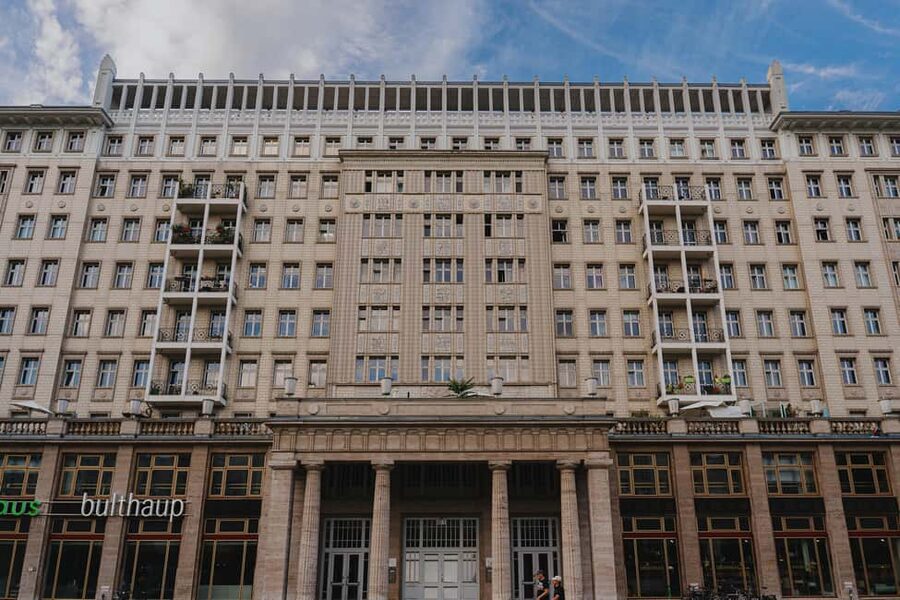
At $23 per person, this is a reasonable price for a two-hour guided history walk in Berlin. You are paying for a live guide who connects architecture, politics, film, and present-day housing issues rather than simply identifying buildings.
The value is strongest if you would otherwise walk along Karl-Marx-Allee without understanding what you are seeing. The avenue is visually striking, but the history is not always obvious from the outside. A guide helps you notice the political choices built into the street.
The price is less compelling if you only want photographs or a general sightseeing walk. Karl-Marx-Allee is accessible without a tour, and visitors who dislike political history may find the subject matter too narrow.
The booking terms also make the decision easier. You can reserve now and pay later, and cancellation is available up to 24 hours in advance for a full refund. English and German are offered, and the activity is wheelchair accessible.
Practical details before you go
Meet outside U Frankfurter Tor at the corner of Warschauer Straße and Karl-Marx-Allee. The orange umbrella is the visual marker for the guide, so keep an eye out for it near the station entrance.
The stated walking route begins at Frankfurter Tor and finishes at U Strausberger Platz. The meeting instructions also describe the activity as ending back at the meeting point, so confirm the final stopping point when you arrive if your onward transport depends on it.
The main guided walk is listed as 1.5 hours, while the full activity lasts two hours. That may include meeting, orientation, and movement between sections of the avenue.
Bring comfortable shoes. No other special equipment is listed, and the focus is on walking, listening, and looking closely at the buildings.
One especially useful sign is the guide’s attitude toward questions. Martina was praised for being attentive to curious participants rather than stubbornly sticking to a fixed script. That matters on a history walk, since the best questions often come from details you notice along the way.
Who should book the Karl-Marx-Allee walk?
I would recommend this tour if you want Berlin history that reaches beyond the usual Wall sites, museums, and Brandenburg Gate. It gives you a clear look at how East Germany tried to shape daily life through housing and public architecture.
It is also a strong choice for architecture fans, Cold War history enthusiasts, and anyone interested in the connection between political ideals and ordinary apartments. Film fans will appreciate the references to The Lives of Others and The Queen’s Gambit, but you do not need to know either production to enjoy the route.
You may want to skip it if you are looking for a relaxed stroll with little commentary. The themes include economic pressure, state control, police surveillance, and protest. The avenue is impressive, but the tour does not pretend that the socialist system was a simple success story.
Should you book this Berlin walking tour?
Book it if you want to understand what Karl-Marx-Allee was built to say, what it concealed, and why it still matters. For $23, you get a focused two-hour introduction to East Berlin’s architecture and political life, with enough context to make the enormous buildings feel human and contested.
The best reason to go is the combination of scale and contradiction. You see housing built to display prosperity, a workers’ revolt tied to the project, hidden Stasi surveillance, post-reunification neglect, and new protests over rent. That is a lot of Berlin in one broad avenue.
If you prefer only postcard views, spend your money elsewhere. If you want the story behind the facade, meet the orange umbrella at Frankfurter Tor.
FAQ
How long does the Karl-Marx-Allee walking tour last?
The full activity lasts two hours. The guided portion along Karl-Marx-Allee lasts about 1.5 hours.
Where does the tour begin?
Meet outside the Frankfurter Tor U-Bahn station, on the corner of Warschauer Straße and Karl-Marx-Allee. The guide can be identified by an orange umbrella.
Where does the walking tour finish?
The route lists U Strausberger Platz as the finish. The meeting instructions also describe the activity as ending back at the meeting point, so confirm the final stopping place with the guide.
Which languages are available?
The tour is offered with a live guide in English or German.
Is the tour wheelchair accessible?
Yes, the activity is wheelchair accessible.
What should I bring?
Bring comfortable shoes for the two-hour walking experience.
Can children join the tour?
The activity is not suitable for children under 10.
How much does the experience cost?
The price is $23 per person.
Can I cancel the booking?
Yes. You can cancel up to 24 hours in advance for a full refund. You can also reserve now and pay later.
Just added around Berlin
- Kreuzberg Private Walking Tour: Immigrants, Artists & Hipsters★ 5.0 · 3 reviews
- Private Photo Tour in Kreuzberg★ 5.0 · 3 reviews
- Individual city tour Berlin for max. 8 persons★ 5.0 · 3 reviews
- Berlin’s Jewish Heritage: Private Tour of the Vibrant Jewish District★ 5.0 · 3 reviews
- Berlin & The Third Reich Private Guided Tour★ 5.0 · 3 reviews
- Private Analogue Photography Experience in Berlin★ 5.0 · 3 reviews
- Spy Mission in Berlin: Self-Guided Espionage Puzzle Quest★ 5.0 · 3 reviews
- Berlin Christmas Markets Walking Tour with Local Guide★ 5.0 · 3 reviews
Walking Tours, compared.





Berlin’s Best: 2 Hour Walking Tour Third Reich and the Cold War
Read our review →


Third Reich Berlin: Hitler and WWII Walking Tour
Read our review →Browse the lists this tour appears in