
Reviewed · THIRD REICH & WWII TOURS
Hitler to Stalin – WWII & Cold War Tour (Small Group)
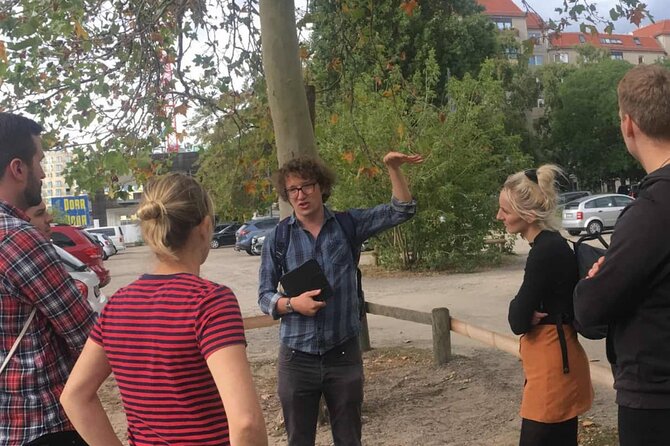
History is under your feet in Berlin. This 2.5-hour walking tour connects the city’s Nazi past with its divided Cold War years, taking you from the Brandenburg Gate to the Berlin Wall, Hitler’s bunker site, Checkpoint Charlie, and other major landmarks. I like the way it links these places into one clear story instead of treating them as isolated photo stops.
I also like the small-group format and the use of then-and-now photographs and maps. Those tools can make a vanished street, damaged building, or changed border line much easier to understand. The main drawback is the pace: two and a half hours covers a lot, so you should expect an outdoor overview rather than long visits inside museums or memorials.
The tour costs $34 per person, which is a fair price for a live guide, a focused route, and a useful introduction to Berlin’s most important 20th-century sites. Tom, one of the guides, is praised for being engaging, clear, and attentive to everyone in the group. If you want Berlin’s political story explained while you walk, this is a strong choice.
In This Review
- Key points to know before booking
- Beginning at the Brandenburg Gate
- The Reichstag and the politics of power
- Hitler’s bunker site and the end of the Nazi era
- The Holocaust Memorial and the cost of Nazi rule
- The former Gestapo headquarters and Nazi terror
- The Berlin Wall and the Iron Curtain
- Checkpoint Charlie and a divided city
- How the route connects war, division, and reunification
- Walking conditions, timing, and practical value
- Who should book this Berlin history walk?
- Should you book Hitler to Stalin?
- FAQ
- Where does the tour begin?
- Where does the tour end?
- How long does the tour last?
- What language is the tour offered in?
- Is the tour wheelchair accessible?
- What should I bring?
Key points to know before booking
- Brandenburg Gate is the starting point: Meet at the Tourist Center beneath the blue umbrella, then begin at one of Berlin’s most powerful symbols of division and unity.
- The route covers both dictatorships and their aftermath: You’ll move from Nazi rule and World War II into the Soviet occupation, the Berlin Wall, and German reunification.
- Hitler’s bunker site is part of the walk: The stop offers historical context, though it is not presented as a dramatic underground attraction.
- You see major landmarks in one compact tour: The Reichstag, Holocaust Memorial, Berlin Wall, Gestapo headquarters site, and Checkpoint Charlie all feature in the experience.
- Then-and-now images help explain change: Old photographs and maps make it easier to picture how Berlin looked during war and division.
- Plan for outdoor walking in all weather: Wear good shoes and bring water, snacks, and rain protection.
Beginning at the Brandenburg Gate
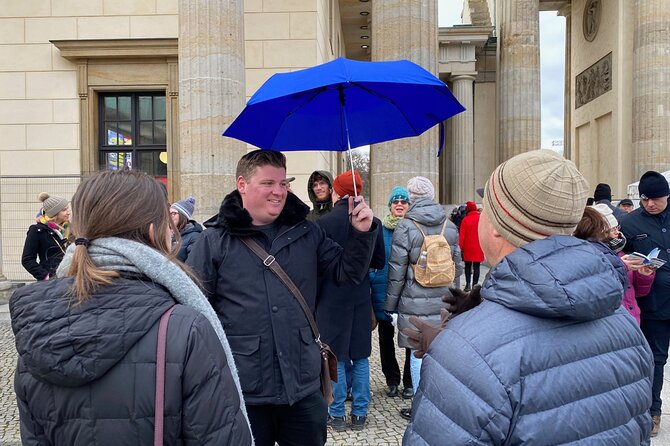
Your meeting point is the Tourist Center at the Brandenburg Gate. Look for the blue umbrella, a useful detail in a busy central area. The tour ends at the same meeting point, so you do not need to arrange transport back across town afterward.
The gate is an excellent place to begin because it carries several layers of meaning. It is now linked with Berlin’s unity, but the surrounding city was heavily damaged during World War II and later sat near the dividing line between East and West Berlin. The opening stop helps set up the central idea of the walk: Berlin’s famous sights changed meaning as governments changed around them.
Your guide speaks English and leads the tour live. The small-group setup should make it easier to hear explanations and ask questions than on a large coach excursion. It also suits the subject. Berlin’s wartime sites often require careful explanation, and a guide can add context that a plaque or quick photograph cannot.
The opening discussion also introduces the difference between seeing Berlin and understanding it. The Brandenburg Gate is not simply a handsome neoclassical monument. It is a marker of political power, war, division, and reconciliation. That makes it a useful first lesson in how this tour works.
More Third Reich & WWII Tours in Berlin
- Berlin: Third Reich and Cold War 2 Hour Walking Tour
★ 4.9 · 6,830 reviews - Berlin’s Best: 2 Hour Walking Tour Third Reich and the Cold War
★ 5.0 · 5,486 reviews - Third Reich Berlin: Hitler and WWII Walking Tour
★ 5.0 · 3,301 reviews
The Reichstag and the politics of power
The Reichstag helps place Berlin’s modern political story beside its wartime past. The tour uses the building to explain the political forces that shaped Germany before, during, and after World War II.
You should not expect an interior visit based on the information provided. Instead, the value lies in seeing the building as part of the city’s wider story. The guide can connect architecture and location with the political events that transformed Germany and later shaped the divided city.
This stop is especially helpful if you know the names of major events but struggle to place them in sequence. The route is designed to explain how Berlin became central to World War II, how the city was divided after the conflict, and how that division eventually ended.
I appreciate that the tour does not treat the Nazi period and Cold War as separate subjects. Berlin’s later division grew directly out of the war and its aftermath. Moving between these subjects on foot can make that connection easier to follow.
Hitler’s bunker site and the end of the Nazi era
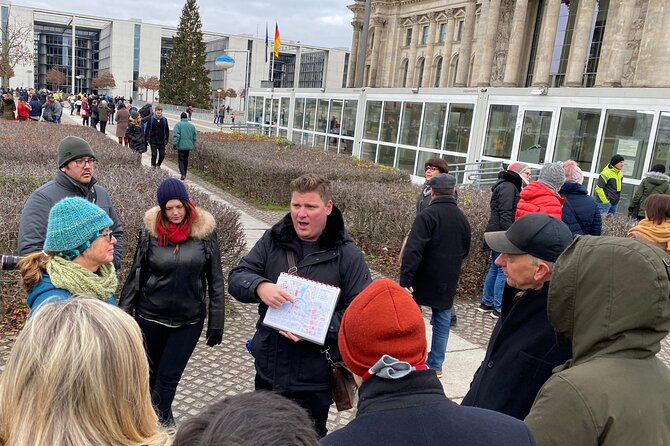
The former location of Hitler’s bunker is one of the most requested stops in Berlin, but it is also a place where expectations need managing. This is a historical site, not a preserved attraction with a grand entrance or underground tour. The significance comes from what happened there and from the way the area has changed since 1945.
A guide is particularly useful here because the physical setting alone may reveal little. The tour places the bunker site within the final days of the Nazi regime and the destruction of Berlin. It also helps you understand why the city around it looks so different from the images associated with the war.
This can be a sobering moment. The focus is not on spectacle or on glorifying Hitler. Instead, the stop helps explain the collapse of the Nazi government and the human cost left behind. The tour’s wider approach encourages you to consider the victims, the destruction of the city, and the political consequences that followed.
If this is your main reason for booking, keep your expectations realistic. You will be learning about a location and its role, not entering a dramatic preserved bunker complex.
The Holocaust Memorial and the cost of Nazi rule
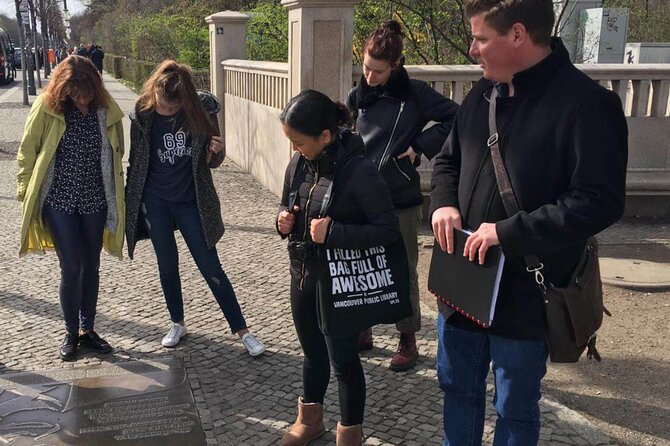
The Memorial to the Murdered Jews of Europe gives the tour a place for reflection. Its field of concrete blocks is visually striking, but the important part of the visit is the historical meaning behind it and the chance to consider the lives destroyed during the Nazi era.
The tour treats this stop as more than a quick photograph. It connects the memorial to the broader events discussed earlier, helping you understand that Berlin’s wartime story is also a story of persecution, mass murder, and loss.
A short walking tour cannot explain every part of the Holocaust. That is one limitation to keep in mind. Still, placing the memorial within a route that also includes government buildings, former Nazi sites, and later Cold War landmarks gives the experience useful scale.
I find this kind of stop most valuable when the guide leaves room for thought rather than rushing through a list of dates. The information supplied for this tour emphasizes emotional connection and lessons learned, so expect the memorial to be handled as a serious part of the route.
Something different for another day:
- Berlin: Reichstag, Dome and Government District Guided Tour
★ 4.7 · 18,288 reviews - Berlin: 1-Hour City Tour by Boat with Guaranteed Seating
★ 4.3 · 16,993 reviews - Berlin: Boat Tour Along the River Spree
★ 4.4 · 11,252 reviews - Discover Berlin Half-Day Walking Tour
★ 5.0 · 9,624 reviews
The former Gestapo headquarters and Nazi terror
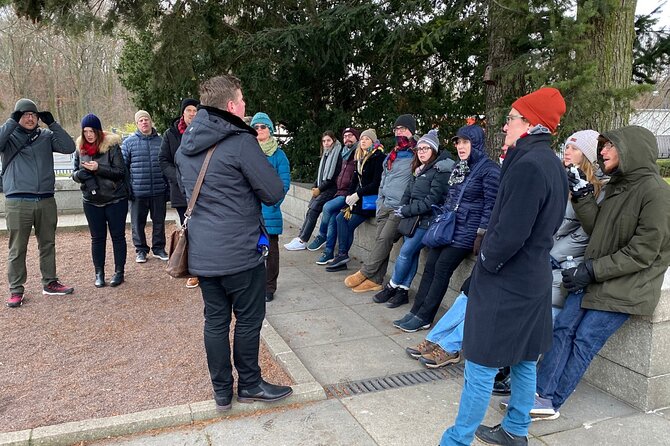
The former Gestapo headquarters site adds another layer to the Nazi section of the tour. It points to the machinery of political repression and shows that Nazi power was not limited to military decisions or grand public buildings.
The stop is important because it moves the discussion from leaders and battlefronts to the institutions that enforced fear. Your guide can help connect the site with the wider structure of Nazi rule and explain how Berlin functioned as a center of government, surveillance, and terror.
As with the bunker site, the physical location may not look the way you expect from wartime photographs. Berlin was damaged, rebuilt, and reshaped. That gap between the old images and the present-day streets is one reason the supplied then-and-now photos are useful.
Do not expect a long museum visit here. The value comes from the explanation, the location, and the connections between stops. If you want a detailed examination of Nazi administration, you would need additional museum time beyond this tour.
The Berlin Wall and the Iron Curtain
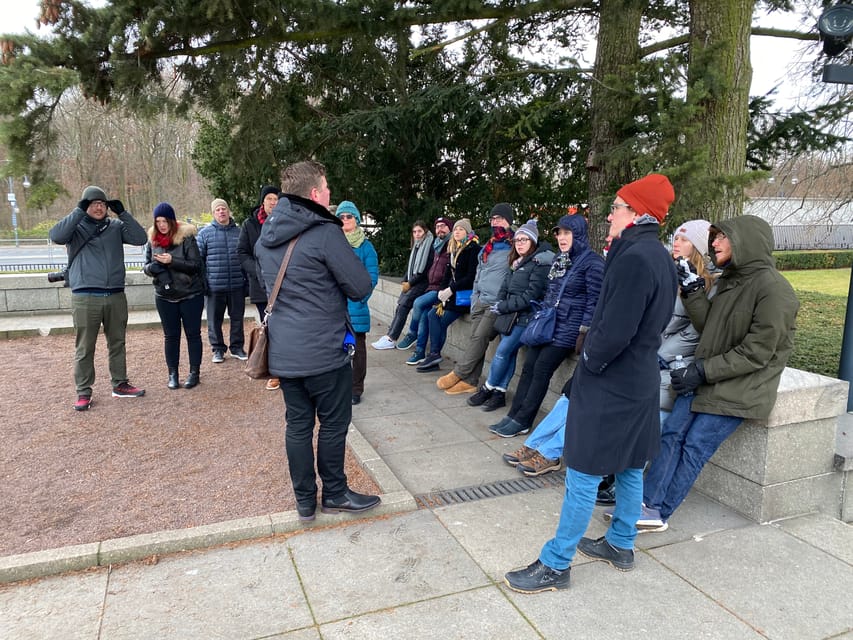
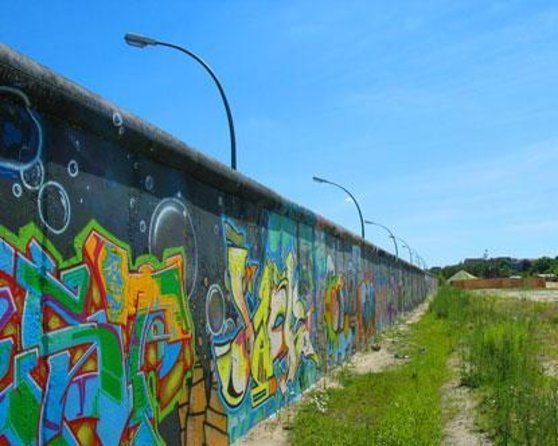
The Berlin Wall is where the tour shifts clearly into the Cold War. You will see part of the actual barrier and learn how Berlin was divided after World War II. This section explains not only the existence of the wall but also the political events that led to its construction and its eventual fall.
The wall can be easy to misunderstand when viewed as a surviving strip of concrete. The guide’s job is to show that it was part of a much larger system of separation. It divided neighborhoods, families, workplaces, and daily routines. The tour also explains the global importance of Berlin’s partition, since the city became one of the clearest physical symbols of the conflict between East and West.
The use of maps should help here. A map can show how the wall cut through the city and why certain streets, stations, and districts mattered. The then-and-now photographs add another layer by showing how the same places changed over time.
This is one of the strongest reasons to choose the tour instead of visiting a wall fragment alone. A preserved section gives you something to see, but the guide gives it meaning. You learn how Berliners lived with the division and how the city moved toward reunification.
Checkpoint Charlie and a divided city
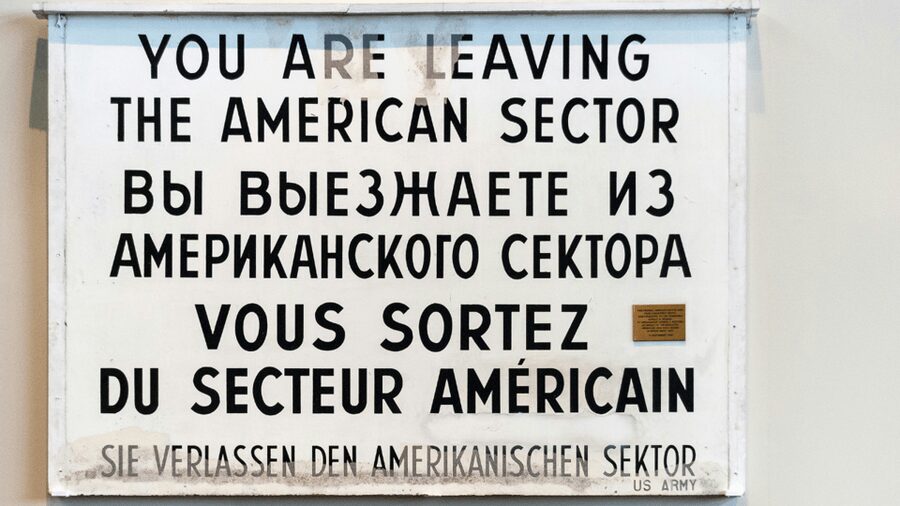
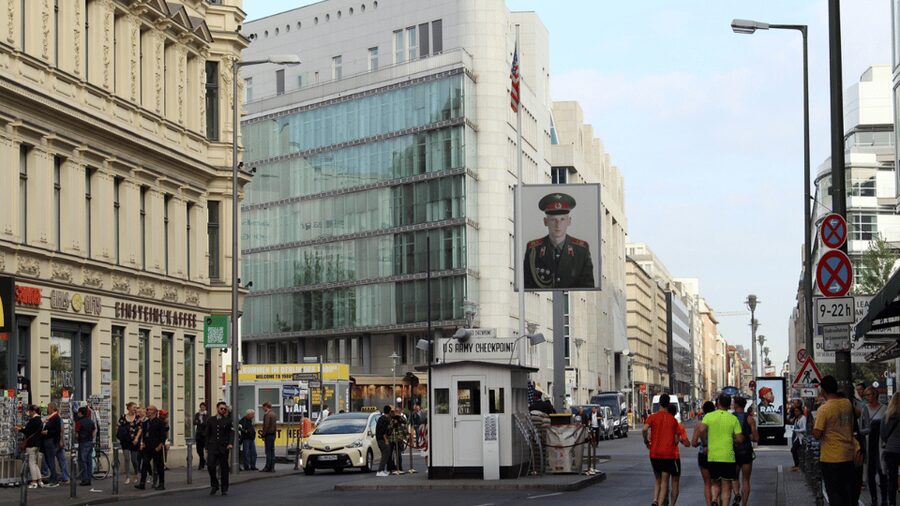
Checkpoint Charlie is one of Berlin’s best-known Cold War stops. Today, it is a central sightseeing point, but its importance comes from its former role as a crossing between East and West Berlin.
The tour uses the checkpoint to explain what division felt like in practical terms. This was not simply a line on a map. It was a controlled border within a city, tied to military tension and international politics. The stop helps you understand why Berlin mattered far beyond Germany.
Checkpoint Charlie can also feel crowded and commercial, depending on the time of day. That is a fair warning. The area is not always the quietest place for reflection, and the surrounding tourist activity can compete with the historical atmosphere.
A guide makes the stop more useful by separating fact from postcard imagery. You can see the location, learn how the crossing functioned, and place it within the story of the wall and reunification. If you visit independently, it is easy to take a photograph and move on without understanding why the checkpoint mattered.
How the route connects war, division, and reunification
The best feature of this experience is its connected storyline. The tour does not simply list the Brandenburg Gate, Reichstag, bunker, Holocaust Memorial, Gestapo site, wall, and Checkpoint Charlie. It uses those places to show how one period led into the next.
You begin with a city shaped by Nazi power and World War II. You then consider the destruction and moral reckoning that followed. From there, the route moves into occupation, division, the wall, and the eventual reunification of Germany.
That structure is valuable for first-time visitors. Berlin has many memorials and historic buildings, but they can feel scattered if you do not know how they fit together. This walk provides a framework you can use for the rest of your stay.
It also suits repeat visitors who have seen the most famous sights but want a clearer explanation. The route focuses on places you may already recognize, yet a skilled guide can change how you see them. Tom is specifically praised for being clear, interesting, appropriate, and engaged with all members of the group. Those are useful qualities on a subject that requires both accuracy and care.
Walking conditions, timing, and practical value
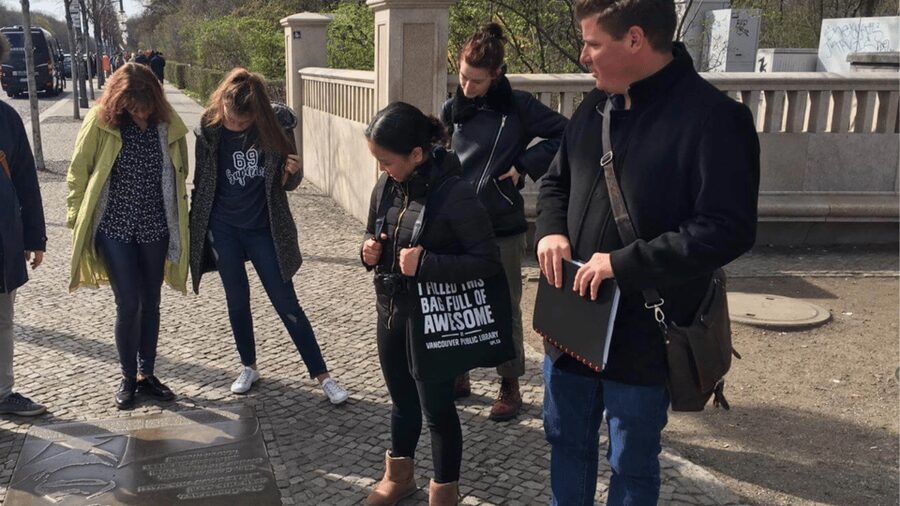
The tour lasts 2.5 hours, which is long enough for a useful introduction but short enough to fit into a busy Berlin itinerary. You should still plan for steady walking outdoors. Comfortable shoes are essential, and water and light snacks are recommended.
The tour runs rain or shine. Bring an umbrella or raincoat if the forecast looks uncertain. There is no reason to let ordinary Berlin weather ruin the experience, but you will be more comfortable if you prepare instead of hoping the clouds behave.
The activity is listed as wheelchair accessible. If accessibility is essential for your plans, confirm the route details and current conditions when booking, since historic streets and outdoor memorial areas can vary.
At $34, the tour offers good value if you want a guide-led introduction to Berlin’s central 20th-century history. You are paying for the guide’s interpretation, the small-group setting, and the route design. You are not paying for museum admission or a private vehicle, and those are important distinctions.
The reserve-now-and-pay-later option also makes it easier to hold a place while you finalize your schedule. Free cancellation is available up to 24 hours in advance for a full refund. Starting times vary, so check availability before building the rest of your day around the walk.
Who should book this Berlin history walk?
I would recommend this tour to first-time visitors who want a firm grasp of Berlin’s World War II and Cold War story. It is also a good fit if you prefer learning outdoors and want a guide to explain the sights as you encounter them.
Families with older children may find the route useful, though the subject matter is serious. History students, documentary fans, and visitors interested in political history should get plenty from the connections between the sites.
You may want something else if you prefer long, quiet visits inside museums, a highly specialized military tour, or a route devoted only to the Berlin Wall. This experience covers a wide period, so it cannot provide an exhaustive treatment of every site.
The biggest advantage is breadth with a clear purpose. The main limitation is the same thing: you see many important places in one morning or afternoon, but none receives the time it would get on a dedicated museum visit.
Should you book Hitler to Stalin?
Book it if you want Berlin’s major Nazi and Cold War landmarks explained as one unfolding story. The $34 price is sensible, the route is packed with significant sites, and the small-group format should make the guide’s commentary easier to follow.
Go prepared for outdoor walking, sober subject matter, and a brisk itinerary. Bring water, good shoes, and weather protection. I would especially choose this tour early in a Berlin visit, since it can give you the background needed to understand the city’s memorials and divided past during the rest of your stay.
FAQ
Where does the tour begin?
The tour begins at the Tourist Center at the Brandenburg Gate. Look for the blue umbrella.
Where does the tour end?
The activity ends back at the meeting point at the Brandenburg Gate.
How long does the tour last?
The tour lasts 2.5 hours. Starting times vary, so check availability when booking.
What language is the tour offered in?
The live guided tour is offered in English.
Is the tour wheelchair accessible?
Yes, the tour is listed as wheelchair accessible.
What should I bring?
Bring comfortable walking shoes, water, and light snacks. An umbrella or raincoat is recommended in unfavorable weather. The tour operates rain or shine.
Just added around Berlin
- Kreuzberg Private Walking Tour: Immigrants, Artists & Hipsters★ 5.0 · 3 reviews
- Private Photo Tour in Kreuzberg★ 5.0 · 3 reviews
- Individual city tour Berlin for max. 8 persons★ 5.0 · 3 reviews
- Berlin’s Jewish Heritage: Private Tour of the Vibrant Jewish District★ 5.0 · 3 reviews
- Berlin & The Third Reich Private Guided Tour★ 5.0 · 3 reviews
- Private Analogue Photography Experience in Berlin★ 5.0 · 3 reviews
- Spy Mission in Berlin: Self-Guided Espionage Puzzle Quest★ 5.0 · 3 reviews
- Berlin Christmas Markets Walking Tour with Local Guide★ 5.0 · 3 reviews
Third Reich & WWII Tours, compared.



Berlin’s Best: 2 Hour Walking Tour Third Reich and the Cold War
Read our review →

Third Reich Berlin: Hitler and WWII Walking Tour
Read our review →
Walking Tour of Former Nazi Party Rally Grounds
Read our review →
Browse the lists this tour appears in