
Reviewed · WALKING TOURS
Berlin: The Wall and Cold War – a Private Walking Tour
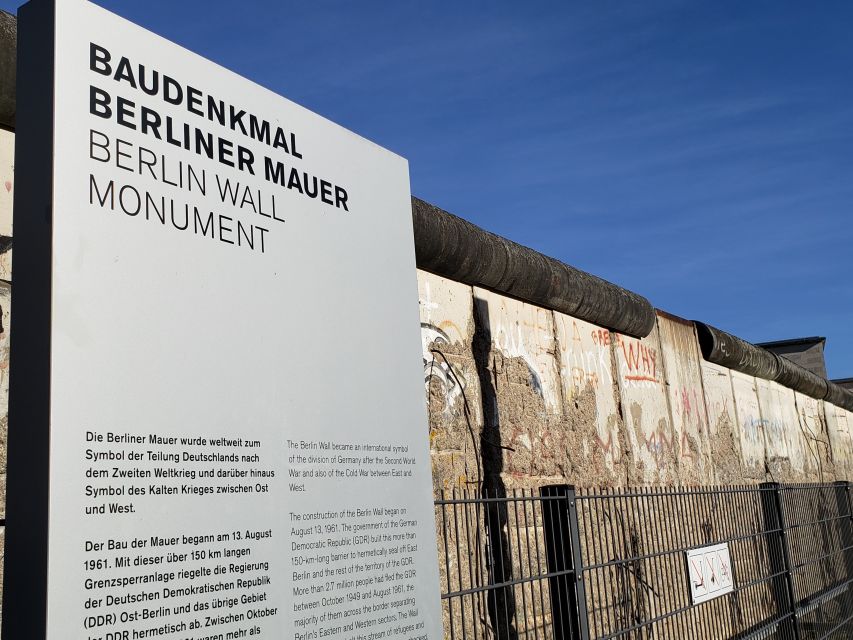
The Cold War still cuts through Berlin. This two-hour private walk connects surviving Wall sites with personal stories about a city split by concrete, guards, and escape tunnels. I like the route from Bernauer Strasse to Checkpoint Charlie, and I like that a private guide can adjust the pace and explain the past in English or German. The main drawback is time: two hours gives you a strong introduction, but not a full study of Berlin’s divided years.
The tour also includes the Palace of Tears and may include a viewing platform over the former death strip, if that platform is open. Guides such as Stephanie and Stefan have been praised for clear, authentic storytelling, and one guide handled English for Canadian friends and German for children in the same group. That kind of flexibility matters when your party has mixed ages or language needs.
In This Review
- Key points to know before you book
- Why Bernauer Strasse is the right place to begin
- Following the former border through central Berlin
- The Wall’s construction and fall, explained on the street
- The Palace of Tears and the human side of crossing
- Looking over the former death strip
- Ending at Checkpoint Charlie
- What the private format adds for $22
- Who will get the most from this walk
- Practical advice for a smoother visit
- Should you book this Berlin Wall tour?
- FAQ
- How long does the Berlin Wall and Cold War tour last?
- Where does the tour meet?
- Where does the tour finish?
- Which languages are available?
- Is this a private tour?
- Is the tour wheelchair accessible?
- Can I cancel for a full refund?
Key points to know before you book
- Bernauer Strasse gives the tour its strongest start: You see an open-air documentation area along the former border, with the Wall’s human cost close at hand.
- The route follows the former borderline: Instead of treating Berlin’s Cold War past as a museum display only, the walk links several real border locations through the city center.
- The Palace of Tears is an original border crossing station: This stop helps explain how ordinary farewells became tense, uncertain moments for families divided between East and West Berlin.
- The death strip viewing platform may not be available: If it is open, you can look across the former security zone from above. The tour still continues if access is closed, but this part depends on opening conditions.
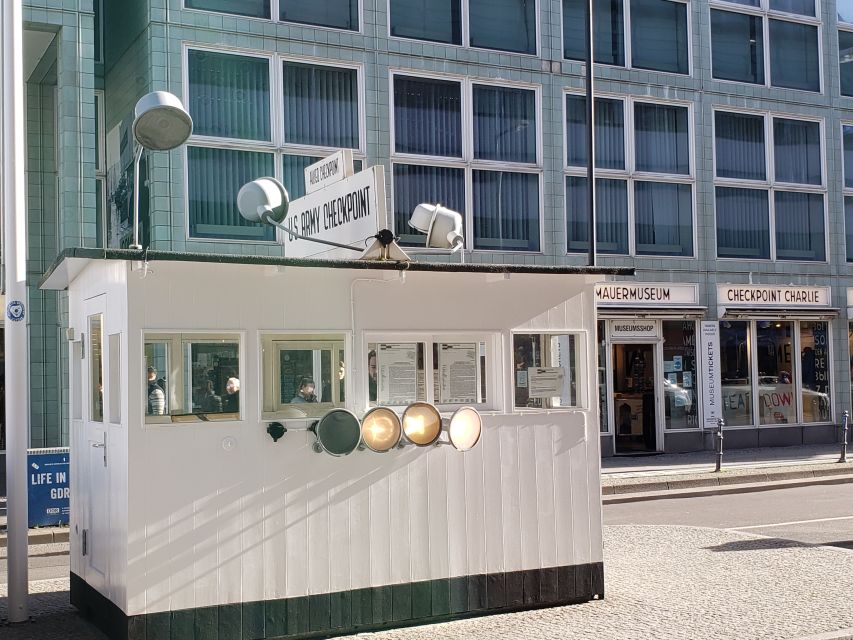
- The tour ends at Checkpoint Charlie: The famous crossing gives the walk a recognizable finish, though it is more central and commercial than Bernauer Strasse.
- The private format is useful for families: Guides speak German and English, and the small private setting allows questions, translation, and a pace that suits your group.
Why Bernauer Strasse is the right place to begin
Your meeting point is at U Bernauer Straße, upstairs at the exit marked Bernauer Strasse. Look for a guide holding a sign with your name. This is a practical meeting point because the tour begins beside one of Berlin’s clearest surviving Cold War memorial areas.
Bernauer Strasse was not just a line on a map. The Wall ran along the street, separating buildings, sidewalks, neighbors, and families. Starting here helps you understand that the border cut through a living part of Berlin, not an empty military zone.
The area now includes an open-air documentation museum. You can expect the guide to use the remaining Wall sections and outdoor displays to explain how the barrier was built and how the border changed over time. Since this is a walking tour, the setting does much of the teaching. You are not simply looking at photographs in a dark room. You are seeing the places where the division was placed into daily life.
I especially like this beginning because it gives the tour an emotional scale. The story starts with homes, streets, and people rather than only with famous political names. You learn what the divided city meant for residents, including those who tried to cross the border or find ways around it.
The opening can also be useful for families. Children may find dates and political speeches hard to follow, but a street split by a wall is easier to grasp. A good guide can then build from that simple idea toward the larger Cold War story.
More Walking Tours in Berlin
- Discover Berlin Half-Day Walking Tour
★ 5.0 · 9,624 reviews - Berlin: Third Reich and Cold War 2 Hour Walking Tour
★ 4.9 · 6,830 reviews - Berlin: Discover Berlin Walking Tour
★ 4.9 · 5,998 reviews
Following the former border through central Berlin
From Bernauer Strasse, the walk follows the former borderline toward central Berlin. The precise streets and pauses can depend on the guide and the conditions on the day, but the basic idea is clear: you move through the city while hearing how Berliners lived with the border.
This route matters because the Wall was not one single structure. It included barriers, controlled crossings, open areas, and zones designed to stop escape attempts. The experience focuses on how the system worked and how it shaped ordinary routines.
You can expect stories about daily life in a divided city. The guide explains the construction and fall of the Berlin Wall, then adds real-life accounts about the people affected by it. That personal element is one of the tour’s strongest features. Political history tells you when events happened. Personal stories help you understand what those events felt like.
I would use this part of the walk to ask questions. A private group gives you more room to pause and ask about escape routes, border stations, family visits, or the difference between East and West Berlin. The supplied experience specifically highlights places where escape attempts were made, so ask the guide to explain how those locations fit into the wider border system.
The pace should be manageable for most people because the tour lasts two hours, but it is still a walking tour. Wear comfortable shoes and arrive ready to keep moving. The route covers several sites rather than spending the entire time at one museum. If you need long stops for photographs or detailed note-taking, tell the guide early so expectations are clear.
The Wall’s construction and fall, explained on the street
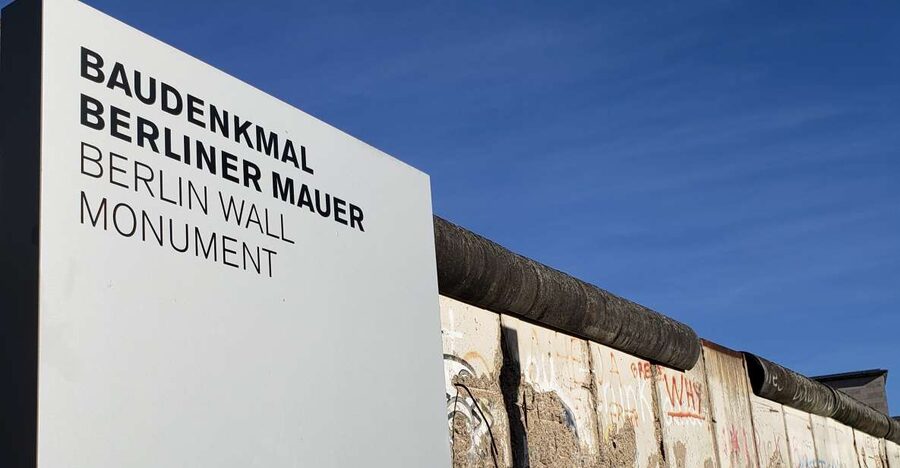
The tour covers both the building and the fall of the Berlin Wall. That balance is important. Some tours focus only on the Wall as a symbol, while this walk also deals with the practical reality of its construction and the ways it controlled movement.
You will hear how the barrier changed the city and about places where people tried to escape. These stories bring tension to what can otherwise become a dry list of dates. The route lets you connect the political decision to the physical result: streets blocked, border stations created, and people forced to rethink where they could work, visit family, or cross the city.
The fall of the Wall gives the story a different tone. The barrier that had seemed permanent became a symbol of political change and public pressure. At the end of the route, Checkpoint Charlie provides a natural place to reflect on that change.
The guide’s role is central here. Stephanie has been praised for authentic storytelling and inside knowledge about Berlin’s past. Stefan has also been praised for guiding a group through the Cold War and its meaning for a divided city. Those comments point to the kind of guide you want for this subject: someone who can explain the facts without turning the walk into a lecture.
One useful detail is the language flexibility. A guide has handled a tour in English for adults and German for children in the same group. If your party includes speakers of both languages, mention this when arranging the tour or at the start. It may make the experience easier for everyone.
The Palace of Tears and the human side of crossing
The tour includes a guided visit to the Palace of Tears, known in German as Tränenpalast. This was an original border crossing station, and its name reflects the painful farewells connected with the site.
For many people, this is the stop that makes the divided city feel most personal. Bernauer Strasse shows how the border altered a neighborhood. The Palace of Tears focuses on the moments when people had to separate after visits between East and West Berlin.
Expect the guide to explain the building’s role as a crossing point and to connect it with the wider system of controls. This is not just another place to photograph. It shows how political division entered family life, especially when crossing meant saying goodbye under strict supervision.
The indoor setting also gives the tour a change of pace. After walking along former border areas, you have a more contained place for explanation. The Palace of Tears helps you consider the emotional cost of travel restrictions, not just the architecture of the Wall.
Because the tour is private, you can ask for more context if this part interests you. You might want to know how the crossing worked, why the station became associated with farewells, or how it differed from other border points. The provided details do not promise a fixed length of time inside, so do not plan on a long museum visit separate from the walking tour. The stop is one part of a compact route.
Something different for another day:
- Berlin: Reichstag, Dome and Government District Guided Tour
★ 4.7 · 18,288 reviews - Berlin: 1-Hour City Tour by Boat with Guaranteed Seating
★ 4.3 · 16,993 reviews - Berlin: Boat Tour Along the River Spree
★ 4.4 · 11,252 reviews - Berlin: Hop-on Hop-off Bus Tour with Live Commentary
★ 4.3 · 8,579 reviews
Looking over the former death strip
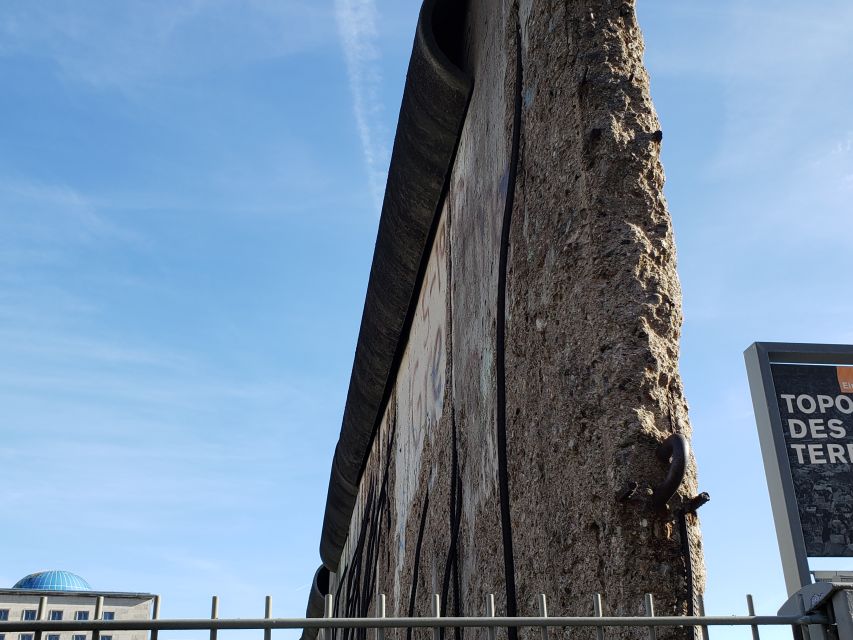
If the viewing platform is open, the guide takes you up for a view of the former death strip. This is one of the most striking parts of the experience because it lets you see the border zone from above.
The phrase death strip refers to the controlled area between sections of the border designed to prevent escape. From a viewing platform, the layout becomes easier to understand. You can see the space as a planned security system rather than imagining the Wall as a single upright slab.
Access is not guaranteed. The information for the tour clearly says this stop depends on the platform being open. That is worth keeping in mind if this view is the main reason you are booking. You should treat it as a valuable possibility, not a fixed promise.
Even if the platform is closed, the tour still includes the Wall’s history, surviving remains, escape stories, Bernauer Strasse, the Palace of Tears, and Checkpoint Charlie. Ask the guide what can still be seen from ground level on the day of your visit. The answer may help you understand the site without relying on the platform.
This is also a good place to slow down and listen. The physical distance between the former border structures can make the system easier to picture, while the guide’s stories explain what that space meant for anyone attempting to cross.
Ending at Checkpoint Charlie
The walk finishes at Checkpoint Charlie, one of Berlin’s best-known former border stations. Its fame makes it an easy final stop, and its location is useful if you want to continue exploring central Berlin afterward.
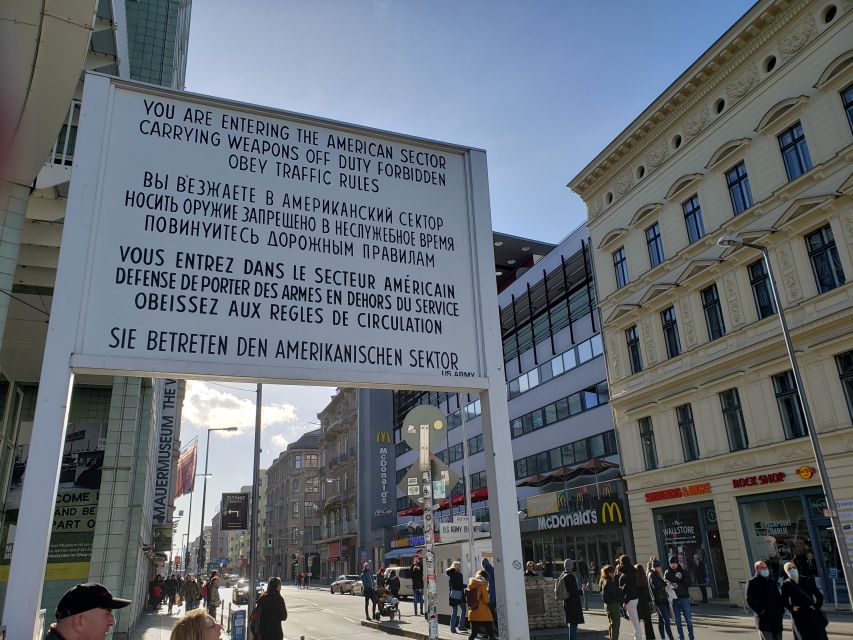
Checkpoint Charlie carries strong Cold War symbolism. It was a crossing point between the former American and Soviet sectors, and its name appears in many books, films, and photographs. After hearing about the Wall’s construction, escape attempts, and family separations, reaching this site gives the tour a clear endpoint.
I would keep your expectations measured. The experience data identifies Checkpoint Charlie as the final border station, but it does not promise a particular museum visit, interior access, or extended program there. The value is in the guide’s explanation and in seeing the location as part of the former border route.
The contrast with Bernauer Strasse is useful. Bernauer Strasse feels more like a memorial and documentation area. Checkpoint Charlie is a famous central landmark. Seeing both in one walk helps you compare the quieter, more reflective parts of the former border with one of Berlin’s most recognizable Cold War symbols.
If you want to continue your day from here, the ending is convenient for central sightseeing. The tour itself does not include transport after the walk, so plan your next stop separately.
What the private format adds for $22
At $22 per person, this tour offers good value if you want a focused introduction with a guide rather than a self-guided route. The price includes a local guide and a private walking tour. It does not list museum tickets, food, or transport as included, so think of the fee as payment for interpretation and company on the route.
The private format is the main reason the price makes sense. You can ask questions without waiting behind a large group, and the guide can explain the history at a level that works for your party. This is especially useful for families, mixed-language groups, or visitors who want to focus on escape attempts and daily life rather than only the major political events.
A two-hour tour also fits neatly into a busy Berlin schedule. You get enough time to connect several important places without giving up half a day. The tradeoff is depth. If you want every remaining Wall section, a detailed museum visit, or a long study of postwar German politics, you will need more time elsewhere.
The overall rating is 5 out of 5 from six verified bookings, with particular praise for Stephanie and Stefan. The most consistent strength is not a flashy feature. It is the quality of the storytelling, including the ability to explain Berlin’s Cold War past in an authentic and friendly way.
Who will get the most from this walk
I would recommend this tour to first-time visitors who want a clear framework for Berlin’s divided past. It gives you several important sites in one route and helps you understand how they connect.
It also suits families. The guide can adjust explanations, and the example of English for adults and German for children shows that mixed-language groups can be accommodated. Children who already know a little about the Wall may get the most from the real-life escape stories and the visible remains at Bernauer Strasse.
History-minded visitors should enjoy the focus on daily life, border stations, and places of attempted escape. The tour is less suitable if you want a purely political lecture or a long museum session. Its strength is the combination of walking, surviving sites, and storytelling.
The route may also suit visitors with limited time in Berlin. At two hours, it gives you a useful first look before you explore more on your own. The tour is listed as wheelchair accessible, which is important for anyone who needs an accessible route, though you should still confirm current site access, especially for the viewing platform.
German and English are available. Private booking is helpful when your group has different language needs, different ages, or a long list of questions.
Practical advice for a smoother visit
Meet upstairs at the U Bernauer Straße exit marked Bernauer Strasse. Your guide will have a sign with your name. Because the meeting point is specific, give yourself enough time to find the correct exit rather than emerging from the station at the last second.
If you are late or cannot locate the guide, use the local partner’s office number printed on your voucher. Keep that voucher accessible before the tour begins.
Wear comfortable shoes and dress for a walking route. The tour lasts two hours and moves between former border locations, so you will spend time outdoors even though the Palace of Tears provides an indoor stop.
Ask about the viewing platform early in the walk. Since it may be closed, knowing the situation helps you set expectations. You can also ask the guide to point out the most important remaining Wall sections and former escape locations along the route.
Booking is flexible. You can cancel up to 24 hours before the activity for a full refund, and you can reserve now and pay later. Check the available starting times for your date, since the two-hour duration alone does not specify a fixed departure.
Should you book this Berlin Wall tour?
Book it if you want a compact, private introduction to Berlin’s Cold War story, especially if you value personal accounts over a simple list of monuments. Bernauer Strasse, the Palace of Tears, the possible death strip viewpoint, and Checkpoint Charlie create a sensible historical route.
The strongest reason to choose it is the guide. Stephanie and Stefan have received praise for friendly, authentic storytelling, and the language flexibility can be a real help for families. At $22 per person, the tour is a fair buy for that level of personal explanation.
Skip it if you want a full-day study, guaranteed access to the viewing platform, or extensive museum time. For most visitors with two hours to spare, though, this walk offers a practical way to see what remains and understand how the Wall shaped real lives.
FAQ
How long does the Berlin Wall and Cold War tour last?
The tour lasts two hours.
Where does the tour meet?
Meet your guide upstairs at the U Bernauer Straße underground station, at the exit marked Bernauer Strasse.
Where does the tour finish?
The walk finishes at Checkpoint Charlie.
Which languages are available?
The live guide is available in German and English.
Is this a private tour?
Yes. It is a private walking tour for your group.
Is the tour wheelchair accessible?
Yes, the activity is listed as wheelchair accessible.
Can I cancel for a full refund?
Yes. You can cancel up to 24 hours in advance for a full refund.
Just added around Berlin
- Kreuzberg Private Walking Tour: Immigrants, Artists & Hipsters★ 5.0 · 3 reviews
- Private Photo Tour in Kreuzberg★ 5.0 · 3 reviews
- Individual city tour Berlin for max. 8 persons★ 5.0 · 3 reviews
- Berlin’s Jewish Heritage: Private Tour of the Vibrant Jewish District★ 5.0 · 3 reviews
- Berlin & The Third Reich Private Guided Tour★ 5.0 · 3 reviews
- Private Analogue Photography Experience in Berlin★ 5.0 · 3 reviews
- Spy Mission in Berlin: Self-Guided Espionage Puzzle Quest★ 5.0 · 3 reviews
- Berlin Christmas Markets Walking Tour with Local Guide★ 5.0 · 3 reviews
Walking Tours, compared.





Berlin’s Best: 2 Hour Walking Tour Third Reich and the Cold War
Read our review →


Third Reich Berlin: Hitler and WWII Walking Tour
Read our review →Browse the lists this tour appears in