
Reviewed · WALKING TOURS
An Introduction to Berlin Walking Tour
Berlin rewards curious walkers. This three-hour history tour links the Reichstag, Brandenburg Gate, Museum Island, Potsdamer Platz, and the Holocaust Memorial while explaining how Prussian power shaped modern Germany. I like the small maximum of eight people, and I like that guides may be professors, doctoral students, journalists, or trained storytellers rather than simple point-and-name escorts. The main drawback is that the route covers a lot of ground, so you will need public transport between some stops.
The $156.53 price is high for a walking tour, especially since food, drinks, and transit are extra. Still, the cost can make sense if you want a serious introduction to Berlin from a historian and prefer a small group over a large pavement crowd. You should also know that this is an overview, not a museum tour with extended indoor visits.
In This Review
- Key points to know before booking
- Berlin’s past in a compact three-hour route
- Starting on Unter den Linden
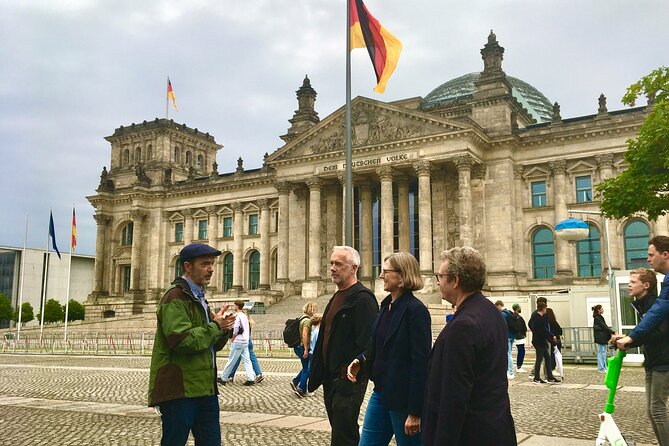
- Reichstag: modern democracy beside old power
- Brandenburg Gate and the changing meaning of a symbol
- Tiergarten and the Holocaust Memorial
- Potsdamer Platz and the Berlin Wall era
- Museum Island and Berlin’s royal center
- Hackescher Markt and the surviving courtyards
- Pace, public transport, and physical demands
- What $156.53 buys you
- Who should choose this Berlin walk?
- Booking details and cancellation
- Should you book it?
- FAQ
- How long is the Berlin walking tour?
- What language is the tour offered in?
- What is the price?
- How many people can join the tour?
- Where does the tour start?
- Where does the tour end?
- Does the tour include food or drinks?
- Does the tour include hotel pickup and drop-off?
- Do I need to pay for public transportation?
- Can I cancel for a full refund?
Key points to know before booking
- Eight-person maximum: A small group gives you a better chance to ask questions and hear the guide clearly.
- Three centuries in three hours: The tour connects Prussian militarism, Nazi-era crimes, Cold War division, and reunified Berlin.
- Public transport is part of the plan: Distances between major sights are too great to walk comfortably in the allotted time.
- The route mixes famous sights and urban detail: You see the Brandenburg Gate and Reichstag, then quieter courtyards around Hackescher Markt.
- No admission tickets are included because the stops are viewed from outside: The listed stops have no admission charge, but this is not a museum-entry tour.
- A strong choice for first-time orientation: You finish with a clear map of central Berlin and a useful framework for later sightseeing.
Berlin’s past in a compact three-hour route
This tour is built around connections. You do not simply collect photographs of famous buildings. The guide explains how Berlin moved from Prussian royal capital to imperial center, Nazi capital, divided Cold War city, and reunified European capital.
That broad sweep is the tour’s real value. Berlin’s history can feel scattered because the city has rebuilt itself repeatedly. A good guide helps you read the gaps, memorials, surviving buildings, and new architecture as parts of one story.
I especially like the focus on Prussian militarism and its influence on twentieth-century Berlin. That subject gives the city’s grand avenues and official buildings more meaning. You begin to understand why Berlin often feels both ceremonial and unsettled.
The small group matters here. With no more than eight people, the guide can adjust the explanation, answer questions, and keep the pace reasonable. The tour has received a five-star rating from all 11 recorded reviews, with 100 percent recommending it, though that is still a small sample rather than a guarantee of every future experience.
More Walking Tours in Berlin
- Discover Berlin Half-Day Walking Tour
★ 5.0 · 9,624 reviews - Berlin: Third Reich and Cold War 2 Hour Walking Tour
★ 4.9 · 6,830 reviews - Berlin: Discover Berlin Walking Tour
★ 4.9 · 5,998 reviews
Starting on Unter den Linden
The meeting point is Unter den Linden 42, in central Berlin. This is a practical place to begin because Unter den Linden itself forms one of the city’s main historic axes.
The boulevard runs from the former City Palace area toward the Brandenburg Gate. Its name comes from the linden trees planted along the avenue, and its role was once comparable to Paris’s Champs-Élysées.
Your guide uses this setting to introduce Berlin as a planned seat of power. The street is not just a pleasant walk. It represents royal ambition, military display, state ceremony, and later the changing face of the German capital.
The first part of the tour is a good time to ask questions about the overall route. You will cover several districts and use public transport more than once, so it helps to understand the day’s rhythm before you get moving.
Reichstag: modern democracy beside old power
The Reichstag is the home of the Bundestag, Germany’s lower house of parliament. The building’s glass dome, added by Norman Foster in the 1990s, has become one of the clearest symbols of modern Germany’s commitment to open government.
The planned stop lasts about 15 minutes. You should expect an explanation and exterior viewing rather than a full parliamentary visit. The tour does not include admission tickets, and the supplied details do not promise entry to the dome.
That limitation is worth noting. If you want to go inside the Reichstag, you will need to arrange that separately. For a first orientation, though, the exterior stop works well because the guide can explain the contrast between imperial architecture and the transparent image chosen for today’s democracy.
This is also an excellent early stop for understanding the tour’s method. Berlin’s buildings often carry more than one historical meaning. The guide’s job is to show you those layers without turning the walk into a dry list of dates.
Brandenburg Gate and the changing meaning of a symbol
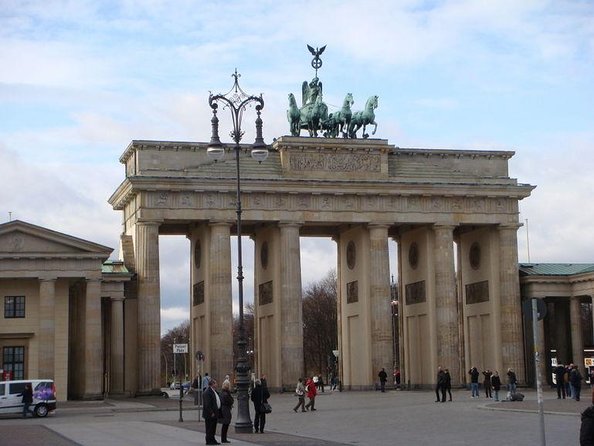
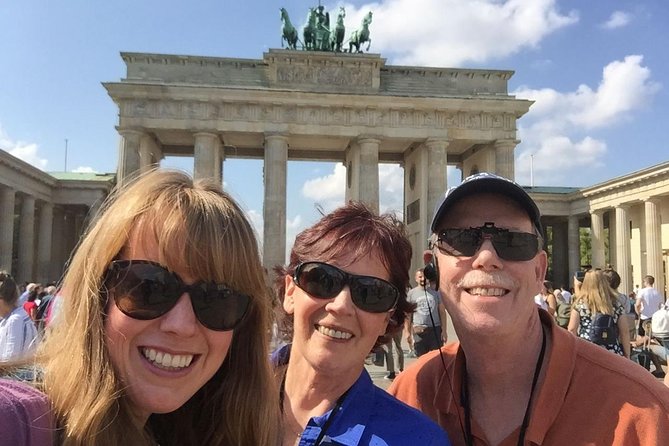
The Brandenburg Gate receives about 20 minutes. Built in the eighteenth century for Prussian king Frederick William II, it began as a neoclassical monument linked to royal power.
Its later history is much broader. Napoleon entered Berlin through the gate after his victory, and Ronald Reagan used the area for his famous Cold War speech. The same monument has served monarchy, conquest, division, and calls for freedom.
That shifting meaning makes the gate more interesting than its familiar columns suggest. Your guide can place it within the larger story of Berlin instead of treating it as a quick photo stop.
The area can be busy, and the open setting offers little shelter. Keep your attention on the guide while you take photographs. The short visit is enough for context, but not enough for a long architectural study.
Something different for another day:
- Berlin: Reichstag, Dome and Government District Guided Tour
★ 4.7 · 18,288 reviews - Berlin: 1-Hour City Tour by Boat with Guaranteed Seating
★ 4.3 · 16,993 reviews - Berlin: Boat Tour Along the River Spree
★ 4.4 · 11,252 reviews - Berlin: Hop-on Hop-off Bus Tour with Live Commentary
★ 4.3 · 8,579 reviews
Tiergarten and the Holocaust Memorial
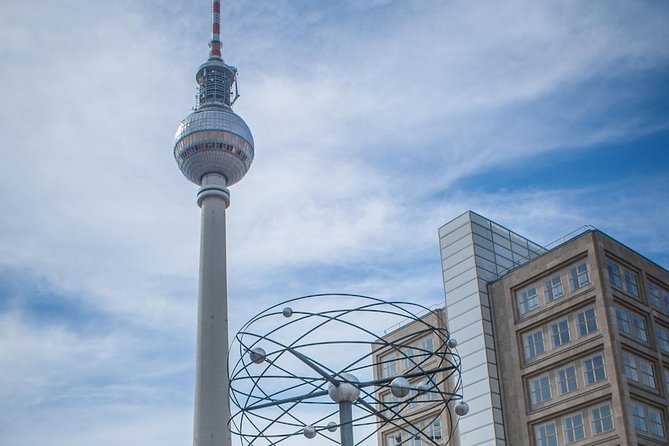
The route includes about 10 minutes in Tiergarten, Berlin’s best-known inner-city park. It is filled with formal gardens and large statues, offering a change from the stone avenues and government buildings.
Do not expect a long park walk. The stop is brief, but it gives you a chance to see how Berlin’s central core includes broad public green space as well as monuments and ministries.
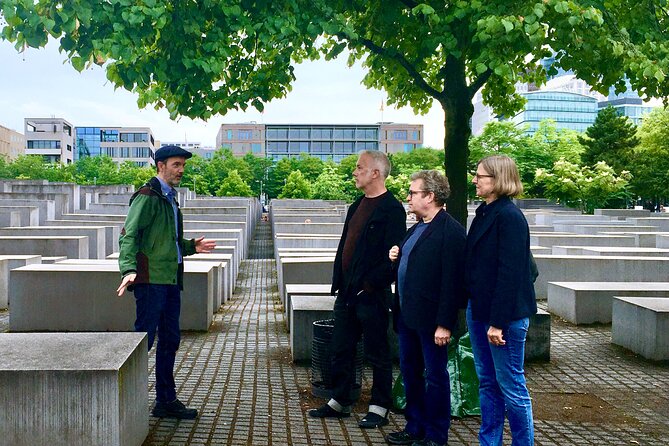
Nearby, the Memorial to the Murdered Jews of Europe receives another 10-minute stop. Designed by Peter Eisenman and opened in 2005, it contains 2,711 concrete slabs of different heights.
You can enter the memorial’s grid and experience its changing sense of scale. The design creates a somber place for reflection without relying on a conventional statue or inscription.
Ten minutes is enough for an introduction, but this is one place where you may want to return on your own. The memorial deserves quiet attention, and the group schedule may not allow you to spend as much time as you would prefer.
The guide’s historical framing is especially important here. A visit can feel powerful, but the surrounding story helps you understand why this memorial occupies such a central position in Berlin.
Potsdamer Platz and the Berlin Wall era
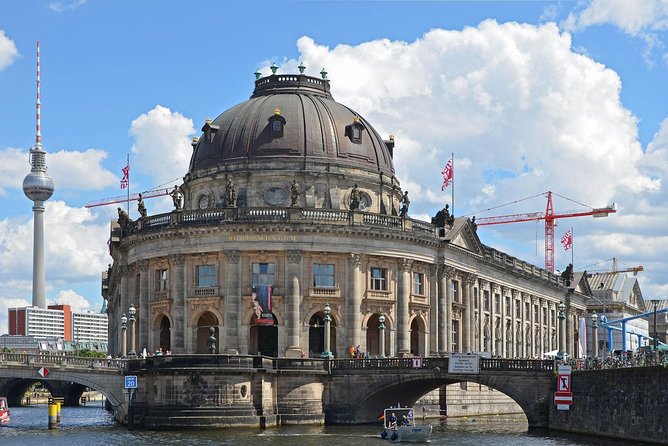
Potsdamer Platz shows how quickly Berlin changed after the Wall fell. Once divided and heavily damaged, the area was rebuilt as a center for entertainment, restaurants, and shops.
The stop lasts about 15 minutes. You will get a clear look at the modern city’s energy, but you should not expect a long architectural tour of every new building.
This is where the tour’s twentieth-century focus becomes especially useful. Potsdamer Platz is not simply a redevelopment success story. Its meaning comes from the contrast between the former divided zone and the busy urban center that replaced it.
The tour also includes a Berlin Wall focus in its main highlights, although the supplied stop list does not name a separate Wall memorial or give a specific Wall stop duration. Ask your guide where the Wall’s story fits into the route so you know what you are seeing.
Public transport becomes important around this part of the day. Some key sites are too far apart to reach on foot within three hours. If you do not already have a Berlin visitor transit pass, a day metro pass is suggested. A single Berlin AB ticket is listed at 2.80 euros, with a senior fare of 1.70 euros. A one-person day ticket is listed at 7 euros, with a senior fare of 4.70 euros.
Those fares are separate from the tour price. Keep your ticket ready and allow a little time for transfers. The transport is not a flaw in itself, but it does mean this is not a continuous old-town stroll.
Museum Island and Berlin’s royal center
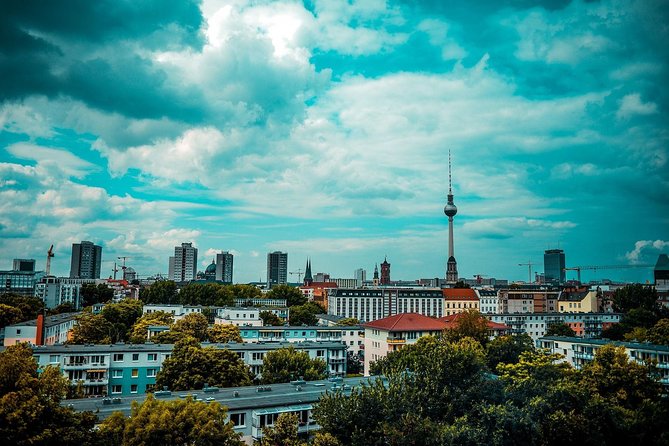
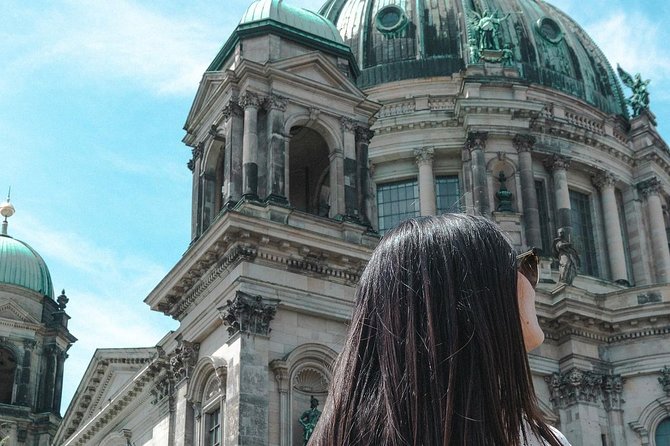
Museum Island sits on Spree Island in central Berlin. Its five major museums were built under Prussian rulers, including the Pergamon Museum, Neues Museum, and Alte Nationalgalerie.
The planned stop is about 25 minutes. This is enough to understand the island as a group of monumental cultural institutions, but not enough to visit the collections.
That distinction matters. Museum Island can consume an entire day by itself. If you want to see the museums properly, schedule a separate visit and check current opening details independently.
As part of this tour, the island helps explain how Prussian rulers used architecture, art, and public institutions to project power and culture. The guide can connect the museums with the nearby boulevard and former palace area, giving you a better sense of how central Berlin was designed.
I like this stop because it moves beyond the standard political story. Berlin’s past is not only armies, rulers, and borders. Its museums also reveal how the city wanted to define civilization and national identity.
Hackescher Markt and the surviving courtyards
Hackescher Markt offers a different view of Berlin. The square provides access to preserved Art Nouveau courtyards from pre-war Berlin, and the stop lasts about 15 minutes.
After the formal monuments of the government quarter and Unter den Linden, this area feels more intimate. Courtyards let you see the texture of older urban life, not only the official face of the capital.
The stop is valuable because it widens your picture of Berlin. The city is not just grand avenues and twentieth-century ruins. It also contains layered residential and commercial spaces that survived, changed use, or were preserved.
The word preserved should not lead you to expect an untouched time capsule. The tour information promises a glimpse into these courtyards, not a detailed architecture lecture or private access to every building.
For architecture fans, this may be one of the most rewarding parts of the route. One three-person group was led by Dan, an architect, and particularly appreciated the architectural perspective, pace, and amount of ground covered. Dan also directed the group to an Italian restaurant for lunch afterward, a useful example of the local recommendations a strong guide can add.
Pace, public transport, and physical demands
The listed stop times add up to about 140 minutes, leaving roughly 40 minutes for walking, explanations between sites, and public transport. That tells you something important: this is an active overview of central Berlin, not a slow stroll with long breaks.
Most people can participate, according to the tour details. Still, you should be ready to walk, stand, keep track of the group, and use the city’s public transport several times.
Wear comfortable shoes and bring water, since food and drinks are not included. The tour does not include hotel pickup or drop-off, so you need to reach Unter den Linden 42 on your own and make your own way onward at the end.
The end point is listed simply as Berlin, Germany. That means you should not plan around a precise final address unless the provider gives you more detail after booking.
The route is a good fit for people who prefer active sightseeing and historical explanation. It is less suitable if you want frequent café stops, long museum visits, or a relaxed pace with little movement.
What $156.53 buys you
At $156.53 per person, this is not a bargain-priced orientation walk. You also pay for public transport, and meals and drinks are separate.
The value depends on what you want from a guide. You are paying for about three hours with a historian and a group capped at eight, not for admission to attractions. If you plan to see Berlin independently using a guidebook, the price may feel steep.
I see better value for a first or short visit, especially if Berlin’s political history feels confusing. A historian can help you make sense of the Reichstag, the Brandenburg Gate, the Wall era, the Holocaust Memorial, and the rebuilt city in one connected session.
The small group improves that calculation. A large group can make historical commentary hard to hear and questions awkward. Here, you have a fair chance to ask about a building, a memorial, or a period that catches your attention.
The recorded feedback is highly positive, with a five-star score and full recommendation rate from 11 reviews. The strongest praise focuses on the guide’s expertise, architectural insight, pace, and ability to cover substantial ground. That is exactly where this tour appears to earn its price.
Who should choose this Berlin walk?
I would choose this tour if you want:
- A serious first look at Berlin’s last 300 years
- A guide with an academic or journalism background
- A group small enough for personal questions
- A route that combines major sights with less obvious urban details
- Help connecting Prussian history with the Nazi and Cold War periods
- A practical introduction before exploring museums on your own
I would think twice if you want to spend most of the day inside museums. Museum Island is visited as a place, not as a collection of galleries, and the Reichstag is viewed without included admission.
I would also compare the cost with a private tour before booking. Since the group can include up to eight people, the experience is small-group rather than automatically private.
Booking details and cancellation
Confirmation is received at booking, and the tour is offered in English. It is near public transportation, and group discounts are available.
The tour is booked an average of seven days in advance, which suggests planning ahead rather than waiting until the morning of your visit. Free cancellation is available if you cancel at least 24 hours before the local start time. Cancellations or changes made later are not accepted for a refund.
Should you book it?
Book this experience if you want Berlin’s major sights explained as one connected story, and if you value a historian’s attention more than included entrances. The small group, strong architectural angle, and carefully chosen stops give you a useful foundation for the rest of your visit.
Skip it if $156.53 feels too high for a tour with no food, drinks, or attraction admissions. Also skip it if you want a slow walk or a full museum visit.
For many first-time visitors, the best use is near the beginning of a Berlin stay. You will leave with a better sense of direction, a clearer understanding of the city’s difficult past, and a short list of places worth revisiting at your own pace.
FAQ
How long is the Berlin walking tour?
The tour lasts approximately three hours.
What language is the tour offered in?
The tour is offered in English.
What is the price?
The listed price is $156.53 per person.
How many people can join the tour?
The maximum group size is eight travelers.
Where does the tour start?
The meeting point is Unter den Linden 42, 10117 Berlin, Germany.
Where does the tour end?
The end point is listed as Berlin, Germany.
Does the tour include food or drinks?
No. Food and drinks are not included.
Does the tour include hotel pickup and drop-off?
No. Hotel pickup and drop-off are not included.
Do I need to pay for public transportation?
Yes. Transportation to and from attractions is not included, and public transport is needed several times. A Berlin AB single ticket is listed at 2.80 euros, and a day ticket for one person is listed at 7 euros, with separate senior fares.
Can I cancel for a full refund?
Yes, if you cancel at least 24 hours before the experience start time. Cancellations or changes made less than 24 hours in advance are not accepted for a refund.
Just added around Berlin
- Kreuzberg Private Walking Tour: Immigrants, Artists & Hipsters★ 5.0 · 3 reviews
- Private Photo Tour in Kreuzberg★ 5.0 · 3 reviews
- Individual city tour Berlin for max. 8 persons★ 5.0 · 3 reviews
- Berlin’s Jewish Heritage: Private Tour of the Vibrant Jewish District★ 5.0 · 3 reviews
- Berlin & The Third Reich Private Guided Tour★ 5.0 · 3 reviews
- Private Analogue Photography Experience in Berlin★ 5.0 · 3 reviews
- Spy Mission in Berlin: Self-Guided Espionage Puzzle Quest★ 5.0 · 3 reviews
- Berlin Christmas Markets Walking Tour with Local Guide★ 5.0 · 3 reviews
Walking Tours, compared.





Berlin’s Best: 2 Hour Walking Tour Third Reich and the Cold War
Read our review →


Third Reich Berlin: Hitler and WWII Walking Tour
Read our review →Browse the lists this tour appears in