
Reviewed · WALKING TOURS
Oberammergau Private Guided Walking Tour
Small town, big stories. Oberammergau packs monastery roots, painted houses, wood carving, plague history, and the famous Passion Play into a compact alpine walk. I like the way this private tour connects everyday streets with events that shaped the village, and I especially like the chance to tailor the walk with your own guide.
I also value the small group format, which keeps the experience personal rather than turning the village into a moving crowd. Guide Ekaterina earned high praise for bringing Oberammergau alive with clear explanations and lively interaction. The main consideration is time: 90 minutes is enough for an introduction, not a complete study, and entrance fees are not included.
In This Review
- Key points to know before you book
- Why Oberammergau rewards a guided walk
- The monastery connection to Ettal
- Pilgrims, markets, and the rise of wood carving
- Frescoes, fairy-tale houses, and the sacred side of town
- War, plague, and the birth of the Passion Play
- Oberammergau’s less comfortable WWII story
- What the 90-minute route feels like
- The value of $280 for a private group
- Who should book this Oberammergau tour
- Practical tips for getting more from the walk
- Should you book it?
- FAQ
- Where does the Oberammergau walking tour meet?
- How long does the private tour last?
- How much does the tour cost?
- Which languages are available?
- Are entrance fees included?
- Can the tour be customized?
Key points to know before you book
- Oberammergau’s Passion Play began with plague-era history, linking a local crisis to one of Europe’s best-known religious performances.
- The village’s wood carving tradition grew along pilgrimage routes, where passing visitors created a ready market for carved religious objects.
- The private format costs $280 for up to 15 people, making it more attractive for a family or small group than for one or two people.
- The walk includes both sacred and everyday Oberammergau, from the Ettal monastery connection to fairy-tale house paintings and local commerce.
- WWII history adds a darker layer, including the village’s links to Wehrmacht activity and a Messerschmitt factory.
- English and German tours are available, with a meeting point in front of the tourist office on Eugen-Papst-Straße.
Why Oberammergau rewards a guided walk
Oberammergau can look simple at first glance. It is an alpine village in Bavaria, crossed by the Ammer River, with painted façades and mountains nearby. But the street scene only makes sense once you know how religion, trade, war, disease, and local craft shaped it.
I find that a guided walk is useful here because the most important details are not always large monuments. The clues sit on house fronts, in old routes through the valley, and in the relationship between Oberammergau and nearby Ettal. Without context, you may admire the frescoes and move on. With a guide, you begin to see why the village looks and functions as it does.
The town’s roots reach back to the late Bronze Age, though modern Oberammergau began to take form around a small monastery in the ninth century. Its location between Germany and Italy placed it on routes used by pilgrims heading toward Rome. That position brought people, ideas, religious traditions, and commercial opportunities into the Ammer valley.
You should expect a walking tour with stories rather than a long list of formal museum stops. The value lies in having one person explain how separate pieces fit together while you walk through the village.
More Walking Tours in Germany:
- Discover Berlin Half-Day Walking Tour
★ 5.0 · 9,624 reviews - Berlin: Third Reich and Cold War 2 Hour Walking Tour
★ 4.9 · 6,830 reviews - Munich: Third Reich & WWII Walking Tour
★ 4.6 · 6,181 reviews
The monastery connection to Ettal
One of the tour’s useful starting points is Oberammergau’s relationship with the nearby Ettal Monastery. The village did not develop in isolation. Its religious and economic life was tied to this important institution, and that connection helps explain why pilgrims passed through the area.
I like this part of the route because it gives the village a wider frame. Oberammergau is not simply a pretty town with religious art. It was part of a network reaching beyond the Ammer valley, with movement between local settlements, the monastery, and longer routes toward Italy.
The tour also refers to an elite boarding school connected with Ettal. That detail adds a more modern layer to the monastery story. You get a sense of how the area served not only religious visitors but also education and institutions with a broader regional role.
Since the tour lasts only 90 minutes, your guide will need to keep this section focused. That is not necessarily a weakness. A short explanation can give you the basic connection without using the whole walk on monastery history alone.
Pilgrims, markets, and the rise of wood carving
Oberammergau’s wood carving tradition is one of the most practical stories on the route. From the 14th century onward, pilgrimage traffic helped turn local carving into a serious craft. Pilgrims needed souvenirs, devotional objects, and reminders of the places they had visited. Local carvers had access to both a skilled workforce and a passing market.
This is where I think the tour offers more than a standard art-history talk. You are not just told that wood carving existed. You learn why it developed in this particular place. Geography mattered. Religion mattered. So did the steady flow of people through the valley.
The connection between pilgrimage and commerce is easy to understand when you see the village as a stopping place rather than a remote mountain settlement. Pilgrims brought demand. Markets helped spread the work. Carved objects could travel far beyond Oberammergau, carrying the village’s artistic style with them.
Your guide can also help you separate local tradition from modern souvenir shopping. The tour description points to centuries-old craft traditions, but it does not promise a workshop visit or a carving demonstration. If you want to buy something or see working carvers, ask your guide what is open during your visit. Those activities are not included in the tour itself.
Frescoes, fairy-tale houses, and the sacred side of town
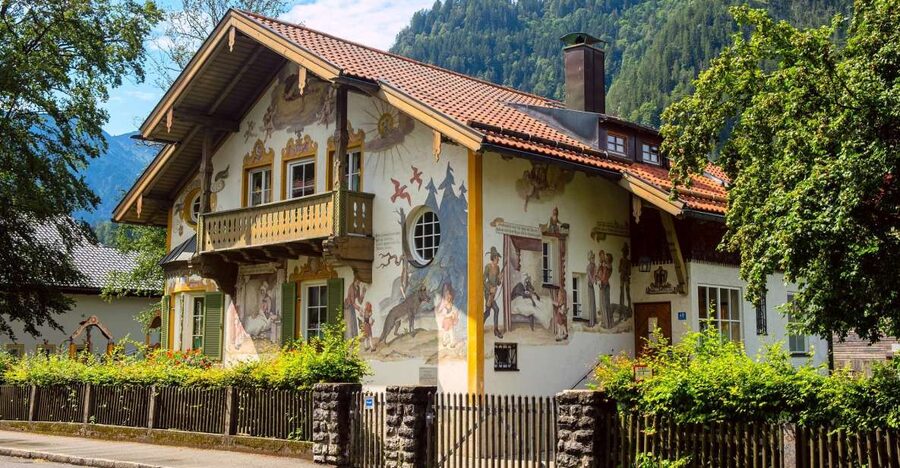
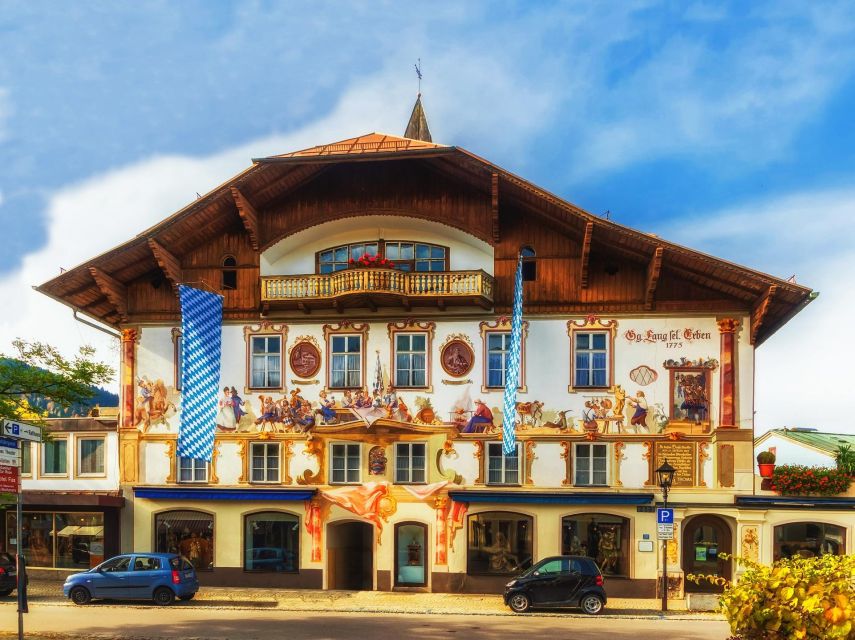
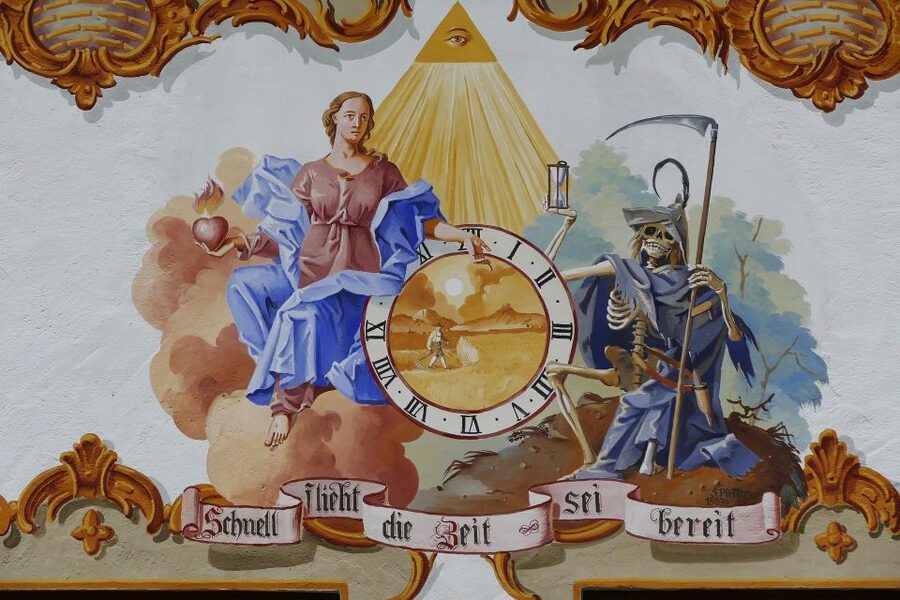
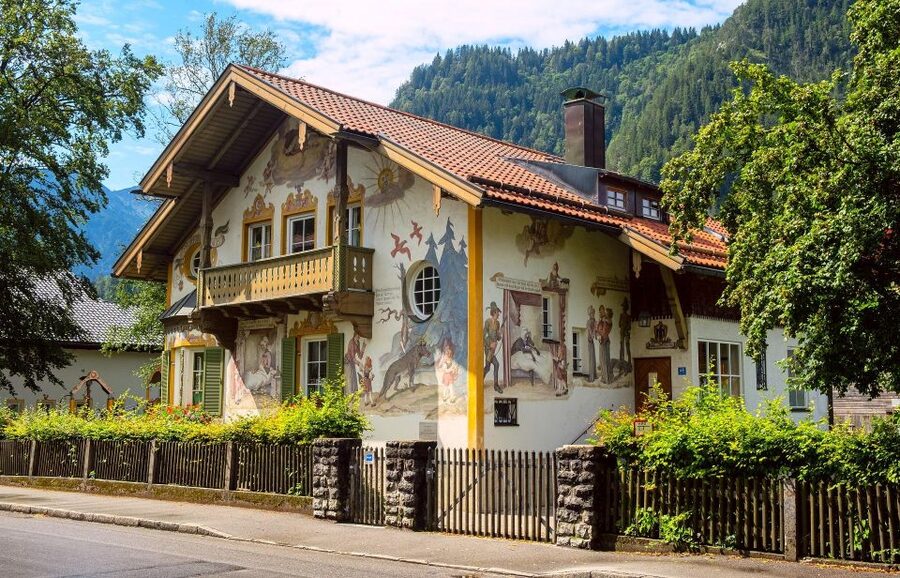
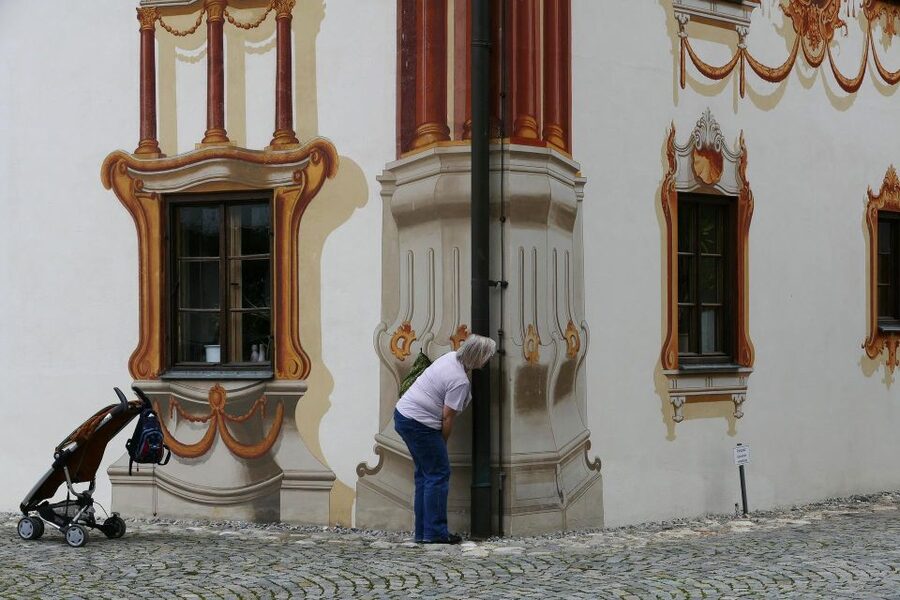
Oberammergau is famous for its 18th-century frescoes painted directly on houses. These façades are among the easiest details to appreciate without preparation, but their meaning becomes clearer with a guide beside you.
The paintings help turn ordinary buildings into part of the village’s public story. Religious scenes share the same streets as domestic buildings and commercial spaces. That mixture of the sacred and the ordinary is one of Oberammergau’s charms.
The route also brings in the idea of Märchenhäuser, or fairy-tale houses. The term connects the village to old German oral folklore gathered by the Brothers Grimm in the early 19th century. The provided information does not specify which exact houses you will enter or how many façades you will see, so treat this as a themed part of the walk rather than a guaranteed interior visit.
I like the contrast here. One minute, the guide may be explaining a religious painting or a Passion Play tradition. The next, the story turns toward fairy tales and folk culture. Oberammergau does not fit neatly into a single category, and that is precisely what makes a walking tour worthwhile.
Bring your attention to the façades rather than rushing from one point to the next. A 90-minute visit goes quickly, and the painted houses are best appreciated when you pause long enough to hear what the images mean.
A few more tours and experiences worth a look
- Berlin: Private Reichstag and Glass Dome Tour
★ 4.8 · 2,226 reviews - Berlin Private Complete History All Day Walking Tour
★ 5.0 · 474 reviews - Munich Private Tour with a Local – Highlights & Hidden Gems
★ 5.0 · 469 reviews - Private Walking Tour Berlin Third Reich Hitler and World War II
★ 5.0 · 360 reviews
War, plague, and the birth of the Passion Play
The Passion Play is the village’s best-known tradition, but the important point is why it began. The tour connects its origins to the return of the Black Plague after the Thirty Years War.
This is a story about fear, faith, and a promise made during a crisis. The play represents the Passion of Christ, meaning the final days of Christ’s life. Over time, it became known for its serious and distinctive presentation of those events.
I would not treat this part as a simple religious attraction. It also shows how a community responds to catastrophe and then carries that response across generations. The Passion Play became part of Oberammergau’s identity, not just a performance held in a theater.
The tour also explains the exclusive nature of the cast. The supplied information describes it as a play with a restricted local cast, which is an unusual feature and an important part of its tradition. Ask your guide for the current rules and schedule if the play is a major reason for your visit, since the 90-minute walking tour itself is not a performance and does not include entrance fees.
This section may be especially meaningful if you are visiting during a Passion Play season, but it still has value outside those years. The village’s streets, houses, and religious customs make more sense once you understand how plague history led to the tradition.
Oberammergau’s less comfortable WWII story
The tour does not present Oberammergau as a postcard village frozen in a peaceful past. It also addresses the Second World War, including the presence of a Wehrmacht headquarters and a Messerschmitt factory.
That material gives the walk a needed sense of balance. A village can have beautiful frescoes, religious traditions, and skilled crafts while also being caught up in modern military history. You should expect this part of the tour to be more serious than the fairy-tale houses or wood carving stories.
The information provided does not specify which surviving buildings or exact sites you will visit. Your guide may explain the history from public streets rather than take you inside a preserved wartime facility. That is worth keeping in mind if WWII history is your main interest.
Still, including these subjects makes the tour broader and more honest. Oberammergau’s story is not only about art and devotion. It also includes the pressures placed on the village by national conflict and military production.
What the 90-minute route feels like
The walk begins in front of the tourist office at Eugen-Papst-Straße 9A, 82487 Oberammergau. Arrive with the address saved on your phone, especially if you are coming into town by train, bus, or car and are not yet familiar with the center.
The route is designed as a private walk for your group alone. The maximum group size is 15, which gives you more room to ask questions than you would have on a large scheduled tour. A group of four, like the party guided by Ekaterina, is likely to get the most personal exchange, while a group of 15 should expect a somewhat more structured pace.
The exact order of sights can be adjusted on the spot with the local guide. That is a useful feature. If your group is more interested in wood carving, Passion Play history, fairy-tale façades, or WWII, you can signal that preference rather than follow a rigid script.
The tradeoff is coverage. Ninety minutes can introduce all these subjects, but it cannot examine each one at museum length. I would use the tour to orient yourself, then return to the parts that catch your interest.
Guides speak English or German. The walk is led by a local professional guide, and the experience is private rather than shared. There is no included entrance ticket, so any paid interior or attraction you choose to visit separately will cost extra.
The value of $280 for a private group
The price is $280 per group of up to 15 people. That means the value changes sharply depending on your group size.
For one person, or even two, the cost is high for a 90-minute walk. You are paying for privacy, a local guide, and flexibility, not for a long list of included admissions. If you are already comfortable reading about Oberammergau on your own, a private tour may not be the most economical choice.
For a family or larger group, the calculation improves. At 10 people, the cost works out to $28 per person. At the full 15-person limit, it is about $18.67 per person. That makes the tour more reasonable for a reunion, family outing, or group traveling together.
I also see value in the ability to customize the route. A private guide can spend less time on subjects that do not interest you and more time on the history you came to understand. That flexibility is often more useful than a slightly cheaper shared tour with a fixed script.
The overall rating is 4.7 from five ratings, and the strongest praise centers on the personal nature of the walk. A verified booking from the United States described it as very personal. Jerry, visiting from Singapore, specifically praised Ekaterina’s clear explanations, historical notes, and lively interaction with a group of four. Those comments point to the tour’s main strength: the guide can make the village feel connected rather than just pretty.
Who should book this Oberammergau tour
I would recommend it to first-time visitors who want an intelligent introduction before exploring the village alone. It is also a good fit if you enjoy local history but do not want to spend hours inside a museum.
Families may appreciate the mix of subjects. Children may respond to the fairy-tale houses and painted façades, while adults can follow the monastery, plague, Passion Play, and wartime stories. The guide can adjust the emphasis, although the depth of the discussion will depend on the group’s interests and the limited time.
This is also a sensible choice for visitors staying near Ettal or passing through Oberammergau on a Bavarian day trip. The tour gives you a framework for understanding the town instead of leaving you with only photographs of decorated buildings.
You may want to skip it if you need a long craft demonstration, a formal Passion Play performance, or extensive access to historic interiors. Those are not promised here, and entrance fees are excluded.
Practical tips for getting more from the walk
Read a little about the Thirty Years War and the Black Plague before you arrive. You do not need a history lesson, but knowing the basic sequence will make the Passion Play story easier to follow.
Keep your group together and arrive at the tourist office meeting point early enough to find it without stress. The walk is short, so losing the first 10 minutes to directions would be a real waste.
Ask for the guide’s preferred emphasis at the beginning. If you care most about wood carving, say so. If WWII history or the Passion Play matters more, make that clear before the route gets underway.
Plan extra time in Oberammergau after the tour. The walk is an introduction, and you may want to look again at the frescoed houses or explore a subject that received only a short explanation. Since admissions are not included, confirm costs before entering any paid site.
Cancellation is free up to 24 hours before the start for a full refund. You can also reserve now and pay later, which helps if your Bavarian route is still changing.
Should you book it?
Book this tour if you are traveling with a group and want Oberammergau explained by a local guide rather than viewed as a quick photo stop. The private format, adjustable focus, and strong personal praise for Ekaterina make it especially appealing to families and small groups who value conversation.
For one or two people, $280 is harder to justify unless Oberammergau’s Passion Play, wood carving, or wartime history is a major interest. In that case, the guide’s context may be worth the premium.
My practical verdict: a strong orientation walk with real historical range, best used as the first 90 minutes of a longer Oberammergau visit. It gives you the reasons behind the village’s unusual character, then leaves you time to explore the details at your own pace.
FAQ
Where does the Oberammergau walking tour meet?
The meeting point is in front of the tourist office at Eugen-Papst-Straße 9A, 82487 Oberammergau, Germany.
How long does the private tour last?
The tour lasts 90 minutes.
How much does the tour cost?
The listed price is $280 per group of up to 15 people.
Which languages are available?
The live tour guide is available in English or German.
Are entrance fees included?
No. Entrance fees are not included in the tour price.
Can the tour be customized?
Yes. The private format allows possible customization with your local guide during the tour.
Just added around Germany
- St George’s Culinary Food Tour★ 5.0 · 3 reviews
- Castle Braunfels Day Trip from Frankfurt★ 5.0 · 3 reviews
- Discover Hamburg: Private Walking Tour★ 5.0 · 3 reviews
- Whodunnit – Interactive city walk in Düsseldorf★ 4.5 · 3 reviews
- Discover Dusseldorf’s most Photogenic Spots with a Local★ 5.0 · 3 reviews
- Kreuzberg Private Walking Tour: Immigrants, Artists & Hipsters★ 5.0 · 3 reviews
- Private Photo Tour in Kreuzberg★ 5.0 · 3 reviews
- Dusseldorf Private Walking Tour With A Professional Guide★ 4.5 · 3 reviews
Walking Tours, compared.





Berlin’s Best: 2 Hour Walking Tour Third Reich and the Cold War
Read our review →

